The term "star producer" doesn't seem to be used much in the industry anymore.
The reason is actually quite simple: since commercial projects now typically involve teams of two or three hundred people—and some even exceed a thousand—the producer’s creative voice has objectively become quite diluted. Furthermore, long-term operation has almost become a mandatory requirement, so for commercial projects, “completing a single work” has paradoxically become a negative factor. At the same time, public sentiment within the gaming community is becoming increasingly sensitive, and the costs and potential risks associated with maintaining one’s personal image are on the rise.
However, these theories don’t quite apply to the casual game genre.
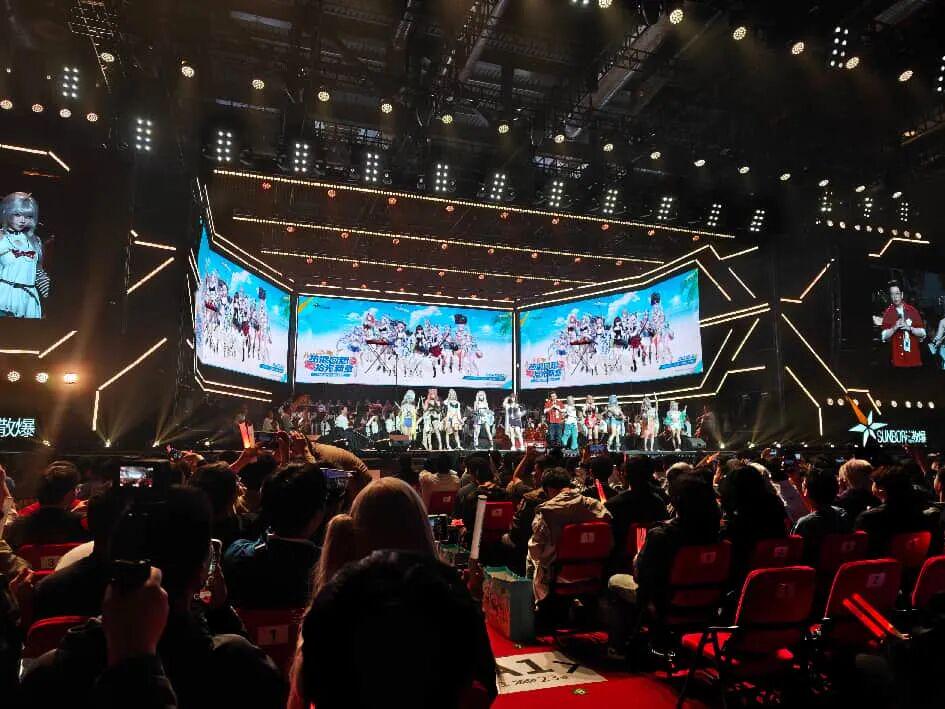
On the evening of May 2, at the "Frontline Girls" 10th Anniversary Music Carnival, when Sanbao CEO Yu Zhong took the stage, the audience erupted in thunderous cheers—a vivid demonstration of the "star producer" effect in the mobile gaming industry.
It is worth noting that, in a sense, this phenomenon also has a distinct temporal dimension, as it is highly concentrated among those developers who achieved fame early on in the development of the indie game genre.
At that time, the industry had not yet fully industrialized, and small teams could define a product’s entire character solely through creative passion and aesthetic intuition. As a result, the producer’s personal style was magnified to an extraordinary degree and etched into players’ long-term memories. Even though later entrants may have produced higher-quality products with larger teams, they have found it difficult to replicate this symbiotic relationship between the individual and the IP.
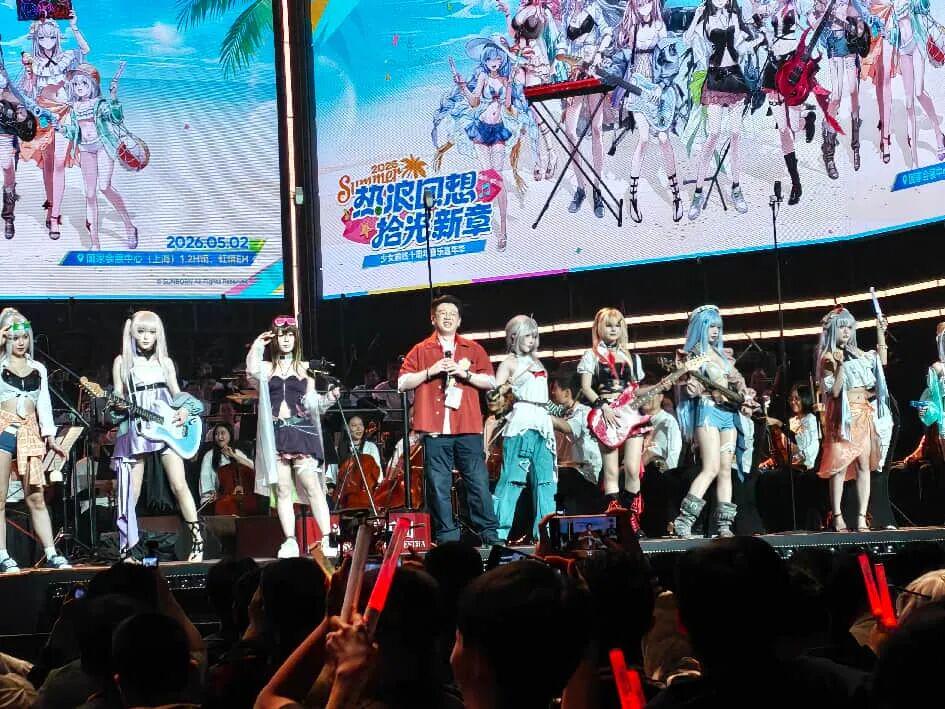
Over the past decade, Yu Zhong has established a reputation among *Shao Qian* players that goes far beyond that of a mere company executive. Players are well aware of his creative preferences and his dedication to the game’s world-building; this recognition has gradually evolved into a shared sense of values, becoming an integral part of how all players perceive Sanbao, this long-established mobile game developer.
This trust and rapport, built up over time, represent the most valuable asset resulting from the influence and legacy of star producers. In essence, this offline carnival serves as a tangible reflection of those ten years of memories.
01
A Decade of Encounters
In early May, the weather in Shanghai is slightly cool.
The line at the entrance to Hall 1.2H of the National Exhibition and Convention Center began to grow slowly starting at 9:00 a.m., and by the time the event opened at 10:00 a.m., it had stretched quite a distance.
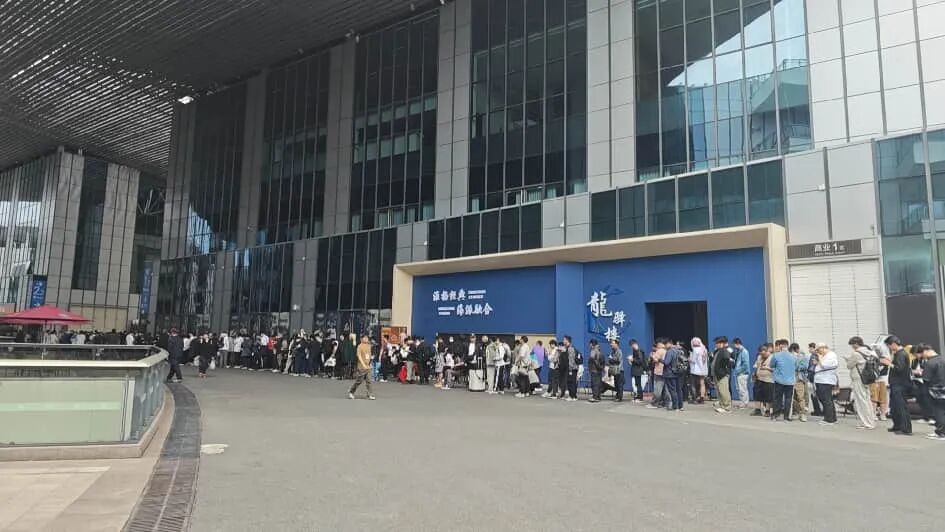
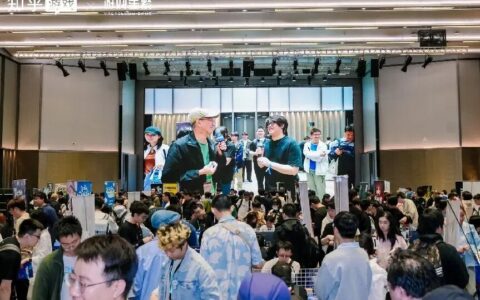
Unlike the lively atmosphere of most anime-themed offline events, the mood in this line was quite subdued. There weren’t many cosplayers in the crowd; most people were dressed in everyday casual wear, and from the outside, it looked no different from a typical weekend outing.
It was only when I caught a glimpse of *Girls' Frontline 2: Exile* autoplaying on a phone that their shared identity became apparent. There were players dragging suitcases—clearly having traveled from out of town—who stood quietly at the back of the line, scrolling through their phones.
Such scenarios have become the norm in *Girls' Frontline* offline events; last year’s *Girls' Frontline* concert, *Human Forms and the Melody of Time*, was a prime example.
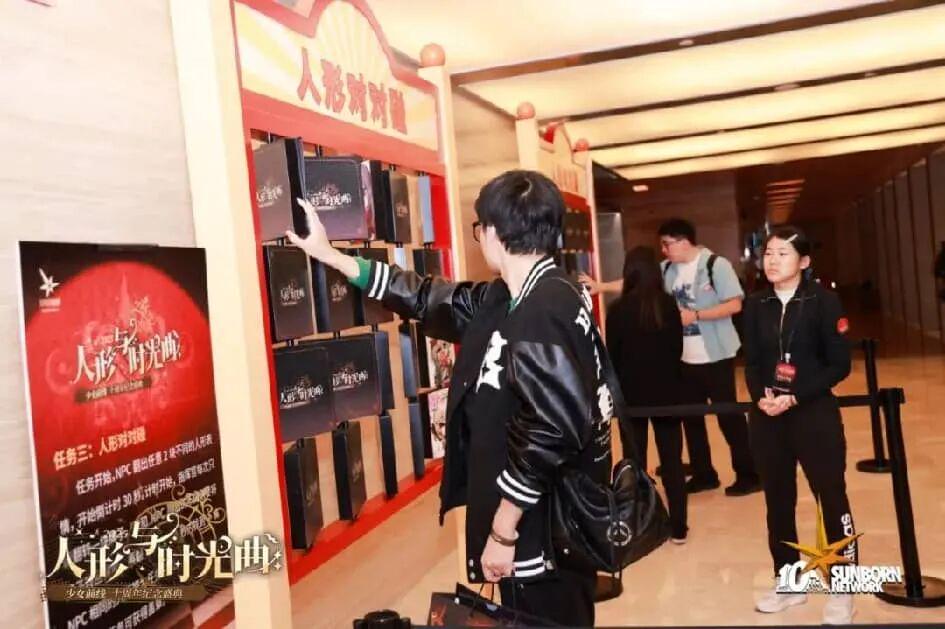
It was then that I realized that, over the years, the player base of "Scatter Blast" had matured; most of the commanders who joined in 2016 are now professionals who have been working for several years.
Taking time off work, booking tickets, and reserving a hotel—making all the necessary arrangements for an event speaks volumes about the depth of emotion that has built up over time.
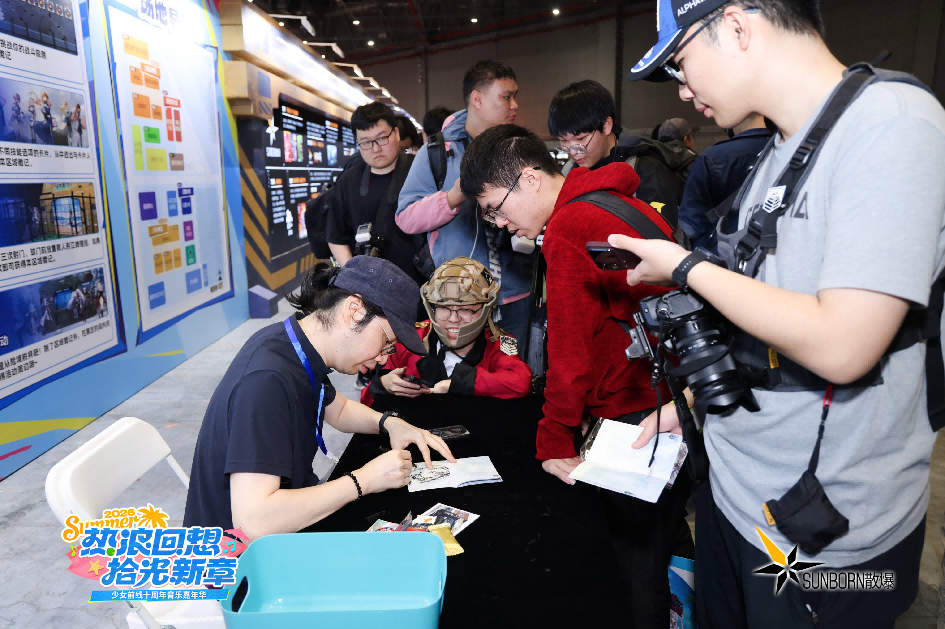
Upon entering, the venue was evenly divided into four exhibition areas: *Girls' Frontline*, *Girls' Frontline: Cloud Atlas*, *Girls' Frontline 2: Exile*, and *Reverse Collapse: Operation Bakery*. From the original title to the latest release, and from tactical board games to turn-based strategy, all of Scatter Blast’s released titles were on display.
With a decade of growth under its belt, the "Onmyoji" IP has amassed enough content to fully support a medium-to-large-scale offline event.
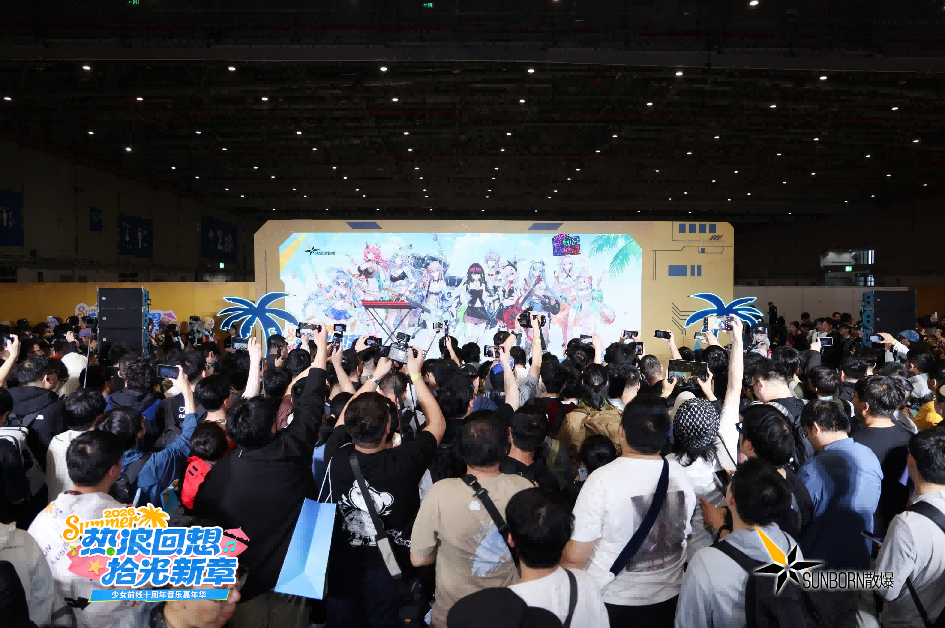
There are no massive LED screens or deafening speakers inside the venue; instead, it’s more like a low-saturation recreation of key game scenes using physical sets.
I noticed a few people standing in front of a set for quite a while, their expressions impassive; in the end, they simply raised their phones, snapped a quick photo, and walked away. That silent acknowledgment is probably something only fellow commanders can understand.
The route design for the stamp collection quest helps spread out the crowd evenly. While waiting in line at the stamp stations, players standing next to each other occasionally strike up a conversation because they’re wearing the same character’s pendant on their bags. They chat briefly about when they first got into the game and their favorite storylines, then go their separate ways after getting their stamps.
Collecting stamps and collecting stamps—countless fleeting encounters, light and natural.
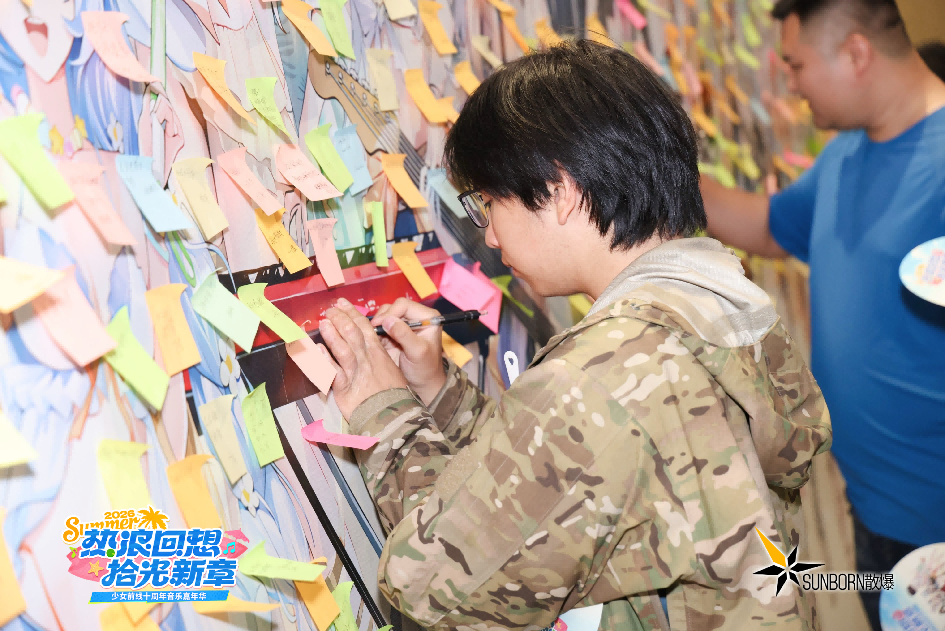
The artist interview lineup features K-Box, Yam, Ling, Hamster, RFF, Anmi, Ddal, Four Knights, and Dice. These names represent the visual origins of nearly every major character from the past decade of the "Shoujo Senki" IP, and the depth of this lineup directly reflects the vibrant creator ecosystem that has developed around this long-running franchise.
The atmosphere during the Q&A session was unexpectedly “academic”; most of the players’ questions focused on design logic and the thought process behind creative decisions, and the artist’s responses were candid and detailed, making the whole event feel more like an industry-internal creative workshop.
Outside the venue, the parking lot at P5 has effectively become an unofficial extension of the carnival.
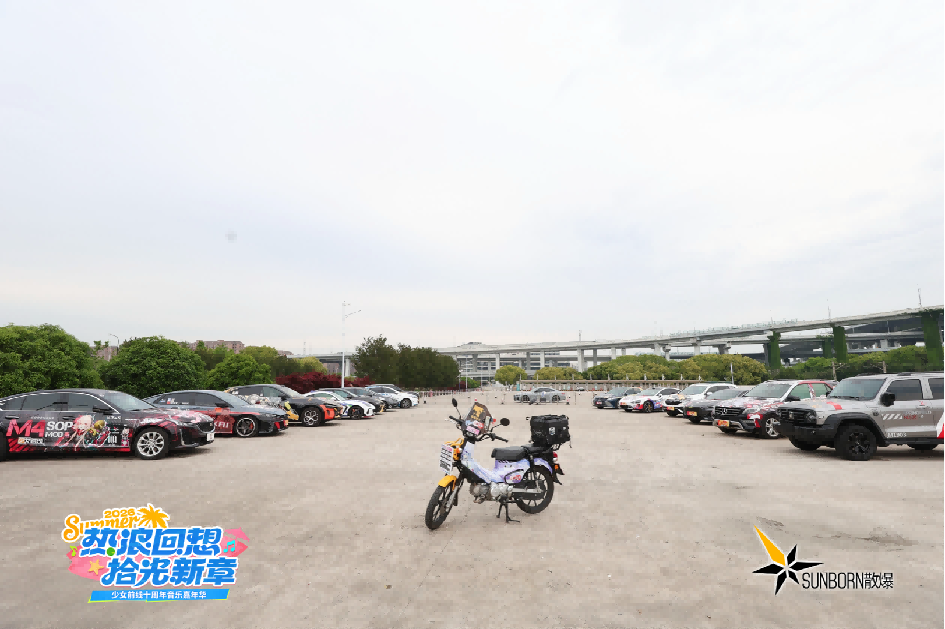
Further away from the venue, Shanghai Bus Routes 15 and 20 have been transformed into "Young Pioneers"-themed city "pain cars" since April 23, traveling along key routes in the city center.
With one of the four leaves of the Shanghai National Exhibition and Convention Center’s “Clover” design at its center, on May 2, the city, along with the early summer rain, was etched into the memories of the youth.
02
Symphony, and Two Gunshots
At 6:30 p.m., the lights inside the EH Hong Hall gradually went out.
Amid cheers from the commanders in the audience, the Shanghai Symphony Orchestra once again performed "For What We Fight."
This marks the second time Sanbao has collaborated with the Shanghai Symphony Orchestra to present a large-scale concert. The orchestra’s participation lends the performance professional credibility, while the addition of the choir has greatly expanded the expressive possibilities of the arrangements. As a result, the iconic tracks from the past decade of *Idolmaster* have gained new depth through the symphonic arrangement.
As the majestic harmonies rose from the depths of the stage, the breathing of the thousands of people in the Hong Hall seemed to slow down in unison for a moment; perhaps only those who had experienced the story behind this music could fully grasp the depth of that silence.
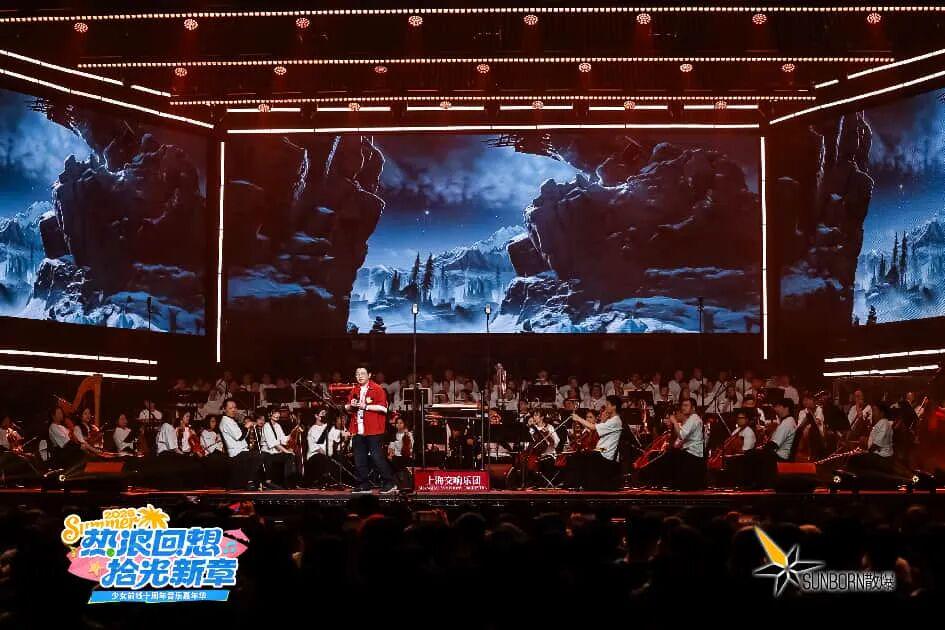
Midway through the concert, Yu Zhong took the stage.
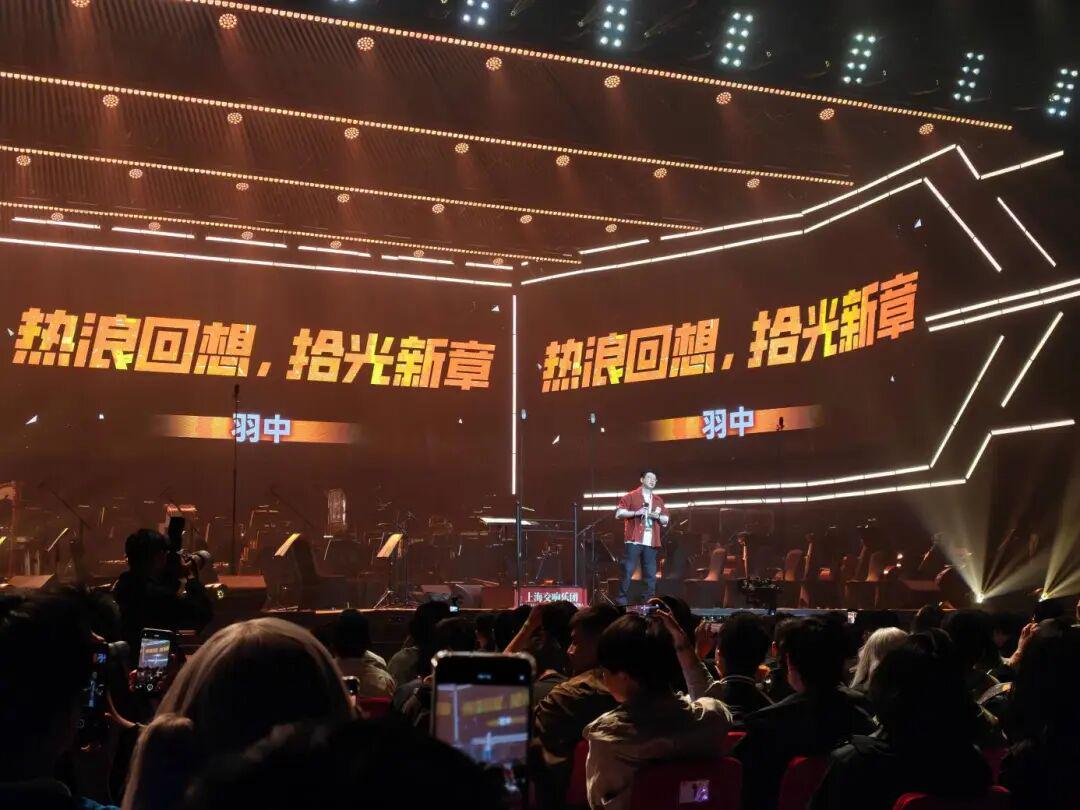
As a producer who has been active in the gaming community for a decade, his demeanor on stage wasn’t as measured and formal as that of most game company executives. To be honest, rather than coming across as a star producer or a CEO, he seemed more like the leader of a club showcasing his team’s latest project.
In a way, the person standing on stage at that moment was the real Yu Zhong—a far cry from the CEO who gave those explosive interviews to gaming media.
He began by recounting the journey of the *Shaoqian* IP, starting with fan creations from twenty years ago. He talked about founding a subtitle group in 2007 to work on *Bakery Girl*, discussed the “Huangpu River Sell-Out Method,” and recalled burning their first visual novel onto CDs and selling out all 200 copies: “‘I never realized that creating something could be so passionate and so much fun.’” He continued all the way to 2015, when he founded the company and spent a year and a half developing the game—a period he described as having been sustained “by creative passion and sheer drive.”
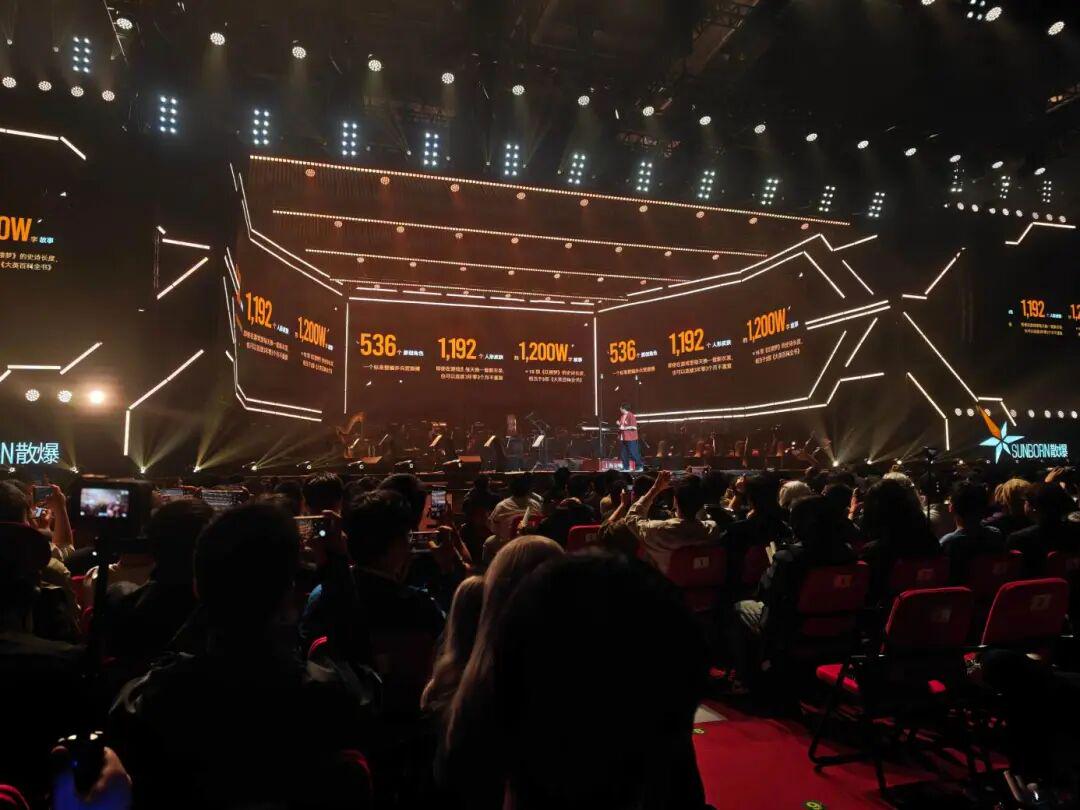
On stage, he mentioned that the "Onmyoji" IP now features 536 original characters and over 12 million words of story content, with more than 35 million Commanders having experienced both laughter and tears in this world built on the "Scatter-Explode" system.
He mentioned these figures in a matter-of-fact tone, but anyone with even a basic understanding of the industry knows what they imply: the sheer volume of content produced over the past decade is what truly constitutes the deepest moat for the "Shouqian" IP.
And then came the moment everyone had been waiting for.
He announced, “Over the next decade, we will draw on the world-building of our IP to bring you more epic stories and more engaging and exciting gaming experiences.”
As soon as Yu Zhong finished speaking, a new image appeared on the big screen, with two major IP sequels taking center stage: *Reverse Collapse* (working title) and *Girls' Frontline: Blue Butterfly Pact*, both of which have already been released on streaming platforms.
I’d like to start with *Reverse Collapse*.
At the event, Yuzhong positioned it as the "next-generation global flagship." Based on the gameplay trailer shown there, the game features a realistic anime-style art style powered by the Unreal Engine, with gameplay clearly centered on TPS and PVE.
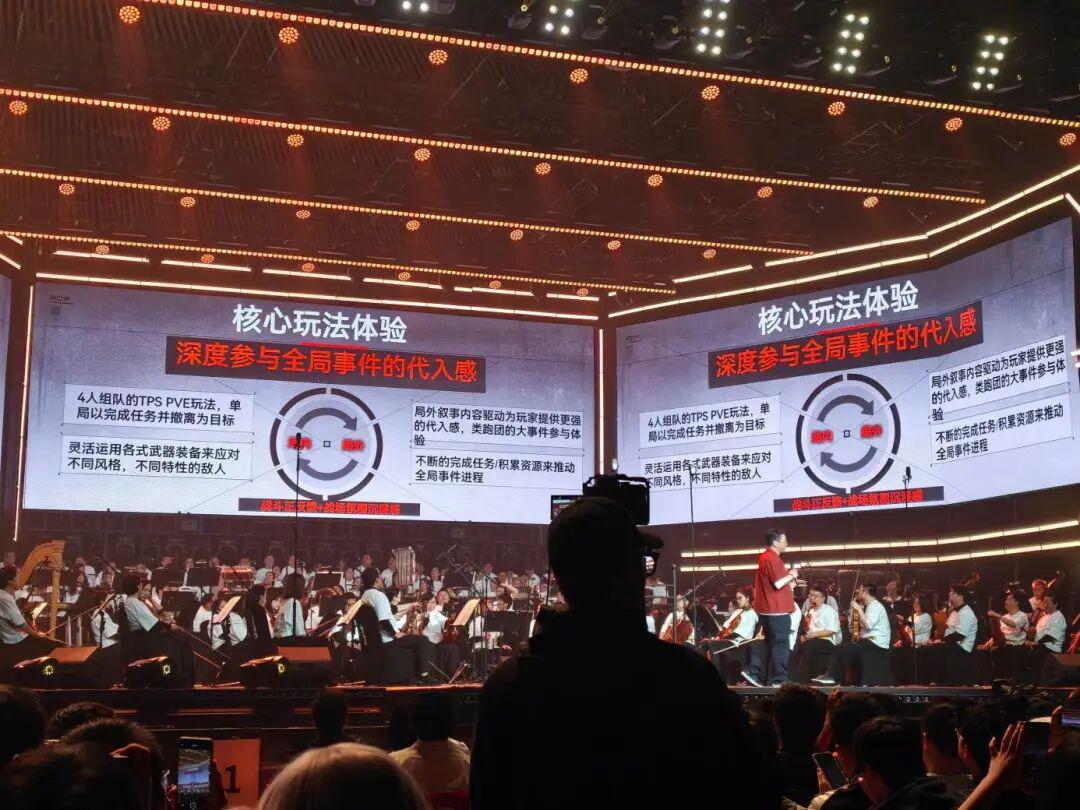
The game is currently in the early demo phase. The game world builds upon the "Reverse Collapse" system from *Scatter Blast*, with a core loop centered on a four-player team completing a single-match objective and then evacuating, while a narrative experience akin to a tabletop RPG—featuring major events outside of individual matches—drives the overall story forward.
In terms of this PV alone, *Reverse Collapse* showcases a distinctly next-gen aesthetic, featuring excellent local lighting and shadow contrast within the game world, where dynamic light sources such as gunfire and explosions cast real-time lighting effects on characters. The environment includes a day-night weather system, and explosion shockwaves can destroy terrain while triggering physical feedback such as blood splatter on characters and torn clothing.
If I were to break down this product from an industry analysis perspective, there are actually a few key points worth mentioning.
First, regarding genre selection, there are virtually no established products in the current market that directly compete with a realistic anime-style TPS PVE game. Existing efforts in the anime-style shooter genre have largely focused on fast-paced action shooters or abstract bullet-hell shooters, while there is a clear gap in the market for products that center on cooperative PVE shooting while maintaining an anime aesthetic.
Second is the technical approach. Sanbao’s decision to develop using Unreal Engine means that its production standards for art assets will align with those of mainstream global AAA pipelines. However, this will result in a significant increase in development costs and team size. According to Yuzhong’s plans, *Reverse Collapse* will undergo a test this year, which indicates that the game has moved beyond the white-box phase. This proves that Sanbao’s talent pool and technical capabilities are indeed far more extensive than the outside world imagines.
"Girls' Frontline: Blue Butterfly Pact," on the other hand, feels more like an addition to the product lineup, giving off the vibe of a sub-flagship title.
Yuzhong mentioned that the game’s key features are shooting, co-op play, and a sense of exhilaration.
While it is also a third-person shooter, the game’s aesthetic, as showcased in the trailer, stands in stark contrast to that of *Reverse Collapse*.
The core concept of *Blue Butterfly Pact* can be summed up in one word: exhilaration. According to Yu Zhong, the game emphasizes intense gameplay feedback, with each character combining shooting, dodging, reloading, and positioning—all enhanced by an over-the-shoulder perspective that delivers a strong sense of immersion. It supports teams of up to four players, with clearly defined roles such as fire support, tanking, and flanking damage. The game is purely PVE-focused, emphasizing teamwork and real-time strategy to conquer dungeons.
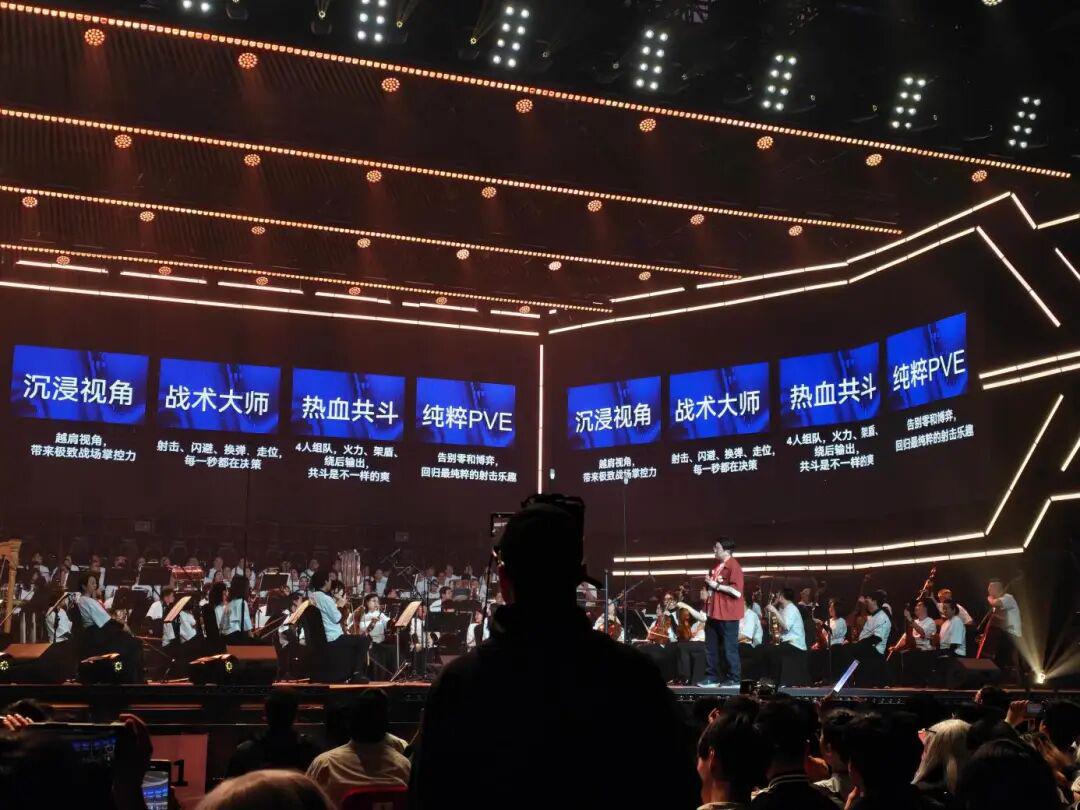
Clearly, with *Girls' Frontline* confined to the Steam platform and *Exile* currently serving as their sole product, Sanbao aims to further build its own product portfolio: *Reverse Collapse* is positioned as an immersive narrative-driven PVE shooter—emphasizing atmosphere, immersion in the game world, and tactical depth through cooperative play;"Blue Butterfly Pact," on the other hand, targets action-packed co-op shooters—emphasizing tactile feedback, the immediate thrill of teamwork, and the intensity of each individual match.
The two products occupy complementary positions within the anime-style shooter genre, catering to two distinct core user groups among PVE shooter players.
A multi-pronged approach within the same sector will likely be the defining trend for Sanbao over the next decade.
From the perspective of the IP ecosystem, *Blue Butterfly Pact* continues the *Girls' Frontline* IP, while *Reverse Collapse* builds upon the world-building of *Reverse Collapse: Operation Bakery*.
These two products are anchored in Sanbao’s two major IP pillars, demonstrating that Sanbao is leveraging its product portfolio to simultaneously expand the content libraries and user bases of both IPs.
That little tree from ten years ago—as Ru Yuzhong mentioned in his speech—is growing into a large IP tree with multiple main branches.
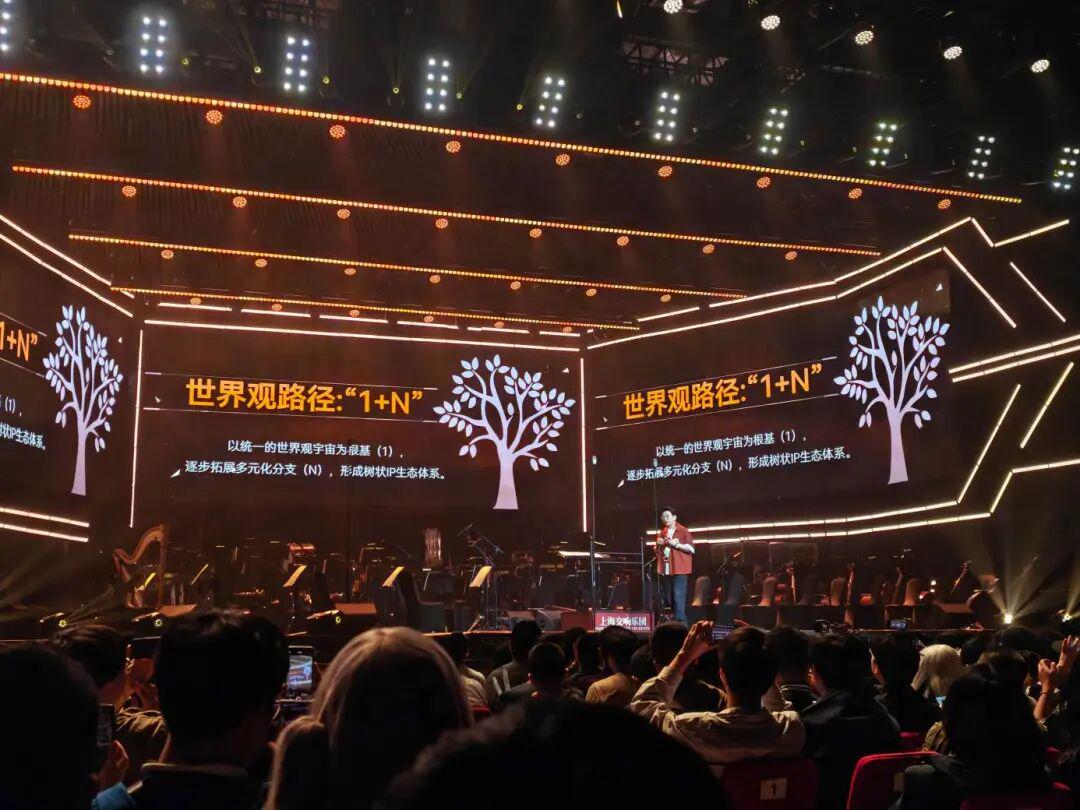
In addition, the future plans for *Girls' Frontline 2: Exile* were also announced at the event: a major summer update is currently in development, a brand-new real-time PvP mode set in the Dark Zone is coming soon, a major collaboration has been teased, and more IP-based Dolls will be joining the Emmerich.
For a product that is currently on the rise, this level of communication is sufficient to manage the long-term expectations of existing users, and it also demonstrates that, while Sanbao is moving forward with new projects, it has not diverted resources away from its existing products.
In closing: The story is far from over.
As the concert came to a close, night had fallen over Shanghai. The evening breeze outside the Hong Kong Hall carried the mild warmth of early May, cool and pleasant. The crowd moved slowly toward the subway station, with groups of conductors in twos and threes excitedly whispering about what they had just seen and heard, their voices blending into the city’s ambient hum.
Ten years—in the Chinese gaming industry, that span of time spans at least two full product generations. I’ve often wondered what it is that has kept so many players’ passion for the *Onmyoji* IP burning brightly, even after a decade.
Today, thanks to Yuzhong and this carnival, the answer has become even clearer: *Idolmaster Cinderella Girls*’ content production and ongoing cross-media expansion have allowed it to maintain a steady, low-key presence in players’ daily lives—a presence that perfectly aligns with the need for certainty felt by countless *Idolmaster Cinderella Girls* players as they navigate the transition from college to the workplace.
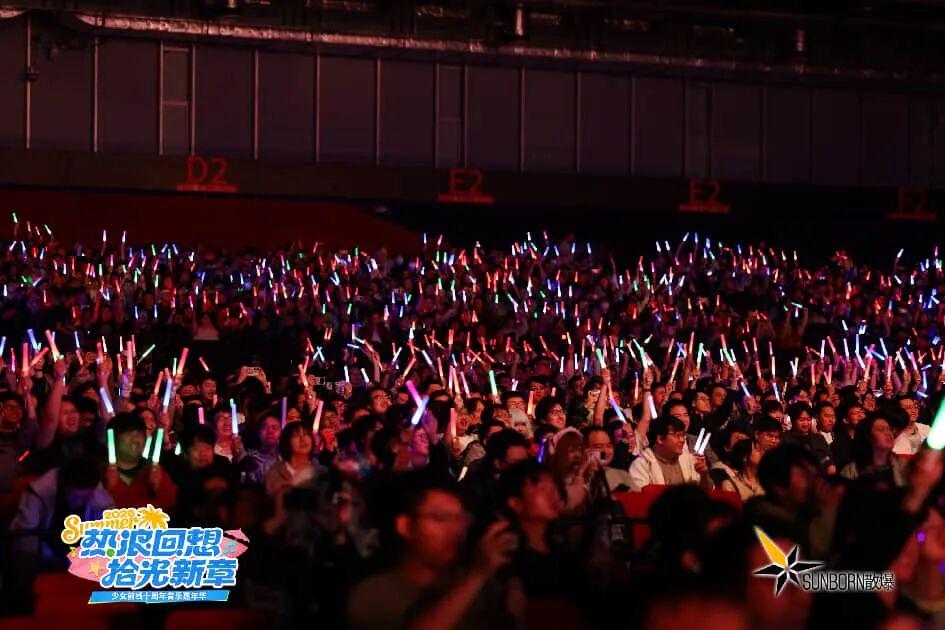
For Sanbao, the achievements accumulated over the past decade are now being transformed into strategic assets for the next phase. The global expertise gained through long-term operations, a user base of tens of millions, mature cross-media operational capabilities, and technical expertise in the shooter genre—these elements collectively provide the foundation for Sanbao’s transition into a global developer and publisher of shooter games.
The next decade for *Shao Qian* has already begun, and this marks yet another new beginning.
原创文章,作者:游茶妹儿,禁止转载:https://youxichaguan.com/en/archives/195737