This is the story of a dreamer who is deeply committed to the ideals of martial arts fiction and creative writing.
On April 3, a single-player martial arts backpack game titled *Backpack Adventures* launched on Steam.This previously unknown title attracted over a thousand downloads on its first day of release; in less than a month, sales surpassed 20,000 copies, with an 81% positive rating—not only earning the platform’s “Overwhelmingly Positive” status, but also being hailed by gaming enthusiasts as “a title that fills the void for wuxia games in the backpack genre.”
This highly anticipated innovation is the brainchild of He Pipi and his three longtime partners. What astonished the industry even more was that this team of four completed development in just eight months, working with limited startup funding.
Given that game development today often costs millions of yuan and takes years to complete, this case is truly rare in the history of China’s gaming industry. Behind it all, in addition to the team’s perseverance, lies He Pipi’s dream, which has never faded over the years.
Ever since his school days, He Pipi has been obsessed with wuxia-themed games. He often spent his free time devising the rules and storylines for a wuxia world, dreaming of creating his own wuxia game.After entering the gaming industry, the projects he worked on—whether as a mobile game designer or a PC game developer—have always been closely tied to the martial arts genre. Whenever he interacted with mentors and colleagues, he would habitually jot down promising ideas, believing they would serve as valuable experience for future development.
When their journey to realize their dream officially began, they had no large R&D team, no massive marketing campaign, and not even a proper office—just a handful of people crammed into a tiny workspace, refining their game over and over again. They infused their passion and understanding of wuxia into the game’s inventory system, ultimately transforming the “wuxia blueprint” in their minds into a vibrant martial arts world on players’ screens.
Undeterred by countless mountains, flowers bloom in secluded valleys. This represents not only the determination of a game developer who firmly believes that the wuxia genre can capture the market and is willing to devote everything to it, but also the romance of a dreamer who, through repeated trial and error and exploration, has carved out a niche for themselves in the industry.
01
Let's go big!
The year 2025 holds special significance for 39-year-old He Pipi.
In August of that year, he left Hangzhou Dianhun Network Technology, where he had worked for ten years, and teamed up with three colleagues who had also left the company to start a studio, intending to “make a big splash” in the days ahead.
Leaving a unique mark on the long history of game development is a goal shared by nearly every professional in the industry. He Pipi is no exception; this dream has been deeply rooted in his heart since he first entered the field. He once envisioned that if he could one day break free from the constraints of standard development processes, he would create a Chinese indie game that fully reflected his own vision—one that players would be willing to immerse themselves in.
Now, that opportunity has finally arrived.
During the month following his resignation, He Pipi set himself a "regimen"—spending each day in a quiet corner of a café, immersing himself in three or four different games.
This wasn’t merely “playing”; it was more like a “teardown.” While analyzing the design characteristics of different game genres, He Pipi meticulously noted down the innovative gameplay mechanics that caught his eye. His notebook was filled with notes on camera work in specific scenes and the ingenuity behind certain level designs—these details not only formed a repository of research material but also became a potential source of inspiration for his own creations.
Over the course of thirty days, He Pipi gradually clarified the styles and directions his studio could explore in the future. He found himself having little interest in the much-hyped “AAA titles,” but was instead captivated by *Backpack Brawl*, an indie game created by a German couple that featured a rough art style and was only a few hundred megabytes in size.
While playing, he’ll be thrilled by an unexpected combination of gear, and he’ll be frustrated when a single strategic mistake ruins the whole game. “Many games lose their appeal after a while, but this backpack game is the only one that completely immerses me—it’s not only the game I’ve played the most and spent the most time on, but even when I’m lying in bed at night, scenes from the game keep flashing through my mind.”
In He Pipi’s view, these games—which last between 20 and 40 minutes per match—not only allow players to enjoy them easily during short breaks but also strike an exceptionally clever balance between their inherent strategic depth and the interplay of spatial freedom and constraints.Although the game imposes numerous rules and restrictions that prevent players from building content without constraints, it still allows them to create nearly infinite strategic possibilities within a limited framework through the combination of inventory slots, skill pairings, and the stacking of character traits.
This "dancing in chains" concept perfectly aligns with He Pipi’s understanding of the essence of games—true enjoyment does not stem from unbridled freedom, but from carving out one’s own unique path within the boundaries of the rules.
To get the other three team members on board with this idea, He Pipi would strongly recommend it in the group chat every day, declaring with absolute confidence, “I’ll bet a month’s worth of coffee on it—you’re definitely going to love it.”
“To be honest, I really couldn’t get into it at first,” admitted Mo Yu, the team’s game designer, who had never played this type of game before. When he first started playing, he wanted to quit within 10 minutes and even wondered, “Has He Pippi lost his mind? Why would he target this market?”
But the appeal of the game spread like invisible ripples throughout the team. As he continued to explore its mechanics and gameplay, Mo Yu gradually became immersed in it. The novelty of this game—which blended core elements such as roguelike procedurally generated levels, auto-battler-style combat layouts, and intense real-time battles—gave him a sense of enjoyment that no other genre could match.After some time, he was surprised to discover that he had, without even realizing it, played for over 700 hours.
At the final meeting before the project was officially launched, seeing He Pipi’s smug, raised-eyebrow expression, the other three burst out laughing: “It’s settled! The team’s first project will be a backpack-organizing game!”
02
Creating a Unique "Backpack"
Before developing the game, there is another key issue that needs to be addressed.
The four-member team had played every similar game on the market and discovered that while there was no shortage of high-quality backpacking games, the player base remained small. “Why didn’t players stick with them?” and “Why weren’t players interested in games that clearly sold well?” These two questions became the biggest concerns weighing on the team’s minds.
After looking into it, they found that, in addition to having a high barrier to entry, these games mostly focused on Western fantasy themes that were unlikely to appeal to domestic players, making them naturally difficult for the market to accept.
Lowering the barrier to entry isn’t difficult, but how can the game’s characters and style attract players?
Having been fascinated by the world of wuxia since childhood and having read the works of masters like Jin Yong and Gu Long dozens of times, He Pipi turned to the wuxia genre—a familiar symbol deeply ingrained in the cultural DNA of Chinese gamers. It not only evokes a sense of nostalgia but also fills a gap in the domestic market for backpacking-style games.
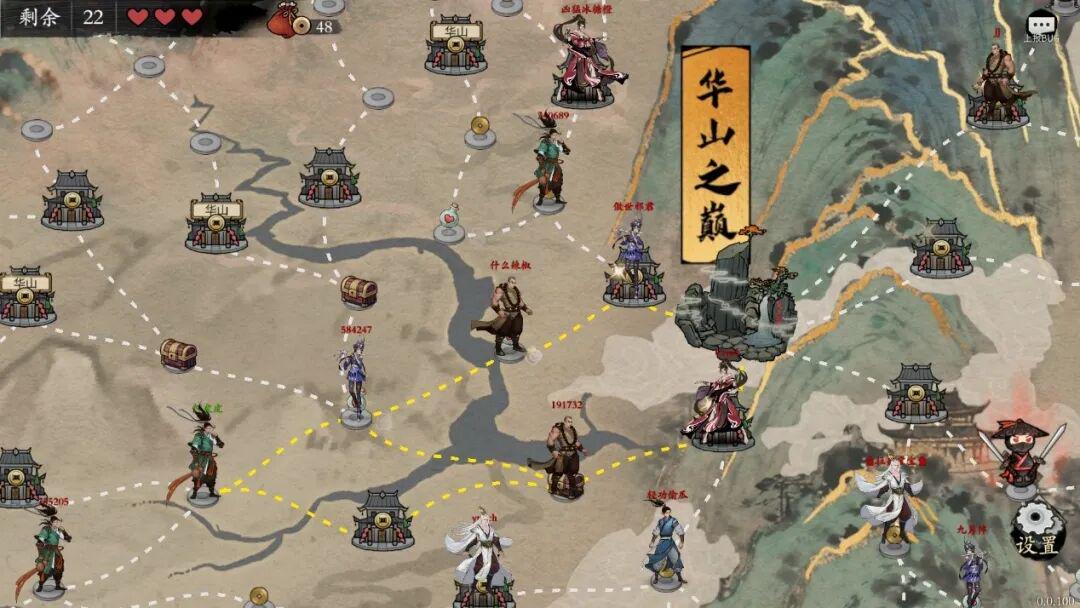
Imagine stepping into the martial arts world as an unknown, unheralded young hero, strategically building your character by combining martial arts styles and collecting legendary weapons, eventually growing into a hero of extraordinary ability; or, by mastering specific styles and acquiring the world’s most legendary martial arts, ultimately rising above 100 fellow martial artists to reach the summit of Mount Hua.Which martial arts fan could resist the exhilarating thrill of this world where justice and vengeance reign?
They got right to work. Two months later, the demo version of *Backpacking Through the World* was officially released and quickly attracted nearly 2,000 downloads.
But soon, He Pipi realized there was a problem. In the early stages, the team had rushed to meet the launch deadline by simply replacing the equipment in players’ inventory slots with wuxia-themed items like swords, manuals, and elixirs, neglecting to refine and polish the core of the game’s wuxia worldview.As a result, although players were controlling characters and wielding items with martial arts-themed names, they were unable to experience the immersive feel of martial arts culture or the core thrill of combat, character progression, and story interactions. In fact, the game differed from similar titles only in appearance, with no significant differences in its core gameplay.
This means that if the game’s core positioning isn’t clearly defined, forcing a full release will inevitably end in failure.
After several rounds of discussion, the team decided to scrap the previous unreasonable design and overhaul the game’s core mechanics:Although the core gameplay of backpack-building games revolves around the key interaction of “building,” in order to differentiate itself from similar titles that overly prioritize numerical balance, He Pipi decided to take a bold, unconventional approach. He shifted the overall experience of *Backpack Adventures* toward a more intense and exhilarating “thrill,” allowing players to enjoy a more satisfying combat and progression experience within the game.
To enhance player immersion, the development team specifically designed 10 well-known martial arts schools, such as "Huashan," "Wudu,” and “Shaolin”—and incorporated each school’s signature martial arts moves. Players can unleash the exquisitely refined “Sword-Breaking Form” from the “Dugu Nine Swords” or unleash the devastating “Rising Dragon’s Regret” from the “Eighteen Dragon-Subduing Palms” when facing enemies;Similarly, when facing opponents, players can use classic moves like the “Prajna Palm” and “Single Yang Finger” to block and counterattack.
The new version was quickly brought to life thanks to the team’s meticulous attention to detail. Upon its relaunch, the game not only allowed players to fully immerse themselves in the world of martial arts and enjoy thrilling combat, but also established a unique identity and distinct competitive edge that sets it apart from other backpack or action games in the same genre.
Soon after experiencing the updated game, players began to shower it with praise, with many wuxia enthusiasts declaring, “Finally, a backpack game that truly understands wuxia.” In no time, more and more players were drawn to this Chinese-developed backpack game brimming with the spirit of the martial arts world, causing the popularity of *Backpack Adventures* to rise steadily and giving the small team a glimpse of the vast potential in this niche market.
03
Reflection and Trade-offs
As the game development progressed, He Pipi’s “ambitions” grew ever greater. No longer content with simply creating a fun martial arts backpack game, he aspired to craft a work with greater depth.
“Encourage players to think and make trade-offs in the game”—this quote comes from Sid Meier, the creator of the *Civilization* series, and is a design philosophy that He Pipi particularly agrees with.
In the world of *Backpack Adventures*, this process of "thinking and making trade-offs" is evident in every aspect of the game—from planning routes on the world map and sorting through backpack items to purchasing and selecting equipment.
When designing the game, He Pipi and her team assigned unique attributes to every item; no single item is universally useful. Every choice a player makes comes with clear benefits and trade-offs.
For example, carrying high-damage heavy weapons takes up slots that could otherwise be used for health potions or support throwing weapons; choosing armor that boosts stance defense against burst damage means accepting the trade-off of weaker defense against combo attacks. Even when you obtain a legendary item with excellent stats, you still need to assess whether it fits your current build’s combat strategy and weigh the pros and cons of swapping out your current gear.
Another example is when a game offers multiple paths to choose from, allowing players to opt for either a “high-risk, high-reward” or a “steady progression” approach based on their preferences. Each path will feature different enemies, resources, and story developments depending on the player’s choices. If you choose the low-difficulty path for a comfortable progression, you’ll only receive limited equipment rewards and miss out on hidden adventures in the game world; if you choose the hardcore path to face powerful enemies head-on, you’ll gain stronger growth resources, but you may have to restart due to insufficient combat power.
This design moves the game away from repetitive gameplay that relies solely on overwhelming numerical superiority. Every choice reflects the player’s understanding of their own playstyle, making each journey through the martial arts world a unique experience—truly embodying the core design philosophy that He Pipi originally intended to convey to players.
When talking with players, He Pipi candidly expressed his hope that through the concept of “trade-offs,” they would realize that many moments in life are like packing a backpack: if you want to fit more inside, you must learn to let go of unnecessary burdens. This life lesson distilled from the game struck a chord with many players. It also adds a touch of real-life warmth to this small indie game, complementing the exhilarating thrill of adventuring in the martial arts world.
The need to make trade-offs isn’t limited to players’ choices; it’s also a challenge faced by the development team.
Mo Yu Ge was deeply impressed by how the game’s demo version attracted a large number of players who love backpacking games. The community was even regarded by the team as a “second development team”—not only did they enthusiastically discuss game details in the group chat and provide the team with bug reports and optimization suggestions, but they also eagerly helped other new players get familiar with the game within the community.
On one occasion, the team planned to launch a new faction and designed an extremely complex set of mechanics for it. They had originally believed that the intricate design would allow players to appreciate the depth of the content. However, after Mo Yu spoke with several veteran players, he realized that the complexity and learning curve of these mechanics far outweighed the enjoyment they provided, making them seem rather pointless and lacking in value.
After receiving the feedback, the team found itself in a dilemma: if they made changes, all their previous work might go to waste; if they didn’t, the game’s direction might veer further and further off course as development progressed.
After much deliberation, the team reluctantly decided to scrap this complex system, which had been refined over a long period. Instead, they simplified and refined it into a new design that better fits the overall pace of the game and is easier to grasp, ensuring that the new faction’s gameplay remains unique without placing an additional burden on players.
Trade-offs like this are actually quite common during the development process.To maintain a fast-paced gameplay rhythm, we omitted several storylines that would have lengthened the campaign; to preserve the purity of the backpack system, we removed side activities that might distract players. It is precisely through these repeated decisions to cut redundant content that *Backpack Adventure* has remained focused on its core design philosophy throughout development, never straying from its original direction, and ultimately delivering a more pure and seamless martial arts adventure experience to players.
“Making a game is like a player organizing their inventory: you want to add everything, but eventually you’ll exceed the capacity and end up crowding out the truly valuable content. Only by having the courage to let go of the unnecessary parts can you make enough room for the core gameplay and create content that players truly find enjoyable and engaging,” said He Pipi.
04
The Heart of Marketing
Since its launch on April 3, *Backpack Adventure* has quickly achieved impressive results: it has surpassed 20,000 downloads on Steam, with an approval rating of over 81%.
These days, He Pipi and Mo Yu Ge’s daily workload has become increasingly demanding. In addition to discussing future game updates with the team, they also have to juggle numerous other tasks, including marketing and public relations.
Unlike other games, which typically launch with a massive marketing blitz across social media channels, Backpack Studio chose a path that many outsiders found “hard to understand”—as early as the game demo release phase, He Pipi politely declined partnership offers from several third-party publishers and decided to handle marketing and distribution in-house.
There’s a sound rationale behind this decision. Rather than pouring their limited funds into the market, they’ve chosen to invest in game development. After all, what truly resonates with players is the quality of the game itself, and word-of-mouth is far more effective than forced marketing at retaining fans of *Backpack Adventure*—a strategy that also aligns with the studio’s consistent approach of quietly focusing on content creation.
For months, the two worked nonstop, often staying in the office until the early hours of the morning and relying on coffee and takeout for their three daily meals. But their efforts were not in vain: by being fully involved in the publishing process, He Pipi not only became familiar with Steam’s publishing procedures but also gained a wealth of experience and skills.Meanwhile, as a developer, Mo Yuge was able to engage more closely with content creators on social media platforms, player communities, and game QA teams, further bridging the gap between them and gaining the most direct feedback from the market.
Once, a player reported an unsolvable bug in the game via the official player group. Mo Yu immediately teamed up with He Pipi to run repeated tests over a dozen times, and they finally pinpointed the root cause of the problem.After pulling an all-nighter to fix the bug and releasing a patch immediately, the team also made a point of expressing their gratitude to the player who reported the issue. This experience further convinced the two that engaging with players up close not only allows them to identify genuine needs in real time but also lets players feel the studio’s sincerity. And this is precisely the human touch that’s hard to convey through outsourced publishing.
As its popularity grew, *Backpacking Across the World* began to reach a wider audience, and an increasing number of content creators reached out after playing the game, offering to collaborate for free or at a very low cost.
Before long, *Backpack Adventure* began appearing across various social media platforms.Unlike traditional game reviews, these content creators primarily produced walkthroughs from a player’s perspective—guiding new players to get up to speed quickly and gain a deep understanding of the game, while also offering genuinely valuable content that attracted more attention and downloads. These authentic gameplay videos and player reviews allowed more players to see the sincerity behind this small-scale indie game, and gradually helped the team build a following of their own in a highly competitive market.
As more and more players joined the game, the team not only felt more confident about the future but also began tackling new tasks: they were busy fixing bugs and rolling out updates based on player feedback, while simultaneously developing new game modes, factions, and items, with the aim of refining the game and expanding its player base.He Pipi plans to port *Backpack Adventure* to mobile platforms to bring the game to a wider audience. He has also begun conceptualizing the development direction for their next game—they still intend to focus on deck-building games and create another “small but beautiful” title centered around the backpack theme.
After all, for He Pipi and the team, “making their mark” has never been about achieving great fame or creating products that rake in huge profits. Rather, it’s about staying true to their original passion for games and creating content that players will love—and that alone makes the journey worthwhile.
原创文章,作者:游茶妹儿,禁止转载:https://youxichaguan.com/en/archives/195741