Although it has been a month since the Spring Festival holiday, a brand-new feature introduced during the holiday season for mini-games still leaves a lasting impression on Teahouse.
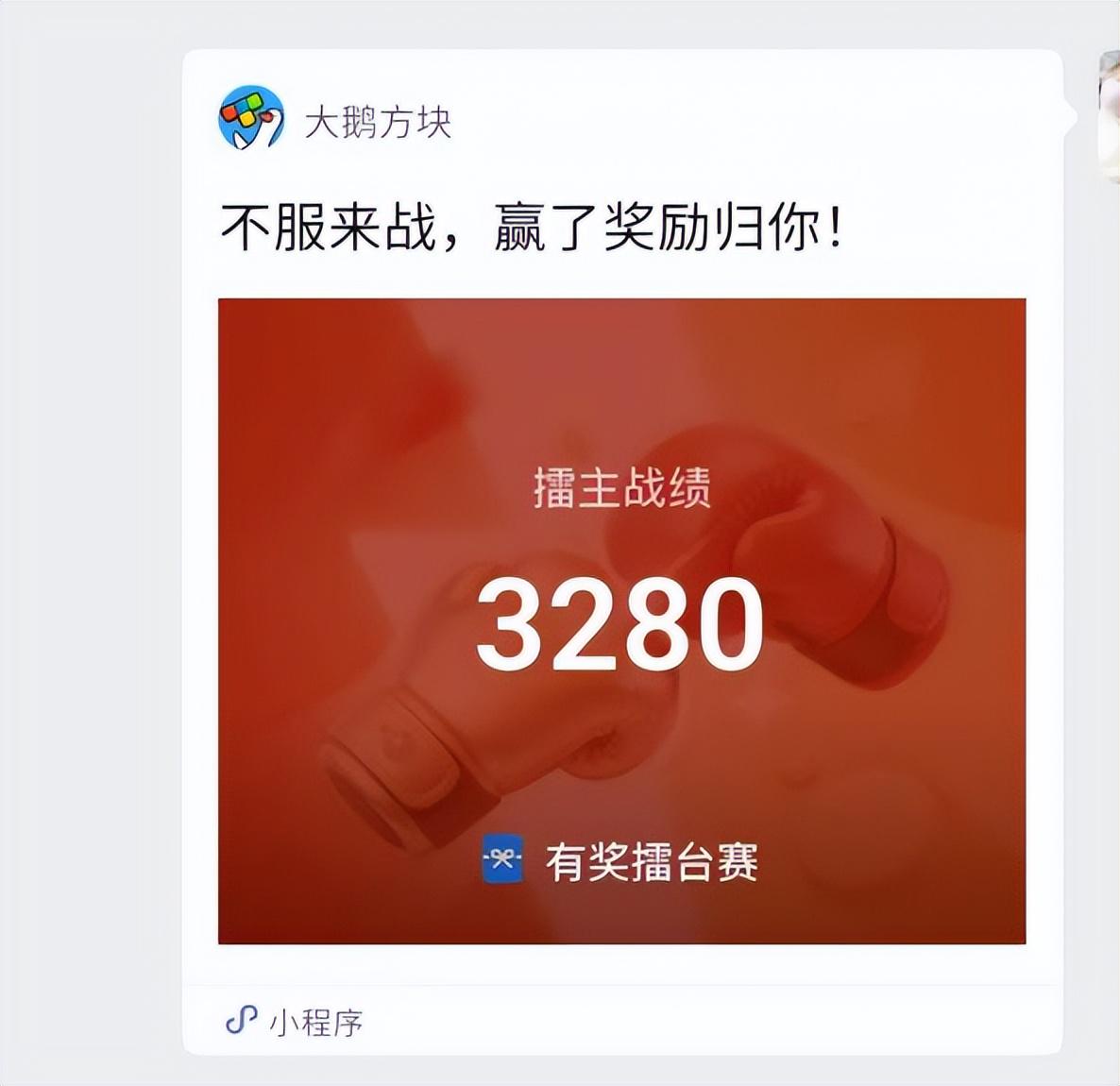
“You’ve been challenged by a friend—click to accept!” During this year’s Spring Festival, this provocative message flooded many people’s group chats and social media feeds.
Click to enter a description of the image (up to 30 characters)
Just click the link to start an exciting mini-game challenge: win the game, and you’ll instantly receive real rewards like Milk Snow City bubble tea vouchers; even if you lose, your competitive spirit will drive you to hit “Play Again,” passing the challenge on to your next friend. And so, the cycle of “win to claim rewards, lose but never give up” spreads rapidly through social circles, gaining momentum with every share.
Moreover, this excitement isn’t limited to any single game. Several top mini-games, including *Three Kingdoms Ice Age*, *Catch the Goose*, and *Snipe the Aliens*, all launched “social tournament” features during this year’s Spring Festival. By leveraging social multiplayer gameplay and incentive mechanisms, they’ve sparked a nationwide craze for mini-game showdowns.
In fact, this frenzy is no accident. As mini-games have gradually become a mainstream form of daily entertainment for the general public, they are no longer merely a way to pass the time, but have become an integral part of people’s social lives. During this year’s Spring Festival, they became an indispensable “social necessity” just like snatching red envelopes and sending New Year’s greetings videos.
What’s even more noteworthy is that behind this nationwide frenzy, more than 40 leading brands—including L’Oréal, Mixue, Tongcheng Travel, and Miniso—have entered the WeChat Mini Games ecosystem in unprecedented numbers, collectively creating a Spring Festival prize pool worth over 10 million yuan. So why are these brands collectively betting on this sector? Just how much energy can the convergence of social virality and commercial growth unleash?
01
Addressing "Traffic Anxiety" Through "Relationship-Based Trust"
In Tea House’s view, the core reason why so many brands are flocking to this space boils down to the fact that WeChat Mini Games have built a healthy ecosystem characterized by “genuine engagement” and “immediate conversions.”
The user base for WeChat Mini Games continues to grow, with monthly active users now exceeding 500 million and daily active users also reaching the 100-million mark. User engagement is also rising significantly: the number of users active for 10 or more days per month has increased by 27% year-over-year, and paying users spend an average of more than 50 hours per month playing games.
Furthermore, unlike other traffic platforms, the spread of WeChat Mini Games relies on WeChat’s social network of acquaintances. When users issue a challenge to their friends, they are not sending a hard-sell advertisement, but rather an interactive invitation. By leveraging the natural trust between acquaintances, both the efficiency of brand message dissemination and user acceptance are significantly enhanced.
From a marketing perspective, traditional e-commerce is primarily based on the "customer-to-product" model: users only open the app to search, compare prices, and place orders when they have a specific purchasing need. Under this model, brands can only passively wait for customers to come to them, and users' attention is easily diverted by a flood of competing products.
WeChat Mini-Games, on the other hand, have taken a different approach, establishing a new "product-to-consumer" model: brand benefits are transformed into in-game "loot," allowing users to naturally encounter brand messages while playing, thereby significantly shortening the conversion path. Moreover, in this process, players "earn" rewards through competitive gameplay. This "loot mentality" makes users value the offers more highly, leading to a significant increase in their willingness to use them.
Click to enter a description of the image (up to 30 characters)
Image source: WeChat Mini Games
The "authentic engagement" driven by social connections among acquaintances, combined with the "high conversion rates" enabled by the "products-to-people" approach, has led to a star-studded lineup of brands partnering with WeChat Mini Games this Spring Festival, covering virtually every category in the consumer market. From tea coupons worth just a few yuan to travel deals on airfare worth thousands, brands of all types and budgets can find a marketing niche that suits them within this ecosystem.
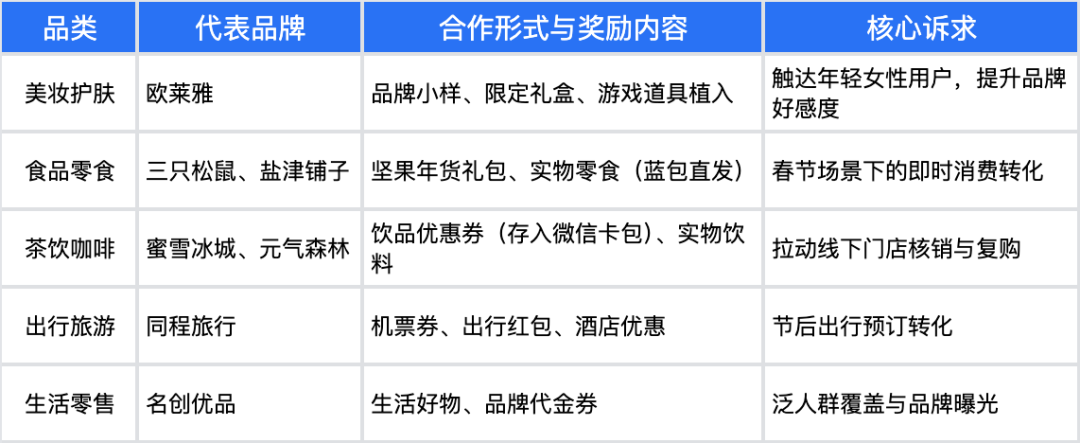
Click to enter a description of the image (up to 30 characters)
Participating Brands in the “Social Media Challenge”
This also means that WeChat Mini Games are now capable of supporting complex business needs; they are no longer an exclusive marketing platform for specific brands, but rather a “super scenario” capable of accommodating diverse business models.
02
Retain users with a seamless experience
In brand marketing, user experience is often the key factor that determines the final outcome.
The reason the “Social Tournament” generated such a huge buzz during this year’s Spring Festival is precisely because the platform created a seamless experience for gaming, sharing, and redeeming prizes. Moreover, through standardized feature design, it enabled developers to leverage these advantages at low cost, truly achieving a deep integration of competitive gaming and social sharing.
WeChat Mini Games' "Battle Arena" feature makes it easy to "launch a challenge with a single tap, instantly notify friends, and jump into a match in seconds." There is virtually no learning curve for users, from joining the game to actively sharing it.

Click to enter a description of the image (up to 30 characters)
Screenshots from the Arena Game
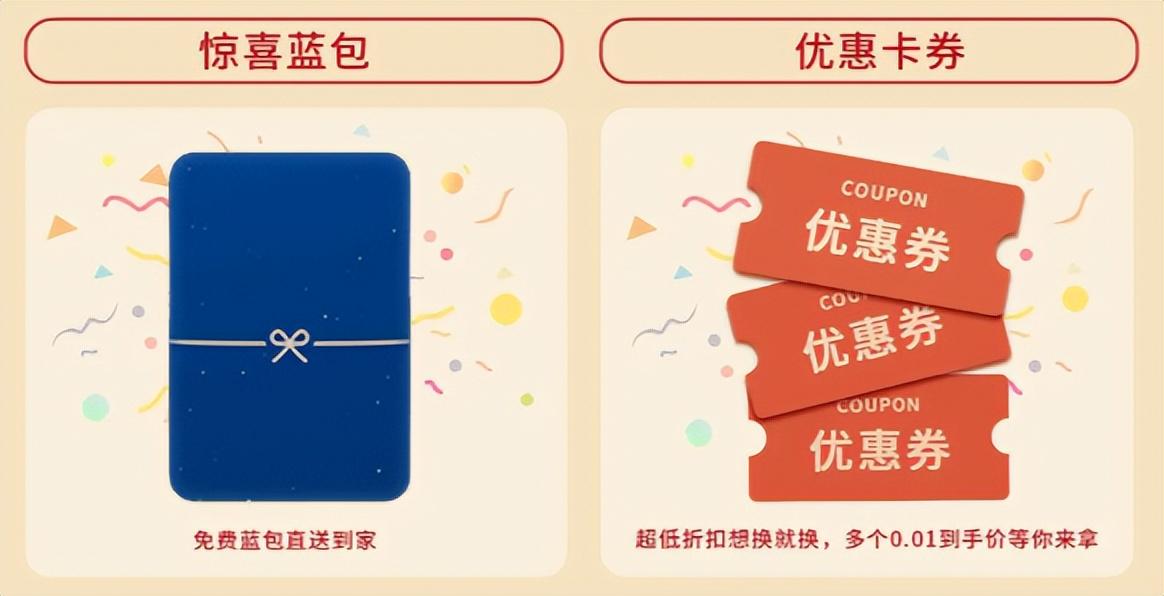
At the same time, the platform has established a complete closed-loop system connecting virtual rewards to actual purchases through "WeChat Mini Store Gift Blue Packets" and "WeChat Card Wallet."
The blue gift envelope is primarily designed for physical rewards: after players win prizes such as Three Squirrels nut gift packs or Miniso products, they don’t need to navigate to another page—they simply enter their shipping address within the game, and the brand will deliver the item directly to their doorstep. This “win and ship” experience makes the rewards feel more tangible and real.
The WeChat Wallet primarily handles coupon-based rewards: items such as Mixue Milk Tea coupons and Tongcheng Travel red packets that players win during PvP matches are automatically added to the user’s WeChat Wallet. The Wallet automatically reminds users to redeem their coupons, seamlessly bridging the gap between online customer acquisition and offline redemption.
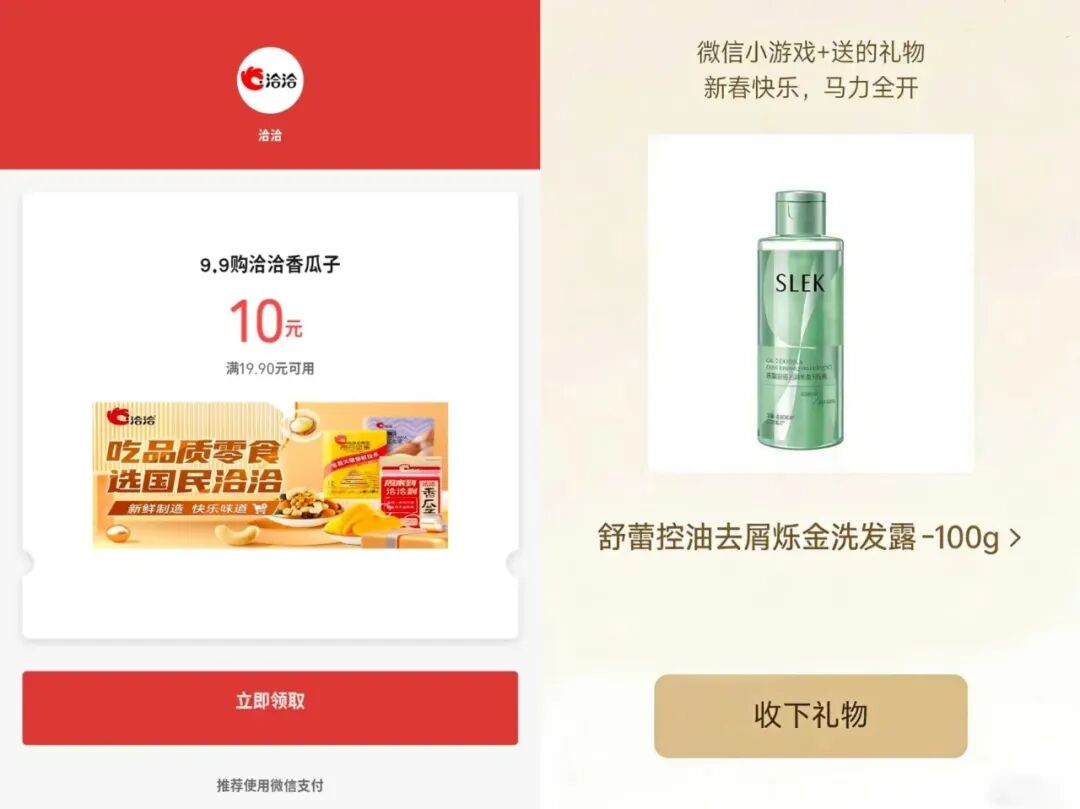
Click to enter a description of the image (up to 30 characters)
Image source: WeChat Mini Games
The most ingenious aspect of this system lies in its full utilization of WeChat’s ecosystem infrastructure. By integrating WeChat Stores and Mini Programs, users don’t need to download a new app, register a new account, or navigate to external links—all operations are completed in a single, seamless process within the familiar WeChat environment. This exceptionally smooth experience provides a fertile ground for brands to pursue commercial partnerships.
03
A "Business Flywheel" That Benefits All Three Parties
Teahouse firmly believes that a successful marketing campaign is not merely a one-sided celebration, but rather a means of achieving mutual value for all parties involved. The WeChat Mini-Game “Arena” has successfully created a “business flywheel” that benefits game developers, brands, and users alike.
For users, these cross-industry collaborations between brands and mini-games offer tangible benefits: there’s no need to complete tedious tasks or sit through lengthy ads—simply compete against friends to easily earn surprise rewards.
For brands, WeChat Mini Games serve as both a massive traffic hub with over 500 million monthly active users and a high-trust communication network embedded within a social circle of acquaintances. During campaigns, brand rewards are presented as “loot,” making it easier to encourage players to complete conversions and leaving a positive impression of the brand.
For developers, the various operational tools introduced by WeChat Mini Games also provide a low-cost, efficient path to growth. During the “Social Tournament” event, the platform offers a complete set of social engagement components. Developers need only design the head-to-head gameplay to launch their games quickly, without having to expend energy on determining winners, collecting information, or shipping prizes. This approach achieves a viral effect that far exceeds that of traditional sharing.
In this process, the rewards provided by brands serve as a form of "external subsidy," allowing developers to expand beyond traditional advertising-based user acquisition and attract users who are not interested in ads but are drawn to genuine benefits.
Under this model, developers have shifted from the old practice of “paying for traffic” to “building scenarios to create value,” resulting in a healthier and more sustainable business model.

Click to enter a description of the image (up to 30 characters)
"My Garden World" has topped the bestseller charts with its unique feature of rewarding players with real flowers for playing the game, and user engagement and discussion remain consistently high.
When developers, brands, and users can all benefit, a complete virtuous cycle is formed:
As more brands join the platform, they will add greater appeal, thereby boosting user engagement. Recognizing the value brands bring to user engagement, developers will be more willing to invest in advertising, partnerships, and game mechanics. Through this mutually reinforcing dynamic, users will enjoy more surprise gifts and greater gaming enjoyment.
04
WeChat Mini Games are demonstrating new possibilities for "social gaming and brand commerce"

Click to enter a description of the image (up to 30 characters)
Image source: *Big Goose Blocks*
The huge popularity of the “Battle Arena” clearly demonstrates that the “power” of WeChat Mini Games stems from a deep understanding of social dynamics—the desire to win, the appeal of discounts, and the thrill of surprises. These universal emotions are skillfully woven into the product design, driving continuous viral growth.
The "vision" behind WeChat Mini Games stems from its role as a "super connector"—linking developers with users, brands with consumers, and virtual experiences with real-world consumption. It creates value through these connections and deepens those connections through the value generated.
Today, as technology continues to advance (AIGC content generation, more immersive game genres, and richer social features), the commercial ecosystem matures (with more brands across various categories entering the market and more diverse forms of collaboration), and user habits become more established (shifting from “occasional play” to “daily play” and from “killing time” to “a social necessity”), the commercial potential of WeChat Mini Games is constantly expanding.

Click to enter a description of the image (up to 30 characters)
Mini-game Collaboration
Teahouse also looks forward to seeing more brands, developers, and users join in the future to help build WeChat Mini Games into a more efficient, healthier, and more vibrant business ecosystem.
原创文章,作者:游茶妹儿,禁止转载:https://youxichaguan.com/en/archives/195672