Over the past two years, a trend has become increasingly apparent: traditional Chinese culture is being incorporated into video games at an unprecedented rate.
*Black Myth: Wukong*, based on *Journey to the West*, has sparked a boom in domestic AAA games;GaaS games need no further introduction; *Digital Jingdezhen: Little Craftsman of the Porcelain Capital*, previously announced by Tencent at its own game launch event, exemplifies how, in the age of AI, developers are leveraging new technologies to explore the organic integration of traditional culture and gaming in more multidimensional ways.
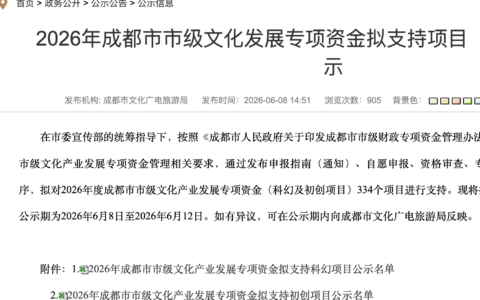
Numerous research reports published by the China Game Industry Research Institute and other organizations have, for several consecutive years, identified the “integration of games and traditional culture” as a key dimension for observing industry development. In practice, local governments in many regions are increasingly incorporating games as a medium for disseminating traditional culture in their cultural tourism and cultural and creative industry plans.
It can be said that the social value unleashed by the medium of video games is gaining recognition far beyond the industry itself, and the formation of this consensus would not have been possible without the long-term investment in cultural practices by leading titles.
When it comes to “top-tier” games and long-term investment, many people might not immediately think of *League of Legends*, but this game is actually deeply rooted in traditional Chinese culture. The three Dunhuang-themed “Exquisite” skins released today—“Divine Dragon Venerable: Sacred Dragon Lee Sin—Formless,” “Son of the Celestial Dragon: Kai’Sa—Flight of a Swan,” and “Son of the Celestial Dragon: Ezreal—Flying Apsara,” are a glimpse into this cultural influence.
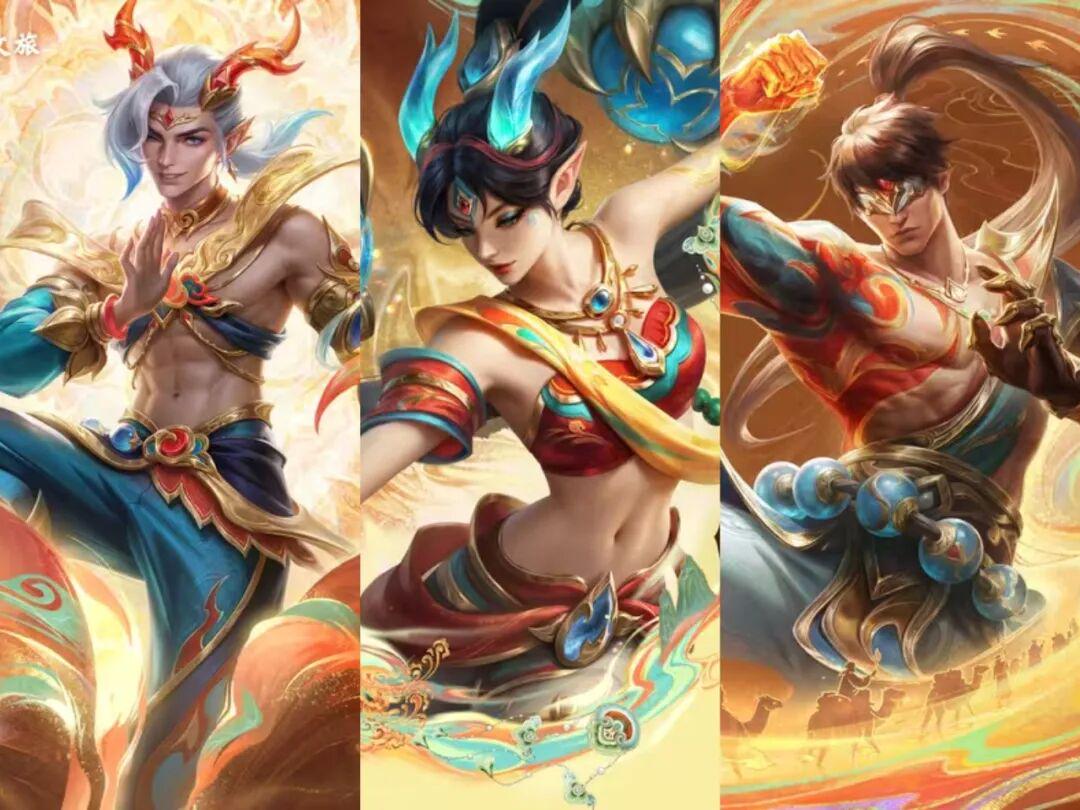
In fact, Dunhuang is not the only cultural footprint left by League of Legends. From blue-and-white porcelain to Shu embroidery, from Gaomi paper-cutting to Tang Sancai, this enduring game’s contributions to traditional culture are far deeper and broader than many people realize.
Why does *League of Legends* continue to engage with traditional culture? As one of the most established games in the global esports ecosystem, what do its cultural practices actually look like?
This answer might become clearer if we examine it in the context of specific events.
01
Dunhuang “Takes Flight” into Runeterra
Let’s start with this Dunhuang collaboration.
“Venerable Divine Dragon: Holy Dragon Li Qing—Formless,” “Son of the Celestial Dragon: Kai’Sa—Flying Beauty,” and “Son of the Celestial Dragon: Ezreal—Flying Apsaras”—the cultural inspiration behind these three Prestige Skins is immediately apparent: the Dunhuang Flying Apsaras.The concept art and 3D models for all three builds upon the design of the original “Son of the Celestial Dragon” series’ “Chinese Dragon” skins, further incorporating the unique aesthetic style of Dunhuang.
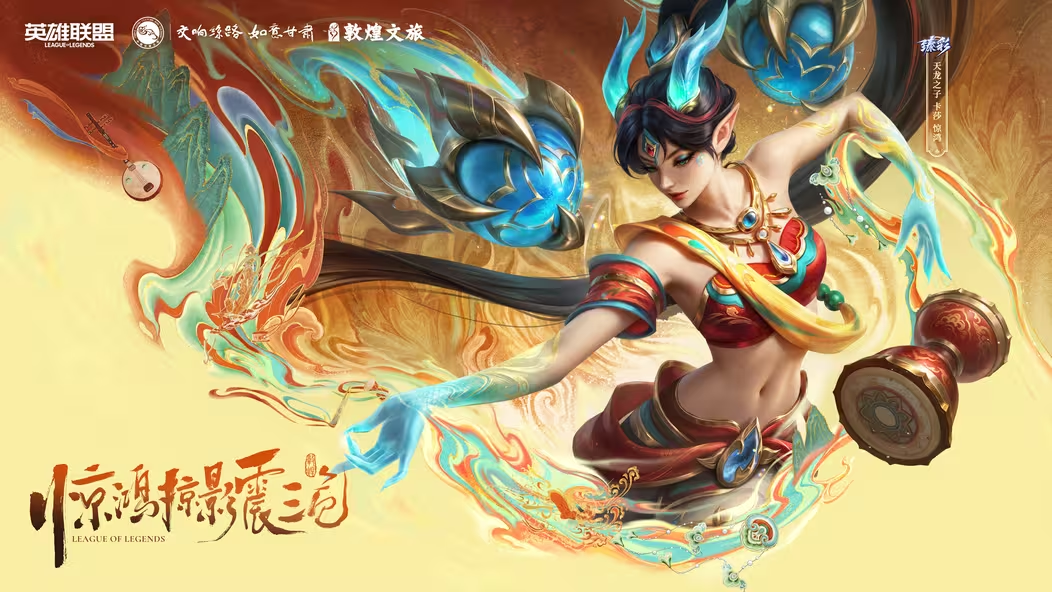
Take this concept art of Kassadin, for example: not only does Kassadin embody the most classic image of the Dunhuang Apsaras—with “flowing celestial robes andwith the wind stirring across the walls,” but the details also feature the ruanxian and the slender-waisted drum—the most common traditional Chinese instruments among the musical instruments depicted in Dunhuang murals. It can be said that, both in its overall composition and in its finer details, the artwork faithfully recreates and respects the cultural symbols of Dunhuang.
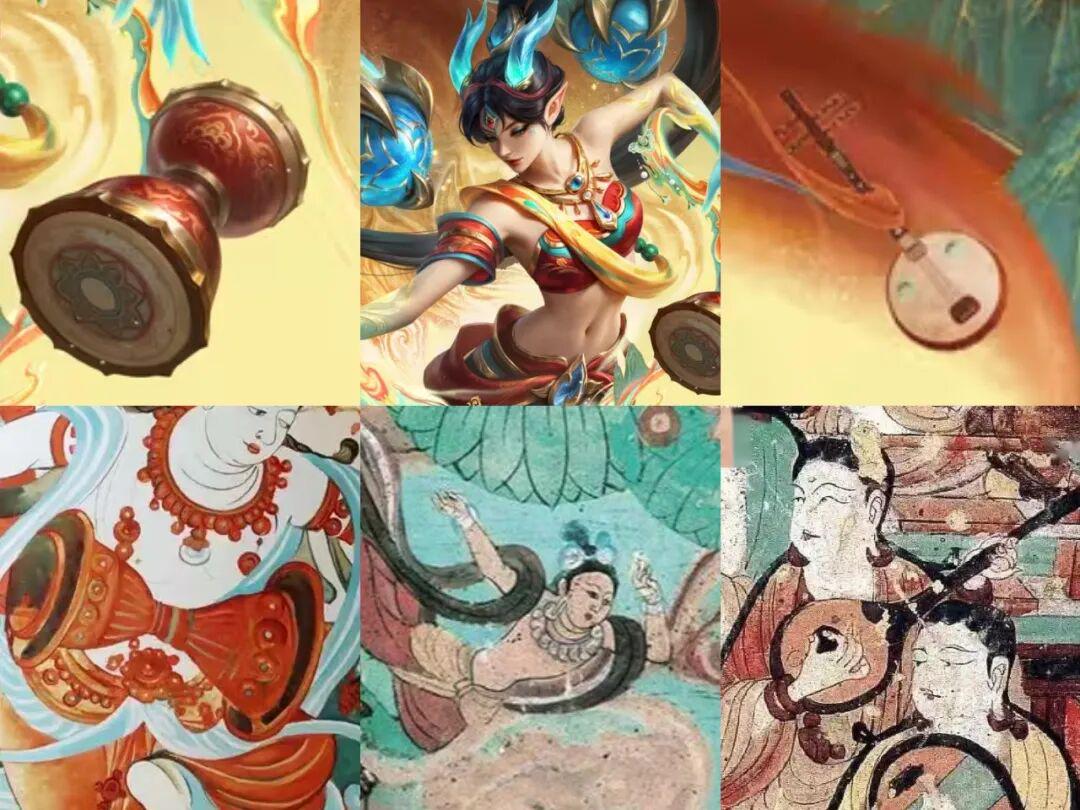
Below: Slender-waisted drum—Cave 172 at the Mogao Caves, *The Sutra on Contemplating the Infinite Life Buddha* (left)
Flying Apsaras—North Wall of Cave 112 at the Mogao Caves: Dancing Flying Apsaras (center); Ruan Xian—Cave 112 at the Mogao Caves: “Dance Scene Depicting the ‘Sutra on Contemplating the Infinite Life Buddha’ with a Musician Playing the Pipa Backward” (right)
Combined with the caravan in the Blind Monk’s Premium Skin, the celestial dancers accompanied by birds and cloud patterns in the Dunhuang murals, and the “Pipa Celestial Dancer” and “Flower-Scattering Celestial Dancer” in the Ezreal Premium Skin,across these three “Zhencai” concept art pieces, the various Dunhuang elements are not randomly assembled; rather, they precisely encompass the three most central artistic dimensions of Dunhuang murals: dance, painting, and music.
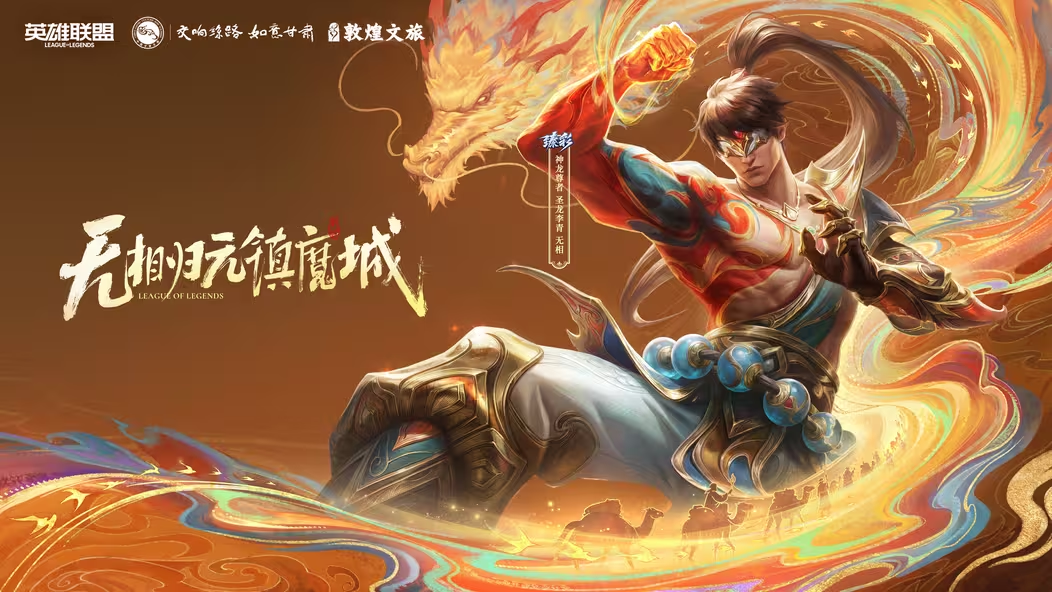
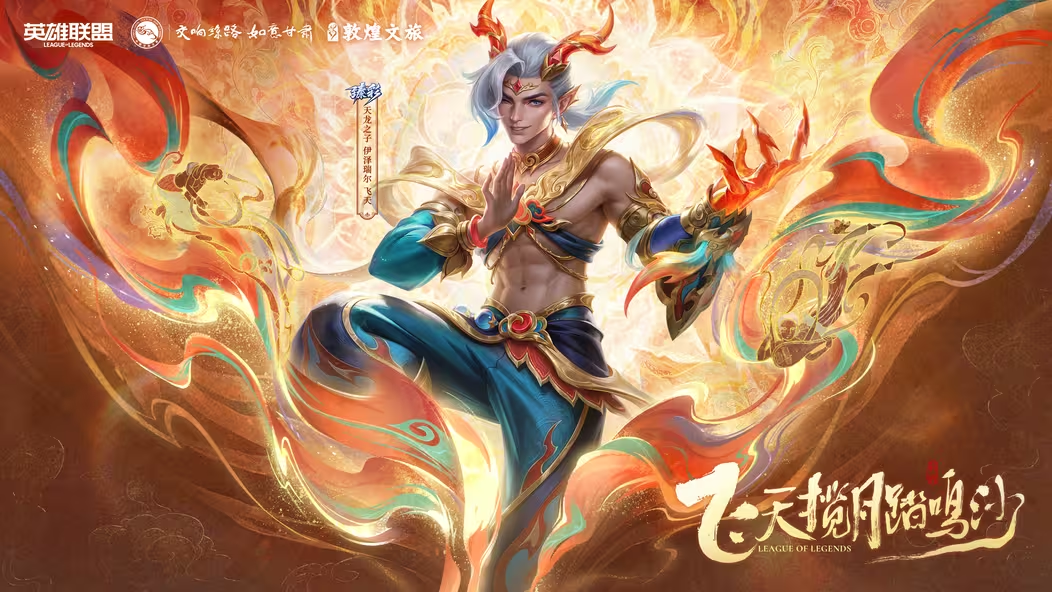
This indicates that the visual design team for *League of Legends* already had a thorough understanding of Dunhuang culture when selecting cultural elements, so the final “Zhencai” concept art reflects a high degree of academic awareness.
In addition to the “Zhencai” collection, *League of Legends* also released three collaborative posters illustrated by guest artist Lu He, as well as a documentary featuring a field trip to Dunhuang.
Lu He has designed posters for the Oscar-winning film *The Shape of Water*, so his talent is beyond question.
While Zhencai focuses on the “cultural” aspects of Dunhuang, Lu He’s three posters turn their attention to the “natural” aspects of Dunhuang; together, they weave a comprehensive interpretation of Dunhuang culture for this *League of Legends* project.
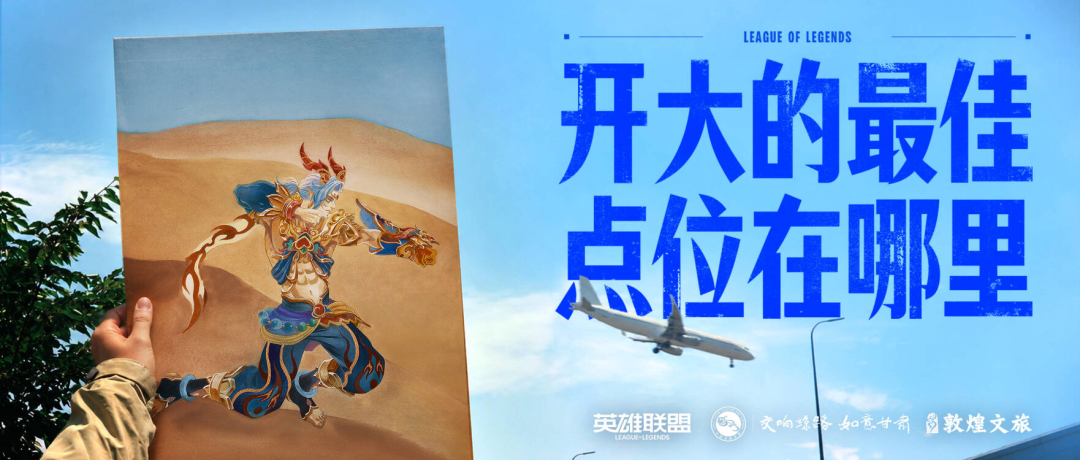
For their poster designs, Lu He selected iconic natural landscapes from Dunhuang as visual motifs:
Ezreal’s ultimate ability, “Precision Barrage,” has transformed into the Crescent Spring at Mingsha Mountain in Jiuquan.
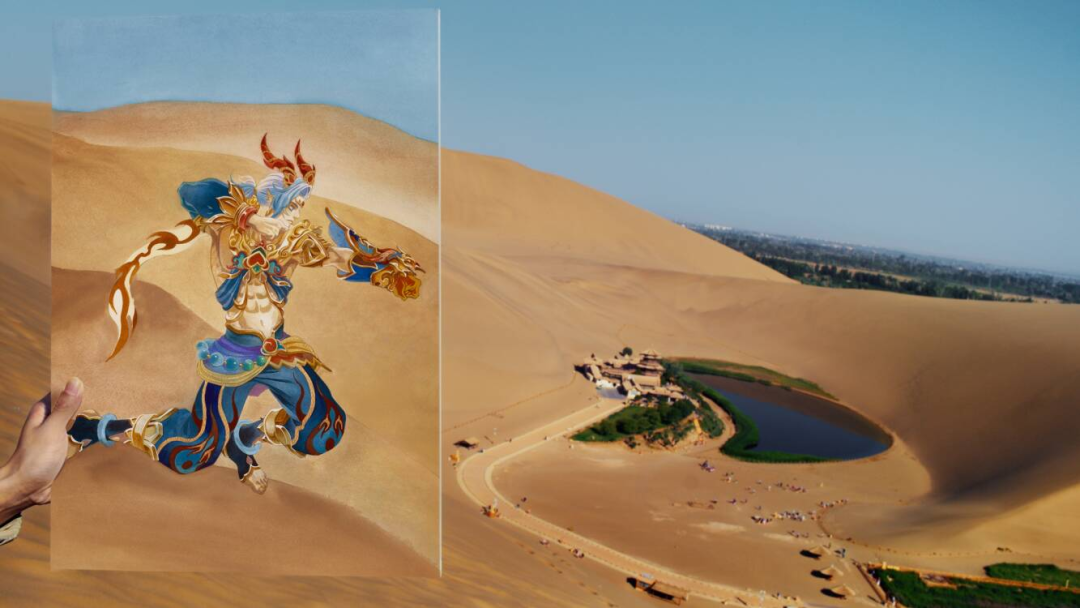
The trail left by the Void projectiles fired from Kassadin’s Q ability perfectly matches the shape of the dunes and ravines in the Gobi Desert;
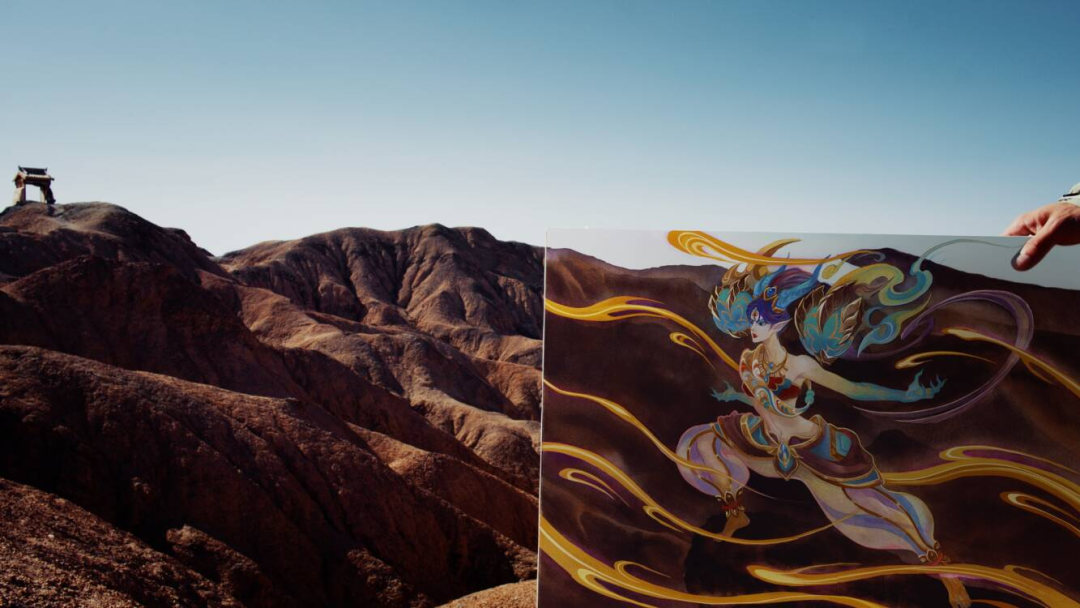
For Li Qing’s poster, artist Lu He used a shift in perspective to transform the ravines of the Gobi Desert into the Blind Monk’s ultimate ability, “Fierce Dragon’s Tail”—a devastating strike that splits mountains and shatters the earth.
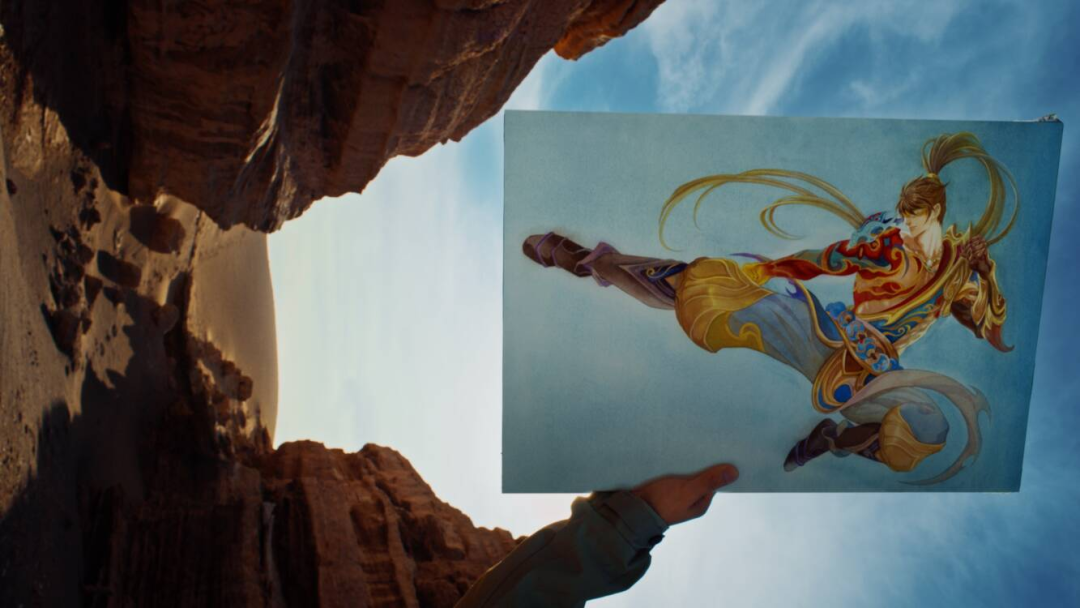
Through the documentary, viewers can see how Lu He and *League of Legends* made their way to Dunhuang, how they drew inspiration from the real-life landscape, and how they translated those insights into paintings.
Anyone familiar with *League of Legends* knows that, as a MOBA game, the options for incorporating traditional culture into the game are quite limited—aside from visually blending cultural elements into champion skins.
Interestingly, however, these product-level limitations have actually given rise to a path that is quite unique within the industry: *League of Legends* often shifts the focus of its cultural expression beyond the game itself, allowing players to experience authentic traditional culture in the real world.
This Dunhuang documentary is a snapshot of that approach; in other words, it is also a fairly representative example of *League of Legends*’ cultural collaborations.
02
From the Canyon to Reality
Since “stepping out of the game” is the central theme of *League of Legends*’ cultural practices, it is no coincidence that some examples delve even deeper into reality.
During the 2024 Lunar New Year, the second phase of the “Blue and White Porcelain” skin series was released in *League of Legends*. In addition to the skins, *League of Legends* brought the millennia-old culture of porcelain from the virtual world to Jingdezhen, the “Porcelain Capital,” hosting the “Dragon Rhythm, Porcelain Splendor: League of Legends Art Gathering” Blue and White Porcelain Art Exhibition.
One particularly interesting aspect of this exhibition is that, as part of a previous “Blue-and-White Porcelain Chinese-Style Co-creation” campaign launched by *League of Legends*, fan-designed champion patterns were recreated by Jingdezhen masters of intangible cultural heritage using traditional blue-and-white porcelain techniques and fired into actual porcelain exhibits.
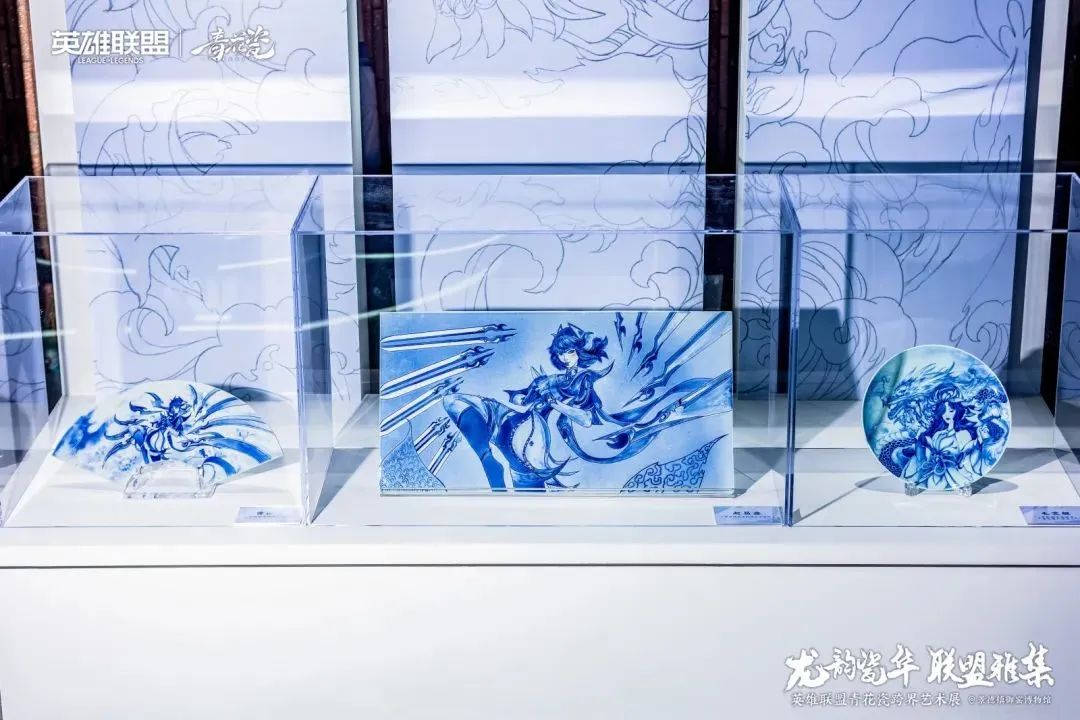
From the global debut of the first skin of 2022 to the exhibition in Jingdezhen, *League of Legends* spent two full years showcasing the beauty of Chinese porcelain to the world and empowering young people to become active participants in the preservation of intangible cultural heritage.
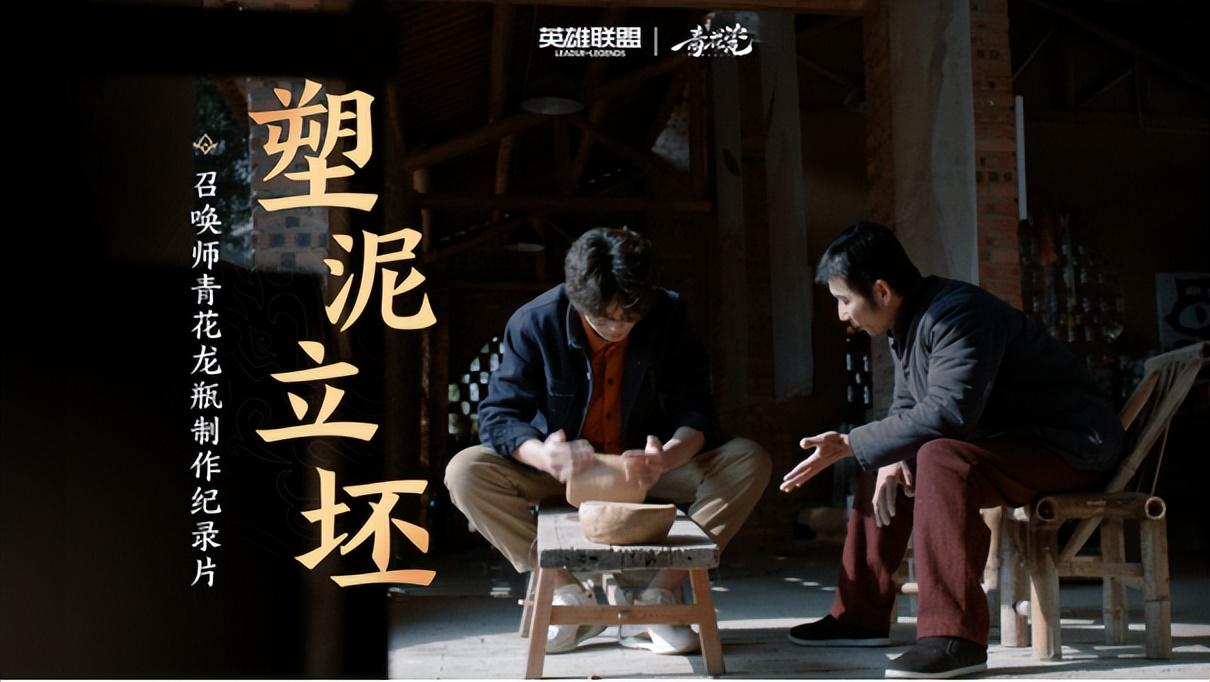
The documentary *The Charm of Blue-and-White Porcelain* chronicles the stories of young enthusiasts and blue-and-white porcelain.
Alongside blue-and-white porcelain, *League of Legends* has also used traditional crafts such as Tang Sancai, Chinese paper-cutting,small doucai cups with phoenix-and-bamboo patterns as cultural anchors, expanding into a series of cultural initiatives centered on “artifacts.” This has allowed traditional vessels spanning millennia—along with the artisanal skills behind them—to be rediscovered and experienced by young people in the digital age.
If we take a broader view, we’ll also find that *League of Legends*’ cultural collaborations aren’t limited to the realm of “objects”; esports has become a natural gateway for the game to expand into a wider arena, allowing “objects” to evolve into “cities.”
The 2025 World Championship, which will be held in China, is a classic example.
In Beijing, *League of Legends* partnered with the “East of the Forbidden City” urban brand to create an offline viewing experience featuring Dongcheng District’s intangible cultural heritage, such as cloisonné, the “Rabbit God,” and Zayan kites.
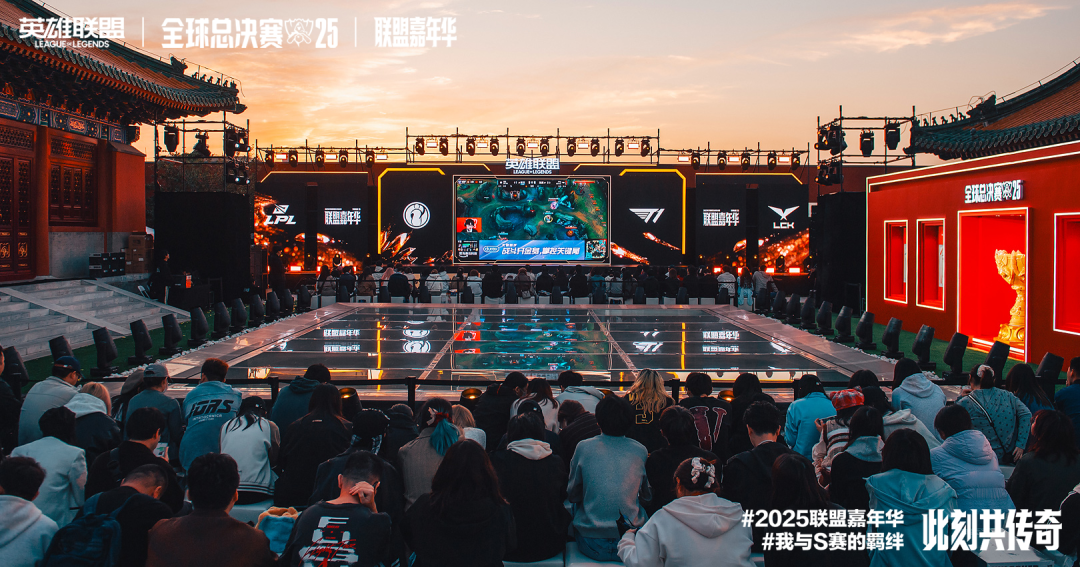
Chengdu, the host city of the finals, was transformed into a hub celebrating the fusion of *League of Legends* and Sichuan culture. Urban settings and installations showcasing hot pot, Shu embroidery, and bamboo culture were integrated into landmarks such as Chunxi Road, Wenshu Monastery, and the Wide and Narrow Alleys.
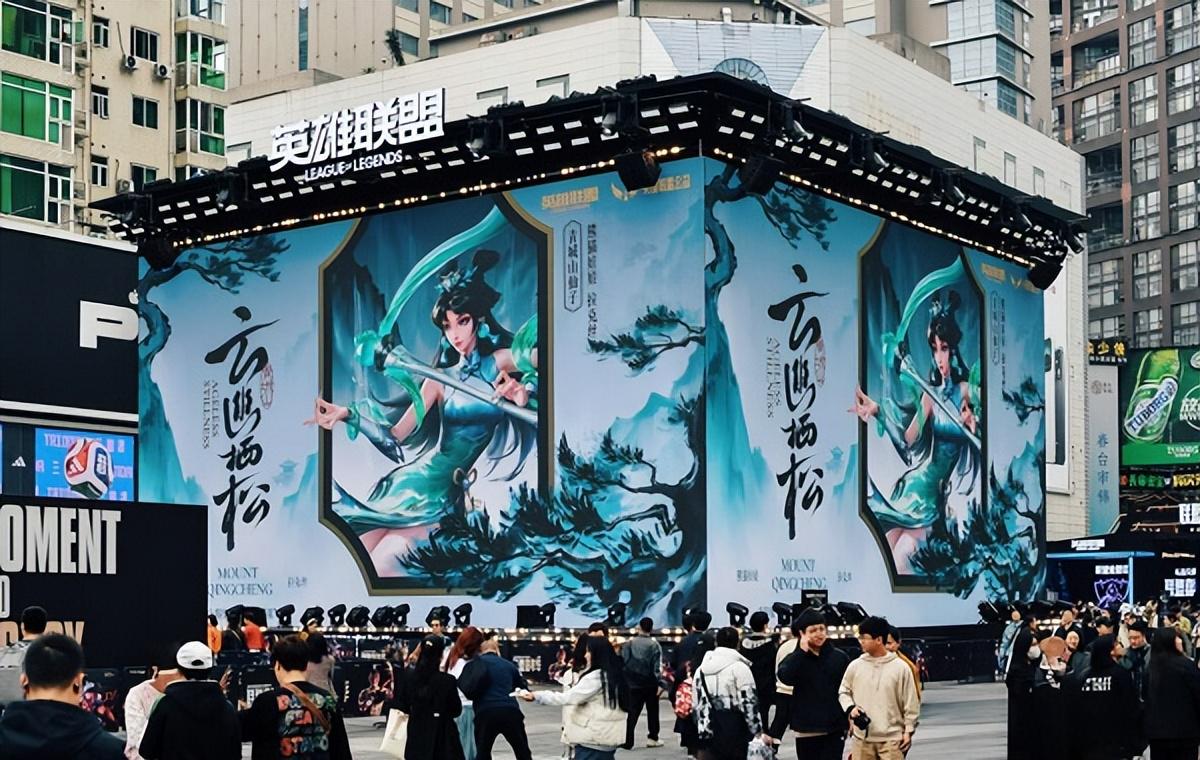
Furthermore, in addition to integrating the tournament into the urban landscape, *League of Legends* also used the proceeds from the “Panda Cub” Lux charity skin to support the development and preservation of traditional crafts among rural artisans, thereby transforming the theme of cultural collaboration from a simple partnership into a form of industrial support.
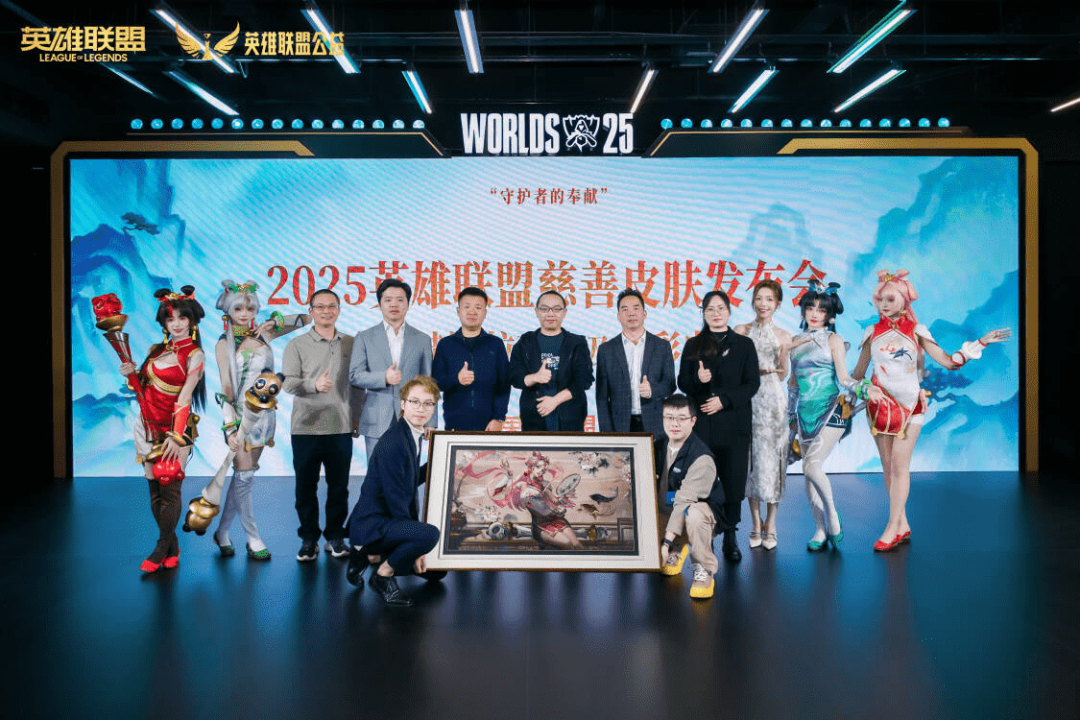
This approach of “immersing oneself in reality” stands in stark contrast to the more common industry trend of purely virtual asset-based strategies; in terms of “objects,” they retain their most authentic texture when presented to players.
Meanwhile, the “urban” dimension—represented by embedding cultural content into esports tournaments and integrating it into city cultural and tourism initiatives—connects with players’ daily lives and consumption habits, allowing traditional culture to naturally emerge in their everyday lives through the various channels provided by *League of Legends*. This approach is far more effective at spreading cultural awareness than a top-down, educational approach.
This approach, rooted in practical experience, has given League of Legends’ cultural expression a unique character—one that is grounded in reality and closely tied to everyday life.
03
“Setting the Stage” and “Performing”
I’ve always believed that as long as we can spark the interest of today’s young people, they will spontaneously speak out for what they love.
Within the cultural dissemination ecosystem of League of Legends, the official team plays the role of a catalyst—or, one might say, a “stage-setter” who creates a platform for traditional culture that resonates with young people.
You have to admit that *League of Legends* really understands young people.
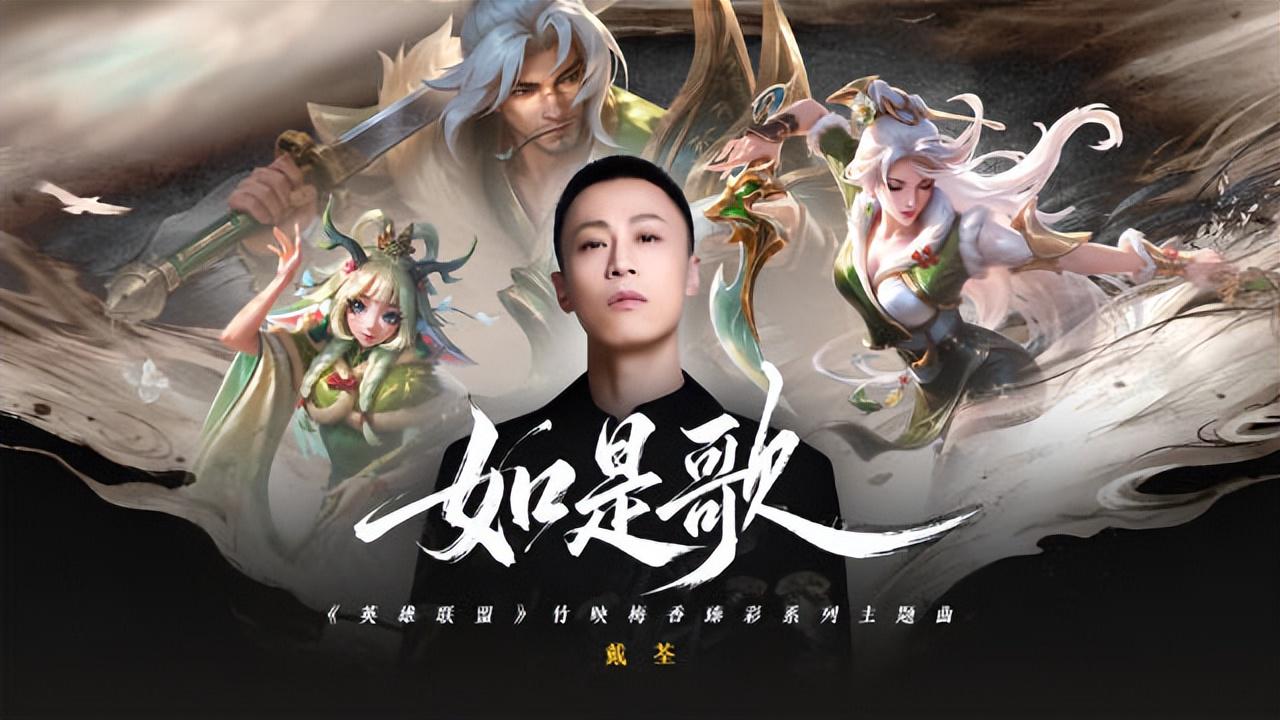
Earlier this year, *League of Legends* partnered with the Palace Museum to launch the “Treading Through the Snow in Search of Plum Blossoms” skin series and the corresponding “Bamboo Reflects the Fragrance of Plum Blossoms” Prestige Edition. To mark the release, *League of Legends* teamed up with Dai Quan, the singer of “Wukong,” to release the theme song “Such Is the Song,” in an effort to appeal to the younger generation.
As it happened, it was the Lunar New Year,and *League of Legends* released a Lunar New Year animated short titled *Blooms as Promised*. The visual style of the film drew inspiration from the wildly popular *Arcane*, translating the classic image of “searching for plum blossoms in the snow”—a recurring motif in Chinese poetry—and the festive atmosphere of family reunions during the Lunar New Year into a visual language that players worldwide could appreciate.
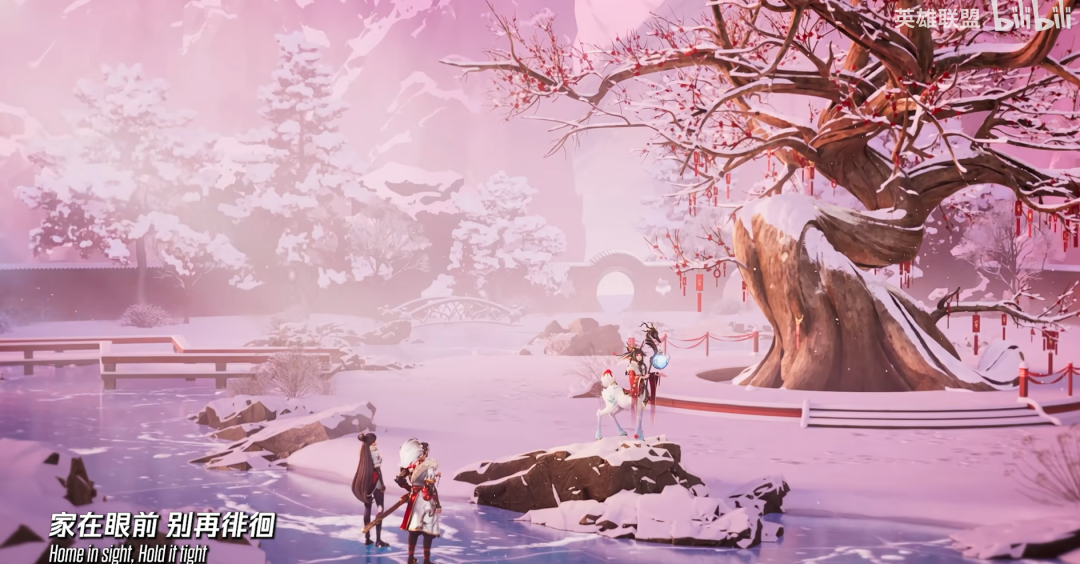
Traditional Chinese music artists and animation—every choice of content theme is tailored to the interests of young users.
Thus, by summarizing these points, we can identify the underlying logic behind *League of Legends*’ cultural collaborations: identifying cultural touchpoints that young people are already familiar with and love, and using them to bridge the gap between them and traditional culture.
The effect of this underlying logic is also quite direct: nearly every cultural collaboration involving *League of Legends* is accompanied by a surge of spontaneous player participation, and fan-created works inspired by the collaboration’s content continue to be produced across various platforms.
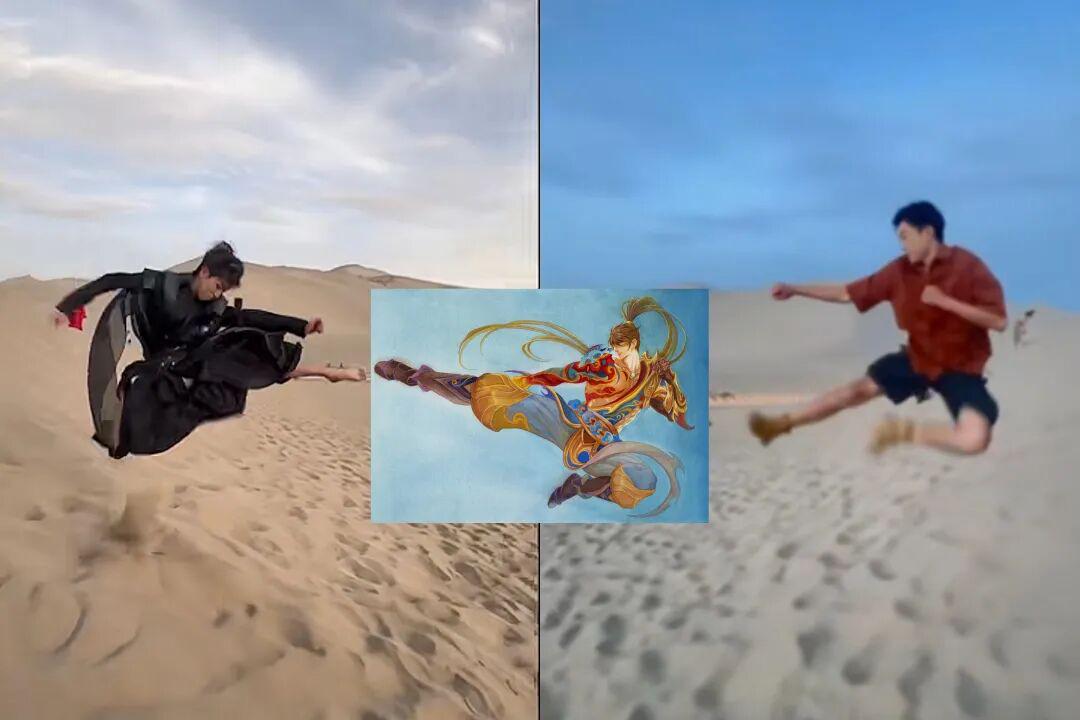
The Dunhuang Collaboration has just been launched
Social media has seen a surge in check-ins inspired by the “League of Legends in Dunhuang” campaign
These are all natural reactions that players have when they are genuinely moved by cultural content over the long term.
In the context of traditional cultural dissemination, “how to get young people to participate voluntarily” has always been a key challenge. What *League of Legends* has done is create countless “cultural catalysts” that resonate with players, sparking a new generation’s interest in traditional culture. To put it simply, it’s about setting up the cultural stage—but the performers are, in fact, the players themselves.
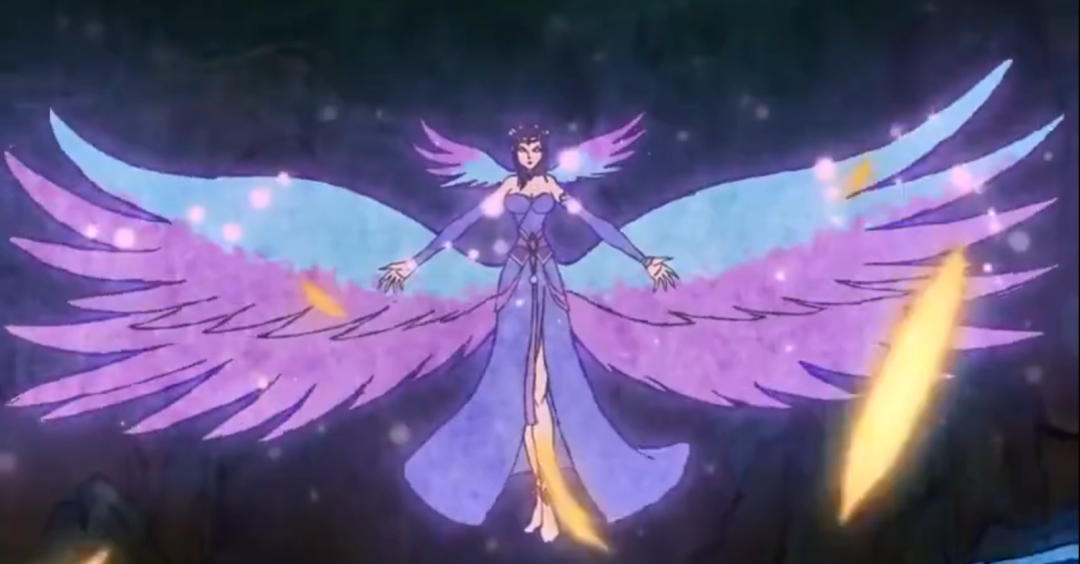
A digital animation titled “The Legend of the Jade Sword,” created by students at the China Academy of Art, incorporates the intangible cultural heritage of rock-color painting.
After all, the primary goal of cultural dissemination has always been to make it appealing and enjoyable to the public.
Conclusion
Returning to the question posed at the beginning: Why does *League of Legends* continue to engage with traditional culture?
When you think about it, the relationship between *League of Legends* and traditional culture is, at its core, one of mutual enrichment.
The former, with its hundreds of millions of users worldwide and a well-established esports tournament system, provides a window for cultural symbols such as Dunhuang, blue-and-white porcelain, and Shu embroidery to truly reach the world’s younger generation;Meanwhile, the continuous infusion of traditional culture is also expanding the depth of content in Runeterra, allowing a game born in a Western context to incorporate increasingly rich expressions of Chinese culture.
Nowadays, the topic of “the social value of games” is being discussed with increasing frequency, and games of all genres and scales are seeking their own solutions to this challenge.
This mutual success in *League of Legends* demonstrates that even when constrained by its product format, a game can still find a cultural solution within its area of expertise—one that players genuinely embrace and actively help spread.
Once you understand this, it might not be so difficult to expand the boundaries of the game’s value.
原创文章,作者:gallonwang,禁止转载:https://youxichaguan.com/en/archives/199976