Five years ago, Koi (Wang Zilin) sketched out the rough concept for his game on a sheet of A4 paper, using strokes that looked almost like a child’s doodles. I didn’t think much of it at the time.
But one industry heavyweight who had seen the prototype didn’t see it that way. He encouraged Koi, saying, “The direction is right; this is the kind of thing that’s bound to happen sooner or later.”
The demo for this game is now available on Steam under the title *The White Hunt*. It’s a 2.5D action game that can be described simply as a 2D Monster Hunter-style game. It took a year to develop.
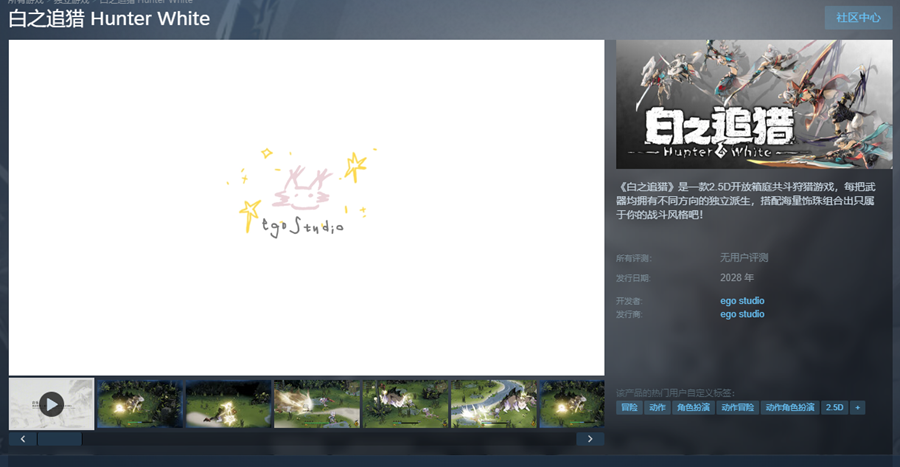
On the eve of the release of the *White Hunt* demo, I headed to Yulin South Road in Chengdu, where I found Koi’s ego studio nestled in an artsy neighborhood lined with cafes and cultural and creative shops.
The Koi I know was not only a founding core member of the Flying God Studio, but also the “unlucky one” who kept getting knocked down but never gave up.
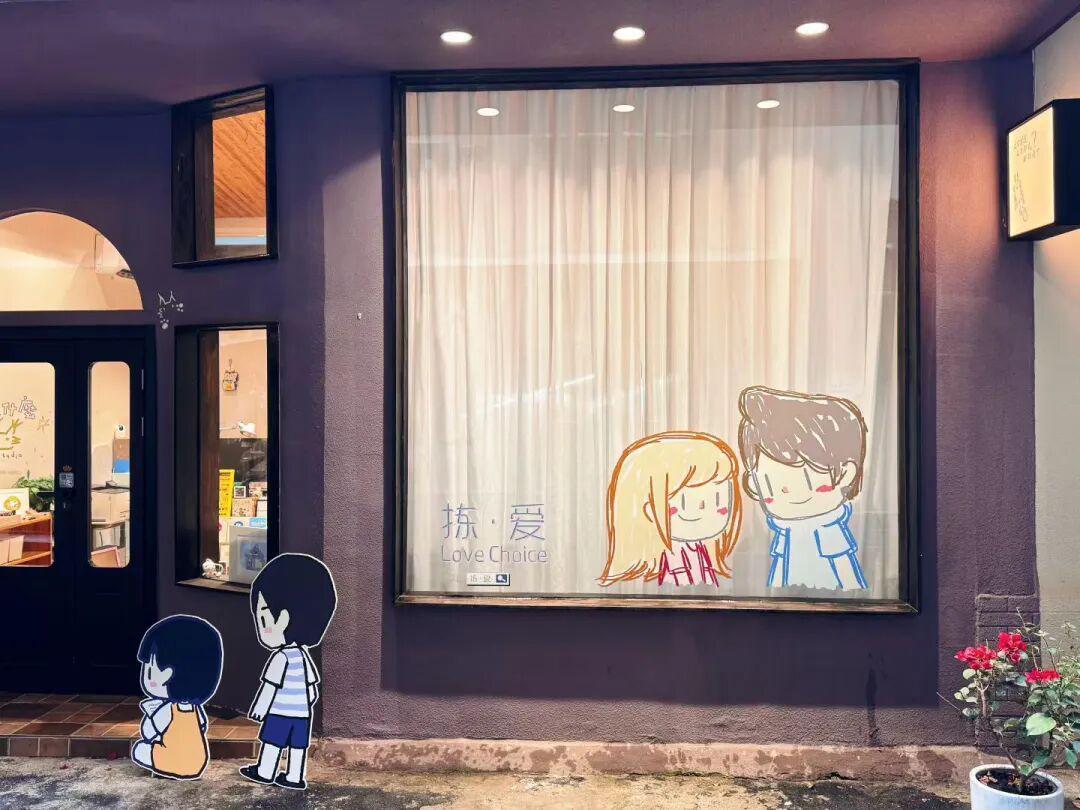
A game development team in an artsy neighborhood
After achieving great success in the casual gaming sector, Koi led the development of the creative project *Rearrangement in Adversity*. In 2021, the industry landscape shifted dramatically, and *Rearrangement in Adversity* was scrapped due to a lack of funding. The development team disbanded, and Koi left to join a publicly traded company in Guangzhou.
The most bitterly ironic part is that two years after the team disbanded, the publishing license for *Restructuring in Adversity* was finally approved. But with the original members having gone their separate ways, Koi no longer had the resources to revive the project.
After wrapping up a less-than-successful trip to Guangzhou, Koi returned to Chengdu, assembled a team of seven, and revived the idea he had once sketched out on a sheet of A4 paper.
Why would a startup team choose to enter a market dominated by industry giants? After all, promising new titles like Tencent’s *Monster Hunter: World* and miHoYo’s *Origin’s Knot* are already lying in wait in this space.
01
The First Hunt in the 2.5D World
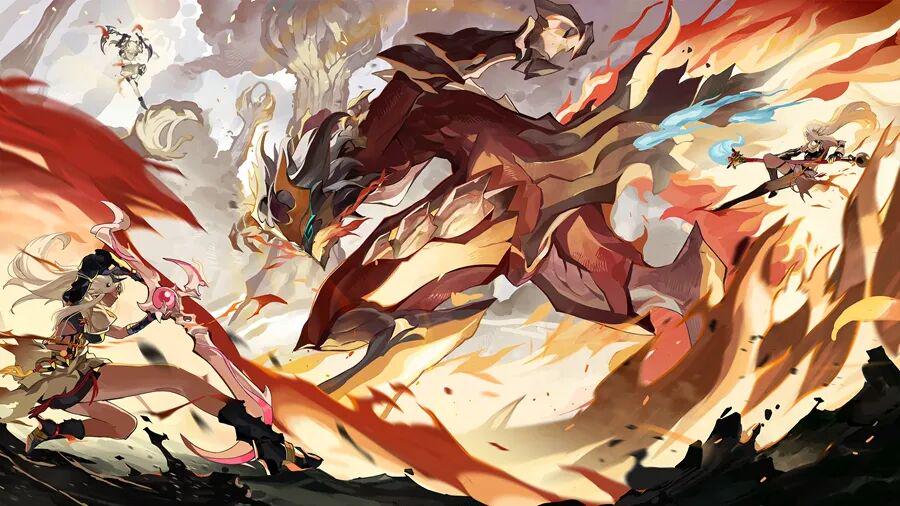
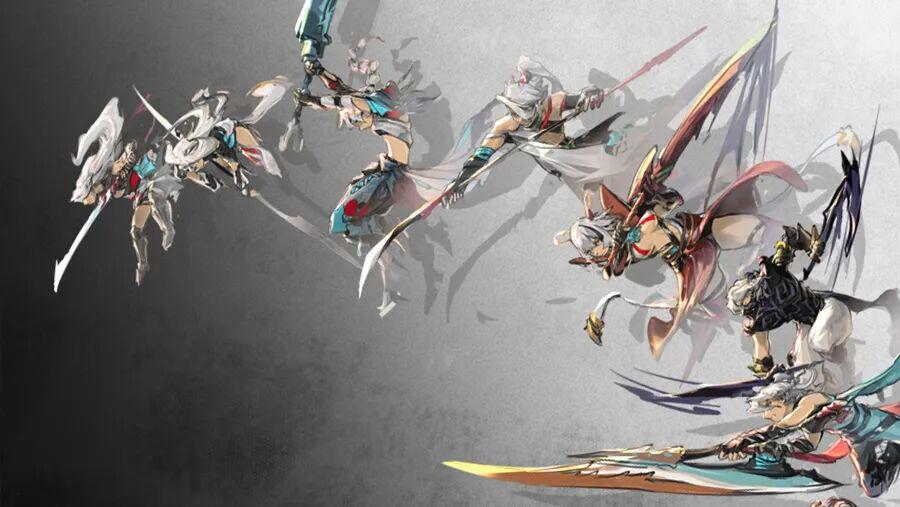
As soon as you enter the main title screen of *The White Hunt*, the Monster Hunter-esque vibe hits you right away. Orange-red flames rise from the bottom of the screen, creating a striking contrast against the cool, light-gray background. A massive dragon-like monster looms in the center, with three human characters surrounding it.The composition of the key visual itself makes it clear that *White Hunt* supports four-player online PVE hunts.
My chibi character woke up at the camp and was ready to set out on a quest to slay monsters. Being the cautious type, I naturally practiced my moves on the dummy at the camp entrance to get familiar with the combat moves and the game system.
When I actually took control of the character in combat, that familiar “clumsy” feel immediately brought back memories of getting beaten up in *Monster Hunter*. The character’s low mobility, along with its attacks and rolls, all felt heavy and required me to anticipate and master the rhythm.
The weapon variants in the *White Hunt* series will each have their own distinct focus. Of the three weapons currently available, two will be very “Monster Hunter”-esque, while the third will showcase the team’s creative design capabilities.
As for the skill-based weapons, they are an original design the team is particularly proud of.
Tech-type weapons are better suited for close-quarters combat. They can quickly build up Overload (a buff that converts health into increased damage and can be reset), and once the threshold is reached, unleashing it deals incredibly massive damage. Even better, combos can be interrupted at any time using the special “Slide” move, making for an incredibly satisfying experience.However, precisely because their damage output relies on trading health for increased damage, these characters have fragile survivability, making them an option reserved for advanced challenges.
The Koi team has created a vast, freely explorable box garden world for *The White Hunt*. Wielding a speed-type weapon, I followed a path onto a plain and soon spotted a “Mud-Brown Wood Spirit” resting there.
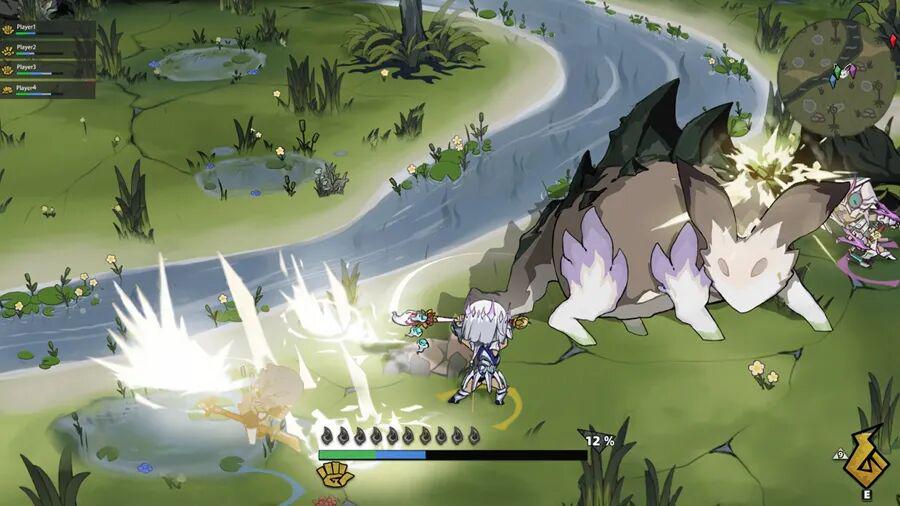
With a quick sidestep and a jab, I launched the attack first.
Speed-type weapons have fast attack speeds and relatively fluid movement, making it perfectly feasible to “strike and retreat” rather than engage the Wood Spirit in a head-on clash. This is especially true after unlocking the dual-blade mode, which further increases the attack frequency.I fight while retreating, constantly building up my Overload gauge. When the time is right, I unleash “Whirling Blessing” to gain an attack power boost, then unleash a burst of damage.
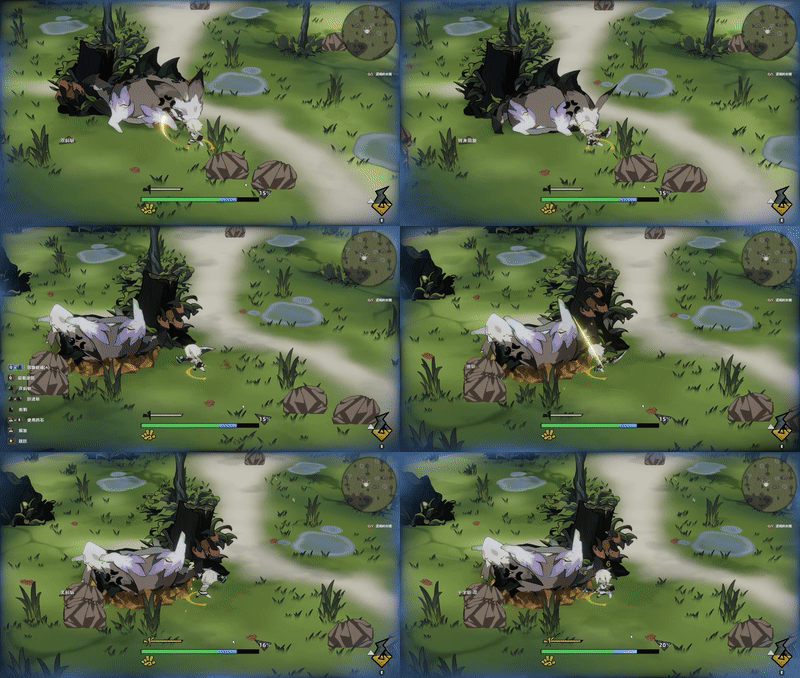
The enraged Wood Spirit quickly retaliates, not only hurling rocks as ranged attacks but also charging directly at the player. Especially on higher difficulty levels, the Wood Spirit’s charges are almost always aimed directly at the player, making them extremely difficult to dodge.After a fierce battle, I finally managed to defeat the Wood Spirit. I obtained weapon upgrade materials from it, just like in *Monster Hunter*.
The demo for *The White Hunt* isn’t very long, but the core gameplay is already taking shape, and features such as the soundtrack and controller support have already been implemented. In particular, the game’s soundtrack was created in collaboration with Reo Satotani, the original composer for *Monster Hunter*.
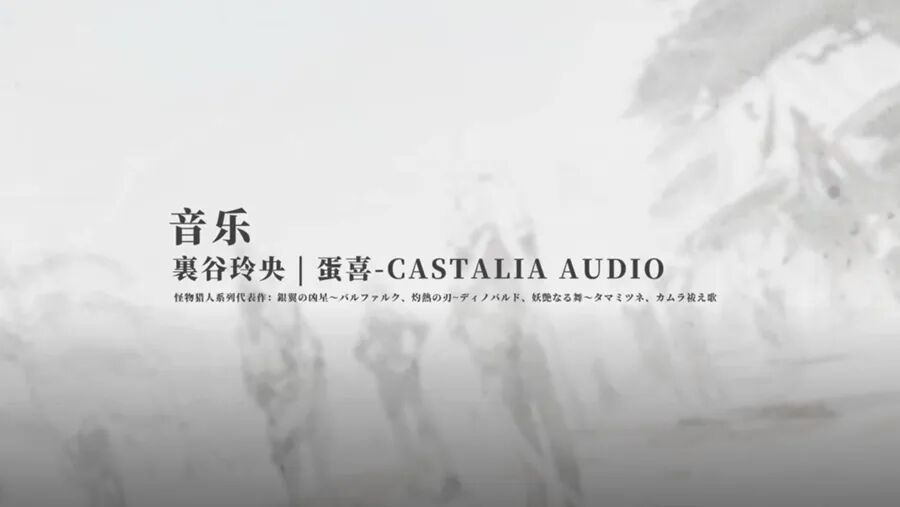
Koi revealed that the current level of map completion for the demo is 4%. Given the open-world design, they have not yet prioritized fully implementing all map features. Throughout development, they have designed assets and technical specifications to be compatible across all platforms, facilitating future cross-platform porting.
02
Does a 2.5D action game really require art skills?
Playing the 2.5D *White Hunt* is indeed a unique experience. Much of the experience I’ve gained from past *Monster Hunter* games no longer applies here. However, the unique 2.5D perspective also brings its own set of challenges. What frustrates me the most is the misjudgment caused by parallax:
When my character is positioned behind a monster, it looks like the monster is well within my attack range from my perspective, but the actual distance is actually quite far. The frustration of missing a critical attack at a crucial moment really got to me for a while.
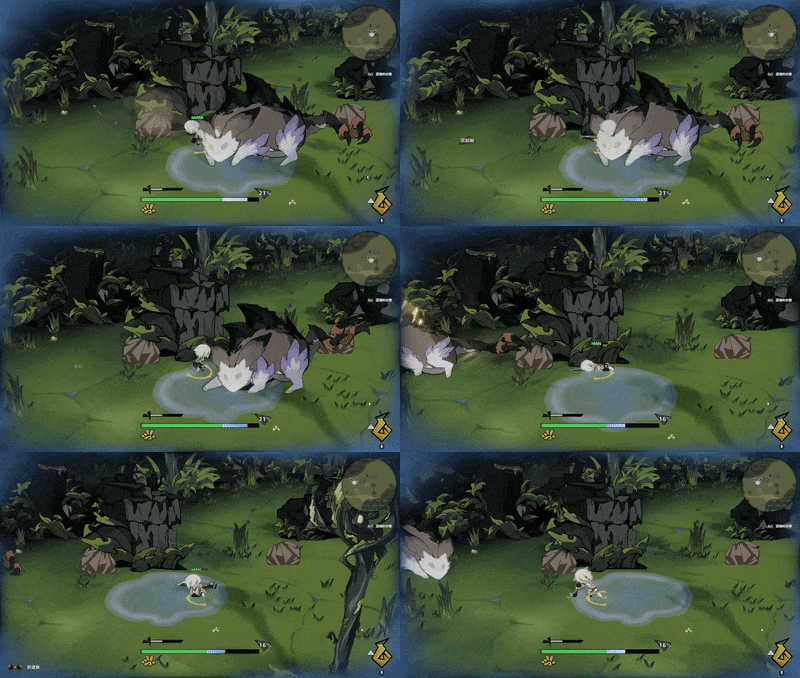
I thought I could make it
To address this issue, Koi is considering adjusting the projections of characters and monsters to enhance players’ perception of the overall 3D space.
I’m curious—wouldn’t all those issues be resolved if *The White Hunt* were made in 3D?
“Once you make it in 3D, players are bound to compare it to *Monster Hunter* in every way,” Koi revealed. He noted that as early as the game’s preliminary research phase, they had considered developing it in 3D, but after further investigation, they realized that Capcom had built up such a deep foundation in the 3D action genre that it had reached a level that was virtually impossible to match.
The decision to adopt a 2.5D art style is, at its core, a strategic choice designed to play to the game’s strengths while mitigating its weaknesses. Koi believes that a 2.5D art style can create a distinctive first impression and prevent players from automatically associating the game with *Monster Hunter*.
But don’t assume that 2D is necessarily easier to create.
Even though it’s a 2D game, *The White Hunt* took nearly a year to build a complex production pipeline (3C tools, terrain editing tools, etc.), enabling the entire process to be handled in-game without the need for programming.
The Spine bone animations for 2D characters and monsters in the game are affected by real-time global illumination. Special pathfinding algorithms must be written to determine the monsters’ movement paths. In particular, when not in combat, monsters load information about their surroundings and behave in ways that blend into the ecosystem. Additionally, there are complex collision issues between characters and monsters during combat interactions, and so on……..
The aforementioned design presented a host of technical challenges. To address this, Koi specifically recruited a technical artist (TA) to provide support.
In addition to its visual appeal, *The White Hunt* has also put a great deal of effort into crafting a unique combat experience.
Koi, known for its minimalist approach, has revamped the originally more hardcore “tiered” overload system into a real-time “mana” mechanic, allowing players to simply build up energy and unleash it for a more satisfying combat experience.
At the same time, we’ve streamlined the game’s stats system, focusing almost exclusively on weapons, while making outfits purely cosmetic. As players upgrade their weapons, they unlock new move variations, reducing the learning curve.
Koi hopes that *The White Hunt* will not only appeal to hardcore action gamers but also attract a wider audience. True to this vision, *The White Hunt* has undergone a complete transformation from its original concept.
03
“Mass Effect”: Born from a Sense of Weightlessness
The origins of *The White Hunt* can be traced back to *The Legend of Zelda: Breath of the Wild*, which was released ten years ago.
Back when Koi was playing *Breath of the Wild*, he was captivated by the game’s approach of centering its world design around the concept of “temperature.” He has since sought to apply this design philosophy to his own game projects.
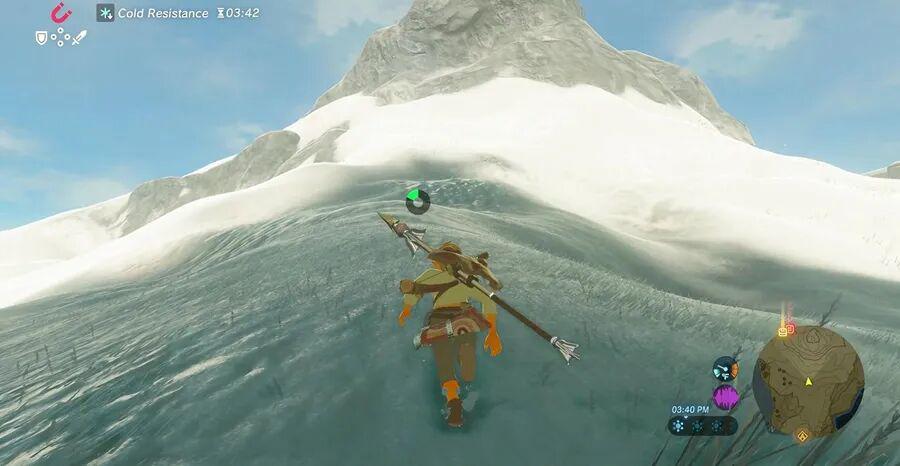
Breath of the Wild, with its temperature-based design philosophy, inspired Koi
While on a flight, a sudden, intense sensation of weightlessness struck Koi with a flash of inspiration: Why not base the rules of the entire game world on the concept of “mass”?
This idea ultimately became the underlying design philosophy of *The Hunt for White*. The weapon handling and the Overload system I experience in the game today are, at their core, different manifestations of this central element: “mass.”
While working at his previous company in Guangzhou, Koi presented this concept to the lead artist he was collaborating with at the time. The lead artist took an instant liking to it and was very enthusiastic about the idea. However, the company was going through a turbulent period at the time, and before long, the lead artist left to join Mihoyo’s blockbuster project.
The story might have ended there.
One evening, the lead artist—who hadn’t yet left miHoYo at the time—called Koi to catch up. During their casual chat, he brought up the prototype for *The White Hunt* and asked:
“Do you still want to do this project?”
It was this profound question that reignited Koi’s fighting spirit. Just when he needed a little push the most, someone from afar handed him a match.
A year later, Koi gathered several of his former colleagues and officially launched *The Hunt for White* in Chengdu. The lead artist who had called him late that night also left miHoYo to join the team.
But with so few successful Monster Hunter-style games on the market, what are Koi’s chances of success given their passionate commitment?
Koi’s assessment is spot-on: while many Monster Hunter-like games currently on the market draw heavily on the surface-level mechanics of *Monster Hunter*, they cannot match Capcom in the short term when it comes to core experiences such as combat feel, feedback, and action presentation. From the very beginning, *White Hunt* has broken free from the 3D action evaluation framework established by *Monster Hunter* to carve out its own unique style.
He developed *The White Hunt* with the intention of creating a series based on the IP. As the game’s title suggests, the “Creator”—as perceived by the characters and NPCs—is represented by the color white, and the game contains numerous subtle hints regarding its deeper lore. Koi hopes that *The White Hunt* is just the beginning.
04
Money and resources: a topic that can’t be avoided
With the release of the demo, *The White Hunt* has entered a new phase. The Koi team will now focus on steadily expanding content and advancing QA efforts, such as enhancing visual quality and introducing more monster types. During the testing window, the team will actively gather player feedback to validate the core gameplay experience.
Koi is confident in his project management skills. As long as the core gameplay and loop are about 70 to 80 percent complete, the rest is just a matter of seeing it through to the end. But that doesn’t mean he isn’t anxious.
Funding and resources are always a major concern for any startup team. Although Koi has spent its budget wisely, *The White Hunt* still has a long way to go before reaching the final stage. Anticipating this, Koi has already begun reaching out to potential partners.
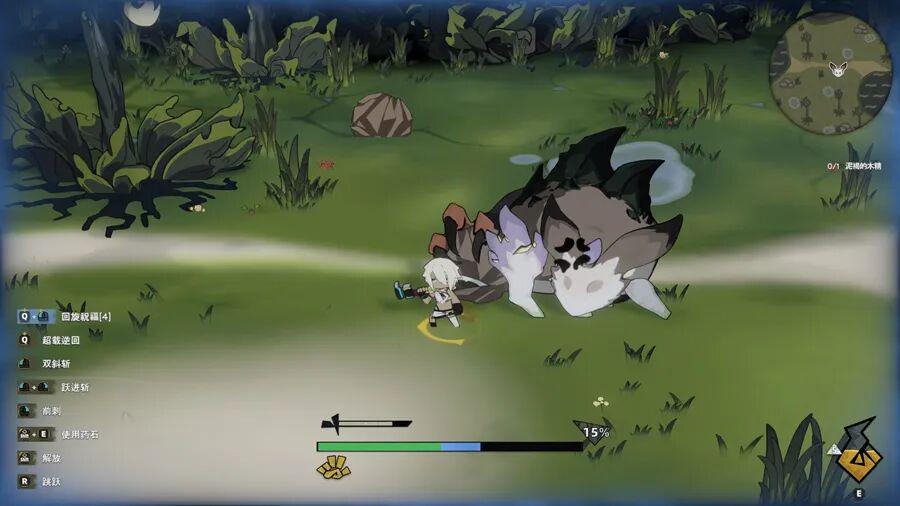
The Angry Wood Spirit
Having worked on commercial games for a decade—from blockbuster casual hits to mobile projects that never saw the light of day—Koi has come to realize that pursuing self-expression in commercial projects is, in itself, a disservice to the team.
In that case, why not let go of the obsession with scale and make the game you really want to make?
Epilogue: Playing Games in the Yulin Community
Before leaving, I took one last look around the studio.
Stepping through the door, you’ll find a cultural and creative space run by Koi’s wife, with shelves stocked with merchandise for games like *Picking Love*. Head further inside, and behind the partition lies the development team for *The White Hunt*.
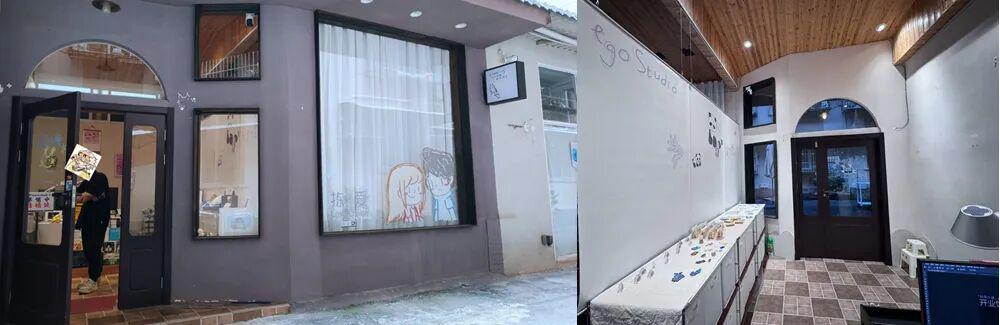
Koi Wife EC is one of the lead creators of “Picking Love”
Disguised as a cultural and creative store, the studio blends seamlessly into the trendy neighborhood, yet surprisingly offers a quiet retreat from the hustle and bustle.
Koi is quite content making his own games in this neighborhood, which is brimming with the vibrancy of everyday life. Not only is it convenient to live here, but the studio space is affordable too. From Shuishen to Guangzhou and back to Chengdu, this city has given him two chances to start anew—the first time when he rose to fame at a young age, and this time, with a fresh start.

Outside the ego studio, laid-back Chengdu locals are enjoying their coffee and the sunshine
Looking back on the desolate path I’ve walked, there was neither rain nor sunshine.
原创文章,作者:gallonwang,禁止转载:https://youxichaguan.com/en/archives/199486