In China, developing mobile games on a buyout model has always been difficult.While iOS has the App Store, on Android, traditional co-publishing channels generally operate on a 50-50 revenue-sharing model designed for the long-term revenue streams of free-to-play (F2P) games with in-app purchases. User acquisition campaigns for one-time-purchase products are almost guaranteed to result in losses. As a result, games that aim to sell copies based on quality have long had nowhere to go on the Android platform.
But over the past few years, this gap has gradually been filled by one platform. The payment model for *Ghost Valley Eight Wastes*—which includes the base game and DLC as a one-time purchase—is identical to that of the PC version, and the mobile version is exclusively available on TapTap;*Diver Dave*, which has sold over 7 million copies worldwide and boasts a 97% positive rating on Steam, is also available on TapTap; the same goes for *Daughter of the Volcano: Reunion*. The mobile versions of these critically acclaimed, full-price games have all chosen the same platform.
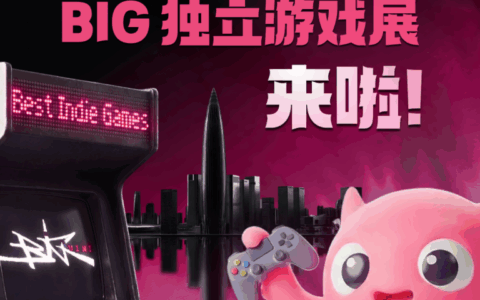
From June 13 to 20, the third TapTap Exclusive Game Festival kicked off, showcasing more than 60 games that are available exclusively on TapTap or can be pre-registered for on the platform. A significant proportion of these are high-quality, one-time-purchase titles that prioritize critical acclaim.Now in its third year, this annual event offers a window into why these games are all converging on the same platform on mobile.
01
The Android Dilemma Facing High-Quality Mobile Games—and Its Solution
Why do high-quality mobile games favor TapTap? Let’s look at a case study to find out.
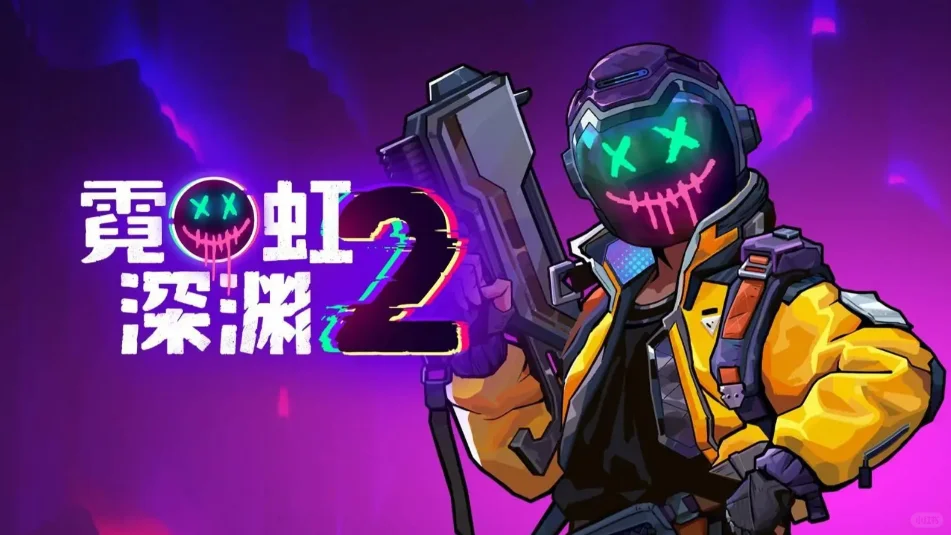
The first free-to-play mobile game in the “Neon Abyss” series—*Neon Abyss: Infinite*—was released exclusively on TapTap at launch and wasn’t made available across all channels until after its one-year exclusivity period ended. For the one-time purchase title *Neon Abyss 2*, the mobile version was also unveiled exclusively on TapTap, where pre-registration began.
Both generations of products under the same IP chose the same platform, a decision based on the developers’ experience with both business models: whether it’s free-to-play or a one-time purchase, TapTap is the best choice for developers of high-quality games.
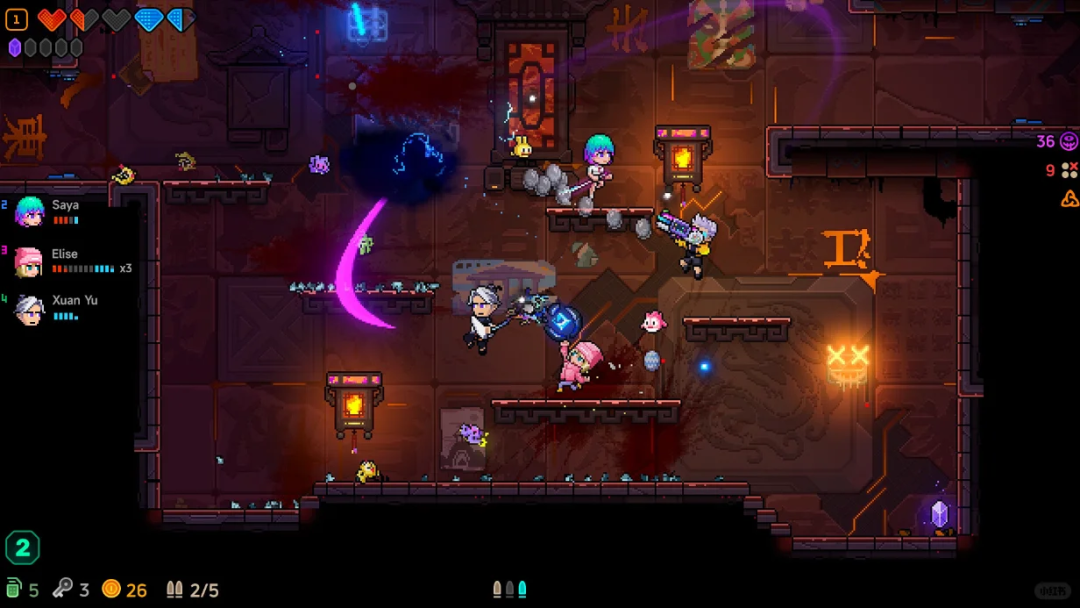
And as product models shifted from free-to-play (F2P) to a one-time purchase model, TapTap emerged as the optimal solution. More and more high-quality one-time purchase titles on mobile have made the same choice, and the reason is straightforward: the rules of traditional distribution channels were never designed for this type of product in the first place.
The most direct conflict lies in revenue sharing. The premise of a 50-50 revenue split in co-publishing is long-term revenue from F2P games: users enter for free and continue to pay through in-app purchases, allowing both the distribution channels and developers to profit.However, with buy-to-play games sold for a one-time fee of 20 to 30 yuan, after deducting distribution fees and various costs, developers are left with very little—let alone funds to recoup costs for subsequent R&D. Under the traditional model, buy-to-play games are virtually unprofitable on Android.Since its inception, TapTap has established a platform model that avoids co-publishing and relies primarily on advertising revenue. By charging zero co-publishing revenue share for buy-to-play games, it has become the first third-party platform in China to support the purchase of official, licensed Android games. For the first time, the buy-to-play model has found a commercially viable foothold on Android.
Beyond revenue sharing, the customer acquisition strategy is also misguided. With one-time purchase products, LTV is capped—users pay once and that’s it, with no long-term in-app purchases to sustain a return on investment. Competing with in-app purchase games for user acquisition in the news feed is almost guaranteed to result in losses.For a one-time purchase game priced at 30 yuan, the cost of acquiring a single activated user through traditional channels may be higher than the game itself, and it’s common for the ROI to not add up.However, the users these products need are precisely the ones that user acquisition campaigns cannot accurately target: they look at ratings and reviews and are willing to pay for quality, and checking ratings before deciding what to play is a natural habit within the TapTap community.A game with a high rating of 9.0 or above generates promotional effects far exceeding those of a million-user hard-bought user acquisition campaign. The in-depth reviews written by players and the developer’s personal responses to bugs and optimization plans within the community create a virtuous cycle of interaction, where word-of-mouth recommendations replace the logic of paid user acquisition.
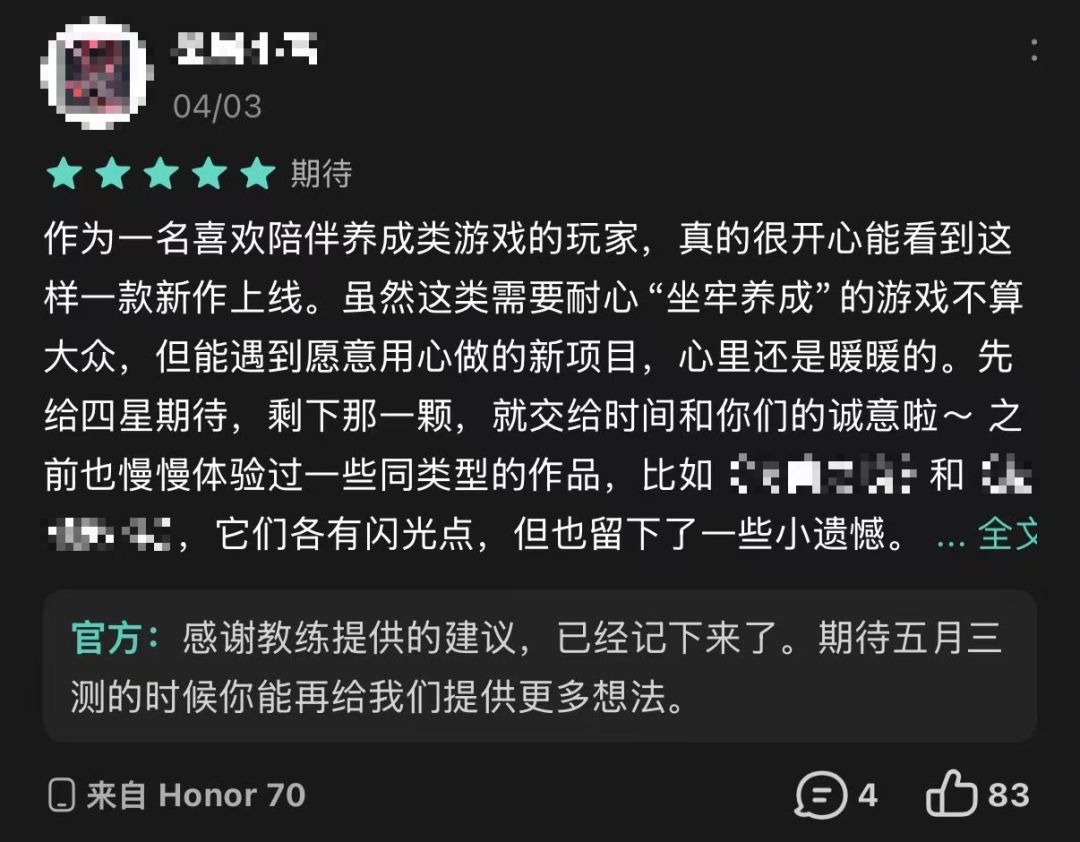
(Interaction between players and developers in the reviews for a certain game on TapTap)
It is worth noting that this exclusive platform was built through the combined efforts of two forces. On one hand, there are titles like *Ghost Valley: Eight Wastes*, where developers independently chose TapTap as their exclusive mobile platform; on the other hand, there are globally acclaimed titles like *Dave the Diver* and *Daughter of the Volcano: Reunion*, for which Xindong secured the Chinese distribution rights and launched on TapTap.The former demonstrates the appeal of exclusivity to developers, while the latter proves the platform’s determination to proactively bring in high-quality titles. It is this mutual commitment that has allowed the list to grow longer and longer. And as the list grows, one inevitable consequence becomes increasingly irreversible: players interested in high-quality and creative games are being drawn to a single entry point.When the target audience for a buy-to-play mobile game is almost entirely concentrated here, developers’ options are naturally narrowing.
But revenue-sharing advantages and high-quality users alone aren’t enough. Games sold under a buyout model lack long-term operational events to repeatedly generate buzz, so the launch is almost the only window to create a viral sensation. Under the scheduling logic of traditional channels, it’s difficult for such products to secure decent exposure: they lack both consistent revenue data to back them up and the user acquisition budget needed to compete for featured spots.TapTap’s solution is its event calendar system: exclusive game festivals held throughout the year, the “Nuclear Fusion” event, offline demo sessions in the WePlay indie game zone, and even the GameHouse demo area at the Strawberry Music Festival. This provides multiple predictable release windows throughout the year, allowing the platform to concentrate traffic, media attention, and player anticipation around these key dates.This serves as a vital resource for small and medium-sized teams lacking their own marketing and promotion resources, and it is also an effective scheduling option for commercial products that need to generate a concentrated surge in buzz.
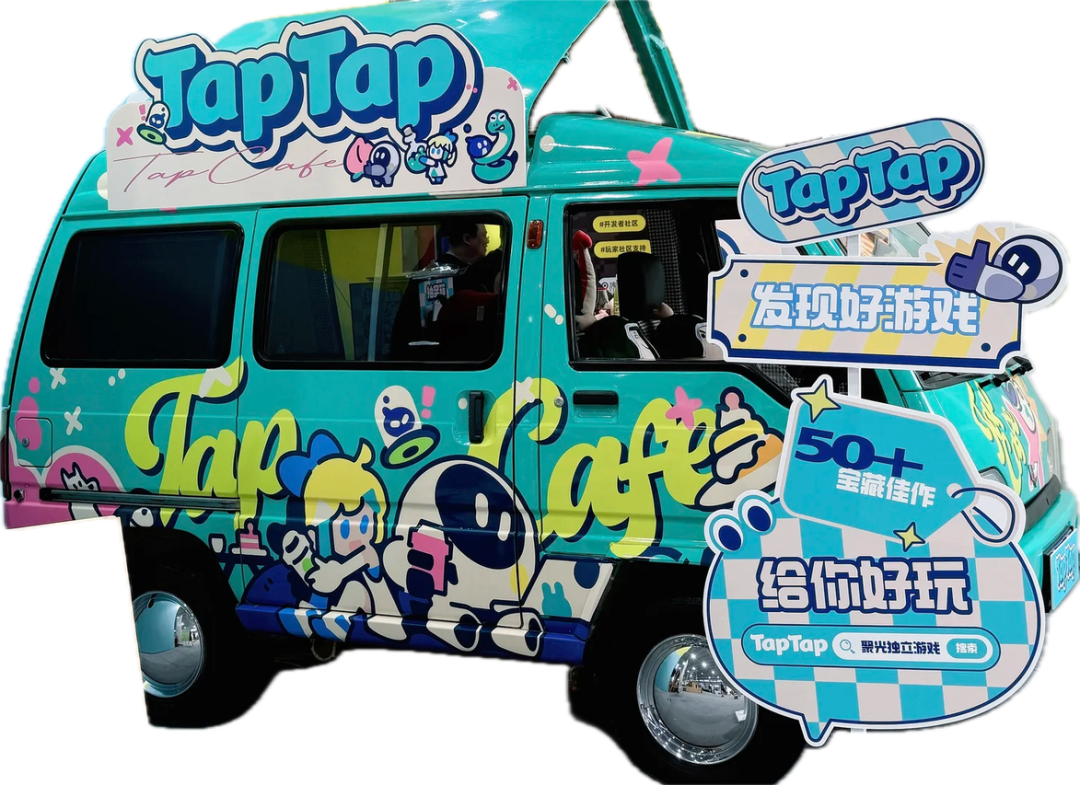
(2025 TapTap × Nuclear Fusion Beijing Event; collaboration to continue in 2026)
Going a step further, from the Spotlight GameJam, which has brought together teams of nearly 7,000 developers, to TapTap’s development of user-friendly tools for the AI era, and on to early access programs that bridge the gap to distribution, TapTap has established a full-cycle incubation capability encompassing tools, funding, community, and distribution.
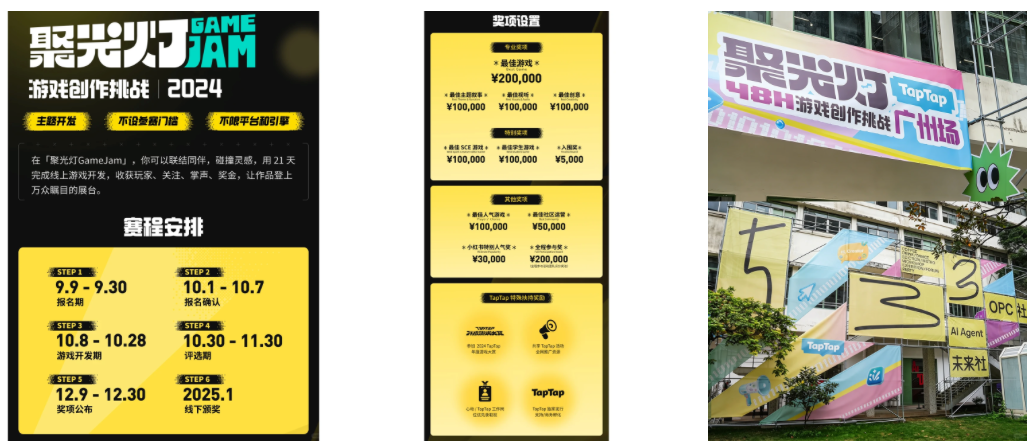
(The game creation challenge launched by Spotlight GameJam in 2024 is still touring the country.)
Mismatches across three dimensions—revenue sharing, user acquisition, and visibility—have been resolved one by one. Combined with end-to-end support spanning the entire process from development to distribution, the choice of how to publish premium exclusive mobile games in China has effectively become a no-brainer. This isn’t something the platform has announced; it’s evident from an ever-growing list of games.
02
A gaming festival that showcased the scale of its exclusive lineup
If the first two editions of the Exclusive Games Festival were still testing whether an exclusive platform could hold its own, by the third edition, the question had shifted to just how big that platform could become.
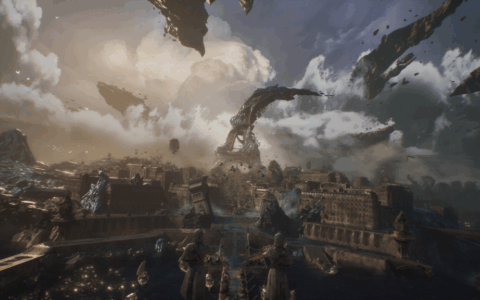
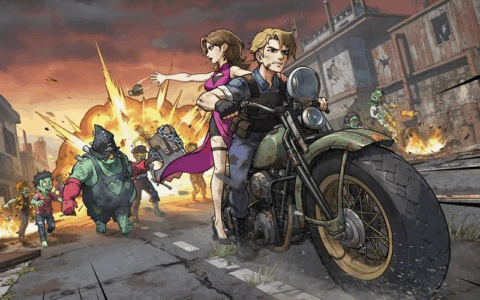
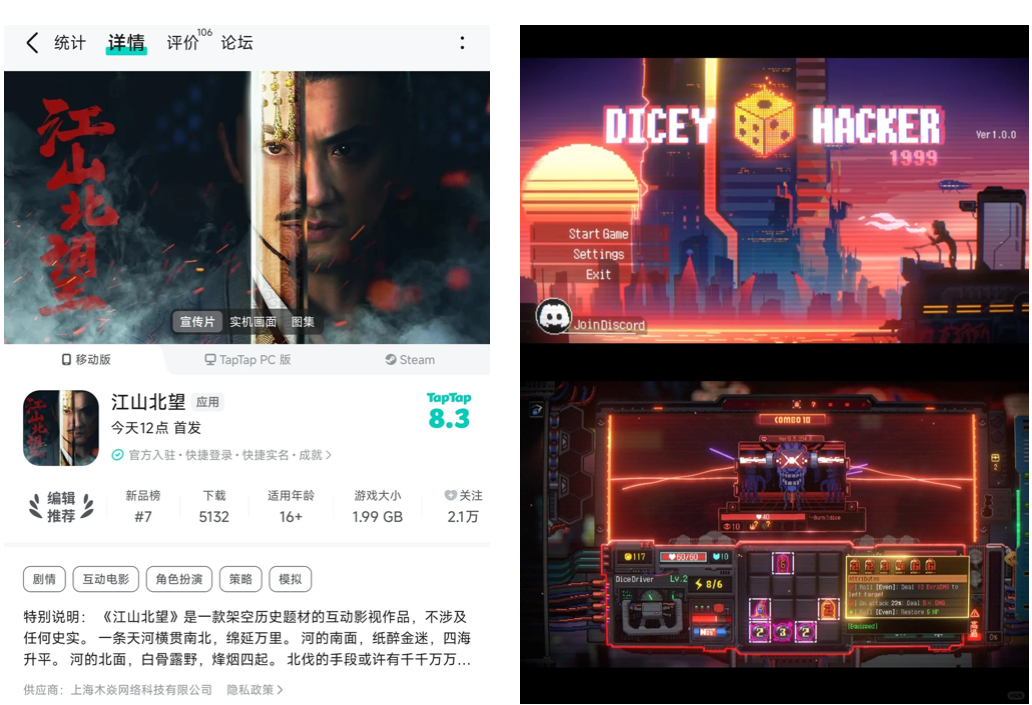
The most obvious indicator is the density of launches. *Neon Abyss 2* unveiled its mobile version and opened pre-registration; *Crash Continent 2* held its first mobile beta test for the Chinese server; and *Dice Hacker 1999* launched its beta immediately upon its debut.while major titles *Looking Northward* and *The Hidden Sword* made their debut at the same event. With three once-in-a-lifetime milestones packed into a single event, the launch density has reached the scale of a small-scale launch event.
Milestones like “first reveal” and “first playtest” offer developers only one chance—once it’s gone, it’s gone. Under the traditional approach, preparing for a product’s first reveal requires building a landing page, investing in promotional materials, and coordinating with media outlets—all of which entail extremely high resource allocation costs for small and medium-sized teams.By tying the first reveal to a game festival, developers can directly tap into the concentrated traffic, media attention, and player anticipation generated by the platform. They don’t need to build a launch environment from scratch—they just need to have their product ready. The willingness to hand over this once-in-a-lifetime opportunity is, in itself, a vote of confidence.
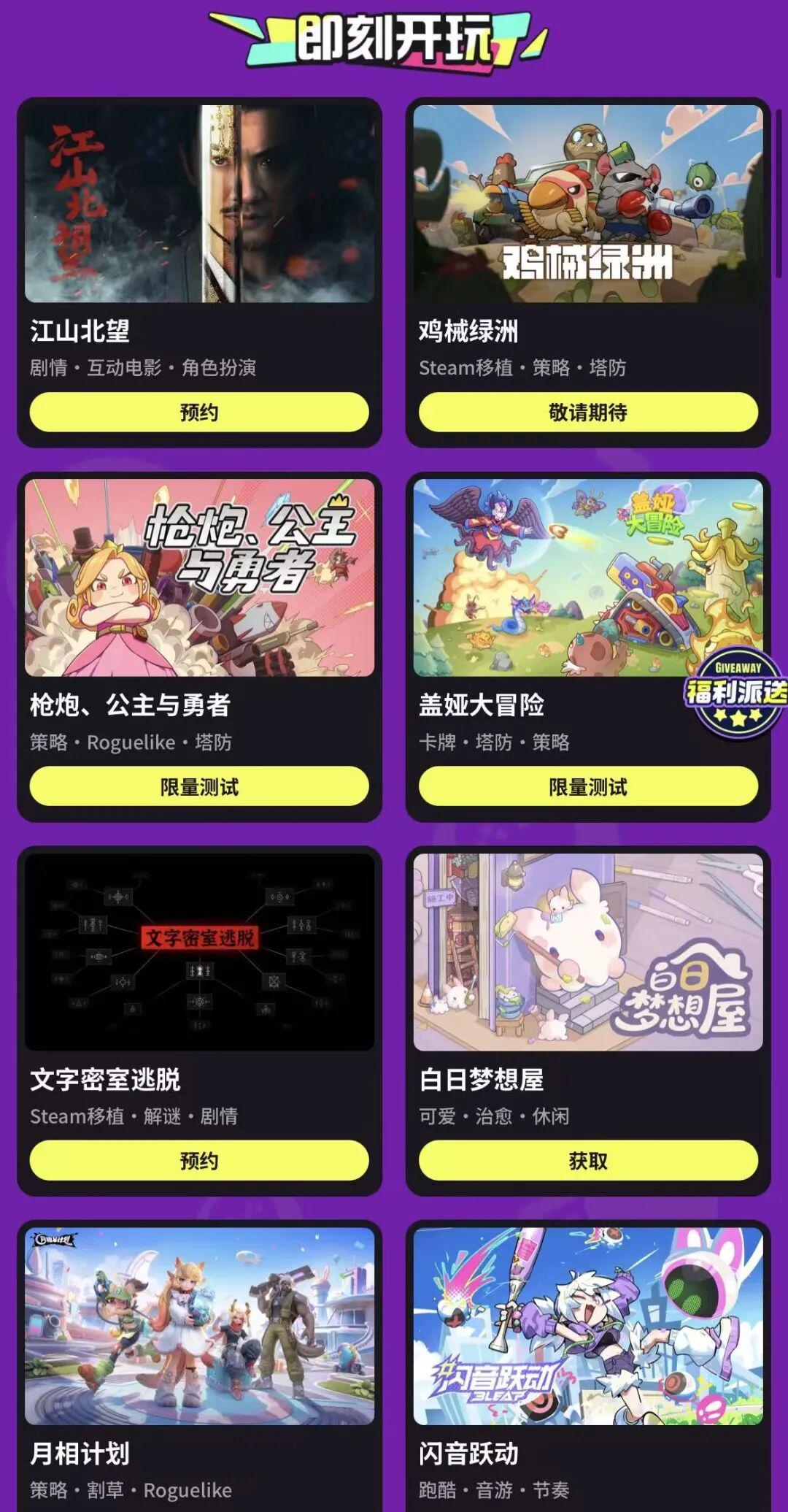
The lineup’s composition is also worth a closer look. From wuxia to AVGs, from puzzle games to management sims; from mobile-exclusive titles to PC games showcased simultaneously—the range of genres is quite broad, but one common thread runs through it all: a very high concentration of one-time purchase titles and critically acclaimed games.The mobile version of *Ghost Valley Eight Wastes* features the exact same monetization model as the PC version and is exclusively available on TapTap; *Diver Dave*, which has sold over 7 million copies worldwide, is also available on TapTap;the same goes for *Daughter of the Volcano: Reunion*. Add to this the exclusive domestic mobile releases of console and PC blockbusters like *Prince of Persia: The Lost Crown*, and this list essentially serves as a catalog of premium, one-time-purchase games available on Chinese mobile platforms.
For players, this game festival has truly shown its sincerity. The mobile version of *Ghost Valley Eight Wastes* features limited-time discounts, free limited-edition profile frames, an exclusive pre-order merchandise giveaway, and a free trial. In the context of a one-time purchase model, discounts are the most direct way to offer value to players.Combined with the free trial chapters provided by TapTap, this allows domestic players—who are accustomed to free downloads with in-app purchases—to experience full-price games with a much lower barrier to entry.
Conclusion
For players, this is becoming the go-to destination for finding high-quality, one-time-purchase mobile games; for developers, the fact that this is the third edition—held more than once a year—shows that this hub has established a stable output.Once the niche for high-quality games is firmly established, and once nearly all players interested in quality and creativity have gathered here, the virtuous cycle isn’t just up and running—it’s accelerating. Great games attract the right users, and the right users attract the next wave of great games; with each cycle, this ecosystem becomes even harder to replace.
The channel landscape won’t be changed by declarations; it will only be shaped by repeated publishing decisions. When mobile versions of buy-to-play and premium games repeatedly point to the same entry point, and when the lineup of exclusive titles is so extensive that game festivals can be held several times a year, a de facto landscape has already taken shape.By the time the next game aiming to sell copies based on quality is greenlit, the answer in the “mobile distribution plan” section will likely already be filled in.
原创文章,作者:gallonwang,禁止转载:https://youxichaguan.com/en/archives/201424