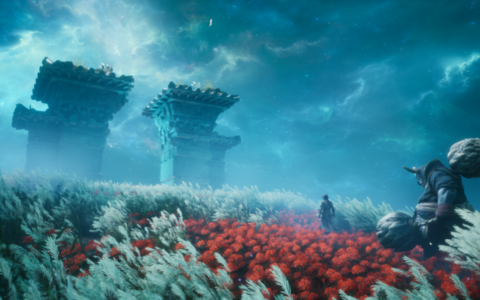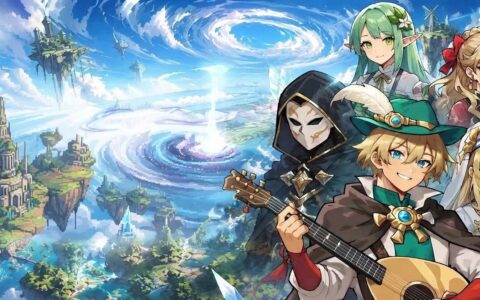
Not long ago, Perfect World’s financial report revealed that, as of the end of June, *The Heterocycle* had generated global revenue of over 1.4 billion.
This figure indicates that the project has now gained a firm foothold, allowing Suzhou Fantasia Studio to catch its breath just a little.
However, in reality, they didn't let up.
“Now might be exactly the time to step up our efforts,” Tian Jiashan, the executive producer of *Heterocycle*, told me.
The period following the public beta launch of a new product—especially a flagship title from a major publisher—is typically the busiest time for the entire team. Even though the development team behind *Echo Ring*, Suzhou Fantasia Studio, had accumulated ample experience, *Echo Ring*—as the first urban open-world mobile RPG to enter public beta—still encountered many “first-time issues.”
Balancing the production capacity, optimization, and quality of *The Strange Ring* is no easy task, even for Su Huan. However, the entire *The Strange Ring* team has adopted an attitude of “overcoming every challenge as it comes.”
Tian Jiashan said that the team is united in its belief: “We must live up to the players’ expectations.”
If you’ve played *The Strange Ring*, you know that they didn’t treat this statement as just a slogan. Between versions 1.0 and 1.2, *The Strange Ring* not only ramped up production but also rolled out numerous optimizations to refine the player experience. In response to player feedback, they’ve demonstrated a sincere and earnest attitude.
In fact, anime and manga merchandise may be the product category that best embodies the saying, “Water can support a boat, but it can also capsize it,” as it relies to a large extent on emotion and trust as the cornerstones of its business.
For this very reason, how to interact with players and how to strike the right balance between “listening to feedback” and content creation is a perennial challenge that virtually every anime and manga company must face.
At the upcoming TapTap Developer Workshop (hereinafter referred to as TDW), scheduled for July 26, Tian Jiashan will give a presentation titled "How to Make Friends with Players," which will focus on managing relationships with players.
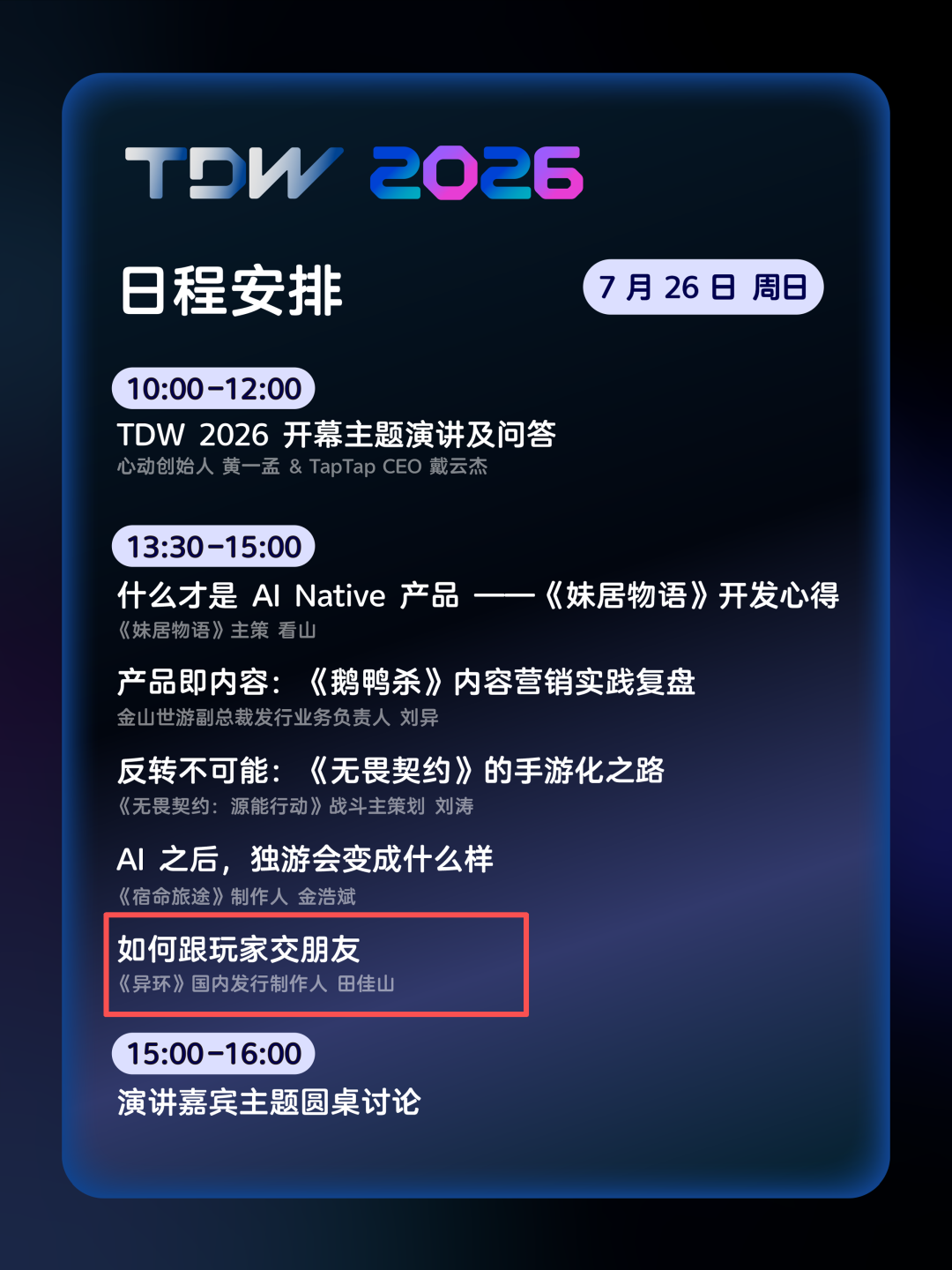
I also took this opportunity—through TapTap’s arrangement—to have an initial conversation with Tian Jiashan while he was taking a break.
I think we could perhaps consider this conversation a sort of advance preview of TDW. Of course, aside from player relations, he also shared with me—as the producer and publisher—some of his thoughts on *The Strange Ring* itself, as well as on the industry in general.
01
About the Open Beta Phase
Game Teahouse:
Let me start by introducing myself. Since this is likely your first interview, I imagine people are curious to know exactly what your role is in the *Heterocycle* project—and why you chose to speak out at TDW.
Tian Jiashan:
Hello everyone, I’m Jia Shan from *The Strange Ring*. I previously met with players during *The Strange Ring*’s preview livestream. I currently serve as the domestic publishing producer for *The Strange Ring*.
The reason I chose to participate in TDW is, first and foremost, because TapTap is a partner with whom we have a particularly close and important relationship. Furthermore, since TDW is an event for developers—an opportunity to network with industry peers—I certainly couldn’t miss it.
Game Teahouse:
Why don't we start by reviewing the project? After all, we've been missing a publisher's perspective up until now. How did you decide on the release schedule for *The Strange Ring* at the time?
Tian Jiashan:
The overall release schedule for *Heterocycle* is a unified plan jointly determined by the development team and the publisher after taking into account a variety of factors.
Game Tea House:
So why choose April for the open beta? It’s actually less than two months since the project’s last test, and no similar products are set to launch anytime soon. Looking at it now, doesn’t this seem a bit rushed?
Tian Jiashan:
In fact, we have our own internal considerations. With the urban open-world genre, there are few established benchmarks to draw upon. If we rely solely on internal closed beta testing, it will be difficult to fully capture the authentic gameplay experiences of different player groups.
The R&D team didn’t want to rely solely on limited internal test data to predict the actual needs of the general public, so we set a timeline that might seem a bit rushed at first glance. However, we’re actually well-prepared—for example, we’ve built up a content library and developed contingency plans for after the launch.
Furthermore, since we do not purchase the product outright, rather than extending the development cycle and relying solely on internal iterations to refine it, we prefer to leverage real-world feedback from a large player base and gather a wide range of optimization suggestions. Throughout the long-term operation of the game, we will make targeted adjustments to gameplay, environments, and various details to continuously refine and improve the game’s overall content and player experience.
Our core principle is to make the full game content available to as many players as possible as early as possible, with a focus on the player experience.
Game Teahouse:
Looking back now, how do you think *The Strange Ring* managed market expectations at the time?
Tian Jiashan:
Overall, our management of market expectations for *Heterocycle* during its early stages has been entirely in line with our plans. We did not allow expectations to get out of hand, yet we still managed to attract sufficient player interest.
Game Teahouse:
How was this achieved? Is there a methodology you could share?
I think the main reason is that, unlike conventional marketing and promotion strategies, our internal publishing team and the development team reached a consensus early on:
Throughout the production of *The Strange Ring*, we must maintain a restrained promotional approach and avoid excessive hype or sensationalism.
All content presented to the public strives to faithfully reproduce the game's true appearance, ensuring a "what you see is what you get" experience, and this promotional principle has been fully implemented.
It’s not really a methodology per se, but we’ve always adhered to one core principle: approaching players with sincerity, honestly conveying the current state of the product, listening to their concerns, and building a bond of trust with users through open communication. This has also been our core communication guideline throughout the entire project lifecycle.
02
Dividends and Disparities
Game Teahouse:
Now that we’ve covered the open beta, let’s talk a bit more about the product. As of now, *Ether Ring* is the only urban open-world mobile game currently available on the market. As the first to take the plunge, what challenges have you faced from a publishing perspective?
Tian Jiashan:
We were indeed the first to venture into this entirely new market segment, so there were certainly challenges, and as you mentioned, there were virtually no guidelines to follow.
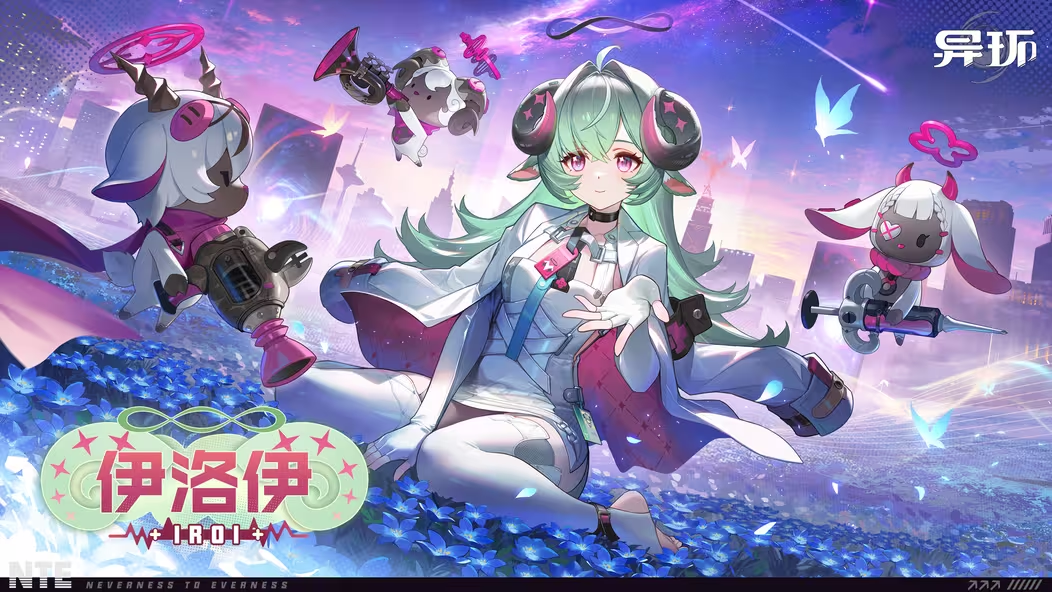
First, one of the most significant challenges we face is the objective gap between player expectations and the project’s current development capacity. Since there are currently no established models for open-world urban games, every player has their own idealized vision for this genre and naturally expects *The Strange Ring* to fully meet their expectations.
However, due to objective limitations on the project’s R&D capacity, it will be difficult to meet all idealized expectations at once in the short term. This is why we have adopted a restrained marketing and promotion strategy throughout the process; we have proactively anchored public expectations within the scope of what we can realistically deliver at this stage.
If initial expectations are out of line with the product’s actual delivery capabilities, it’s easy for there to be a gap between expectations and reality after launch—this is a key risk that we focus on managing throughout the entire process.
Game Teahouse:
So, have you reaped the benefits of being first to market?
Tian Jiashan:
Of course, there are definite early-mover advantages. Our “urban open-world” label is highly recognizable in and of itself; relying solely on this unique positioning allows us to efficiently and precisely reach and convert our target audience—a market advantage unique to this new niche.
Game Teahouse:
After these past three months, do you think the concept of “urban open world” has taken root in the minds of Chinese users? From a publishing perspective, what metrics do you use to measure this?
Tian Jiashan:
We believe that, conceptually speaking, this idea has really taken hold with our domestic users—as evidenced by the fact that players are urging us to update the urban content in various comment sections. Rest assured, players: going forward, we will place greater emphasis on the urban gameplay elements within the game.
Game Teahouse:
"Heterocycle" is actually a typical big-screen title, so PC sales likely account for a significant portion of its commercial performance. Can you share the breakdown of PC and console sales now?
Tian Jiashan:
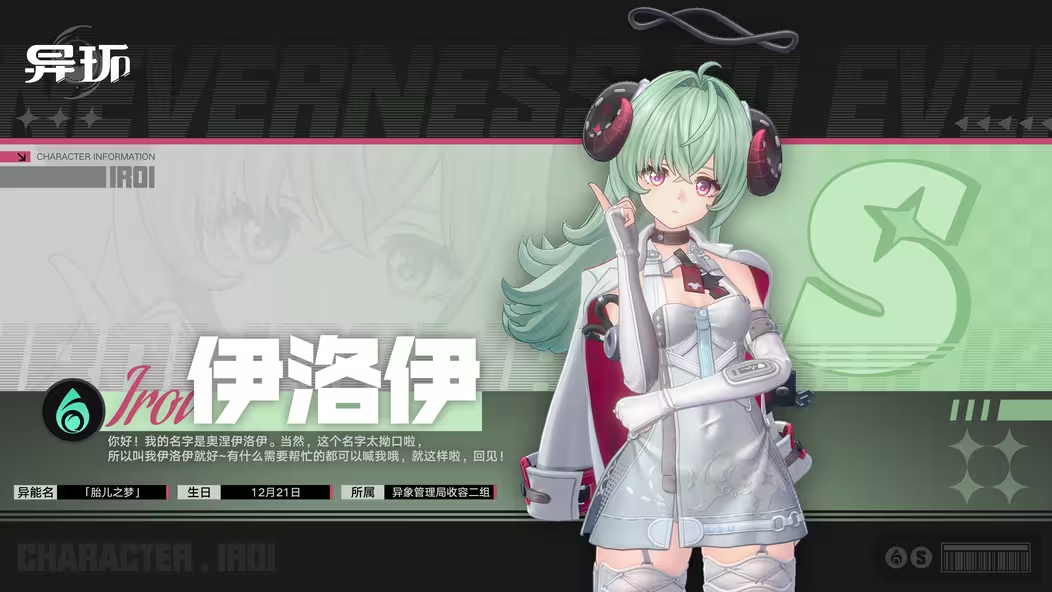
The company had previously disclosed that domestic PC sales accounted for approximately 60% of *Yihuan*'s total sales, a figure that clearly underscores the product's core positioning toward larger screens.
Game Teahouse:
To some extent, the high proportion of PC games also poses a significant challenge to how the industry is perceived by the outside world, given that the media, gamers, and even investors have become accustomed to relying on mobile chart data. What are your thoughts on this issue?
Tian Jiashan:
We are well aware that current industry discourse, industry rankings, and market evaluation systems largely use mobile products as their reference standard, and that a high proportion of PC and console games can indeed create a certain bias in the public’s perception.
Game Teahouse:
Has the distribution team taken any steps to correct this perception?
Tian Jiashan:
We have not deliberately taken any measures to adjust or influence market expectations,
The core principle is this: the fundamental factor that enables long-term game operations and retains core users will always be the quality of the product itself.
We prefer to focus all our efforts on refining the game’s content and maintaining a long-term user experience, relying on the long-term retention and word-of-mouth of real players to naturally build an objective market perception that aligns with the product itself.
03
Finding the Right Person
Game Teahouse:
I’ve also noticed that the promotional account for *Heterocycle* is performing well on Douyin. Does this suggest that the novelty of urban-themed content is reaching a broader audience than traditional mobile games?
Tian Jiashan:
In fact, *Yihuan* has never used the broad label of “anime/manga culture” to define its user base; we’ve always shared the consensus that:
A game should find its audience based on multiple factors—such as its gameplay, theme, visual style, and monetization model—rather than relying on a vague label.
Game Teahouse:
Since this conversation is centered on TDW, let’s take this opportunity to discuss distribution channels. How do you currently view *The Strange Ring*’s presence on different platforms? Do you have a distribution model that involves “tailoring strategies to specific channels”?
Tian Jiashan:
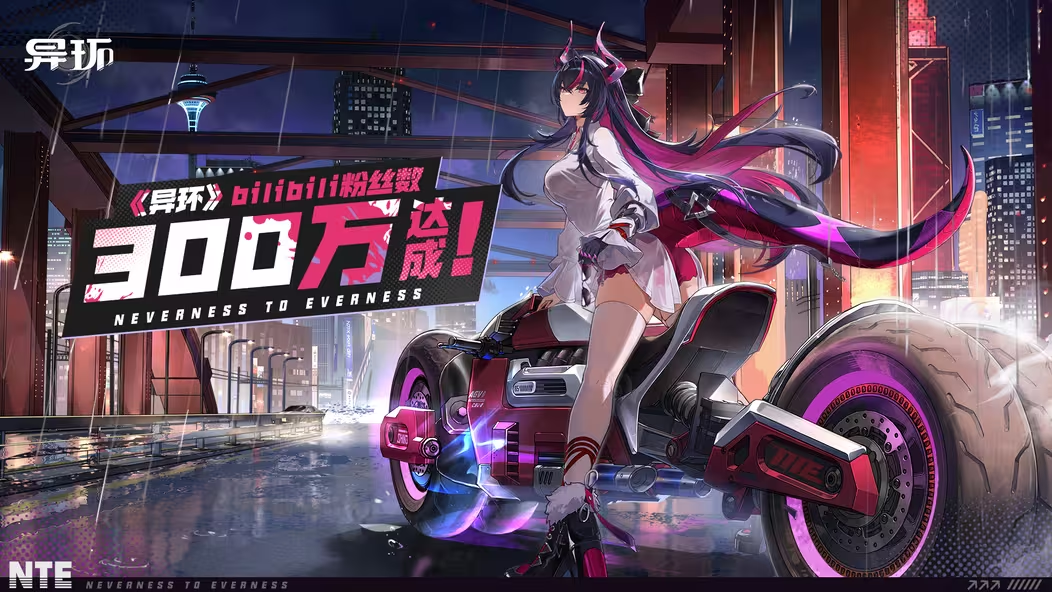
We feel that the overall image of *Heterocycle* across various platforms is fairly consistent, with only minor differences—which is exactly the effect we intended to achieve. As a project designed for long-term operation, we believe it’s not advisable to create different images based on the platform; at most, we might make some adjustments in the selection of promotional materials.
The prerequisite for a long-term project is having a group of players who will stick with us over the long haul. We will adapt based on the players’ experience and grow alongside them over the long term, but we will not project multiple public personas.
Game Teahouse:
Since its launch, *The Strange Ring* has undergone quite a few product-side adjustments—including not only experience optimizations but also numerous content-related changes—and the community has responded very quickly. I’m curious: Does *The Strange Ring* have an internal mechanism that can distinguish between players’ emotions and their genuine feedback, and translate that into concrete optimizations that the development team can implement?
Tian Jiashan:
We have always believed that we cannot rely solely on feedback from a single channel as the basis for decision-making.
Player feedback comes from a variety of sources. Community comments and live-stream comments on major platforms serve as public forums for public opinion, while in-game surveys can collect large-scale, structured feedback. At the same time, many players also share their thoughts through channels such as influencers and online communities.
We will compile and cross-verify information from multiple sources to accurately reflect the genuine needs of our players.
Game Teahouse:
How does the publishing and operations team filter through this feedback and relay it to the development team? Also, for content-driven products, how do you think community feedback should be viewed?
Tian Jiashan:
We’ve established a standardized internal information-sharing mechanism. The operations and publishing teams continuously gather feedback from various community channels, first categorizing it into “what we’re currently working on,” ““what we’ll do in the future,” and “this idea is really great—we’ll do it.” We then organize, categorize, and prioritize this information to create structured requirements that are shared with the R&D team, enabling them to assess feasibility and schedule optimization efforts.
In my view, community feedback is crucial for the long-term operation of open-world products and serves as an important reference for continuous iteration, but it is not the same as a direct list of development tasks.
Community feedback helps us promptly identify pain points in the user experience and understand player expectations. At the same time, we will carefully weigh these factors against our long-term product roadmap and the objective constraints of our R&D capacity to strike a balance between listening to player requests and staying true to the project’s long-term content direction, thereby advancing product adjustments in an orderly manner.
Game Teahouse:
What are your thoughts on fan-created content in the community these days?
Tian Jiashan:
I believe fan creations play a significant role in promoting the product and fostering a community atmosphere, and high-quality fan content has a remarkably strong viral effect. However, *The Strange Ring* is a new, original genre and lacks an established foundation for fan creation.
Therefore, fostering a fan-created content ecosystem is an ongoing priority for us during the operation and distribution phases. Currently, we are regularly organizing fan creation events across various platforms, while also proactively identifying high-quality creators to engage with them directly and provide targeted support.
Of course, external incentives are merely a means to an end; the long-term sustainability of the fan-created content ecosystem ultimately depends on the game’s content itself. We will continue to refine our creator support system, encourage players to create freely, and work together to build a vibrant community content ecosystem.
04
Continuously Exploring the Possibilities of the “Metropolis”
Game Teahouse:
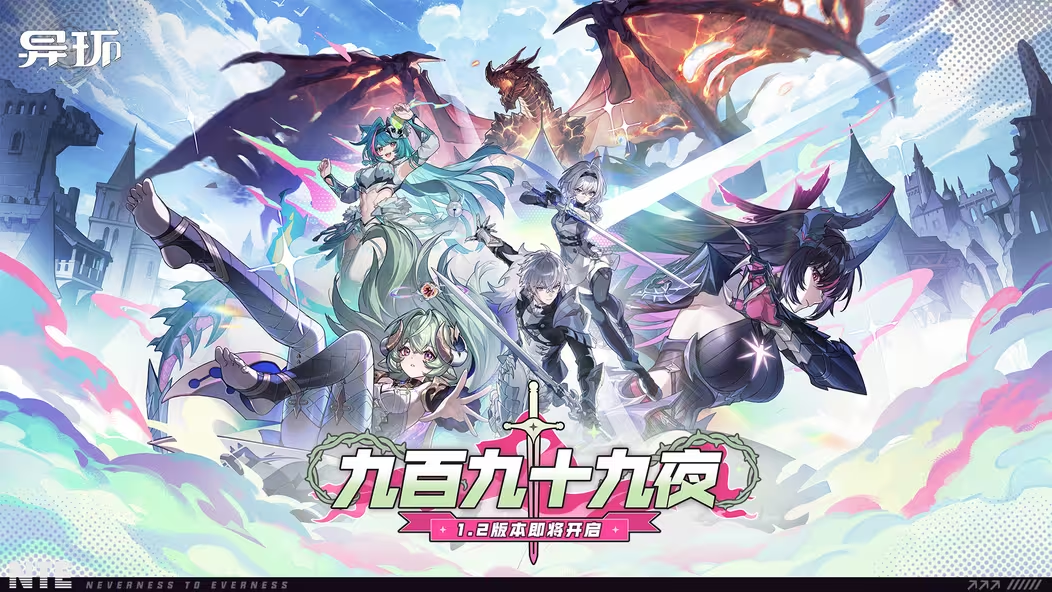
"The Strange Ring" has a unique long-term foundation: "the possibilities of the city." It has demonstrated this flexibility in content across several editions, such as the ongoing Version 1.2 of the D&D tabletop game. From a publishing perspective, has this content model altered the marketing rhythm for "The Strange Ring" editions?
Tian Jiashan:
The unique "urban fantasy" setting of *Eccentric Ring* derives its versatility from its rich imaginative potential and creative freedom.
A modern urban setting combined with surreal, otherworldly elements. The urban landscapes are grounded in real life, allowing players to feel deeply immersed; meanwhile, the surreal elements break the rules of reality, enabling us to continually create fresh and distinctive content within familiar urban settings—offering players a completely new experience within familiar environments.
From a distribution perspective, this gives us more opportunities to promote our version.
We don’t rely solely on new characters and maps to attract players; all kinds of innovative gameplay features can become highlights of each update. Every update features a brand-new promotional theme and content that resonates with players. We aim to provide players with a diverse urban open-world experience that goes beyond just characters, maps, and storylines—this approach also helps prevent players from experiencing update fatigue during long-term operation.
Game Teahouse:
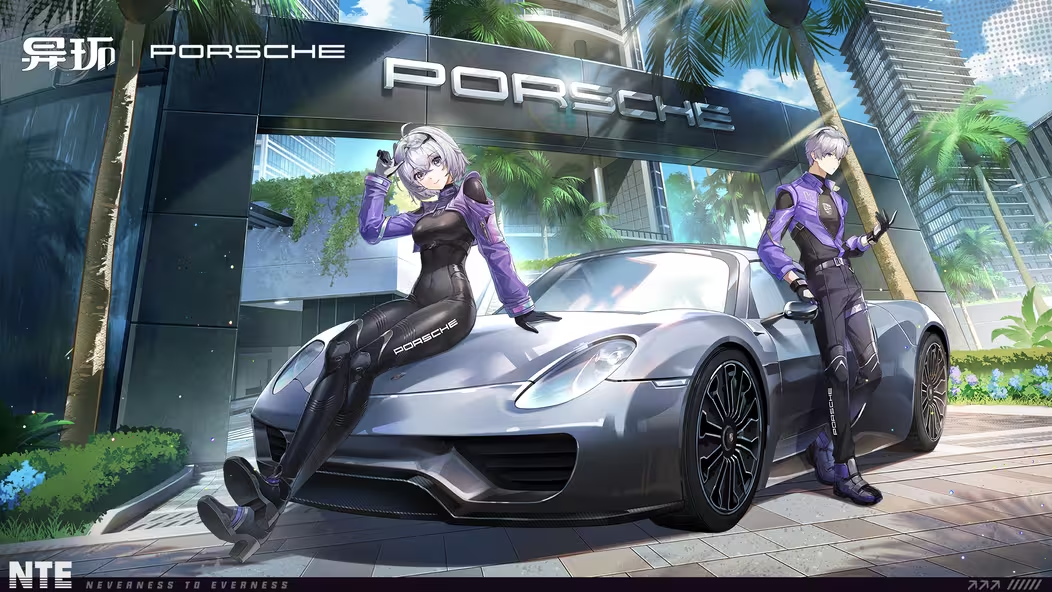
"Heterocycle" previously collaborated with Porsche. From a publishing perspective, how did this collaboration perform in terms of commercial results?
Tian Jiashan:
The cross-brand collaboration with Porsche performed quite well in terms of enthusiasm among the gaming community, the reach of our content, and commercial results—all of which met our internal expectations.
From an analytical perspective, on the one hand, the collaboration with the automotive brand aligns perfectly with the tone of *Ether Ring*, effectively amplifying the game’s urban open-world atmosphere and reinforcing the distinctive appeal of its vehicle-based gameplay;On the other hand, it has indeed demonstrated the feasibility of collaborations between urban-themed games and high-end real-world brands, providing us with practical experience in executing cross-industry partnerships and commercial operations.
Game Teahouse:
Will cross-industry collaborations become a standard strategy for *The Strange Ring* in the future?
Tian Jiashan:
Cross-industry collaborations will not become a fixed, standardized routine strategy, but they will remain an important operational tool in our long-term, sustained planning.
We firmly adhere to the principle of “thematic alignment and content first.” We do not blindly pursue the number of collaborations; instead, we prioritize selecting partners whose worldviews, user profiles, and tone align with *The Strange Ring*, and we reject short-term marketing efforts that amount to little more than simple branding.
However, our urban open-world setting does give us a unique advantage when it comes to cross-industry collaborations, and we are actively reaching out to more high-quality brand partners.
Moving forward, *Heterocycle* will continue to explore diverse forms of real-world brand integration and content co-creation. However, all collaborations will be designed to enhance the game experience itself, ensuring that collaborative content blends naturally into the urban open-world setting—without disrupting gameplay or compromising immersion—to deliver gaming content with a more authentic atmosphere for players.
Game Teahouse:
Finally, I’d like to ask: As of today, what are your thoughts on the “urban open world”?
Tian Jiashan:
In my view, urban open-world games cannot simply be categorized as a genre, a gameplay format, or a standalone market segment; they are, in essence, more like an identifying label for a niche market.
When players see this tag, they’ll quickly come to realize that this game offers a high degree of freedom, plenty of content to explore, and resonates with real life.
Of course, tags are just meant to help players form a quick first impression.
The urban setting is merely one type of world-building framework within the open-world genre; while it offers advantages such as realism and a stronger narrative atmosphere, such labels alone cannot serve as a product’s competitive advantage.
As more titles with similar themes hit the market, you can’t rely solely on the “urban open-world” label to stand out.
What truly keeps players engaged are the unique story, gameplay design, and sense of immersion within this framework—and this is the direction we have consistently pursued in developing *The Strange Ring*.
原创文章,作者:游茶妹儿,禁止转载:https://youxichaguan.com/en/archives/208375