By 2026, user-generated content (UGC) in gaming had already moved beyond the stage where “the first to act stands the best chance of reaping the rewards.”
In recent years, stories—ranging from making millions a month from a single user-generated map, to small teams of just a few people rapidly expanding their operations thanks to a single gameplay concept, to independent developers amassing tens of millions of players on the platform based solely on their imaginative ideas—have certainly caught the attention of many small teams.Nowadays, the biggest headache for many small and medium-sized UGC teams isn’t coming up with game mechanics—it’s the difficulty of scaling up after they’ve created them: the top players are becoming increasingly dominant, while new mechanics are more and more likely to be just a flash in the pan.
As traffic and resources become concentrated on top-tier games, mid-tier developers easily find themselves caught in a vicious cycle: they work tirelessly to develop a game, which shows some initial promise thanks to the platform’s initial traffic boost upon launch, but as soon as subsidies stop and featured spots are removed, players quickly abandon the game. Without long-term retention, long-term profitability is out of the question.
With the "head-of-the-class" siphon effect becoming increasingly pronounced, is there still room for small and medium-sized teams to grow?
The answer may lie in the "Peace Elite: Oasis Genesis" Developer Conference, scheduled to take place in Shanghai on July 29.
According to reports, this conference will not only reveal the latest ecosystem data but will also announce a new set of support policies for Workshop developers. The focus is clear: to give small and medium-sized teams more opportunities to gain visibility, survive, and continue to grow.

(See below for the specific event schedule.)
01
For small and medium-sized teams to survive, they must first find a stable source of traffic.
Before discussing the new policy, we must first recognize a reality: for today’s UGC platforms, their native traffic pool is no longer just a bonus—it’s a matter of survival.
Over the past few years, the monetization models of some platforms have still been in the exploratory phase, with monetization rules lacking transparency; as a result, creators’ incomes have often fluctuated frequently in response to changes in platform strategies.The combination of unsustainable traffic and uncertain commercial returns has left many teams that entered the market with high hopes ultimately stuck in the awkward situation of “creating content that no one uses” and “investing without recouping their costs.”Developers have paid a steep price for this experience, arriving at a simple consensus: what they need is not a subsidy that lasts just a week or two, but a platform that offers both a stable supply of traffic and a clear path to monetization.
Since its official launch in 2021, Oasis Qiyuan has continuously optimized and iterated on its three core systems—tools, traffic, and monetization—to build a solid ecosystem foundation. This is precisely what developer teams need most right now: a top-tier UGC platform that offers both stable traffic and clear monetization pathways.
Public data shows that Oasis Qiyuan’s DAU has now surpassed 58 million.Unlike platforms that rely on external user acquisition for their initial launch, Oasis Qiyuan’s user base primarily comes from *Peace Elite*’s own pool of active players. This means it doesn’t consist of a group of casual users acquired through paid advertising, but rather active players who are already familiar with *Peace Elite*’s gameplay and control mechanics.For small and medium-sized teams, this also reduces the risk of “traffic shortages” during the cold start and ongoing distribution phases. The 58 million DAU is not just an impressive number; it is the confidence that allows them to commit resources and continue rolling out updates.
02
It's not just about subsidies—it's about opening up opportunities for small and medium-sized teams.
With traffic in place, the question becomes: Can this traffic truly be distributed to more teams?
Judging by the signals sent by this conference, Oasis Qiyuan aims to address precisely this issue: Beyond the top-tier games, can more up-and-coming teams get the chance to be noticed and supported?
Although the full details won’t be announced until July 29, the current trend suggests that the platform will allocate more resources to growing small and medium-sized teams, as well as new game genres that haven’t yet been fully explored. This is actually an issue that UGC platforms will inevitably face: top-tier, mature games can already sustain themselves through in-app purchases and operations;what the platform must do is allocate new incremental resources—without disrupting the existing ecosystem—to nurture emerging talents that have genuine potential but need a little extra push. If this policy is implemented, mid-tier developers will at least have one more pathway to move up the ranks.
For Oasis Qiyuan, it goes without saying that they don’t want the ecosystem to become stagnant.Genres such as RPGs, SLGs, simulation games, and casual puzzle games still have room to grow on the platform. For small and medium-sized teams, as long as their gameplay offers something unique and they are willing to continuously iterate, they can ride this wave of momentum and seize their own opportunity for growth.
03
More important than subsidies is ensuring the game survives past its second month.
Being noticed is just the first step. For small and medium-sized teams, the real challenge is staying in business for the long haul.
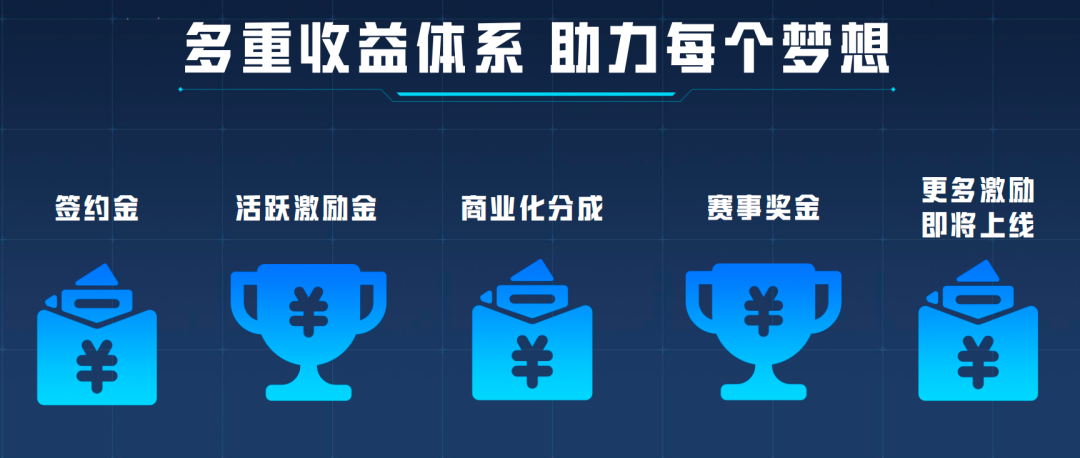
Oasis Qiyuan’s approach to supporting professional developers in the PC Workshop is also evolving:Rather than relying solely on one-time subsidies, the platform has established a comprehensive, tiered, and complementary monetization framework—one that allows for the parallel stacking of incentives—by combining special incentives such as performance bonuses, signing bonuses, and tournament prizes. This approach channels more resources toward ongoing operational support and long-term revenue sharing, helping game modes sustain operations beyond the second month.
The PC Workshop Editor is based on a mature game engine and features the Lua scripting language, providing full access to low-level development capabilities. This allows development teams to create more complex rules, statistics, levels, and monetization designs. In-depth gameplay requires a longer development cycle and a more stable revenue model.Over the past few years, Oasis Qiyuan’s strategy has been to shift its support model from “one-time subsidies” to “cold-start support + revenue sharing + long-term operation.” The real highlight of this conference will be whether the company continues to advance this system.
In fact, this model has already proven successful. Within the Oasis Qiyuan ecosystem, numerous small and medium-sized teams have achieved remarkably stable monthly revenue through a single, deeply engaging game mechanic. Take *Eat Pills, Cultivate Immortality*—the platform’s breakout hit that I covered in an interview last year—as an example: rather than resorting to the well-trodden path of “skin-swapping,” the development team utilized PC Workshop to meticulously refine a long-term progression system.Bolstered by official traffic and revenue sharing, this game not only set a new record for revenue but also enabled the team to make a transformative leap from zero to one and even rise to become a top-tier player in the industry.
Conclusion: The best time to get involved is right now.
Over the past five years, Oasis Qiyuan has evolved beyond being merely an editor platform; it has begun to actively shape—and even drive—the rules of the UGC space.
For small and medium-sized UGC teams that are still sitting on the fence, now is indeed a window of opportunity worth reevaluating: on one hand, there’s the stable traffic from established platforms; on the other, there are new support measures tailored for small and medium-sized teams—and these come in the form of tangible, financial resources. Such a “stacked buff”-like opportunity, offering this level of certainty, is rare in today’s gaming industry.
In the second half of the UGC era, understanding platform rules is sometimes more important than just working hard.
The upcoming Oasis Qiyuan Developer Conference is clearly the best opportunity to gain first-hand industry insights. At the event, the official product team will provide a comprehensive breakdown of the new support policies for small and medium-sized teams, and the industry analysis team will engage in in-depth discussions with developers.For teams currently developing UGC features—or those already facing growth bottlenecks—this conference is well worth attending: You’ll be able to learn firsthand how to qualify for the new policies, which categories receive the most support, and more—allowing you to determine whether now is the right time to enter the market.

原创文章,作者:游茶妹儿,禁止转载:https://youxichaguan.com/en/archives/208369