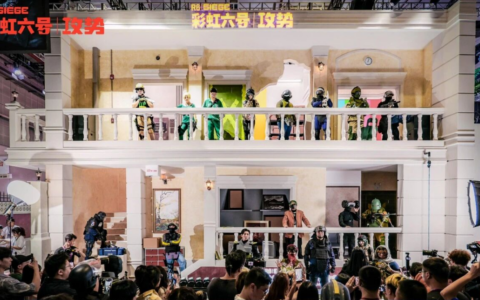
At the end of last month, Season 10 of *Operation Delta* introduced the new map, AZ3 Nuclear Power Plant.
Unlike usual, after this new update was released, players on social media were more eager to discuss two other things than the power rankings of new operatives or speedrun guides: a door that requires a 36-digit passcode to open, and a hidden achievement called “No Nukes.”
A video about the new season has gone viral on social media. In an underground area of the new map, after players finally cracked a 36-digit password, a sight rarely seen in gaming history unfolded within the air-wall maze behind the door. Countless player characters fell one after another, and their “boxes” formed a trail on the ground, guiding those who followed.
Meanwhile, some players are rushing around the game, racing against the clock to reach the large safe zones on the map. But unlike before, they aren’t interested in the loot inside these safe zones; instead, they actively cause them to expire, triggering the cutscene that players have dubbed “the coolest CG.”Within the player community, thousands of players are sharing their experiences of unlocking this hidden achievement and exchanging “secret codes” for in-game meetups.
01
The Gentlest “Impossible Challenge” in a Shooting Game
Since the new season launched, the hidden achievement “No Nukes” has been the subject of heated discussion across various platforms. The requirements to unlock it are quite challenging: within a single match, players must hack and deactivate five nuclear facility control consoles without anyone hacking a safe, and all players must successfully evacuate.
In other words, if even one player can't resist taking the big insurance, everyone's efforts in the entire game will be for nothing.
Upon entering this map, players start with a reactor power of 30 megawatts. Every time a player triggers a major safety shut-off, the power increases, and players are exposed to higher levels of radiation. This causes interference with their vision and hearing, and when radiation levels are severe, they also receive a health-draining debuff.
From a purely “utilitarian” perspective, radiation exposure isn’t an unbearable negative effect—you can simply evacuate promptly after consuming supplies. On the other hand, shutting down the console means players must give up immediate benefits, which is a rather unconventional design choice for a “search-fight-evacuate” game.
But many players chose to do so anyway.
On social media, some players shared their experiences: after queuing for a random match all night, they finally achieved their goal at dawn. “Seeing the sun in the cutscene right at dawn was so beautiful it brought me to tears.”Another player, who hadn’t known about this hidden achievement at first, was busy gathering supplies when they suddenly saw their radiation level drop to zero. After searching online, they discovered it was a hidden achievement, quickly called out to their random teammates to evacuate, and couldn’t help but exclaim, “That was absolutely mind-blowing.”
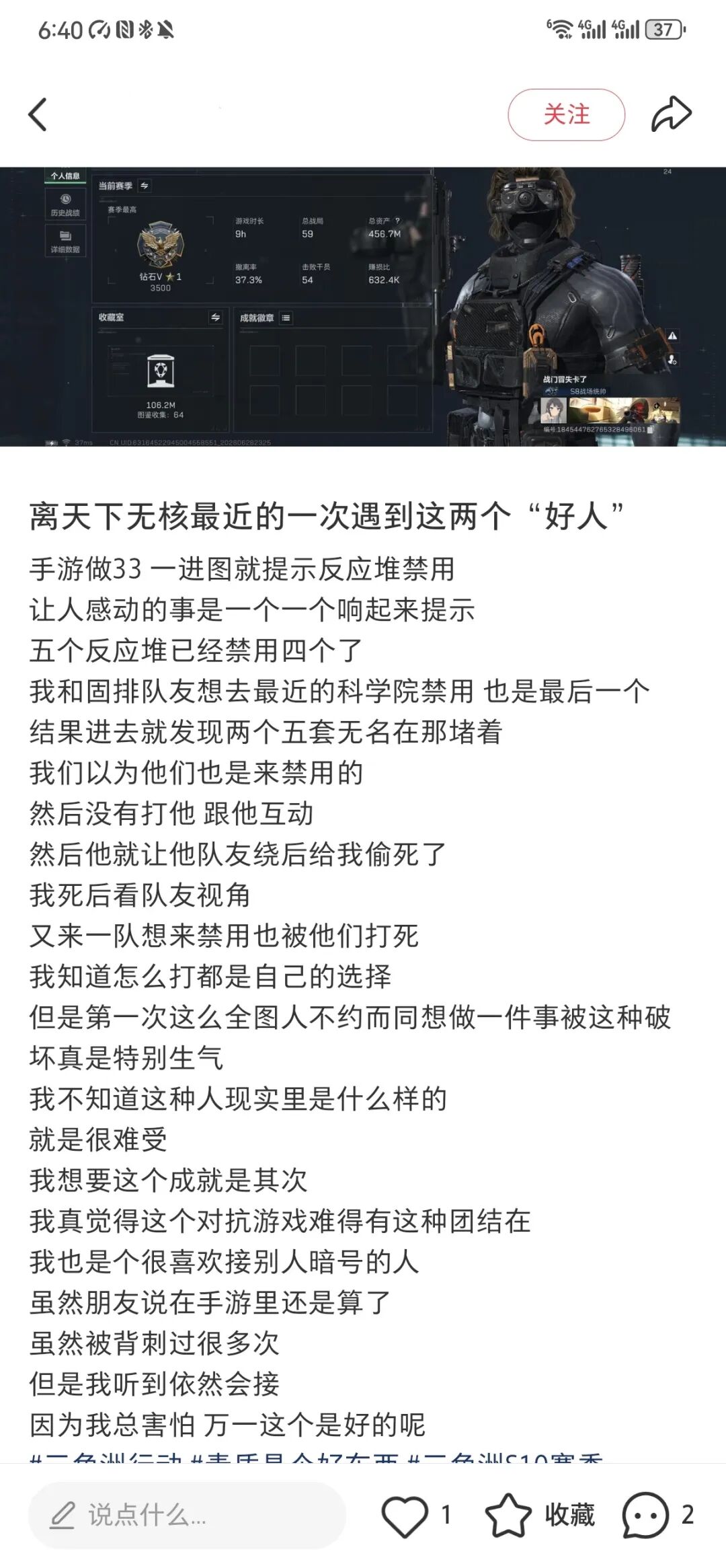
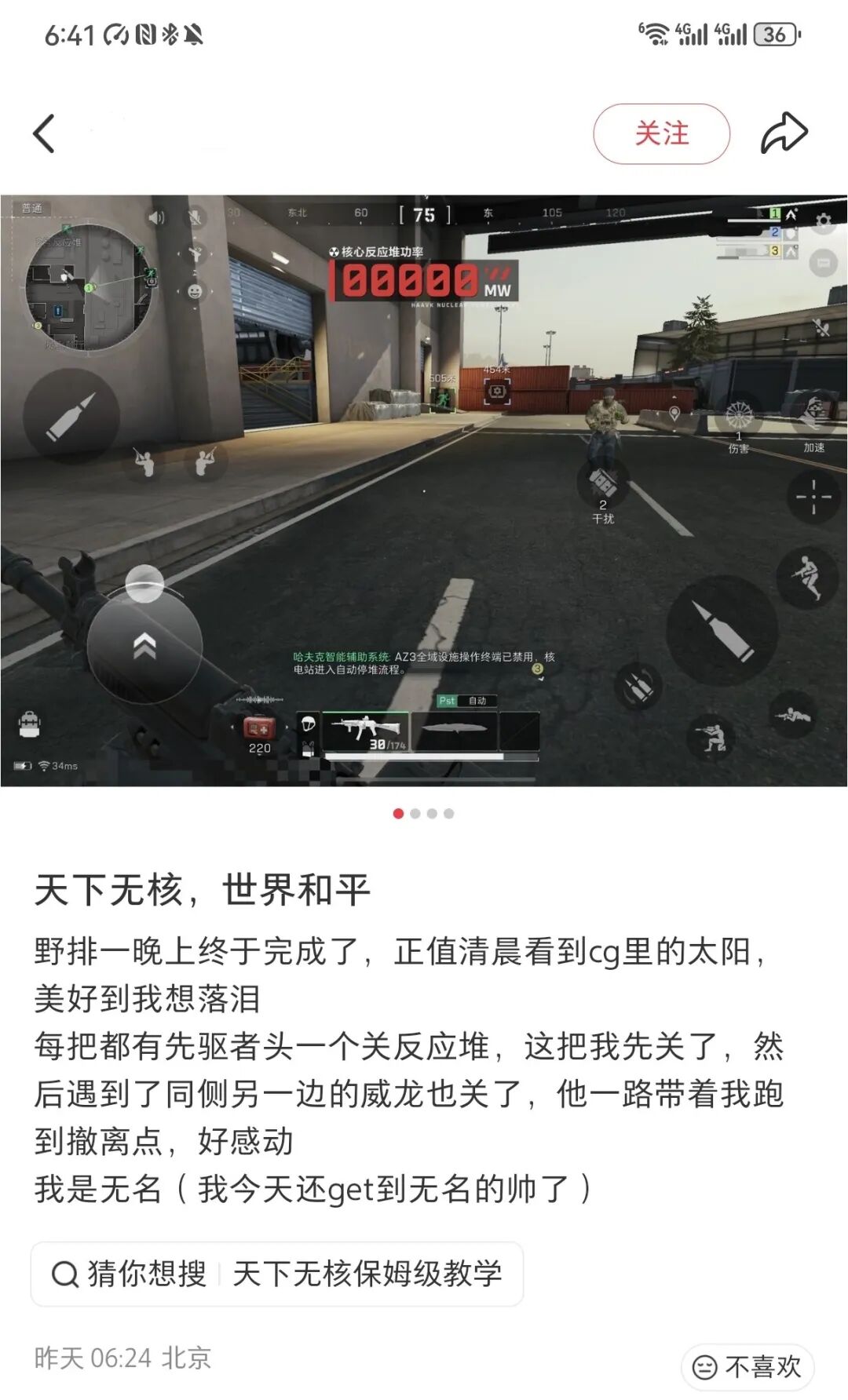
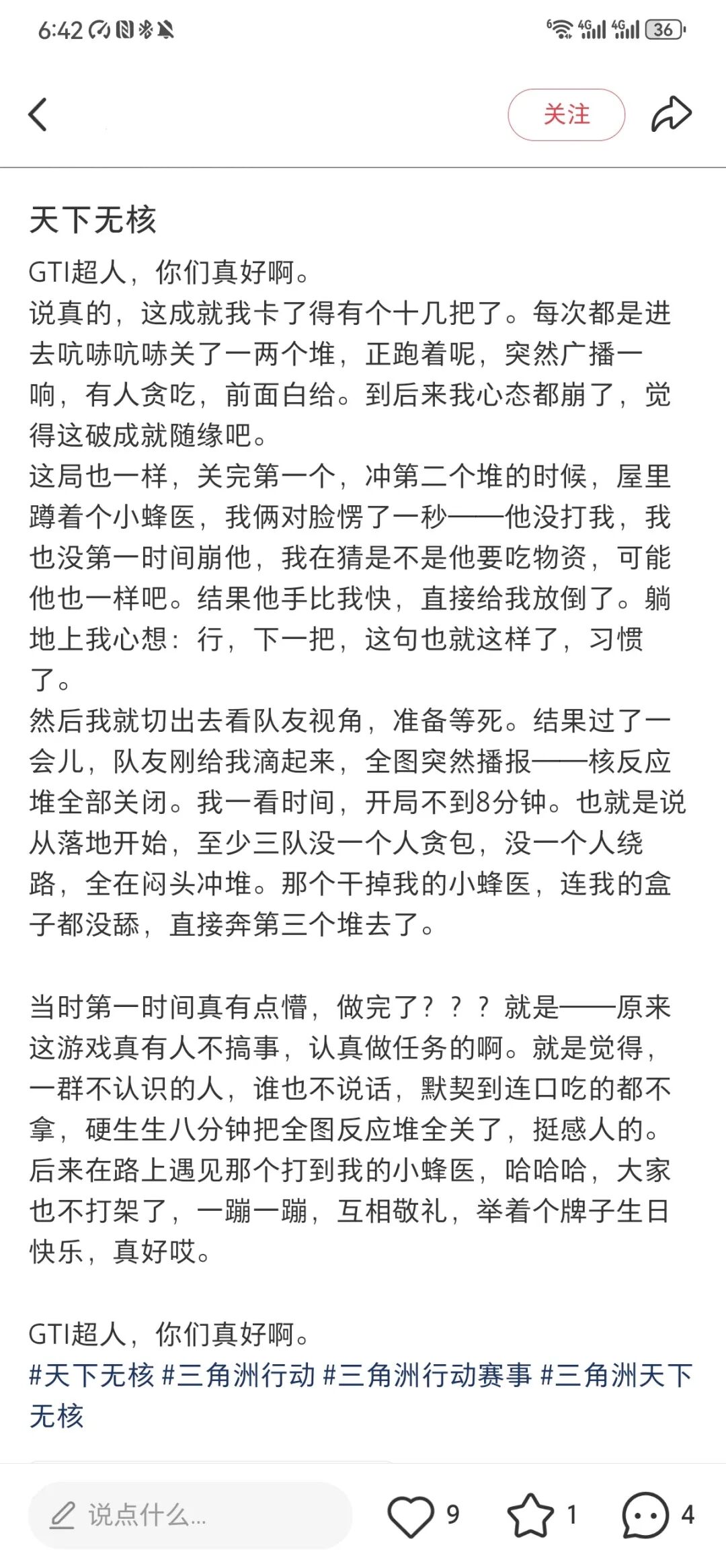
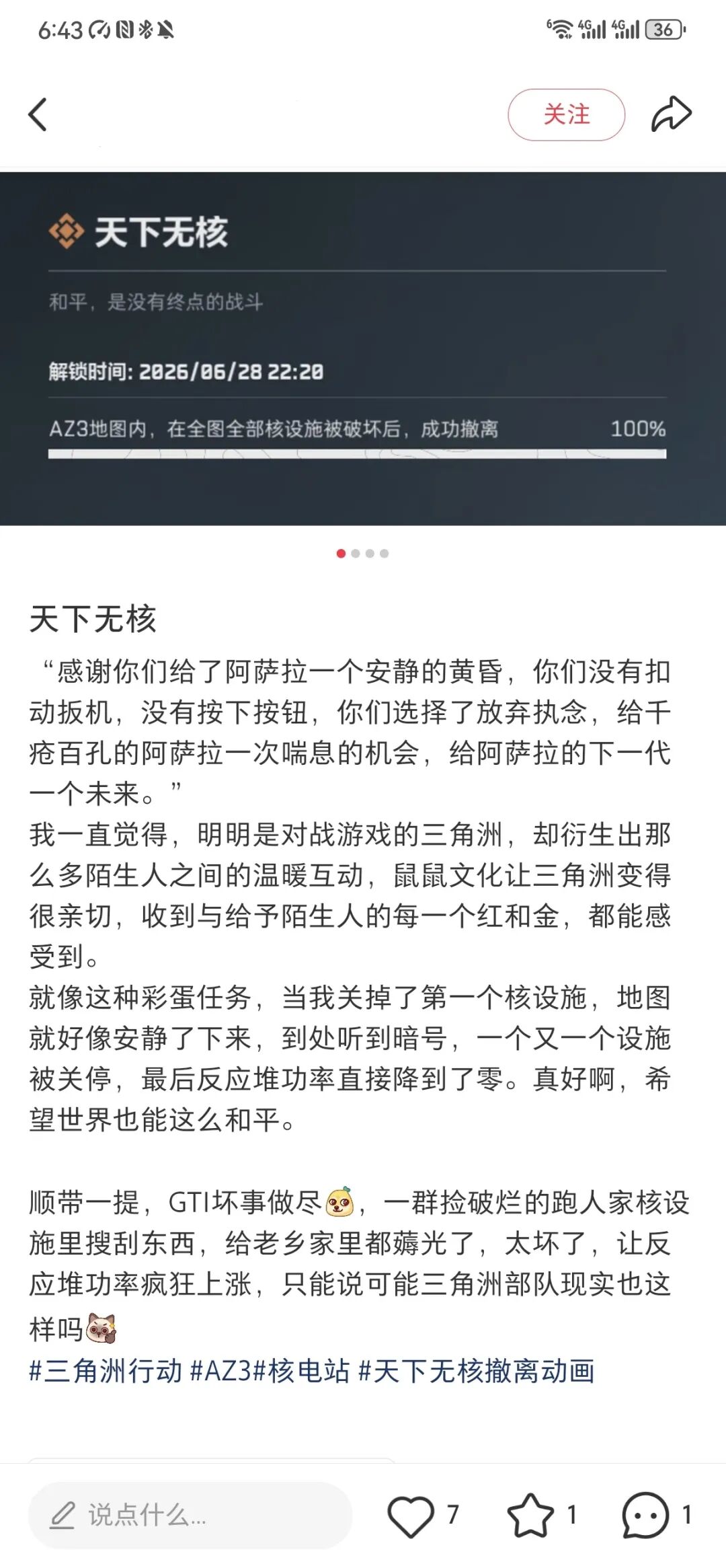
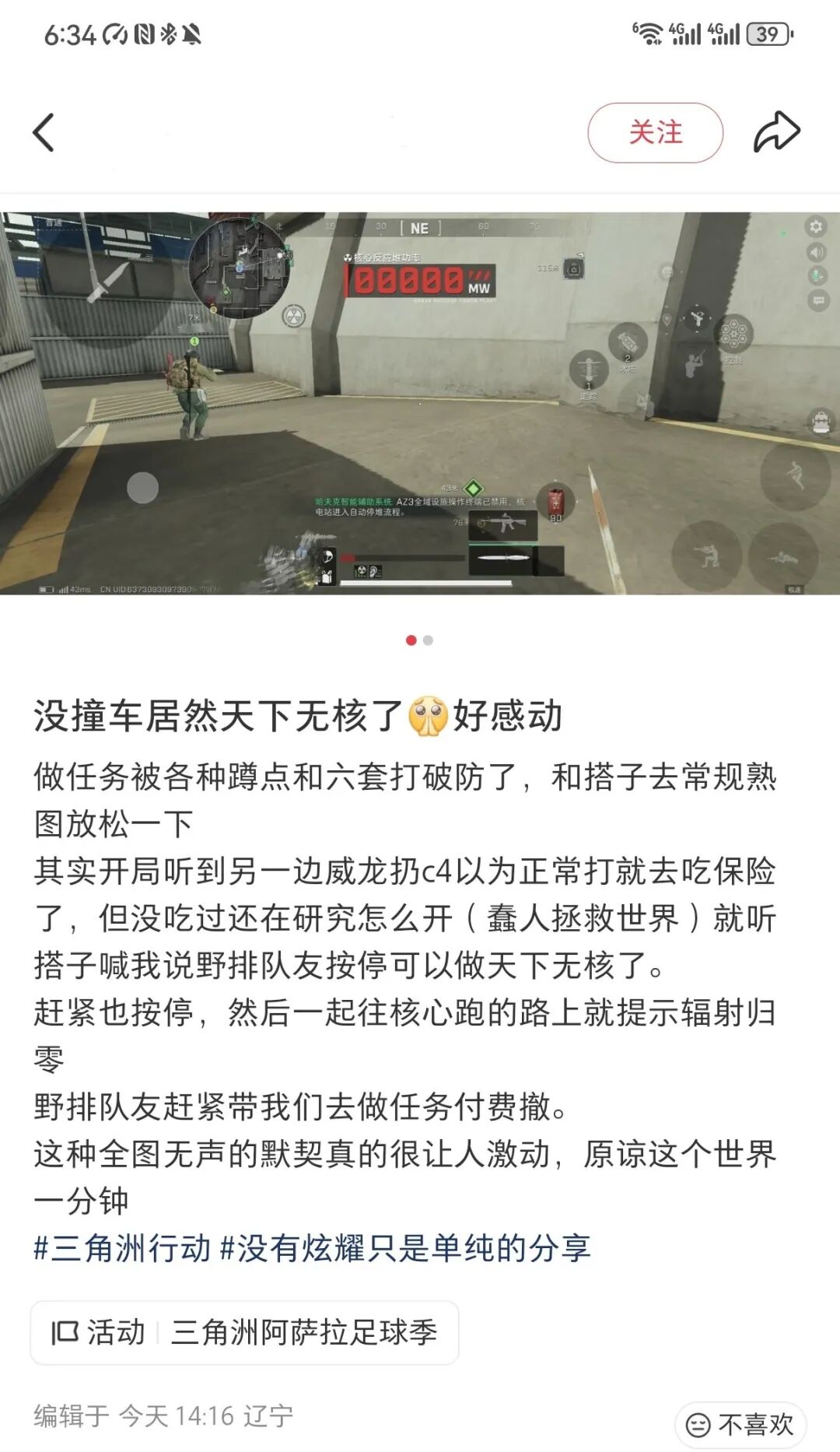
Experiences shared by players (swipe left or right)
These stories, which unfold between strangers, form a shared memory among players. The reason players are moved by this content and continue to spread and share it is, at its core, that the kindness shown by strangers is passed on, and mutual trust is reciprocated.
Sociologists D. Meyerson, K. E. Weick, and R. M. Kramer have proposed the concept of “rapid trust,” which refers to the ability of members of ad hoc teams—who have no history of collaboration and no time to build traditional trust—to immediately establish trust and begin working together.
Strangers who don’t know each other build functional mutual trust within thirty minutes, based on shared goals and transparent rules. When the broadcast announcing a global halt sounds, isn’t what the players experience nothing short of a genuine miracle?
When streamer Bai Ze led his viewers through an hour-long gameplay session and finally completed the challenge, everyone cheered as they guided their operatives to the last console for a “group photo.” Immediately afterward, the CG animation depicting a peaceful evacuation played.The scene contained no explosions, no combat—only a voiceover: “Thank you for giving Asara a peaceful twilight. You didn’t pull the trigger, you didn’t press the button; you chose to let go of your obsession and gave the battered and scarred Asara a chance to catch her breath.”
This time, players didn't just witness peace—they created it with their own hands.
Every player involved made a choice: to lay down their weapons, give up the supplies right in front of them, and trust strangers they had never met. The design philosophy that “player behavior is narrative” transformed the game from a data-driven combat system into a narrative space capable of conveying emotional weight.
02
An ARG experiment completed by over a thousand players
If “A World Without Nukes” moved players, another Easter egg in Season 10 took them on an adventure that bridged the real and virtual worlds.
On April 16, the developers released a short story video featuring the Operator “Echo.” Based on the Morse code at the end of the video, “157”—an author skilled in puzzle-solving—and “Key725”—a walkthrough author—decoded a long string of characters.The first half of this string of characters means “go down along the waterfall,” pointing to a new password-protected door featuring a clock on the map, while the second half requires a key to be further decrypted.
Around the same time, the “Treasure Pile” feature was launched in the game, and some players unearthed a note left by an NPC that read: “Time is the key.”” Players obtained another Morse code segment, “0926,” at the waterfall clock, and subsequently successfully decoded an image of a nuclear power plant part featuring the word “WASTE” and some numbers.
When the “Nuclear Power Plant” test server went live, players discovered a hidden door that required a 36-character password. They then spontaneously began searching for images and found several password rooms on the new map; however, because the text clues in the rooms were vague, they spent two weeks trying every possible combination without success.
The turning point came on June 26, when the S10 season story short film was released. A QR code appeared on the back of the big boss’s bald head, and scanning it led to Hafke’s website.Players split up to investigate the “Slacking Diary” on the website, decompress images, take quizzes, search for numbers hidden in CG scenes, and use Rubik’s Cubes to solve math puzzles—cracking the first five password gates in less than a day.
However, the sixth code door requires six players to hold the gate simultaneously, while the remaining players record the numbers displayed on the cathode-ray tubes and head underground to enter the 36-digit code. If anyone lets go during this process, the numbers will change, which means that at least three teams of players must work together seamlessly within the same round.
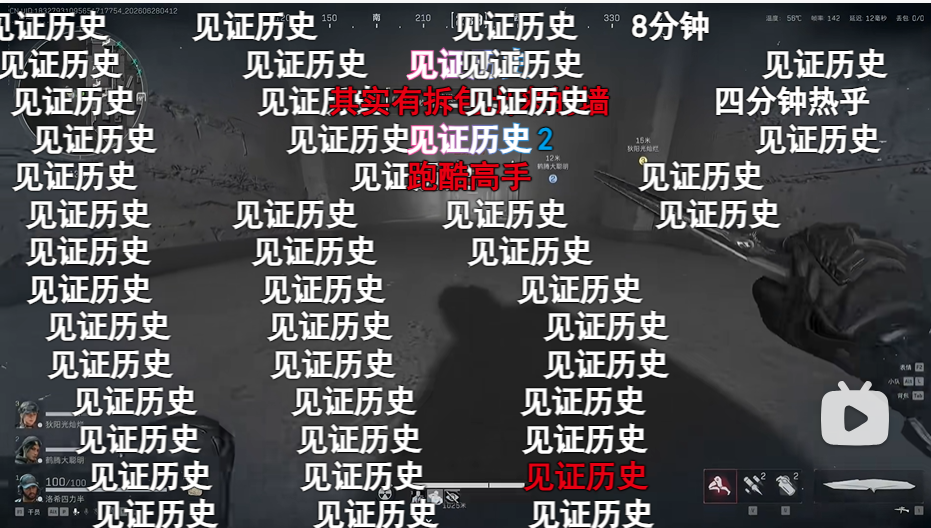
Videos of players braving the invisible wall maze
To determine the final sequence of the 36-digit password, players racked their brains, spending most of the day deducing the solution from various angles—including history, spatial geometry, and cryptography. When they finally managed to open the door, they discovered that instead of a CG scene leading to the Easter egg, they were faced with a complex maze of invisible walls.
This maze pays homage to the tunnels carved out by workers at the real-life Chernobyl site at the cost of their lives. Once you take a step inside, you have only a 10-second countdown to find your way out to the next checkpoint—smoke grenades and other items for scouting are all ineffective.
And so, we have the scene described at the beginning of this article: players coming one after another, using the chests they obtained after countless deaths to lay out a trail on the ground.After 48 consecutive hours of sacrifice and relentless effort, at 4:00 a.m. on June 28, someone finally reached the end of the maze, finding a “work ID card” and a clue pointing to the real-life short-video creators “Siyue and Xiao Luo.”
After players sent screenshots of their in-game work cards, “Siyue and Xiao Luo” replied with a thank-you, adding, “We’ll return to Asala after the September holiday to properly thank everyone.” The exploration journey, which drew over a thousand participants, has now come to a close.
The entire process spanned two and a half months and involved multiple fields, including cryptography, audio analysis, encoding conversion, historical knowledge, and large-scale synchronized collaboration.Players challenged the conventional notion that “matches mean opposition” and achieved cross-team collaboration within the PVP framework; the “air wall” maze even transformed the death mechanic from a “punishment” into a “tool for contribution.”
French sociologist Émile Durkheim once proposed the concept of “collective euphoria,” which refers to the intense psychological and chemical reactions that occur when group members gather in the same place, focus on the same activity, and perform the same actions.Clearly, this puzzle-solving journey—in which thousands of people worked together in unison—allowed players to experience this sense of collective euphoria.
In terms of operational effectiveness, players have evolved from content consumers to content creators. Through the interweaving of virtual and real-world narratives, they have extended the game’s worldview beyond the game itself and created a shared set of memorable experiences.
03
The Same Design Blueprint Behind Two Easter Eggs
On the surface, these two Easter eggs in Delta’s Season 10 take completely different forms—one is a social experiment about “choice,” and the other is a hardcore puzzle about “collaboration”—but they share the same underlying logic: seeking new motivators for players beyond the traditional FPS framework.
The 36-bit Code Room is driven by a sense of curiosity and collective pride, while “A World Without Nukes” draws players in through its narrative and the choices it offers. On the surface, participating in either of these Easter eggs does not yield rare in-game rewards, but the emotional experiences and community memories they provide are more valuable than high-value loot.
From a game mechanics perspective, the core economic cycle of “Search, Fight, Retreat” is built on the scarcity of resources; players invest time in the hope of receiving quantifiable rewards. However, the design of these two Easter eggs relies on unquantifiable rewards such as emotional resonance, collective memory, and a sense of community.
Feedback from social media platforms has proven the effectiveness of this design.
Even when playing the same game, players' needs and preferences are diverse and varied. There are "aggressive" players who seek thrilling competition, "gold-farming" players who focus on accumulating wealth, "collectors" who are passionate about gathering rare items, and "social" players who value social interaction.
Looking back at Delta’s various seasons, the development team seems to have consistently and deliberately surprised players with different playstyles.
The brain-computer interface introduced in Season 6 brought more narrative elements and possibilities,Season 8’s “Red Kite Hunt” allowed players to take on the role of the boss, Sayed, catering to the role-playing desires of story enthusiasts, while Season 9’s “Treasure Pile” mechanic fostered asynchronous cross-match social interaction—casual players could casually dig for treasure in safe zones, while hardcore players could set up ambushes at high-traffic locations.
By Season 10, this differentiated design approach had been further refined, appealing to the puzzle-solving desires of exploratory players and the emotional needs of social players, respectively.
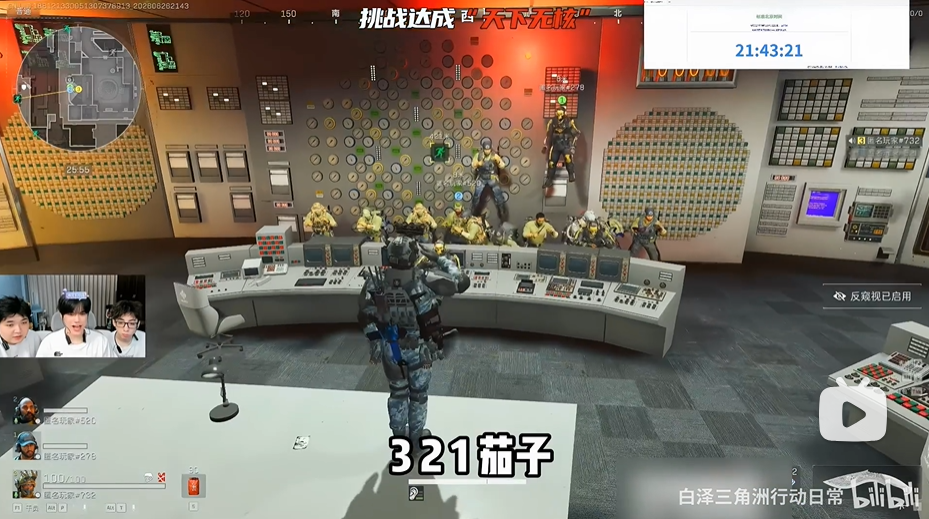
Streamer Bai Ze poses for a group photo with netizens after completing "A World Without Nuclear Weapons"
Take "A World Without Nuclear Weapons" as an example: achieving this goal requires you to actively give up certain benefits and make a choice, and that very act of voluntary sacrifice is a source of fulfillment in itself.
Unlike traditional FPS games, Delta AZ3’s branching endings offer players the option to “choose not to detonate the bomb or to protect it.” In these moments, the sense of satisfaction players feel stems primarily from the sense of control that comes from knowing they can “determine the outcome.”
Second, it satisfies people’s desire for a sense of meaning. In the virtual world, working with a group of complete strangers to achieve a grand goal awakens players’ longing for a “grand narrative that transcends the individual,” and this experience itself holds value beyond the mere outcome of the game.
It’s fair to say that Delta’s gameplay design this time around incorporates kindness into the conditions for victory. Players may be motivated by achievements, a desire for something new, or simply a sense of kindness—their reasons vary—but in the end, they work together to forge a peaceful conclusion.
Players are not only recipients of game content but also active media users. They proactively choose games to satisfy specific needs, and the practice of rotating content through different seasons addresses a core challenge faced by all games in long-term operation: how to ensure that a diverse range of players are willing to invest their time in the game.
Everyone’s gaming preferences may differ, but everyone longs to find their place.
04
Some things are more worth reflecting on than “winning.”
Looking at the FPS genre itself, it’s clear that innovation in gameplay seems to have hit a plateau.
As the hype surrounding battle royale mode has faded, and following the introduction of the “search, shoot, and escape” genre in *Escape from Tarkov* and the subsequent release of numerous similar titles, the core mechanics have largely solidified. New shooter games essentially just add new maps, weapons, and characters to existing content, so developers need to consider where the next opportunity for differentiation lies.
Two Easter eggs in Delta’s Season 10 offer a possible answer: a focus on the players’ emotional experience.
The numbers on the data panel are cold: kill counts will be surpassed by those who come after, assets fluctuate with each match, and rankings reset at the end of the season.But the shared memories of collaborating with hundreds of strangers to lay down a path through the maze using crates, as well as the emotional connection of working together with complete strangers to achieve a “nuke-free” match, can foster a deeper sense of loyalty and belonging.
As one player remarked on social media, “Even though Delta is a PvP game, it has spawned so many heartwarming interactions between strangers.” When she shut down the first nuclear facility, the map seemed to fall silent; code words were heard everywhere, and one facility after another was shut down, until the reactor’s power finally dropped to zero.
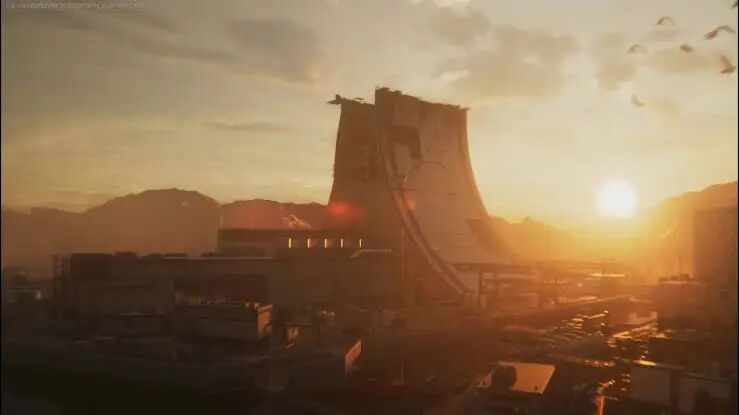
"A Nuclear-Free World" CG Scene: Twilight of Asara
The design of this Easter egg isn't about offering a huge reward, but rather about making players feel: "I'm not just playing a game—I'm a part of this story shared by millions of people."
In 1979, Atari programmer Warren Robinett left his name in a hidden room in the game *Adventure*. Over the more than forty years since then, Easter eggs have evolved from secret signatures into a fully-fledged cultural phenomenon. The core reason this culture has continued to thrive within the gaming community is that it inherently possesses the qualities of “social currency.”
Players who are the first to discover Easter eggs gain prestige and recognition within the community; the discovery process itself becomes a story worth telling, while the interpretation and sharing of these Easter eggs form a unique system of discourse within the community. When players discuss the “36-bit password room” or “No Nukes in the World,” they are, in effect, affirming their shared sense of community.
It can be said that Easter eggs offer a unique way to deliver content. They do not require a large investment in art resources, yet they can spark ongoing discussion and a passion for exploration within the community. Just as Delta has demonstrated, a well-designed Easter egg can have a lifespan spanning multiple seasons, becoming a shared point of reference in the players’ collective memory.
Memory is not only individual but also socially constructed. When new players join the community and hear veteran players recount stories of “thousands of people working together to place boxes to mark the path,” a transgenerational community legacy naturally takes shape. These stories contribute to the cultural depth of the game’s IP and form the emotional foundation for player retention.
Of course, players want the thrill of dominating the game, but they also need the emotional connection and awe that come from human interaction—those moments that make their eyes light up when they talk about them with friends.
These moments—which cannot be quantified or replicated by competitors—are precisely what form the strongest core of a game IP.
原创文章,作者:游茶妹儿,禁止转载:https://youxichaguan.com/en/archives/208154