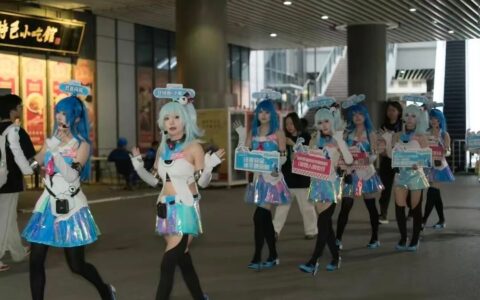
Lately, I've found that I'm having more and more trouble understanding *The Strange Ring*.
In my view, as the first officially launched urban open-world game, it should, in theory, continue to reveal the true essence of an “urban” setting through successive updates and steadily reinforce the public’s impression of a city with a distinct “Yihuan” flavor.
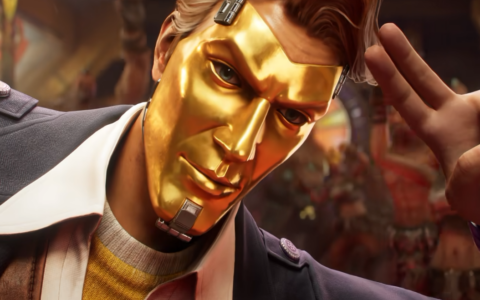
However, during last week’s preview stream for *Heterocycle* Version 1.2, the main gameplay trailer—with its Western fantasy-style open world—completely threw me off. Is this still Haite Luo?
It wasn’t until version 1.2 officially launched yesterday that I realized Su Huan had actually incorporated an entire set of D&D LITE into this version’s core gameplay feature, “999 Nights.”
I once wrote in an article about the open beta of *The Strange Ring*: “The city in *The Strange Ring* is like a web, and the gameplay consists of multiple threads running independently of combat.” At the time, that assessment was based largely on my understanding of the multi-threaded, parallel structure of the game’s urban lifestyle mechanics.
Version 1.2 has made me realize that the way this network is expanding may be even more radical than I expected. It seems that Su Fantasia’s goal is to use “Metropolis”—a highly flexible content platform—to accommodate completely different types of gameplay experiences.
In other words, isn’t this just another example of the urban flavor unique to *The Strange Ring*?
01
A Western Fantasy Adventure in the City
To understand the approach taken in *Heterocycle*, we really need to look specifically at the experience of “Nine Hundred and Ninety-Nine Nights.”
According to Su Huan’s design, Version 1.2 is actually a “time-jump” chapter on the timeline; it does not follow directly after the events of Version 1.1—the confrontation with the Red Text and the resolution of the Nanali incident—but rather serves as an epilogue set after Version 1.3. Therefore, right at the beginning, Su Huan included a cutscene indicating that this is Chapter 7 set in the future.
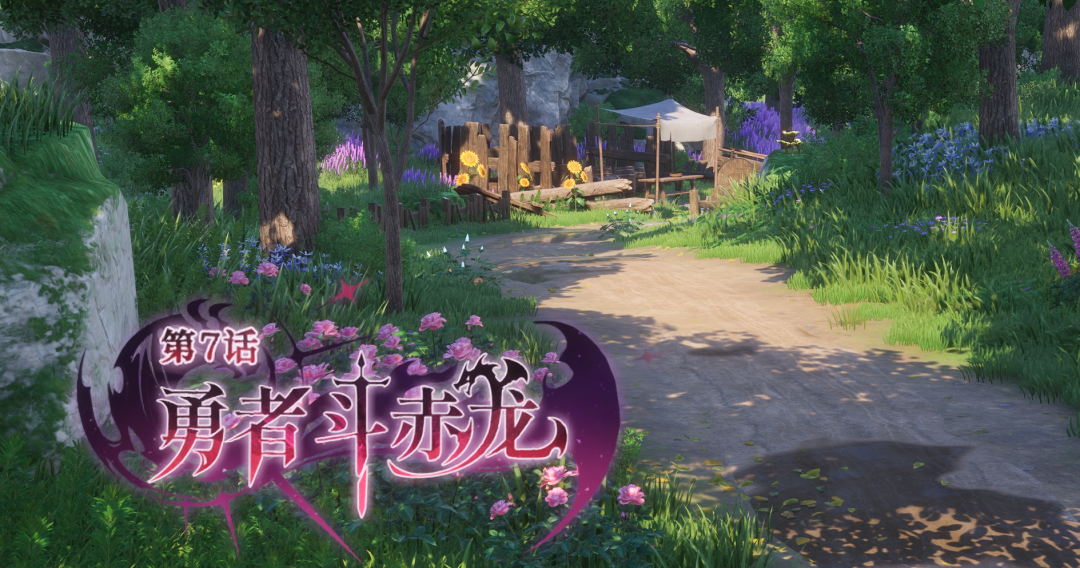
Therefore, the overall tone of this chapter is lighthearted and upbeat. From a narrative perspective, this was likely intentional on Su Huan’s part; the plot of Chapter 1.1 was relatively high-pressure, with numerous conflicts,Setting aside whether this narrative structure—which completely disrupts the gacha rhythm—goes against the general commercial logic of content products, after Nanali has fully won over players’ hearts and enough emotional weight has been built up, serving up a happy-ending epilogue set in the future first,is actually a sequence that strikes a better balance between tension and release.
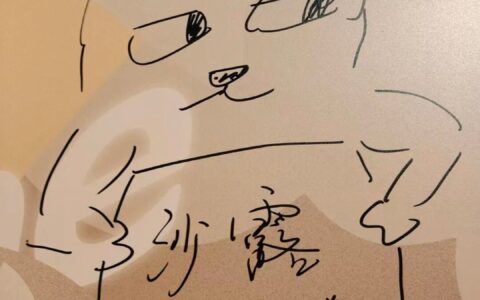
So, in Chapter 1.2, Su Huan set up the opening scene where the player meets Nanari and goes to Mint’s house to play board games.
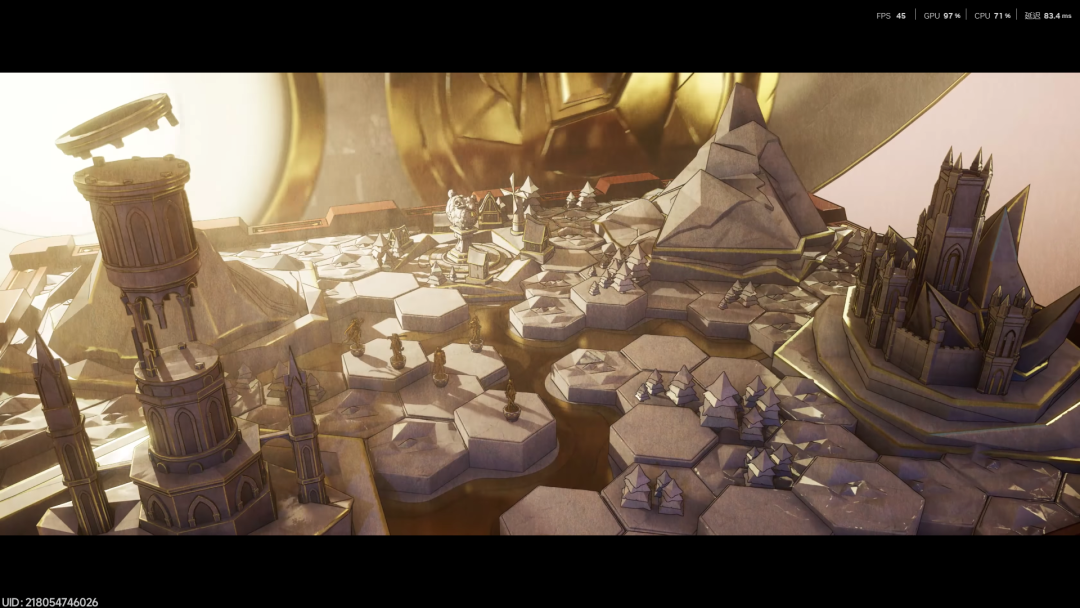
This board game is also the core gameplay of 1.2, “Nine Hundred and Ninety-Nine Nights.”
From the perspective of narrative embedding, the way *The Strange Ring*—a modern urban Western fantasy story—shifts its narrative is actually unexpected yet logical.
*Anomalies* is set in a world with supernatural phenomena; all otherworldly elements are explained within a coherent world-building framework, the urban setting remains consistent, and the characters’ sense of identity remains intact. (Supernatural phenomena—pretty convenient, right?)

Getting back to “999 Nights,” the first impression this Western-style fantasy RPG leaves is one of a level of polish that exceeds expectations.
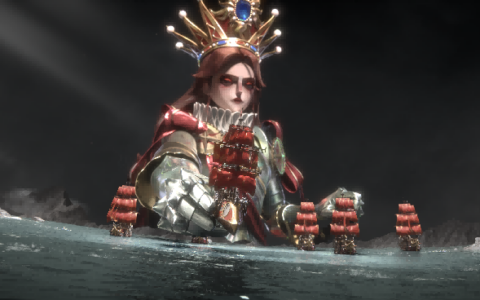
First of all, both the setting and design are quite true to the genre. For example, you start in a beginner’s village and set out on a journey to find the fragments of the legendary hero’s armor in order to fight the evil dragon threatening the world. Along the way, you wander through a volcanic castle filled with dragons and gold coins, exploring dungeons, encountering monsters, avoiding traps, andboss battles—all classic RPG elements are faithfully recreated in *The Strange Ring*.

In particular, the open-world mode that begins once characters leave the main city—with its use of scale contrast to emphasize shifts in the setting’s scale, the merging of the party into a single character, and other such design choices—also draws heavily on techniques commonly used in 1990s JRPGs to convey a “sense of traveling through a vast world.”

As a result, the overall structure of the “999 Nights” experience closely resembles the RPG framework seen in the DOS-era *Dragon Knight* or the *Final Fantasy* series—exploring maps, triggering encounters, and completing side quests—while also featuring a complete narrative arc and character development.
Although several of the characters are essentially “players” from the real world of Heitelo—retaining their original character traits—this actually makes the narrative atmosphere even more lighthearted, aligning with the tone of *The Strange Ring* 1.0.

Furthermore, the details of this gameplay mechanic are filled with elements borrowed from many other game genres and mechanics—for example, the campfire rest mechanic in dungeons, which clearly draws inspiration from the “sitting by the fire” mechanic found in Souls-like games.

In addition to traditional combat and puzzle-solving, *The Strange Ring* also features special gameplay areas across the Warren Continent—such as vertical jumping challenges reminiscent of the platformer *Only Up*—which integrate a purely skill-based platformer experience into the RPG’s exploration mechanics.

There are also some CRPG elements, such as dice rolls to determine the outcome of opening chests and other similar mechanics.

The alternation between these different types of levels effectively prevents the decline in flow that can easily result from the repetitive, purely exploratory gameplay loop of *999 Nights*. Although I didn’t have time to play through the entire game, the experience from the volcano to the snow-capped mountains alone was already quite rich and multi-layered.
Frankly speaking, the “game-within-a-game” structure seen in titles like *999 Nights* is nothing new in the industry. To draw a comparison,“Queen’s Blood” in *Final Fantasy VII: Rebirth* and “Gwent” in *The Witcher 3* are similar examples. However, these nested gameplay elements mostly take the form of card games or mini-games and remain, in terms of scope, secondary to the main storyline. “999 Nights,” on the other hand, takes a more radical approach:embedding an entire RPG experience—complete with its own narrative and systems—within the urban gameplay of *Anomaly*.

Encounters with enemies on a big map like this are really something else.
Furthermore, *999 Nights* also skillfully addresses a common challenge in urban fiction when it comes to evoking emotion.
As I wrote in my article on the open beta, *Heterocycle* aims to depict the interplay between the “extraordinary” and the ordinary in an urban setting.
As for the "everyday" aspect, it’s actually relatively easy to pull off. Thanks to interactions with characters and the support of the "Urban Tycoon" system, the "life simulation" element has already taken shape, while the "non-everyday" aspect can unfold as a separate storyline due to the presence of supernatural phenomena.
However, when it comes to everyday life, it’s easy to fall into a rut of monotony and boredom. Even though it’s routine, finding the right outlet is still necessary to deepen emotional connections.
As a result, an immersive board game adventure can transform everyday socializing at home into a shared experience with greater emotional depth, turning the act of “getting together with characters to play board games”—through the game’s presentation—into a truly meaningful adventure.

Simply put, the setting of a house party is, by its nature, ordinary and mundane. But when it simultaneously becomes an immersive Western-fantasy adventure, the emotional intensity of that everyday setting is amplified, the interactions between characters become more dynamic, and yet the narrative framework never strays from the logic of urban daily life.
This approach is indeed a design concept that can only be realized within the framework of *The Strange Ring*.
It is also worth noting that “999 Nights” is not the only gameplay feature in Version 1.2 that embodies this approach.
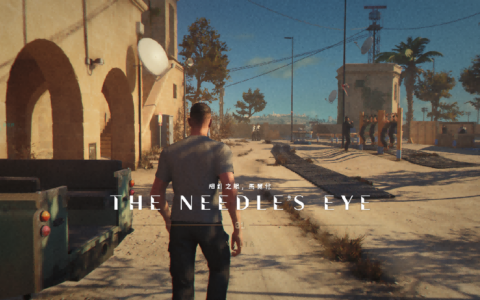
As mentioned in the preview livestream, this update for *Alien Ring* will also introduce an online mode similar to CS hide-and-seek, as well as a *King of Auctions*-style mode based on the auction house gameplay.

CS Hide and Seek is a classic game that combines competitive gameplay and strategic spatial play in a lighthearted social format. It has enjoyed enduring popularity among the CS player community because it blends tension with fun,this game is naturally well-suited for multiplayer social interactions and live-streaming, whereas “King of Auctions” centers on competition in information analysis, bidding strategies, and resource management.
As you can see, whether it’s the asymmetric combat in the former, the strategic gameplay in the latter, or the RPGs I discussed at length earlier,*The Strange Ring*’s version 1.2 allows these three completely different gameplay styles to coexist within the same update without conflict, precisely because the urban setting provides sufficient narrative flexibility and contextual plausibility.

We need to take a broader view of this issue.
In the current mobile game market, the vast majority of products follow a highly standardized content cycle: new characters, new storylines, and event mini-games—essentially a content-consumption model centered around character-based microtransactions.
In the context of event mechanics, these elements serve as “filler”; they are typically low-impact, short-lived, and disposable, and rarely leave a lasting impression as a standalone experience.
This model has proven effective in the past; after all, given the production pressures in the mobile gaming industry, simply executing this aspect well is no small feat. It also means that the scope of the game’s content is limited to the two dimensions of characters and narrative, and differentiation between versions relies primarily on the appeal of the characters and the quality of the storyline.
However, the approach demonstrated in Version 1.2 of *Eccentric Ring* points toward a different path: by leveraging the strengths of its urban setting, gameplay can become the absolute core of future updates.
Of course, this doesn’t mean that *The Strange Ring* has neglected its characters and narrative; in fact, both remain at a high enough standard in Version 1.2.

In my article on the open beta, I quoted Zhang Yu, the producer of *Heterocycle*, who said, “There’s a lot of room to grow with urban humanities themes, and there will be plenty of opportunities to explore in the future.”
At the time, my assessment of this statement was largely limited to the conclusion that it was theoretically sound; but today, the simultaneous debut of these 1.2 gameplay features has effectively validated the underlying product philosophy behind *The Strange Ring*—or, perhaps, its understanding of the city.
In other words, in Su Huan’s view, the “extraordinary & ordinary” urban life in Heathrow is, in and of itself, an all-encompassing vessel that not only accommodates various real-life activities but also allows for forays into all manner of fictional scenarios that are, on the surface, non-urban.
For example, this Western fantasy RPG, which uses “board games” as its narrative entry point, could very well incorporate a wider variety of experiences in future versions using the same structural logic but with different urban life themes as entry points.
This means that the scope for content expansion in *Heterocycle* may be much broader than most people anticipated at the start of the open beta.
02
The Experience: Not Overlooked
Of course, discussions about Version 1.2 shouldn’t be limited to just gameplay or content concepts. If you take a comprehensive look at Version 1.2, you’ll find that its true strength lies in the fact that, while introducing significant new content, it hasn’t neglected the ongoing refinement of the core gameplay experience.
In this update, *Heterocycle* has also introduced a wide range of optimizations. In short, these can be summarized into two clear areas of product improvement.
The first clue: the keyword is “adjustment.”
It might be clearer if we look at a few examples here.
Previously, while the housing system in *Eccentric Ring* offered a high degree of freedom, the decoration process required players to place items one by one and adjust each one’s angle and position individually—a rather time-consuming process for players looking to quickly set up a comfortable living space. This was especially true when moving into a new home after purchasing it.
From a design perspective, a well-designed gameplay system should not penalize players when they haven’t made a mistake, so the previous house system was a bit difficult to navigate.
So, in Version 1.2, *Eccentric Ring* introduced a one-click blueprint layout feature. Now, when you move or want to give your house a new look, you no longer have to deal with the hassle of starting from scratch and arranging each item one by one in an empty room.

Another example is the simplified mode on the Walkman. Previously, the song-selection UI took up a large portion of the screen in the center, which somewhat disrupted the immersive experience. Now that it’s been scaled down, the overall interface looks much more natural than before.

The same principle applies to the new "Hide Component" option added to the fashion system. Since appearance is one of the core commercial elements of *The Ring*, players naturally have higher expectations for freedom in customizing their outfits. While the addition of the "Hide Component" feature may seem like a minor update, it actually helps maintain the foundational experience of the game’s appearance-based monetization system.

There are also some features—such as the health regeneration from coal orbs—that weren't even mentioned in the patch notes, but were optimized in version 1.2.

The common thread among these optimizations I’ve mentioned is that they’re all pain points that are likely to go unnoticed until after the product goes live.
The premise behind this conclusion is that, during the design phase, designers’ predictions of user behavior are always based on assumptions. Only when the product actually reaches players and is used frequently and over an extended period of time do those details—which “seem fine in theory but are a bit annoying in practice”—come to light.
If left unaddressed, these kinds of issues will gradually erode players’ enjoyment of the game, much like sandpaper.
The fact that SuHuan was able to continuously identify and eliminate these minor friction points one by one over the course of two major version cycles following the open beta actually reflects that, even after the product’s launch, the team maintained a highly attentive and critical eye toward their product and did not let their guard down simply because of strong commercial performance.
Following this line of reasoning, we can also identify a second thread, with the key phrase being “taking advice.”
After the open beta, *異環* actually received quite a few reports from players regarding issues, such as the “Dark Realm Race” from the previous version, which was an online game mode.players frequently complained about cheating. Consequently, in Version 1.2, *The Ring* introduced a reporting system for online racing to address players’ frequent concerns regarding fairness in the racing environment and malicious behavior.

Similarly, the difficulty of "Vision Hunt" has been reduced—a change that directly addresses the community’s dissatisfaction with the time and difficulty of daily material dungeons. Systems involving repetitive actions—such as character leveling, "Lonely Disk," and "Empty Curtain"—now fully support long-pressing to select materials in bulk, eliminating the need for individual taps, a process that had previously been widely criticized.

These changes also share a common characteristic: they closely align with the feedback that has been raised most frequently in community discussions and has generated the most player dissatisfaction.
In recent years, while “listening to feedback” has become standard practice for GaaS game developers, the speed and judgment required to do so remain rare commodities.After any GaaS product launches, the community is flooded with a massive amount of noisy feedback. Valuable, constructive suggestions are mixed in with emotional outbursts. Determining which issues are genuine, which are isolated user experiences, and which changes could have far-reaching consequences requires the team to have a deep understanding of their own product.
As I mentioned in my article on the open beta, Su Huan’s ability to iterate stems in part from the pipeline experience gained through *Phantom Tower*, and in part from the decision-making efficiency and responsiveness to the community brought about by the team’s youthful composition.
These two storylines in Version 1.2 happen to demonstrate these two capabilities: the “Teamwork” storyline tests the team’s ability to self-reflect on product details, while the “Feedback” storyline tests their ability to filter and evaluate external feedback and respond to it quickly.
The fact that these two approaches coexist without conflict demonstrates that Su Huan has a clear understanding of the distinction between the two types of optimization: “issues that should be identified and resolved independently” and “issues that require listening to user feedback and immediate correction.”

When viewed alongside the gameplay innovations discussed earlier, the update structure for Version 1.2 reveals a fairly comprehensive product strategy: gameplay innovations, character updates, and narrative progression focus on content development, while system-level refinements are achieved through iterative testing and incorporating player feedback.
It is the convergence of multiple storylines that makes version 1.2 of *The Strange Ring* a release that excels in both breadth and depth.
To be honest, this type of version structure isn’t very common among current mobile games.
It is more common in the industry for updates to focus heavily on a single aspect—either a “major update” featuring high-profile characters and high-quality storylines, or a “transitional update” primarily focused on optimization and content expansion. However, it’s difficult to clearly define what “Ring of the Strange” 1.2 is.
This is because it has delivered tangible results across three key areas: gameplay innovation, expansion of standard content, and optimization of the core experience.

That’s also why I say Version 1.2 is making me find *The Strange Ring* increasingly “hard to understand.”
Two months into the open beta, the product is still in the stage where it needs to gain a firm foothold. Based on normal expectations, the strategy during this period should be relatively conservative and prudent—for example, refining the core experience, fixing known issues, and relying on safe bets to retain the user base.
However, Su Huan chose to vigorously pursue experiments in the horizontal expansion of gameplay types while maintaining a solid foundation. This approach places far greater demands on the team’s underlying production capacity than it appears at first glance, because it means the team cannot rely solely on a single main content production line; it must possess the organizational capability to drive multiple independent production lines simultaneously.
So, Su Huan’s accumulated experience in pipeline operations is probably not to be underestimated.
Conclusion
Having said all that, looking back now, perhaps the very aspects of Version 1.2 that I “didn’t understand” are precisely why it’s worth discussing separately: it answers the questions I hadn’t fully grasped during the open beta of *The Strange Ring*—questions regarding both direction and execution.
At this point, I believe I can confidently say that the future direction of *Heterocycle* will continue to build on the characteristics of Version 1.2—namely, using the flexibility of its urban worldview as a content framework to enrich gameplay and storytelling. In terms of execution, we will continue to follow the approach taken in Version 1.2 by pursuing a multidimensional, parallel development strategy that balances content creation with optimization.

In my view, it is precisely this combination of a clear direction and effective execution that constitutes *The Strange Ring*’s core competitive advantage at this stage.
As for the fact that people “don’t understand” it, that’s not really that important either. After all, for a product that’s trying to define a new category, if every step falls exactly within everyone’s expectations, it actually means it hasn’t broken out of the existing framework.
Perhaps *The Strange Ring* will continue to leave me “confused” many more times to come, but that’s certainly a good thing.
原创文章,作者:游茶妹儿,禁止转载:https://youxichaguan.com/en/archives/208152