The “Big Orange Bonanza” mode for *Teamfight Tactics* officially launched today (November 4). This mode is an update to the classic “League of Legends Legends” season.Simply put, players can bring three Time Cards into each match (which can be thought of as three guaranteed Hextech Boosts). By achieving specific placements, they earn Golden Oranges (the exclusive currency for “Big Orange Bonanza”), which can then be used to draw even more powerful Time Cards.
Many "Golden Shovel Battle" influencers have already started posting videos about the new season, sparking great anticipation among players in the comments section for today’s official launch of the "Big Orange, Big Profit" mode.
In a standard 8-player match of *Golden Shovel Battle*,the pattern of the top four players gaining rank and the bottom four losing rank has remained consistent. However, in the “Big Orange, Big Rewards” mode, the design team has overturned this “time-honored tradition,” allowing players to set their own goals during the match—with the cost of failure being the loss of the bonus deck they brought into the match.
It’s not hard to see that these gameplay changes have shifted the game’s objective from “winning the match” or “climbing the ranks” to “earning money.” In other words, the essence of this gameplay is more akin to the loop found in “search, fight, and retreat” games, blended with a touch of the out-of-game progression typical of Roguelike titles.
If we analyze the individual designs of “Big Orange, Big Profit” in isolation, we can find precedents for most of them—pre-game selection, risk-reward dynamics, and investment and loss mechanics are all relatively well-established gameplay elements.However, what’s interesting is that when these designs are integrated into the gameplay loop of an auto-battler, they form new connections with one another, which in turn fundamentally influences players’ decision-making during a game of “Golden Shovel.”
This dynamic gives players a reason to play another match outside of ranked play, but it also raises some questions: Will deck compositions quickly converge on a few optimal solutions under big data analysis? How can game balance be maintained amid more complex variables? And how can we address the frustration players feel when they lose cards?

"Big Orange, Big Luck" adds a new spectator system to Golden Shovel
01
A New Approach to “League of Legends Legends”
Over the course of more than five years of updates for *Golden Shovel Battle*, the core gameplay mechanics—synergies, experience, and levels—have long been established. Even amid new seasons filled with disruptive updates, these mechanics typically remain unchanged,and even within the ever-evolving seasons, this playstyle offers a long progression path for players to explore.
Players can learn a relatively formulaic playstyle from guides and other players. As their understanding of the game version deepens, they learn to build decks flexibly, and then move on to constantly observing their opponents’ lineups and adjusting their own—this is the stage of “competing against others.” Season updates then force players to adapt to the new environment. This is the path that keeps many players coming back.
This season of “League of Legends Legends” is a bit different. Widely recognized as a high-quality season, it introduced a unique unlock mechanism, and on April 23 of this year, “Golden Shovel Battle” made it a permanent season in the game.
However, this approach also presents some issues: when players spend a long time playing the same season, they become very familiar with all the lineups, and this overfamiliarity can lead to boredom.
However, in subsequent updates, *Teamfight Tactics* took the classic “League of Legends Legends” season and “ran with it.” Following the major “League of Legends Legends: Hextech Tomes” update on July 23, *Teamfight Tactics* introduced new elements to the game’s core mechanics,introducing the City-State Keys (Order Key/Tech Key) system and setting new caps for existing synergies at the synergy level.
I still remember the thrill of assembling a “Infinite Forge Gangplank” with a set of Bilgewater Golden Tech Keys, and the awe of rolling an 11-Demacia set that sent the entire team soaring,Back then, almost every player I knew who played *Teamfight Tactics* was cheering for the “Hextech Tome” update. But even so, the “Hextech Tome” season still faces the issue of content burnout; the developers must constantly introduce new content to keep players engaged.
The update to the “Big Orange, Big Payoff” mode feels more like a synthesis of the essence of the previous “League of Legends Legends” season update, built upon with bold and fundamental innovations. The biggest in-game change in “Big Orange, Big Payoff” is that it takes elements that previously relied on luck and, through time cards, transforms them into elements that can be preset before the game even begins.Players select three cards before the match begins, which trigger effects at different stages of the game. This allows players to turn the cards they bring from the pre-game phase into in-game certainties, enabling them to build their decks around that certainty.
For example, the legendary card “The King’s Avatar” allows players to unlock Sylas in Stages 4–5, granting him 7 additional class synergies;“Wandering Savior” guarantees players access to Ryze—who is otherwise difficult to unlock in the game—during Stages 4–5, and grants an additional effect for each region synergy (Ryze’s abilities are enhanced based on unlocked region synergies), allowing players to combine effects from up to a dozen regions;In addition to new Champion cards, there are synergy-based crossovers—the “Tale of Two Cities” card allows Champions from Piltover and Zaun to gain each other’s synergies,“The Forge Family II” transforms Ornn’s exclusive synergy, “Flame of the Mountain,” into a crest that can be equipped to champions as early as stages 3–7 to forge artifacts.
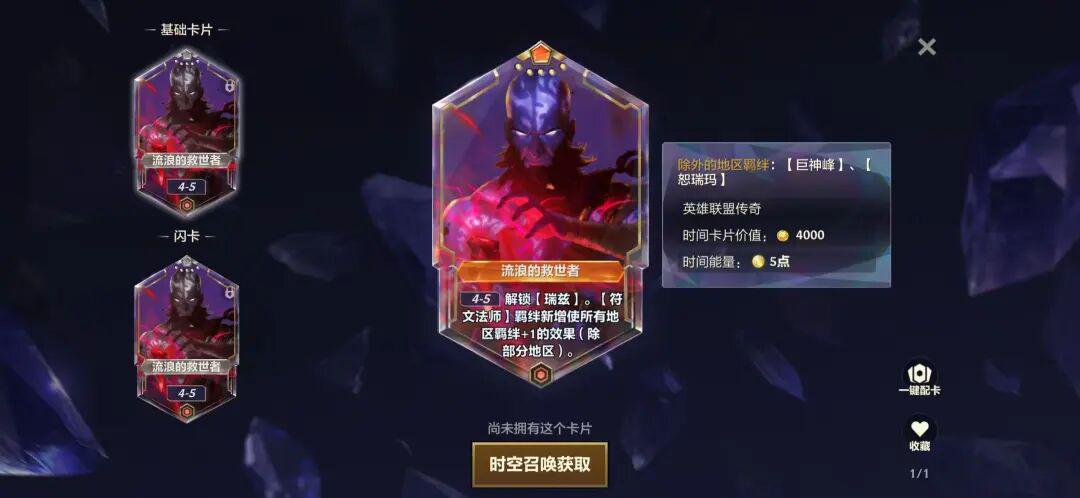
Legendary Card: "The Wandering Savior"
The deck I usually play is built around Eshtar, which is my favorite recreational synergy in *Golden Shovel Battle*. The “Investment Guru” time card boosts Sun Shards and grants a free Niko right from the start;“Investment Novice” grants a Milio during Stages 2–3; since Qiyana is a 1-cost card that’s easy to draw early on, I can usually assemble three Eustal units by Stages 2–3. I can then save the third card slot for a free refresh or to build up my economy, allowing me to upgrade Qiyana to 3-star faster.
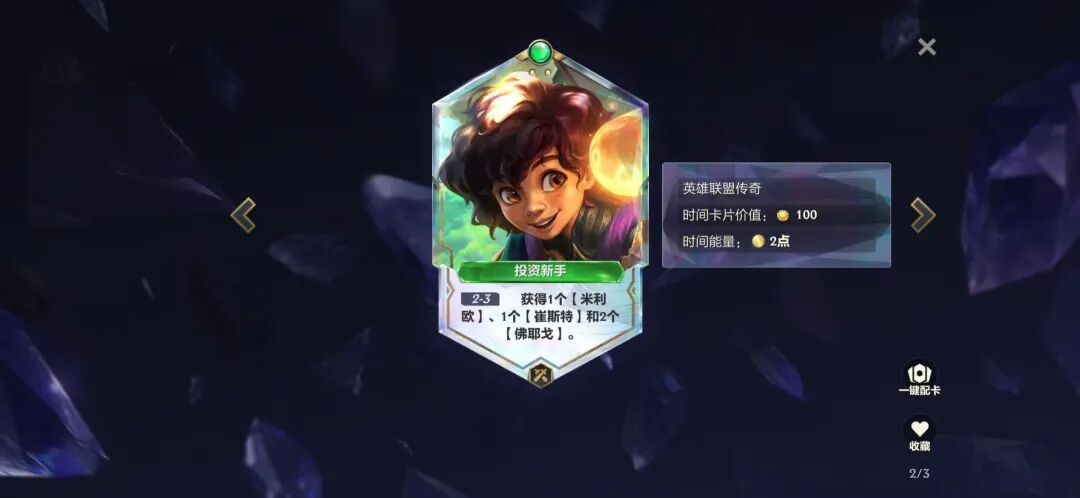
The “Investment Newbie” card lets me consistently draw 3 Eustal cards at a rate of 2-3.
Due to the effect of Eustar’s Order Key—which grants gold when enemies are killed—the earlier you reach three-star Qiyana, the greater the reward. She remains strong throughout Stages 2 through 4, and can even generate over ten gold per game, which helps offset the cost of early-game card draws and allows you to level up quickly.If the Eustar quest goes smoothly, you can continue pushing the level count beyond 500 all the way up to 1,000. Doing so gives you a high probability of unlocking a 3-star 5-cost card, putting you in contention for first place.
In actual gameplay, building a deck with Time Cards isn’t just about mindlessly stacking power. For example, the card “Clone, Clone, Clone…”grants 5 “Hero Cloners,” which is practically a guaranteed three-star, five-cost piece. However, this card’s effect doesn’t take effect until Stage 6-3. Before then, players must constantly withstand pressure while holding one fewer card than their opponent, making it nearly impossible to see the effect through to fruition.
The examples above are just a few of the more distinctive time cards. On the test server, there are over 200 time cards in total, which means that when players select 3 cards to combine, there are millions of possible combinations, giving the “Big Orange, Big Rewards” mode a unique depth of content.
02
Amid the uncertainty, leave yourself some certainty
Pre-game setup isn’t a new feature in *Golden Shovel Battle*. The “Power of Hero Legends” season already allowed players to choose their preferred direction before the game began. In “Big Orange, Big Profit,” this choice was further broken down into collectible cards that players can freely combine, turning the preparation process itself into a gameplay element.
This predictability is particularly appealing to players familiar with the game. Routes that previously required finding the right upgrades before attempting them can now be prepared for in advance; players also have the opportunity to re-combine their preferred moves and equipment using cards.
However, certainty does not mean the entire game has already been decided. Random elements such as shop refreshes, rune enhancements, and the shared card pool remain decisive factors in determining the outcome, and opponents will also compete for units and adjust their lineups. Even after selecting a core unit early on, players must still decide when to draw cards, how to transition, and whether to continue investing in their planned strategy.
The addition of time cards has also introduced more variables into the game’s balance, and card balancing must now account for synergy between effects: two cards that seem reasonable on their own may, when combined, significantly accelerate the timing at which a player’s full combat potential is realized. Designers must always remain vigilant to prevent any single deck from gaining an advantage large enough to override the randomness inherent in Auto Chess.
For example, a strategy that uses transformation and re-composition effects to build up to a 3-star, 4-cost unit in three phases requires meeting certain conditions—such as obtaining a 3-star unit at a low cost—and isn’t achievable in every game. However, once it comes together, it’s very difficult for other players to compete with it using conventional gameplay.
The “Big Orange, Big Rewards” mode also imposes restrictions on decks of varying strengths—on the one hand, by limiting the number of duplicate cards, and on the other, by using a card’s energy level as a criterion to differentiate the entry requirements for different portals.

3 Different Types of Portals
The game is divided into three matchmaking pools: The Stable Portal requires no entry fee, limits decks to 8 energy or less, carries no risk of card loss, and allows for combinations of high-cost and low-cost cards;The Volatile Portal has an entry fee of 500 Gold Oranges, carries the risk of losing two cards, and provides players with a 10-energy budget, leaving more room for combinations featuring high-cost cards; the Unknown Portal has an entry fee of 2,000 Gold Oranges, places no restrictions on entry energy, and results in the loss of all cards upon failure—offering high risk and high reward.
“Big Orange, Big Win” encourages players to pursue endgames that are rarely seen in standard matches. Clashes between three-star and five-cost units can be deeply satisfying—provided players can reach the late game through various strategies rather than being eliminated from contention early on by a handful of specific deck builds. Striking the right balance in long-term gameplay may be the key challenge following the “Big Orange, Big Win” mode.
03
The Choice Between Search, Attack, and Retreat
Returning to the “Search-Strike-Withdraw” strategy, the connection between the “Big Orange, Big Profit” model and “Search-Strike-Withdraw” is primarily reflected in the allocation of resources, the assessment of returns, and the assumption of losses.
Top 7, Top 5, Top 3, and 1st place form a progressive ranking challenge. As your team takes shape and the strength of your opponents becomes clearer, you’ll need to reassess: Is your current lineup still worth aiming for higher goals?
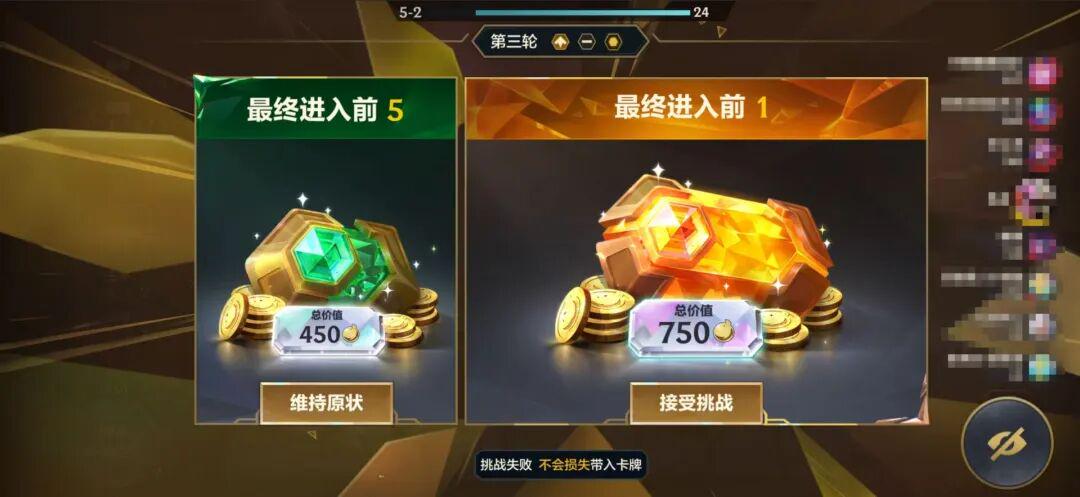
Players decide for themselves what the goal of the game is.
In a way, this shares similarities with the approach in *Marvel: Ultimate Reversal*, where players decide whether to take on more risk based on the situation. The difference is that in *Big Orange, Big Profit*, there are eight players advancing together, requiring players to assess their final rankings in real time amid multi-player competition.Maintaining a lower target does not mean the game ends immediately; players also have the opportunity to re-select their target as the game progresses.
For example, when I play the Eustar deck, I usually don’t aim for the top five right from the start; instead, I opt for a conservative top seven. Whether Kiana can successfully reach three stars and how my quests are progressing both influence my decision on my placement. Plus, since placement choices are visible to everyone in the game, this can also cause other players to adjust their strategies.
The ability to assess in-game combat strength and the overall situation is often a key criterion for determining whether a player is a “pro,” and the “Big Tangerine, Big Rewards” mode places even greater emphasis on the importance of such judgment—because it is directly linked to gold tangerine rewards.In addition to challenge rewards, random in-game drops provide extra rewards, so even if players aren’t aiming to improve their ranking, they may still be in for a pleasant surprise if they stick it out until the late game.
As a result, the game now features multiple tiers of objectives. While rankings still determine the outcome of the competition, the in-game rewards and collection progress allow more players to set their own goals. This approach helps reduce players’ daily sense of frustration and increases their sense of accomplishment.
The reduction in frustration during gameplay doesn’t mean that “Big Orange, Big Win” will become a “mindless, feel-good” experience. On the contrary, when a player’s favorite card is destroyed due to a mistake or misjudgment, it’s not simply a matter of losing a collectible.
I once lost a Legendary Angel card in an Unknown Portal, and I haven’t drawn it again since. Whenever I see a streamer playing an Angel deck, I’m reminded of that lost card. It’s not just the regret of losing it—it’s also the frustration of not being able to play that familiar deck for the time being.
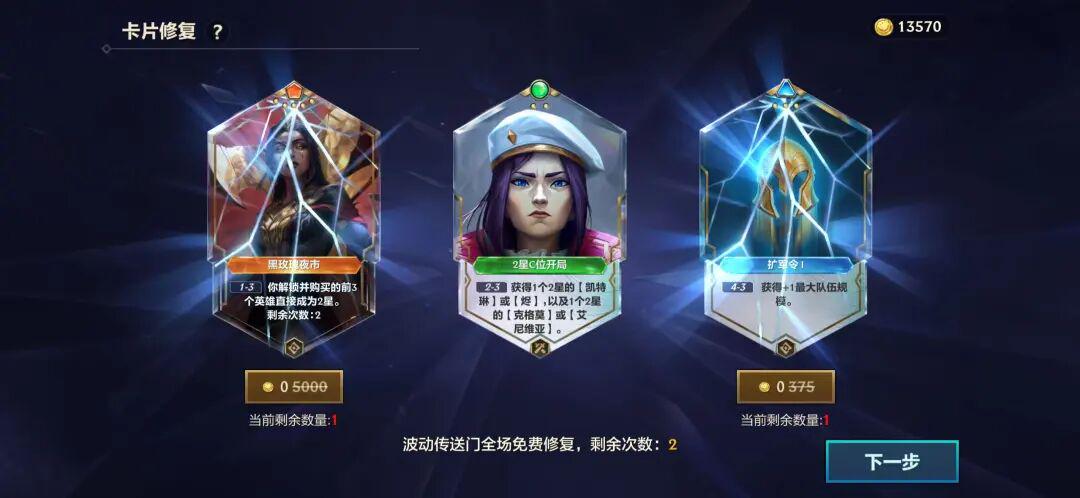
Heartbreak Cards
After experiencing a few setbacks, players will adopt a more serious and focused attitude toward the game. However, these setbacks may also make players more cautious—the more extensive their collection, the more combinations they can try; the more they cherish these items, the more likely they are to stick to familiar playstyles and team compositions.
Therefore, the loss mechanics must include certain safeguards. When a player’s deck is destroyed, the settlement screen offers the option to repair it using Golden Oranges—though at a significant cost. If a player lacks enough Golden Oranges to repair the deck, they are forced to part with it reluctantly.To prevent new players who haven’t fully grasped the rules from losing cards, the game also offers free buyback protection during the beginner phase. These mechanisms alter the meaning of failure to some extent, but the popularity of the “Search, Fight, Retreat” gameplay proves that this loop is acceptable to most players.

Here’s hoping every Shovel Knight player can successfully “escape.”
Conclusion
Although the previous section discussed the various innovations and questions surrounding the “Big Orange, Big Profit” mode, there’s no denying that *Golden Shovel Battle* is increasingly showcasing a form of boundless innovation within the auto-battler genre—from the return of classic seasons in the early days,custom PVE modes and Easter egg units, to the reimagining and refinement of the Lucky Star Season, innovations in entertainment modes, and now the complete reconstruction of a classic season from the ground up.
It’s safe to say that every move *Golden Shovel Battle* has made over the past year has exceeded players’ expectations. Whether in terms of in-game mechanics or community building and management outside the game, *Golden Shovel Battle* has carved out its own path in the auto-battler genre.
原创文章,作者:游茶妹儿,禁止转载:https://youxichaguan.com/en/archives/222240