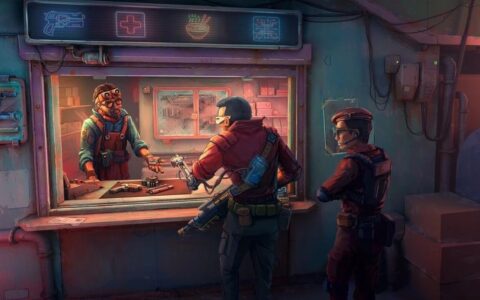
Four or five years ago, the months of March and April were the peak season for talent recruitment in the gaming industry. Industry professionals only had to log in to job recruitment platforms to receive a flood of private messages from HR representatives and headhunters. After just a few brief exchanges, they could usually secure an interview invitation—without even having to submit a resume themselves.
The job market in the gaming industry this spring, however, is a completely different story: on recruitment platforms, nine out of ten companies that reach out proactively are outsourcing firms, highlighting the stark contrast.
Even if game developers are reluctant to admit it, labor dispatch has become a widespread employment practice in the industry. A quick glance at job recruitment websites reveals that the job postings can be summed up in one sentence: it seems as though only outsourced positions are available, and they’re still hiring on a massive scale.
PART I
Before I knew it, it seemed like only outsourcing companies were actively hiring.
Xingxi, who had just left her “former employer”—a major tech company—a few years ago, refreshed the job search page on a recruitment website once again. For almost an entire week, she received no new responses to the resumes she’d submitted. Xingxi quietly considered her options: Maybe she should put her job search on hold for a month or two and take a break?
Although it was her former employer, Xingxi had not actually signed an employment contract with the major company; instead, she had been working on-site as an outsourced employee for many years.
At a time when cost reduction and efficiency improvement have become the dominant trend in the gaming industry, the ratio of contract staff to full-time employees at major companies has reached or exceeded 1:1. Coupled with the high turnover rate among contract positions and strong hiring demand, opening any job-search app reveals a screen full of contract job postings, creating the illusion that companies are “hiring only contract staff.”

PiPi, an artist based in Chengdu, knows this all too well.
She scoured the job boards and found that the same few companies were always posting for art positions in R&D, while 90% of the rest were outsourcing their art work. Pi Pi knew all too well that many of these art outsourcing companies were nothing more than sweatshops—her former employer was exactly like that.
At her previous company, PiPi’s daily work was crammed full of design KPIs—from 9 a.m. to 9 p.m., with not even a moment to slack off.The negative feedback she received from the client from time to time left her physically and mentally exhausted. With low pay and overwhelming pressure, PiPi decided to “pack it in” less than a year after starting the job.
Labels such as “limited growth opportunities, low pay, and poor job stability” have long been an unspoken consensus among game industry professionals. News that NetEase is replacing outsourcing staff on some of its projects has only amplified this anxiety.
According to the “Insights into Job Seeking and Recruitment” (January–February 2026) report released by Maimai, this year’s spring recruitment season has seen an overall shift away from entry-level positions, with roles requiring three or more years of experience accounting for more than 70 percent of openings. The disappearance of entry-level positions is, on the one hand, leading to a shift toward outsourced roles, and on the other hand, may be resulting in their replacement by AI.
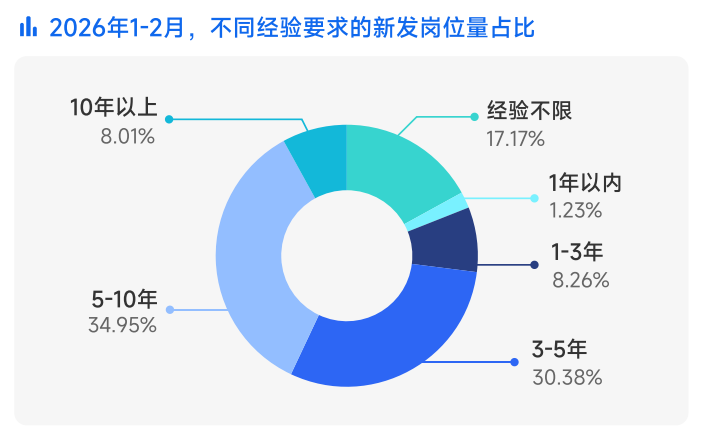
(Image courtesy of the Maimai report)
With the headwind of a continuing shortage of full-time positions in the industry on one hand, and a job market flooded with outsourcing opportunities on the other, will Xingxi and Pipi be able to find a new job that truly satisfies them?
PART II
A roundabout solution when there aren't many options
Xingxi was, of course, well aware of the various shortcomings of outsourcing positions. In her plans, outsourcing work at major companies had always been a stepping stone into the gaming industry—not a place to stay for the long term.
Right after I graduated, the gaming industry had already passed its boom cycle, and major companies were scaling back operations everywhere and freezing hiring.Xingxi had neither an impressive academic background nor gaming internship experience to back her up, and she lacked a clear plan for the future. She had no choice but to send out mass applications to game companies, but her resumes went unanswered time and time again, nearly eroding her determination to break into the industry. Just as Xingxi was about to give up, a staffing agency reached out to her privately with an interview invitation.
These days, nine times out of ten, the ones who take the initiative to say hello are from outsourcing companies.
After three rounds of interviews, Xingxi received an offer from a major tech company’s outsourcing division. Without much hesitation, and guided by her initial goal of getting into the industry first and figuring out her future later, Xingxi decided to accept the offer.
For inexperienced outsiders with unremarkable résumés, outsourcing may indeed be a relatively accessible alternative route to success.
After working for many years, Pi Pi had still not developed any business development skills and became increasingly convinced that she was not cut out for a career in marketing. A few years ago, she decided to change careers, picked up her paintbrush again, and enrolled in a training program to study art systematically.
But PiPi, who had only training experience and couldn’t produce an impressive portfolio, wasn’t enough to catch the attention of R&D companies; however, an outsourcing firm was willing to send her some test questions to try out.For a complete novice in graphic design like PiPi, letting go of her obsession with joining an R&D company and instead gaining experience at an outsourcing firm—where she can build practical experience while developing her portfolio—is undoubtedly a pragmatic compromise.
That "temporary" contract worker status—though not the ideal shortcut—was the only ladder they could grasp at the time to enter the industry.
PART III
The Ever-Vigilant Outsider
After joining the team, Xingxi quickly adapted to the work environment at the large tech company and took on many of the project’s day-to-day tasks. The atmosphere in her project team was harmonious; the team leader was approachable, and everyone got along well. Even during internal team-building activities, outsourced employees were never excluded, and Xingxi was rarely treated as an outsider.
During her time at the major tech company, Xingxi had only witnessed one instance of a direct conflict of interest between a full-time employee and a contract worker.
A full-time employee in the neighboring team was known for slacking off on a daily basis. As the proposal deadline approached, he actually stole a PowerPoint presentation from a contractor, modified it, and claimed it as his own. Eventually, the truth came to light, and he was publicly reprimanded and held accountable.
Even so, the strict internal rules and regulations at major tech companies have long drawn a clear line between contract workers and full-time employees. Salary and benefits are the most prominent dividing line.
The compensation for full-time employees at major tech companies is more than double that of outsourcing staff in the same positions. They receive higher performance bonuses and year-end bonuses, and are eligible to share in the profits generated by successful projects. In contrast, outsourcing employees receive only 13 months’ salary, no year-end bonus, and a cap on their performance bonuses. The disparities in smaller benefits—such as meal allowances and holiday perks—go without saying.

Outsourcing is more cost-effective
Even though contract workers are paid far less than full-time employees, the workload and pressure they face are just as intense.
During the major game update, Xingxi worked nonstop on the project for more than ten days, leaving work at 2 or 3 a.m. every day only to return to her regular job that same morning. The overwhelming workload left her feeling numb and ultimately led her to resign.
When the team members learned that Xingxi was about to leave, they all reacted with surprise, saying, “Are they really going to fire such a dedicated employee?”
For companies, outsourcing basic operational tasks to contract workers not only significantly reduces labor costs but also eliminates the need to provide them with career advancement opportunities.
During her years working at a major tech company, Xingxi has seen only three contract employees be hired as permanent staff. All of these employees had been with the company for more than five years and were outstanding performers. The experience of one of these colleagues left Xingxi feeling she couldn’t hold a candle to him:
When AI was just emerging, this employee developed a workflow that, by setting up dozens of agents, helped boost the efficiency of core operations by as much as 60 percent.
That is why Xingxi constantly reminds herself not to become complacent in this seemingly comfortable environment. If she doesn’t want to be stuck in entry-level roles forever, she must break out of the outsourcing cycle and work hard to improve her skills on the job.
In addition to the differences mentioned above, certain subtle aspects of day-to-day management at large companies can also highlight the status of outsourced employees as outsiders.
Yunzhou, a contract worker at another major tech company, said frankly that the longer he works, the more deeply this sense of inferiority stemming from the “distinction between insiders and outsiders” becomes ingrained in him.
Yunzhou’s employee ID card was a different color than those of the regular staff. Every day when she clocked in, she would quickly swipe it and then tuck it back into her bag, as if hiding a label she didn’t want anyone to see.
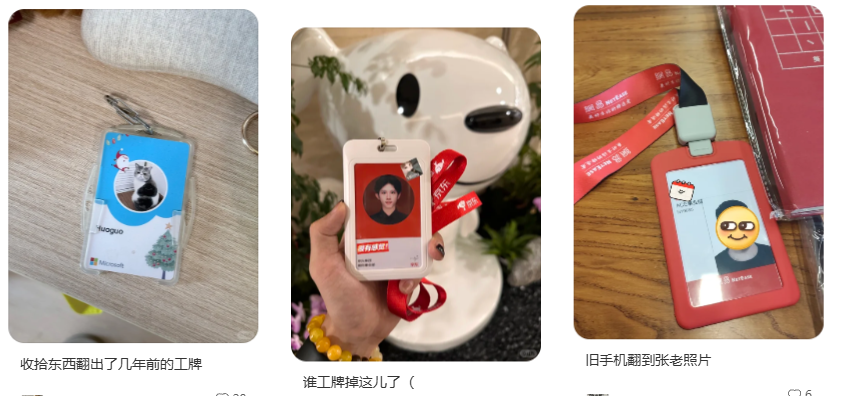
I guess only full-time employees post photos of their employee ID cards.
Another example is when eating in the cafeteria: since outsourced employees don’t have meal vouchers, they have to pay for their meals by swiping their employee ID cards to deduct the amount from their account balance. Whenever the cafeteria card reader displays “Insufficient meal credits,” Yunzhou has to awkwardly ask the cafeteria staff to switch to cash mode.
Although my full-time colleagues are all very friendly and have always treated me as a “fellow student,”But as an outsourced employee at Yunzhou, Yunzhou repeatedly encountered that invisible barrier at work: he couldn’t book conference rooms, had almost no access to internal documents, and even his personal information in office software was prefixed with a “w.” All of these constantly reminded him of his marginalized status.
Yunzhou knew full well that his colleagues didn’t care about these trivial matters at all; they were far more concerned with whether the project would be completed successfully. But in the end, he still found it hard to get past that mental hurdle.
Just like Xingxi, becoming a permanent employee is a distant dream. If Yunzhou could be transferred to an in-house contract in the future, that would be the highest promotion he could hope for.
Although they are within the walls of a major tech company, they remain on the periphery of its system; no matter how hard they try, they cannot erase the divide in their status.
PART IV
With AI on the rise, are even outsourcing jobs going to disappear?
Over the past two years, the company has undergone constant internal restructuring, with several well-known producers leaving one after another, and the pressure to cut costs and improve efficiency has been passed down through the ranks to the front-line staff. Last year, Xingxi had already heard rumors that management was planning to downsize the front-line staff. Therefore, when she saw the news about another round of layoffs at her former company, she wasn’t surprised.
Xingxi told Game Teahouse that her former company placed a strong emphasis on employees’ AI skills and has already incorporated AI usage and output into performance metrics this year.
However, once tied to KPIs, implementation inevitably deviates from the original intent and may even give rise to a form of “AI for AI’s sake” that is purely for show.
To meet her AI output targets, Xingxi had to devote an additional 30% of her energy to creating AI content unrelated to the project, which actually reduced her efficiency in her primary duties.
Compared to bureaucratic formalities, rapidly evolving AI technology is already capable of handling the work of entry-level positions such as customer service and quality assurance, which has caused anxiety among outsourcing employees—who are already on the margins—leading them to wonder: Are even outsourcing jobs going to disappear?
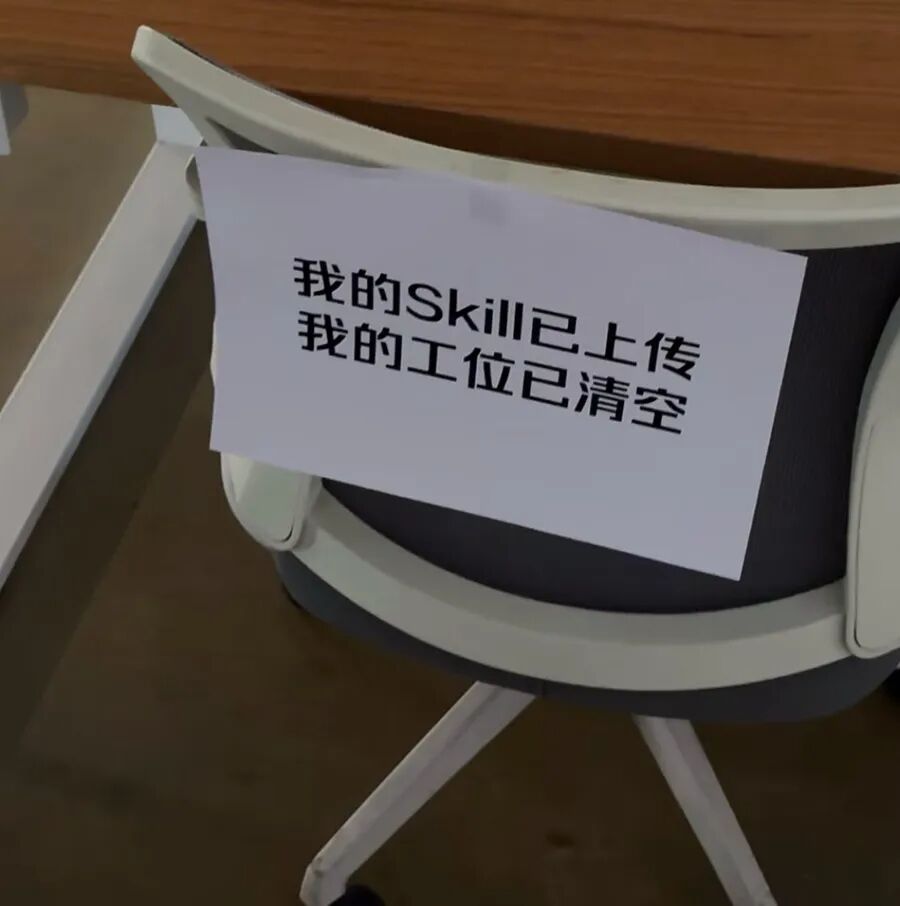
In PiPi's view, AI is not a rival that will replace him, but rather a capable assistant.
She admitted that it is difficult for AI to accurately grasp the client’s ever-changing needs, let alone directly produce finished work that meets strict delivery standards. However, having AI generate reference images based on sample images can help spark her creative ideas.
PiPi once used a logging camp designed by the client as a template to have the AI generate multiple versions of weapon shop sketches in a consistent style; by refining and redrawing these sketches, he achieved twice the result with half the effort. For projects with lower precision requirements, he could simply make minor adjustments to the AI-generated images before delivering them.

Use AI-generated images as a reference—it might just spark some new ideas.
"Work that used to take an hour to complete may now take as little as 20 minutes."
However, the paradox created by AI-driven efficiency gains is that the client’s steadily declining quotes actually reflect the cost of the AI dividend. As AI has been fully integrated into the art production pipeline, PiPi’s actual workload has nearly doubled, trapping her in a vicious cycle where “the higher the efficiency, the greater the workload, and the lower the unit price.”
The owner of an art outsourcing company asserted that outsourcing firms lacking R&D capabilities will eventually be weeded out by the market. Game Teahouse has also observed that only suppliers with full-stack service capabilities—covering the entire workflow from modeling to rigging, animation, and engine integration—can gain the upper hand in price negotiations with clients.
In contrast, Yunzhou, who works in publishing, is much more relaxed about it. A key aspect of publishing is interpersonal communication. This type of work requires adaptability—something AI cannot yet replace—which has eased his anxiety about being replaced by technology.
PART V
Epilogue
According to the “2025 China Game Industry Report” released by the China Game Industry Committee, the size of the domestic game market, the number of game users, and the number of game publication licenses issued last year all reached their highest levels in recent years. The game industry has emerged from its slump and entered a new cycle of development.
However, this positive trend has not eliminated the imbalances in the job market. Xingxi, Pipi, and Yunzhou continue to aspire to full-time positions, but employers remain cautious, and full-time opportunities are still scarce.
- After leaving her job, Xingxi received job offers for full-time positions at two small-to-medium-sized companies, but she decided to turn them down because the roles weren’t a good fit and didn’t align with her career plans. She’s still on the fence about another new outsourcing offer that comes with a 30% pay raise.
When asked what her final decision would be, Xingxi said she would prioritize finding a full-time position at a small or medium-sized company. If no such opportunities arose, she might continue working as a contractor for other major tech companies to build up her resume. Or she might switch careers altogether; having witnessed the dot-com bubble firsthand, she no longer views so-called “major tech companies” through rose-colored glasses.

- PiPi first worked at an R&D company, then eventually landed a job at a small game outsourcing firm. With the industry booming, her salary had increased and the pressure was relatively low, so she planned to stay there long-term.
- Yunzhou, meanwhile, is stuck in a low-paying contract position where he isn’t learning anything new. Unwilling to be confined by his current status, he plans to break free from this “walled city” next year and seek a new path.
Some lie low and bide their time, some take advantage of the momentum to put down roots, and some are determined to break through. They are the unseen cornerstones behind the gaming industry’s prosperity; caught between permanent and temporary roles, stability and uncertainty, they stay true to their original aspirations as they search for a way forward.Though the gaming industry has its ups and downs, the aspirations of these ordinary professionals remain simple: to have a job that is recognized, offers a future, and allows them to put down roots.
原创文章,作者:游茶妹儿,禁止转载:https://youxichaguan.com/en/archives/216240