
On June 29, the Teahouse was invited to participate in the media hands-on event for the third beta test of *Imo*, the “Paw-Shake Test.”

Throughout the entire demo, I kept mulling over an age-old question: It’s 2026—why do we still enjoy pet-catching games?
The reason I think this is because the monster-catching genre has become extremely crowded today. Mihoyo’s *Honkai: Fate Spirits*,Manju’s *Blue Starfield: Travel Ballads*, Magic Cube’s *Rock Kingdom: World*, and TiMi’s *Yuanmeng Star: Spirit Hunt in the Classic Chinese Mythology* are all competing for the same player base. On Steam, there are 1,928 games tagged as “Creature Collector,” with 228 new titles added this year alone.
"Imo" is one such game. Developed by Hangzhou Clawprint Studio, its producer and core team members are mostly from leading companies such as Tencent, NetEase, and Mihoyo, and the game itself was incubated by FunPlus.To date, *Imo* has surpassed 15 million global pre-registrations, establishing itself as a highly anticipated and formidable contender in the industry.

(The PV for the third installment has been released, and it has already surpassed 4 million views.)
The "pet-catching" genre in which *Imo* is set may appear prosperous and bustling on the surface, but beneath the surface, there are turbulent undercurrents.
Objectively speaking, pet-collecting games are an extremely mature genre, but their core gameplay loop is inherently limited. Meanwhile, players of service-oriented games expect unlimited playtime. As a result, today’s pet-collecting games must not only provide collection and progression systems but also address players’ deeper questions: “Besides unlocking the bestiary, what’s the point of training my pets?”“Besides battling, what else can I do with other players?” “Is this world worth my time to play repeatedly?”
It can be said that figuring out how to expand the depth of content while maintaining the core gameplay loop is a challenge that every new monster-catching game aiming for long-term success must face.
In addition, the novelty of open-world games is steadily waning, and open-world games centered on collecting pets typically have to juggle multiple systems at once—such as exploration, combat, home bases, and social interaction. If these elements aren’t closely integrated, players will only grow more easily fatigued.
Therefore, in addition to experiencing the game’s latest developments, what’s even more intriguing about this test is how *Imo* will differentiate itself today and address the challenge mentioned above.
In the first two tests, the game has already showcased the foundational mechanics of its gameplay—"Connections": Players can transform into the Imo they own to explore the world, battle, solve puzzles, and even socialize.
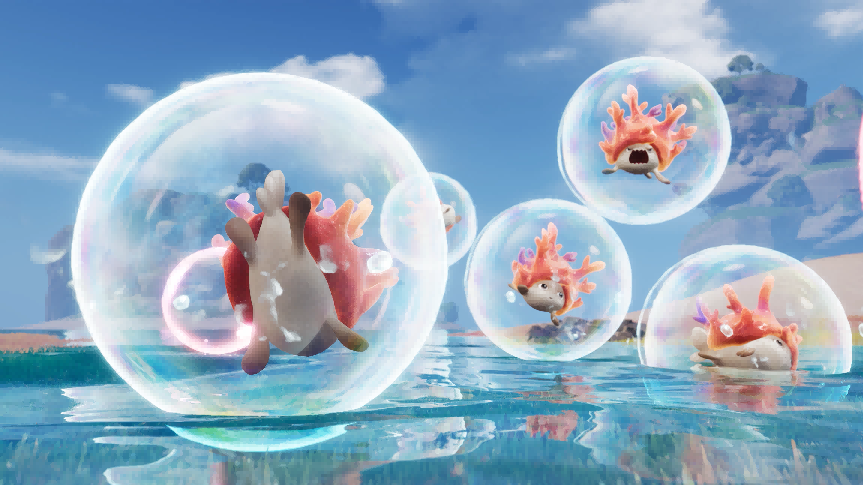
(Some Imo players can even help catch pets—essentially acting as accomplices.)
For example, by bonding with a Burrowing Imo, you can burrow underground to find hidden passages, blend into a group of these Imos to unlock new interactions, and even avoid aerial attacks during critical battles.
The concept of transformation fits seamlessly into the game’s ARPG framework: after transforming into a specific Imo, players can dodge, perform basic attacks, and cast skills—all without turn-based cooldowns.A single party may contain different Imos, each with entirely distinct attack mechanics and skill sets; however, they share a common skill cooldown and can benefit from each other’s attribute bonuses.

It can be said that, by leveraging connections, *Imo* has deepened the relationships between players and Imo, between players and the world, and between players themselves, while also providing the long-term motivation required for a service-oriented game.
By the third beta test, the development team had expanded upon the "Connection" gameplay mechanic to introduce more polished features: Holographic Training, Egg Rush, and Home & Ecology.
Over the course of several hours of gameplay, these features truly set the teahouse apart. They offer a depth of mechanics rarely seen in typical monster-catching games, while effectively integrating with the bonding system: Holographic Training uses a roguelike framework to redefine the relationship between character development and validation; Egg Raid incorporates the “search, attack, retreat” rhythm into the multiplayer interaction of monster-catching;Home and ecosystem features allow the world itself to provide emotional value, giving players a reason to return time and again.
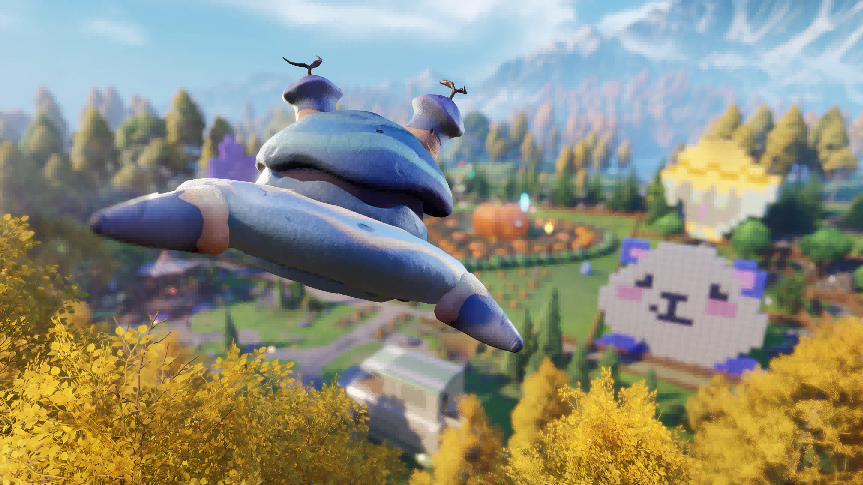
From the players' perspective, these gameplay elements might just answer the question posed at the beginning.
01
The Motivation to Raise Pigeons for Meat
For all pet-collecting games, the most fundamental aspect of the design lies in the rationale behind raising the pets themselves.
As a result, when designing pets, their evolution and interactions must follow a consistent and coherent internal logic that aligns with the game’s world-building, their personality traits, and their ecological niche. In terms of character development goals, players should be given challenging tasks to motivate them to develop their pets and explore the game world.
In this context, the effectiveness of the pet-catching genre has long relied on a fixed formula: setting up a sequence of challenges that increase in difficulty step by step, where players enter with their own trained teams to face a series of predictable opponents in turn-based battles.
This design concept dates back to the handheld console era, and its core principle is "stability"—players can accurately predict the layout of each level, tailor their party compositions accordingly, and repeatedly strive to achieve higher clear times.
In addition, pet-catching games typically feature attribute weaknesses, which are easy to understand and quick to pick up. However, once the novelty wears off, they become “rote memorization”—you have to memorize each boss’s attack sequence and elemental weaknesses, and the rest is just mechanical gameplay. Once you figure out the patterns, testing your strength becomes a matter of simply following the steps, and there’s almost no unexpected feedback during combat.
The value of the pet-catching mechanic in open-world GaaS games lies in its “randomness”—compared to fixed dungeons, the pet-catching experience is far more unpredictable. However, in most games, this randomness is limited to “which pets you’ll encounter”; the randomness of the battles themselves and the scope for strategic variation remain limited.
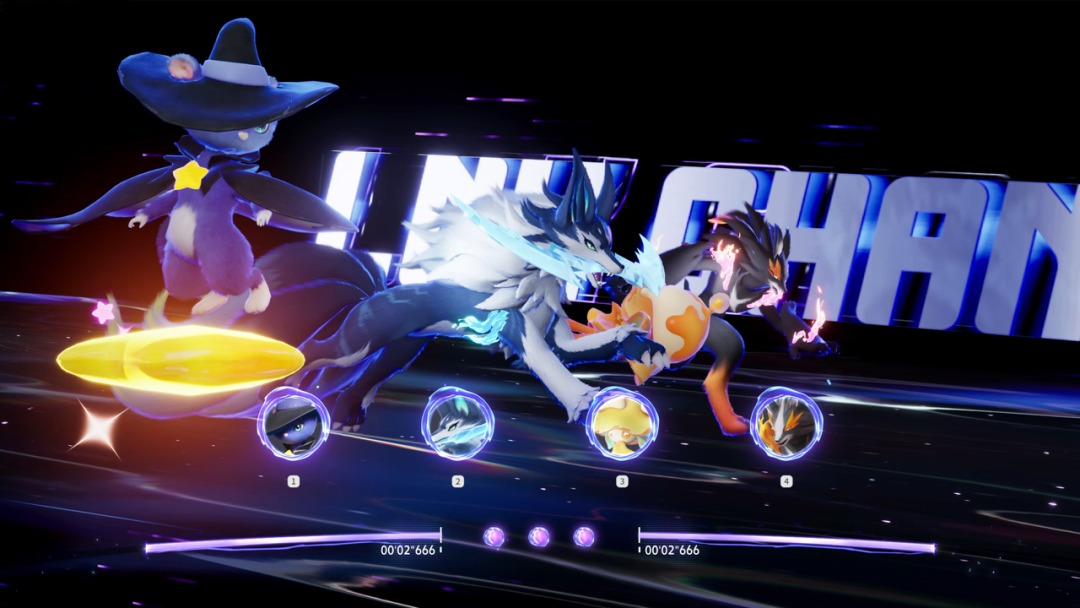
The “Holographic Training” mode, which was retained and optimized in the third beta test, addresses this issue.
This is a roguelike tower-climbing game. Combat is triggered on every floor, and defeating opponents rewards you with “Fate Cards,” which can alter the rules of battle or enhance your character’s abilities.
The tower consists of multiple combat floors and event floors. On the event floors, players can restore health, obtain additional power-ups, or tackle high-difficulty challenge stages. The higher the floor, the more complex the enemy formations become, and the difficulty increases with each floor.
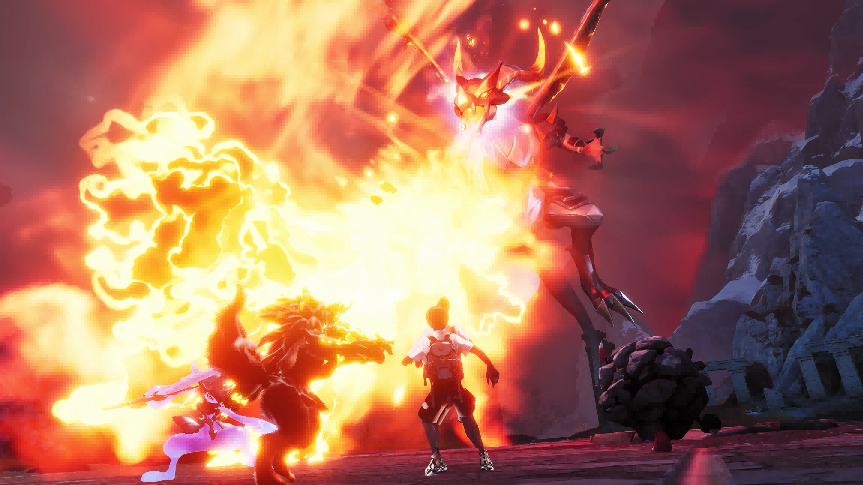
The highlight of holographic training is that, thanks to the random bonuses, the same Imo will have different combat styles and offer different thrills depending on the skills it possesses, the teammates it’s paired with, and the “Destiny Cards” it draws.
During my trial play, I experimented with two typical types of buffs. One focused primarily on healing and shields; combined with Immo’s innate healing abilities as a Grass/Water-type, this created a nearly zero-cost combat loop. This allowed me to shift to a sustain-focused strategy, using continuous healing and positional combat skills to wage a war of attrition.
Another time, I got the “Critical Hit Rate Boost,” which was a perfect fit for a certain Imo in the team—with its short-range burst damage and multi-stage dash attacks—so I was able to immediately adjust my strategy, stacking all the buffs onto its damage-dealing skills to try and quickly chip away at the boss’s health during its defense window.
With the same team composition and the same boss, simply because of the different enhancements obtained, the choice of main DPS, the timing and balance of support, and even the entire tower-climbing strategy and pace can be completely different.
For service-oriented games, the motivation for character progression comes from the sense of surprise when testing a character’s strength, and Holographic Training uses roguelike mechanics to avoid the major issue of repetitive gameplay during character development.Building up an Imo offers high replayability because the feedback comes not only from Imo’s own stats but also from the richness of the enhancement pool—dozens of different skill enhancements covering damage, healing, shields, crowd control, and speed, among others. Theoretically, there can be thousands of possible combinations in each round.
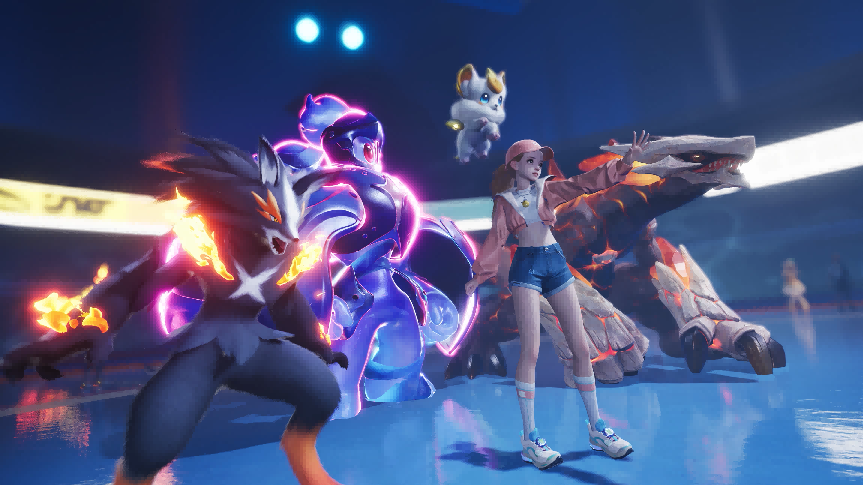
The "Meat Dove" also adds value through roster diversity; random buffs disrupt the "optimal solution," so if you get the healing buff this round, a sustain-focused Imos becomes even more valuable;If you get the critical hit buff in the next round, a burst-damage Imo becomes a viable choice—ensuring that no single type of Imo is completely sidelined. The staff told us that, so far, there are over 200 Imos, and with a team of four Imos, the possible combinations are virtually endless.
This is a new variable that conventional frameworks cannot provide. Holographic training not only answers the question of “how strong” a character is, but also—through random enhancements—encourages players to reconsider “why” a character is strong in every round, thereby indirectly heightening players’ anticipation as they develop Imo.
02
Can you catch pets by searching, hitting, and retreating?
Another highlight of the third beta test was undoubtedly the “Egg Grab Battle,” which didn’t follow the traditional search-and-attack format.
This is a multiplayer mode introduced in the second closed beta of *Imo* and retained and optimized in the third closed beta; its design originated from a long-term operational challenge commonly faced by pet-catching games.
In "Pet Catcher," content is consumed much faster than it is produced; players capture new Imos much faster than the developers can design them. Once the bestiary is complete, all that’s left is daily character development and repetitive battles.
For service-oriented games, PvP is supposed to be a key component of long-term content, but conventional ranked matches face several inherent obstacles: the high barrier to entry,new players have almost no chance against veterans; even when team compositions are similar, differences in understanding of team composition and synergy lead to a lopsided experience—in other words, the learning curve is too steep;
In addition, in conventional pet-catching games, victory or defeat depends largely on stats and type advantages; there is limited room for maneuver, the gameplay is monotonous, and if you can’t beat an opponent, you simply can’t—there is a lack of strategic depth.

"Search, Attack, Retreat" is a game mode offered by *Imo* that combines intensity with fun.
Specifically, players need to form a team of three and take the egg boat to the “Lost Islands.”The map is divided into inner and outer rings—the outer ring is a PVE zone featuring multiple small islands with wild Imos, supply crates, and random events. Players can set up camp on the outskirts, call it a day, and withdraw with the loot they’ve gathered, which can then be used for Imos’s growth and breeding.
You can also choose to enter the inner circle for an exhilarating showdown against all kinds of "troublemakers." This PvP zone features only one central dungeon, where the focus is on intense combat and tactical strategy.Stronger wild Imos, map traps, and the involvement of other players can suddenly ramp up the intensity. Hidden in the center of the dungeon is the Super Imo Egg—the most valuable resource on the entire map. The first player to come into contact with it will transform into an “egg” and instantly become the target of everyone else, stumbling their way toward the exit.
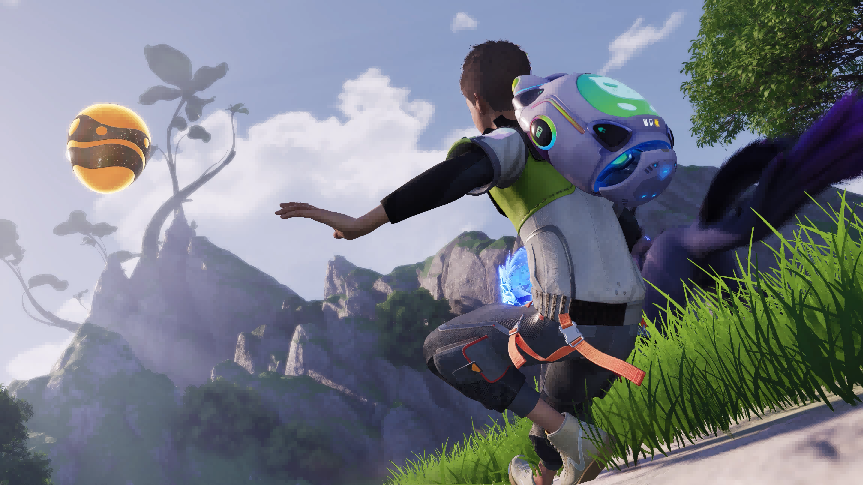
PvP players can choose to compete for Super Imo Eggs, which can hatch highly collectible Imos, or they can acquire even more valuable collectibles to use for in-game development in this mode.
From a long-term operational perspective, once players have accumulated a certain amount of character-development resources, the marginal returns from daily activities decline rapidly. “Egg Grab Battle” provides a new channel for acquiring resources, while also freeing players from the constraints of fixed daily quests.
However, the in-game experience isn’t entirely positive. “Search, Attack, Retreat” places high demands on map depth, but the dungeon maps remain relatively flat and consist mostly of narrow passages. It remains to be seen whether players will be able to incorporate strategy during high-intensity combat—including whether they can quickly identify their teammates in the midst of multiplayer battles.
03
Eco-supremacy
If we view holographic training and "Egg Grab" as answers to the question of "what to play," then the changes to the Home system in the third beta address a more fundamental question: What exactly do players gain by staying in a game long enough?
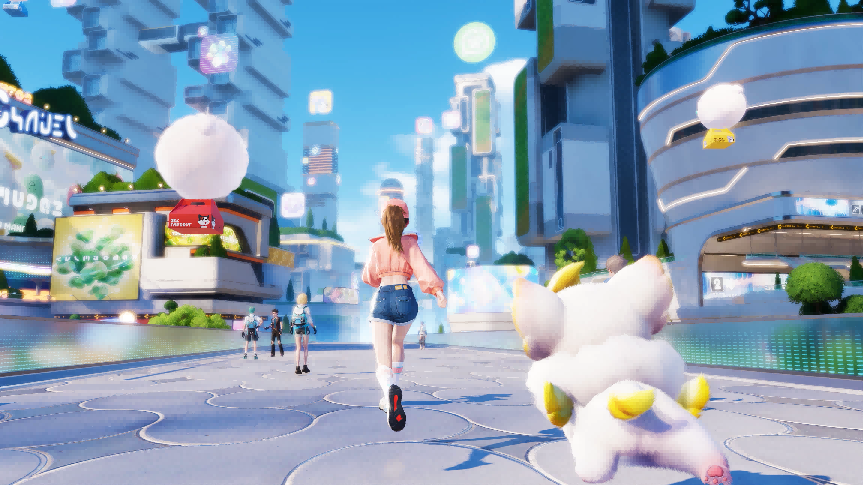
Beyond collecting, character development, and social interaction, the key factor that keeps players engaged in a world is often the extent to which they can shape that world with their own hands.
This is a principle that has been repeatedly proven in the open-world game and MMO genres—the true turning point for long-term retention comes when players transition from consumers to creators, from merely experiencing the world to leaving their mark on it, and from a consumer mindset to a sense of belonging.
And *Imo* also has a clear vision in this regard: to make the interactions between the player and Imo as rich as possible—so rich that they fill every corner you can see.
First of all, *Imo* has no cross-media background to draw upon; it must establish its distinct identity through the behavioral details and evolutionary logic of individual Imo characters. As a result, the game features a wealth of design elements related to the ecosystems, habits, and social interactions of different Imo groups.
For example, even just the Shy Otter species alone exhibits a variety of interaction behaviors, such as running away, hiding, and observing; they also dig up shells to give as gifts to one another. Furthermore, as their evolutionary branches diverge, they develop even more distinct forms and corresponding interaction patterns.

Not only that, but each Imo even has its own MBTI type. Every Imo has one of the 16 personality types, determined by a combination of the four dimensions: E/I, S/N, T/F, and J/P.Each dimension provides a 5% positive bonus without reducing any stats—E boosts both attack stats, I increases speed, S increases base damage, N increases critical hit rate, T increases physical defense, F increases magic defense, J increases health, and P increases damage reduction. Players can take their own MBTI test and then search for Imos with matching personality types.
Next is the open world. In addition to the classic wilderness maps, the game introduces an RV campground system. You can also come across other players’ RV campgrounds scattered throughout the open world, drop by for a visit, hang out, and experience the carefree spirit of a road movie.
Inside the home, you can also set up various mining rigs and generators that are currently in operation. Imo with different attributes can produce resources on a large scale based on their own characteristics, working hard at the mining rigs and generators.
"Imo" has also introduced all kinds of play equipment into the homestead, so that the mischievous Imo can explore and have fun, giving the homestead a genuine sense of home and warmth—no longer just the sterile atmosphere of a plantation. The toy tracks scattered everywhere are enough to make you think of your own pets at home.
And “home” is just a part of that space.*Imo* also features a substantial amount of city-based content. On the streets of Star City, you’ll find Imo performing; in ice cream shops, Imo working part-time; and in barbecue restaurants, Imo serving customers. In addition to standard exploration and daily quests, you’ll randomly trigger combat encounters with NPCs throughout the city, allowing you to fully experience the thrill of martial combat.
Next is the “Co-Creation Pixel Art” feature, added in the third beta test, which allows players to create pixel art within the game—a feature that has already sparked a small creative wave within the community. Some players have turned the nighttime form of the “Shy Otter” inside their RV into pixel art to hang on the wall, or have arranged it to feature any elements they like.
These elements create an exceptionally high emotional value, going far beyond mere collecting and display—they also provide players with high "cooking" skills with ongoing motivation to develop their characters. After all, the depth of Imo development is quite substantial—not only do they have various personalities and different aptitudes, but each Imo also has multiple evolution paths,with each branch corresponding to a completely different role. Beyond that, there’s attribute enhancement, potential point allocation, talent trees, artifact set resonances, and faction bond cultivation—deploying multiple Imos from the same faction simultaneously can even activate additional attribute bonuses.
Incidentally, the visuals in the third beta test also reinforced this experience. The development team made extensive customizations to the Unity engine, resulting in more polished dynamic lighting and shadows in the open world, as well as higher-resolution environments and architecture than before. Real-time raindrops feature independent physics-based material effects, and the textures of Imo’s fur, leather, and metal are even more refined.
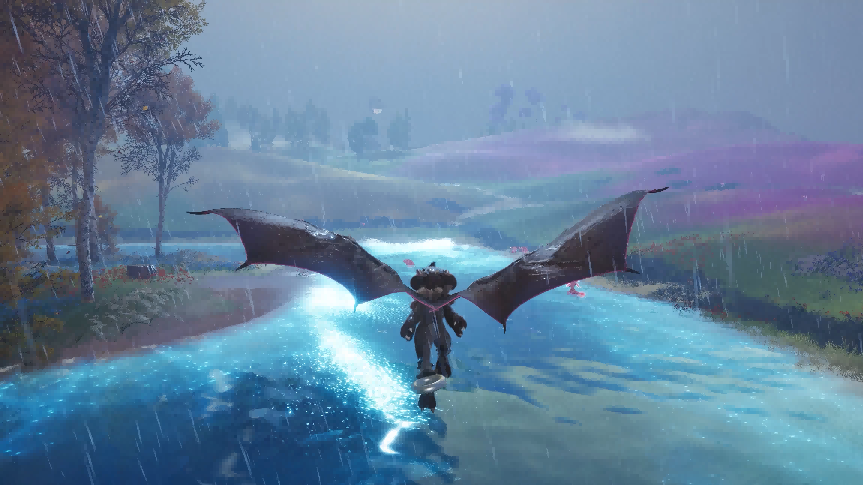
It’s safe to say that, in terms of content and interactivity, *Imo* is all about offering a massive, satisfying experience; for players who love pet-themed games, it’s unlikely they’ll ever get bored while playing.
Conclusion
Over the past few years, products in the "pet-catching" genre have tended to seek differentiation beyond the core "pet-catching" mechanic—by adding gameplay features, social elements, and building mechanics.
The third beta test for *Imo* is also incorporating these new features, but after experiencing all three directions, one thing becomes very clear: among the games adding new content, it’s the most radical and ambitious.
It strives to ensure a comprehensive player experience in every aspect. The holographic testing feature provides a repeatable yet unpredictable validation environment, preventing progression feedback from becoming increasingly diluted over time; “Egg Raid” addresses the issue of dimensionality in PvP gameplay—in addition to traditional PvP, raid challenges, and co-op play, it offers two new possibilities for social interaction: cooperation and strategic competition;The layering of diverse spatial experiences extends players’ sense of investment in Imo beyond mere numerical progression…
Of course, during the third beta test, there were still quite a few rough edges. For example, performance and optimization issues still need to be addressed, the urban content requires further development, and bugs that cause the game to get stuck within the map occasionally occur when switching between different worlds.
But the direction is clear. In an increasingly crowded market, building a framework that is complex enough—while always serving “Imo” itself—may be enough to serve as the game’s moat.
原创文章,作者:游茶妹儿,禁止转载:https://youxichaguan.com/en/archives/208079