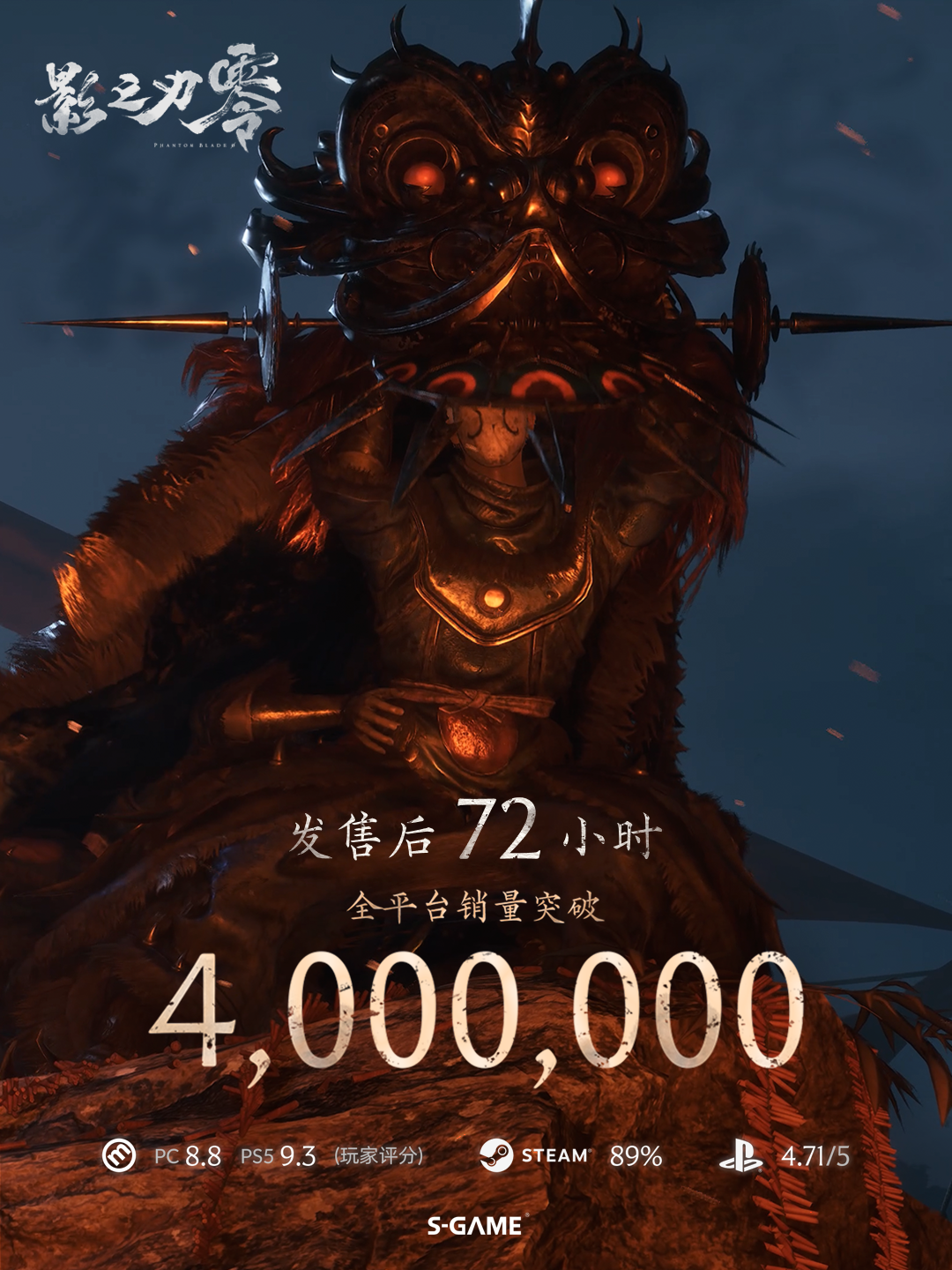
Last Thursday (the 29th), *Shadow Blade Zero*—dubbed “the village’s second college student”—was released. With a high score of 88 on Metacritic, it entered the Top 10 list of this year’s new game ratings and set a new record for domestic single-player games.Sales figures were equally impressive, with the game surpassing 4 million copies sold within 72 hours of release, second only to *Resident Evil 9*.
Behind the marketing and promotion of *Shadow Blade Zero* lies Sony’s full support. When it was first unveiled, it served as the grand finale of a PlayStation presentation; as the release date approached, Sony organized an exclusive *State of Play* livestream and even commissioned a massive mural to build hype…
However, *Shadow Blade Zero* is not part of the “PlayStation China Stars” program (hereinafter referred to as “China Stars”). For more than a decade since Sony PlayStation entered the Chinese market, it has consistently promoted the China Stars program to nurture Chinese developers for console platforms.
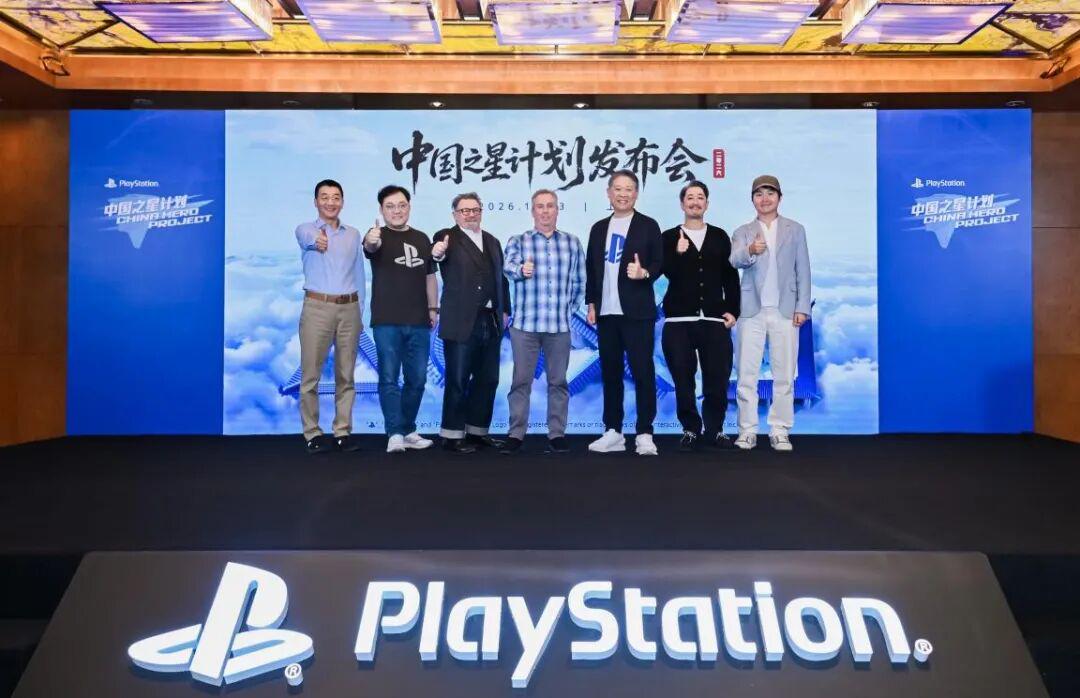
As domestic games such as *Black Myth: Wukong* and *Shadow Blade Zero* have seen successive successes and the domestic single-player game development ecosystem has gradually taken shape, Sony has launched a new phase of its China Stars program in Shanghai. Targeting console platforms and global players, what new support will Sony provide to China’s increasingly mature developers?
$1 million in actual funding
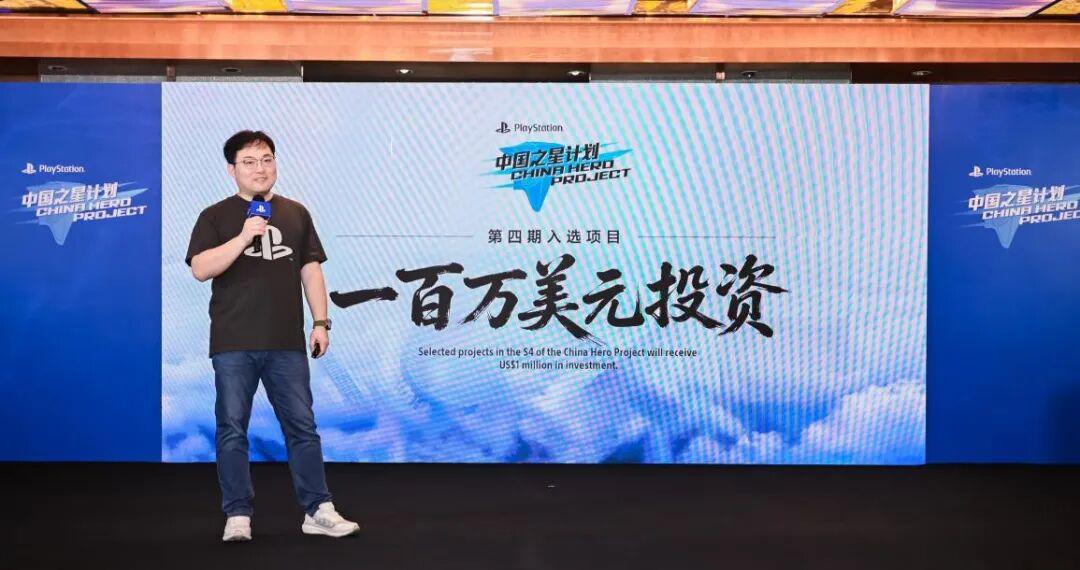
Bao Bo, Director of Game Production at SIE Shanghai, announced that SIE will invest $1 million in each project selected for the fourth cohort of China Stars. In addition to the previously announced list of partners for the fourth cohort, DENMU and S2G will be added as new partners to provide a more comprehensive support system for the selected game projects.
DENMU is an investment firm focused on the global gaming industry; its founding team previously invested in *Showa: A Tale of America*. *Daba*, a finalist in the third China Star competition, is one of DENMU’s many investments in China.
S2G is a distribution service provider that has been partnering with PlayStation for 22 years. As a partner in the China Stars program, S2G plans to assist in the release of the third batch of selected games, *Daba: Land of Watermarks* and *Subthreshold*.
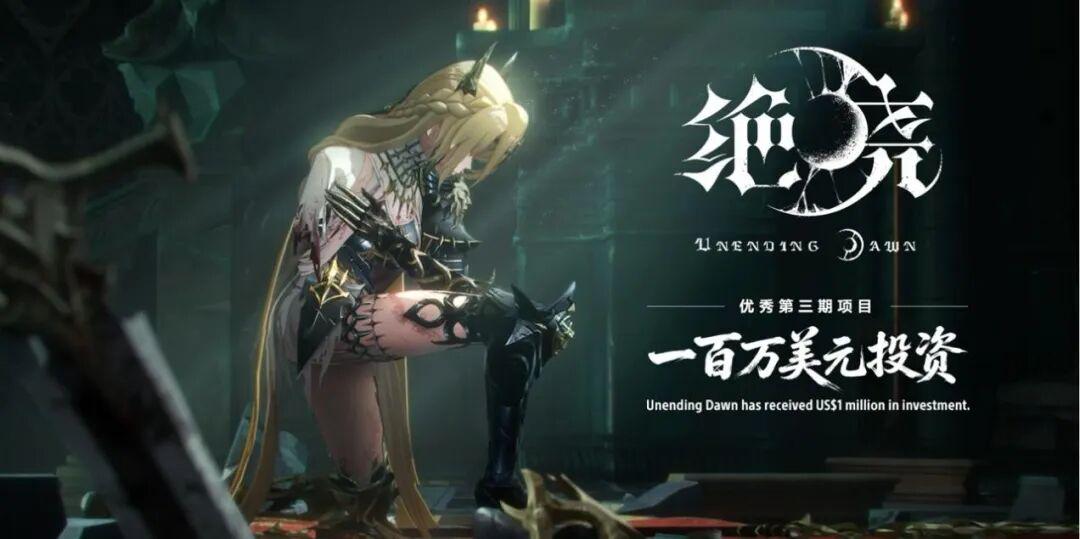
Meanwhile, there is also good news regarding the projects shortlisted for the third round. *Absolute Dawn* has also secured a $1 million investment from Sony.
According to reports, this $1 million investment will take the form of a project investment rather than an equity investment, which is more common in the domestic market. Bao Bo revealed that SIE hopes the financial support will help the development team grow more quickly, rather than seeking a specific return on investment.
Counting from the launch of its first phase in 2016, this program has now entered its tenth year.According to official press releases, a total of 20 games were selected across four phases, producing critically acclaimed titles such as *Shadow Torch City*, *Hardcore Mech*, and *Infinite Mech*. However, some projects also fell by the wayside and have gradually faded from public memory.
Once teams incubated by China Star and proven in the market have matured, they no longer need the program’s endorsement. However, this does not mean they will no longer receive marketing and promotional support from Sony.
Sony has begun replicating this model—which has been in use in China for ten years—in other markets.
Copy and Paste: The “China Star” Model Expands Globally
In the early days of China Star, Takehito Soeda, then Vice Chairman of SIE Shanghai, expressed his hopes in an interview: “I hope that one day, whether at the TGA or E3, a Chinese game will appear on that list of honorees.”
In less than a decade, *Hardcore Mecha* has won the PS Awards, and *Infinite Mecha* has been honored with the G-STAR Jury’s Choice Award. It’s safe to say that one of the major goals of China Star has already been achieved, and the initiative has been a resounding success.
Sony has indeed taken the “China Star” model and experience beyond China, with India serving as the first pilot region. India has long served as an outsourcing hub for Western game developers, and there is still a significant pool of local development talent there.
In May 2023, the India Hero Project (IHP) was launched. The following year, the first five games were announced at the Develop: India conference, and two more were added later, bringing the total to seven:
India Hero Project
Sony’s support for the IHP program is very straightforward: it provides renewable development grants starting at $100,000, with payments made based on milestones, and there is no obligation to release the product. Teams joining the incubator must be registered in India, and at least half of the development work must be completed in India.
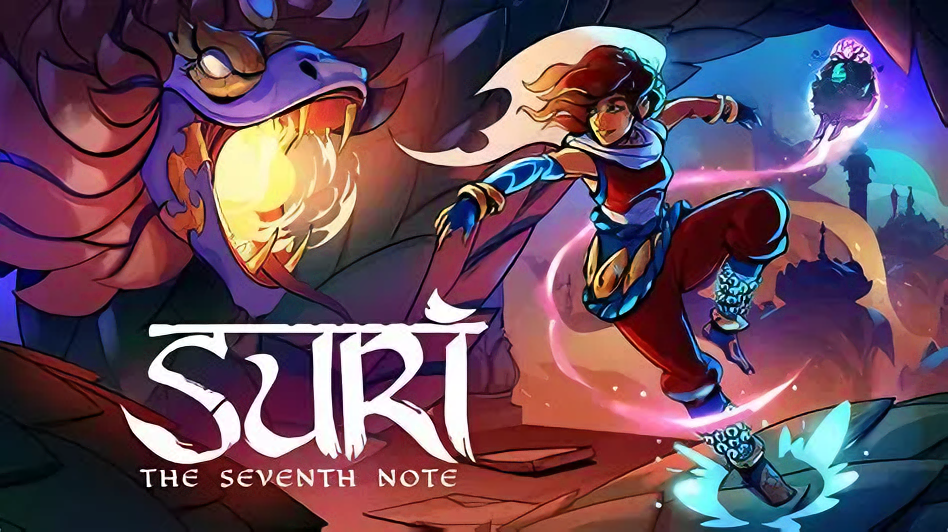
Tathvamasi Studios, based in Bangalore, has stated outright that without funding from IHP, their debut film, *Suri: The Seventh Note*, would not have been possible.
In addition to financial support, Sony has also applied the approach to development resources introduced by China Star to the IHP.
The list of suppliers includes Epic, the developer of the Unreal Engine; Wwise, the interactive audio engine; and Streamline, an outsourcing developer—all of whom helped ensure the project’s successful implementation.
However, progress on the India Hero Project has been slow. It wasn’t until this past April that the first project—the indie pixel-art game *Fishbowl*—was officially released. It currently holds a 94% positive rating on Steam, though it has been described as “visually stunning with a deep theme, but with repetitive gameplay.”The second title, *Suri*, was released just last week; it has received mixed reviews from the media, and there are very few Steam reviews so far.
The Middle East project got off to an even later start. Last August, the MENA Hero Project announced its first four titles: “Red Bandits” from Saudi Arabia, “Enci’s Solution” from the United Arab Emirates, “The Perfect Run” from Tunisia, and “A Cat’s Manor” from Bahrain. All are still in development.
MENA Hero Project
The biggest challenge in the Middle East and North Africa remains the shortage of talent; Sony believes that the talent pool there is even shallower than in India. There are no shortcuts here—it can only be achieved through continuous development and long-term accumulation.
When comparing ChinaStar to its two sister programs, the most notable difference is still “money.”
China primarily follows the equity investment model. In the early stages, China Star brought in the venture capital firm Whiz Partners, which invested in several game developers; more recently, it partnered with the Shanghai Game Industry Special Fund, which focuses exclusively on single-player games and has a planned total scale of 1 billion. However, SIE now also provides direct financial support to shortlisted projects.
India and the Middle East are following a project financing model. Sony provides early-stage development funding and receives a priority share of game sales revenue in the later stages.
Overall, when China Star was first launched, China already had a large community of game developers. In contrast, India and the Middle East still have a lot of ground to make up, and results won’t be visible overnight.
Building a Developer Ecosystem
There is no doubt that Sony’s Hero Project (XX Star) is a systematic, long-term initiative. Sony has set internal expectations for it.
In May of this year, the PlayStation vice president in charge of the global Hero Project stated that the project’s goal is to first cultivate a developer community and that it is not aimed at making a profit in the short term—it is “a five- or ten-year vision.”
As is well known, the PS5 hardware isn’t particularly profitable; the main source of revenue comes from a share of game sales. A steady stream of content still relies heavily on third-party developers. While there are many players in emerging markets, console penetration rates remain low, creating an urgent need for “games that local players actually want to play.”Every market has its own unique story. Developers in Europe, the U.S., and Japan cannot fully meet the demands of markets in China, India, and the Middle East; they can only pin their hopes on local game developers.
As a result, Hero Project acts more like a trailblazer, guiding local developers through the entire game development process—from project initiation to asset slicing, to optimization, and finally to release. It steps in when a team consists of just a few people, bringing a comprehensive set of game development expertise to accelerate the formation of a local developer ecosystem.
Over the past decade, China Star has cultivated a group of developers who possess a unique aesthetic sensibility and know how to create single-player games. These developers will move on to new opportunities, start their own companies, and have a ripple effect across the entire industry. Their future games will undoubtedly rekindle their partnership with Sony’s PlayStation.
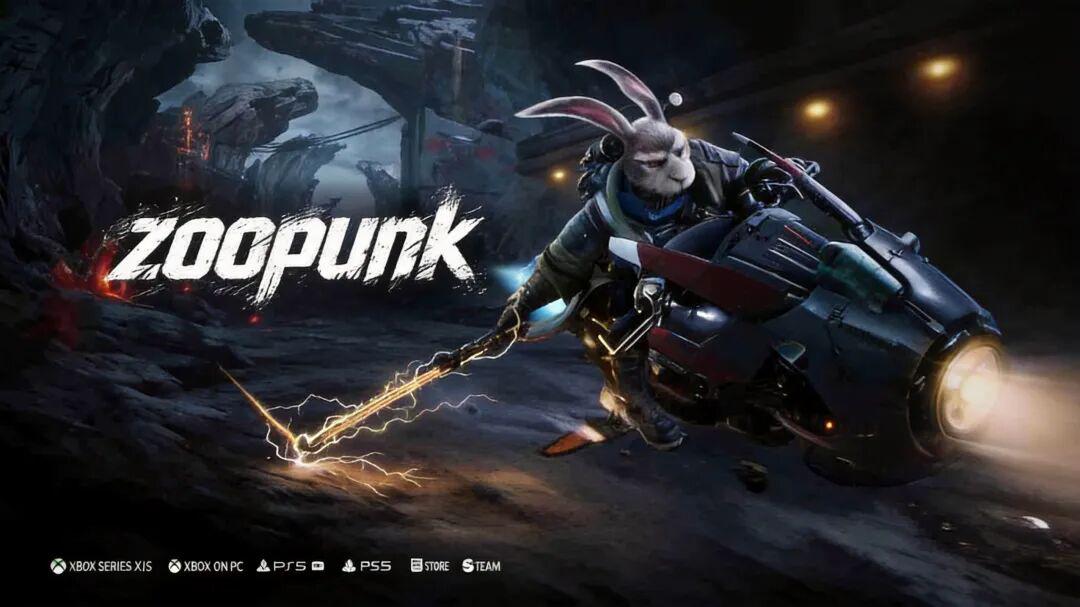
Shadow of the Torch City Team’s New Game May Still Focus on the PS5 Platform
This also explains why the same set of templates looks slightly different in the three regions.
China has a well-established developer ecosystem that is already maturing, with major players like Tencent, NetEase, and miHoYo entering the market, as well as small but promising startups like Sense Games and Titanium Core Network, whose products are reaching a global audience. China Star is the icing on the cake.
In India and the Middle East, Sony is essentially starting from scratch, so it has no choice but to front the costs to provide timely support and gradually build up a developer community. The Hero Project is a spark that ignites a flame; it bears the important responsibility of raising awareness and provides more nuanced support. It may take Sony a decade before it reaps the rewards of its efforts.
We complement and enhance each other, and help each other succeed.
Ten years ago, when the China Star program was launched, the domestic game development ecosystem was still a barren wasteland; ten years later, outstanding products created by Chinese developers urgently need a bridge like China Star to reach global markets.
After the press conference, Bao Bo, Director of Game Production at SIE Shanghai, remarked that Chinese single-player game developers are gaining momentum, but the road ahead is long. He expressed his hope to see the day when more than six Chinese AAA games are released each year, with overseas sales accounting for more than 50% of total revenue.
Most of the developers at China Star have experience in mobile game development; they’ve turned to creating single-player games largely because they feel such games offer greater creative freedom. Compared to the highly competitive mobile game market, the single-player game sector remains a growing market.
Sony’s goal is to further expand the console ecosystem and foster a thriving developer community. Startup teams will gain access to resources and guidance, while Sony will secure scarce, exclusive, high-quality content.
Developers and Sony complement each other and help each other succeed.
原创文章,作者:游茶妹儿,禁止转载:https://youxichaguan.com/en/archives/222204