How can a newcomer to the gaming industry come up with ideas for their first game? How do game producers develop their aesthetic sensibilities?Are there any advantages to switching careers and entering the gaming industry in your 30s? In an era of widespread AI, how can indie games enhance their competitiveness? We gained some insights into these questions during this interview with Ou Haolin, producer of *Dreamaze*.
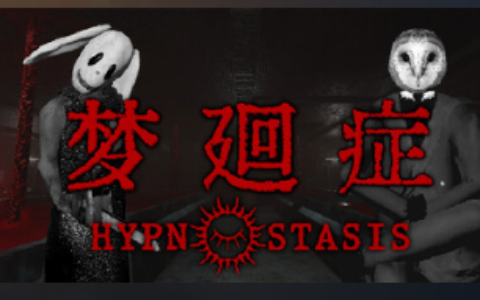
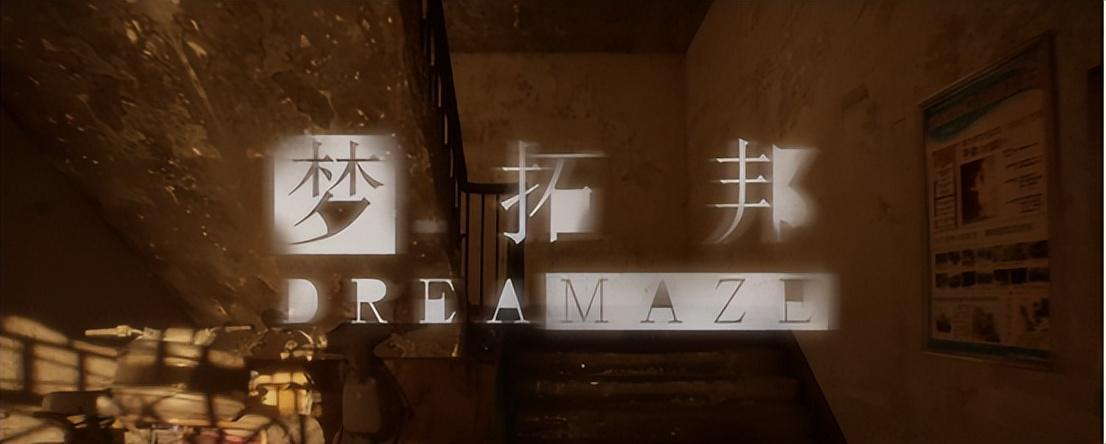
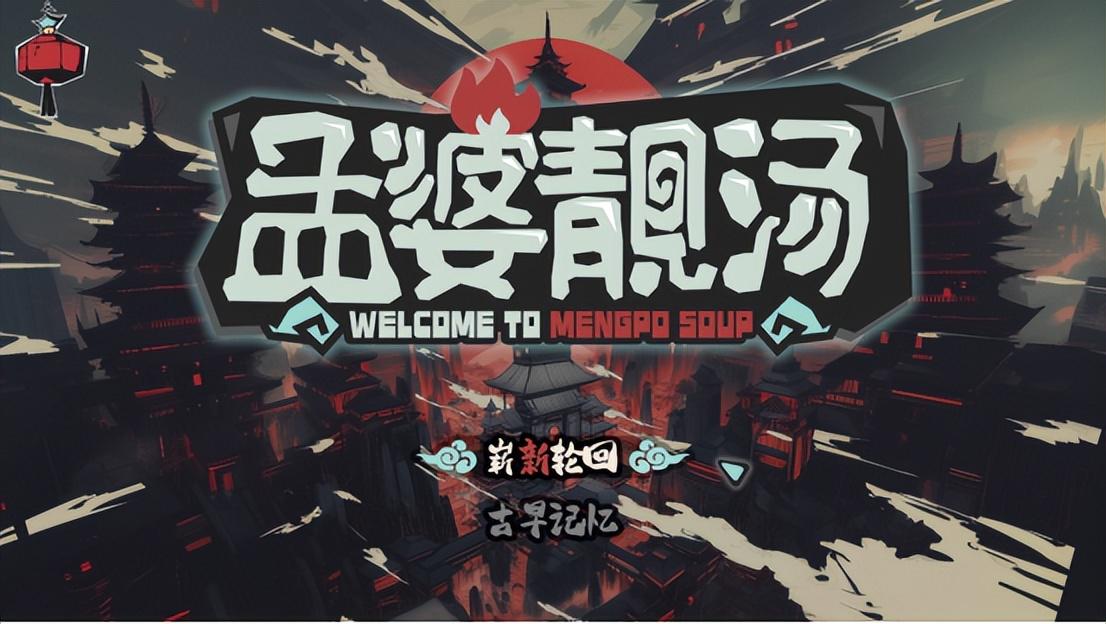
Ou Haolin switched from a career as an advertising director—a field he’d worked in for ten years—to become an independent game developer two years ago,He has led the Dark Box team in participating in two TapTap Spotlight GameJams, where they were nominated for the “Best Audiovisuals Award” for the lighthearted narrative game *Meng Po’s Delicious Soup*, and won the “Best Art Direction Award” and the “Editor’s Special Recommendation Award” for the 3D Chinese-style dream-core game *DREAMAZE*.*Meng Po’s Delicious Soup* was released on August 27, 2026, and has a 95% “Positive” rating on Steam, while the full version of *Dreamaze* is currently in development.
For game developers just starting out, consistently nailing GameJam themes, successfully completing projects, winning awards, and signing deals with major publishers can already be considered a “smooth ride.”
He said, “I guess it’s the ‘newbie aura,’ but it’s so strange—not a single question from the past three years matched any of the ones I got right.” When asked if he’d ever underestimated the difficulty and learned a lesson from it, he replied, “I’ve always overestimated the difficulty—even in the teammate-selection phase, which I was most worried about, I ended up drawing an SSR.”
That answer is so "Versailles." So now we need to focus on this question: What kind of game do you want to make?
01
Making My Own Game
Ou Haolin said, “I’ve always had just one personal goal: to lead the development of a game that ‘only I (and our team) can create.’”
This answer doesn’t seem to answer the question; it feels like a cryptic riddle, but it actually touches on an issue that many game developers and players are currently concerned about: In the age of comprehensive AI, what will creators rely on to attract their audience?
In Ou Haolin’s view, “authorship” is the key.
“Authorship is something that people will increasingly emphasize in the wake of the AI revolution, as the barriers to creation continue to drop. It’s about how you can tell that a particular work is the creation of a specific author.This is something I care deeply about. It has nothing to do with specific stylistic expressions; rather, it’s about the stories only I can tell and the works only I can create—that’s what matters to me. If you lose sight of this and simply compete with others on efficiency, you’re just gambling on luck.”
Everyone’s experiences are different. Take Lao Ou, for example—someone in his late thirties who switched careers from advertising. You could say his strength lies in the ways of thinking and perspectives he’s developed over the years. These eventually crystallize into a more personal, even authorial, style of expression. These are the qualities people can sense as they engage with his work on a human level, and they represent the only true weapon an author has in the era of full-scale AI.
That’s why he doesn’t limit the style of each game he makes or set specific goals for himself—such as awards, how much money to make, or how many copies to sell. These are things that come naturally after creating a good work; they aren’t goals that can be predetermined.
Recent news in the AI industry has been a hot topic: short videos, AI games, AI engines, which companies are raising funds through AI… From a business perspective, these developments certainly deserve attention, but from a creative standpoint, works that are truly “human” are even scarcer, and their quality is subject to even stricter scrutiny.
The two aren’t mutually exclusive—at least not for Ou Haolin. It’s not that making indie games means you can’t consider commercial aspects; it’s a matter of balance. If you focus too much on the market and lose sight of yourself, you might end up losing out commercially as well, because in the age of AI, people are paying more attention to works that have a “human touch.”
After all, he originally entered the gaming industry because he saw no future in the film and television industry, which was in decline.
02
Career Changes and Transferring Experience
Before changing careers, Ou Haolin had always worked in film and television production.
The film and television industry also has different niches; he primarily works as an advertising director, planner, and producer. At the time, the team was in a startup phase, operating more like an in-house studio with a core team that also collaborated with various technical specialists.Ou Haolin specializes in creative film and video production—or what people often call “viral videos” these days—tending toward humorous and entertaining content. Although he is capable of producing high-end or visually sophisticated projects, as a director, his focus is primarily on creative content aimed more at the consumer market.
Actually, the experience he gained from working on creative advertising turned out to have a lot in common with game development. He has now shifted his focus to indie game development, though he still takes on some advertising projects part-time, since he isn’t yet able to work on indie games full-time.
As for why I changed careers, the most direct reason is that the film and television production industry has been hit so hard in recent years—AI has left everyone out of work.
Ou Haolin put it bluntly: “It really feels like ‘the upper reaches have become the middle reaches, the middle reaches have become the lower reaches, and the lower reaches have become a sewer.’”
In Ou Haolin’s view, the gaming industry is indeed in much better shape. There are structural differences in the payment models between the two industries.
During the interview, he gave our reporter an example: Suppose you hear someone mention a movie—say, *Titanic*—but you haven’t seen it. What would be your first thought about how to go see it?
My first thought was to watch the commentary before watching the movie.
He said, “So what if there’s a game that everyone’s talking about—like *The Witcher 3*—and you want to play it? What would you do?”
Well, I guess I'll just have to buy it.
“This is the issue I’m talking about. With film and television, it’s impossible to establish a point-to-point payment model for individual works. With the exception of some theatrical releases, you’re likely to first look for a commentary or watch it on a video streaming platform—you’ll prioritize free options. Even excellent works struggle to get users to pay directly. It’s not like the gaming industry, where people spend real money on games.Games, while also facing challenges from AI or the ‘bad money drives out good’ phenomenon, can still generate direct commercial returns if they’re of high quality and have a clearly defined target audience. That’s why I believe that, as I approach 35, I can’t just talk about dreams and passion—I also have to think about how to turn that into income.In my view, games still win out on quality. To put it in my own words: “Once you’ve crawled out of hell, anywhere else feels like heaven.” I’ve been in this new field for a year and a half now, and I think it’s going pretty well. It can’t compare to those hyped-up AI industries, but it’s much better than film and television.”
Although the gaming sector also has development cycles and is driven by revenue, the results are presented in a very intuitive way.
"To be honest, there are just too many old-timers in the film and television industry who have been hogging resources, to the point where newcomers can’t even break into the market, let alone make a name for themselves. The gaming industry can’t deny this either."
“Although it’s easy for everyone to focus on hit products—which make up only one-thousandth or one-ten-thousandth of the market—it still comes down to the production strategy.If you’re just jumping on the bandwagon with a reskinned version, then if sales aren’t good by Q4 2026, you’ll have only yourself to blame. Besides, I think revenue performance should come down to the quality of the production—that’s what makes it a fair game.”
With this mindset, even though Ou Haolin has undergone a career transition into a completely different industry—specifically the indie game sector, which places a relatively strong emphasis on individual creativity—and even though he faces the “age anxiety at 35” frequently discussed in the gaming industry in recent years, as well as news of layoffs at major studios, he doesn’t feel particularly anxious about it.
“Being in my 30s—being a bit older—has its own advantages, such as accumulated life experience, a more mature way of thinking, and a different mindset. Personally, I think it’s better to focus on my strengths rather than dwell on my flaws or negative aspects.From what I’ve seen, many indie game developers are indeed on the younger side, but youth comes with its own set of challenges. In this regard, my partner and I are certainly a bit older, but we have our own strengths as well. As latecomers to the field—jumping from one mountain to another—the downhill stretch is an inevitable part of the journey, and you have to be mentally prepared for that before making the transition.“The downward slope does indeed require more time than others to navigate, to make up for what was lacking before—but of course, you can use that momentum to amplify the strengths you already possess.”
Ou Haolin has always seen himself as a creative professional, working as an advertising director, graphic designer, and creative planner.Back in the day, there was a popular term called “slash youth”—that’s exactly how he defined himself. So he never strictly confined himself to any one field. His shift to gaming stemmed partly from his lifelong passion for playing games, driven by sheer interest; on the other hand, it was also somewhat impulsive and came about through a specific opportunity.
In June 2024, he visited an in-person gaming expo. While there, he played a demo that piqued his interest, and it just so happened that the lead developer of that project was also facing a decision about whether to switch careers.Ou Haolin went up to ask for his advice: “Given my background—I’ve worked in creative fields before and have project management experience, so I’d say I have some strengths—I asked him how I should get started if I were to switch to game development.”
The producer listened very patiently as he explained his situation and helped him analyze it. The producer felt that he was well-suited for the role of an indie game developer rather than starting out as an entry-level game designer. He encouraged Ou Haolin to participate directly in a GameJam:
“Don’t even think about trying to ‘handle’ the work. Instead of spending years now forcing yourself to learn programming or low-level technologies, you can gain development experience and build a network by participating in GameJams, and get a feel for how the game industry works.”
Although the AI era hadn't yet begun, people were already aware that the impact of technology was significant.
Lao Ou has a more “E” personality, so he thought it was worth a try. Then, in May and October 2025, the team participated in two 21-day GameJams, successfully completing both and earning nominations, which convinced him that they could give game development a shot.Then, in early 2025, we decided to officially launch *Meng Po’s Delicious Soup* as a commercial project.
Based on his experience, GameJam is indeed well-suited for beginners or those looking to change careers, as it places greater emphasis on creativity and organization. For the technical aspects, participants can team up with people who have the necessary technical expertise. Furthermore, as a cross-industry collaboration platform, beginners can find others there to compensate for any technical skills they may currently lack, which is also a way to gain experience.
As Ou Haolin said, “To put it bluntly, a Game Jam is about leveraging other people’s skills to create a complete game project for yourself—for free—in a short amount of time. So from this perspective, it’s a great way to gain experience and get a feel for the development process.”After a Game Jam, you’ll face a form of market testing: this includes the judges’ opinions on your finished work, whether you win an award, and feedback from players and within your team. You’ll accumulate the resources or experience you’re looking for in a ‘semi-real-world’ environment, so I personally think it’s quite suitable.”
Currently, juggling part-time advertising gigs with indie game development has provided him with a relatively smooth transition as he starts over in a new career, and he feels he’s handling it quite well.
On the one hand, the advertising industry he previously worked in is inherently highly “project-based.” When juggling multiple projects simultaneously—each with different timelines—he had to manage his energy allocation effectively and switch roles seamlessly to coordinate production details.Thanks to this rigorous training through project work, he has developed excellent attention span and the ability to allocate his energy effectively. So for him now, it’s simply a matter of managing different projects; even the specific design work within each project follows the same process—whether it’s advertising or film and television design—so there isn’t much difference; the overall logic is highly similar.
No industry considers itself to be a growth industry. Not to mention that over the past two years, there has been frequent online discussion suggesting that the gaming industry is on the decline.
In response, Ou Haolin said, “Defining a person’s abilities based on an industry is indeed ‘a bit too narrow.’ Fortunately, the work I’m doing now allows me to put my creative ideas into practice, which is a real plus for me.As for whether the industry is really on the decline—at least from my own perspective—if you’re a recent graduate or someone just switching careers in the film and television industry, just ask any professional what it’s like to break into the field right now, and they’ll most likely respond with just two words: ‘Run for your life!’In the gaming industry, however, based on my interactions with various people—including producers, media representatives, and others across the entire supply chain—the most common sentiment I’ve heard is anxiety about the impact of AI or market competition. But no one would ever make a blanket recommendation for everyone to flee.”
03
Emotion and Aesthetics
Ou Haolin and his partner—who is also his cousin—have been creating together since childhood: from writing novels and making videos to developing games.
Ever since they switched to game development, they’ve been focused on creating “the games we can make.” They leverage their unique strengths—rather than competing on technology, funding, or the number of developers—since they simply can’t compete with others in the market on those fronts.
Ou Haolin said, “From *Meng Po’s Delicious Soup* to *Dreamtopia*, which is currently in production, our guiding principle has always been to create works that we are best qualified and most skilled at expressing.”
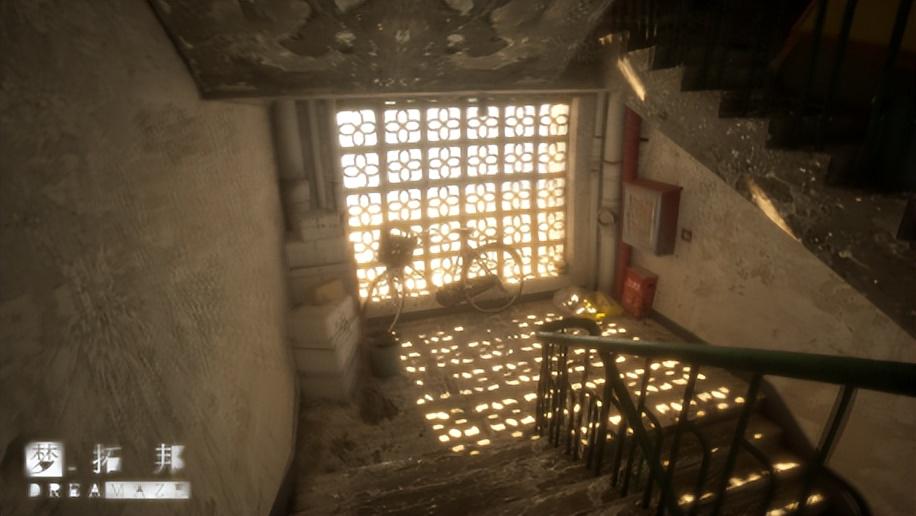
Since the goal is to create “a game that only I can make,” during the current GameJam phase, Ou Haolin defines the “high level of completion” for the game demo in two ways:
First, from a gameplay perspective, the experience must be complete. A demo shouldn’t just present players with “raw materials” or a vague blueprint—that would be somewhat irresponsible. In an era where aesthetic standards have reached a certain level of sophistication, gameplay must be built on a solid framework, and the development team needs to clearly define what the core experience is.
The second is the aesthetic dimension: it must reflect clear and rigorous aesthetic standards.
“I think many indie developers today tend to overlook aesthetics, assuming it’s simply a matter for the art or music teams. But if developers lack sufficient aesthetic sensibility, the game will come across as tacky—and players will sense it immediately. A good game must at least meet certain aesthetic standards; otherwise, it will give the impression that ‘the development team’s aesthetic sense is just that poor,’ which may also lead to poor market performance.A game is a well-rounded product, so we must strive for aesthetic excellence. We can’t just say, ‘Well, that’s just how things are in our country—we’ll have to make do with this,’ when in reality, it’s simply that we haven’t done a good enough job and haven’t kept up.”
When it comes to a game’s aesthetics and style—style, aesthetics, and art—these are all one and the same. In a game, the art and audiovisual design must be built around the game’s narrative.
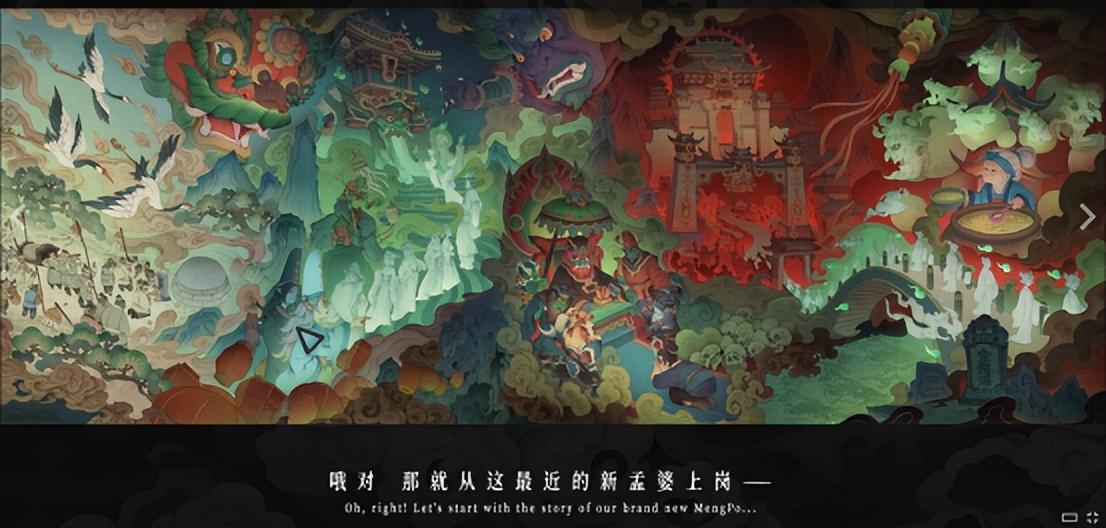
At the time, Dark Box Studio’s stylistic vision for *Meng Po’s Delicious Soup* centered on the themes of modernity and the underworld.
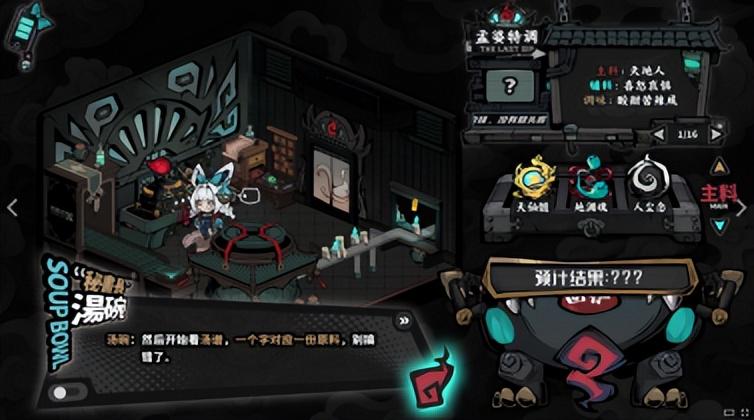
This touches on a common issue in the early stages of game development: as the lead game designer, where does a game actually begin? Does the initial inspiration come from its gameplay, its art, or the world it aims to portray?
Ou Haolin said, “I think this actually varies from creator to creator. For some people, it might start with a single detail—a particular line of dialogue, or perhaps an experience that came to mind one day while taking a dump—and then they begin to mull it over.”
When it came to *Meng Po’s Delicious Soup*, the first thing the Dark Box production team considered was what genre newcomers to the industry would be able to handle. Naturally, they thought of visual novels—combining visuals and storytelling.When it came to the visual aspect, Ou Haolin and his partner believed they possessed strong aesthetic organizational skills and a keen sense of aesthetics—a definite advantage they’d brought over from other industries. It would have been a waste not to put that to good use.
These days, with many games, everyone realizes that storytelling is important, but from a storytelling perspective, there’s perhaps a bit too much convergence in the gaming industry.For example, many well-known visual novels on the market tend to be heavy with suffering and vengeance, quite dark, and high-concept. The Dark Box Team wants to create something more down-to-earth—so down-to-earth it takes you all the way to the underworld.
They thought of *Cyberpunk Bartender Action*, which also takes place in a cocktail bar—using the small to illustrate the big, offering a glimpse of the entire world. So Ou Haolin took it one step at a time to solidify his strengths and began thinking about how he could combine some of his favorite elements.
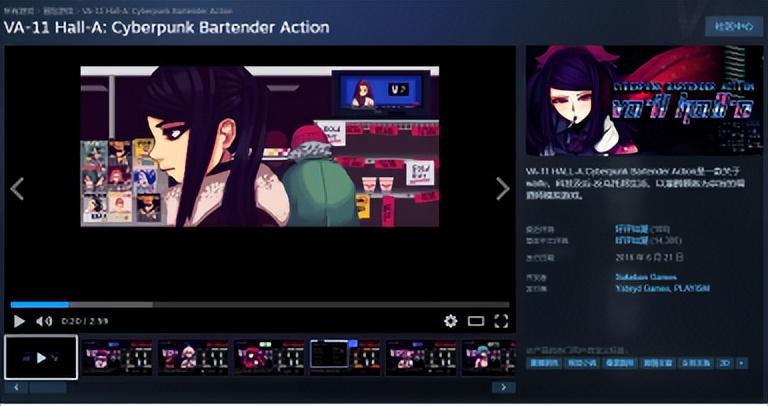
This project was greenlit in September 2024. At the time, the team thought that while the gaming industry had created many depictions of the Chinese underworld, whenever such a setting appeared, it always fell back on the same stereotypes.So they wondered: Could we create a concept called “A Joyful Underworld”? Combining these market insights, the framework was established. They filled it in with various elements one by one, and ultimately unified it into a distinct, self-contained worldview.
Even experienced developers go through this kind of thought process.
“Even if I can only think of a tail, I have to ask myself, whose tail is it? Is it a dog’s tail, or a sea monster’s tail? Or maybe an insect’s tail?”
Ou Haolin also noted that many developers, when launching a project, do indeed capture certain so-called core loops—or core gameplay and core experiences.However, they tend to figure things out as they go, which often leads to them losing sight of the best parts of their original concept down the line. In his view, this is quite unfortunate. That’s why he recommends spending three months—or even a much longer period—on the project planning phase. Sometimes, planning a project is actually a smarter approach than rushing to launch it.
People coming from the advertising world believe that getting a good project approved is already half the battle. If the project isn’t thoroughly thought through during the approval phase, many problems will come to a head in the middle and later stages, which could very well result in a major project management failure—even though these issues could have been resolved during the planning phase.
“Rather than solving problems, we think it’s better to anticipate them and avoid them—after all, a skilled warrior doesn’t seek glorious victories.”
From a producer’s perspective, the art and sound design can’t be haphazardly thrown together; while that might look pretty, it won’t come together as a cohesive whole. If certain parts of a work can be separated from the rest, it means the work isn’t up to par.
This is also a point that Ou Haolin reflected on after *Meng Po's Delicious Soup*.
Even while studying film and television, he understood that film and television are also a form of fiction—an art form. How to evoke genuine emotions in the audience within a fictional world is a key point that requires careful thought.
This way of thinking applies to games as well. We all know that it’s a fictional world. But a good game is one that uses this fictional world to evoke genuine thoughts, a genuine sense of touch, genuine feedback—or, in other words, genuine emotions.
Looking at the two games produced by Ou Haolin—*Meng Po’s Delicious Soup* and *Dreamtopia: DREAMAZE*—it’s clear that when creating games, they place great emphasis on the human touch within the stories, or rather, on vividly conveying emotional experiences and atmospheres.
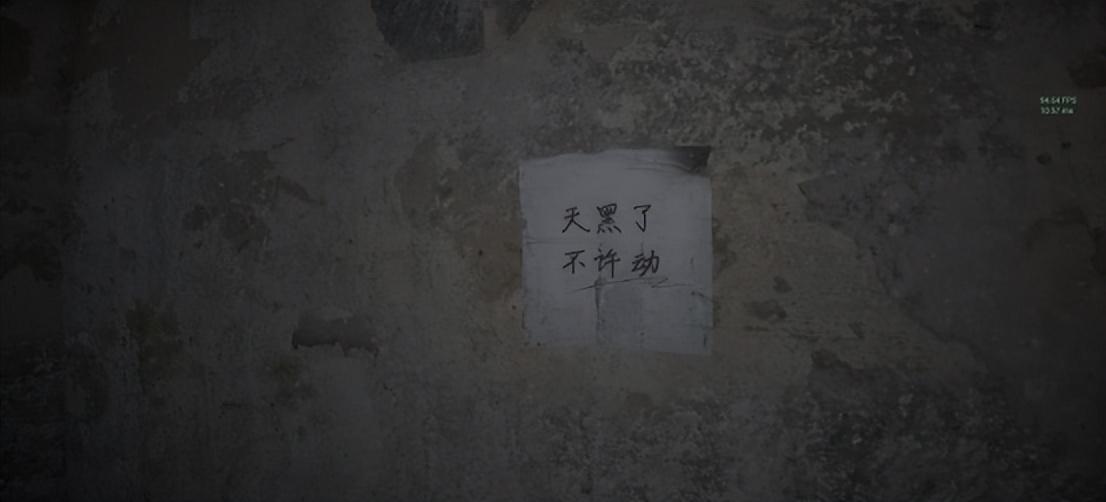
When our reporter asked this question during the interview, Ou Haolin only then realized: “It wasn’t until you put it that way that it clicked for me.”I think it’s like the personal stamp or style of every creator—sometimes it’s not something you can really articulate yourself. It might just be that I’ve unconsciously created a series of works, and once there are enough of them, people look at the big picture and realize, ‘Oh,I’ve always joked with people that the only similarity between Meng Po and Mengtopia is that the first character in both is ‘meng’—otherwise, they’re completely different. For example, many people who’ve played two of my games might think, ‘I can’t tell at all that these were conceived by the same creator.’But now that you’ve put it that way, I realize—or rather, this is something I’ve emphasized from the very beginning—that I feel my life experiences are a bit richer than most people’s, so I tend to focus on those aspects as entry points for my creative work. So perhaps, without even realizing it, this has become a kind of “path dependence” in my creative process.”
That’s perfectly fine. Going back to our earlier discussion about the AI era, people are placing increasing value on things that are more “human.”Whether it’s *The Memory of Edie Finch* or *Operation Bartender*, at the end of the day, it all comes down to the creators themselves having very strong, genuine feelings that they channel through the medium of the game, allowing players to experience sincere emotions within this fictional world and generate authentic emotional experiences.
Ou Haolin believes these are also some of the characteristics that will make a work more competitive in the coming AI era.
Take *This War of Mine*, for example—what these games have in common is that they highlight the brilliance of human nature within a simulation of resource management. But why are they all so successful? Ou Haolin believes that the creators of these games must have “discovered some kind of secret”—a secret that likely involves certain experiences and how to translate them into an expression suited to this game genre.
“If I had to talk about a development philosophy, this is the one I’d place my trust in. It has nothing to do with the genre of the game you’re developing; it’s more about the genuine expression that comes from within you—and how to use technology to transform that into a gaming experience. I think this is more meaningful than continuously specializing in a single niche or genre to become the ‘king of the genre.’”
When they were making Meng Po's Delicious Soup, the production team realized there were some areas that could be improved. So when they made Meng Tuobang, they made a lot of improvements.
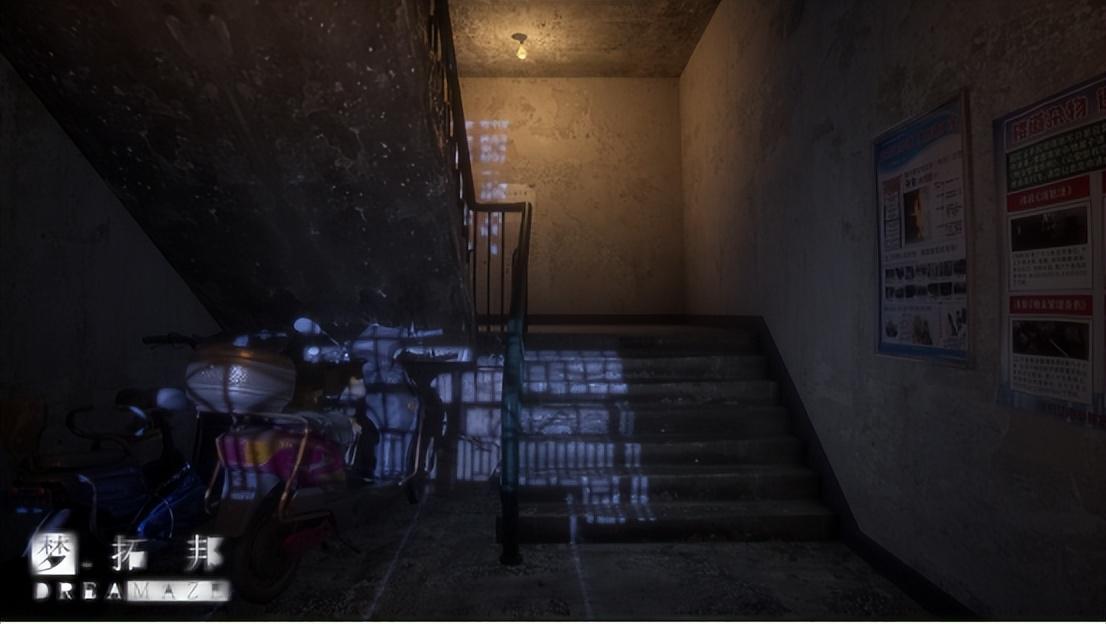
From stairwells to the emotional bonds among East Asians, Ou Haolin’s initial idea was to tell stories that only Chinese people could tell.
When *Dreamaze* was greenlit in the middle of 2025, the team had already considered developing a Chinese-style dreamcore game because they noticed a gap in the market: while there are currently successful Chinese-style dreamcore games—one called *No One* and another called *Millennium Dream*. However, in Ou Haolin’s view, both of these games actually lack the emotional depth that Chinese dreamcore, as a genre, is meant to convey. They lack concrete narratives; for players, they’re likely more about taking screenshots because they look beautiful,post them on social media, and evoke a sense of childhood nostalgia.
The Dark Box production team is also interested in this aesthetic feature.
“I’m getting on in years myself, so I naturally find myself feeling nostalgic for the good old days—that kind of sentiment is part of it. With that comes a natural tendency to reflect on my life experiences, and I’ve come to realize that the ‘Chinese Dream’ and its aesthetic characteristics are indeed missing from the gaming world. Oh,I’ll use the term ‘Chinese Dream Core’ to describe the kind of story I want to tell. So at the time, I approached it much like I did with the ‘Meng Po’s Delicious Soup’ project: the ‘Chinese Dream’ concept itself offers strong visual distinctiveness, a rich aesthetic atmosphere, and a unique aesthetic sensibility—especially since production costs are low, as much of the content comes from free assets.”
Coincidentally, several creators of Chinese-style dreamcore are from the south. Perhaps it’s because the elements of Chinese-style dreamcore—the chirping of cicadas, summer, the setting sun, and old-fashioned stairwells—are simply etched into the DNA of southerners.Ou Haolin has always believed—and will always believe—that our great China, with its vast history spanning thousands of years, is a treasure trove of culture. That’s why he’s always been driven by a deep conviction to tell stories that only Chinese people can tell well. So, first and foremost.It must be acknowledged that every creator is inevitably influenced by the aesthetics of their homeland. But more important than that is not to resist it too much.
Of course, whether it’s aesthetics, music, or other audiovisual elements, there are indeed some stereotypical or symbolic components that can be identified, captured, and utilized.So how do we transform these elements into aesthetic characteristics? On the one hand, it requires a certain understanding of the elements themselves—and there’s no need to force the entire 5,000-year-old traditional culture of a vast nation into a single game.
It’s a very subtle balance. There are certain stereotypical elements that are impossible to avoid, but how to understand them fully and then convey them effectively depends on whether the producer has truly internalized them. This doesn’t mean the production team has to read a lot of books or conduct extensive research; rather, it means they need to think for themselves.
And that’s how we ended up with what we see today: the “East Asian version of *Silent Hill: P.T.*”—*Dreamaz*.
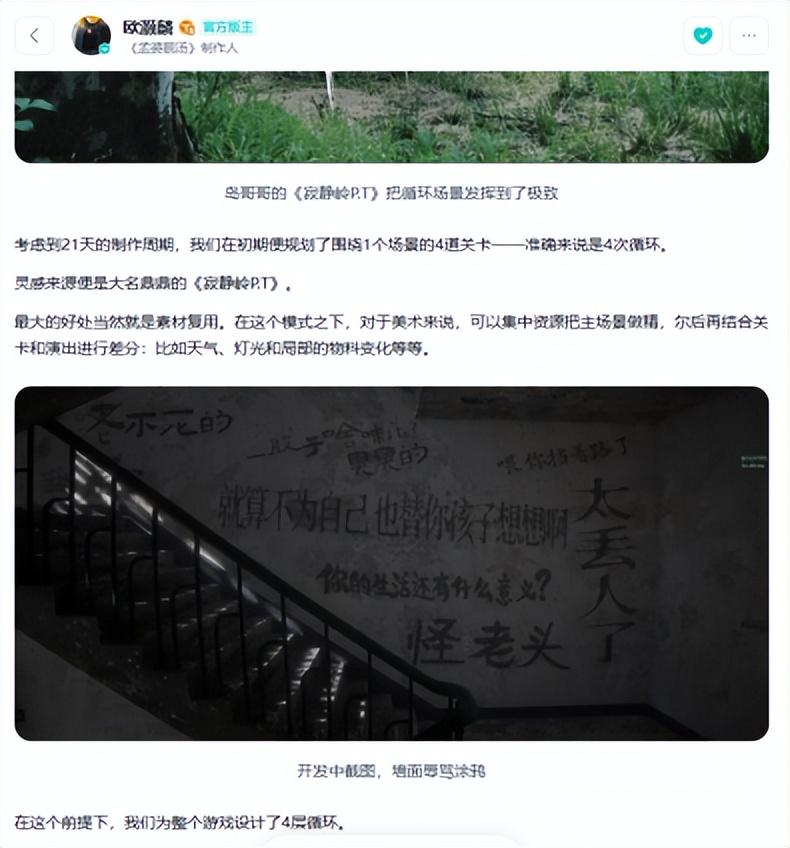
What exactly is the production trying to convey? If you have a clear message, that’s your weapon—it all depends on how you use it.
Ou Haolin said, “I don’t have that many knives right now—maybe just four or five. I know this one is for cutting my nails, that one is for peeling apples, and this one is for chopping people up.But there are some people who are just like, ‘I don’t care—I’ll just collect 18 knives first. I’ll collect all kinds of knives, and I won’t even think about how to use them.’If I see a big one, I’ll use it to chop someone up—but for that person, I’d probably be less effective than if I just used a small knife to stab them.I think this comes down to not having thought through how to master—or assimilate—these elements. It’s purely a case of adopting things without understanding them, resulting in something that’s merely superficial. It fails to form a systematic aesthetic; it’s just a superficial pile of elements.”
More than a month after the release of *Meng Po’s Delicious Soup*, he became even more certain of one thing: you can’t just focus on storytelling—especially not storytelling that relies heavily on text.Ou Haolin is the sole screenwriter and the only person responsible for the dialogue. He knows all too well that writing dialogue is his weakest point. “Visual novels are truly a niche within a niche. People are always saying, ‘Visual novels should get out of the gaming industry.’ While that’s an extreme statement, it does highlight the issue.”” He said that the studio will move toward being “more and more like a game” going forward—first by making the game the primary medium, allowing mechanics, camera work, scenes, and interactions to all contribute to the storytelling, rather than relying solely on dialogue.
*Dreamtopia: DREAMAZE* represents a shift in direction. The team adopted a different approach, avoiding excessive text for storytelling and instead integrating game mechanics and certain camera techniques into the visual environments. In fact, it was a series of experiments.
It still explores Chinese-style dream-core themes and East Asian emotional bonds, but rather than relying on extensive text to drive the narrative, it uses four layers of loops, stairwells, lighting, graffiti, sound, and basic interactions to “nurture the player subtly and imperceptibly.”
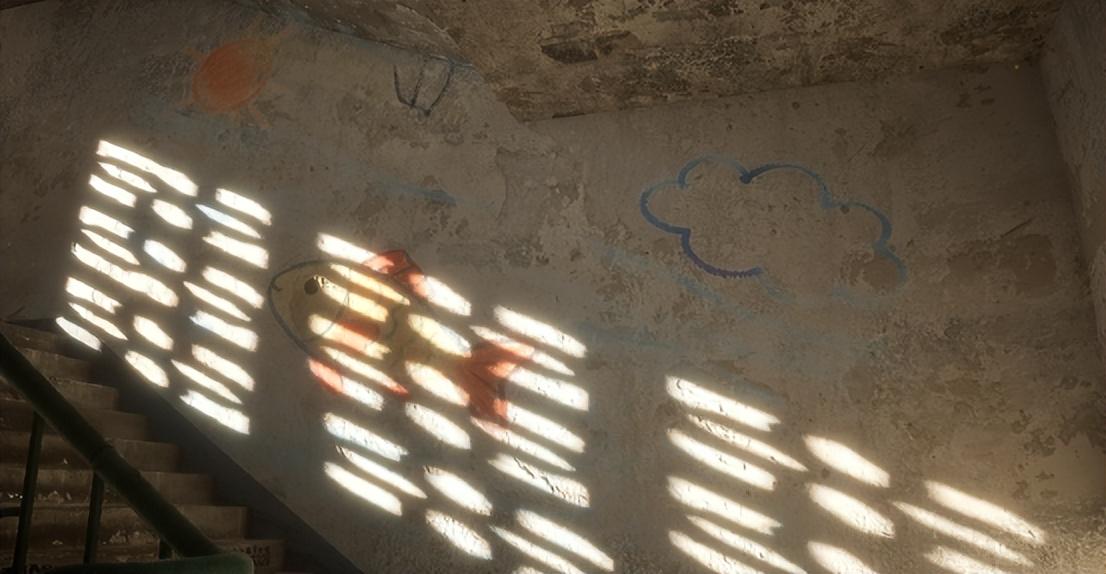
Once a project is completed, it’s important to reflect on what was learned throughout the process. When it comes to games as a medium—and given today’s rapidly changing market—how can you ensure your competitiveness? At the same time, you need to make sure the game aligns with market demands and stays within the development resources available to the producer. These are questions every development team must continually grapple with.
From this perspective, *Meng Po’s Delicious Soup* had the Dark Team stumble into nearly every pitfall that indie developers typically face. In a follow-up comment, Ou Haolin also described it as a very successful failure.
Time was tight during both GameJams, but the two demos produced under Ou Haolin’s leadership were both highly polished. When asked about “inspiration” and “hitting a wall,” he said that, so far, he hasn’t experienced either.
“First of all, I believe that so-called ‘creative burnout’ is a false premise. When you’re actually developing a game—if you intend to sell it as a commercial product—its primary purpose is to be a commodity; it must be a product capable of consistent output or maintaining a stable state.You cannot rely solely on so-called flashes of inspiration; I believe it’s very dangerous to be overly dependent on these brilliant, spur-of-the-moment ideas. As a creator, this is actually a perfect excuse, because you can view all of your life experiences as a source of inspiration.”
Ou Haolin said that he sometimes even wonders if he has too many ideas, to the point where he hasn’t delved deeply enough into any one field—and whether that might be a disadvantage. They’ve reflected on this as well and have come to realize that the various interactions in one’s life all hold meaning; the key is how to transform them into inspiration.
“So I’ve always considered myself pretty savvy when it comes to gaming—I don’t just jump into games that might have a bad reputation. I’d much rather find a good game and play it over and over again.In the film and television industry, we have a learning methodology called ‘film analysis.’ When my partner and I come across a great game, our discussions about it are sure to be more in-depth than those of 99% of the people who’ve played it. We analyze why it’s so well-made, which aspects we can draw inspiration from, and exactly what makes it so good—and in what specific ways.I’ve noticed that for some developers, their very first work is already their peak. What comes to mind is that their first work might have been the culmination of ten or twenty years of accumulation, whereas their second work might come after they’ve exhausted everything they most wanted to express—and were best able to express—in that first game, and then built upon that foundation. The depth of their work is simply different.”
04
Production and Collaboration
After all, as a newcomer who had just switched careers, I made a name for myself in the early days of the game through GameJams. So every time I put together a team—aside from Ou Haolin, my partner, and the music producer—the rest of the members were basically a new group of people. Since most of them were working part-time, balancing game development with their day jobs became a challenge.
Fortunately, Ou Haolin has extensive experience in project management, and the teammates he assembled were all fantastic. In his development log on TapTap, he summed up the collaborative experience on *Dreamaze* as “six idiots”: “No arguments or team breakdowns, no twists or turns—and, of course, no meticulously crafted layout or beautifully illustrated images.”To sum it up, I think it’s because our team stuck to these four words to the very end: ‘keeping our heads down and developing.’”
In the early stages of management, as a producer, he would first assume that everyone had limited time and, when planning production, put himself in everyone’s shoes: Under these circumstances, what is the absolute minimum, safest workload?He needed a very clear benchmark for estimating everyone’s output. All of this was built on an atmosphere of mutual respect and collaboration, and the process went so smoothly that the primary cost of the Diablo team’s production was still time.
The current version of *Dreamtopia: DREAMAZE* that we see has only four levels. Actually, in the original design document, the Diablo team had planned for seven levels, but about a week after the tournament began, they immediately decided to cut it down to four levels and refine the four-level loop to improve its quality.
In response, Ou Haolin summed it up by saying, “All I want is your liver and your heart.”
It’s been a month and a half since “Meng Po’s Delicious Soup” was released. Before its launch, the developer naturally anticipated player feedback. For him, what he wanted players to test were true-or-false questions, rather than multiple-choice or fill-in-the-blank questions—
“For example, when we’re developing a game, we have to think about what kind of experience it will provide to players. So when we release the game to the market and it’s out there for everyone to see, what we focus on most is whether it meets our original expectations for the players—or for the game itself. We then make adjustments based on player feedback.I believe these adjustments are based on the premise that your initial assumptions were largely correct. You can’t just throw something together at random, release it, and then wait to see what suggestions players offer or which direction they expect the game to take. I would consider that a lack of rigor in the project’s planning phase.”
And when you look at it from another angle, there are some surprises as well.
At the time, when Ou Haolin and his team were developing *Dreamtopia: DREAMAZE*, they never intended to make it a horror game. However, many players who saw a few screenshots—or who had already played the game—perceived it as an atmospheric horror game, even though we didn’t incorporate horror design elements in the typical places.
At that point, the team is often pleasantly surprised: “It turns out that with this type of game, it’s not us who define it—sometimes the market as a whole makes that call for us.”
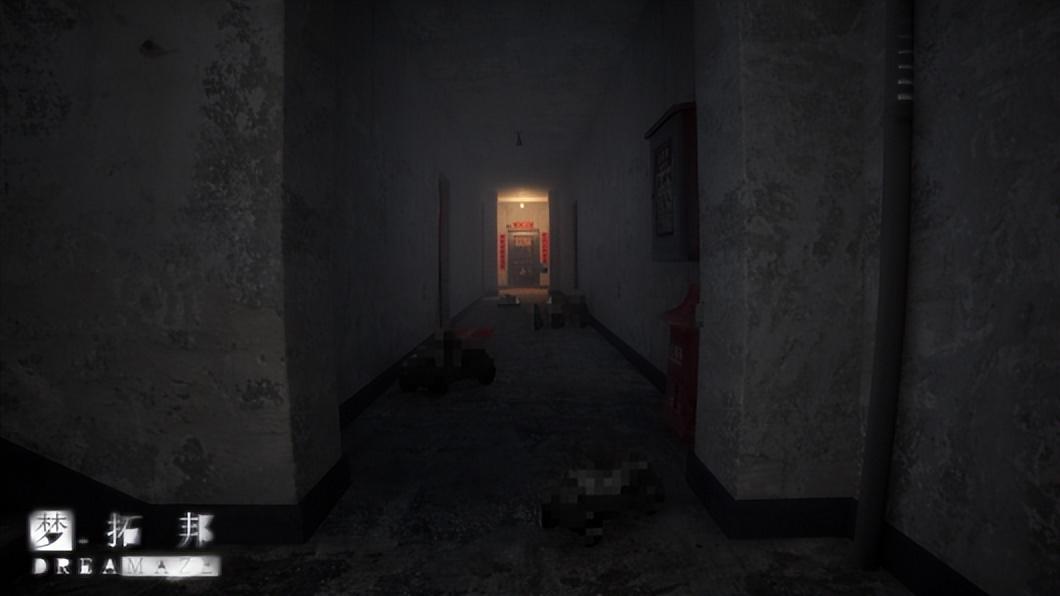
Consequently, the developers will consider whether the shortcomings mentioned by players are issues they hadn't thought of.
There’s certainly no such thing as a perfect game. But if players point out a specific issue that actually exists, it’s worth the development team taking a closer look.
If the production team knew from the start that certain parts might be misunderstood or draw criticism, but couldn’t address them adequately due to time and resource constraints, then they were at least aware of the situation.
At the time, Ou Haolin told Meng Po’s publishing company that he hoped players would, as much as possible, understand what kind of game it was before playing it; otherwise, the disappointment might be like expecting lamb but getting a piece of beef instead. Conversely, from the development team’s perspective, they would hope that any criticism would be constructive.
05
About the Future
As the interview drew to a close, the conversation turned to “the future.” Ou Haolin didn’t offer a sensational answer.
Although he previously mentioned making “games that only Chinese people can create,” he also said that future projects will continue to explore new genres and styles—and that some of these projects might “show absolutely no Chinese influence”—but at their core, they will still tell stories of Chinese people.
“You don’t necessarily have to incorporate a Chinese element to be qualified to tell a good Chinese story.” He doesn’t want to do things “just for the sake of China.”
Speaking of the third GameJam, he revealed that the team had chosen the theme “Decision-Makers in Exile Amid a Plague”: If there were only 10 people in the city, who should be exiled and who should stay?They had already recruited an artist with programming experience who was interested in the theme, and they also had a Plan B ready. If the assigned topic didn’t align at all, the team would discuss it together, with finishing the game being the top priority.
As it turned out, just a couple of days after the interview, I saw Ou Haolin post an update to his development log on TapTap—*No Mercy for the Pandemic* had hit the mark again. He joked that he was just too lucky and that his “newbie aura” was still intact.
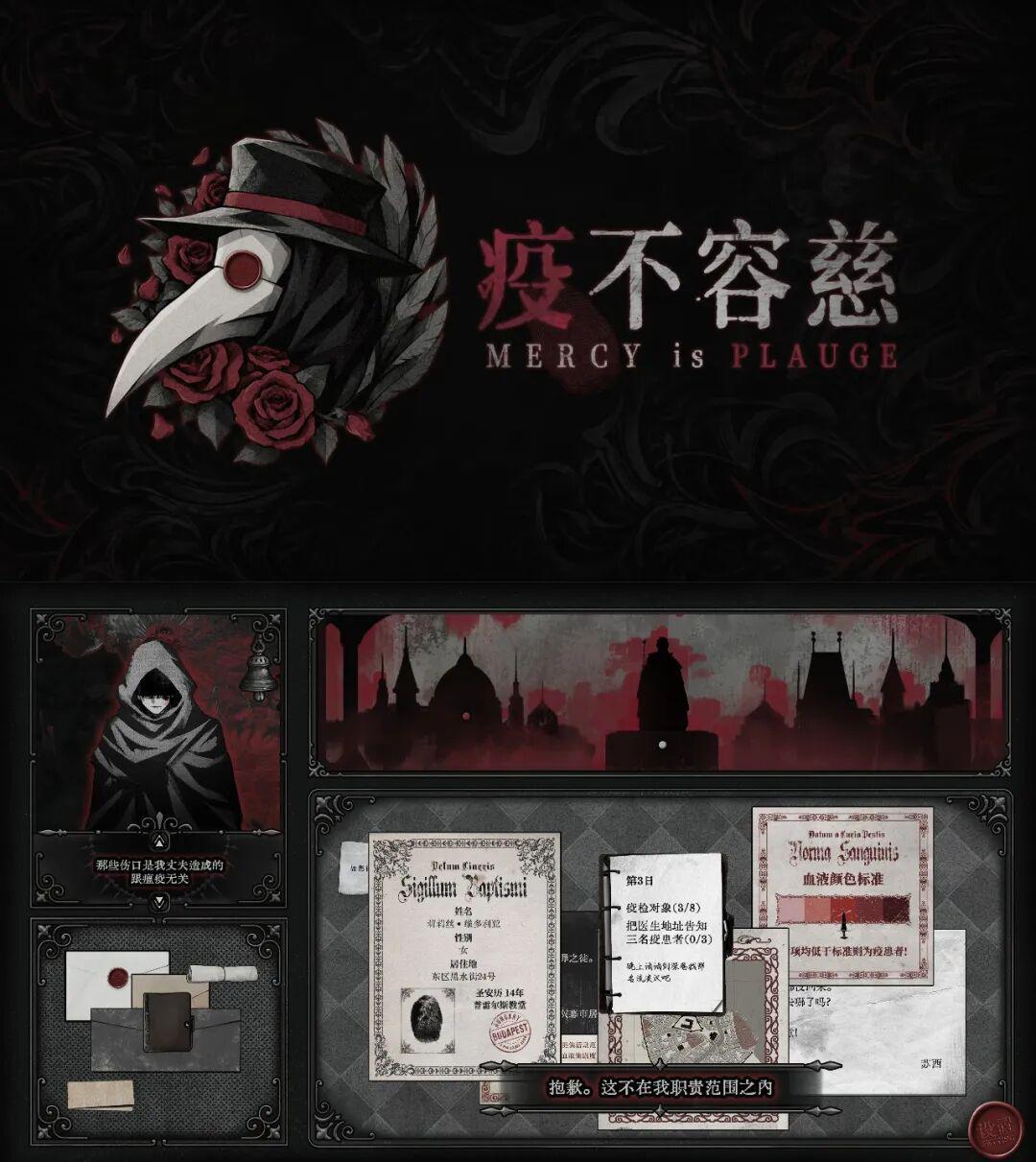
To call it luck would be an understatement; in reality, I’ve strived for perfection at every step, and that’s exactly why things have gone relatively smoothly along the way.
For creators and game developers, the future is about more than just predicting trends and finishing projects.
Ou Haolin sees it clearly: the market in 2026 has changed. Narrative-driven, lightweight titles that don’t emphasize gameplay are being pushed further down players’ purchase lists.“People only set aside a few hundred yuan a year for games. Once you take out *GTA 6*, *Blade & Soul Zero*, and *Silent Hill*, how much room is left for indie games?” He even cited *Kill the Shadow* as an example—a narrative-driven indie game at the industry’s T0-T1 level—whose first-week sales were less than ideal.This isn’t a problem with any single title; it’s a sign that the market structure is changing.
AI is another variable. With the barrier to entry lowered, thousands of demos have flooded the New Product Festival, leaving players and bloggers overwhelmed—and there’s a risk that bad products might drive out the good ones. But Ou Haolin isn’t entirely pessimistic. He believes this will actually make works that truly have a “human touch” and a distinct authorial voice shine even brighter.“Once technology becomes accessible to all, personal identity, aesthetic sensibilities, and creative style will be the irreplaceable moats that set creators apart.” Platforms must step in, the market must keep a sharp eye out, and developers must further refine their craftsmanship. Only through the joint efforts of all three parties can a positive outcome be achieved.
As for indie games, he still believes that “indie games are defined by their spirit, not simply by being outside the AAA category.” Awards, sales, and revenue are all things that come naturally after creating a good work—they aren’t goals that can be set in stone beforehand. He doesn’t want to be defined by just one or two works, nor does he want to treat his own creations as if they were one-off masterpieces.“There are many teams whose debut titles made a huge splash, only to fail to even meet the baseline standards in their subsequent releases—this is the norm. As long as you keep moving forward, who knows what might happen?”
In the gaming industry, publishers aren’t really interested in a single title—they’re interested in the entire team. When “Meng Po” didn’t sell as well as expected, the publisher actually comforted them and continued to pursue a deal with Mengtuobang. This positive relationship made him realize that once you’ve taken a bold fall, you’ll know how to avoid falling next time. “It hurts a little, but once you’ve fallen once, you won’t fall again.””
Their plans for the future sound straightforward: make their next game great, build on their strengths, and keep making games that only they can create. As for whether the market will reward them or whether AI will continue to pose a challenge—that’s another matter.
“Take a broader view—as long as you’re making progress in the industry, that’s good enough,” said Ou Haolin. “Everyone has their own pace.”
原创文章,作者:游茶妹儿,禁止转载:https://youxichaguan.com/en/archives/221708