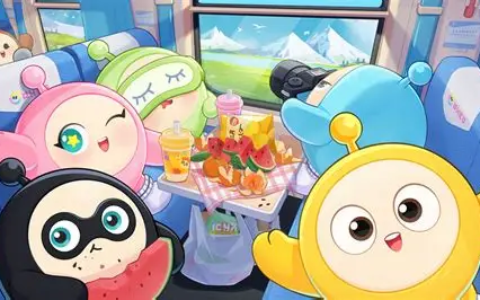
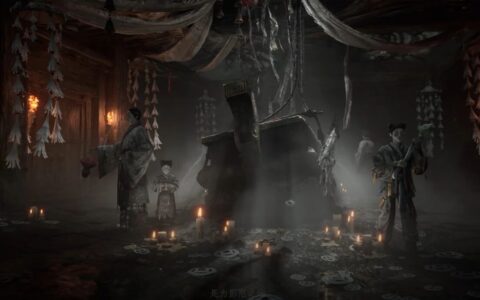
During the recent Steam October New Releases event, a demo for *Otherworld: The Demon School*, the fourth installment in the horror visual novel series *Tales of the Eerie*, was released. Players familiar with the series quickly noticed a detail: the background color of the new game’s logo had been changed to red, differing from that of the first three installments.
This detail was intentional; developer Cascha stated that if *The Otherworld* receives positive feedback after its release, they plan to develop it into a standalone spin-off series. The subtitle of this game is “Magic School,” and future installments may be set in other locations.
This series was created by a team of just two people. Cascha previously worked at several well-known game companies, where he contributed to the development of *Alice: Madness Returns*, *Tomb Raider: Shadow*, and *The Avengers*. In 2021, he resigned to pursue entrepreneurship full-time.His partner, Joey—the original creator of the horror comic *Tales of the Eerie* under the pen name “Nine Days and Ten Nights”—is responsible for all the series’ scripts and artwork.
Since 2020, they have released three titles—*The Stand-In*, *Infiltration*, and *The Other*—each receiving better reviews than the last. On Steam, their ratings have climbed from “Mostly Positive” to “Overwhelmingly Positive,” and Japanese gaming media have covered them on several occasions.
Cascha said that the two of them hope to gradually tell all the ghost stories that take place at the fictional Di Yingling High School—much like in *Strange Stories from a Chinese Studio*—over the course of their lives.
01
A Plan to Eat Some Grilled Skewers
Cascha and Joey first met during the development of *Alice: Madness Returns* at Malama Studio, when Joey had just joined the Shanghai-based studio.Later, when Cascha was working as a producer at Longtu Games, she recruited the lead concept artist from one of her previous projects. The two worked together for quite a few years; they weren’t exactly online friends, but more like longtime colleagues.
By 2021, Cascha had been in the gaming industry for sixteen years, working his way up from a regular 3D artist, level artist, and level designer to lead designer and eventually producer, having participated in or led numerous console game projects. During his six years at Vitas, he served as Creative Director while also serving as lead designer on key projects.After completing the *Avengers* project, he submitted his resignation to the company. During the handover period, while helping train the new design team, he began working on his own projects.
The idea of creating something had actually been on their minds for a while. In 2020, as the pace of work and life was forced to slow down, the two mentioned during a casual conversation that they wanted to create something of their own. Cascha suggested adapting Joey’s horror comic series *The House of Strange Tales* into a visual novel.They chose the shortest story, *The Stand-In*, to start with. With a “let’s give it a try” attitude, they collaborated online in their spare time and managed to put together a prototype in just seven months.
“At first, I knew absolutely nothing about the process of developing and releasing a game on Steam,” Cascha recalls. “But after nearly a year of trial and error, I actually managed to get the game out there.”
At the end of 2020, *The Stand-In* was unexpectedly discovered by many video bloggers, and a large number of live-play videos with impressive view counts began appearing on Bilibili and YouTube.Cascha said that he and Joey had originally just wanted to prove themselves—if they made any money, they’d treat themselves to some grilled skewers. But the players’ feedback and expectations far exceeded their wildest dreams, and both felt it was time to put their other commitments aside and go all in.
The key to the success of *The Double* was the absurd twist at the end.
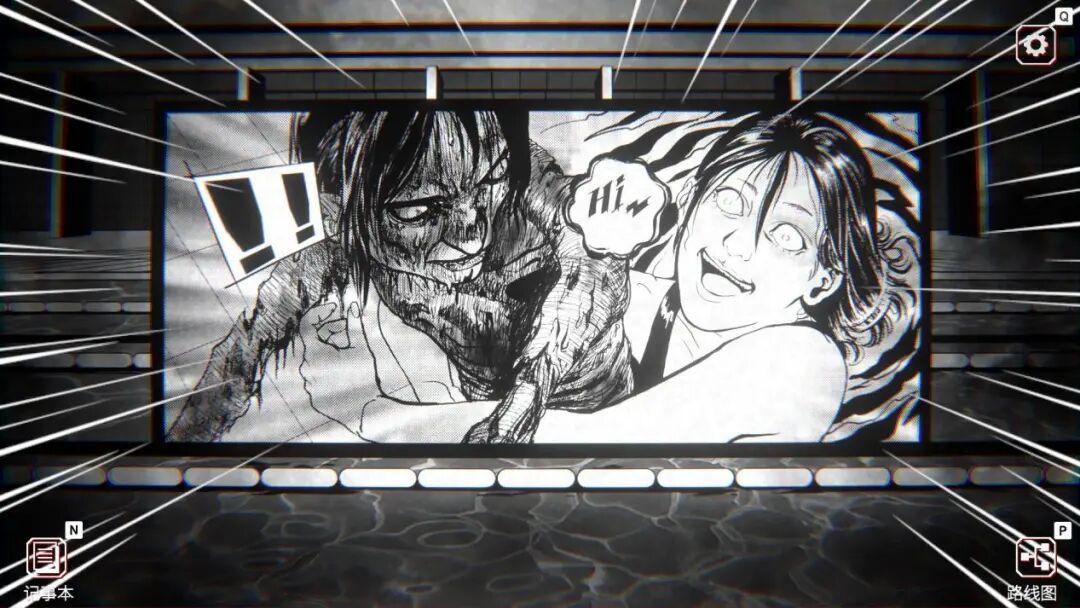
“Ghosts Fighting Ghosts” Is a Real Wild Card
In the story, the protagonist is “chosen as a substitute” by a water ghost and, after her death, becomes a vengeful spirit. She gives up on searching for new victims and instead grabs the water ghost that killed her, staging a revenge plot along the lines of “We’re all ghosts—who’s afraid of whom?” The horror atmosphere suddenly shifts at the very last moment into a comedy that leaves the audience both laughing and crying.
This ending is taken from Joey’s original comic, and Cascha admitted that it was precisely this unexpected twist that turned this short game into a hot topic among players and viewers online—something that completely caught them off guard.
02
Four Attempts and Mistakes
From *The Stand-In* to *The Other World: Magic School*, the four titles in this series have offered almost entirely unique gameplay experiences.
*The Stand-In* marks the beginning of a conventional approach: it features a linear progression and a relatively short runtime, with mechanics similar to those of a typical visual novel. Players select plot nodes on a route map and then make choices that lead to different branches. Its only strength lies in the story itself—which is engaging enough—and the surprising twist at the end.
By the time *Infiltration* came along, the production team’s ambitions had clearly grown. The scope expanded significantly, with a script exceeding 200,000 characters; the portrayal of a large ensemble cast was meticulous and nuanced, creating a campus life that felt deeply immersive and relatable, complete with subplots woven into the main narrative. This is also why the characters in this work are so memorable.
However, the issues are just as glaring. Some players feel that the game’s excessive length and lengthy plot buildup dilute the tension, and that many choices have limited actual impact on the story’s direction.On CnGal, a Chinese GalGame resource site, *Infiltration* received a perfect score for art and music, an 8 for the script, and only a 6 for voice acting—its strengths and weaknesses are clear at a glance.
This title was nominated for Best Narrative at the 2023 indiePlay China Independent Game Competition, marking the highest level of industry recognition the series has received to date.
The third installment, *Stranger*, marked a clear shift in direction and focus. In addition to introducing romance elements, the game presents the consequences of players’ choices more intuitively through affection levels and character storylines, allowing players to directly see the impact of their decisions. This can be considered a successful transformation and step forward, and its 89% positive rating on Steam is the highest in the series.
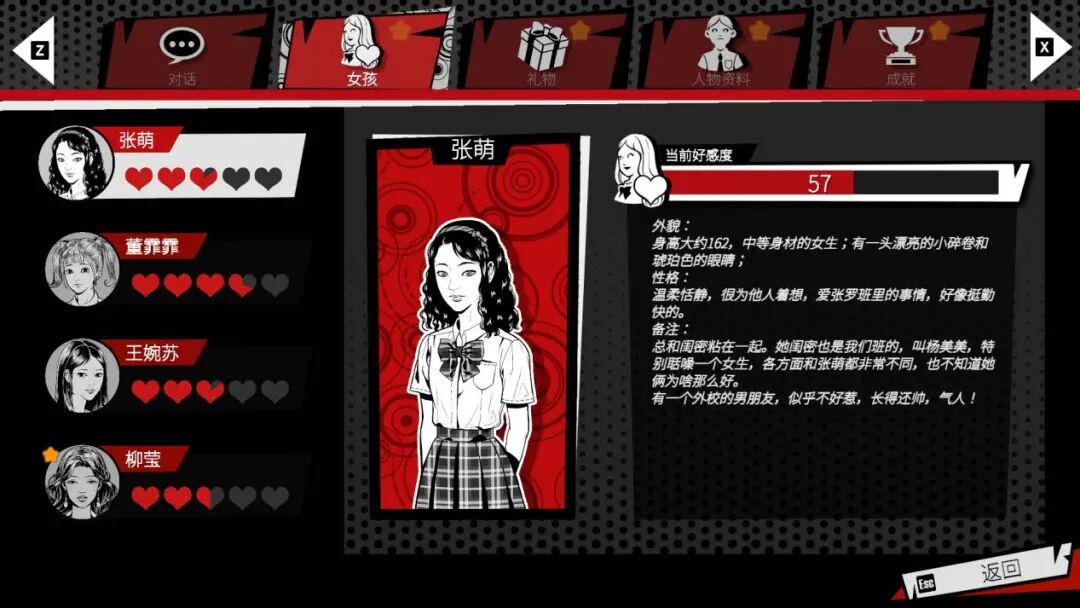
Having a Sweet Romance with a Beautiful Girl in a Horror Game
The latest installment of *Otherworld: Magic School* takes things a step further by introducing new mechanics such as escape-room-style puzzles and QTEs, marking the most innovative gameplay in the series to date.This change did not come without a cost. Cascha acknowledged that after the new title was announced, quite a few longtime fans of the pure visual novel series voiced their concerns. The red logo is part of a compromise—a visual distinction meant to signal to longtime fans that this is a deliberate expansion, and that sequels with a stronger narrative tradition will return in the future.
Why keep taking risks with gameplay? Cascha’s answer was candid: changes to gameplay are bold experiments born from continuous reflection during the creative process.“Even the finest wine struggles to find an audience if it’s hidden away,” he says. In his view, today’s indie game market is fiercely competitive. “We hope to keep making changes and trying new things to gain more recognition from players and audiences.” He also mentioned a very practical reason: games with richer gameplay are more appealing to video bloggers, who are more willing to play and stream them—a crucial factor in today’s era of online traffic.
Their technical confidence comes from AI. Cascha revealed that neither he nor Joey are actually programmers; he handled both design and programming for the project, which is why the programming features in their early works were relatively limited. It wasn’t until last year, when he began developing new features with the help of AI tools—which significantly improved stability—that the team gained the confidence to boldly experiment with gameplay.
03
Between Critical Acclaim and Commercial Success
While its reputation has continued to rise, its commercial journey has been far more rocky.
On Steam, *The Double* has over 350 reviews—the most of any game in the series—with a positive rating of about 78 percent; *Infiltration* has about 90 reviews, with a positive rating of 84 percent; and *The Outsider* has 55 reviews, with a positive rating of 89 percent.While player satisfaction has been on the rise, sales have followed an opposite trend.
“As for how it compared to our expectations—to be honest, we didn’t have any expectations at all back then.” Cascha reflected on the release process of the entire “Mystery Pavilion” series. When *The Stand-In* first came out, they had no real idea what to price it at; ironically, because they set the price so low, it ended up becoming the best-selling title in the series’ history.
By the time they developed *Infiltration*, the team had signed with a publisher, but due to a rushed development schedule and insufficient technical capabilities, they “felt like they’d bitten off more than they could chew.” In his words, the game’s post-release performance was something of a “Waterloo.”So they accelerated development and released *The Outsider* in early 2025, but unexpectedly made another mistake in choosing the theme, and sales still fell short of expectations.
In 2025, the two paused development on their new project to go back and meticulously refine and remaster the first three games, then ported all the remastered versions to the Switch platform in one go. Today, sales of the three games on both platforms have begun to pick up slowly.
Through this series of trial-and-error experiences, they arrived at a conclusion: Cascha believes that today’s players, when it comes to games priced under 50 yuan, place greater emphasis on whether they can derive maximum enjoyment in a short amount of time, rather than on the game’s scale—and it is precisely this scale that directly affects the development costs and time required for narrative-driven games.
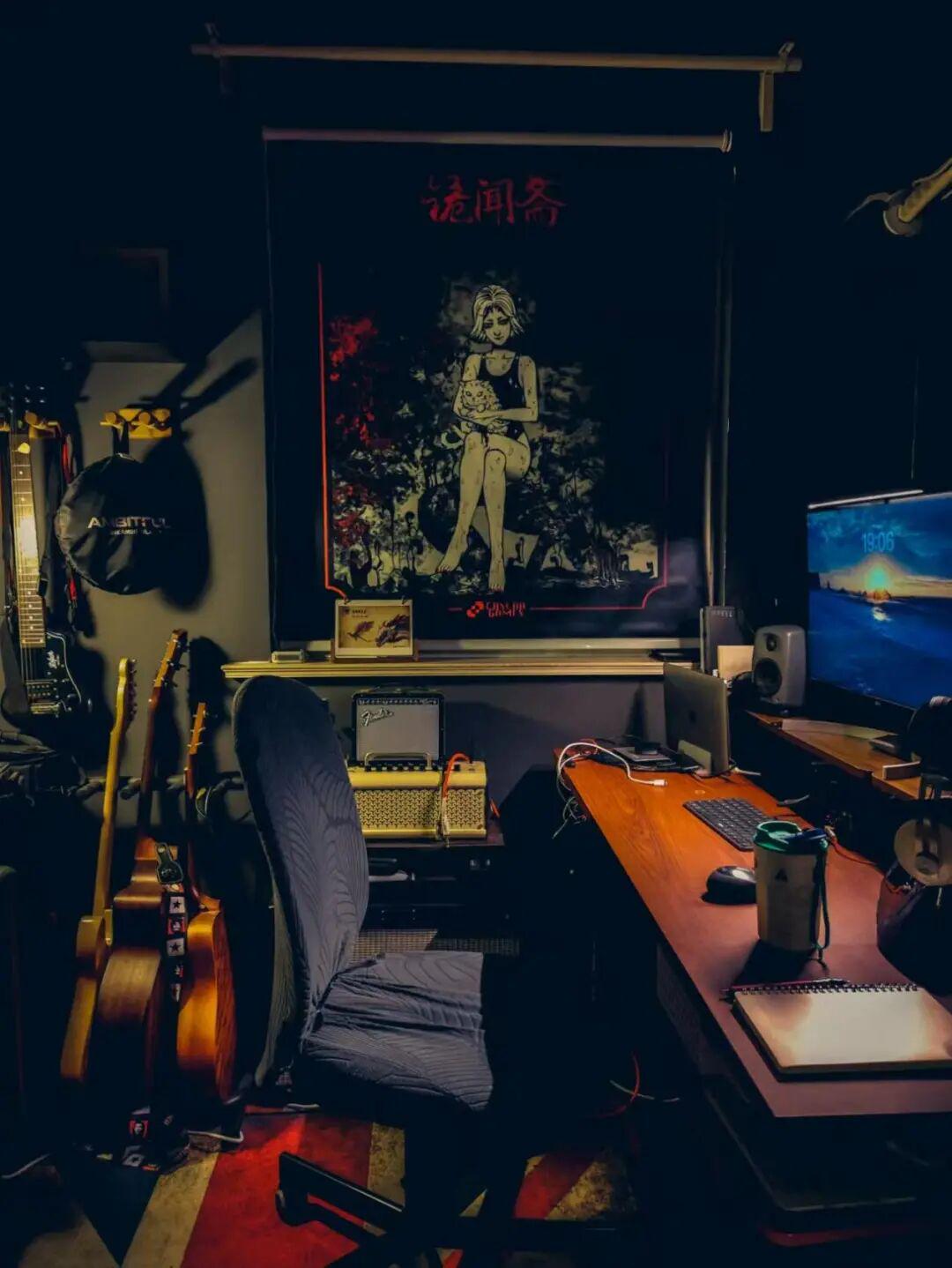
Cascha’s studio—the star of the show is the “Pool God”
The team’s current strategy is therefore to shorten development cycles and use small, polished titles to pivot quickly and iterate rapidly. He also noted that while the three games have generated some revenue, they still have a long way to go before they can cover living expenses.
In addition to pricing and gameplay, Cascha has also begun to prioritize hands-on involvement in operations. Initially, with no publishing experience, they assumed that signing a publisher would allow them to focus solely on development—so they completely neglected their social media accounts and failed to build an organic audience or fan base.It wasn’t until the game launched that they realized the publisher wouldn’t promote it with the same dedication as if it were their own child; instead, they tended to cut their losses based on the data.
“Of course, I’m not saying there’s anything wrong with having a publisher,” Cascha emphasized. “But to sum it up, even with a publisher’s backing, as an indie game creator, you still need to work hard to build your own brand—it’s like the old saying, ‘The cobbler’s son has no shoes.’ No do-gooder is going to promote your game on a large scale for free.”Today, the two of them are indeed personally managing accounts on multiple platforms, including Bilibili and Xiaohongshu.
After six years of independent creative work, Cascha describes himself as a relatively conservative person; his biggest takeaway is to rely on himself and believe in himself. In his view, the human factor is often the biggest obstacle in any endeavor; once the thought of relying on others arises, the results are usually less than satisfactory.
As for Vitash’s experience, he believes that the project management mechanisms at large companies are the most valuable takeaways—they allow for relatively accurate planning and execution of workloads—while the detailed division of labor in those environments is of no use whatsoever to independent developers.“Participating in game development at a company and creating a game on your own are two almost completely different things,” he said, drawing an analogy. “It’s like going straight from kindergarten to college.”
04
“The point of making indie games is simply to make indie games.”
Each installment of the *Tales from the Eerie Room* series opens with a monologue that essentially states that there are some events in this world that science cannot explain. This monologue can almost be seen as a commentary on Joey’s creative philosophy.
According to Joey, this aesthetic preference stems from her early childhood. When she was two or three years old, she would pester her parents to read to her every night before bed, and she was very picky—if she didn’t like a story, she insisted on a different one.Her parents tried fairy tales from all over the world, but eventually discovered that stories from *Strange Tales from a Chinese Studio* were the ones she was least likely to dislike; no matter which one they picked, she would fall asleep contentedly.
“When I was a kid, I truly believed that everything had a spirit and that the world was full of spirits and monsters—and to be honest, I still feel that way now,” Joey said. “But as I’ve grown up, I’ve come to feel that something just isn’t quite right about real life.”
As for why the characters in the game aren’t strictly good or evil, her reasoning is that the people she’s encountered are simply like that.“People are living beings, not two-dimensional creations shaped by moral codes. Besides, morality itself changes with the times,” she added with a smile. “If there really were an ‘absolutely good’ person who perfectly met all the criteria, that would be the most terrifying thing of all, wouldn’t it?”
“Joey has the entire ‘Diyingling’ universe in her head,” Cascha said. “The series’ timeline and all its unsolved mysteries are all in her mind. Even I often only know bits and pieces, but every time I learn a new detail, I’m amazed.”This world-building was established early in the creative process, while the specific stories and details were refined as the artwork progressed.
The two creators aim to have players piece together the full picture of Di Yingling, much like assembling a puzzle, by combining stories set across different time periods, told from different perspectives, taking place in the same location, and even involving the same groups of characters.
Cascha describes it as a “Stranger Things” or “Silent Hill” with a clear origin, a narrative arc, and not necessarily an ending; in terms of concept, it aspires to the intricate, nested structure of the German series *Dark*. The three works released so far reveal only the tip of the iceberg.What exactly did Zhan Fan go through in *Infiltration*? What organization is his older brother a part of? Will Wang Zhe from *The Strange* cross paths with these people in the future? Why is this school constantly haunted? These unresolved mysteries are all lined up in future installments, waiting to be unraveled.
Feedback on the demo for *Otherworld: Magic School* exceeded the team’s expectations. Cascha said that most players expressed enthusiasm and gave positive reviews, and nearly all veteran players praised it.For this installment, he spent more than half a year restructuring and building the underlying framework from scratch, adding a large number of new feature modules. His goal was to truly enhance player engagement and, for the first time, bring the series’ story to life through gameplay.
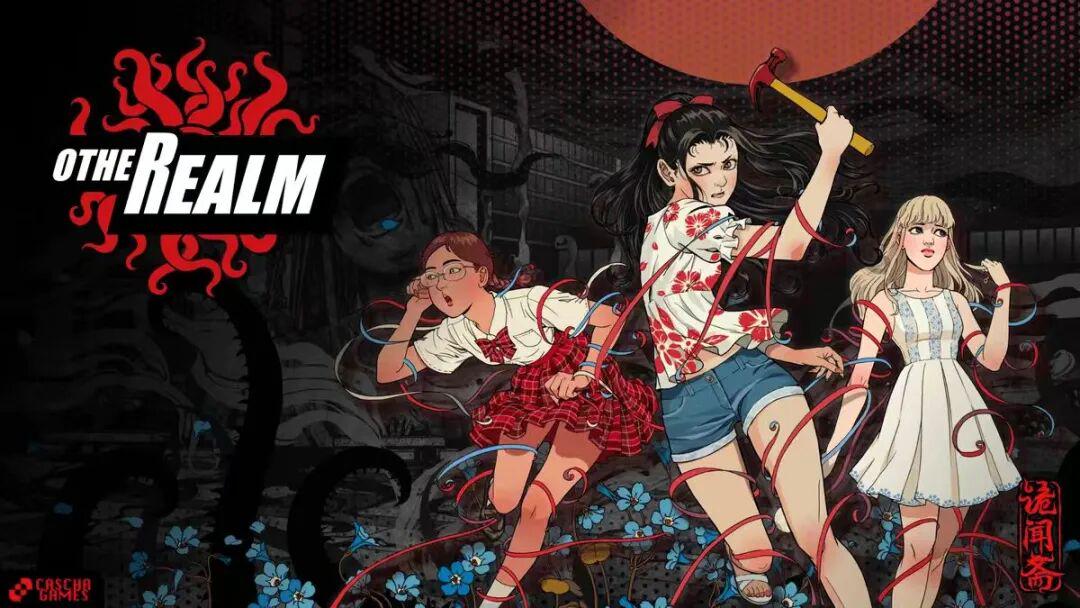
Latest Work: “The Otherworld: Magic Academy”
When asked how long she planned to continue telling the story of Di Yingling, Cascha’s answer consisted of just four words: “For as long as I live.”
This answer is tied to their assessment of industry trends. Cascha said that if he had to do it all over again, he would still quit his job to make indie games—and he might even have started sooner.The reason has nothing to do with income. In his view, the revolution sparked by AI is bound to reshuffle existing production structures; companies that rely on labor-intensive models will eventually disappear, while small, artisanal studios with a strong human touch will instead become new havens that aren’t swept away by the tide—and indie games are precisely part of this trend.
For those working at major game companies who are also thinking about quitting to make indie games, his advice is rather blunt: first, ask yourself if you truly love it, or if you’re just jumping on the bandwagon to give it a try, or if you feel like you’ve run out of options. The former are welcome; the latter should definitely stay away.“Making indie games isn’t about financial freedom—and it’s almost impossible to achieve,” he said. “Making indie games is about making indie games. Just like in *Kung Fu Girls*, ‘I play soccer just to play well.’”
原创文章,作者:游茶妹儿,禁止转载:https://youxichaguan.com/en/archives/221613