When the conversation turned to that unexpected removal from the platform, the four creators—who had been laughing and joking just moments ago—instantly stopped smiling.
After all, before the incident, their debut film, *Kill the Shadow*, had gotten off to a nearly perfect start.
Similar to *The Last Night*, *Kill the Shadow* also features a distinctive pixel art aesthetic and a complex detective narrative—with richly layered cyber-pixel visuals,with neon lights bleeding into the rainy urban night, rich details preserved in the shadows, and soft, diffused lighting created as light passes through translucent obstacles.
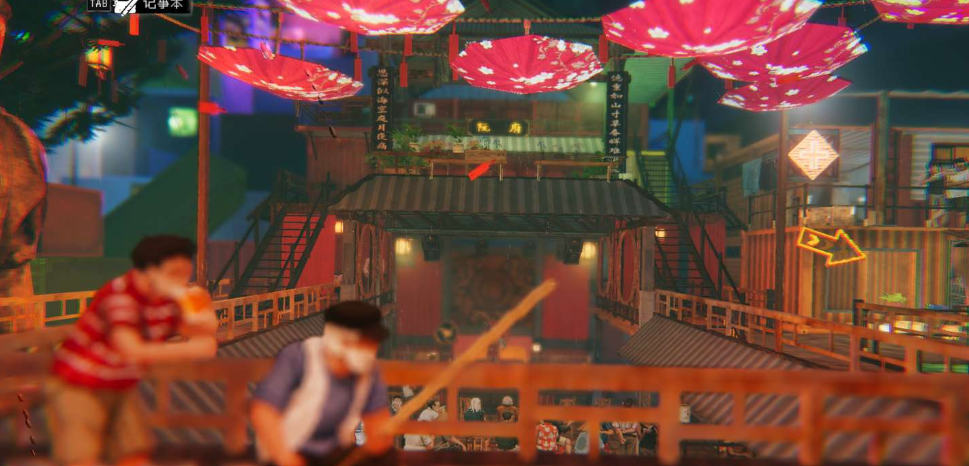
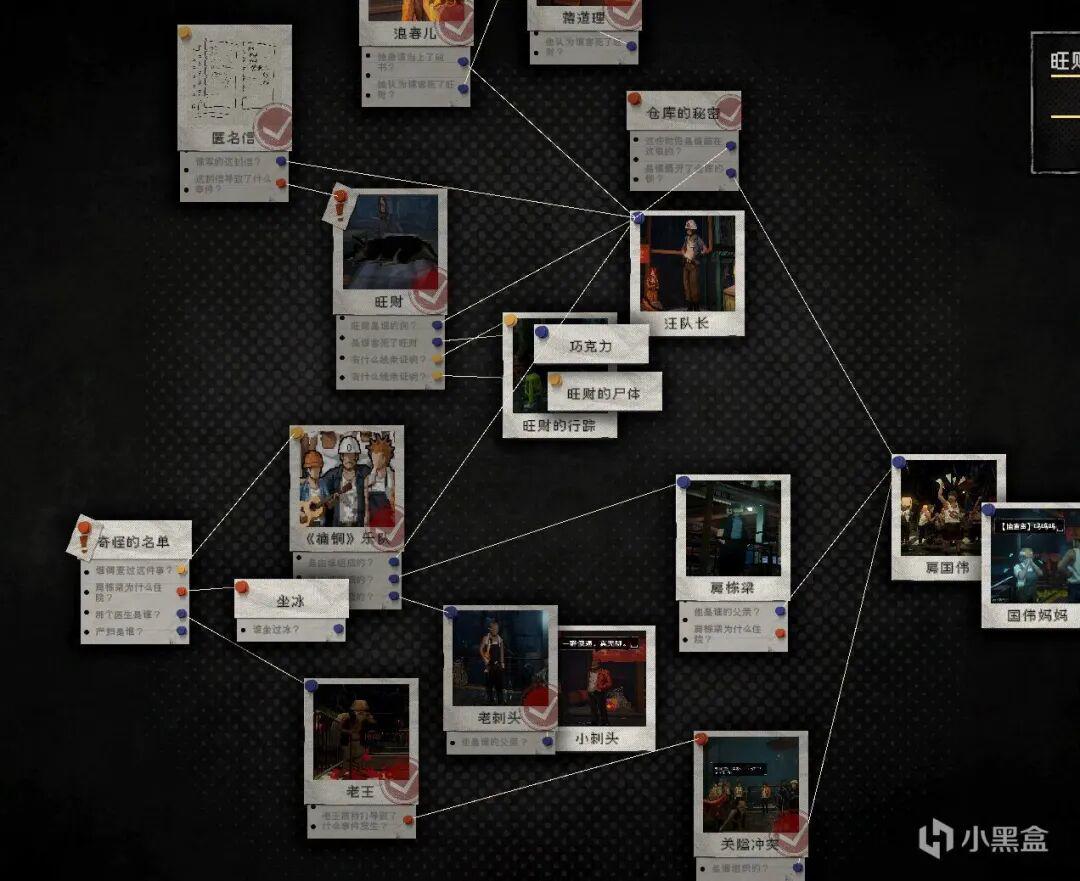
Players take on the role of a detective, extracting keywords from conversations and collecting physical evidence during crime scene investigations. They drag clues—such as witness statements and crime scene photos—onto the evidence board to piece together a logical chain of events;At key junctures, players can rewind to a specific point in time before the crime occurred to uncover part of the truth, or, as the story progresses, reexamine the truth from a different perspective. These multiple branching choices ultimately lead to different endings.
Thanks to this design, the game secured incubation support from Eagle角’s Kaituo Core even before the studio was founded, and its demo on Steam received a 94% “Positive” rating at one point.
However, in January 2025—just 12 days before the originally scheduled release—the former publisher had its account suspended due to violations related to other games, causing the *Kill the Shadow* Steam page to vanish overnight.With all backend access lost and over 10,000 wishlists reset to zero, many players repeatedly asked about the game’s whereabouts in the community.
After six months of negotiations and reworks, the game finally launched officially not long ago, prompting many longtime players to exclaim, “I can’t believe it’s still alive.” Now that it’s officially live, the number of views on related gameplay videos on Bilibili has quickly surpassed one million.
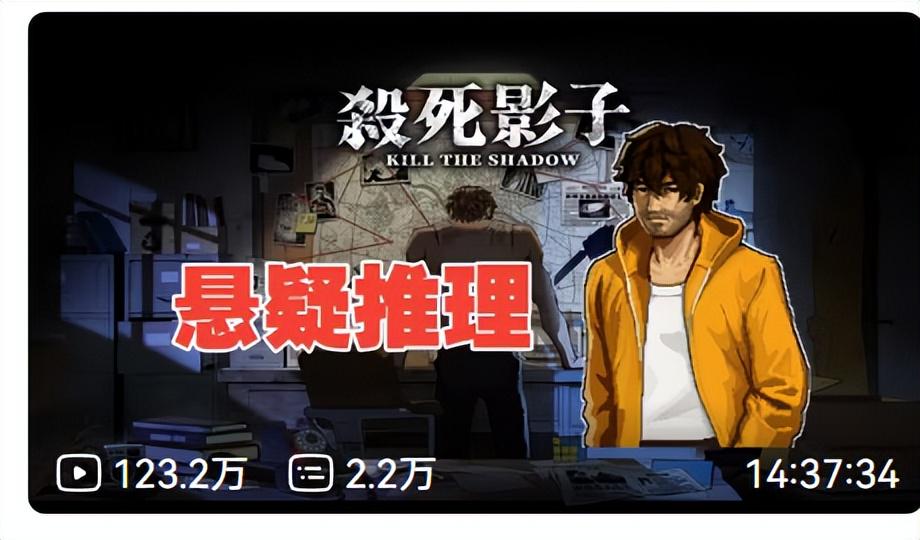
Although the official release still maintained an 87% approval rating, the toll of spending four and a half years scrapping and rebuilding the project—and the cost of missing the optimal launch window—led the creators to repeatedly use the word “regret” when discussing its success or failure.
01
A Natural Start
In 2022, Zhu Guohao and Wang Zhen participated in a Game Jam themed around “Duality and Contrast.” Over the course of 48 hours, they wrote nearly 900 lines of code and rushed to complete a rough side-scrolling demo called *The Light That Steals Shadows*,The character walked as if slipping on a bar of soap.
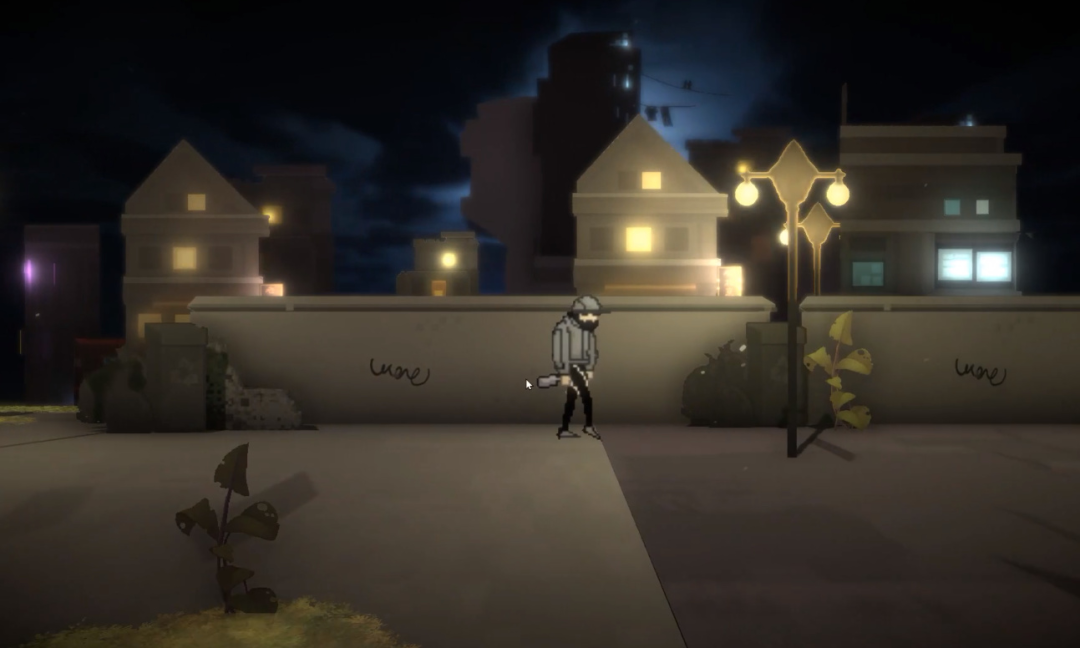
But these young people believed this idea had the potential to become a major success.Zhu Guohao, a fan of *Blade Runner 2049* and *Cyberpunk 2077*, has always had a soft spot for cyberpunk aesthetics, and the pixelated lighting effects in *The Last Night* at E3 2017 left a lasting impression on him.After discussing it, the group agreed that the game prototype at that stage had the potential to align with both of these directions, so they decided to expand upon it. They refined the game and entered it into several student competitions that year, winning multiple awards.
Subsequently, the project secured investment commitments and venue support from Yingjiao Network’s game investment and incubation brand, Kaituo Xin. Several team members resigned one after another and officially transitioned to full-time development, with Zhu Guohao taking the lead on day-to-day creative work while the others contributed ideas.
“There wasn’t any particular reason. We all knew each other and had worked together on previous projects, so we thought it would be fun to start this venture together,” Zhu Guohao recalled. “At least we don’t have to work like slaves at a big tech company.”
However, the team soon faced a series of setbacks.
The original three core members were all programmers by background; none of them had ever written a novel or screenplay, and they rarely played narrative-driven games. But at the time, they on a whim decided, “Our art is so strong—it’s a perfect match for the story,” and blindly assumed that narrative games would be the least expensive to develop. As a result, the story ended up requiring repeated revisions and major overhauls.
In addition, because criticism of “Ubisoft-style canned content” was prevalent online at the time, the team automatically decided to completely “eliminate quests” from the game—removing the quest list, doing away with map navigation, and including only scattered points of interest along the way.
It wasn’t until they actually began development that they realized the quest system not only provides players with motivation to play but also serves as a vital link between the storyline, gameplay, and feedback. It is the core framework of RPGs, refined over decades, and the most direct bridge connecting players to NPCs, fostering immersion.Without a thorough grasp of even the basic rules of quest design, so-called “guidance-free innovation” becomes nothing more than a castle in the air.
A lack of experience and misjudgments in game design led to endless rework during the subsequent development process. The project, which was originally expected to be completed in six months, ended up taking more than two years.
The game’s mechanics were also overhauled multiple times during this process. It evolved from an initial side-scrolling shooter to a story-driven puzzle game for a student competition, and then to the high-freedom time loop system in the early stages of *Full-Time*, which attempted to emulate *Stardust*.The team struggled with it for over half a year, but Wang Zhen eventually realized that the complexity of a non-linear, networked narrative far exceeded the team’s technical capabilities at the time. They had no choice but to start over once again, ultimately settling on the current system of clue board deduction and node backtracking.
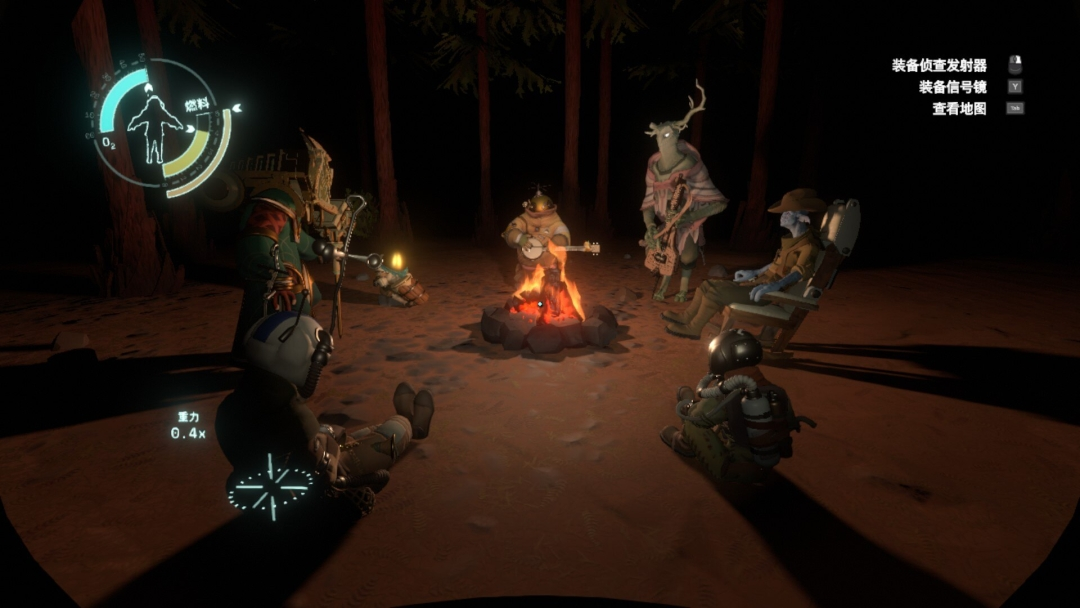
By the time the game was released, the story content had already been expanded to over 10 hours, and costs had risen accordingly.
What has sustained them through their repeated trials and errors in this quagmire is Kaotai Chip.
KaituoXin provided them with spacious, well-lit office space in Shanghai at no cost, and even offered extensive administrative and financial support and assistance, freeing them from the hassle of hiring and other administrative distractions.Most notably, KaituoXin also granted the team ample creative freedom, requiring only that they submit a monthly progress report. By refraining from interfering in specific R&D details, the company allowed the team to shake off short-term commercial pressures and focus on refining the content itself.
Thanks to this supportive environment, the team adopted a more flexible work schedule. Except during the pre-launch sprint phase, the team rarely worked long, high-intensity overtime hours. Wang Zhen believes that if indie game developers are under constant high pressure, the resulting strain on their mental well-being can easily be reflected directly in the game’s content.
However, the drawbacks of lacking experience with mature projects soon became apparent during the collaboration—as a small startup team, the members didn’t know how to establish clear acceptance criteria and milestones when liaising with outsourced art and music vendors. The resulting back-and-forth communication and rework consumed a significant amount of the game’s time and budget.
Even so, by the end of 2024, the team had completed the final assembly of all content and set the official release date for January 17, 2025. After repeated cycles of scrapping and trial and error, they finally seemed to be on the verge of success—if not for the repercussions from their former publisher.
02
A Sudden Misfortune
On the morning of January 5, 2025, with only 12 days left until the scheduled release date, the development team—who had hoped to enjoy a happy Chinese New Year—woke up, turned on their computers, and discovered that the Steam page for *Kill the Shadow* had completely disappeared, and all their administrative privileges in the backend had been revoked.
To make matters worse, the team did not receive any official warning or notice of a violation.
Since Steam customer service does not offer real-time communication channels, the team had no choice but to submit a support ticket and wait in line. Two weeks later, they received a response from the platform: 663 Games, the publisher under contract with them, had its entire account suspended by Valve due to fraudulent positive reviews on other games under its name, and all games associated with that account were removed from the platform.
As newcomers lacking practical experience in commercial distribution, the creative team only realized at this point that, early in the collaboration, they had failed to adequately define the boundaries of authority and responsibility regarding distribution and had not sufficiently anticipated the systemic risks posed by the platform.
According to Steam’s rules, Valve has an absolute zero-tolerance policy toward review manipulation,At the same time, within its account system, the platform treats publishers as single, indivisible compliance entities. Faced with the massive influx of new titles every day, the platform’s risk control relies heavily on automated scripts—once a publisher’s account crosses a violation threshold, the system immediately suspends all associated products under that account without verifying them individually during the initial screening process.
As a result, Steam’s takedowns sometimes affect innocent titles. For example, in 2018, the overseas publisher Insel Games had all of its games—including *Wild Planet*—removed overnight after it was discovered that the company had mobilized employees to post fake positive reviews for its products.
For independent titles published under a publisher’s name, this systemic risk of joint liability can often leave unsuspecting developers in a dire situation in an instant—especially for small and medium-sized teams.
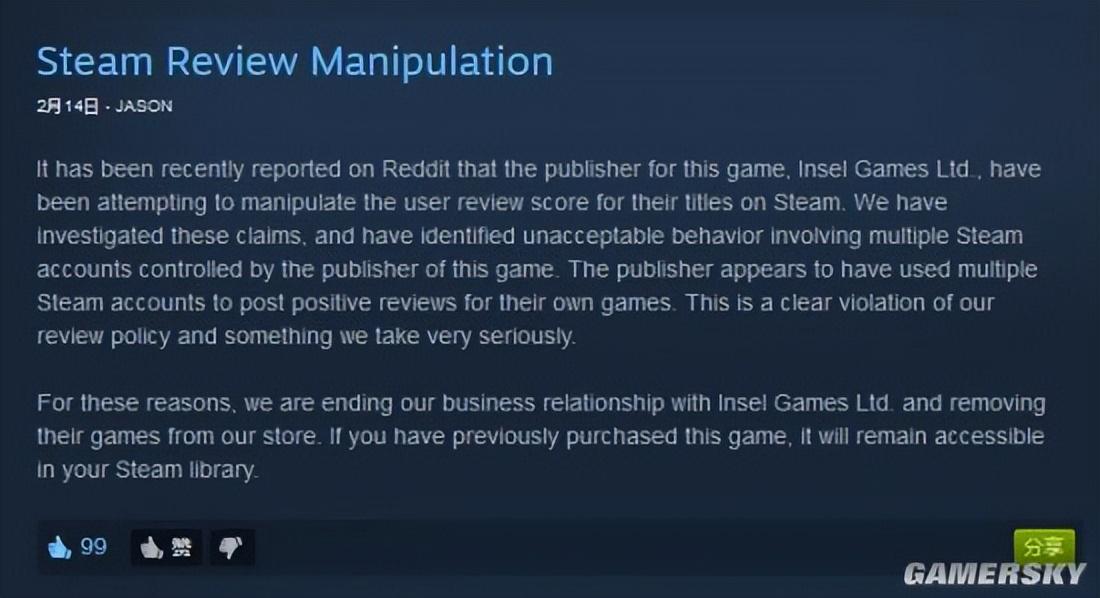
The sudden turn of events instantly froze the studio’s usual atmosphere of banter and jokes. The entire team had been counting on the game’s launch in mid-January to generate revenue, cover back pay, and ensure a stable Lunar New Year celebration, but when the website went dark, the whole team found itself teetering on the brink of financial ruin. “We didn’t get to celebrate that Lunar New Year.“We negotiated with the publisher, terminated the contract, and argued—we were constantly battling them,” said Wang Zhen. The team sprang into action to save themselves, signing a termination agreement with their former publisher as quickly as possible.
Since the original release date for the project was pushed back indefinitely and there was no prospect of recouping funds, the entire team found itself on the brink of financial collapse several times.
At the most difficult moment, KaituoXin’s support became the key to keeping the team running. Thanks to KaituoXin’s backing, the team was able to prepare various supporting documents to appeal to Steam for the game’s unblocking while simultaneously ramping up R&D efforts. During this phase, they further refined the game’s maps and storyline and added content such as bilingual Chinese-English voice acting.
Xiang Fa’an told me that on the eve of the game’s release in 2025, development costs were still relatively low, but a year and a half later, they had more than doubled—thanks to the ongoing financial support and connections provided by Kaotai Chip.
What followed was a long and grueling transoceanic appeal process. Due to the long response times from customer service, each round of communication often took half a month.It took the team more than four months to repeatedly submit supporting documentation proving that they had legally terminated their contractual relationship with the original publisher and regained independent control of the game before the platform finally confirmed that the team was an innocent third party caught in the crossfire and restored the page.However, shortly after the page was restored, the platform omitted the link to the demo version; identifying and fixing this issue caused another half-month delay.
After regaining control of the project, the team went through several twists and turns in selecting a publisher. Having been taken advantage of in the past, the team members became increasingly cautious. Not only did they repeatedly scrutinize and compare publishers’ past performance and track records, but they also learned to include more protective clauses in their contracts—as Fang An put it, they were as meticulous as if they were choosing a romantic partner.Last October, they had officially announced a partnership with a well-known South Korean publisher, but this cross-border collaboration quickly fell through. Later, through a friend’s introduction, the team connected with Phoenix Games in China.
It wasn’t until now that *Kill the Shadow* found the right partner. Through discussions, both sides discovered that their philosophies aligned, and the team could sense the publisher’s genuine commitment: Phoenix was able to clearly define the boundaries of rights and responsibilities for the partnership, possessed extensive experience in marketing and distribution as well as strong channel capabilities, and consistently followed through on its promises. The two parties immediately finalized the distribution partnership.
Looking back on this controversy, which has lasted nearly half a year, the team has paid a heavy price: not only did the game miss its originally planned release date, but it also lost the player interest it had gradually been building—out of the 80,000 wishlist entries accumulated previously, over 10,000 were lost.
Zhu Guohao told me, “Although we’ve been optimizing the content ever since, and the game has definitely improved, it would have actually been better if we’d released it earlier as originally planned, so we could have used that experience to start working on the sequel sooner.”
03
Regrets and Echoes
Two weeks after its official release, sales of *Kill the Shadow* had just surpassed 10,000 copies.
Faced with a development cycle that had stretched out to four and a half years and rising costs—far short of the team’s projected first-year sales target of 100,000 units—Wang Zhen admitted that breaking even would be extremely difficult.
Along with sales pressure comes mixed reviews in the comments section. Behind the 87% approval rating, positive reviews mostly come from casual story-driven players who appreciate the game’s atmosphere; they value the pixelated lighting and shading and are comfortable with the episodic pacing. Negative reviews, on the other hand, are primarily concentrated among hardcore mystery enthusiasts.
Tang Xiong analyzed that this discrepancy stems from the game’s positioning and labeling: “Reviewers find it difficult to describe the plot to players without spoiling it, so they can only focus on the game’s systems—since it features time rewinds and a clue board, they’ve labeled it a detective mystery game.””Many hardcore players came in expecting rigorous deductive reasoning, only to discover that the clue board functions more as an interactive tool to advance the plot, leading to a sense of disappointment.”
Furthermore, the haste with which the world-building was initially designed became apparent later on. When the project was greenlit, the team believed it could be completed in half a year; they spent only half a month designing the framework for the world and, following their inspiration, wrote two or three short stories with intense dramatic conflicts.However, when these standalone stories were pieced together into a full-length novel, inconsistencies in the world-building began to surface—Chapter 1 was a factory-set story, Chapter 2 shifted to a traditional Chinese-style mystery, and the conclusion inevitably felt forced.
“We anticipated some of these issues, but time and cost constraints didn’t allow for major revisions. There are many things we regret,” said Wang Zhen.
Another example: the premise of a key case in the game was quite controversial, and the team had considered revising it. However, since the core puzzle of that case relied on the victim’s specific motive to work, any changes would have required completely reworking the entire chain of clues and levels leading up to it. With the release date fast approaching, the team had no choice but to keep it as is.
Although there were some disappointments regarding both commercial performance and design details, specific feedback in the comments section and among players still struck a chord with the creative team.
During the early demo testing phase, an overseas player spent over a dozen hours completing a two-hour demo and left a long poem summarizing the storyline in the comments section.The team later learned that this player, who was both hearing-impaired and colorblind, had managed to complete the entire demo bit by bit through trial and error, without any dedicated accessibility features.
After completing Chapter 1, some players expressed their love for the fictional band of three handsome guys to Zhu Guohao and lamented that they couldn’t hear their songs during the main story.Subsequently, Zhu Guohao contacted a music producer and had a complete song composed specifically as a hidden Easter egg, so that after completing that chapter, players could find a cassette tape in a corner and play it on the radio.
The ups and downs of these past four and a half years have taught the team everything there is to know about project initiation, project management, and release risks.
“The project proposal accounts for at least 50 percent. If the proposal is flawed, all subsequent efforts will only lead you further and further down the wrong path,” Wang Zhen concluded.Having left major studios to create indie games, they still don’t regret not prioritizing commercialization at the outset, but next time, they’ll spend more time on project selection and world-building.
Currently, the team is focusing its efforts on daily game updates and patch maintenance. We’ll finish the tasks at hand, take stock of what we’ve learned over the past four and a half years, and then decide whether to develop DLC or start work on our next project.
原创文章,作者:游茶妹儿,禁止转载:https://youxichaguan.com/en/archives/208615