Kunpeng is the kind of founder who has his vision ingrained in his very bones.
Ten years ago, he played games like *Heavy Rain*, *Beyond: Two Souls*, and Telltale’s *The Walking Dead*, and was captivated by interactive storytelling for the first time. He subsequently founded HuYing Technology—“HuYing”—which they later defined as “interactive film and television.”During a recent chat with me, he recommended *Unhinged*, an interactive horror series Netflix released a while back. In one scene, the protagonist can actually call the viewer directly on their cell phone. When he talks about moments like these, his speech still unconsciously speeds up, revealing the same excitement he felt back then.

Kun Peng, CEO of HuYing Technology, at the ChinaJoy 2026 Official Forum
Recently, news that *Prosperous World* had sold 5 million copies brought the interactive film and gaming genre back into the public eye, with major companies like ByteDance and Tencent collectively investing in this sector. The Dataeye Research Institute predicts that this genre is currently experiencing explosive growth, with an expected increase of over 90% compared to two years ago.
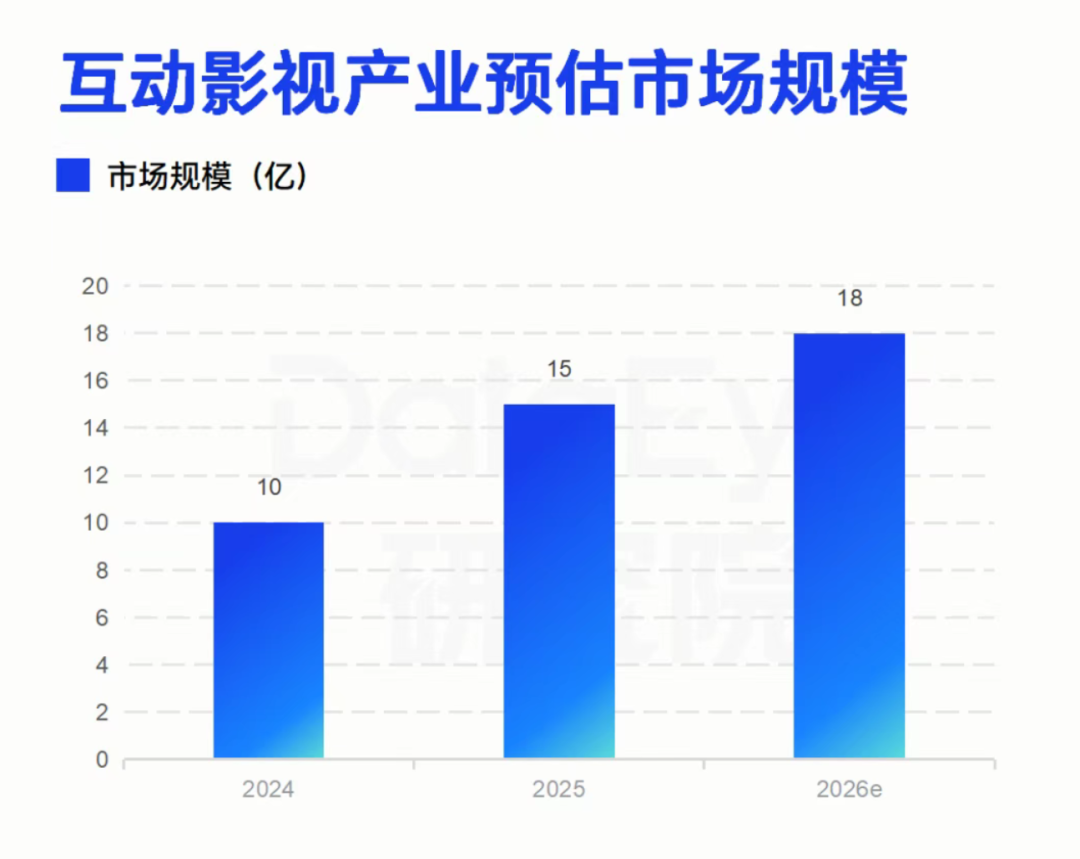
Data Source: Dataeye Research Institute
Kunpeng was very pleased: “People are finally recognizing the charm and value of interactive storytelling, which will attract more talented creators and entrepreneurs to the field—that’s exactly what I want to see.”
Over the past decade, they have defined several key turning points in the domestic interactive media industry.
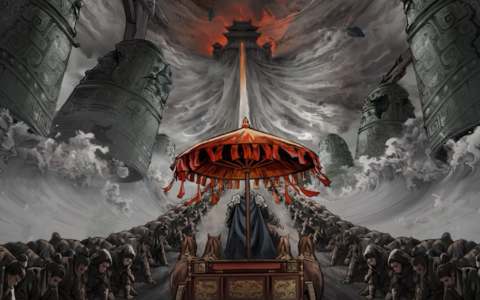
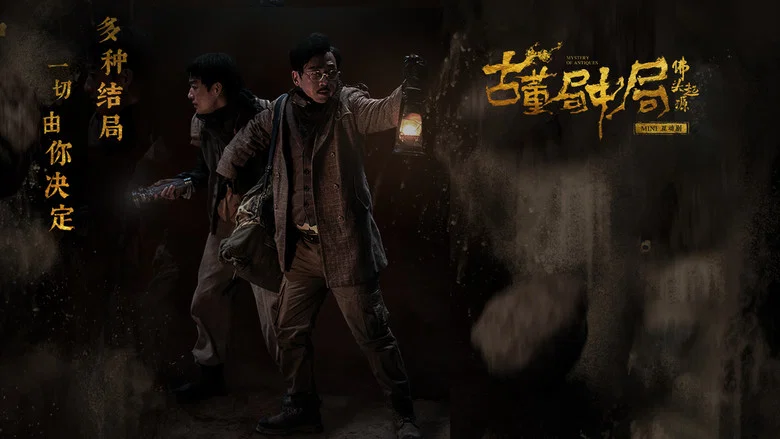
HuYing’s 2019 release, *Antiques Bureau: The Origin of the Buddha’s Head*, is considered the pioneering work of interactive drama in China;In 2022, they partnered with Bilibili, bringing together well-known content creators such as Xiaoyao Sanren and C-Jiao, along with over 3 million users, to participate in *Super Raccoon Vote*, allowing viewers to influence the outcome of a battle royale through millions of bullet comments;Most well-known in the gaming community is the interactive film-game *Escape from Room 13*, which sold over a million copies; HuYing’s products have accumulated more than 10 million paying users worldwide.

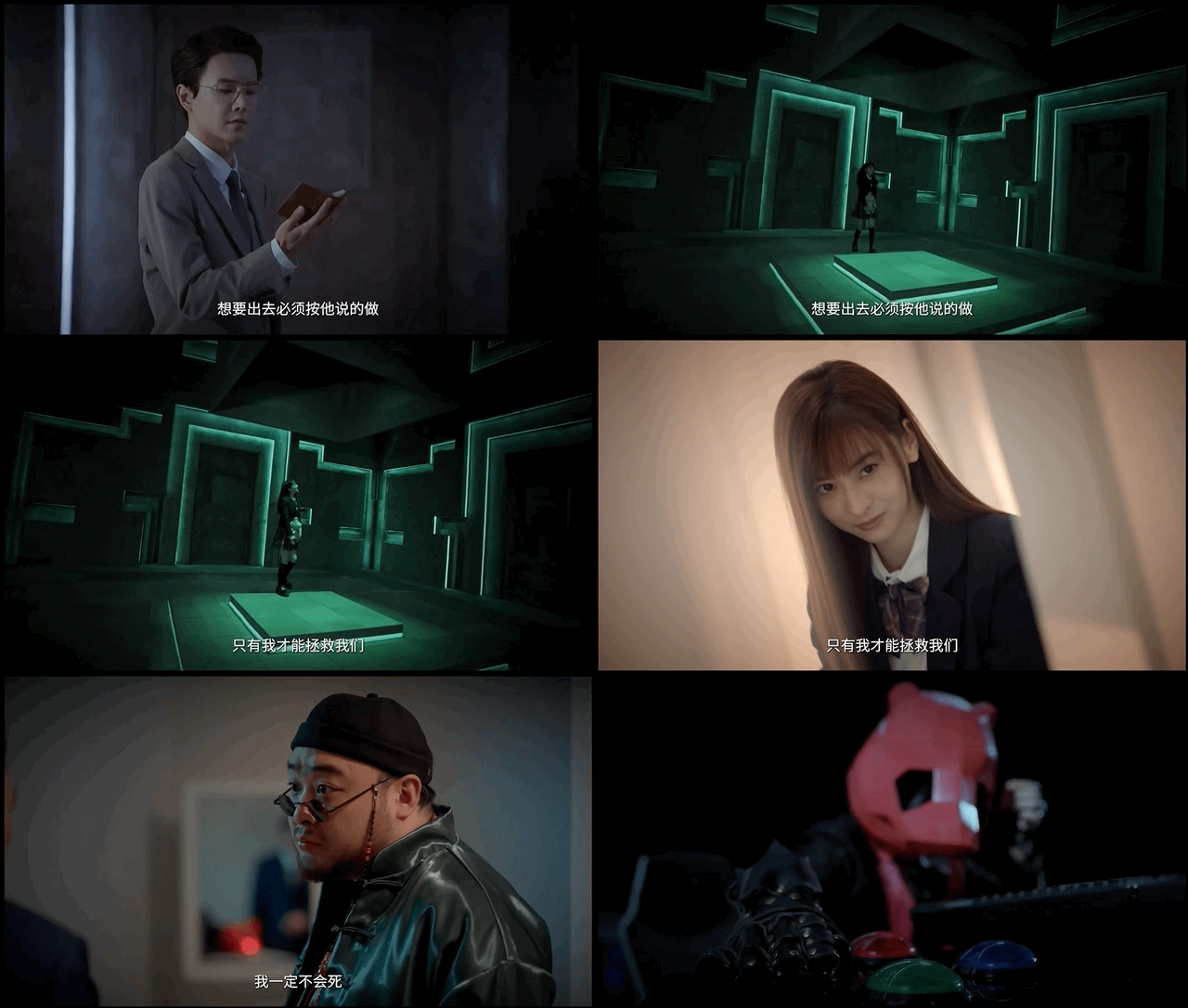
"Flying Over Room 13"
A while back, they also launched pre-orders on the App Store for a brand-new interactive movie called *New World: Shadows in Tandem*, which focuses on two-player collaboration. With two players and two screens, you work together to decide the story’s direction.

From VR/AR and danmaku interactions to interactive movies and games, and from single-player to multiplayer modes, they’ve experimented with every form of interaction. Having navigated so many pitfalls, they’ve come to truly appreciate the blood, sweat, and tears that go into creating interactive experiences.So these days, while Kunpeng is pleased to see the category he’s been cultivating for years finally gaining traction, he also feels a strong sense of anxiety.
Creation, production, and distribution—these three major hurdles stand in the way of interactive film and game development: On the one hand, a good interactive film or game must have a compelling story and script;at the same time, it must contend with filming costs that can easily reach tens of thousands per minute; pre-production is highly intertwined with post-production gameplay mechanics, allowing for only a single take, which makes subsequent revisions extremely difficult; and the final product cannot succeed without effective distribution channels. Mutual Media has personally scaled all three of these mountains.
In Kunpeng’s view, these are long-standing, fundamental issues across the entire category—ones that won’t be automatically resolved just because the industry has become a hot trend—until the emergence of AI provided an opportunity to break the deadlock.

Kunpeng once used the metaphor of “a call from God.” AI is exactly that kind of call—it has the potential to multiply the growth of an entire product category by 10 or 100 times. It’s not just about reducing costs and shortening timelines; more importantly, it makes entirely new forms of experience possible.
Over the past year, Kunpeng has been busy driving this AI transformation within the company: many day-to-day operational and creative tasks have been taken over by “AI employees.”They are also testing AltFlow, an AI-powered interactive narrative creation platform—one designed to do just one thing: assist creators in developing interactive narratives and scripts. It doesn’t write the story for you; instead, it helps you build the framework: the kind of experience you want to create for users determines how you should write the story.
They found that, through blind testing and data annotation, AI has already learned to understand highly subjective human concepts such as “pleasure points” and “emotions.” Kun Peng said that AI can solve 70% to 80% of the problems, while the rest depends on the creator’s inspiration—which is what matters most to the creator.
Kunpeng showed me an AI interactive project they’re about to unveil to the public. It has some elements that show promise for breaking into the mainstream and capturing people’s attention. I tried to spot the “AI vibe” in the clips, but wasn’t very successful—and that might actually be the most noteworthy aspect.Prior to this, Huying had been conducting various “threshold” tests internally—not to measure model performance scores, but to pinpoint that critical point: the moment when AI-generated content becomes indistinguishable from content shot by a real person.
And now, Kunpeng felt that the time had come.
The following is a transcript of a conversation between Tea House and Kun Peng, CEO of Huying Technology (some content has been edited for readability):
01
Regrets After a Million-Person Experiment
Teahouse Guy (hereinafter referred to as "Q"): Have you been developing interactive film and gaming experiences ever since you started your company?
Kunpeng: To be more precise, we’ve been constantly exploring and experimenting with various forms of interactive content. In the very beginning, we didn’t even call it “interactive film and gaming”—we called it “interactive drama.” Projects like *Antiques Bureau: The Origin of the Buddha’s Head*, as well as our attempts to make variety shows and film and television content interactive, were all developed during that phase.
"Antiques: The Origin of the Buddha's Head" was an interactive drama we created back then. It featured not only branching choices but also simulated actions, swipes, rapid taps, puzzle-solving, and how different choices affected subsequent character relationships and the plot’s direction. For example, if you treated a character a certain way earlier on, they might not come back to save you later in the story.There were also puzzle-solving mechanics based on the Nine Palaces and the Eight Trigrams, and the game featured multiple endings. Interestingly, this product was developed in 2018 and launched in January 2019. Many of the interactive features we wanted to implement back then still can’t be achieved on some platforms even today.
After that, since our interactive content was hosted on long-form video platforms and users hadn’t yet developed a habit of paying for such content, we began shifting our focus to the consumer market (To C) and released our product on gaming platforms like Steam.*Fly Over Room 13* was our first true consumer-facing product. It performed well in terms of sales, virality, and feedback from streamers—many streamers featured it—and it allowed us to confirm for the first time that users were willing to pay directly for this type of content.
Q: What’s it like to stick with something for ten years?
Kunpeng: I don’t think the word “perseverance” is entirely accurate here. To be honest, we didn’t really think about whether we needed to “persevere” or endure the process with great difficulty. Of course, there were many challenges along the way, but many of us on the team are gamers ourselves, and we also love interactive storytelling.We also place a strong emphasis on the immediacy and realism that live-action filming brings, which means the game team has to understand film production, and the film team has to understand interactivity and game design. We had to learn and figure out a lot of things on our own.
So if we absolutely have to use the word “perseverance,” I think the reason behind it is still passion.
Q: So, am I correct in understanding that the team’s core expertise lies in games and interaction design, and that it’s expanding into the film and television industry?
Kunpeng: Our team is quite multidisciplinary and highly diverse. It includes a film and television storytelling team, a game design team, and a technical development team.Within the technical team, we have a PhD in Human-Computer Interaction from Tsinghua University, an architect who graduated from Tsinghua’s Yao Class, a former architect from Hulu, and product managers with experience at major tech companies; we also have game designers and producers who have worked on titles that have sold over a million copies.
Bringing together people from all walks of life is actually a great opportunity to explore the next generation of storytelling—the next generation of personalized storytelling. I believe that’s exactly what we’re doing. Ever since we started working on *Antiques Bureau: The Origin of the Buddha’s Head*, we’ve been conducting various in-house technical explorations, such as 360-degree VR experiences, interactive video players, and video formats.
Q: Are there any interesting examples of exploration?
Kunpeng: Yes, and we’ve even won some gaming awards for it. We’ve found that interactive content isn’t limited to the narrative-driven products we just mentioned—there are also more entertaining, game-like directions to explore.In 2022, right around the time *Squid Game* was taking the world by storm, we collaborated with Bilibili on an interactive AI-based game called *Super Raccoon Vote*: Users posted comments in real time and cast votes to influence the plot’s direction as it unfolded.
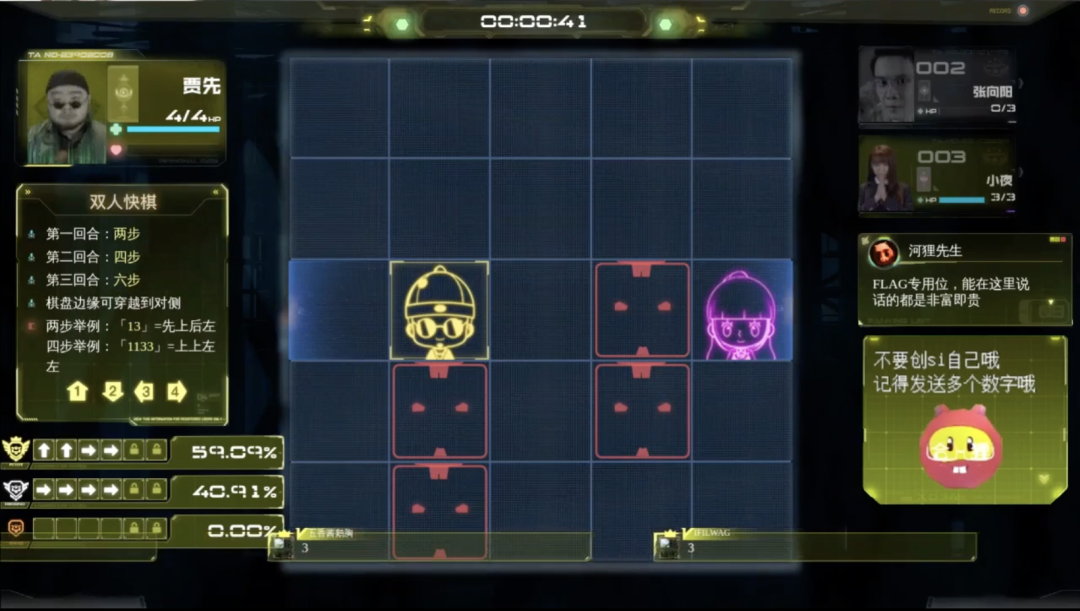
At the time, there were many specific technical challenges to overcome: How do we enable real-time interaction with a million users online? How do we tally votes and compile statistics despite some latency? How do we allow 30 to 60 live streams and ten incoming links to participate in this content simultaneously?Not only did we need to build a backend real-time decision-making and voting system—back then, there wasn’t the kind of real-time content generation technology we have today—but our approach was to stack various plot trees using a massive library of assets, store them in the cloud, and let users’ decisions determine what content was broadcast. Think of it this way: there’s a massive cloud-based asset library that distributes different content based on users’ “battle royale”-style decisions.
Q: What did you learn from this test?
Kunpeng: The biggest takeaway was confirming that real-time multiplayer interaction is a viable direction, and player engagement was incredibly high. But at that point, the technology wasn’t ready yet.
Back then, there weren’t any generative tools like Sora or Seedance. But the creative freedom offered by live-action filming is ultimately limited—you can’t film every possible scenario, and it’s impossible to exhaust all possibilities. We shot a huge amount of footage and uploaded it to the cloud to provide users with real-time feedback, but I felt it wasn’t enough—it couldn’t achieve true personalization.
I believe that whether it’s interactive live streams, interactive videos, interactive dramas, or interactive movies and games, the essence of interactivity is to provide users with a personalized experience. However, within existing content formats, we can’t simulate exactly what every user wants in terms of a personalized experience, so we have to settle for a compromise: filming with real people and giving users some options.
This part really puts the creator's skills to the test. You have to represent the vast majority of people as much as possible and figure out what they want.You can’t possibly cater to everyone, so focus on what kind of experience the vast majority of people want from interactive storytelling, and build your product based on your experience and insights. But this is difficult—you can’t cover every angle, and there will always be some areas where the option design or interactive storytelling experience falls short. This has long been the most frustrating aspect of this industry for us.
That is precisely why we believe the fundamental issues with interactive storytelling have not been resolved.
Q: What does “the fundamental issues of interactive narrative” refer to?
Kunpeng: Let me break it down into three points.
The production phase is probably where the industry feels the impact the most. The volume of footage required for interactive video is enormous, and the cost per project is too high—it’s simply impossible to fully explore all the narrative possibilities within a limited budget. If the art style in a game isn’t right, you can scrap it and start over; but with interactive video, you can only shoot it once, and once it’s done, you can’t make changes—not even by spending more money, unless you’re willing to spend a great deal of it.
The second point is distribution. Previously, distribution was significantly constrained by platforms, but now it’s relatively more flexible. Soon, our video format will also be integrated into various domestic apps, mini-programs, and other platforms, allowing interactive content to play directly on these platforms. It’s quite important to ensure that domestic players can enjoy the interactive content as intended.
The third point—and the most challenging one—is the creative process: writing a good interactive script is extremely difficult. It requires a balance between rational and emotional thinking, which calls for collaboration between the game development team and the film and television production team. It’s not just about writing a script; it’s about crafting an entire interactive experience.
With layer upon layer of hurdles piling up, this industry is like a giant funnel that constantly sifts through candidates. In the end, only a very small number of teams remain—those that have truly dedicated themselves to the field for many years, have accumulated deep expertise, and continue to invest in research.
02
When AI Becomes a Game-Changer in Film and Gaming: This Time, It’s Really Different
Q: So do you think the interactive film and video genre has reached its ceiling? Not long ago, everyone was talking about the boom in the interactive film and game sector, with some titles selling millions of copies. What stage do you think interactive film and games are currently in?
Kunpeng: We’re nowhere near hitting a ceiling; I think the film-to-game adaptation trend in China is actually just getting started.People will gradually get used to seeing new things. The team behind *Prosperous Realm* is amazing—they’re truly passionate about this field. What they’ve discovered is that female-oriented content can sell very well, and it’s no longer limited to the gaming community; it’s broken into the TV drama and broader content consumption markets.Our *Flying Over Room 13* is a social-realism title aimed at Steam players and international audiences; and *New World: Shadows in Tandem* explores an interactive film-game experience similar to *It Takes Two*. Film-games are actually breaking through traditional genre boundaries, becoming increasingly mainstream and widespread.

"New World: Shadows in Pairs"
Interactivity also requires more content and more people from various industries to get involved, using more works to educate the market. The same goes for short-form dramas—people didn’t start loving them overnight; instead, their viewing habits developed gradually. At first, people said, “Aren’t short-form dramas just longer series cut into shorter segments?” but now the mindset is completely different.
Let me give you some figures: on just one platform alone, tens of thousands of short dramas are released each month in China; the annual box office revenue for the film market is 50 billion yuan.We have products that have sold over a million copies, but compared to the existing short-form drama, film, or gaming markets, interactive film and gaming remains very small. It still has enormous potential and is a sector on the rise.
Then there are the changes brought about by AI. I’d like to return to the question you raised earlier: I sense that core AI technologies are already tackling those three fundamental challenges in interactive content. That’s why we feel that this time, things really seem different—not just because new blockbusters, new products, and new business models are drawing attention to this sector, but because some fundamental challenges may actually be getting resolved.For example, AI can transform what used to be a nearly “one-time” filming and production process into an iterative model similar to game development. It can also significantly reduce production costs, making high-budget genres like fantasy and xianxia feasible.
Q: When did you start taking an interest in AI?
Kunpeng: We started using AI for some experimental projects back in 2023. At the time, I really wanted to test something: I’m a huge fan of the *Xianjian Qixia Zhuan* IP, so I wondered if we could use AI to recreate it—to have Li Xiaoyao rescue Zhao Ling’er.People already have such strong associations and impressions of these characters—who played them and what they looked like are etched in everyone’s minds—that it would be very difficult to recreate this with live-action actors; it would always feel a bit unsatisfying.So we used AI to create videos. But to be honest, it never made it to market—the AI technology at the time wasn’t advanced enough. There were obvious hallucination issues, and the video footage was shaky, so it wasn’t really market-ready; it was more of a demo test.
Starting in 2024, we gradually began doing a bit more. By the first half of 2025, we started using more video models like Veo, still with the goal of addressing the content shortage. By mid-2025, there were actually already many video models capable of producing high-quality videos. However, video production merely reduces costs; it doesn’t truly solve the industry’s problems.
What really moved me was the creative process. In June 2025, when “vibe coding”—writing code with AI—started to take off, we began to wonder: Could we use the “vibe” approach to create something—to use AI for creative work? I gave it a try myself and used AI to write an interactive story.Wow—I thought it seemed kind of interesting; it actually worked. At first, we used an internal system we’d written ourselves—not the AI tool we have now—and after testing it, we found it was pretty cool.
So in the second half of last year—around August or September—we started working on an agent. The large language model’s training data didn’t include interactive scripts, so it didn’t understand what “interaction” meant or what constituted good interactive design—it might not even be able to write a novel well, let alone create interactive content.So we began fine-tuning it, adding a multi-path routing system and the ability to parse IP, and gradually realized that this approach might actually work. We’ve been conducting continuous experiments since 2023, and by the second half of last year, we had truly integrated AI into our operations on a comprehensive basis.
Q: How are you currently using AI internally?
Kunpeng: We’re all moving toward AI—not just programmers, designers, artists, and backend developers… Every team is using it to boost efficiency. I think this is an inevitable trend; it’s not mandatory—if people find it useful, they’ll adopt it on their own.
For example, when we use AI to “break down” a novel’s plot, it’s a bit like having 64 AI units “read” the book for you.When a novel comes in, humans read it too slowly, so we have different large language models work together—Model A specializes in analyzing structure, Model B in plot, and Model C in dialogue. Each AI unit has its own specific role, and when combined, they form a virtual team that helps us get a lot of work done.
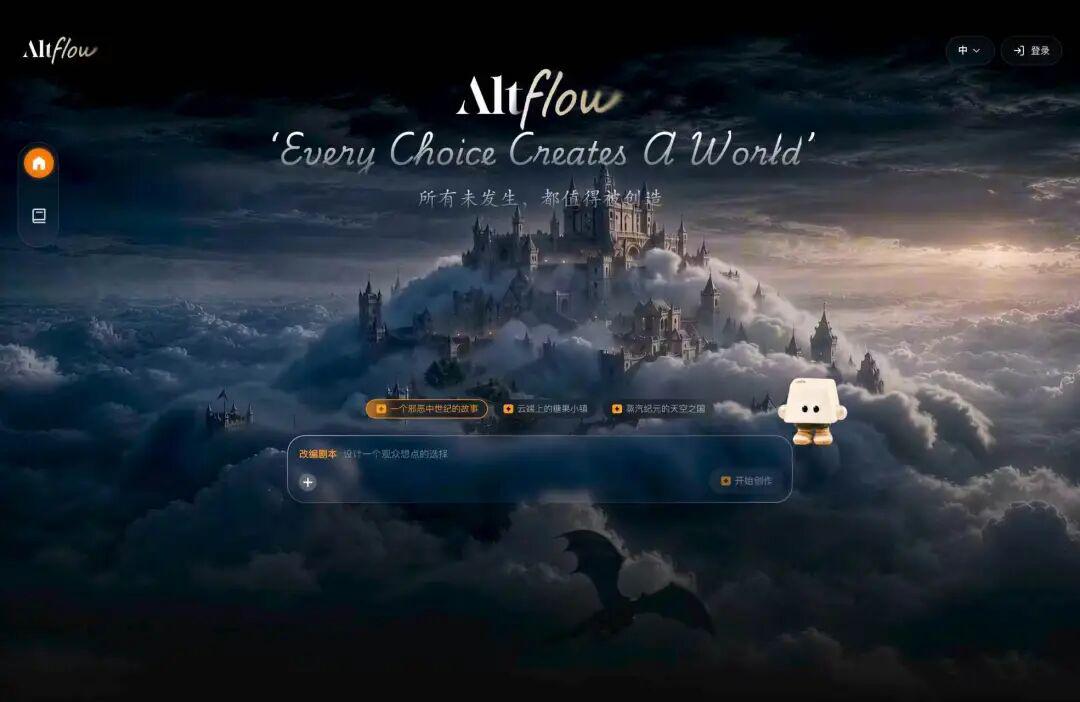
Our team has been continuously exploring this field, venturing into new and uncharted territory. We are currently developing AltFlow, an AI agent product for interactive storytelling. In fact, we want to make the AI capabilities we’ve developed internally available to everyone, because interactive storytelling is truly not something that can be done well by just one team.
I think the biggest problem in the interactive content industry right now is a lack of production capacity; we need more talented creators and excellent teams to join the field. In the past, the industry was too small and the market was too limited. Whether it was due to creative challenges, high production costs, or high barriers to distribution, many issues kept smart people from getting involved in this field.But with more high-quality products emerging this year—and following the success of some of our products last year—people are starting to take notice of this sector. If we can also take this opportunity to lower the barriers to entry, then this venture will become viable.
Q: As a company with extensive experience in film and game production, what makes your approach to developing an AI-powered film and game creation platform different?
Kunpeng: The hardest part of this industry is the creative process. We focus on one thing: using AI to assist in the creation of interactive narratives. Interactive storytelling is inherently challenging—it involves many steps—and most people don’t truly understand the real needs of creators. But because we’ve been serving these creators for a long time, we understand the problems they’re trying to solve.There are already plenty of tools for video generation; that’s not where the challenge lies.
Q: You mentioned earlier that creating interactive narratives is very challenging. In what specific ways is that the case?
Kunpeng: Our producer might explain this more professionally than I can—many people think interactive storytelling is just about writing a script and then creating multiple endings, but that’s not actually the case.The kind of experience you want to create for users determines how you write the story and design the interactions—it’s not about starting with a linear story. The creative process begins with the user experience, not just with the story itself.
Q: How does AltFlow speed up this creative process?
Kunpeng: It has two modes. One is guided, which provides you with workflows and helps you break down the process from a “Flow” perspective—this is a step-by-step method that shows you how to break down interactive content.The other is free mode, which lets you explore freely and expand any pre-written script or idea you have into an interactive experience.
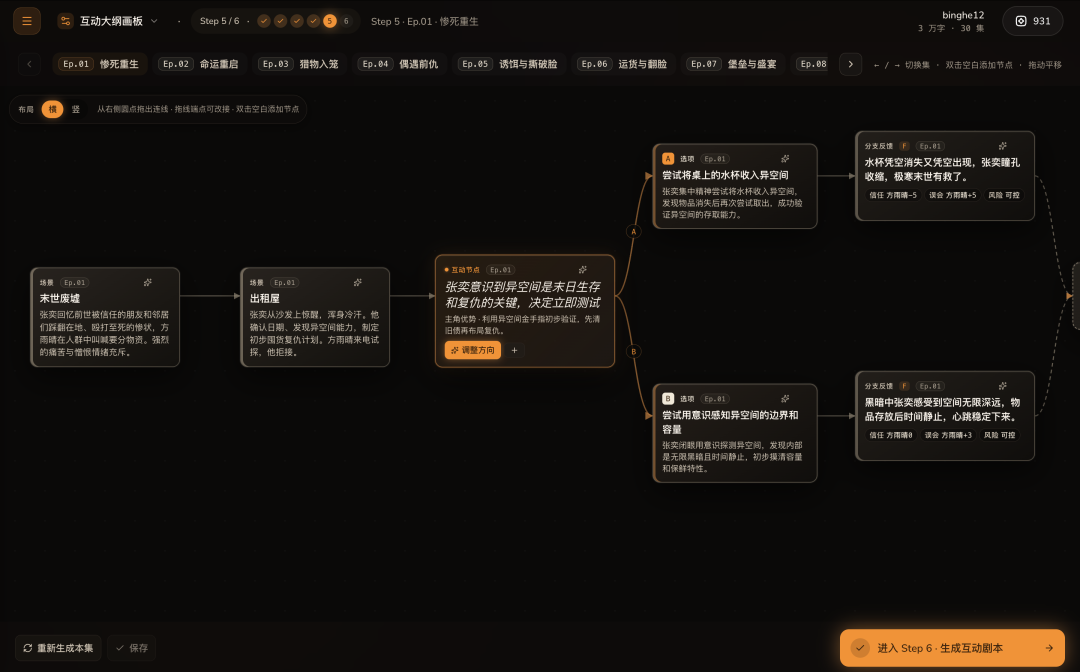
One point it repeatedly emphasizes is: What is your experience? For example, in a post-apocalyptic setting, it doesn’t stop at very concrete choices like “save or not save.”There are many types of post-apocalyptic settings—what kind of experience do you want to create? Is it an experience centered on trading or stockpiling resources, or one that explores the extreme moral dilemmas of life and death, selfishness and selflessness, or perhaps one that builds an emotional connection between you and a particular character in a post-apocalyptic world?Even within the same post-apocalyptic setting, these experiences don’t have to be mutually exclusive. For instance, you could dedicate 30 percent of the experience to resource management and 70 percent to extreme moral dilemmas. These aspects must be understood through structural design from the very beginning; only then does the script come into play.
Q: From what I’ve heard, does AltFlow mainly help you set up the framework?
Kunpeng: Yes, that’s its most important value.It will assist you in writing the script, but scriptwriting isn’t the most important part. For example, when breaking down an IP: What are the character relationships and core experiences inherent to this subject matter? What kinds of interactions can occur between characters? Are they strategic or relational? What is the nature of these interactions—trust-based or resource-based? All of these aspects can be adjusted.
You can also adjust the pace of the interactions—making them more frequent at the beginning and less frequent toward the end—as well as set the proportions and values for different interaction types. Then, generate an outline, move on to the interaction script, and finally to video generation. If you feel something isn’t quite right along the way—for example, if a particular section isn’t exciting enough—you can change the direction, and it will rewrite the script accordingly.
Q: You mentioned "pleasure points." Can AI understand this concept, which serves human emotions and consciousness?
Kunpeng: AI is understandable because you feed it a large volume of scripts, and our professional team annotates them. This brings us to the issue of AI data: what kind of data anchors should you provide? Take blind testing, for example—humans need to give it feedback, otherwise it won’t know what “good” means.We generate two versions of the same content and have testers rate them: which one is better, whether it’s usable, and what the quality is like—but the testers don’t know which model wrote it.After repeated training and feedback, it becomes increasingly clear on these judgments. It knows what each model is capable of, and even which one excels at each step—which is better at branch design, and which is faster at advancing the plot.
Q: Are there already creators using this platform? Have you seen any particularly impressive ways it’s being used?
Kunpeng: During the testing phase, we released several hundred beta invitation codes to let creators try it out first; we haven’t started commercializing it to the public yet.I’ve seen some pretty interesting ways people are using it. For example, someone wrote their life story as a short biography and put it into the editor to generate branching choices—it’s kind of like using it to “tell fortunes.” I think that’s pretty funny.
Q: So it's not just a platform for making video games.
Kunpeng: Right. My ultimate conclusion is that it should be a “world.” Everyone is talking about open worlds, “Westworld,” and world models these days… but my view is that “Westworld” isn’t just about mountains, rivers, and the like—it has another very important aspect: the characters, relationships, events, and stories within it are constantly in motion.When interactive storytelling reaches its pinnacle, life itself becomes interactive storytelling—what I’m saying to you right now, whether I choose to say A or B next—choices are constantly present in life.Choice is the smallest unit through which humans engage with the world, and making a choice is essentially a form of annotation: what you like, what you don’t like, and what your preferences are at this very moment. When the choices generated by an infinite number of people, characters, and stories are all converted into data annotations, they can potentially become the model and agent that best understands “how a story should be written.” After all, stories are a timeless form of human emotional expression.
Broadly speaking, interactive movies and games are just one application of interactive storytelling, as are interactive short dramas.In the future, it could integrate more deeply with the gaming industry, with world models, and even with the kind of futuristic technology seen in *Ready Player One*—or with brain-computer interfaces. Ultimately, you still need a way to let users participate, make choices, and determine the course of the story. And the story paths users want to see are, in and of themselves, the highest-quality data.
03
The tipping point has been reached
Q: I’m curious about something. These days, people tend to instinctively view traditional short dramas and animated series as distinct from so-called “AI short dramas” and “AI animated series.” Will a similar situation arise with interactive video?
Kunpeng: I don’t think the distinction is that clear-cut. It’s just like the gaming industry: art is essentially just a medium used to convey what the creator truly wants to express.I think of AI as a virtual film set—it’s a virtual space for filming and production; on-location, real-world filming takes place on a tangible, physical set. Everyone does their own filming and expresses their own content.
It’s just that AI-generated content isn’t quite good enough yet—it still feels very “AI-like,” which is why we refer to it specifically as “AI content.” But as time goes on, I feel that this distinction has become very blurred. We’ve been conducting internal tests, and some of the recent results are so convincing that it’s hard to tell them apart from those created by real people.
Q: What exactly is being tested in this internal test?
Kunpeng: What we're measuring is when that so-called tipping point will arrive—the point at which we can use AI to generate content.
Q: As mentioned earlier, when you began focusing heavily on AI in 2023, were your employees eager to embrace it from the very beginning?
Kunpeng: It’s actually a process that’s both top-down and bottom-up—the two approaches converged. But at first, people were resistant because AI wasn’t good enough back then—which is perfectly understandable; it really wasn’t good enough at the beginning. It wasn’t until we kept trying that we realized it had actually become good enough.After June of last year, things changed dramatically: People began to realize that this technology had moved beyond the realm of concepts, demos, cost reduction, or preliminary materials and conceptual designs—it had truly become an “AI employee” capable of helping you get work done. By that point, people started using it on their own initiative.
Q: That makes sense—after all, people who create content tend to have high standards for it.
Kunpeng: Yes. So, taking our AltFlow as an example, I don’t see it as a replacement for creators. AI is there to empower creators, allowing them to focus on delivering a great user experience. As for some of the foundational tasks—such as writing flowcharts or designing branching paths—AI can handle them for you or provide excellent suggestions.I think with our current AI capabilities, AI can solve 70% to 80% of the problems, while the remaining 20% to 30% comes down to the creator’s inspiration—and that’s what’s most important about the creator themselves.
Q: In what directions will interactive content evolve in the coming years?
Kunpeng: I think there are three fairly clear directions.
First, greater social interaction. The evolution of games has followed a path from single-player to multiplayer, from offline to online, and finally to MMORPGs—becoming increasingly social. The same will be true for interactive content. By developing a two-player product, we aim to explore how social interaction will transform interactive storytelling.
Second, deeper integration with AI. AI will help creators better balance rational design and intuitive creativity, reduce costs, and empower everyone to explore topics they previously couldn’t afford to tackle.
Third, the formats will become more diverse. Interactive content shouldn’t be limited to live-action interactive games on Steam that last four or five hundred minutes. Shorter content, real-time live-streamed interactions, and procedurally generated content could all become new formats.
Q: What do you think the future of interactive storytelling will look like?
Kunpeng: I think a lot of science fiction works have actually already shown us this ultimate outcome—“Inception” is about creating dreams, allowing you to enter a world; “The Matrix” is about truly entering another reality through an interface; and in “Westworld,” every character has their own story, the entire world keeps running, and you’re the protagonist in it all.
I think interactive content in the future will be more like your very own “Westworld.” The IPs you love and the events that interest you can all be brought to life through AI and interaction, and you’ll be the protagonist in that world. You’ll no longer just passively consume stories—you’ll be able to truly participate in them.
I think that day is already very close. At the very least, if we set aside the more complex gameplay aspects and focus solely on the story, characters, and content generation, it’s already much closer than it used to be.
原创文章,作者:游茶妹儿,禁止转载:https://youxichaguan.com/en/archives/208483