“National Style.”
These days, when you see this word, the first thought that might come to mind is probably, “No, thanks.”
To some extent, this is unavoidable; after all, with so-called “traditional Chinese style” increasingly becoming a fashion trend, such a reaction is actually quite normal.
But is “Guofeng” itself really the reason we find it boring?
I'm afraid that's not entirely true.
Su Shi once said, “To judge a painting solely by its likeness to the subject is to have the same discernment as a child,” meaning that if one evaluates a painting’s quality based only on how closely it resembles its subject, then one’s discernment is not much different from that of a child;A fellow named Xie He from the Southern Dynasties also said that the foremost principle of ancient painting criticism was “vitality and rhythm.” He believed that the most essential element of a painting lies not in brushwork or color, but in whether the entire work possesses a sense of meaning and spirit.
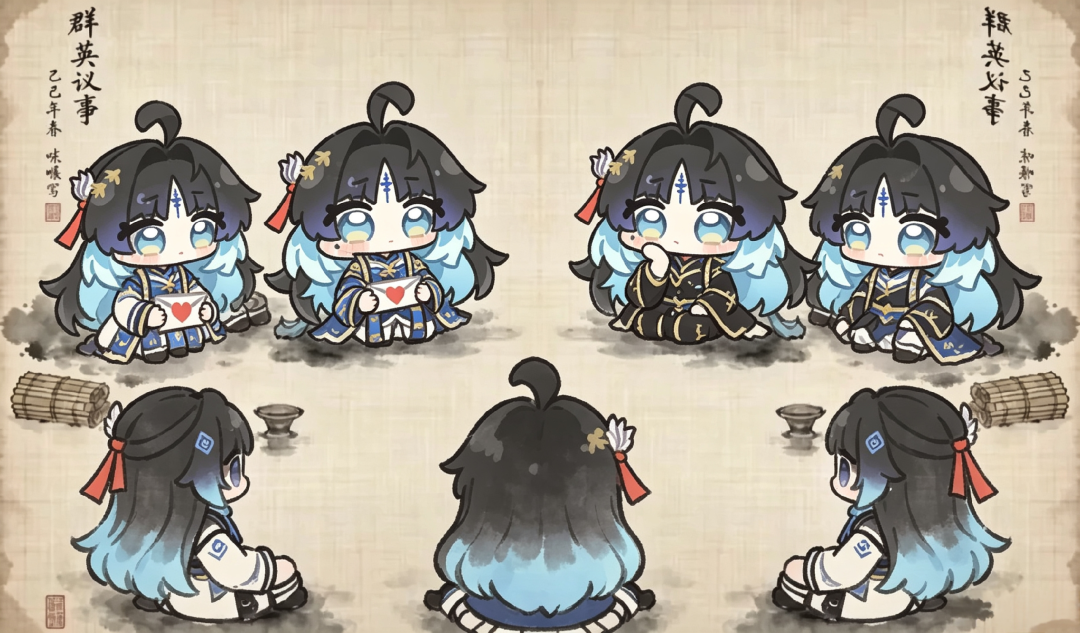
To summarize what these two masters have said: in creative work, form serves as the entry point, the foundation, and the level of content; however, what truly sets one artist apart from another lies in whether there is intention and depth behind that content.
If we apply this theory to “traditional Chinese-style” works, we can draw the following conclusion: if a “traditional Chinese-style” creation remains stuck at the first level—merely copying elements and imitating forms—then in today’s world where players’ aesthetic standards are constantly rising, it will inevitably plummet into the basement, drawing derisive cries of “BOOO~.”
So, perhaps the “traditional Chinese style” has never been the issue; the main point of contention is whether the work’s portrayal of this style can achieve a balance between form and meaning.
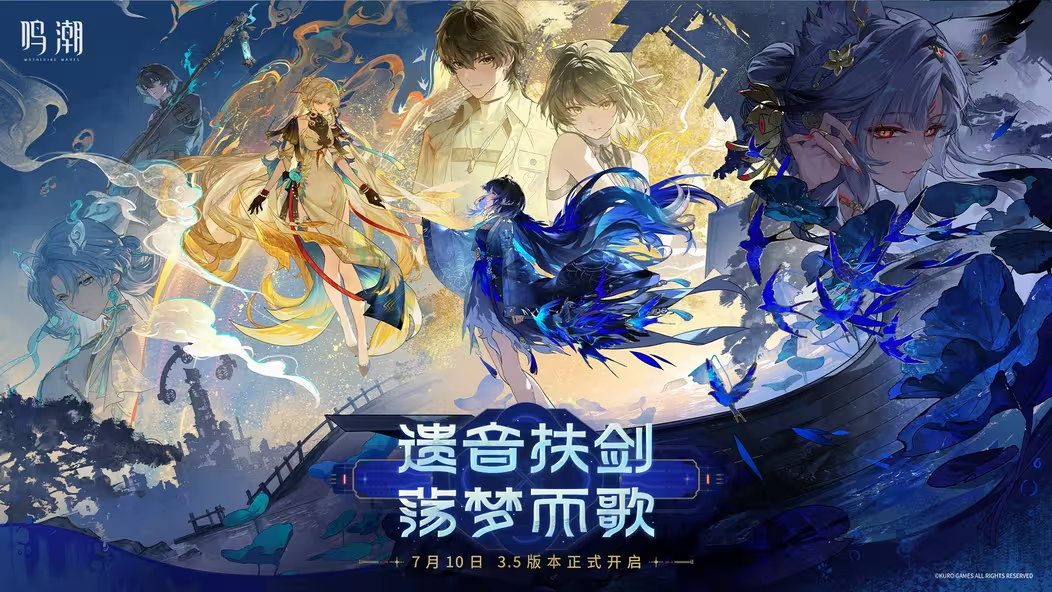
As it happens, *Mingchao* updated to version 3.5 today,Kuro has shifted the focus back to Huanglong, a region featuring Chinese cultural settings. The story of the Wanderer has entered the Xuanfang Territory in the new region of Mengzhou, where we’ve reunited with Yangyang—the character Solaris first met—and witnessed her own transformation.
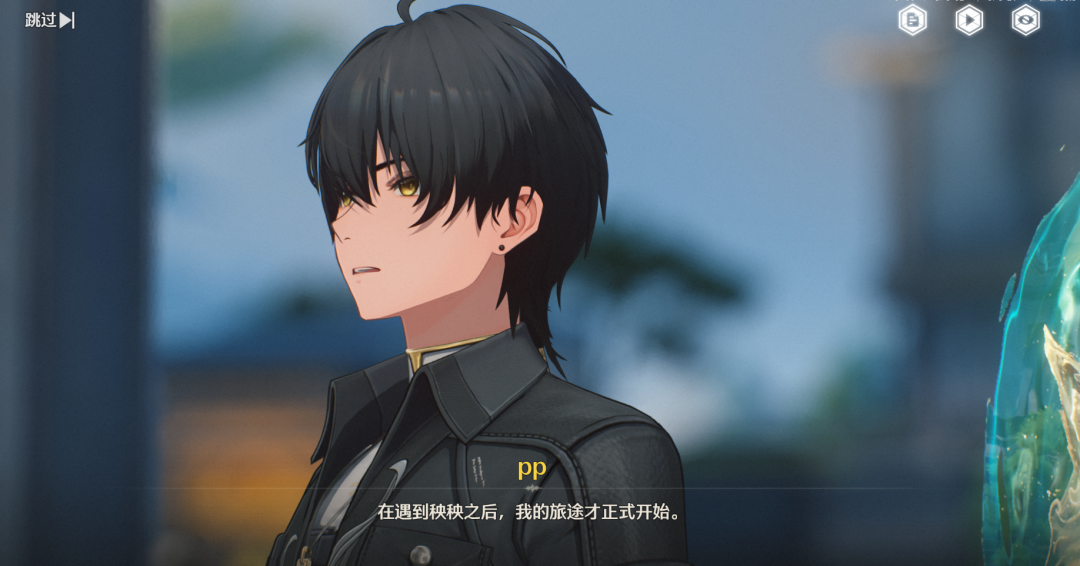
So, what is *Mingchao*’s interpretation of the “Chinese-style” aesthetic?
01
A Thousand Li in a Single Step; Seeing the Big Picture from the Small Details
Although I started off with a lot of lofty rhetoric, the “form” is actually quite important, so I’ll still begin by discussing the surface level.
Overall, the “Xuanfang” realm depicted in *The Roar of the Tide* certainly embodies the “form” of the “Chinese-style” aesthetic—from the horizon at the edge of the view to the fine details that only become visible when the camera zooms in, the density of Chinese elements is quite high.
In Yangyang’s storyline, there’s a scene where she has to climb to a high vantage point to scout the area. This may have been intentionally included in *Tide of Voices* to allow players to experience the scene through Yangyang’s perspective, advancing the narrative while also showcasing the game’s environments.
When I piloted Yangyang, climbed to a high vantage point, and looked down on the Xuanfang region from a broader perspective, to be honest, my first impression was that I was looking at Fan Kuan’s “Travelers Among Mountains and Streams”:
In the distance, Zhangjiajie-style peak forests stand in neat rows; in the deep valleys, dense forests stretch out in continuous swaths,between the peaks, swirling clouds and mist spread out like a veil, obscuring the distant mountains, turning the peaks into half-hidden silhouettes, and making the nearby cliffs appear even more imposing.
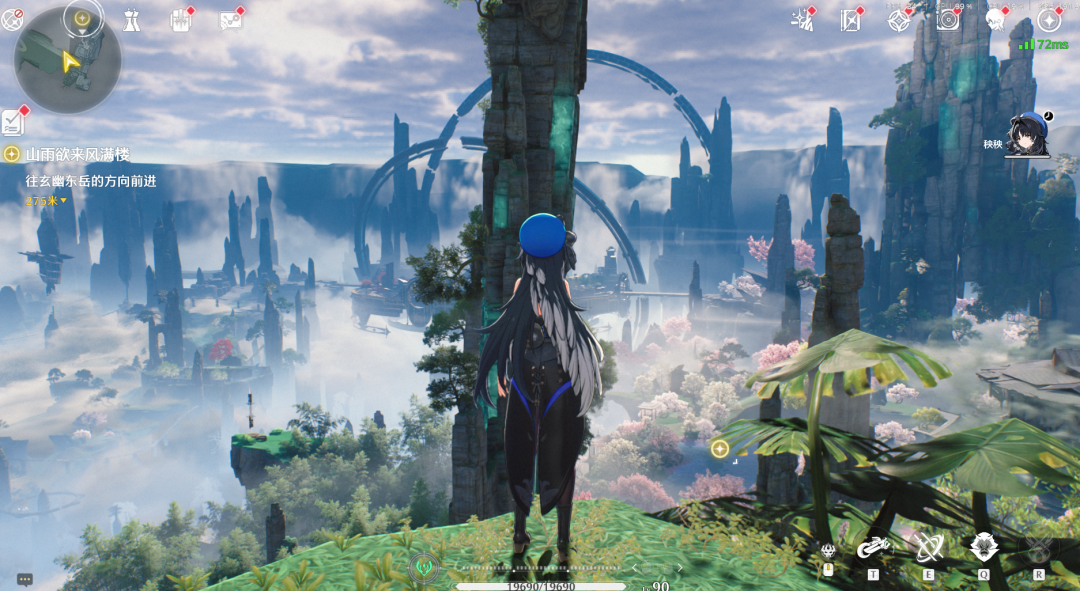
This layer of white mist, like the blank spaces on Xuan paper, lends the distant view of the Xuanfang realm a sense of the “interplay between the real and the abstract” found in landscape painting.
In traditional Chinese painting theory, there is a saying: “A thousand li in a single step.” This means that a landscape painting is considered a masterpiece if it can convey a sense of grandeur within a very small space.
"Tide of Sound" likely employs this approach in its handling of large-scale scenes; it treats the screen as a canvas, ensuring that every time players climb to a high vantage point and gaze into the distance, the experience comes as close as possible to that of a traditional Chinese landscape painting.
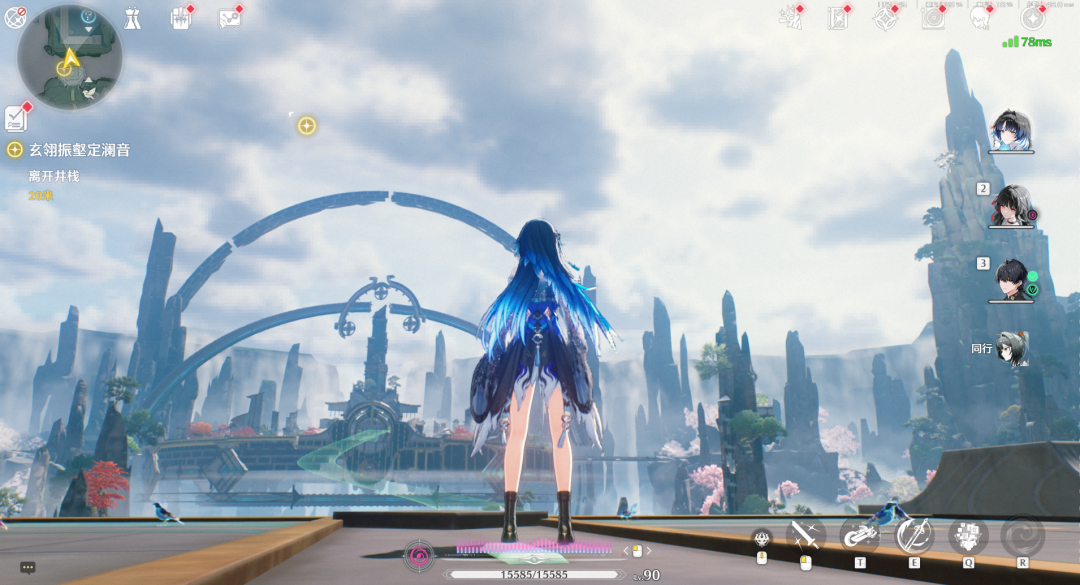
However, once you descend from the heights and find yourself within the realm of Xuanfang, the Chinese-style sensory experience offered by *Mingchao* narrows further, shifting from the vast and boundless to the minute—as vast as a mustard seed yet as vast as Mount Sumeru. As the ancient Chinese said, “The great is found in the small; the universe lies within a teapot.” The spatial design within Xuanfang City also embodies this same spirit.
This is particularly evident in Sui Sui’s storyline. It’s important to note that *Mingchao* 3.5 employs a true dual—or even triple—narrative structure. The Drifter, Yang Yang,Suisu—are separated due to differences in timing and unexpected events, causing the story to split into three distinct perspectives that alternate across different times and spaces.
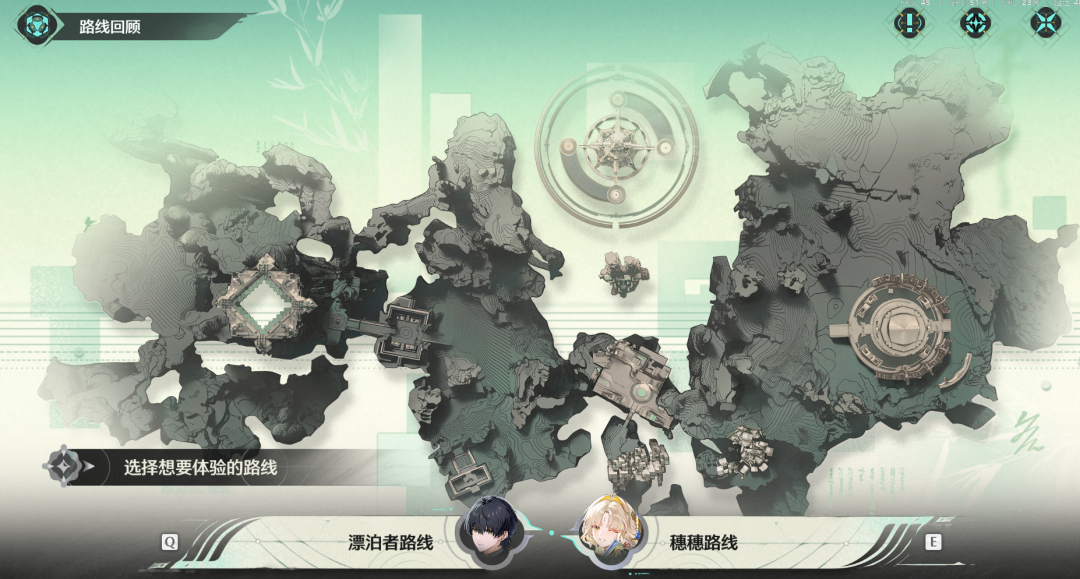
That said, the storylines of Yangyang and the Wanderer can actually be condensed into a single narrative arc, with the storytelling leaning more toward high-impact, large-scale scenes—such as the Afterimage War and boss battles. The accompanying camera angles are also grand in scale, showcasing the overall depth of the Xuanfang Realm.
Sui Sui's storyline, on the other hand, focuses on the one-on-one interactions between Sui Sui and the mysterious Year Lord, Xinyue Fox's Residual Shadow, and much of the narrative unfolds within small garden settings, allowing us to catch a glimpse of the interior and courtyard scenery of the Xuanfang realm.
This narrative structure objectively creates a very ingenious effect: in the Yangyang and Drifter storylines, players can experience the vastness and grandeur of Xuanfang’s landscapes, while in the Suisu storyline, they can appreciate the intimacy and seclusion of the intricate pavilions and terraces.Taken together, these two storylines provide a comprehensive view of the Xuanfang realm, from the macro to the micro.
In the "Sui Sui" storyline, *Mingchao* extensively incorporates Chinese elements into its performances and set designs.
The most iconic scene is the one where Suisu first encounters the residual thoughts of the Heart Moon Fox: light streams in from behind, shadows dance across the screen, and the characters move forward and backward among the silhouettes.The fox maiden, the dense forest, and Xin’s gentle guidance all gave me the feeling of reading a folk supernatural novel.
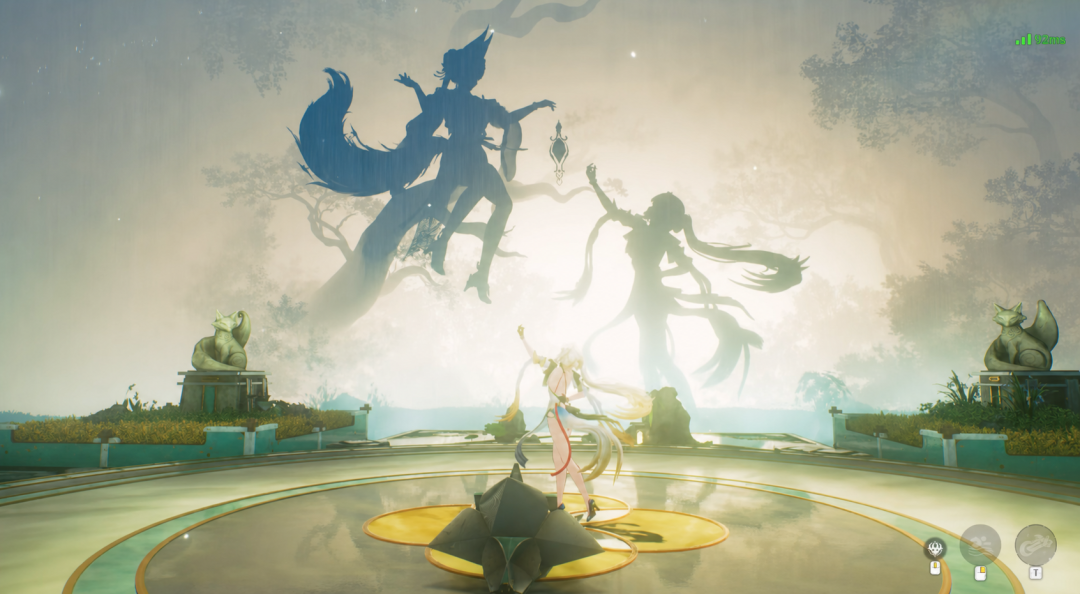
This scene depicting Sui Sui and Xin’s first encounter concludes with Sui Sui “stepping into the painting,” after which the setting shifts indoors. Once inside, I discovered that the Chinese-style interior design in *Mingchao* is also quite rich in cultural charm.
Throughout the space, lighting fixtures covered with bamboo-slat screens are visible everywhere; the screens are subtly painted with ink-wash bamboo branches—a signature motif of ancient scholars’ study rooms that exudes a warm and gentle atmosphere.
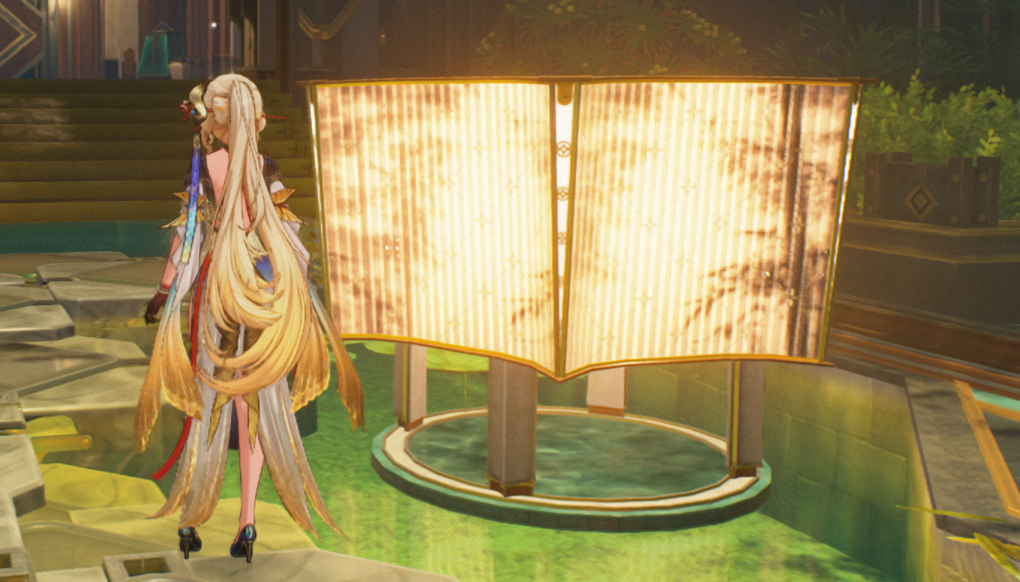
You can also see decorative arrangements that recreate traditional rosewood furniture, such as a solid-wood cabinet with a begonia-shaped medallion. In these cozy, lived-in corners, ceramic vases are displayed on small tables, with square palace lanterns standing nearby, casting a warm, soft glow throughout the entire hall.
Strolling through one Chinese-style interior after another—each filled with the warmth of life and adorned with warm-toned wood, porcelain, and palace lanterns—truly allowed me to experience the tranquility and grace of the ancient courtyards of yesteryear.
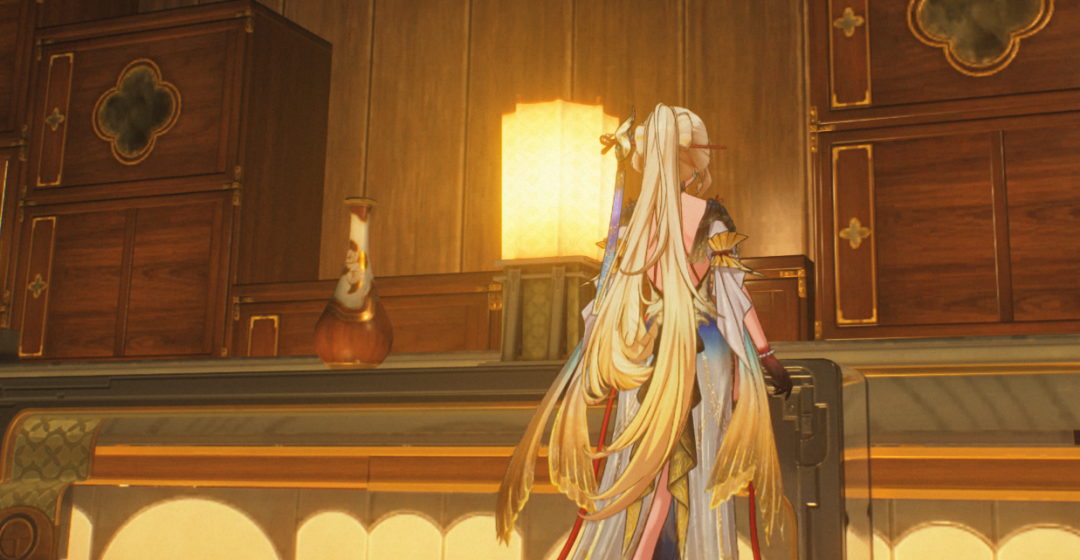
Not to mention that Sui Sui herself and Xin’s silhouette often take center stage in the frame—especially Sui Sui, who, after switching to walking mode, wears a long hairpin and a step-shaking ornament,warm light washes over the bamboo screen, creating a soft halo. Water, bamboo, wooden artifacts, and the beauty blend together, resembling the elegant scenes of court ladies admiring the scenery in ancient paintings.
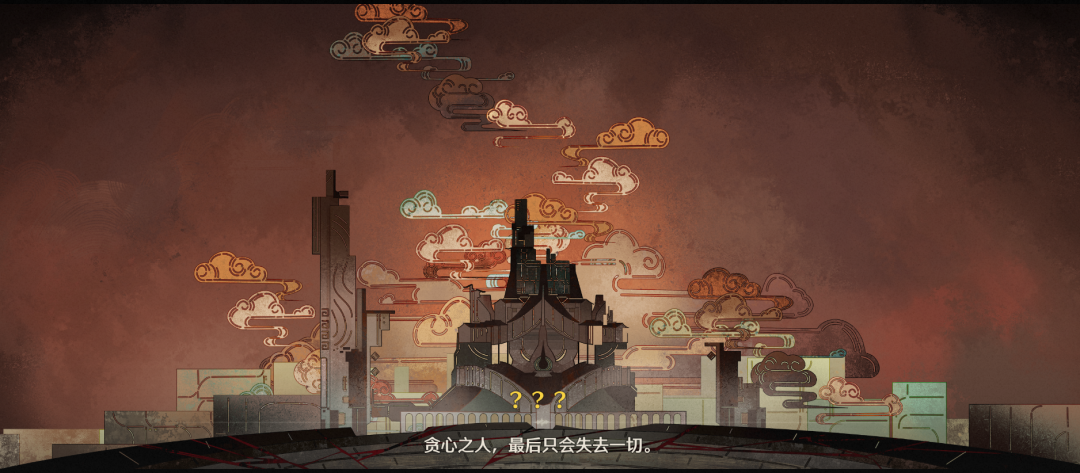
There are many similar examples;for example, the narrative illustrations interspersed throughout the main story cutscenes—unlike the woodcuts found in Linaxi Tower or Lahailuo—Xuanzhang’s overall aesthetic is more reminiscent of the texture and composition of ancient scroll paintings or even Dunhuang murals. The background features an aged finish, with Xuanzhang City and Yun Yang outlined using flat-painted lines,exuding a profound sense of ancient charm.
Xuanfang City itself is also a vivid embodiment of Chinese aesthetics.
As you stroll through the grounds, you’ll often come across pavilions with double eaves and conical roofs,where the openwork carvings of the floral windows cast delicate patches of light onto the ground; pavilions built along the water’s edge extend their reflections onto the surface, forming a second half of the structure; the crackle-glaze patterns on the latticework, the stacked stones at the corners, and the shadows of branches swaying in the breeze within the courtyards—every detail reveals that the architectural language of this city resonates with the cultural tradition of Suzhou-style gardens—characterized by “seclusion, elegance, leisure, and tranquility.”
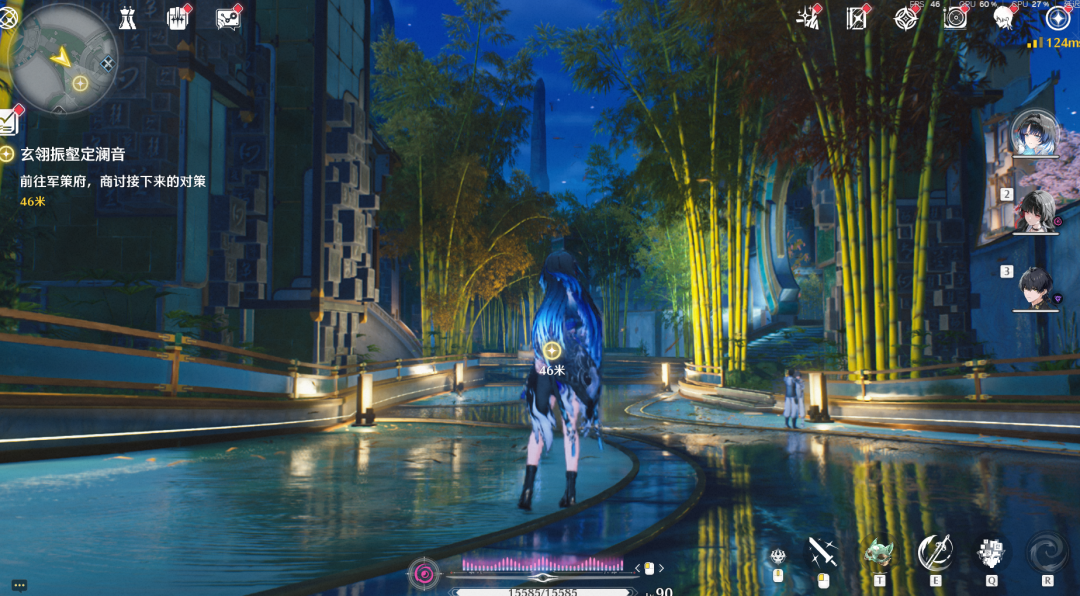
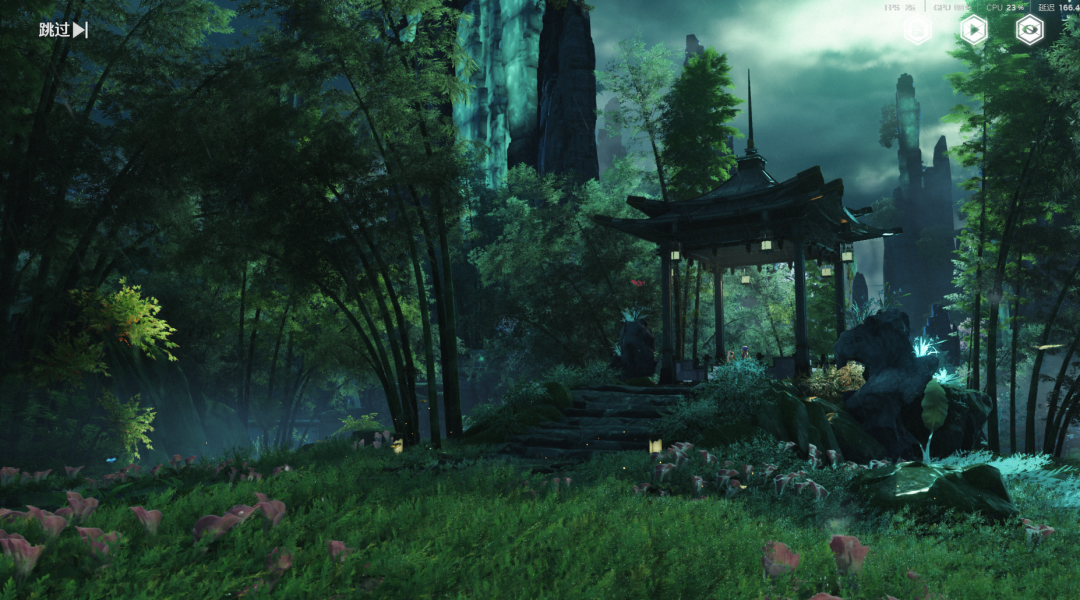
To be honest, there is so much to say about the Chinese aesthetic of Xuanfang Diji that it simply cannot be covered in just one or even half an article. Whether it be landscapes or ceramics, they can all be summarized as the static framework of Xuanfang Diji’s “national style.”
In terms of animation, *Mingchao* doesn’t fall short either—or rather, the animation elements are what provide the perfect finishing touch to the “Chinese-style” aesthetic of Version 3.5.
Roles, of course, are dynamic in their initial order.
As I mentioned earlier, Sui Sui’s stroll through the courtyard is like a scene from an ancient painting. The underlying meaning here is that the character designs in *Mingchao* blend seamlessly with the “traditional Chinese-style” settings they inhabit.
The details of the black bird on the Yangyang·Xuanling garments, the gold-embroidered pattern of the Zhongming bird’s feathers on the Suisu qipao, as well as the hairpins and brooches worn by the two sisters, all blend seamlessly with the setting and do not appear out of place.
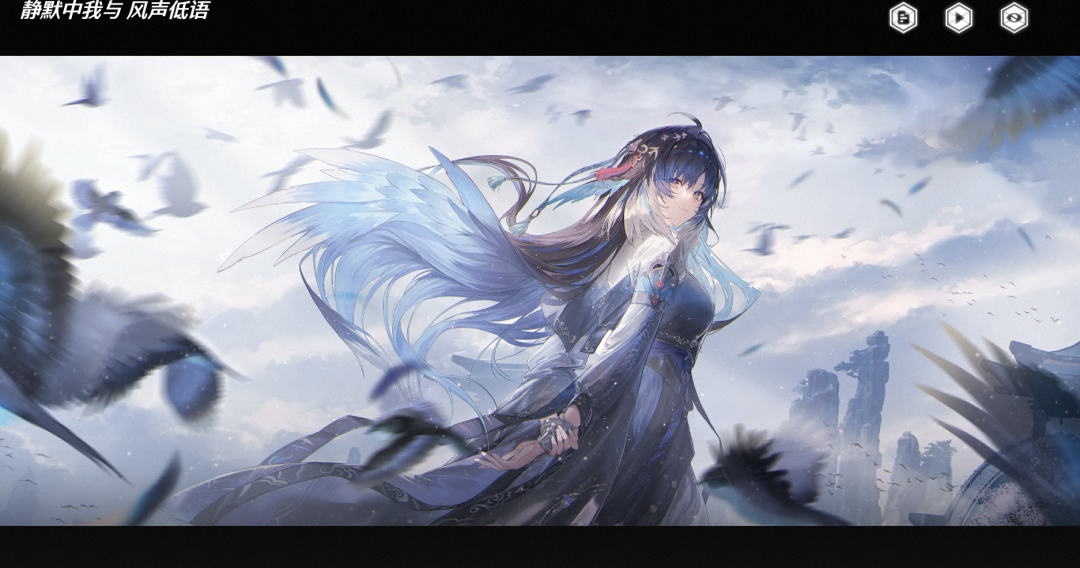
Furthermore, *Mingchao* has incorporated this Chinese aesthetic into the two characters’ combat stances. Yangyang’s style is clearly that of a sword dancer, with her movement animations featuring classic sword dance poses such as the “point-collapse sword” and “inner-outer wrist flourishes,” all of which combine to form Yangyang’s combat style, which is as graceful as a swan in flight.
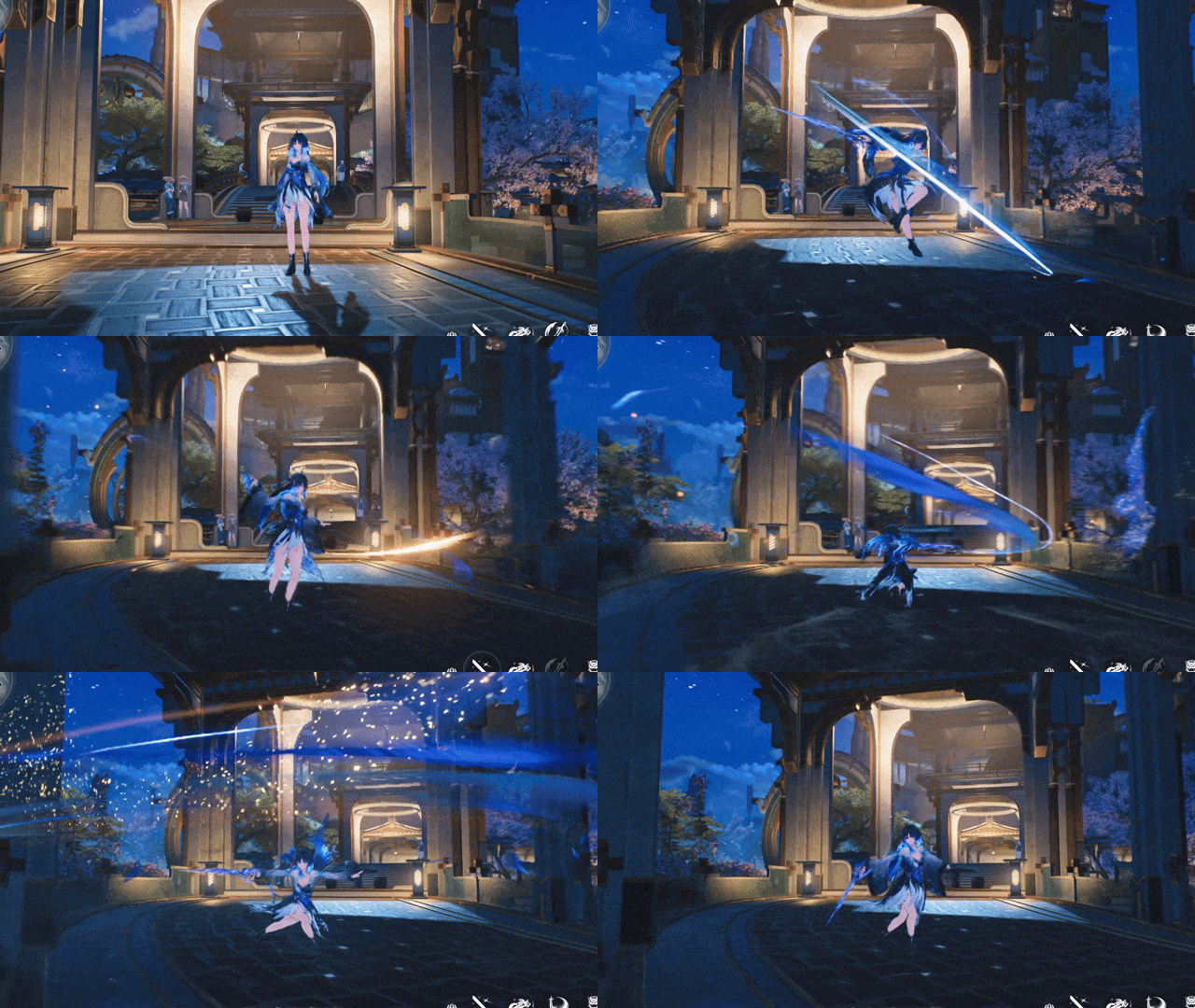
As for Sui Sui, her dance flows seamlessly from the folding fan dance to the water-sleeve dance. She moves with grace and agility; as her long sleeves unfurl, the landscape unfolds like a painting, giving her a touch of elegance that sets her apart from her younger sister’s sharp, intense style.
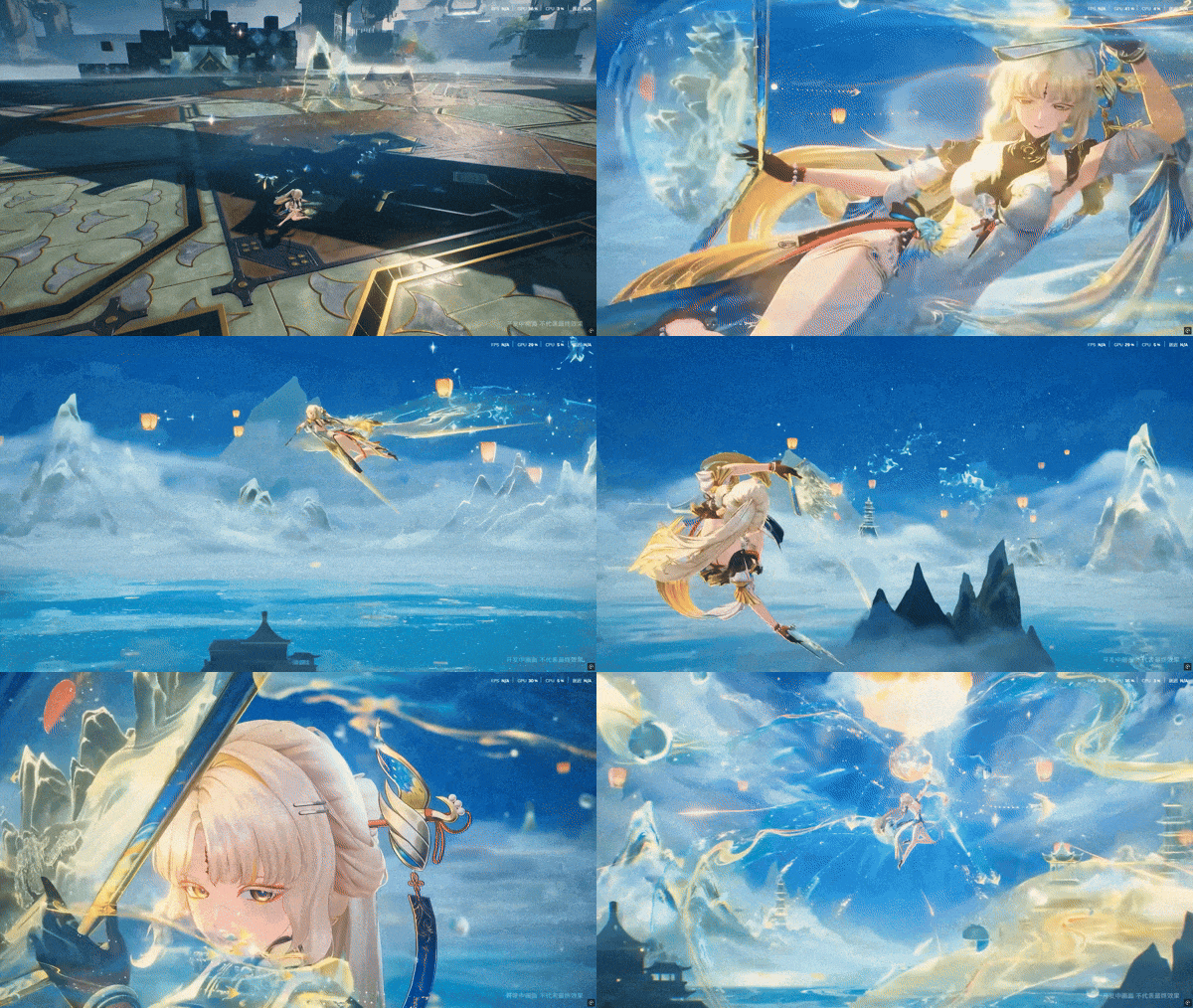
Whether it is the sword dance, the water-sleeve dance, or the fan dance, these traditional Chinese dances emphasize the concept of “shenyun” (body rhythm and spirit). As the saying goes, “Before the body moves, the spirit leads the way”; the fluidity inherent in every movement is, in itself, a vehicle for beauty.
"Mingchao" preserves this sense of grace in the characters' movements, infusing the combat itself with elegance; as sword blossoms bloom and folding fans open and close, the "traditional Chinese style" comes vividly to life.
Even the enemies have been incorporated into this logic in *Resonance*. Since the design of the Sound Skeletons in the Xuanfang Realm is intertwined with mechanical arts, *Resonance* naturally fuses them with “artifacts”; blue-and-white porcelain, Sanxingdui bronze ware, and even architectural structures like pavilions and towers have all become visual elements in the design of the Sound Skeletons.
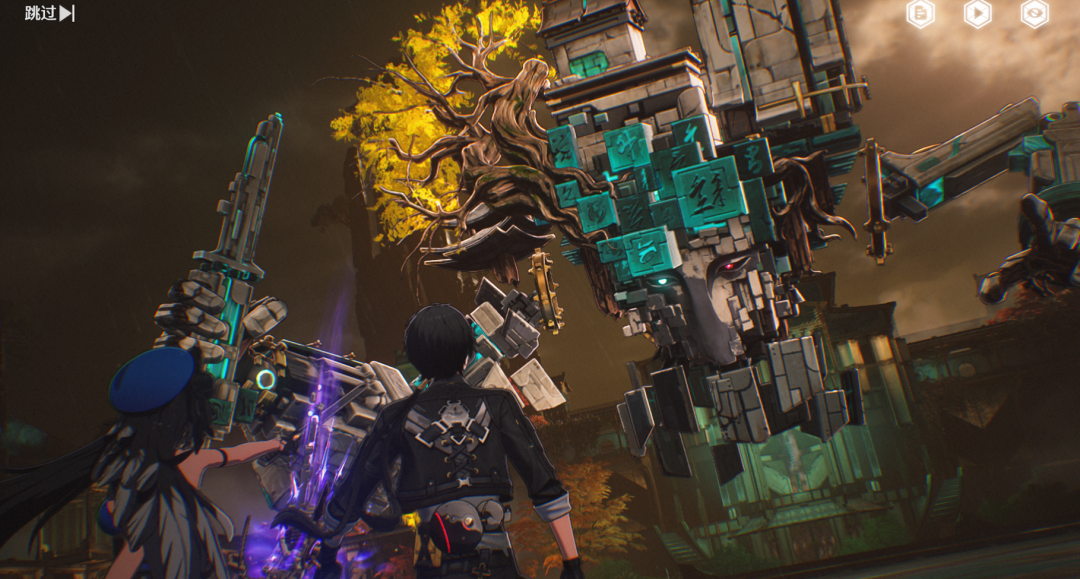
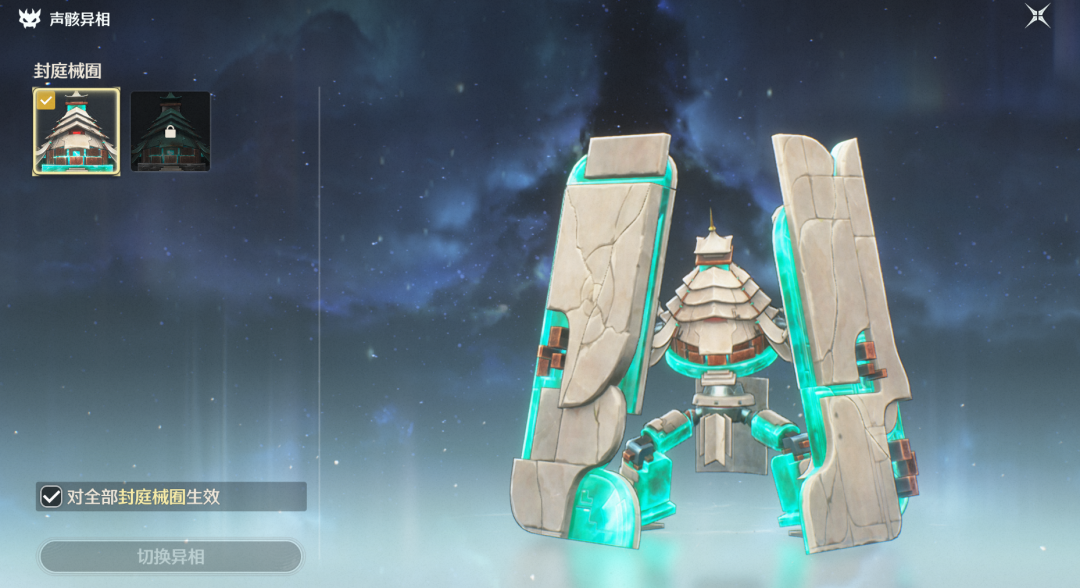
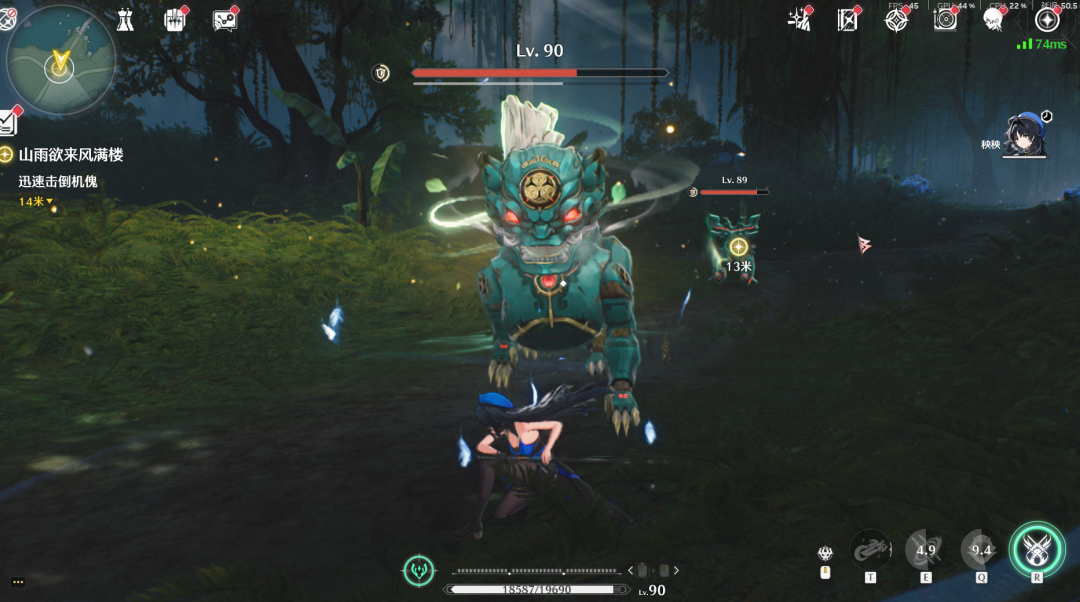
At the same time, *Mingchao* infuses the spirit of the artifacts into the movements and postures of the Sound Skeletons.for example, the *Jixi Beast Vessel* draws inspiration from both stone lions and bronze vessels. While incorporating the dynamic movements of lion dance—with every gesture embodying that distinctive rhythm of sudden pauses and bright bursts—it also displays the solid weight characteristic of bronze vessels during attacks.
It can be said that, in terms of the "traditional Chinese style" aspect of *Mingchao*, both appearance and posture are incorporated into a single set of Chinese-style forms.
Therefore, when viewed as a whole, the “Chinese-style” aesthetic of *Mingchao* 3.5 can be seen as a fusion of stillness and movement. Within these two dimensions, the still elements—such as the landscape—draw inspiration from traditional Chinese landscape painting, while the urban architecture reinterprets the philosophy of Chinese gardens, and the interior design recreates the daily lives of the people;On the dynamic side, the characters draw inspiration from traditional mythology and dance, while the sound effects convey the aesthetic beauty of the artifacts’ forms.
All these layers—nested within and combined with one another—ultimately coalesce into a complete aesthetic expression of “traditional Chinese style.”
It is precisely this design integrity at the holistic level, along with the cultural consistency that permeates every sensory experience, that I believe makes Xuanfang Diji—as a space embodying “Chinese national style”—far from boring. Whether it is the “a thousand miles within arm’s reach” seen from on high or the “seeing the big picture through the small details” embodied by a single decorative vase on an indoor writing desk,*Mingchao* has achieved, at the level of “form,” a seamless continuity between near and far, with not a single moment of slackness.
That said, I must admit that—from the landscapes to the gardens, from the costumes to the sound design, and from the musical score to the dance—it’s all still just “form.” Although this form is beautiful and well-organized, and clearly has cultural depth, it is ultimately just a “collection of set pieces.”
What truly transforms Xuanfang Diji into a cultural space is, after all, the “intention”—that invisible yet all-encompassing force—that lies within its form.
02
Like attracts like; kindred spirits seek one another.
To explain what I mean, let me start with one of my personal observations.
At the time, I was riding my motorcycle along the main road. Within Xuanfang City, an ancient pavilion with a two-story, four-cornered pyramidal roof stood by the roadside, its eaves curving upward andand openwork circular floral windows—clearly a replica of the traditional wooden architecture found in the pavilions and gazebos of the Jiangnan region. The gilded wooden structure stood against a backdrop of crimson maple trees in the distance, with layers upon layers of orange-red maples and scarlet autumn foliage.
Logically speaking, riding a motorcycle in such a place steeped in ancient charm should feel somewhat out of place, but in reality, I didn’t feel that sense of incongruity at all. Fengting and the motorcycle each occupy one end of the scene, yet they don’t clash at all.
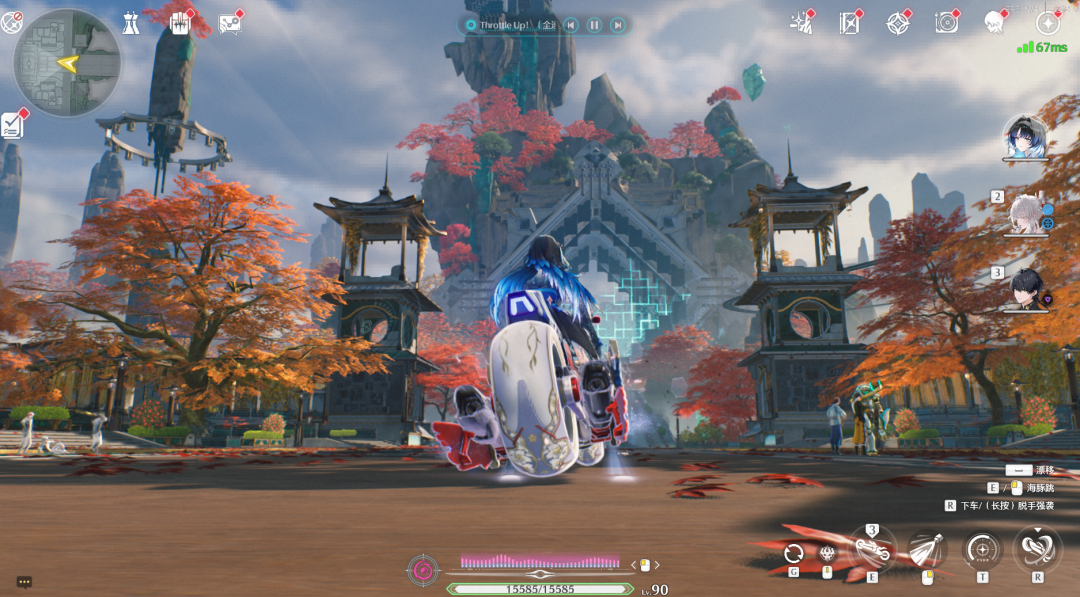
This made me realize something: although Xuanfang Diji focuses on traditional Chinese aesthetics, the overall impression it gives me is still distinctly "Mingchao."
Come to think of it, as an aesthetic style, traditional Chinese elements should naturally take on completely different characteristics when incorporated into different products. What strikes me about the traditional Chinese elements in *Mingchao* is that they’ve been seamlessly integrated into the game’s own artistic expression, aligning with the product’s consistent tone—rather than the other way around, where the game would have to adapt to accommodate the traditional Chinese style.
From its very inception, the key concepts that defined *Mingchao* have been “frequency” and “resonance”; here, they also symbolize the “spirit” of *Mingchao*’s traditional Chinese aesthetic.
In La Hailuo, it had previously appeared within a retro-futuristic framework under the theme of “curiosity,” so when the topic of “Chinese cultural style” was presented, what *Mingchao* truly needed to address was how to find elements within the vast ocean of Chinese culture that could resonate with its audience.
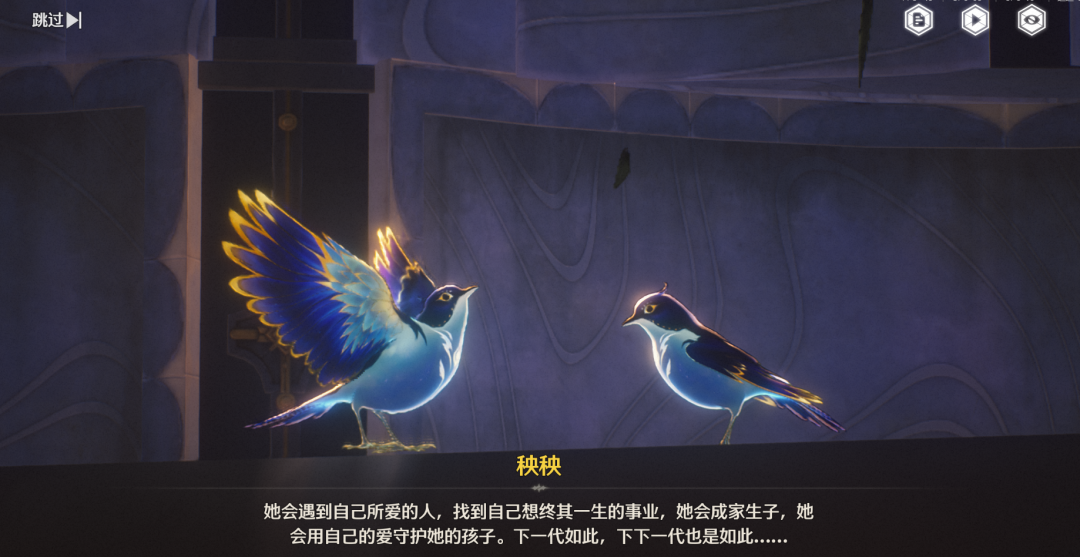
In my view, what *Mingchao* captures here is a kind of romance deeply ingrained in the Chinese spirit—something that transcends time, creating a resonance between people of the present and those of the past, and fostering a shared frequency between the individual and the collective.
In the specific narrative of Section 3.5, these are: “protection” and “carrying on the legacy.”
Before Yangyang and the Wanderer met, she either witnessed firsthand or actively participated in the entire process of the people of Xuanfang City resisting the Afterimages. What she saw was the courage of the city’s people to stand their ground despite knowing the danger they faced—a courage passed down from generation to generation,countless residents of Xuanfang City have carried forward the resolve known as “protection.”

This kind of legacy that transcends the dimension of time is, in itself, a concept deeply rooted in Chinese culture. Our history and culture emphasize the importance of传承, and it is through传承 that certain shared values and cultural traditions are born.Just as the *Book of Changes* states, “Like voices resonate with one another; like spirits seek one another out,” the people of Xuanfang City—both past and present—are connected on the same spiritual wavelength precisely because they share a common belief.
Yangyang herself, as the vehicle of the narrative, is in fact deeply embedded within this structure.
Her original relationship with the Wanderer was, in fact, also one of “protector and protected.” In the past, with the Wanderer by her side, Yangyang could only be the one being protected; this dynamic persisted for a long time and shaped the gentle yet slightly dependent demeanor that characterized Yangyang’s early persona.
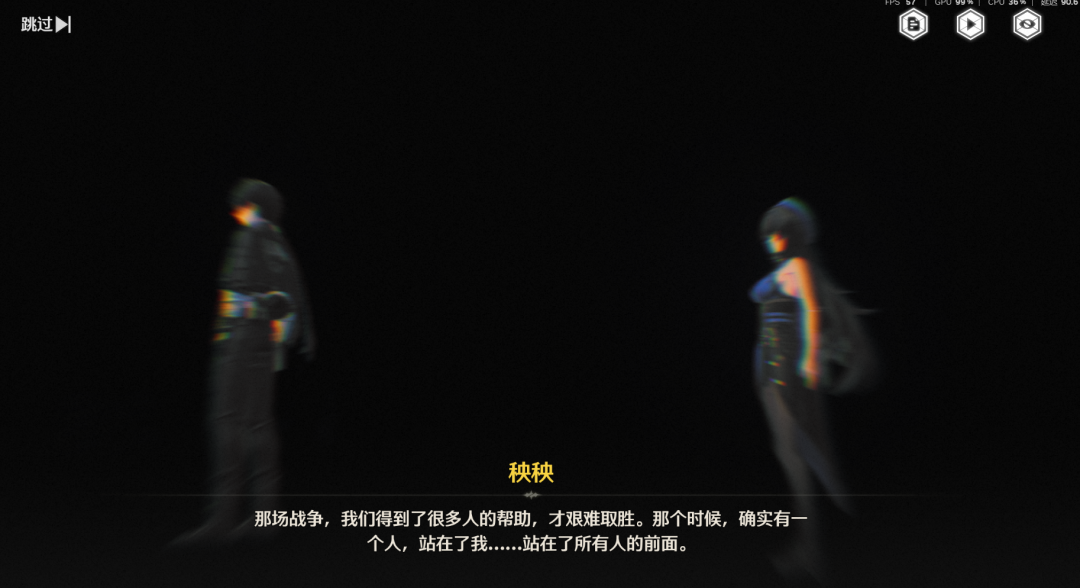
Ever since the Wanderer set out on his journey, the desire for change had been taking root in Yangyang’s heart. When she witnessed firsthand in Xuanfang City how its people passed down the legacy of “protection” from one generation to the next, that surging collective willin turn, completely awakened and strengthened the thought that had always been there deep within her heart: she wanted to stand by the Wanderer’s side and walk alongside him.
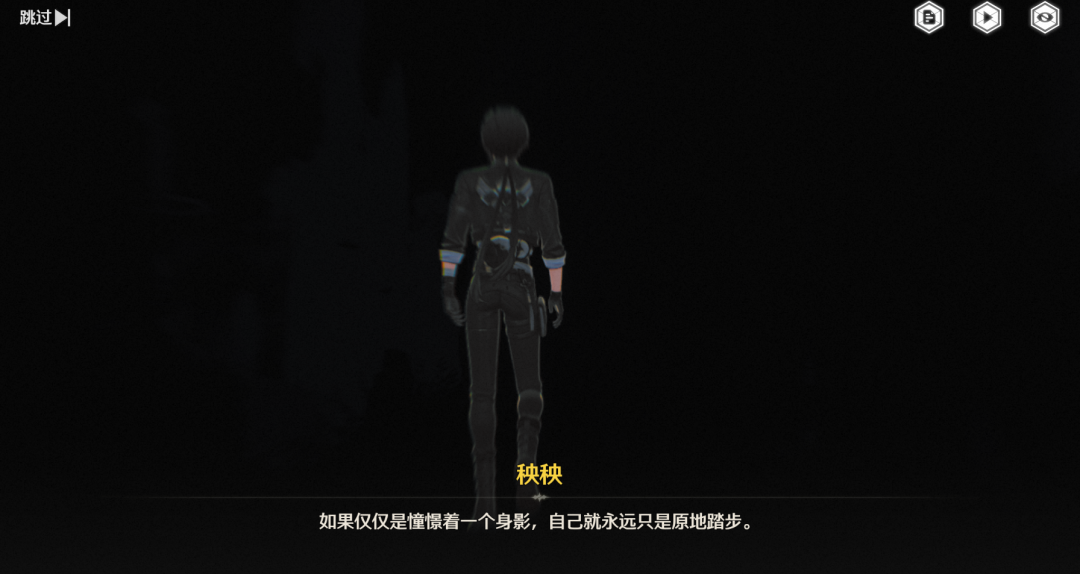
That once-vague wish, after witnessing the protection of Xuanfang City, crystallized into an unwavering conviction.
Zhuangzi once said, “If the wind is not strong enough, it lacks the power to support great wings.” Even the Peng bird, whose wings are as vast as the clouds stretching across the sky, cannot take flight without the wind to lift it.Yangyang’s transformation from a lark to a Cangling may, on the surface, appear to be an elevation of her ability to resonate, but the true wind that propels this metamorphosis is precisely the will passed down through generations in Xuanfang City.
Inspired by the aspirations of others, one’s own aspirations are kindled. When inspiration reaches its peak, one’s aspirations are ignited, and it is thus that heroes are forged.

In traditional Chinese narratives, heroes are rarely "chosen ones" selected out of thin air; rather, they are gradually shaped and forged by the weight of history, the people around them, and the beliefs passed down through generations. Whether it be a sense of duty to family and country or a commitment to integrity, the birth of every hero traces back to a spiritual lineage that stretches far into the past.
I believe that Yangyang’s transformation and the rise and fall of Xuanfang City may well be the “spirit” of the “National Style” as interpreted by *Mingchao*—a spirit that can be conveyed through resonance.
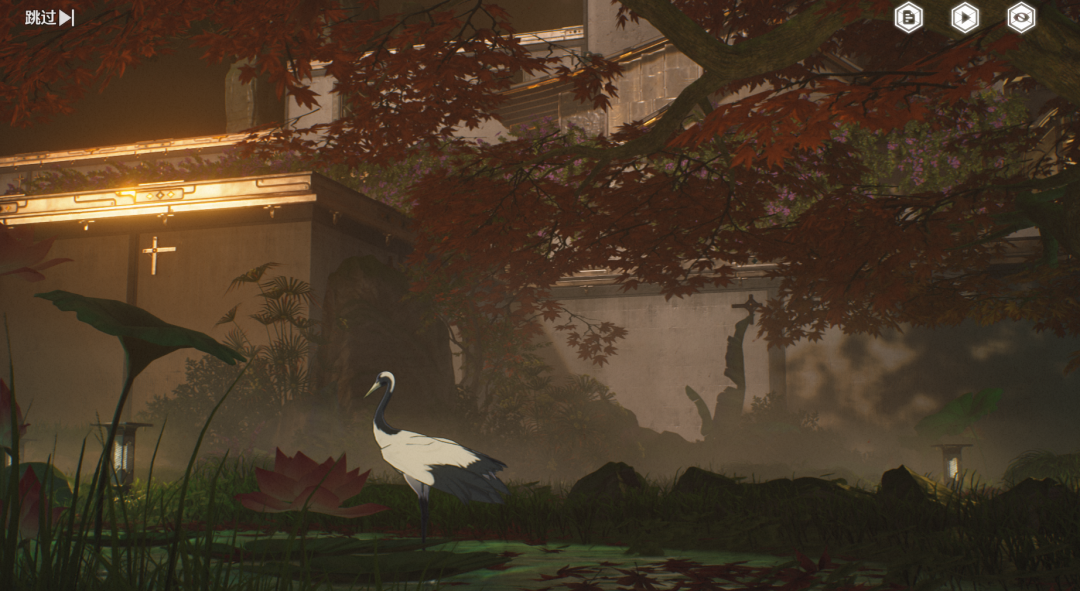
Not only that, but the sisterly bond between Sui Sui and Yang Yang, the resoluteness with which Liang Yu’s mother entrusted her child to others, and the determination of the people of Xuanfang City to sacrifice their lives for a noble cause—all of these are manifestations of traditional Chinese values, embodying family love and self-sacrifice.
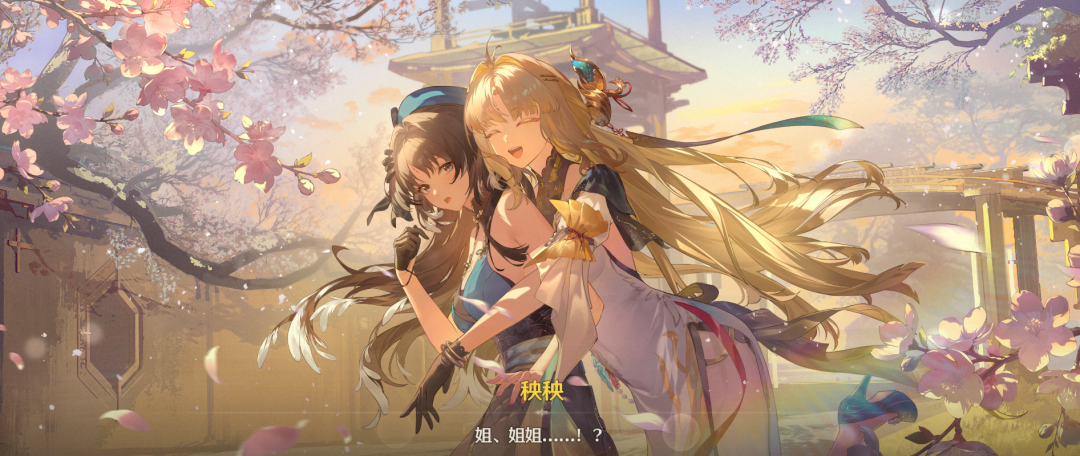
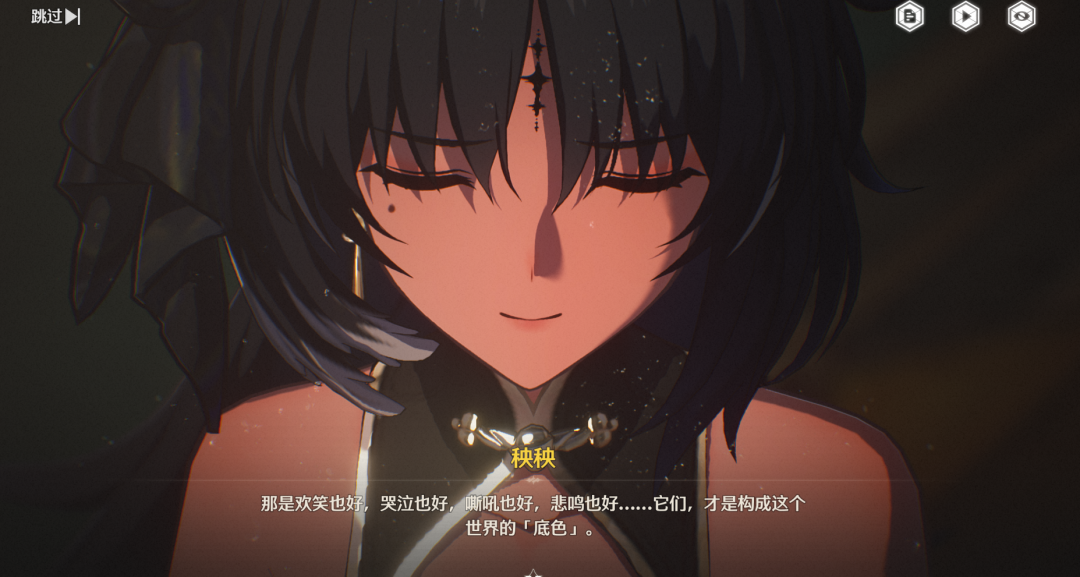
And it is precisely these formless expressions that allow the “form” discussed earlier to truly attain the “meaning” that belongs to it.
Once you've finished the story, take another look at the architecture, artifacts, and music of Xuanfang City—you'll likely experience them in a different light.
At this moment, they are not only aesthetic expressions but also traces of the lives lived by the people of Xuanfang City. The landscapes here now carry a significance that goes beyond mere visual spectacle; they have become cultural landscapes imbued with weight—or, one might say, historical depth.
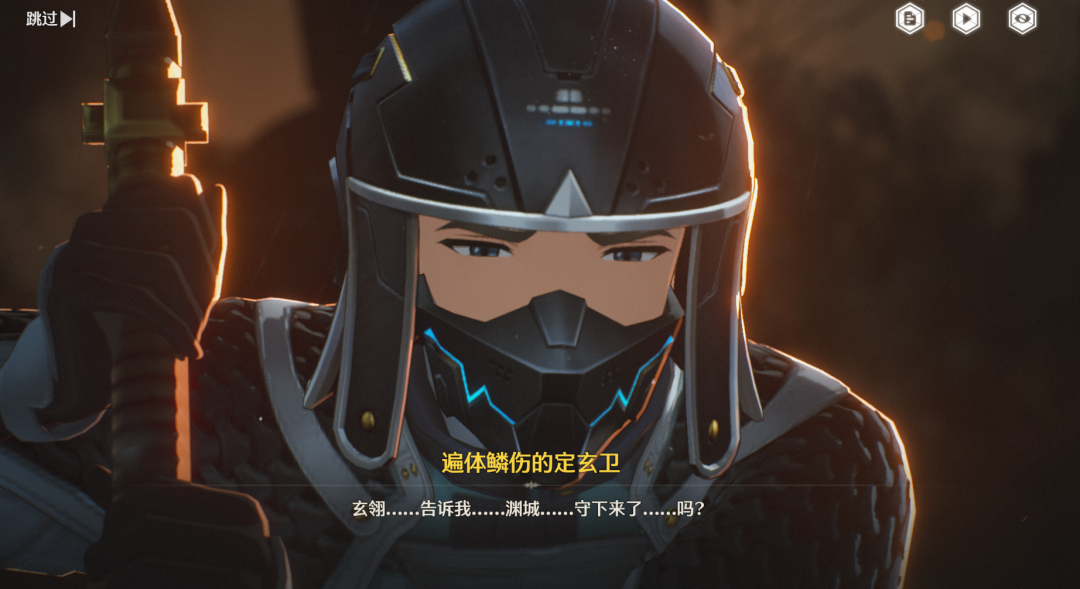
In terms of the setting, the same logic applies.
For example, the ingenious contraptions that run throughout the story of Xuanfang City were inspired by the Mozi school’s art of mechanical devices from the Pre-Qin period. Among the various schools of thought in the Pre-Qin era, the Mozi school was a unique phenomenon; it was, in essence, almost a form of “science” and represents the branch of traditional Chinese culture that naturally embodies a technical rationality.
Mozi was both a philosopher and an engineer; the disciples of the Mohist school built cloud ladders and siege engines, and their way of understanding the world inherently embodied the spirit of “investigating things.”
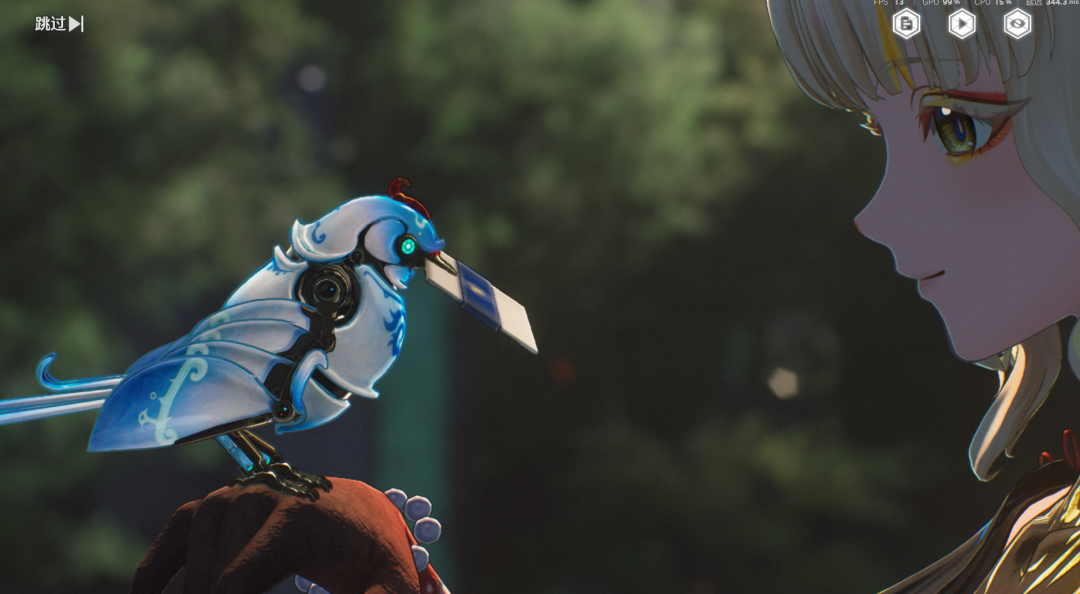
The underlying theme of *Mingchao* has always been humanity’s exploration of the laws governing the world, which aligns perfectly with this concept of “investigating things.”
What makes it even more ingenious is that the Moists’ most renowned skill is, in fact, “defending.”
Mozi stopped Chu’s attack on Song by using a set of defensive mechanisms to repel Gongshu Ban’s nine assaults,which gave rise to the idiom “clinging to old ways.” Xuanfang City, in turn, relied on the techniques of the Mohist school to defend its homeland. Therefore, whether traced back through the lens of “technical rationality” or “defense,” it ultimately leads back to the Mohist school.
So you can see that the “form” of the mechanisms in *The Roaring Tide* and the “spirit” of defending one’s homeland in this section share the same source.
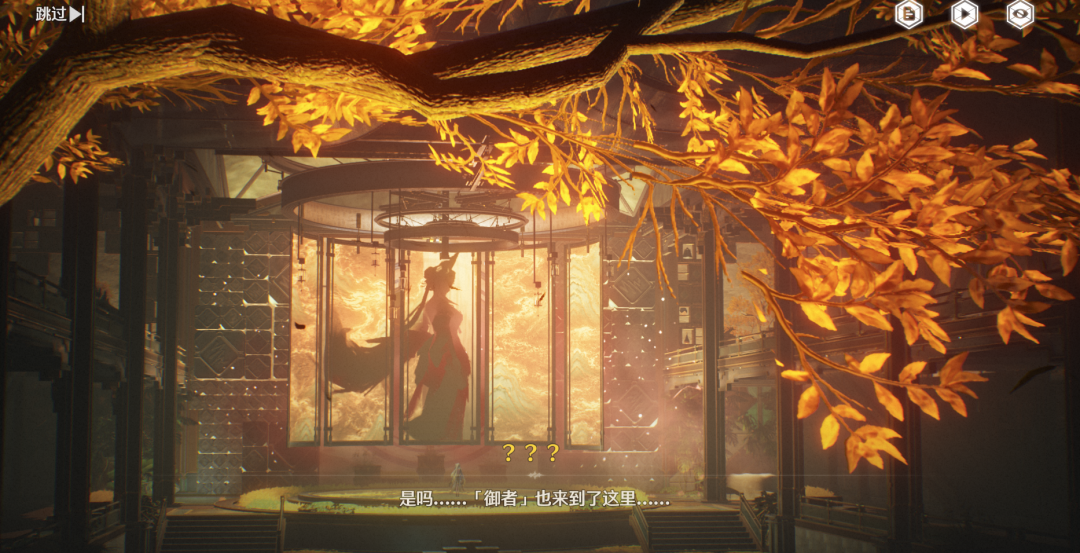
Another example is the giant ring-track installation on the dome of the first scene in the Suisu Line at that time, which combined an antique feel with a touch of science fiction.with several layers of gilded metal rings stacked and suspended, resembling the tiered ring structure of an ancient armillary sphere, yet the surface of each ring appeared to be wrapped in silk cloth adorned with intricate seal script characters.
The circular lamp at the center symbolizes the sun, moon, and the celestial axis, with metal supports crisscrossing and holding the ring-shaped structure in place;whose precision mechanical structure encapsulates the Eastern cosmological concept of “heaven is round and earth is square.” Soft light washes over the ring band engraved with seal script characters, while delicate specks of light scatter all around. The classical armillary sphere has shed its wooden and bronze shell, transforming into a mechanical celestial wheel suspended in the grand hall of an immortal realm.*Mingchao* expresses much of the romance with which ancient people gazed upon the starry sky in a sci-fi form.

In fact, the same logic is clearly evident in the music as well. The soundtrack for Version 3.5 reinterprets the timbres and emotions of traditional folk music using a distinctly modern compositional approach. In terms of instrumentation, in addition to the da di, guzheng,the pipa, the arrangements also generously incorporate modern instruments and electronic music. The collision of these two sound systems ultimately blends to create an ancient Eastern charm within a contemporary framework.
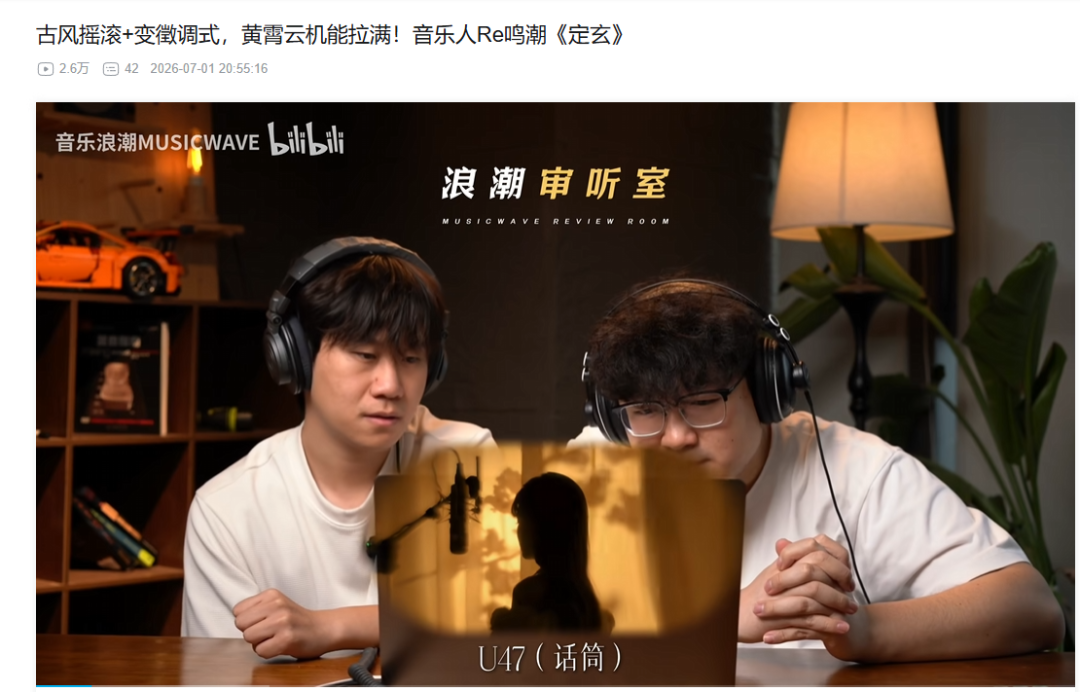
The theme song for "Xuan Fang," "Ding Xuan," is a prime example—it was produced by a professional musician named Re.
The folk song that Yangyang hums in the story draws inspiration from traditional folk music, yet its melodic arrangement and production quality are thoroughly contemporary, creating a listening experience that is both familiar and fresh.At the same time, thanks to the narrative, players can sense that this song also embodies the Xuanfang soldiers’ resolve to face death without fear, as well as their unbreakable spiritual bond with their homeland.
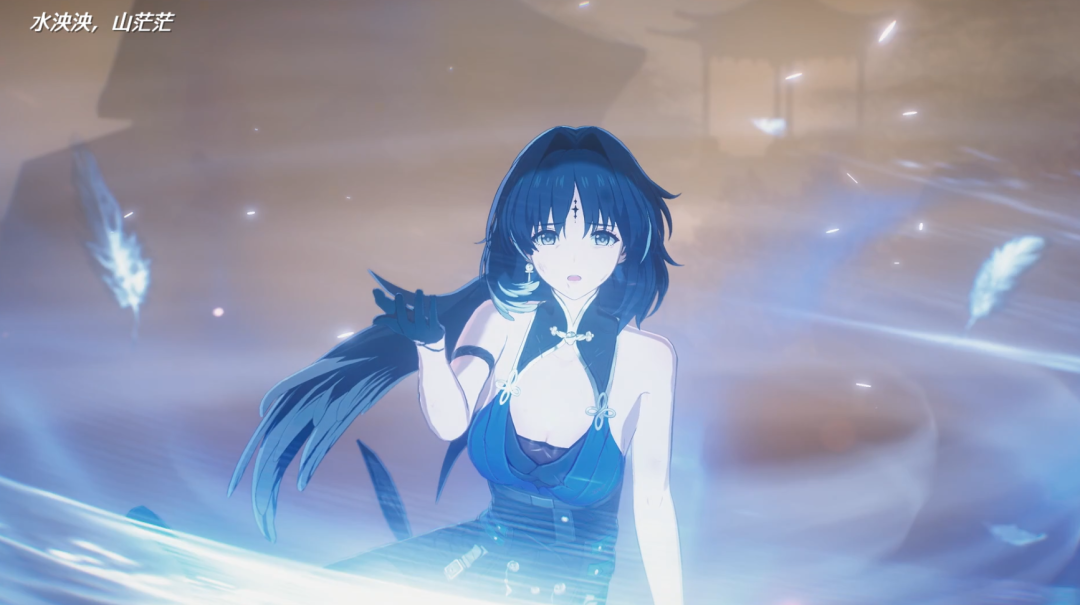
Therefore, if the narrative level represents the metaphysical aspect of *The Sound of the Tide*’s “meaning,” then mechanical art, installation art, and even the soundtrack represent the tangible aspects of that “meaning.” In addition to embodying characteristics of traditional Chinese culture, these elements also possess a sci-fi flair unique to *The Sound of the Tide*.
In my view, this fusion of form and meaning is precisely the hidden core methodology that has long been at the heart of *Mingchao*.
It explains a confusion that easily arises when observing the product from the outside: Why can the stylistic approach of *Mingchao* jump from space sci-fi to an oceanic opera and then to a Chinese-style garden—a span of such vast diversity—yet still maintain a consistent tone throughout the experience?
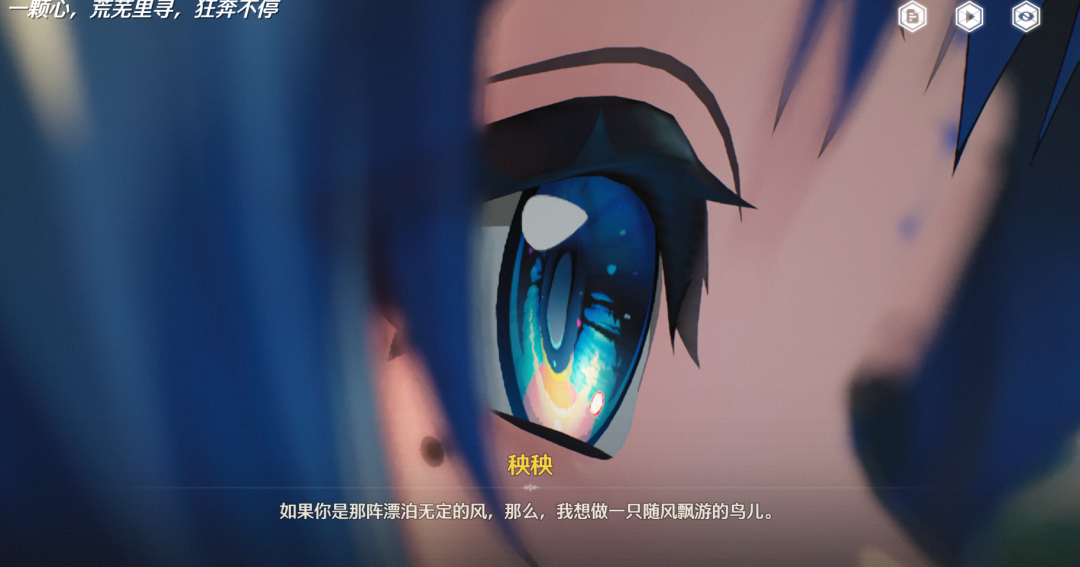
The answer lies in the fact that Kuro has always used his own set of core concepts to assimilate every new cultural motif, then translates that culture into concrete visual, auditory, and even gameplay elements. This ensures that, no matter which culture he chooses to draw upon for his creations, the spiritual essence of that cultural aspect ultimately resonates with the “resonance” at the heart of *Mingchao*.
Conclusion
Actually, to put it simply, the four characters “qi yun shengdong” refer to that sense of vitality that emerges when form and meaning become one—the feeling that the creation has come to life.
I believe it’s fair to say that *Tide of Voices* has successfully achieved “expressing meaning through form, and guiding form through meaning.” It is precisely this interplay between form and meaning that allows *Xuanfang Diji* to transcend the superficial level of “imitation” in the player’s experience, enabling the “traditional Chinese style” to truly take root through the dual channels of worldview and narrative.
"Mingchao" uses a Chinese approach to create Chinese-style content.
At this point, there’s no need for me to reiterate *Naruto: Tides*’ consistent strengths—such as its character depth and polished production values—as these are already well-established. However, starting with Version 3.5, perhaps we can also add “stylistic innovation” to *Naruto: Tides*’ product tags.
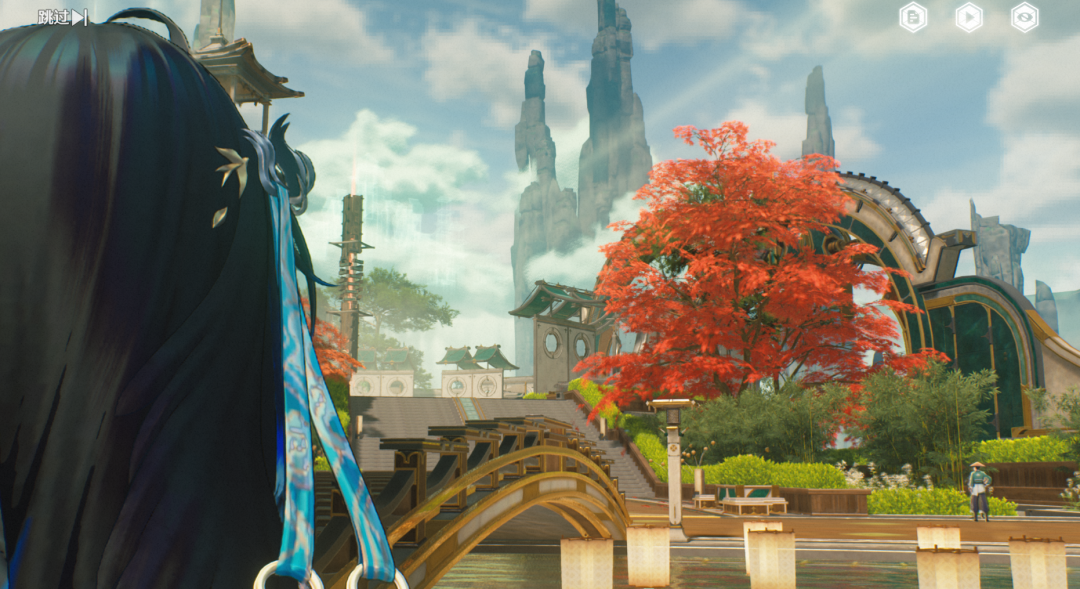
This is because, over the course of its long-term operation, *Mingchao* has developed a clear understanding of “what can change and what must remain unchanged.” On the operational side, the team has consistently managed to preserve the core tone of the game with every stylistic shift, ensuring that “style” never takes precedence over the product itself.
This is something that version 3.5 made me realize very clearly.
原创文章,作者:游茶妹儿,禁止转载:https://youxichaguan.com/en/archives/208173