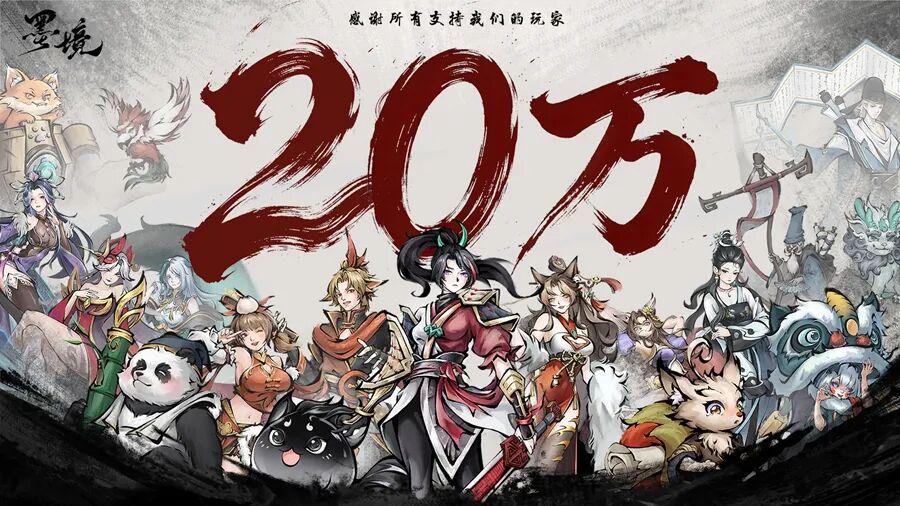
Just three days after its release, the Chinese-developed ink-wash-style action "roguelike" game *Ink Realm* has sold over 200,000 copies and boasts an approval rating of over 90%, making it yet another recent dark horse hit.
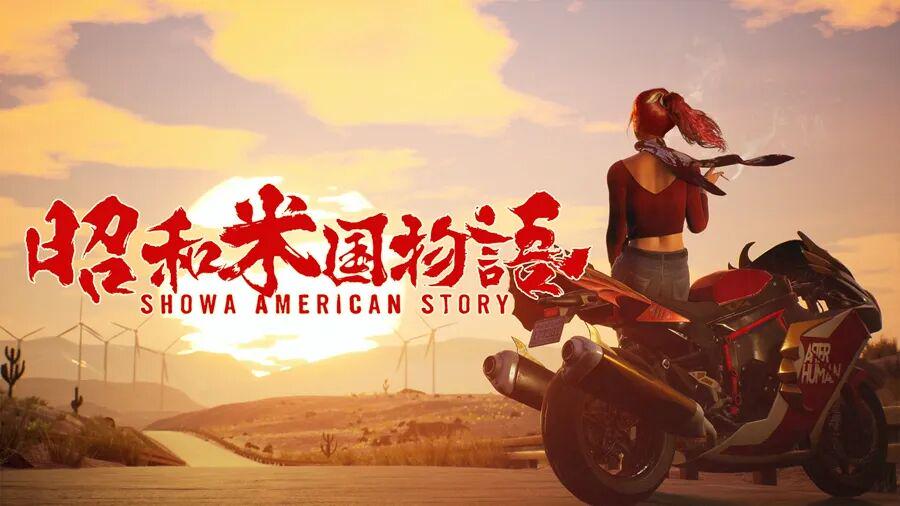
4Divinity, the publisher behind *Ink Realm*, is the same up-and-coming publisher that previously invested in Suzaku Games, the developer of *Showa American Story*.
Meanwhile, GCL Group, the parent company of 4Divinity, is currently at risk of being delisted from the Nasdaq. Its stock price has plummeted by more than 90% over the past year, falling to just $0.423, and the company reported a loss of $5.6 million in its semi-annual report.
But take a look at 4Divinity’s lineup: there’s *Resisters*, a World War II-themed *Call of Duty*-style game; *Yuan Gong Jian*, a Sichuan-style ARPG; and *Showa American Story*, a game that’s generating massive buzz.This Singaporean company, on the verge of delisting, holds some of China’s most daring games in its hands, having staked much of its fate on its Chinese partners.
A Singaporean company has traveled all the way to China to “do charity,” investing the funds it raised through its IPO into domestically produced games under an exclusive licensing model. The question is: with the company itself teetering on the brink of collapse, what’s the point?
01
Just one year after its backdoor listing, the company is on the verge of being delisted.
In February 2025, GCL went public on the Nasdaq through a reverse merger with the SPAC shell company RF Acquisition, with its market capitalization briefly surging to $1.2 billion. What followed was a prolonged decline.
In March of this year, because GCL’s stock price had consistently traded below $1, Nasdaq issued a deficiency notice:
If the stock price does not return to above $1 by September 14, the stock will be downgraded to the lowest tier of the Nasdaq market, resulting in a significant drop in liquidity. If it still fails to recover by mid-March 2027, it will be delisted.
A review of GCL’s interim report for the first half of fiscal year 2026 (April–September 2025) showed that the net loss widened to $5.6 million, and guidance for full-year revenue and profit was lowered simultaneously, triggering a sell-off among investors.
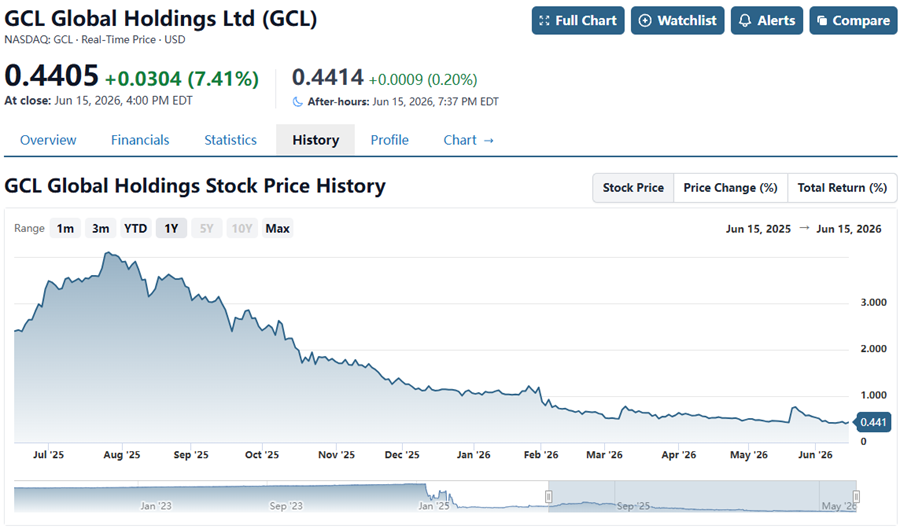
The stock price has been on a steady decline
GCL's market capitalization has now shrunk to $54 million, making it a true penny stock.
Facing pressure to avoid delisting, GCL's management views fiscal year 2027 as a "critical turning point." By then, several Chinese studio projects in which the company has invested will be released one after another, representing GCL's most important assets.
02
"Black Myth" Generates Tens of Millions of Dollars in Annual Revenue
GCL's executives are all Singapore-born Chinese with no prior professional experience in the Chinese gaming industry. To gain a deeper understanding of the Chinese gaming industry, they need a knowledgeable "guide."
Block Games has stepped into this role. Previously, Block Games had a long-standing partnership with Epicsoft, a subsidiary of GCL, to distribute game activation codes. In 2024, the two companies expanded their collaboration and jointly invested $100 million in game studio acquisitions, game development, and anti-piracy efforts.
Leveraging Fangkuai Games’ years of experience in the domestic gaming industry, GCL has quickly built closer ties with Chinese developers.
After *Black Myth: Wukong* became an overnight sensation, 4Divinity secured the global distribution rights for the game’s physical edition, riding the biggest wave of success in Chinese gaming history.In fiscal year 2025 (April 2024–March 2025), *Black Myth: Wukong* alone generated $11.2 million in revenue for 4Divinity, accounting for nearly 70 percent of its annual revenue!
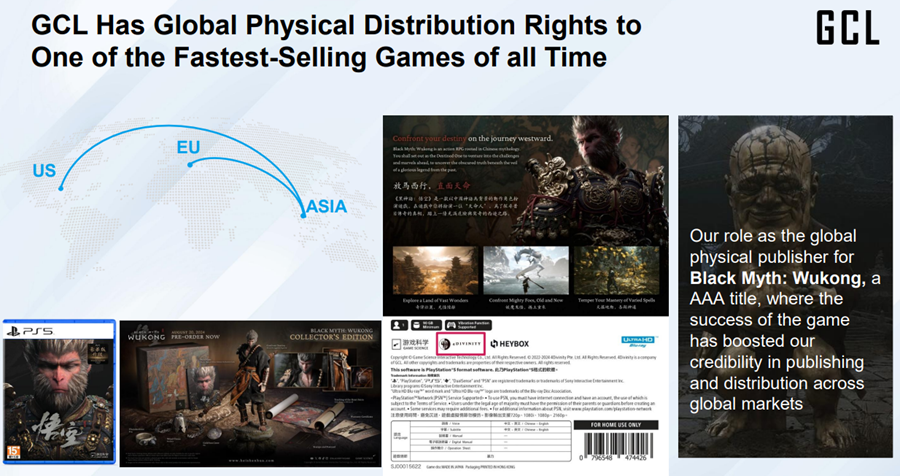
4Divinity Releases Physical Edition of "Black Myth: Wukong"
Reaping the benefits of the long-tail traffic generated by *Black Myth* has encouraged GCL to accelerate its investment in large-scale domestic games and boldly back projects that major studios have approached with caution.
"Showa: A Tale of America" is a prime example. This B-movie-style open-world game went viral online thanks to its debut trailer, which was packed with pop culture references and absurd plot elements, sparking a flood of fan-created content.
At the time, the developer, Lingkong Games, had limited resources and was unable to move the project forward on its own. Meanwhile, the unconventional nature of *Showa American Story* deterred major domestic studios and investment firms from getting involved.4Divinity came to the rescue by acquiring a 20% stake in Lingkong and securing the global publishing rights, making the game’s eventual release possible.
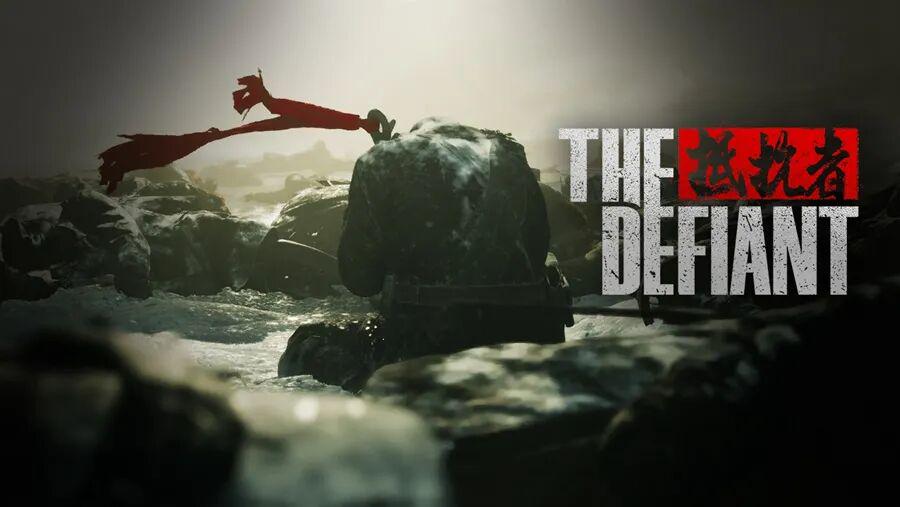
Another featured title is the World War II-themed FPS *Resisters*.
With its cinematic storytelling, it fills the long-standing gap in WWII games by offering a perspective on the Asian theater of war, earning it the nickname "the 'War of Resistance' version of Call of Duty" among players.It’s worth noting that the last domestically produced shooter set during the War of Resistance dates back 20 years to Zulu Studio’s *Resistance: Battle of Shanghai* (2003). The fact that GCL dared to take on this subject matter speaks volumes in itself.
In addition to these high-profile projects, GCL is also investing in small- and medium-sized projects of exceptional quality.
The developer of *Ape Sword*, Jianmaoxiong, was founded by former members of Ubisoft Shanghai and the developers of *Shadow of Torch City*; GCL acquired a 7.25% stake and secured the publishing rights;*Ink Realm* was also taken over by 4Divinity under a “investment + publishing” model while facing significant challenges, and ultimately sold 200,000 copies.
All things considered, GCL’s investment strategy in China is clear and restrained. Its “investment plus distribution” model addresses the two biggest challenges facing startup teams: funding and marketing. By not taking a controlling stake and refraining from interfering in creative decisions, this approach is indeed quite attractive to a number of Chinese teams that have great ideas but lack resources.
03
Pragmatic Cooperation in the Real World
For GCL, investing in Chinese startup teams is, of course, not a charitable endeavor—it is a strategic move toward its goal of “becoming an Asian gaming and entertainment giant.”
Looking at the global gaming scene, Chinese developers—who are rapidly making a name for themselves—are a rising force that GCL cannot afford to overlook.
The sales phenomenon achieved by *Black Myth* proves that Chinese developers are capable of creating AAA titles that sell well worldwide; meanwhile, the fact that an indie game like *Ink Realm* sold 200,000 copies shows that niche games targeting the Chinese market can also thrive.
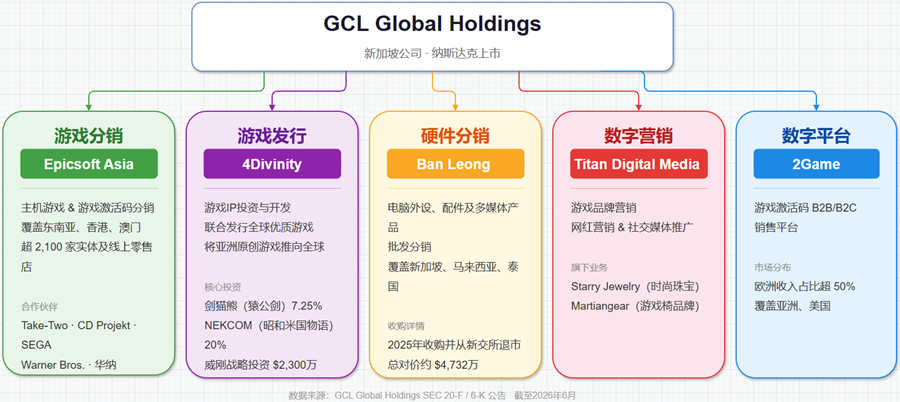
GCL’s “cast-a-wide-net” investment strategy means that if even one “lottery ticket” pays off, the company can recoup its principal plus interest. Moreover, as Chinese developers’ technical skills improve, the odds of hitting the jackpot will only get higher.
Currently, GCL’s network is still limited to Greater China. As for established developers in Japan, South Korea, Europe, and the United States, local companies have already invested in them, making it difficult for GCL to get involved at this time. China is GCL’s most pragmatic option right now.
04
ADATA's money, ADATA's people
Come to think of it, GCL is quite skilled at forging partnerships through resource exchanges.
In 2005, Jacky Choo, who had previously founded a gaming media company, established Epicsoft in Hong Kong, marking the beginning of GCL. Epicsoft initially focused on game distribution in Greater China, and three years later, it expanded its operations to Southeast Asia.
The real turning point came in 2008, when Epicsoft secured the exclusive distribution rights for *GTA IV* in Southeast Asia, generating $1.8 million in revenue on the first day of release. While that amount might not seem staggering by today’s standards, for a small distributor, it was a make-or-break moment.
In 2018, Zhu Shiwei merged Epicsoft, the company he founded, and the digital marketing firm TDM into GCL, marking the beginning of the group’s operations.That same year, the company secured distribution rights for Greater China and Southeast Asia from Sega. Sega later became a shareholder in GCL and, to this day, holds a 6.52% stake, making it the largest external shareholder.
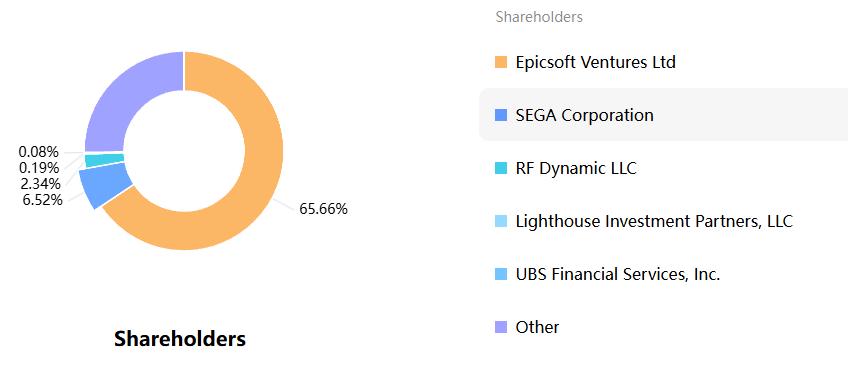
Sega is GCL's largest external shareholder
This strategy of "exchanging equity for resources" is a standard move GCL uses to secure partnerships.
In 2022, GCL launched its publishing brand, 4Divinity, expanding from game retail into content production.
Last year, the market for memory chips was booming, and ADATA, sitting on a large cash reserve, set its sights on 4Divinity, investing a total of $23 million (approximately 155 million RMB) in three separate rounds, pushing 4Divinity’s valuation to $250 million.At that time, GCL’s market capitalization was only $120 million, while 4Divinity’s valuation was twice that of its parent company—a complete reversal of their relative values.
The best is yet to come.
In May of this year, 4Divinity acquired a 60% stake in a Taiwanese game company named “Pan Shi Chuan Shang” through a stock swap and renamed it 4D Taiwan. Pan Shi Chuan Shang is currently developing a new mobile game based on the *Empire of Blazing Flames* IP, which will serve as 4Divinity’s foothold in the Taiwanese market.
Panshi Chuanshang's registered address happens to be on the 7th floor of ADATA's New Taipei City headquarters building, and the photo of the reception area featured in its job postings is also of ADATA's. There is ample reason to believe that Panshi Chuanshang is a game development team incubated by ADATA.
ADATA had just invested in 4Divinity, and 4Divinity immediately acquired an ADATA affiliate. This may have been part of ADATA’s investment agreement all along.
Adata had barely invested in 4D when the latter immediately acquired an Adata affiliate.
It is foreseeable that 4Divinity, with its ample funding, will continue to acquire development teams and move forward along the path of “bringing high-quality Asian IPs to global players.”
However, for GCL, fiscal year 2027 (April 2026–March 2027) will be a pivotal year.Will its previous investments in *Showa: A Tale of America* and *Monkey King’s Sword* bear fruit? And will the acquired companies—such as Madeviral (game marketing) and Ban Leong (hardware retail)—generate synergies with its existing businesses?
These issues will directly determine whether GCL can avoid the embarrassing prospect of eventual delisting next March.
05
Where Has China's Money Gone?
Over the past two years, an interesting phenomenon has emerged in China’s gaming industry: foreign investors have shown greater interest in Chinese developers than domestic institutions.
While domestic investment firms were still debating whether "games can actually make money," GCL, 505 Games, and Savvy Games Group had already grabbed their checkbooks and were knocking on the doors of game development teams in Shanghai, Hangzhou, and Chengdu, one by one.
The most notable buyer is undoubtedly Savvy Games. In recent years, it has made a series of major investments in Hero Esports, acquired the former Perfect World Chengfeng Studio, and brought Mutong Technology under its umbrella.
This raises the question: Where has China's money gone?
The gaming industry’s business model lacks imagination; it’s nowhere near as appealing as AI-driven storytelling, making it difficult to attract hot money from venture capitalists. Today, the number of domestic industry investors still willing to invest in games can be counted on one hand. They are extremely cautious with their investments, having long since shed the massive bubble of the past.
Foreign investment, in the form of funding and resources, is a real boon for domestic developers. The *Ink Realm* team is a prime example: just as their former publisher had gone missing and their funds were running out, 4Divinity stepped in like a white knight, injecting capital to save the team.
Foreign capital coming to China to “hunt for bargains” is filling the gap left by domestic capital. So what exactly are we lacking—money or sound judgment?
原创文章,作者:游茶妹儿,禁止转载:https://youxichaguan.com/en/archives/207851