After losing all four matches on the first day, I woke up today to find that all the LPL teams had won. This year’s League of Legends World Championship has truly put viewers’ patience and insight to the test.
From the shocking upset loss to Anbesa’s crucial performance in Game 369 that secured the victory, and this morning’s advancement of both iG and TES to the 2-1 bracket, social media has been abuzz with a steady stream of witty comments.Trending topics have been popping up one after another, and viral memes have been refreshing the homepage in wave after wave.
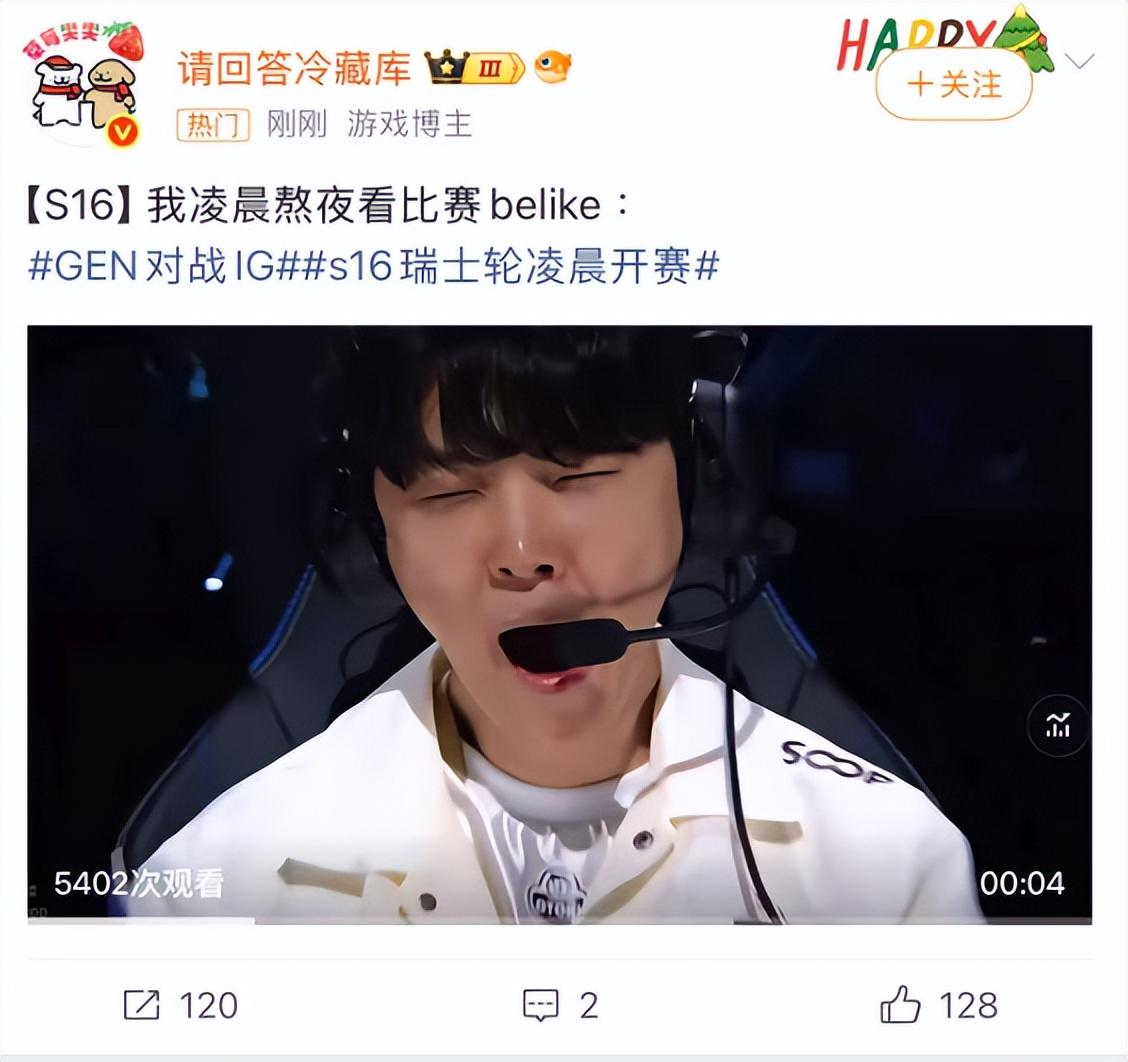
Source: Weibo @Please Answer the Cold Storage
In recent years, as esports has taken the world by storm, following matches on social media has almost become a ritual.The tournaments themselves provide plenty of excitement and talking points, and players have their own way of keeping the conversation going—whether it’s discussing key plays during the match, analyzing post-game replays, or sharing their own memes and fan creations. Rather than simply following the results, joining in on the excitement with a group of people has become an indispensable part of the viewing experience.
With the atmosphere at its peak, this year’s event sponsors have really stepped up their game. A host of domestic brands have capitalized on the event’s buzz to reach young audiences worldwide. Beyond the usual tactics like title sponsorship and brand exposure, marketing strategies such as providing a viewing experience and fostering social interaction have also joined the festivities.
The value of esports influence combined with social media reach may reach new heights at this year’s World Championship.
01
From Competitions to Trending Topics: Why Does Esports Always Break into the Mainstream?
Esports is naturally suited for nationwide celebrations, and not just because the game featured in a particular tournament is widely popular among the public.
In a best-of-five series, everything from draft picks and key teamfight decisions to fluctuations in player performance can become a topic of discussion on its own. This is what makes esports unique—virtually every moment is “worth discussing.”
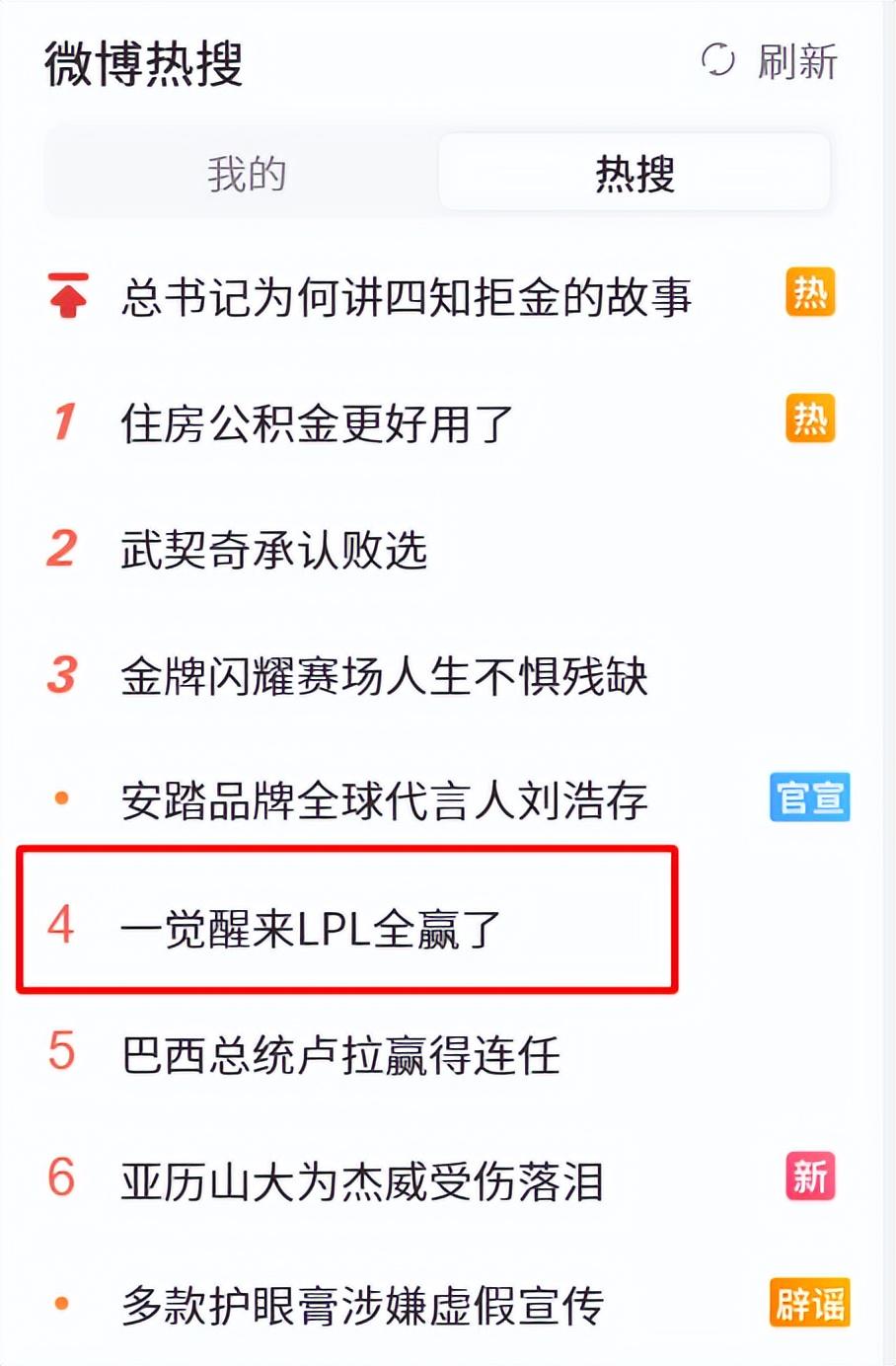
Source: Weibo Trending Topics
On Saturday, the hashtag #LPL Swiss Round First Round Sweep# was still racking up 12,000 discussions on Weibo, while the hashtag #Only 369 Saw the Enemy’s High Ground# spread simultaneously, tinged with both heartbreak and sarcasm.Today, #WokeUpToFindTheLPLHadWonEveryMatch# shot to the top of the trending list—everyone loves a comeback story—and two rounds of hard-fought matches produced plenty of highlight reels worth sharing over and over again.
These emotions—which have sparked reflections and playful banter—have ignited an esports frenzy across all platforms. In addition to dominating Weibo’s trending topics, the official S16 theme song “KNOW MY NAME” has racked up 240,000 likes on Douyin, and as the tournament progresses, real-time topics continue to climb Douyin’s trending charts.Xiaohongshu is also buzzing with posts—from match results to viral memes and player roundups… These days, no matter which platform you open, you’re likely to come across news about the World Championship in your feed.
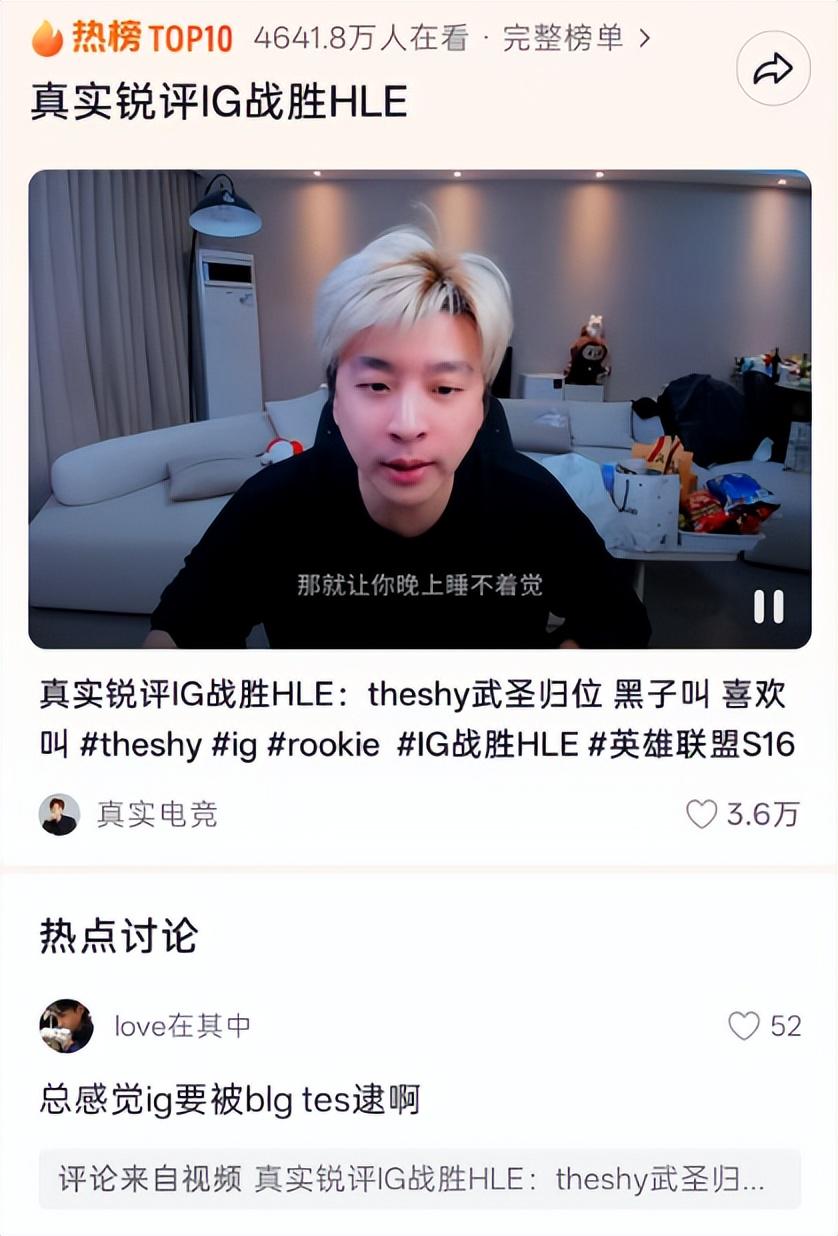
Source: TikTok Trending
Young users don’t just “watch the games”—they are the ones generating buzz and creating fan-made content. Content surrounding these events is never limited to one-way official broadcasts; instead, it is collectively produced by a vast number of fan accounts, fan creators, commentators, and ordinary viewers.
According to the *2025 Weibo "Pan-Anime and Manga" Content Ecosystem Research Report*, 91% of the content generated on the platform during the League of Legends Season 14 tournament was driven by collaboration between cross-domain bloggers and viewers.
According to the “2025 Weibo Esports Trending Topics List” released by Weibo Esports earlier this year, the S15 World Championship appeared in trending topics more than 1,000 times, while the LPL league became the esports event with the highest social media discussion of the year, appearing 1,374 times on the main trending list.
The platform plays a crucial role in this process.Scattered enthusiasm needs a focal point, a space for discussion, and the momentum to go viral in order to ferment into a nationwide phenomenon. Therefore, esports tournaments need a “trending topic” to propel the event into the public eye; when users click on this entry point, they see more than just scores and results—they also encounter fan-created content, memes, and even controversies.
On the first day of S16, various social media platforms simultaneously sparked a flurry of discussions about all kinds of tournament-related topics, creating an atmosphere of lively conversation—not just a single news story. You naturally want to join in and “start a lively chat with someone first.”
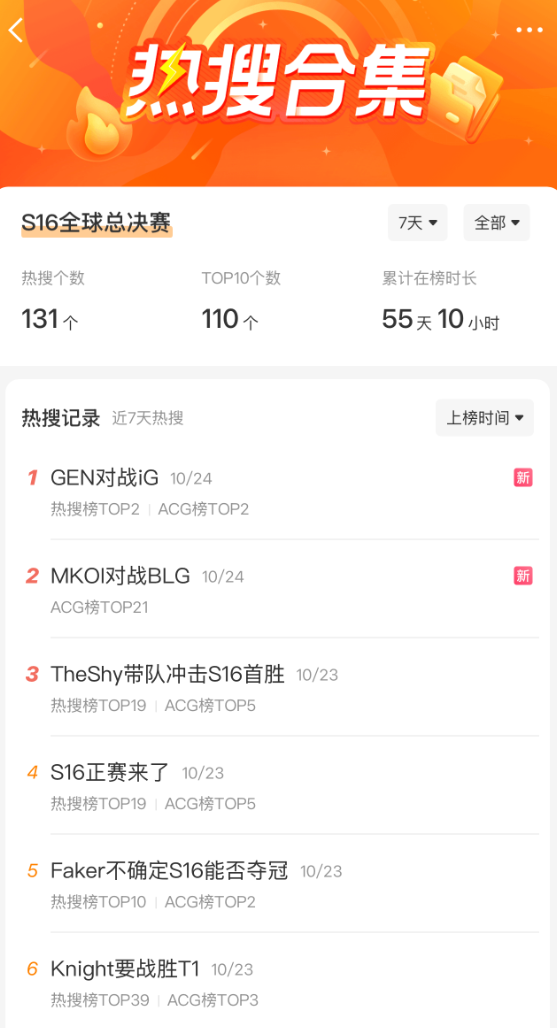
Source: Weibo Trending Topics Compilation
Another area where the platform has “evolved” this year is that “Smart Search” has been a huge help. Esports tournaments are always packed with information; clicking on the trending topics takes you to a vast feed filled with discussions about team strategies and qualification prospects. As the tournament progresses into later rounds, you sometimes even have to check the dates to figure out which results correspond to which matches.Clicking into Smart Search provides an exceptionally comprehensive overview—from factual information like the tournament schedule and match timelines to analytical insights on qualification prospects—making it a perfect companion for watching the games.
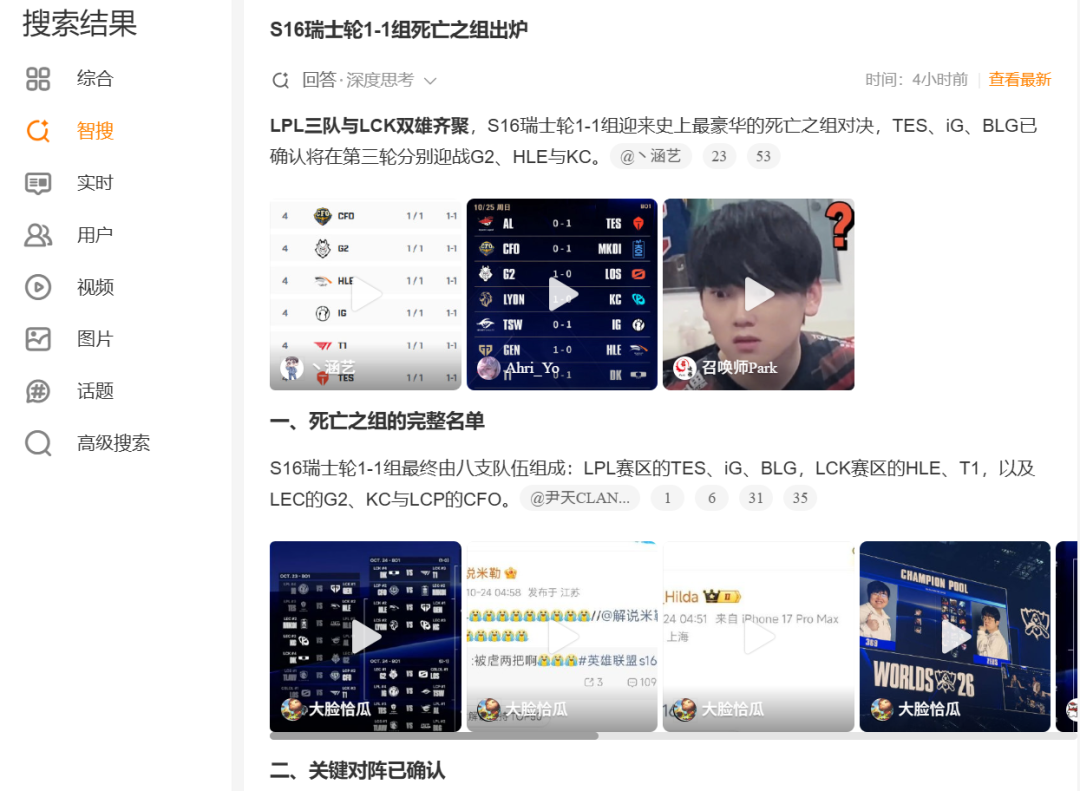
Source: Weibo Smart Search
Weibo’s second-quarter 2026 financial report, released in August, showed that as of the end of the second quarter, Weibo had 561 million monthly active users and 254 million daily active users. Building on the widespread adoption of its Smart Search product, Weibo has focused this year on enhancing the depth of use of its multi-round conversation feature.
There has long been a learning curve when it comes to esports-related information. Concepts like draft strategy, patch analysis, and qualification rules are, of course, old hat to longtime viewers, but for new viewers looking to get into the scene, using smart search features can be very convenient.
With the theme set and the stage prepared, there’s even more room to shine off the field.
02
Both on and off the competitive stage, esports content continues to grow
The competition arena is the “primary venue” of esports; this is where scores are tallied and victories and defeats are decided. But esports has never been limited to simply “watching matches online.” Social media comment sections, trending topics, fan-created videos, and trending search terms collectively form the “secondary venue,” transforming competition into a cultural experience that everyone can participate in.
In fact, during the first round of the draw, iG was matched against GEN and TES against HLE, and commentator Miller’s reaction at that moment was immediately edited into promotional footage. Once the matches actually began, the players were locked in intense battles on screen, while the audience off-screen was even more enthusiastic in their interactions.
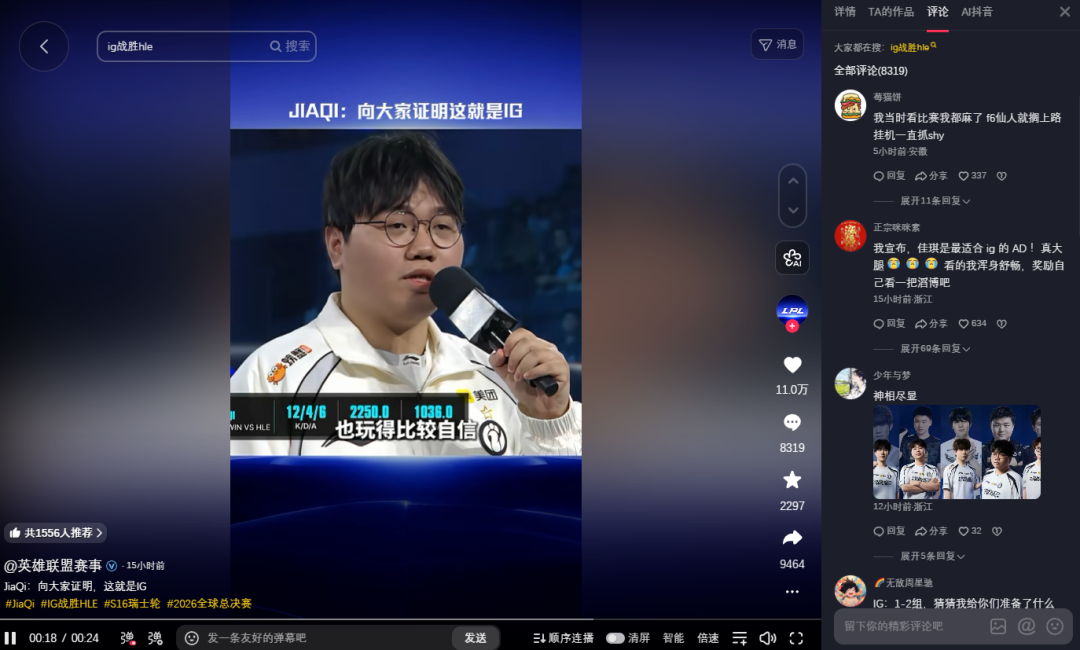
Source: Douyin @League of Legends Esports
There’s no need to wait for a post-match analysis—as the game unfolds, whether it’s the score or the state of the match, real-time updates are flooding Weibo, Xiaohongshu, Douyin, and Bilibili.This morning, when the LPL’s No. 4 seed, iG, defeated the LCK’s No. 2 seed, HLE, everything from the official commentary booth to the secondary live streams went wild. If you opened Weibo to follow the action in real time, you could share in the excitement alongside the massive wave of comments from viewers.
“Live action” is, after all, the greatest source of entertainment in competitive gaming. Scores fluctuate, the tide of battle turns, and the advantage can shift instantly after a single team fight. Social media brings all these countless reactions together in a single space, allowing viewers to enjoy a collective celebration.Beyond real-time updates, fan-created content doesn’t stop once the match ends; rather, it flourishes freely thanks to the existence of these platforms. Across different platforms, you’ll see two distinct camps: the technical analysis camp and the abstract meme camp.
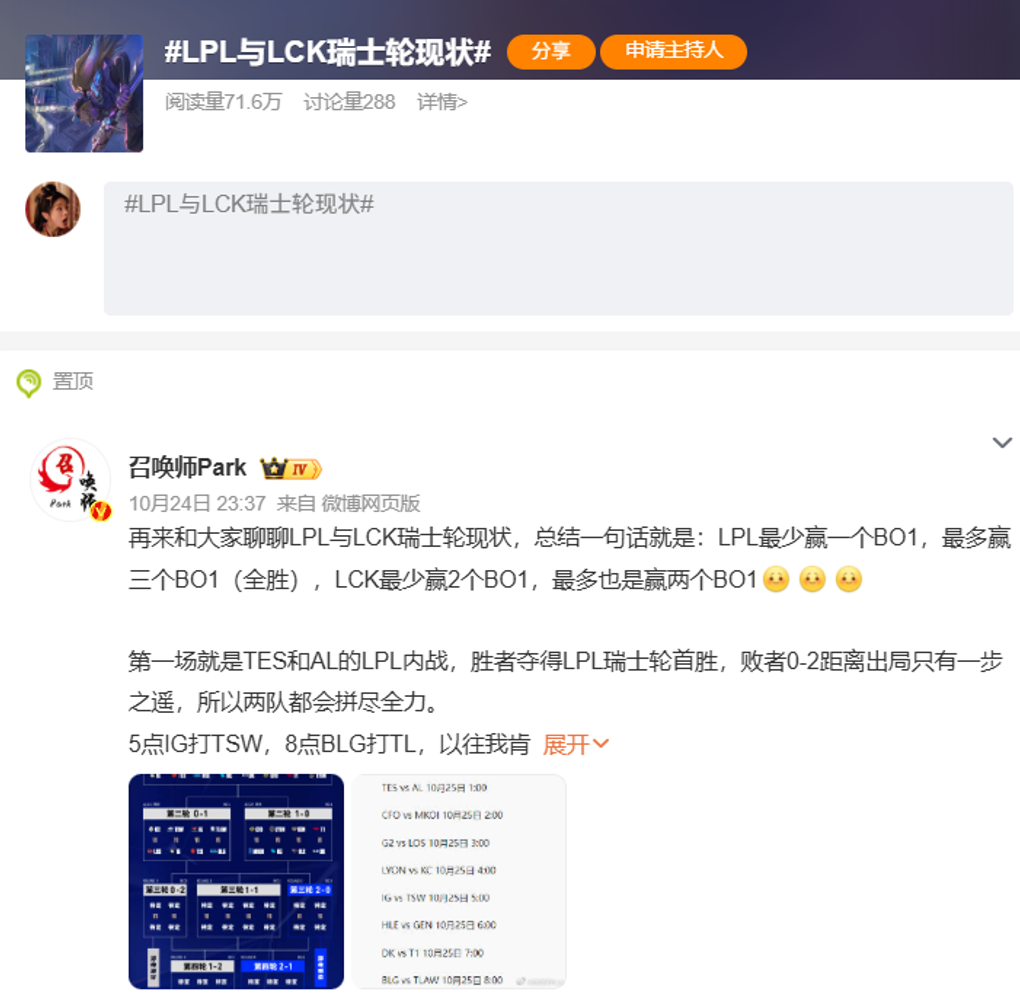
Source: Weibo @SummonerPark
Technical analysis is the bread and butter of esports influencers. From draft picks to tactics to in-game performance, there’s plenty to dissect—and pulling up data charts for commentary only adds to the fun. Post-match interviews are also a highlight. Of course, there’s also the analysis of the playoff standings, which is all too familiar to esports fans. Especially when a team faces an unfavorable situation in the first round, every match is a nail-biter.On the second day of the tournament, the hashtag #Current Status of the LPL and LCK Swiss Rounds# briefly climbed into the top five on the trending list, and the buzz and discussion have continued ever since.
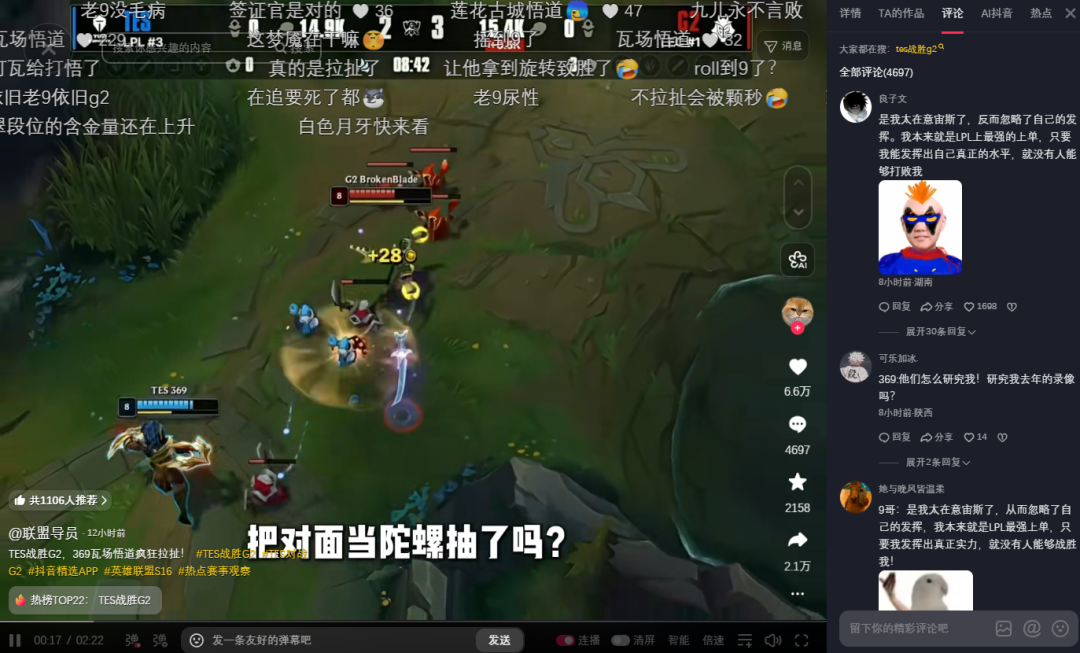
Source: Douyin @Alliance Advisor
Then came the “meme-of-the-moment” segment—a scene that the public absolutely loved. “369” has become the biggest source of meme material over the past couple of days. After nearly half a year off, he stepped in as a last-minute replacement and was the only player from the four LPL teams to reach the opponent’s high ground. He returned from a break to turn the tide, and a comparison of his champion pool has been shared by everyone.
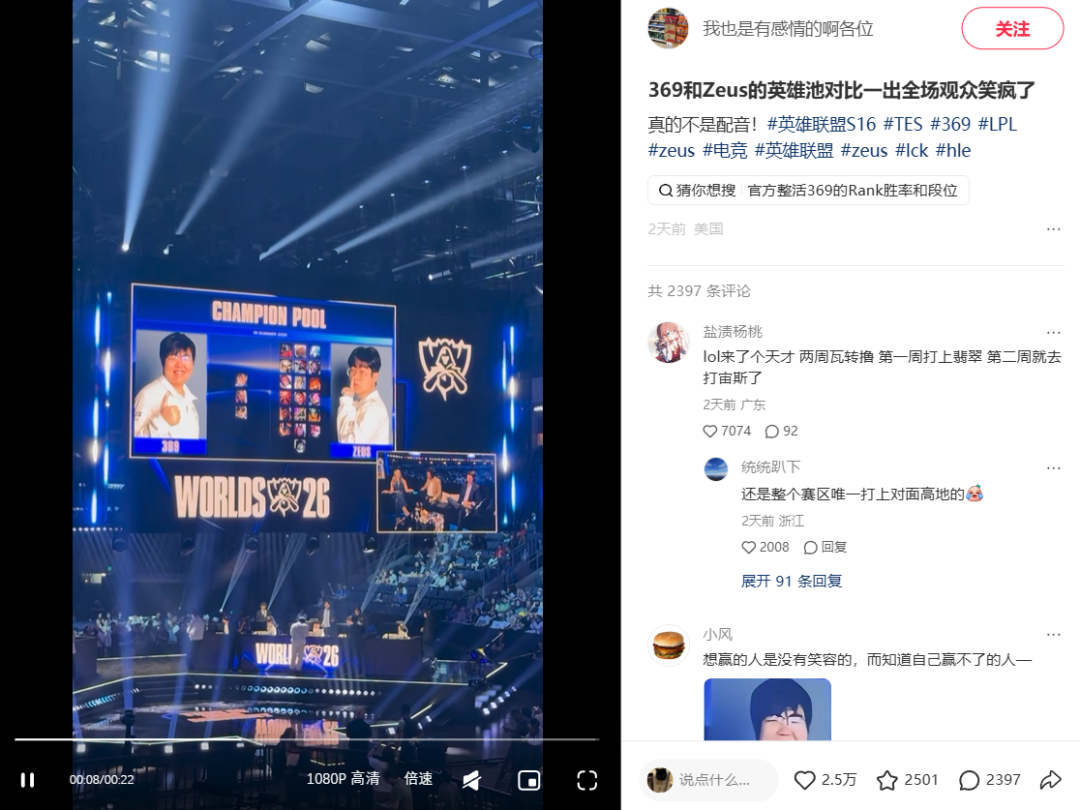
Source: Xiaohongshu @I Have Feelings Too, Everyone
If the “primary venue” faithfully records the competitive successes and failures of the players, then “secondary venues” like Weibo serve as a platform for viewers to express their emotional reactions to the matches.As mentioned earlier, esports events themselves offer a wealth of details ripe for discussion. Since viewers are familiar with gaming lingo, player stories, and team culture, their social media posts go beyond simply writing “reviews” of the matches—they seize upon specific details to create content with even greater impact.
A single play can be replayed over and over again or become the subject of jokes; a loss can be frustrating, but it can also be transformed into a new shared memory through the memes circulating online. The enduring appeal of esports content often lies in this kind of creative reinterpretation.
This is precisely the significance of the “Second Scene.” It not only extends the period of discussion surrounding the event but also transforms individual viewing experiences into collective emotions and memories, allowing a single game to evolve from a mere competitive outcome into a cultural event that encompasses topics of conversation, self-expression, and community engagement.
As this content continues to accumulate within the community, esports tournaments are no longer just one-off events. Thanks to the long-term presence of topic pages and fan communities, past memes, player personas, and rivalries between teams are almost always brought up again whenever a new tournament begins.
In the “2025 Weibo Esports Trending Topics List,” iG topped the team rankings with 376 entries on the main trending list, followed closely by T1 with 345 entries. Faker remained the “League of Legends” pro player with the most appearances on the trending list.
Today, the attention generated by sporting events is no longer limited to the few hours during which the games are played; instead, there is an opportunity to reach more users and influence their perceptions through ongoing discussions in the “second venue.” Brand marketers have thus identified new growth opportunities.
03
The "Vast Skies and Endless Seas" That Brands See
A white paper released at this year’s Cannes Lions International Festival of Creativity revealed that esports currently has a global audience of over 640 million, with Generation Z (ages 13–30) comprising approximately 400 million of that core audience.Furthermore, 85% of respondents said they had noticed brands appearing in esports events, and 73.6% were more likely to purchase products from brands they saw during these events. 65.5% had actually spent money in the past year on products resulting from brand partnerships or collaborations with esports events.
The fact that esports connects with young people and influences their purchasing decisions is enough to make brands recognize the immense commercial value behind it. For fans who have long followed a particular team or player, esports tournaments represent more than just entertainment—they also embody the fans’ own emotions and preferences.When a brand appears in this context, it naturally gains an added layer of “emotional value.” If the partnership is executed appropriately, there is even an opportunity for the brand to become part of the event’s narrative and be remembered as a success story.
BYD Ocean’s official announcement in June of this year that it had become an official partner of the 2026 League of Legends Pro League (LPL) is a prime example of marketing that aligns with its target audience.
Currently, both domestically and internationally, the consumer base for automobiles—especially new energy vehicles—is rapidly becoming younger, which closely aligns with the demographic profile of esports audiences. Furthermore, esports culture is casual and cutting-edge, featuring active engagement and a strong sense of fan identity; esports tournaments also have inherent global reach, which can help automotive brands cultivate a more fashionable corporate image.
More importantly, brands this year have realized that esports is the key to driving traffic and that esports marketing should be more creative.
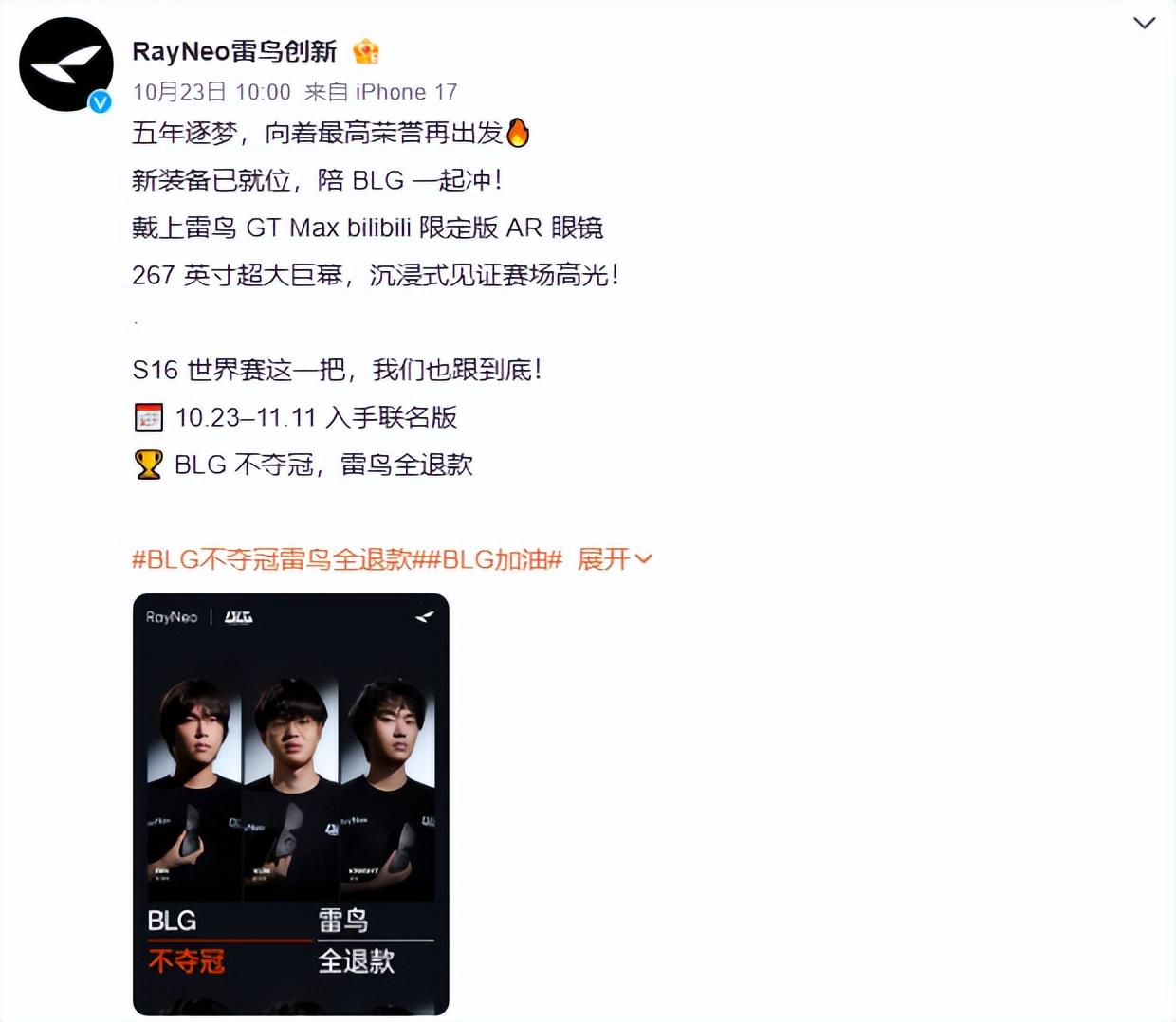
Source: Weibo @RayNeo Thunderbird Innovation
Take Thunderbird, for example—they “went all out.” Before the start of Season 16, the Chinese AR glasses brand Thunderbird Innovation teamed up with Bilibili to launch the GT Max Bilibili Limited Edition AR glasses. As a sponsor of the BLG team, Thunderbird also launched a promotion promising a “full refund if BLG doesn’t win the championship.”By linking product promotion to fans’ greatest hope—winning the championship—the “suspense of the match outcome” took a back seat. More importantly, the brand proactively responded to fans’ emotions, showing a willingness to experience the ups and downs of the competition alongside them and share in their anticipation. This approach, rather than mere product exposure, allowed the audience to feel the brand’s sincerity more deeply.
Source: Weibo @Meituan Hotels
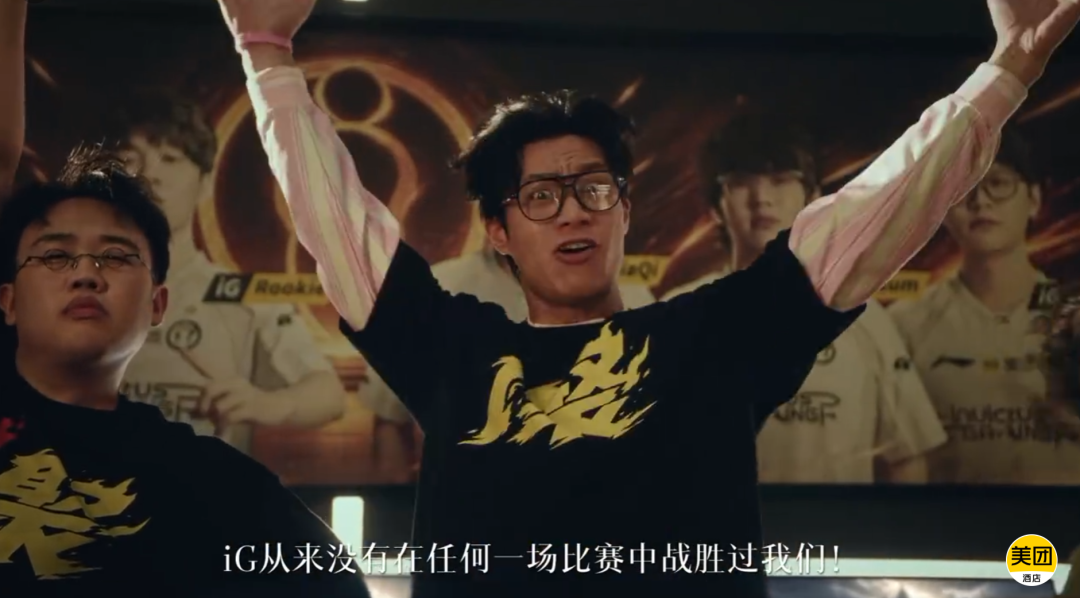
There are many other promotional campaigns that emphasize a sense of companionship, such as the promotional video featuring a collaboration between Meituan Hotels and iG, which centers on a fictional esports team called “iJu.”The team members solemnly describe their daily preparation routines: abstract pre-match training sessions, and the whole team shouting “Godfather!” while picking up takeout. The team’s “meeting spot” is an esports room booked through Meituan. The promotional video embeds commercial offerings—such as free coupons with room bookings and equipment setups—into a context familiar to esports fans, which more effectively sparks their enthusiasm for spending.
Source: Weibo @Li-Ning Official Weibo / @Safeguard / @Zhuanzhuan App
During the tournament, various brand sponsors made their presence felt on Weibo. Apparel brands like Li-Ning showcased players’ OOTDs, personal care brands like Safeguard helped players stay in “top form,” and the official Weibo account for the ZhuanZhuan app chose to “set aside its role as a sponsor and openly share what esports fans are looking forward to”…Marketing doesn’t have to be limited to standardized sponsorship placements. By finding common ground between their products and the tournament and using language that resonates with online audiences, brands can secure sustained exposure through multiple touchpoints—such as team promotions, tournament updates, and player endorsements.
The S Series is still underway. Based on past experience, as the tournament progresses into later rounds, fan-created content becomes increasingly enthusiastic, and it’s more likely to spark trending topics that set social media ablaze.If brands can “adapt on the fly” at the right moment—promptly capitalizing on trending topics both on and off the competition floor, riding the wave of audience sentiment by picking up on memes and engaging with fans, or even making last-minute adjustments to their strategies—they’ll have even more opportunities to create memorable marketing campaigns.
To capture fans’ attention, simply placing a logo on the field is no longer enough. Join the social media frenzy, immerse yourself in the esports atmosphere, and get viewers to embrace the brand as part of the narrative—so they’re willing to actively share it. This is the dynamic energy that the “second venue” brings to esports marketing.
Esports offers a highly concentrated young audience and constantly evolving on-screen drama, accompanied by fans’ natural emotional investment; social media platforms like Weibo have become a “second venue,” continuously generating content and encouraging interaction, thereby extending their influence to a wider range of demographics. As marketing strategies continue to evolve, we can certainly expect the esports industry to unlock even greater commercial value.
原创文章,作者:游茶妹儿,禁止转载:https://youxichaguan.com/en/archives/222012