Adding a “new world” to a game that’s been around for 17 years might not sound like a big deal. But for Minecraft, this update is a bit special.
01
“The Sift”
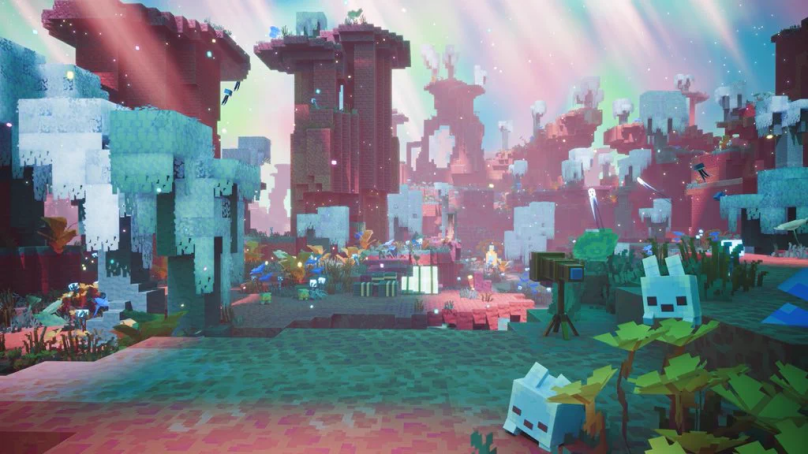
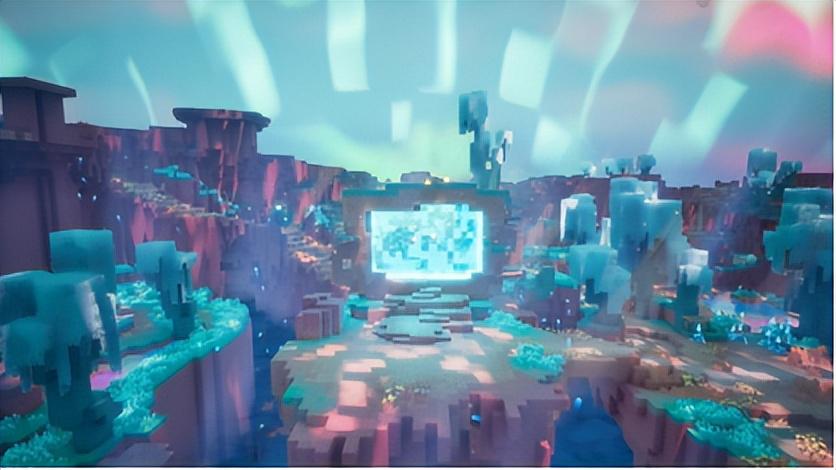
On August 20, Mojang Studios unveiled “The Sift,” a brand-new dimension, which many players hailed as a “historic moment.”
At Minecraft Live on September 26, Mojang revealed that The Sift will first appear in *Minecraft Dungeons II* and will then be added to the Java Edition and Bedrock Edition of *Minecraft* in 2027.
After the game officially launched, many players praised its visual presentation and concept design, which brought a fresh perspective to the world.
This marks Minecraft’s 17th year on the gaming market, and there’s hardly a gamer out there who isn’t familiar with this game, “MC,” “Minecraft,” and its iconic cover art.
The reason “The Sift” is so historic is precisely because Minecraft hasn’t added a new dimension in over 14 years. Over the past decade or so, the game has continuously expanded its content—including the ocean, caves, villages, and the Nether—but these additions have always been within the existing dimensions;The Sift, however, has become the fourth dimension outright, meaning that Minecraft has altered its world structure for the first time in 14 years—for a game that has been running for 17 years, this is not merely a content update, but a rare “world expansion.”
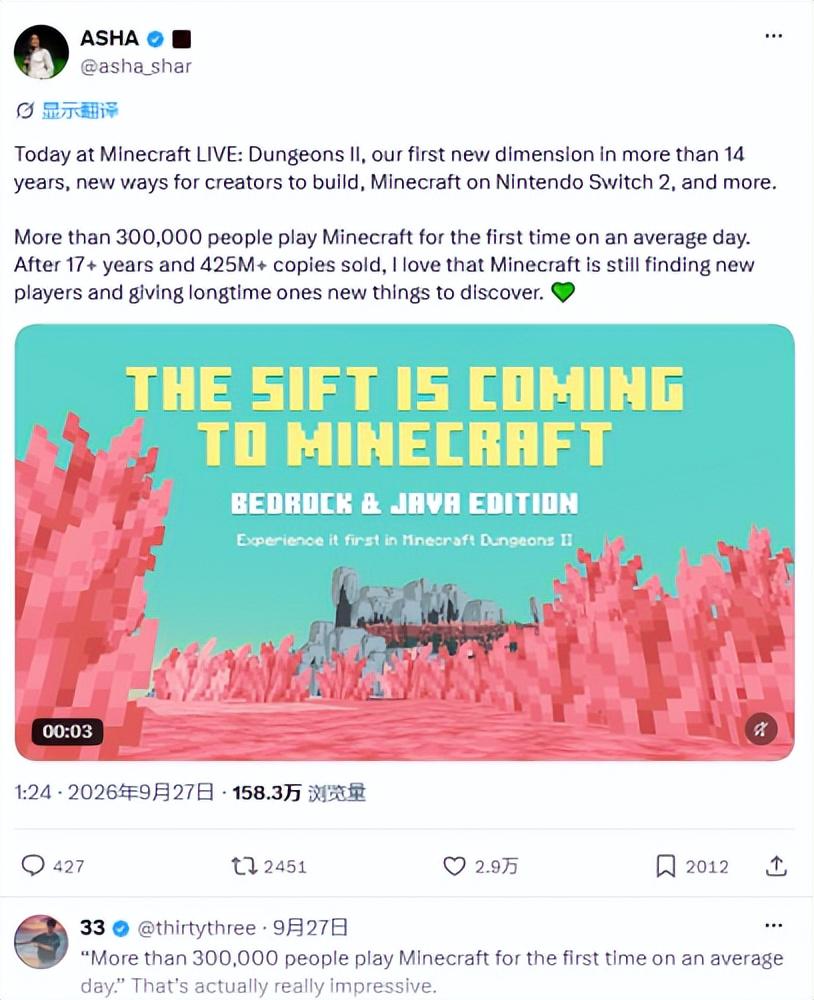
On September 27, 2026, Xbox CEO Asha Sharma stated that even after all these years, an average of more than 300,000 players experience Minecraft for the first time every day. After more than 17 years, sales have surpassed 425 million copies.
How did it come to be in front of us?
Looking back on this journey, we realize that it didn’t actually become popular through a “major promotional campaign.”
02
The Process of Establishing a Community
Notch initially released the game on the TIGSource forum, where it started out very small. So how were players “managed” back then? How did the game keep them coming back for more? The answer is actually very “indie”:
Minecraft wasn't even called Minecraft at first—it was called Cave Game.
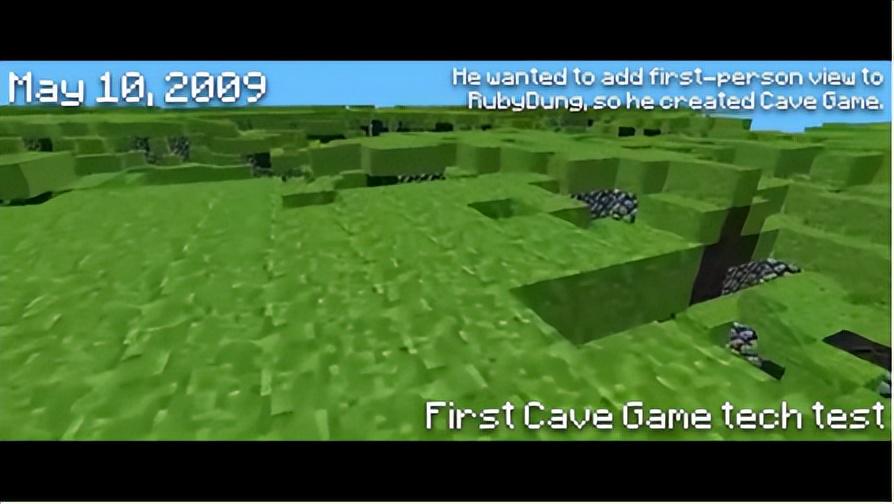
Notch began developing this project around May 10 or 11, 2009. He initially based it on the code from his previously abandoned game, RubyDung, and experimented with concepts he had just encountered in Infiniminer. By May 13, a working technical test version of Cave Game was already available.
This version is very important, but it is not available for the public to play. That same day, Notch recorded a video of this version and uploaded it to YouTube under the title “Cave Game tech demo.”
On May 14, 2009, Notch announced the name “Minecraft: Order of the Stone.” This name was suggested during community and IRC discussions at the time and was later simplified to simply “Minecraft.” Notch had been rapidly iterating on the prototype from May 13 through 16.
On May 16, Notch announced on TigIRC, “Minecraft alpha is available,” and then privately sent the test link to testers. Notch also explicitly requested that people test the game on Windows, Mac, and Linux, respectively.The version is recorded as mc-161607, dated May 16, 2009.
This version later became known as the "Classic private alpha," which was Minecraft's first private test.
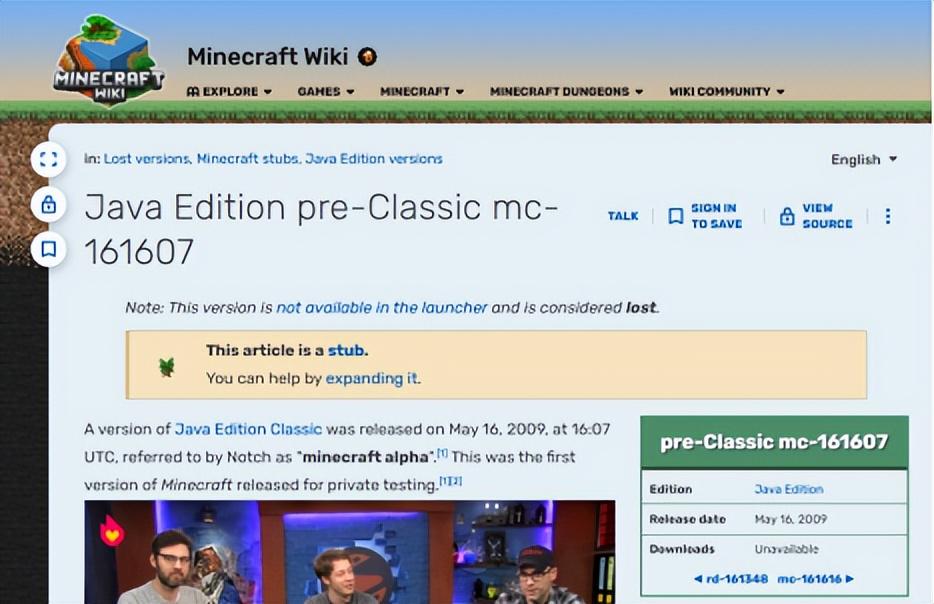
On May 17, 2009, Notch released the first public version of Minecraft on the TIGSource forum.
According to records kept by Guinness World Records, within minutes of the post being published, other users had already begun uploading screenshots and videos of their own work and suggesting new features.PC Gamer’s review of the forum logs from that time shows that the post was published on May 17, 2009, at 04:24:07, and the first player reply came just about 8 minutes later.
From this, we can see that Minecraft’s initial “operation” couldn’t even be called game operation in the traditional sense. What Notch was actually doing at the time was “development as operation”: developing and releasing the game simultaneously; updating it as he received player feedback.
Then something interesting happened. The very lifeblood of Minecraft—its community—sprang up on its own.
In June 2009, a user named citricsquid created the Minecraft Forums in response to the large amount of spam on Notch’s official Minecraft forum; the next day, a user named Quatroking proposed the creation of a Minecraft Wiki on the forums, and the Wiki was subsequently established, with Quatroking becoming its first administrator.
Even before Minecraft had a fully established operations team, players were already organizing their own in-person gatherings. In 2010, an in-person meetup that began as a simple initiative on forums and Notch’s blog eventually drew dozens of players; that same year, on the MinecraftCon server, players organized their own building contests, Spleef matches, and obstacle courses.
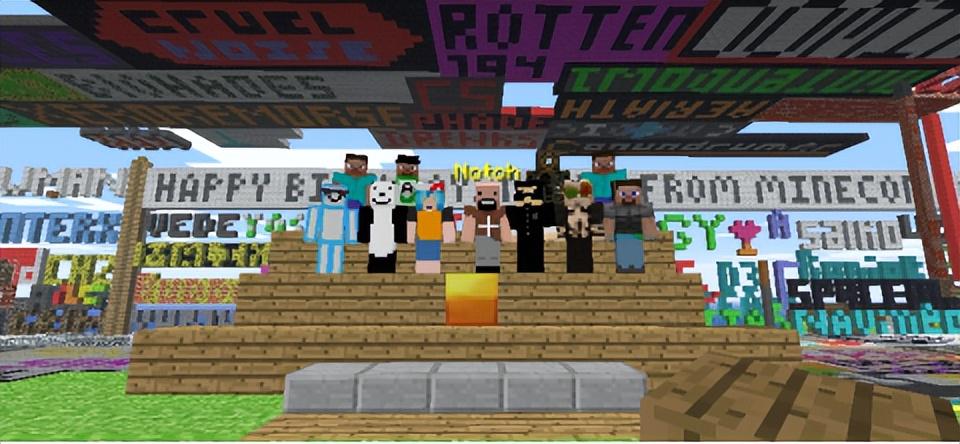
Notch and his fans at MINECON 2010
There was a very interesting response during a live interview at MinecraftCon 2010. When a player asked Notch how he handled player feedback, he said:
“My unofficial philosophy is to give people what they want, not what they think they want.”
“My general philosophy is to give players what they want, not what they think they want.”
A WIRED retrospective on the early days of Minecraft also noted that Notch himself was an active member of the TIGSource community and continued to interact with players on forums, Twitter, and Tumblr after the game’s release. As a result, Minecraft had virtually no “operations team” in the traditional sense during its early days; Notch himself served as the product manager, developer, and community moderator.
For indie games, prototyping, tech demos, and small-scale private testing are all essential; for games that rely on long-term operation, the community can serve as a vital infrastructure connecting developers, players, and content creators;What sets Minecraft apart is that this community has been deeply involved in the production, dissemination, and reproduction of game content from the very beginning, and this has been key to the game’s long-term success.
It began to take shape during the game's development. That is why, once the game was officially released, a feedback loop between the development team and the community formed almost immediately.
But more importantly, Minecraft’s core gameplay is inherently well-suited to “community-driven content creation,” which may be the true structural difference between Minecraft and many successful indie games.
The essence of Minecraft is not that “the developers design 100 levels, and the players complete all 100 levels,” but rather that the developers provide a set of rules, materials, and spaces that can be combined in endless ways.
For example, when a new block is added to the game, it doesn’t just mean “one more block.” It could mean a new structure, a new redstone mechanism, a new automation solution, a new map, a new mod, or a new server gameplay style… And, of course, this brings with it new videos, new tutorials, and new challenges.
Therefore, the value of a single official update isn’t just equal to the amount of content the developers create themselves, but also to how much content players can continue to produce using this new set of rules. This is precisely the fundamental difference between Minecraft and many traditional content-driven games.
In the early days of Minecraft, new content was added almost every week. As players played, discussed, and provided feedback, the game itself evolved accordingly. By 2010, Minecraft had sold more than 700,000 copies, and its popularity was largely driven by players sharing their creations and discoveries on YouTube, Reddit, and forums.
In January 2011, *Minecraft* surpassed 1 million copies sold during its beta phase; it reached 2 million in April and 3 million in August.By November 18, on the eve of the official release, the game had sold over 4 million copies and had more than 16 million registered users, with sales growth still accelerating—it took only about three months to go from 3 million to 4 million copies.The release of the official version in November felt more like a “coronation following a surge in popularity.”
03
Truly become a product that continues to expand
The points mentioned above demonstrate that Minecraft already had a stable set of rules in place before and after its release to support the game’s longevity, but they do not fully explain why, in today’s market—which is flooded with AAA titles and sees a steady stream of blockbusters every year—Minecraft is still able to maintain its popularity, attracting an average of 300,000 new players daily.*Minecraft: Dungeons 2* remained in the top three on Steam’s trending list less than 24 hours after its release.
These achievements are closely tied to Minecraft's product initiatives from 2010 to 2014. It was during this period that Minecraft truly began to evolve into a product capable of continuous expansion.
In September 2010, Mojiang AB was founded and began operating Minecraft. This marked the turning point when Minecraft truly transitioned from “Notch’s personal project” to “an organized game development company.”
In August 2011, Minecraft made its debut outside the PC platform with the release of the Pocket Edition, which first launched on the Sony Ericsson Xperia Play and later became available on additional mobile devices.
A few months later, Version 1.0 was released live at MINECON 2011: This Minecraft-exclusive event in Las Vegas not only marked the game’s official launch but also featured a host of community-focused activities, including keynote speeches, building contests, workshops, cosplay, and exhibitions.The inaugural MINECON attracted approximately 4,500 players from 24 countries.
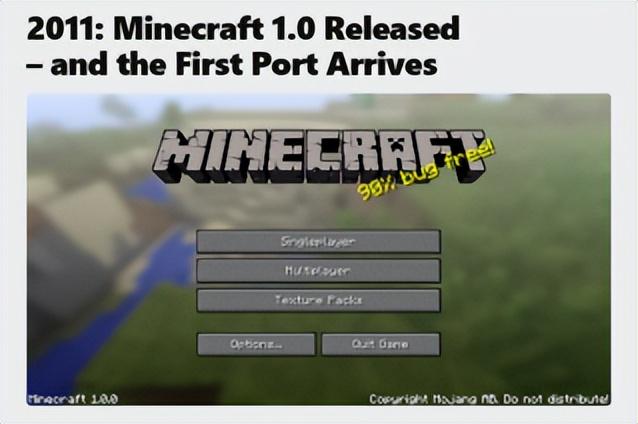
This is actually the first major change Minecraft has made at the product level: it has begun actively seeking "entry points for players beyond the game itself."
For Minecraft, which was originally available only for purchase and play on PCs, the mobile version means players can now enter their own worlds on their phones, while MINECON brings together players who were previously scattered across forums, servers, and video platforms for in-person events. Minecraft no longer interacts with players solely through the game itself; instead, it has begun to foster a series of ongoing community activities centered around the game.
In January 2012, Minecraft began a large-scale localization effort.
We all know what happened next.
I still remember when I was a kid and opened the app store—*Minecraft* was always in the top three of the recommended games. Its free-form and rich gameplay drew me in, and my classmates were also enthusiastically discussing the game.It wasn’t just people who loved surfing the web, browsing forums, and had strong search skills who could find this game—it came right to us on its own. And it continues to attract more and more players.
In May of that same year, Minecraft Xbox 360 Edition was released, featuring controls and multiplayer experiences optimized for the console. Within 24 hours of its launch, this version broke the previous digital sales record on Xbox Live Arcade, with over 400,000 players online simultaneously; in less than a week, sales surpassed 1 million copies.
What really sets the Xbox version apart is that it changed the way Minecraft is played. Originally a building game geared more toward PC players, it began making its way into living rooms and onto TV screens, allowing players to use a controller and join worlds with friends via split-screen and online multiplayer.
In other words, Minecraft’s existing “multiplayer creative” mode was further refined into a product experience that was more accessible to casual console players.At the same time, the 2012 “Pretty Scary Update” introduced new hostile mobs, such as witches and Wither skeletons, and the Command Block made its debut during this phase, providing players with new tools for creating more complex automations, mechanisms, and map designs in the future.
The Command Block is particularly noteworthy because it represents a shift in how Minecraft is updated: Mojang is constantly expanding the range of things players can do using the game's rules.
Originally, players could only build using the blocks provided by the game, but with the introduction of tools like command blocks, Minecraft began to take on characteristics more akin to a “game editor.” Players can design mechanisms, adventure maps, and complex game rules, and as a result, Minecraft has evolved from a “world where you can build” into a tool for creating new ways to play.
The 2013 Redstone Update took this evolution a step further. While Redstone wasn’t a new mechanic introduced in 2013, this update significantly expanded the scope of the Redstone system, allowing players to use components such as pressure plates, pistons, and sensors to build more complex mechanical and logic systems.
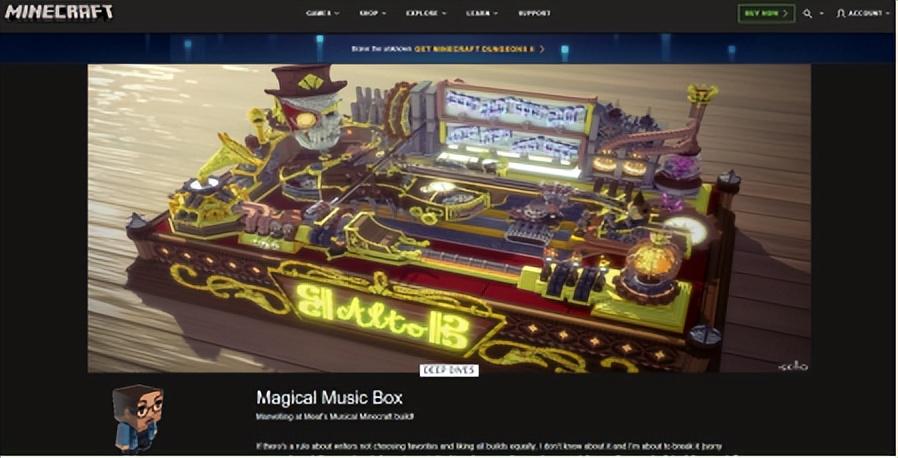
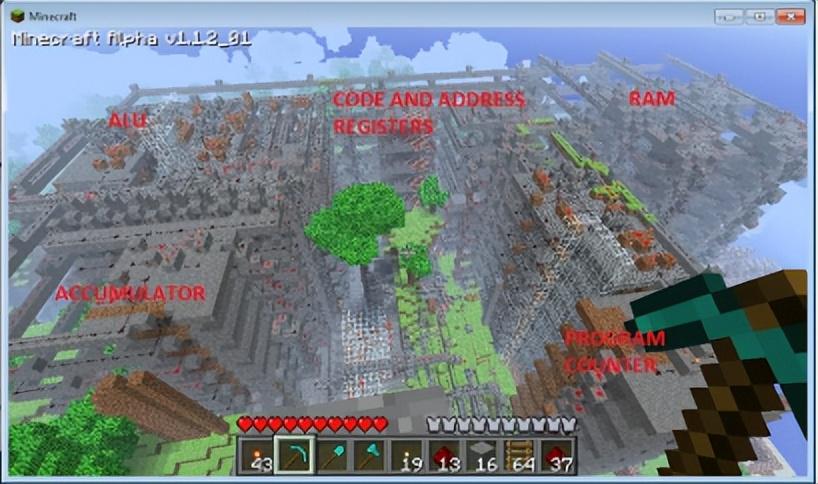
When Xbox officials later looked back on this period, they noted that players had even begun using redstone in Minecraft to build computer circuits capable of performing actual calculations. As early as 2010, players had created a 16-bit ALU; subsequently, the community went on to build an 8-bit computer equipped with components such as a CPU and memory.
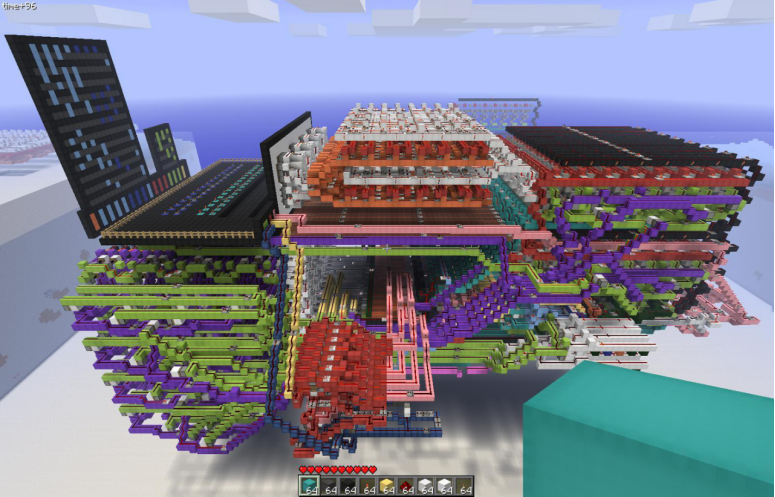
In other words, Mojang provides new “creation tools”: players can use these tools to create things that the development team hadn’t originally designed.
There is another example from this period that clearly illustrates Mojang’s development approach—the 2013 Horse Update.
Horses weren't entirely conceived out of thin air by the development team; rather, they were inspired by long-standing requests from the community and the popular mod Mo' Creatures.
Mojang later explained that horses had long been a highly requested feature among players, and Mo' Creatures had already demonstrated players' interest in this gameplay mechanic. As a result, the team contacted the mod's author in hopes of using their models and code to speed up development, and ultimately rewrote the relevant content.
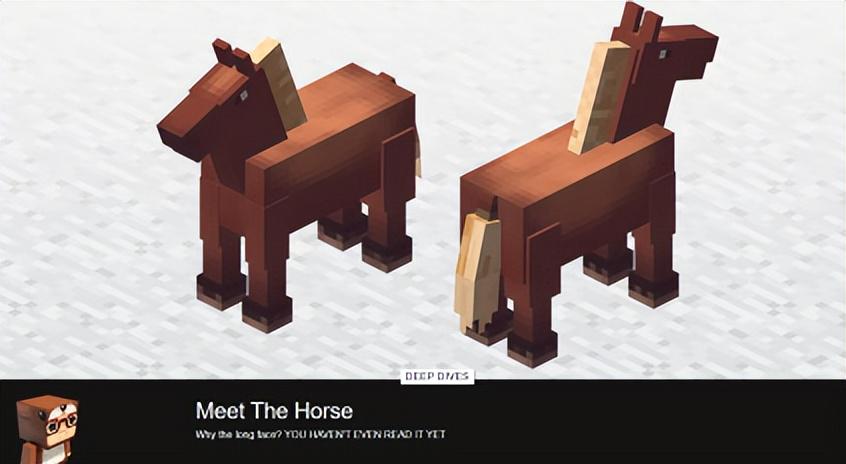
That’s the most interesting thing about the Minecraft community: when players say, “I want a horse,” they aren’t necessarily just posting to urge the developers to add one; in Minecraft, they can even go ahead and make one themselves.
In this way, “player feedback” has evolved from ordinary comments to players creating their own prototypes first.
This is what sets Minecraft apart from many traditional products.
A cycle has begun to emerge between developers and players: “players create—the developers adopt—the developers expand—players create again.”
At the same time, Minecraft continued to expand to new hardware platforms. In December 2013, the PlayStation 3 version was released, supporting local four-player split-screen and online multiplayer for up to eight players, and was developed in parallel with other console versions. By the end of 2013, the Xbox 360 version had sold 10 million copies;That same year, both the PC version and the Pocket Edition surpassed 10 million in sales.
In 2014, the Xbox One version was released in September. Players who already owned the Xbox 360 version could upgrade for just $4.99, re-download their previously purchased DLC, and transfer their worlds and content to the new console;The Xbox One version also features a world up to 36 times larger than that of the Xbox 360 version.
When viewed together, these developments reveal that from 2011 to 2014, Minecraft was actually focused on three very specific things:
Expand the ways players can access Minecraft, expand the range of activities players can engage in once they’re in the game, and continuously incorporate players’ established behaviors into the product.
At this stage, Minecraft began to establish a product cycle in which the more players there are, the more content is generated; and the more content there is, the easier it is to attract new players.
It was precisely at this juncture that Microsoft began to see more than just “a best-selling indie game.”
When Microsoft announced its $2.5 billion acquisition of Mojang in 2014, the company specifically noted that Minecraft had already been downloaded more than 100 million times on PC and had become one of the top online games on Xbox Live; Microsoft’s initial collaboration with Mojang began with bringing Minecraft to consoles.Microsoft made it clear that, following the acquisition, Minecraft would continue to be available on multiple platforms, including iOS, Android, PlayStation, Xbox, and PC, and that it hoped to continue expanding the Minecraft community. Minecraft gradually transitioned from an independent development phase led by its founder to being jointly operated by a professional team and Microsoft’s platform ecosystem.
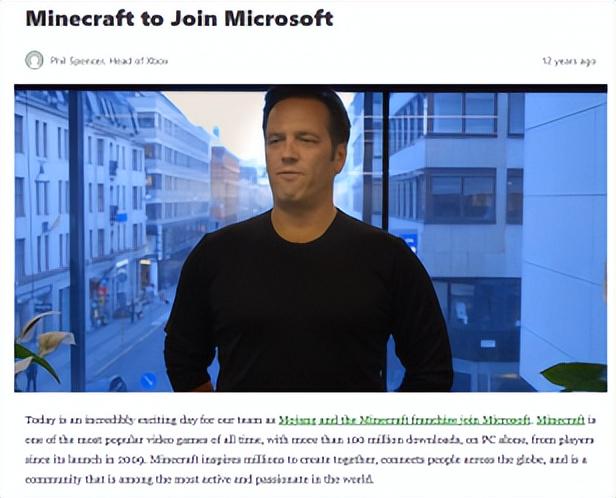
Thus, the years 2011–2014 served as proof that Mojang had created something that could be called a masterpiece: the same set of game rules could continue to expand alongside new platforms, gameplay tools, and player-generated content, without having to start over by releasing sequels. This also became a crucial foundation for the game’s continued operation over the following decade or more.
04
How to Preserve Minecraft’s Rich UGC Ecosystem
The acquisition by Microsoft was followed by the departure of the three founders, but Microsoft did not turn it into an exclusive game. Instead, it maintained its cross-platform strategy, preserved the community’s presence, and further developed this community ecosystem into a platform. Clearly, Microsoft recognized the importance of the MC community, just as they said, and also realized that it could combine the maintenance of a UGC ecosystem with community operations.
First, let’s explain a term that frequently appears in the gaming industry: UGC, which stands for User-Generated Content.
Simply put, players or community creators use the tools and rules provided by the game to create content, which is then shared with other players to experience.Minecraft has had this kind of ecosystem from the very beginning. Players can create maps, skins, mods, redstone contraptions, and server-based mini-games, and this content is then shared through forums, servers, and YouTube. However, before Microsoft took over, a significant amount of UGC still existed within community systems outside the game itself.
After Microsoft took over, it did not incorporate the entire Minecraft community into its official store, but instead provided official distribution and monetization channels for a portion of the user-generated content (UGC).
In April 2017, Minecraft officially announced the Marketplace, stating that it would allow community creators to sell content through the official platform; on June 1, the Marketplace officially launched alongside the Discovery Update.The initial lineup of content included adventure maps, minigames, texture packs, and skin packs, with community creator teams such as Noxcrew, BlockWorks, Blockception, and Razzleberry Fox participating in the launch.
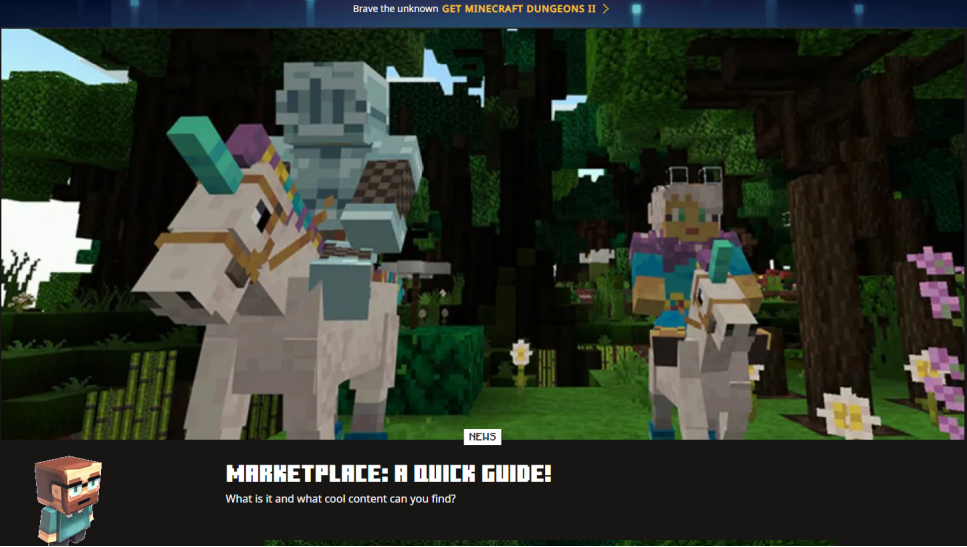
This has changed the way UGC is distributed. In the past, players who wanted to find a map, a skin pack, or a set of mini-games usually had to look outside the game; the Marketplace, however, directly links “creator production—official screening—in-game distribution.”
This program does not allow just any player to directly upload and sell their creations.Under the current Minecraft Partner Program, creators must first have original content that has been shared with the Minecraft community—such as maps, skin packs, texture packs, hosted servers, add-ons, or Realms content. After submitting their work, it must undergo a quality and suitability review by the Minecraft team; only content that passes this review can be released to players, who can then purchase it using the in-game currency, Minecoins.
Officials made it clear at the time that they hoped this system would allow Minecraft creators to earn income while providing players with curated community content.
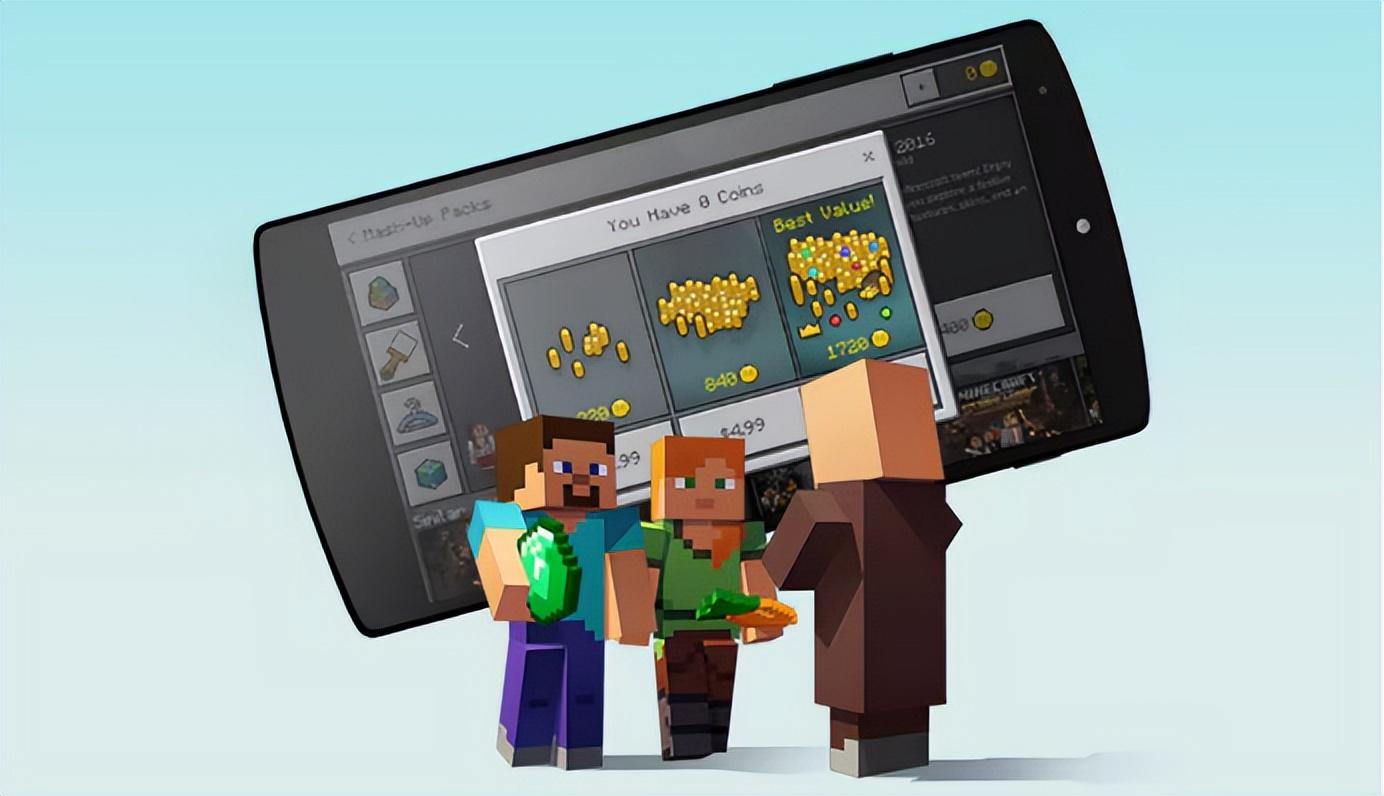
This system eventually grew to a truly commercial scale. In November 2018, Microsoft announced that Marketplace had 77 partners, with creators’ works generating a cumulative total of more than 13 million purchases.
Official 2021 data from Minecraft illustrates the scale of this phenomenon: at that time, Minecraft had nearly 140 million monthly active users, Marketplace creators had earned a cumulative total of over $350 million, and players had downloaded more than 1 billion items from the Marketplace;The same report also showed that Minecraft was the most-watched game on YouTube in 2020, with related videos garnering over 200 billion views.
In other words, after Microsoft took over, Minecraft’s user-generated content (UGC) was not replaced by official content; instead, an additional channel for official certification and monetization was established. This channel continues to generate high-quality creative content and has yielded significant economic benefits.
But Minecraft’s UGC extends far beyond the Marketplace. If the Marketplace represents “official commercial UGC,” then Aternos represents a different kind of ecosystem—one that exists outside the Marketplace and is still run independently by the community.
Aternos' core service is Minecraft server hosting.
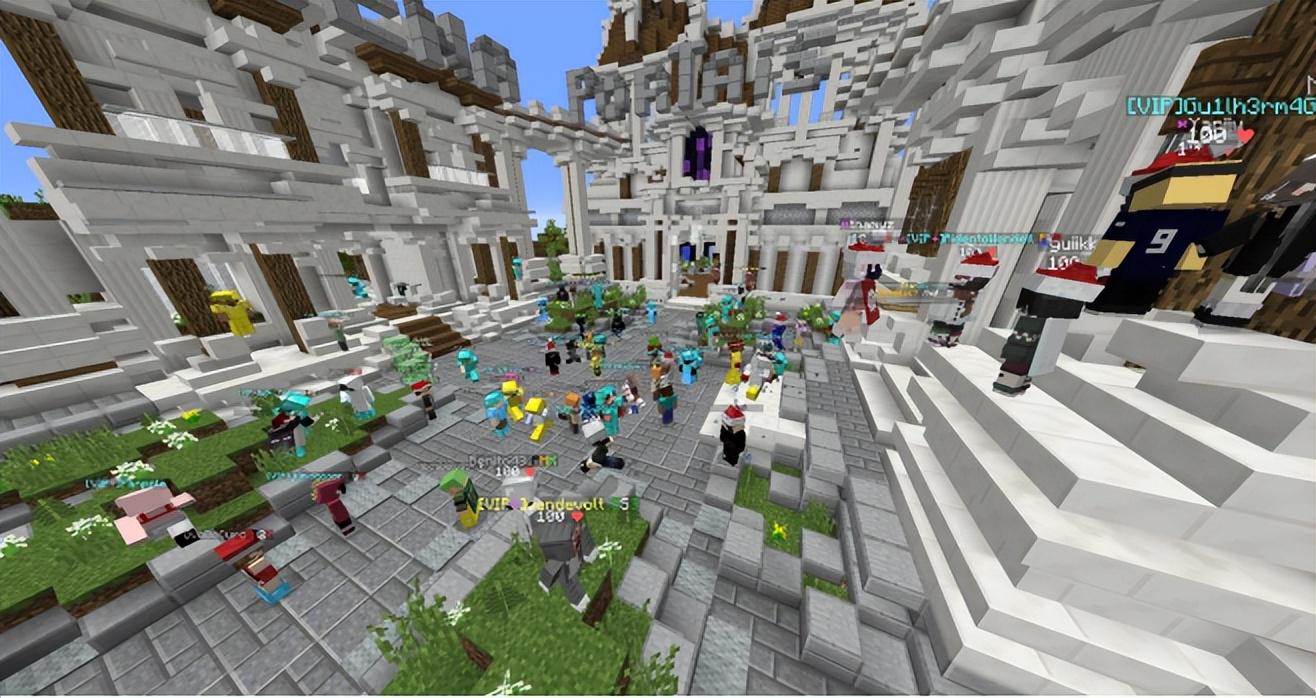
During Gamescom 2026, Aternos partnered with Cytooxien to host an MC Party, giving players the chance to team up and play Minecraft mini-games at the booth—in addition to playing online—and win prizes.
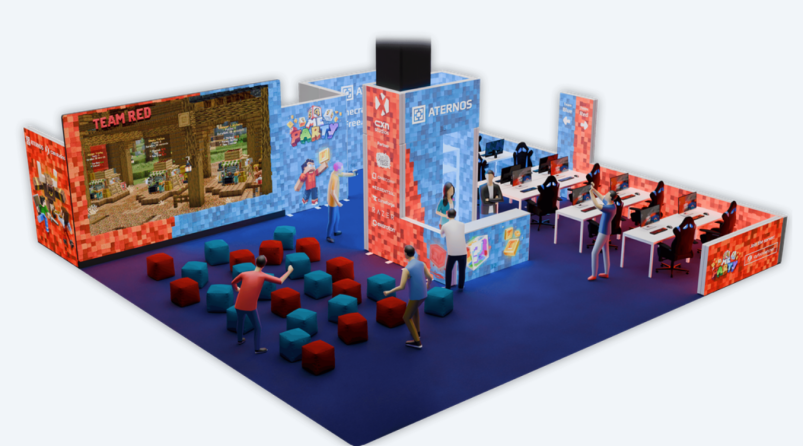
This case study clearly illustrates the current state of the Minecraft community: Players not only consume official content, but also form their own long-term communities centered around servers, mini-games, and creators—and even extend these online community connections into the real world.
However, as game sales have continued to rise and the UGC business ecosystem has expanded, another issue regarding infrastructure has emerged:
How can we bring these players, who are scattered across different devices, back into the same ecosystem without changing platforms?
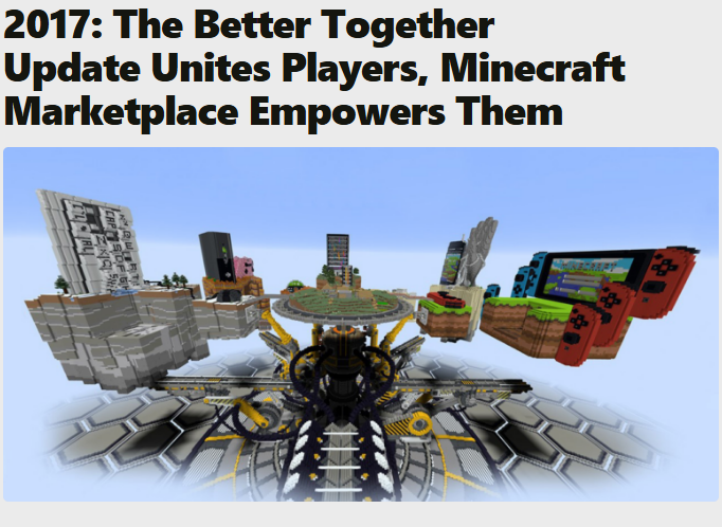
In 2017, Microsoft’s “Better Together” initiative introduced an official Minecraft update that the developers at the time described as one of the most significant updates in recent memory: players could play together across Xbox, mobile, VR, and Windows 10, and could also access worlds in Realms across devices. In 2018, the initiative expanded further to include the Nintendo Switch, creating an even larger cross-platform network.
If players are divided into several isolated groups—such as Xbox players, mobile players, Windows players, and VR players—due to differences in hardware, then the size of the Minecraft community is effectively being artificially fragmented. Better Together solves this problem by bringing players who were previously scattered across different devices back into a single ecosystem.
By now, we’re all familiar with cross-platform multiplayer, but for gamers back then, Minecraft was one of the first titles to make cross-platform multiplayer a core feature of a large-scale sandbox game. Prior to that, games that supported cross-platform multiplayer included the *Final Fantasy* series and *Rocket League*.
Microsoft did not replace the Minecraft community; rather, it added official commercialization and cross-platform infrastructure to that community.
It is only now that this platform can truly fulfill multiple functions simultaneously, including content creation, gameplay expansion, player retention, and monetization.
In 2021, Microsoft reported that Marketplace creators had earned a cumulative total of over $350 million, with related content downloaded more than 1 billion times;Meanwhile, the Java Edition mod, server, and third-party development ecosystems remain active. As of September 2026, the Minecraft section on CurseForge listed over 320,000 mods and related projects, with popular projects continuing to receive updates.
As a result, Minecraft has gradually developed a long-term business model that differs from traditional buy-to-play games.The development team does not have to shoulder the entire burden of content production for 17 years on its own; instead, it continuously adds new blocks, mobs, tools, environments, and rules through updates. Players, mod authors, server developers, and content creators then recombine these elements to create gameplay experiences that the official team had not originally designed.
05
A New Dimension: A Vast Selection of Resources, All in One Place
And "The Sift" is yet another example of how this mechanism continues to this day.
At Minecraft Live 2026, Game Director Agnes Larsson, when discussing Minecraft’s long-term plans, made it clear that Adventure remains one of the game’s primary focuses.
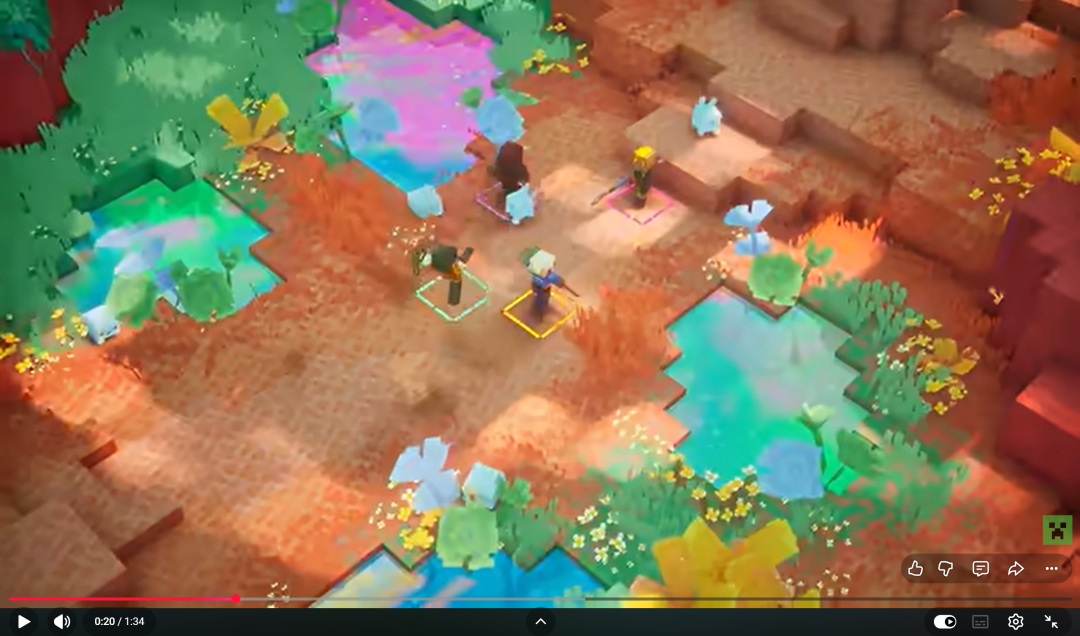
Over the past 14 years, Minecraft has continuously expanded with oceans, caves, villages, and the Nether, but these additions have always been within the existing world. Now, The Sift has become a new dimension in its own right. It introduces new spaces and ecosystems on top of the existing rules, providing players with new material for their next round of creation.
Mojang doesn’t view “The Sift” as merely an expansion for *Minecraft Dungeons II*.Design Director Laura De Llorens mentioned on the official Xbox podcast that the team wanted to “bring something new to the Minecraft universe,” so they began building this entirely new dimension right from the start of *Dungeons II*’s development; the team also needed to ensure it both fit within Minecraft’s existing lore and featured its own distinct ecosystem, art style, and exploration experience.
She also specifically noted that the process was “extremely complex” and involved many participants. More importantly, when asked if she felt any pressure about “adding a new dimension for the first time,” she revealed that the team had actually been discussing the possibility of a “fourth dimension” for “quite some time,” and that such a project takes a long time.
What is The Sift really trying to solve?
Laura’s answer here is very specific. She says the team wants The Sift to be a world that is neither purely hostile nor purely friendly, but rather one that “exists entirely on its own.” It should have its own ecosystem, where creatures can even adapt to environments that would otherwise harm players.At the same time, the team also wants it to feature a brand-new art style never before seen in Minecraft, so that players know at first glance: “This is a place you’ve never explored before.”
So why include "The Sift" in *Dungeons II*?
Laura explained that the team was facing not only two distinct user groups—veteran and new players—but also the Minecraft community’s expectation that “this should be a worthy expansion of the Minecraft universe.” The first generation of *Dungeons* needed to make players recognize that “this is Minecraft.”The second installment, however, had to meet a dual requirement: it needed to be recognizable as both Minecraft and *Dungeons I*, while also being fresh enough to give players the sensation of exploring something for the first time. *The Sift* was introduced specifically to resolve this tension.
Epilogue
This approach hasn't actually changed fundamentally from the way Minecraft has been updated over the past decade or so.
In 2024, on the 15th anniversary of Minecraft, Jens Bergensten was interviewed by Australia's Community Media and discussed why Minecraft has remained popular for so many years.
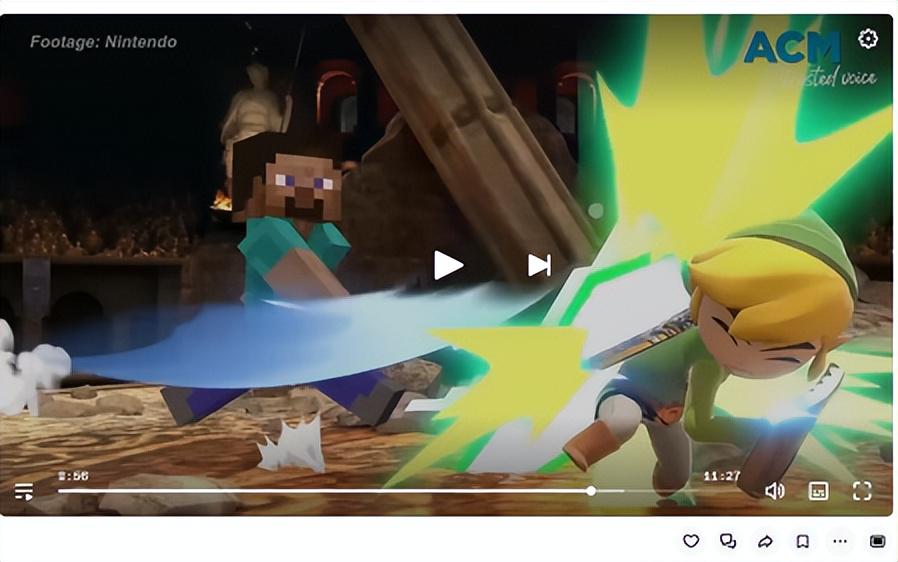
He put it very bluntly: Players aren't leaving Minecraft for good; they're just taking a break and will come back later.
When asked, “What else can be added?” his response was even more insightful: The core of Minecraft remains creation and telling your own stories; in the future, more environments to explore will be added, along with “toys” that players can use in Minecraft.
Jens also spoke directly about the mod community: The mod community continually inspires Mojang with its creations.He believes that creating and playing Minecraft are almost one and the same—players create their own content while playing, and then share their creations with friends, on YouTube, and across other social media platforms; this “symbiosis” between the community and creativity is also a key reason for Minecraft’s continued popularity.
From the early days of blocks, redstone, and command blocks, to today’s Game Drops, and now the new dimension introduced after a 14-year hiatus, Mojang has consistently done one thing—offering new possibilities and leaving the rest up to the players. That’s why, 17 years later, Minecraft continues to welcome a huge number of players who are experiencing this world for the first time every day.
Sometimes it’s turning materials into music boxes; sometimes it’s “playing rhythm games in Minecraft” or “playing console games in Minecraft”; and sometimes it’s using “villagers” to build “perpetual motion machines”… Whether it’s hardcore gaming or “bug + bug = work,” it’s all incredibly captivating, and the endless possibilities within these “communities” attract new players every day.
Seventeen years have passed, and Minecraft still hasn’t become a “finished” game; instead, Mojang continues to add new possibilities, and every day—thanks to players updating mods or creating new tutorials—it can become a whole new Minecraft.
原创文章,作者:游茶妹儿,禁止转载:https://youxichaguan.com/en/archives/221660