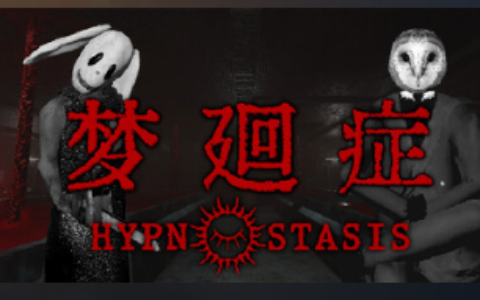
Last month, two AI-powered B2B games that had been highly anticipated by investors began their beta testing almost simultaneously: MuYan ZhiYu’s *Star Sleep* launched its second beta test, “Tracing the Stars,” while Infinite Valley’s *Infinite Valley* also opened its second beta test, “Heartbeat Restart.”
The former completed four rounds of financing in quick succession during the first half of 2024, raising a total of nearly 300 million yuan, with a valuation now reaching $120 million; the latter secured more than $10 million in investment from ZhenFund and IDG Capital less than six months after its founding, with a valuation of nearly $70 million.
"AI erotic games" were certainly a trendy concept in 2024. That year, *Love & Deep Space* and *Beyond the World* were released one after another, and the domestic erotic game market reached unprecedented levels of popularity.At the same time, a research report by China Research & Puhua indicates that the market size of China’s smart companion industry reached 38.7 billion yuan in 2024. Whether viewed from the perspective of AI companionship or the otome game market, the AI otome game sector holds limitless potential.
Back then, when I talked with many seasoned visual novel players about AI-driven visual novels, we were all excited about these products that broke away from the established narratives of traditional visual novels and allowed for free-form dialogue. However, when we discuss the topic today, some of them have shifted their focus to human-AI romance, using Vibe Coding to create more personalized virtual lovers.
As one generation of models replaces a batch of products, today’s AI-powered mobile games are losing ground in the market.
The frontrunner in this space is *EVE*, which is also currently the only officially launched AI-driven otome game.Even a casual promotional video from its early days garnered over a million organic views on Bilibili. Its developer, “Natural Selection,” had already completed two rounds of funding before the product’s launch, with investors including Kaiying Network, Alibaba, Ant Group, and Five Source Capital, among others; the Series A round alone raised over $30 million.
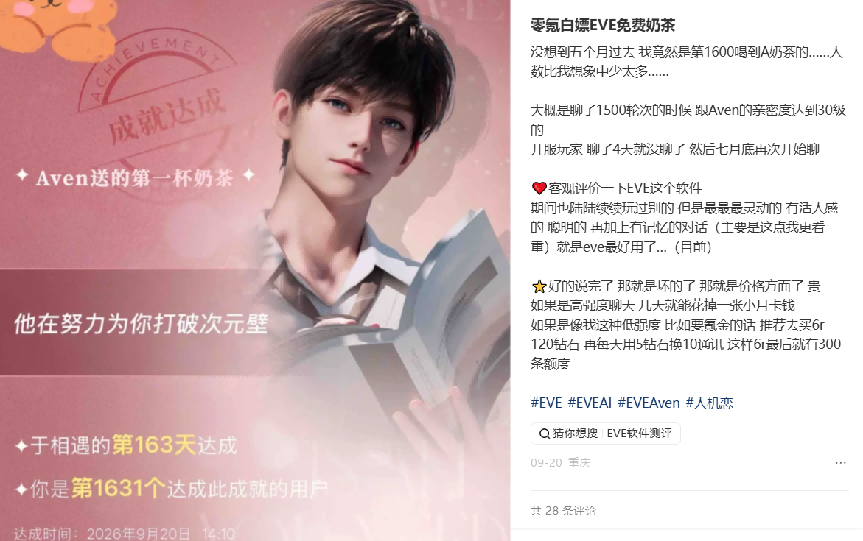
The enthusiasm of investors did not translate into commensurate market returns. In April 2024, *EVE* launched its open beta, but even several months after launch, the number of active players remained low.In *EVE*, reaching Level 30 in the “Affinity” system rewards players with a free cup of milk tea. On September 20, a player posted a screenshot showing they had reached Level 30 and claimed their milk tea—they were the 1,631st person to receive the milk tea for that specific character. Other players estimated that the total number of characters that had received the reward was around 5,000.
The AI-powered mobile game market—how did it come to this?
01
Trapped by Expensive Tokens
Ultimately, the key selling point that sets AI visual novels apart from traditional visual novels is their level of freedom.
In traditional otome games, dialogue consists of pre-set multiple-choice options, and the story follows a predetermined script. AI otome games promise a different kind of experience: you’re not confined by the plot or character archetypes. You can chat with the character as your true self, act cute, and tell him about your day—he’ll remember what you like and gradually build memories that are uniquely yours.
This scene is truly captivating. The problem is that it’s built on large language models, and every round of conversation in a large language model consumes tokens.
Currently, almost none of the AI-powered mobile games on the market have developed their own large language models. MuYan Zhiyu, the company behind *Star Sleep*, partners with Zhipu AI to access underlying capabilities; *Infinite Valley* integrates mature models such as DeepSeek and ChatGPT, with different functions connected to different APIs;*EVE* also relies on external models to support its dialogue system. To put it simply, these products are all middlemen for large language models—every additional sentence a user types costs them more money to pay to their upstream providers.
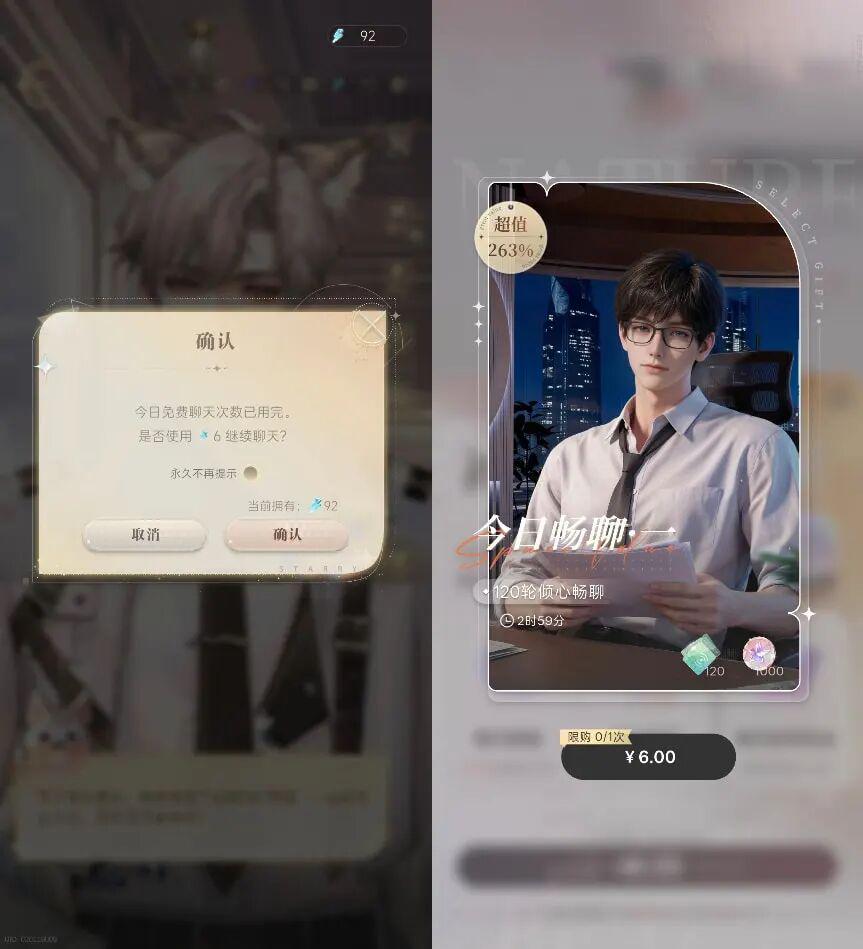
It’s hard to balance the books on this. “Free Chat” means there’s no limit to how much users can chat.During the first closed beta test of *Infinite Valley*, the official data showed “an average of 160 chat rounds per user on the first day and an average session duration of over 60 minutes”—and these figures were from the closed beta phase, when the user base was extremely small. If the user base expands tenfold or even a hundredfold, no one can say for sure how the costs will be covered.
This is the biggest point of controversy since *EVE* launched. When players opened the game, they discovered that the “free chat”—touted as a core feature—offered only 10 free rounds per day; to continue chatting, they had to purchase a monthly pass, available in three tiers: 68 yuan (1,360 rounds of chat), 128 yuan, and 328 yuan (6,560 rounds of chat).Compared to the average monthly pass price of around 30 yuan for traditional otome games, 68 yuan is more than double that amount, while 328 yuan is ten times as much. Negative reviews poured in, and *EVE*’s rating plummeted to 2.2 just after launch.
This isn't just a challenge for *EVE*; it's an issue that everyone developing AI-driven games must confront.
02
After toning down the AI, they found themselves competing in the China League Two
Faced with the challenge of token costs, many AI games have taken the same approach: reducing the proportion of AI dialogue and filling the gap with more game content.
"Star Sleep" is following this path. The second beta version significantly expanded the story, card collection, and simulation management content, while the AI chat now serves more as a supplementary feature. "Star Sleep" is even the only known AI-powered otome game to have obtained a game license.On July 22, 2026, it appeared on the approval list for domestically produced online games. In contrast, *Infinite Valley* still lacks a game license, and its founder, Cai Mao, insisted in an interview that “*Infinite Valley* is an app, not a game.”
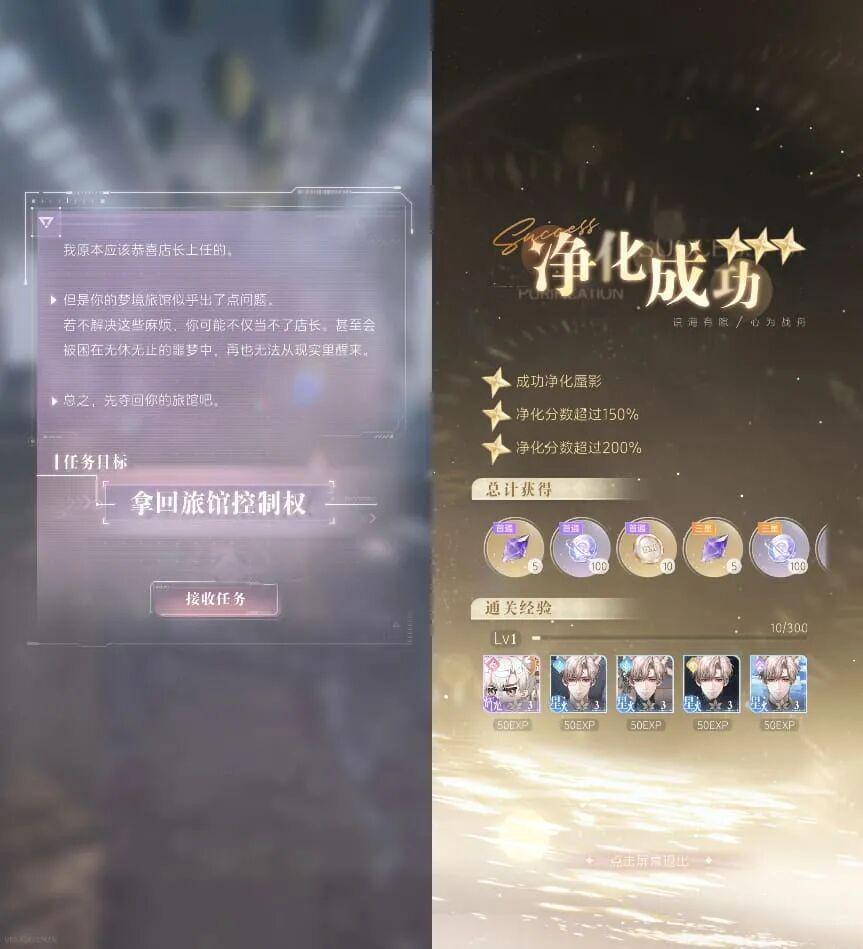
From a business perspective, *Star Sleep*’s decision is easy to understand: rather than continuing to drain resources on token costs, it’s better to return to the tried-and-true model of selling card art, storylines, and character-development resources. However, the cost of this move is that *Star Sleep* has shifted from the “AI otome game” niche and ventured into the highly competitive domestic otome game market.
This market is much tougher to break into than the AI companion space.Products flood into the market in waves, only to be discontinued and phased out in waves as well. The players who remain have seen enough high-quality offerings, so their expectations for storytelling, character development, and emotional depth will only continue to rise. To gain a foothold in this space, you must either move people with compelling narrative writing or keep them engaged with a deeply immersive sense of companionship.
Achieving all of this requires a comprehensive, well-established industrial infrastructure.
"Love & Deep Space," which generated 2.4 billion in revenue in 2025, had a development team of 300 people alone.In contrast, among this group of AI-driven otome game startups, the *Star Sleep* team had fewer than 30 members in its early stages, *Infinite Valley* had about 70, and even *EVE*—the relatively largest of the bunch—had a staff size of less than one-fifth that of *Love & Deep Space*.
The gap in manpower directly determines the upper limit of content production. In the early stages of *Star Sleep*, multiple male protagonists were planned, but in the end, only the character “Star Sleep” was brought to life. Infinite Valley, on the other hand, had planned two characters—Lu and Sol 007—which were originally intended to be two separate products but were ultimately merged into a single one.
A shortage of personnel is only one aspect of the problem; distribution and long-term operations also require significant resource investment—areas where startups often struggle to keep up. During its beta testing phase, *EVE* briefly broke into the mainstream by offering “free bubble tea,” but this strategy was quickly copied by Qianwen and Yuanbao in their large-model marketing campaigns, preventing it from establishing a sustainable competitive advantage.
03
AI Has Not Brought New Experiences to B-Games
The gap in team size is obvious, but there is another problem that is even harder to solve. An industry insider noted that most of the key decision-makers at these AI-focused indie game studios have never worked on indie games before, making it virtually impossible for them to deliver a polished game product in a short period of time.
Zhang Yueguang, the founder of “Star Sleep,” graduated from Tsinghua University’s Department of Computer Science and Engineering and has led the development of several well-known products at Alibaba and ByteDance; “Miaoya Camera” is one of his creations.Producer He Dailan, a user operations specialist with a background at Alibaba, developed the creator ecosystem for Miaoya Camera. Prior to that, she served as the administrator of the nation’s largest Super Junior fan site and has conducted in-depth research on Gen Z communities.Cai Mao, founder of *Infinite Valley*, has a background in investment. He built Maomai FM into China’s largest radio drama platform and also incubated a virtual idol boy band, whose merchandise generates over 100 million yuan in annual sales.
On the surface, these resumes all look impressive, but when you break them down, it becomes clear that most of them specialize in internet products, user operations, and IP incubation, with virtually no experience in game development.
Both companies have also brought in talent from the gaming industry: The lead artist for *Infinite Valley* comes from the 3D team behind *Swords and Fairy Tales 3*, which has over a decade of experience—a fact that Cai Mao personally confirmed in an interview;*Star Sleep* is rumored to feature an artist from a well-known eroge title, though the company has not officially confirmed this. However, these game industry professionals primarily handle operational tasks; decisions regarding product development, strategic direction, and priority setting are still made by the founders with backgrounds in the internet and AI sectors.
A misalignment in the team's culture has led to a series of obvious product shortcomings.
First of all, the storytelling doesn’t hold up to scrutiny. Nearly all AI-themed otome games have been criticized by players for their weak plots and highly homogeneous narrative templates:*EVE*, *Infinite Valley*, and *Star Sleep* all set their stories within a sci-fi framework where humans venture into the AI world, attempting to explore grand themes of AI and humanity—yet all these grand settings ultimately serve as mere vehicles for romantic subplots. The world-building feels more like a shell, and the characters’ professions are little more than superficial labels.
In *Infinite Valley*, Lu is a psychologist, and her clients inexplicably become props in romantic storylines; in *Star Sleep*, characters say things like, “I hear humans use their bodies to attract each other,” while standing completely naked—before they’ve even gotten to know the player.Some players have commented that these main storylines seem to have been cobbled together on the fly to accommodate the AI chat feature.

Second, the AI companion experience—which was supposed to be the flagship feature—also failed to deliver a satisfactory result.
In the intro test for *Infinite Valley*, Sol007 was criticized by players for “provoking people with every line” and having a “cheesy dialogue style.” In the latest test version, Lu often simply repeats what the user has said, drifts off-topic mid-conversation, or makes contradictory statements.After *Star Sleep* proactively reduced the weight of AI dialogue, the characters became locked into fixed plot paths, and the scope for free dialogue ended up being not much greater than in traditional otome games.

When asked about the book he’s currently reading, Lu could only give a general response.
Crafting a lifelike AI lover is about much more than just tweaking a large language model’s interface. It requires comprehensive, layered, and nuanced character profile documents, as well as a vast amount of customized dialogue scripts to serve as the foundation; the large language model is merely responsible for “bringing these settings to life.”In reality, however, some products have already entered the public promotion phase, while game copywriting positions are still being actively recruited, and the establishment of copywriting teams is lagging behind.
Setting aside writing skills, current AI otome games generally have shortcomings in fundamental areas such as art, UI, and long-term retention.AI technology has not brought any groundbreaking new experiences to the otome game genre; *Star Sleep* and *Infinite Valley* remain trapped within the traditional narrative frameworks and gacha business models of otome games. The visual quality and interface design are unremarkable, and compared to the first generation of domestic otome games from 2017, they have not achieved a qualitative leap forward.
Moreover, neither *Star Sleep* nor *Infinite Valley* has managed to create a reason for players to open the game every day. In contrast, *EVE*—the most controversial of the three—is the one that most closely resembles a mature mobile game, and the fact that its producer has a background in game development is perhaps no coincidence.
Technology and capital cannot directly make up for the industrial capabilities that the gaming industry has built up over many years. Relying solely on funding and AI concepts makes it difficult to master the fundamentals, such as storytelling, character development, and version management.
04
The Dilemma of Latecomers
Of course, the team can be gradually built up, and the game content can be continuously refined, but time is clearly running out for AI-powered otome games.
In early 2024, when the “AI + otome game” concept was just gaining traction, there was indeed a group of potential users in the market who were full of anticipation. Players who were tired of the traditional multiple-choice dialogues in otome games were eager for virtual lovers who could authentically respond to their emotions and engage in free-flowing conversation.At that time, Character.AI and Xingye were still relatively new concepts; if a sufficiently polished AI otome game had been released back then, there would have been an opportunity to capitalize on the initial wave of popularity.
But these products didn’t make the cut. *Star Sleep* was greenlit in February 2024, but its internal plans were scrapped three times, and its first beta test was pushed back to December 2025;*Infinite Valley* didn’t begin development until June 2025—which was already considered a fast start in this sector—but by September 2026, it had still only reached the second beta test.
"EVE" launched early this past April, but a handful of veteran users have indicated that the hype surrounding AI-driven visual novels has already faded.

AI companion products have gone through several rounds of shakeups—from Character.AI to Xingye to Zhumengdao, and on to the role-playing features built into various large-model platforms. Users are no longer unfamiliar with—or surprised by—the idea of “chatting with AI.”More importantly, the barrier to entry for “vibe coding” is dropping rapidly. Today, any user with even a modicum of technical skill can use Cursor or similar tools to build a fully customized AI partner in just a few hours—tailored exactly to their preferences, from appearance and personality to speaking style.
Last July, I interviewed a visual novel player who had originally intended to use a character’s backstory from a visual novel to recreate a romantic partner from a traditional visual novel on an AI platform. During the process, she discovered that AI could do far more than the game—it wasn’t constrained by plotlines, had no stamina bars, didn’t require gacha draws, and allowed her to adjust personality parameters at any time.Eventually, she abandoned the original visual novel character framework altogether and instead formed a relationship directly with the AI itself. “It’s freer than any visual novel,” she said, “and it belongs only to me.”
This highlights the most awkward position of AI otome games: the “freedom” they promise doesn’t measure up to that of an AI lover created by the player themselves; yet the “gameplay” they offer falls short of that found in mature, traditional otome games. Caught in the middle, they fall short on both counts.
At the same time, the AI companion sector itself is facing an increasingly stringent regulatory environment. Domestic regulations on AI-generated content continue to tighten, with issues such as the protection of minors, the emotional boundaries of AI characters, and data privacy all coming under regulatory scrutiny.The situation overseas is no less challenging; platforms such as Character.AI have already sparked legal disputes and social controversy due to issues of emotional dependence among underage users. All of these factors are squeezing the survival space for AI-powered dating games.
The female-oriented gaming market has never lacked users willing to pay. However, after undergoing several rounds of market education, these users’ expectations for product quality have also risen accordingly; having seen products of sufficiently high quality, they won’t lower their standards just because a game is powered by AI.
AI-powered otome game products entered the market armed with technological prestige and capital backing, only to discover that they were not facing a “blue ocean,” but rather a “red ocean”—a market already fiercely competitive and with a user base that had been thoroughly vetted.They must catch up with traditional otome game developers—who have a decade of experience—in terms of gameplay, while also racing against rapidly evolving large-model products to deliver an AI experience that keeps pace with the times.
But they may not have much time left.
原创文章,作者:游茶妹儿,禁止转载:https://youxichaguan.com/en/archives/221636