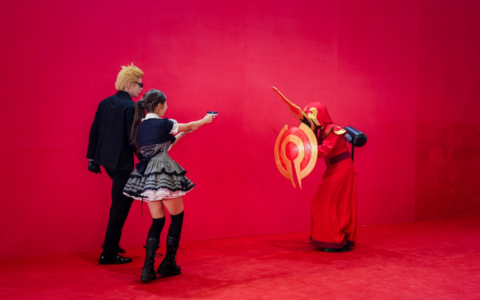
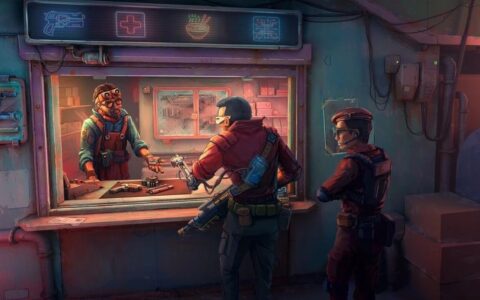
At the beginning of the month, yet another dark-horse roguelike action game burst onto the scene.

On March 30, *Land of Ashes*, developed by MyACG Studio, launched in Early Access on Steam. In less than two weeks, sales surpassed 100,000 copies, and the game earned an 84%–86% "Positive" rating in its first week.This achievement places the game among the top tier of Chinese-developed roguelike action titles, especially considering that the team had no prior publishing experience or marketing budget and relied entirely on word-of-mouth among players.
As of this writing, the most common comment in reviews of *Land of Ashes* is the word “thrilling.”
The thrill comes from multiple dimensions. For example, players can enjoy a customizable action system—*Land of Ashes* completely breaks down the fixed combos found in traditional action games, allowing each attack to be developed independently.You can enhance the Cross Slash into a high-burst physical finishing move, or imbue it with a poison effect to synergize with poison-based builds.Taking it a step further, you can actively remove certain follow-up moves to streamline combos, or forcefully insert new attack modules into a combo—such as replacing the opening move with a throwing knife, or adding a sweeping attack at the end of a combo. The power to edit combos lies entirely in the player’s hands.
In addition, with its unique “tag-based” build system, *Kingdom of Ashes* assigns tags to every skill and attack action—such as “Slash,” “Fire,” and “Throwing Knife.” All buffs no longer target individual skills but are built around these tags.If you acquire a “Poison-type Throwing Knife” passive, all skills tagged with “Throwing Knife” will simultaneously gain a poison attribute bonus. This design significantly enhances the depth of deck-building and the sense of surprise brought by randomness in every match.
With the gameplay framework in place, the four starting characters offer distinctly different playstyles. Little Red Riding Hood can transition from close-quarters melee combat to a ranged dart-throwing playstyle; the Dragon Knight focuses on perfect parries, offering high risk and high reward;the Gunner excels at setting up turrets and can transition to a full-on shooting experience in the late game; the Forest Princess focuses on summoning pets, making her extremely efficient at clearing the map. Switching characters isn’t just about changing a set of skills—it’s about adopting a different way of thinking and developing your character.

To ensure an exhilarating experience from start to finish, the game maintains a high standard in terms of hit stun, screen shake, and the coordination of visual and audio effects. Skills can cancel each other’s recovery animations, enabling smooth skill combos.
And this sense of exhilaration can even reach players through the screen before they’ve even picked up the game—in 2025, when the first gameplay trailer for *Land of Ashes* was released, it racked up over 300,000 views, and the smooth combat footage in the video was even stolen by some platforms’ mini-games and used as source material.

In 2026, it’s rare to find an indie action game that stands out in a crowded market by relying on complexity and depth. On April 2, at the MyACG Studio office in Shanghai, Game Teahouse met with the game designer of *Land of Ashes*,"Hungry Rain," and spoke with him about the game’s development journey, as well as the challenges and environment faced today when creating a mid-sized game—whether from the perspectives of development, publishing, or the players.
The interview has been edited and condensed.
01
A Project That Came About by Chance
Game Teahouse: How did the *Land of Ashes* project get greenlit? What inspired you to decide to make this game at the time?
Hungry Rain: Are you serious? It’s like this: we’ll start a bunch of projects, work on them for about two weeks, and then if we don’t like one, we’ll just scrap it. Then the team next door is working on a project, gets stuck halfway through, and I—how should I put it?—think it’s pretty good, so I take it over. That’s just how it is.It’s pretty unambitious, isn’t it? Do you want to hear something a little more inspiring?
Game Teahouse: You mentioned earlier that you were working on several projects at the same time—were they all in the same studio back then?
Hungry Rain: Mm-hmm.
Game Teahouse: When was this game studio founded?
Hungry Rain: It’s been about 19 years? Oh, I wasn’t the one who funded it. The one who funded it was HJ from the group next door—a friend I used to make World of Warcraft maps with when we were kids. Anyway, he’s the producer of *The Forever Vanished Gensokyo*? Although I did contribute a little bit to that one, too.

Game Teahouse: Why did you choose to come here? Do you want to make your own game?
Hungry Rain: Hmm… At the time, I just thought, uh, it would be really cool if the boss wasn’t like that. And if the opportunity came up, it’d be nice to create something—that’s basically it. It’s just that during those two years, I felt—how should I put it?—the odds of the boss not being like that were pretty low.
Mental disability
Mental disability
Game Teahouse: After you took over this project, how did you create the initial prototype? Could you describe that process in detail?
Hungry Rain: Uh, anyway, I went over to help tweak the animation at the time. I don’t quite remember what I used as references—I think I took a quick look at *The Lost Castle* and the *Naruto* mobile game, then just gave it a shot.Anyway, I spent about two hours working on it in Spine. Then I spent another hour tweaking the special effects. After we finished, we played it on the computer for five minutes and felt like—among similar products on the market—nothing was probably better than what we’d made. We just thought, hmm… we could actually make money off this.

(Demo—First Edition, Early 2024)
Game Teahouse: So, has this game met your initial expectations?
Hungry Rain: How should I put it? There are a lot of good and bad aspects to it. Overall, I still feel… uh, what did you mean by “expectations”? The revenue figures? The revenue figures have basically met expectations by now… But in Europe and the U.S., things are going a little worse than expected at this stage.
Game Teahouse: What are the sales projections for *Land of Ashes*? Will it cover its costs?
Hungry Rain: Looking at this year so far, I’d guess the median is around 600,000 copies? If sales stay at the current level every day, we’ll break even in a month, but it’s likely they’ll drop off—I’d guess we’ll break even in three or four months. That’s not too far off from my initial estimate, though it didn’t quite reach the upper limit of my expectations.
Game Teahouse: How did you estimate sales at the very beginning?
Hungry Rain: It’s like… you’d check out what *Hades* looks like, what *Dead Cells* looks like, then take a look at *Little Bones* and *Warm Snow*, and then see what even worse games look like.I think basically, if you go through games that sold 100,000 copies, 200,000 copies, 400,000 copies, 1 million copies, and 5 million copies, and then take a look at your own demo, you’ll have a pretty good idea of how many copies you’re likely to sell.
02
How Is the Depth of Action Roguelike Games Designed?
Game Teahouse: As a roguelike action game, what do you think is the core design strength of *Land of Ashes*?
Hungry Rain: The areas where I feel most confident are the action elements, the roguelike mechanics, and how they’re combined—the so-called “action roguelike.” I think we’ve created one of the best games of its kind on the market. Anyway, to put it simply, it’s roughly equivalent to getting, say, 15 hammers per run in *Hades*?
Game Teahouse: The game features four characters, each with over 100 skill pools and over 100 equipment pools. This design is actually quite rare in terms of its complexity and depth. How did you come up with the idea to take it to such a deep level?
Hungry Rain: Ah, I think there’s actually something we can talk about here. It’s just that, on my last project, I made a card game—a Tower of Babel-style game.I’ve gained a bit of design experience from that project that I can apply here. It’s about experimenting with combinations of mechanics. How should I put it? Something like this: for example, discarding a card might seem like a negative effect, but another card’s effect triggers an additional benefit when it’s discarded—things like that.I try to avoid those boring upgrades where you “first get a fireball, then increase its damage by 50%, and then boost its critical hit rate by 20%.” Oh, wait—you were asking about the number. Why did I go into such depth? Um, because I love it?
Game Teahouse: What do you think is the most challenging part of this game's design?
Hungry Rain: Um, who are you saying it’s hard for? For outsiders, it’s probably still the so-called skill design and stuff like that…But actually, that part wasn’t that hard for us… On the contrary, the endgame progression system for players outside the game gave us a hard time for a long time, because the in-game content can be completed in 30 minutes. We could test it repeatedly. But long-term progression is an experience that could last 20 to 50 hours.We built a lot of tools to simulate your first return home, your eighth return home, and watching your hometown gradually take shape. But it’s really hard to accurately simulate the experience of getting that upgrade 20 hours into the game. Ultimately, though, since we didn’t have nearly enough content to test, it’s still unclear how these aspects will turn out.
Game Teahouse: What inspired you to create these designs?
Hungry Rain: Um, I guess it’s largely due to our workflow. It’s a very, very agile development process.We move pretty fast when we’re working on things. Take a character’s passive skill, for example. I might just put it together in the editor myself, and if we need something new—like a skill type—I’ll just call out to a programmer, and they’ll write it up in about a minute. Then I’ll quickly put together the first version of the Spine animation myself.The programmers themselves also handle special effects. And so on. Because we work so quickly, we can end up redoing something about 20 times even in the very early stages. This helps ensure solid gameplay. Plus, in our development culture, we really value redoing things 20 times. So when we ask someone to redo something, we rarely run into those kinds of disputes over who’s to blame.
Game Teahouse: Some players think the 68-yuan price is too high. What are your thoughts on this pricing strategy?
Hungry Rain: Well, there’s not really a strategy behind it—I just checked the prices of some action roguelikes: *Hades* is 92, *Raven’s Quest* is 95, *Little Bones* is 70, *Dead Cells* is 80, *Absolute Fist* is 88, and *MeMe* is 118.Anyway, for games available on Early Access, they’re usually about 10 yuan cheaper during the Early Access period. Once Early Access ends, they go back to the current price. So I figured it should be priced around here. I don’t think the full release of *Land of Ashes* will offer a worse experience than these other games do in their final versions.Also, if you’re familiar with the state these games were in when they first launched in Early Access, I think they’re actually at a relatively higher level of polish right now.
Game Teahouse: Was there anything during the development process that made you feel unhappy?
Hungry Rain: They're all pretty hard to talk to…
Game Teahouse: Could there be situations where you have to scrap everything and start over, causing the entire project to stall?
Hungry Rain: Speaking of this, as I mentioned earlier, our development process really embraces the “tear it down and start over” approach, so it’s actually not too bad. It’s the process itself that’s more grueling. We’ll create a scene that we think is pretty good. We know what the standards are.Next, we just had to repeat it 60 more times before we could sell it. That process was pretty grueling. Plus, since we lacked player feedback throughout the entire development process, it was really exhausting.
03
Torn between the voices of two types of players
Game Teahouse: What does the ideal relationship between developers and players look like? We mentioned earlier whether making games can help you make more friends.
Hungry Rain: The way I see it, the advantage of indie games is that developers and players are relatively close—to a certain extent, we’re on the same side and can help each other out. We’ve always been used to developing in that kind of environment. When starting a new project, I’d post something like, “I’m starting to make a game—come join the group!”But now, the general climate really values people who are thoughtful, hardworking, and who polish their work to perfection before releasing it. This means I can’t go back and tweak things ten times over. Sometimes I’ll ask players, “Which of these two skills is stronger?” and they’ll react with utter surprise and say, “Isn’t that something you’re supposed to figure out?” It’s just… really disheartening.
Game Teahouse: So will you still be gathering feedback from players?
Hungry Rain: Uh, yeah. Most of the time, it’s not really about gathering feedback. It’s just that the main joy I get from making games is seeing other people enjoy the games I’ve made. That makes me really happy. And then I just want to keep making games. But these days, it often happens that I’ll post in a group chat that a skill’s stats have been nerfed by 20%.and some guy will say, “Are you asking for bad reviews? Huh?” Or, “Are you trying to piss people off?” The whole thing just turns into a really sad situation. Ultimately, for me, seeing players actually playing my game is a fundamental part of my motivation for making games, so I have to spend a lot of energy keeping the player community in a state where I can still stick my head out and say something—and that’s kind of exhausting.
Game Teahouse: Would you compromise on your design based on player feedback?
Hungry Rain: Hmm… Let me tell you about something I find pretty interesting. It’s a bit long.
When we released the first demo, *Land of Ashes* featured that design—Hades' "Outsider Gates." Basically, there were some rooms where you could only obtain "Outsider" resources.
I suspect that his design isn’t actually about requiring certain rooms to be “out-of-game resource” rooms. Rather, there’s only so many in-game upgrades he can fit into a single round—any more, and the resource pool wouldn’t be deep enough. Plus, he didn’t want any single room to take too long.He needed to split things across more rooms. So in the end, he added some rooms without in-game upgrades. Since those rooms would be idle anyway, he figured he might as well let players select out-of-game resources there. For example, Chapter 1 might have a fixed number of 7 out-of-game resource selections and 5 in-game upgrades.

The general consensus in the community about this design is that it must be a terrible design. The game would definitely be more fun if they just switched to in-game leveling instead.
This doesn't really make sense. I mean, the game was originally designed to allow five in-game upgrades in Chapter 1. If a game is designed to allow five upgrades in Chapter 1, that means the designer has already determined that five upgrades provide the most enjoyable experience—whether in terms of the depth of the character pool, the complexity of gameplay, or other factors.
Players' opinions seem to stem from two common points of view. One is the belief that the "outside" gates in *Hades* take up the space of the "inside" gates, making it impossible to select "inside" upgrades at times. The other is the idea that the game would definitely be more fun if all seven "outside" upgrades were changed to "inside" upgrades. Wouldn't it be stupid not to make that change?
Exactly—to me, none of this makes any sense. I tried explaining it in the group chat, saying something like, “Here’s roughly how it works.” Since the passive skills in *Land of Ashes* are so complex and involve a high degree of multiplicative scaling, getting just 5 more upgrades could ultimately triple your final power. So the boss’s stats would have to be scaled up to extremely high levels accordingly.And since its stats can skyrocket to extremely high levels when the multipliers kick in, the combat power in a single match becomes very unstable. A game that was originally designed to take 10 hours to clear might be finished in just one hour if you’re lucky; conversely, if you haven’t mastered the full strategy, it can sometimes feel like a real grind.
I can understand that the absence of an “outsider” mechanic has its own appeal, but I can also see that it creates an endless stream of new problems—some of which will ultimately be very difficult to solve. But public opinion doesn’t care about that.Everyone says that a change will definitely make the game more fun. If you don’t make the change, you’ll face immense pressure and be labeled as a clueless game developer. So in the end, unable to withstand the pressure, they went ahead and forced through the change to appease public opinion—even though it meant reworking the game’s balance, which had taken a very long time to fine-tune.
But, after the final adjustments, the gameplay mechanics basically all came together. This also helped *Land of Ashes* differentiate itself even further from the so-called "Isaac" action genre. The outcome should be positive.
So, anyway, the whole thing has its interesting aspects for me. Wow, that was long.
Game Teahouse: How many people are currently on the team? What positions are currently filled?
Hungry Rain: There are about twelve or thirteen people in this room right now. Um, as for job titles… it’s a bit hard to pin down. It’s just that… first of all, this project basically doesn’t have a formal design document. How should I put it… maybe aside from the artists, who are pretty much always drawing, everyone else gets involved in gameplay-related design, so we tend to cross over into each other’s work a lot.For example, there’s a guy over there named Muji. He spends most of his time working on game environments and drawing environment assets. Occasionally, he’ll fill in some character back views, and sometimes he’ll work on special effects. Finally, he’ll occasionally step in to handle some sound effects at the last minute—though he’s not very good at that part.He’d also occasionally design the UI—which is one of the tasks I mentioned earlier that one person would handle.
Game Teahouse: Among these job responsibilities—including UI design, animation effects, and gameplay design—which aspect do you think is the most essential?
Hungry Rain: He’s all about multiplication—I don’t think there’s one single most important thing. Maybe we can just talk about what we’re relatively best at. When it comes to the final product for players, I think what we’re best at is still the gameplay. Because on this project, everyone else is basically making way for the gameplay team to do their work.
Game Teahouse: Do you have any criteria for hiring? Do applicants have to be experts in the game or have played certain games?
Hungry Rain: As for this project, we haven’t really hired anyone. We’ve mostly brought together people from previous projects to work on this together. In terms of the team composition, about a third of the members are players of the games we’ve made in the past, along with people they’ve referred. As for people we’ve actually recruited through open hiring, there are probably just one or two in this office.

Game Teahouse: Are there any reasons why you might let people go?
Hungry Rain: We kicked out a sound designer who wasn't quite up to par… In the end, the art, terrain, and testing teams stepped in to fill the gap… We'll probably have to redo the whole thing later on.
Game Teahouse: How does your team make decisions? Do you ever argue?
Hungry Rain: I’m trying my best to maintain our friendship, but he just can’t quite keep it going.Everyone wants to make games, but when it comes to making decisions, it ultimately falls to me, so it’s impossible to remain 100% friends. It’s actually pretty hard to get into a real argument, since a lot of people are only in contact with me through a single channel… Well, this is a slightly complicated topic.
Game Teahouse: So, are you ultimately responsible for all aspects of this game?
Hungry Rain: Let's put it this way. Personally, I'm not too keen on taking full responsibility myself, but that's how it ends up.
Game Teahouse: How are publishers selected? Is it based on their experience publishing blockbuster titles?
Hungry Rain: I guess you could call the publisher a friend. NPC (NPC Entertainment). They don’t really have much experience publishing big-budget titles, do they? How should I put it? Basically, we just brought them on board to work with us. That way, we can all learn a lot together.

Game Teahouse: How would you define a game? How do you think games differ from other art forms?
Hungry Rain: I really don’t like that term—you know, “the ninth art” or whatever. I was actually pretty annoyed when I watched *Ready Player One*, too. Because the movie was trying so hard to promote that idea—but games are already accepted by us old-timers now, so everyone can relax.It’s totally acceptable to play video games these days, but don’t overdo it. That whole vibe just gets on my nerves.
For me, games are the place where all of that can happen. If you asked me to quickly define a game, I’d say it’s simply an accelerated process. Anything fun—like building a career you might spend a lifetime working toward, joining the military, killing a lot of people, and eventually becoming a general—you can experience all the fun of that in just two hours.That’s why I think games are so cool—they can do anything. Ultimately, they’re about simulation and acceleration; they can make anything happen. For me, watching a movie is just a tiny part of the experience. Even though it seems to condense the essence of something into an hour or two, it’s still just something you watch—it can’t fully replicate the experience of actually participating in those things.So I think games operate on a much higher level than those other forms of media. A movie might only be a small part of a game—you can watch movies in games and experience the fun of watching them—but games let you experience everything. That’s why I think games have aspects that don’t necessarily require them to be an art form.
Game Teahouse: Do you have any particular favorite games?
I was reading the staff profiles for *Hades* earlier, and at the end, each person listed three of their favorite games. At the time, I wanted to list *Heroes of the Storm*, *Teamfight Tactics*, and *White Album 2*. Actually, they weren’t necessarily my absolute favorites—I just felt like listing them that way at the time.
原创文章,作者:游茶妹儿,禁止转载:https://youxichaguan.com/en/archives/216192