Having worked as an editor for so long, I’ve become a regular at 2Yu concerts.
However, I don't usually write about concerts.
Why is that?
Because I feel it’s truly difficult to put into words the sense of shared emotion that rippled through the hearts of tens of thousands of people there.
Every time I try to set the record straight, hoping that more people will understand the significance of the "Second Game" concert, I find myself in complete agreement with Žižek’s description of the so-called “deficit of the symbolic”—that is, the symbolic order can never keep up with real experience, and wherever language reaches, there always remains a surplus that cannot be subsumed by symbols.
Words fall short; they can convey perhaps not even a tenth of the emotions felt by the players there.
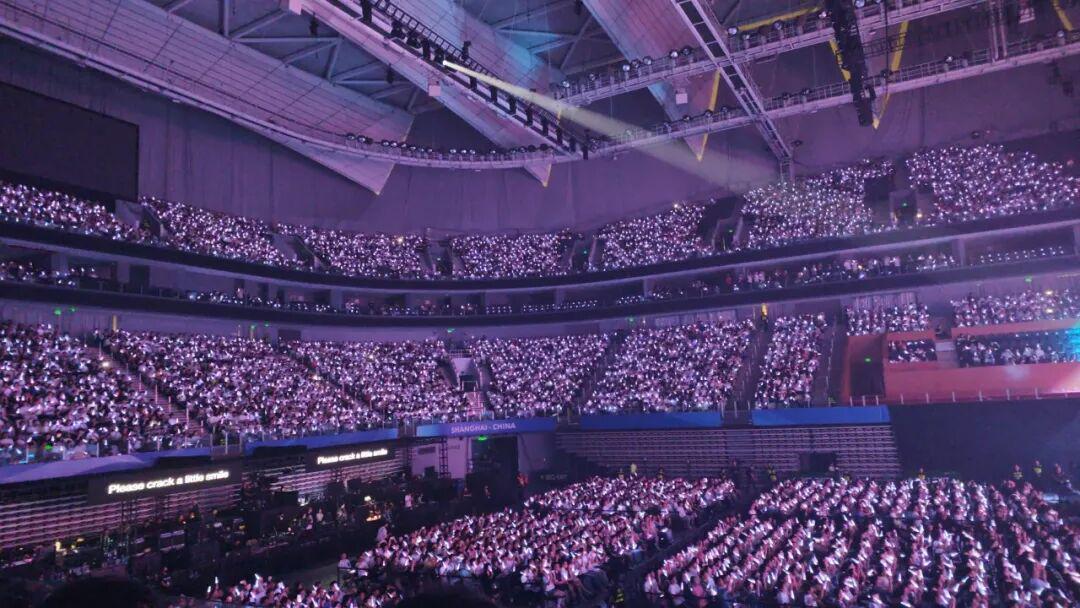
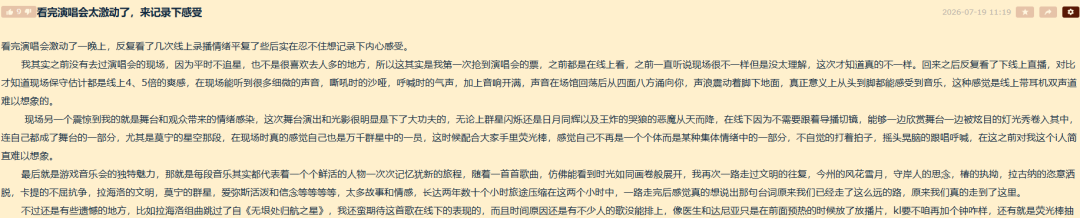
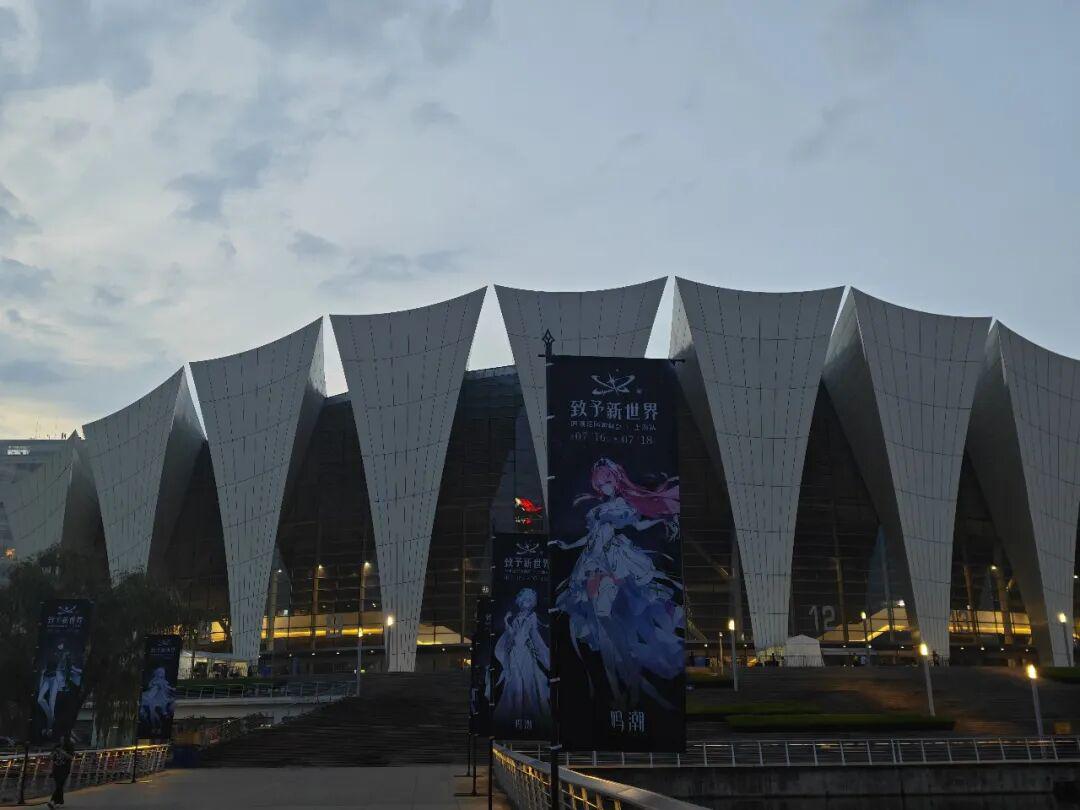
So, on the evening of July 16, as I walked out of the Shanghai Oriental Sports Center, the only thoughts running through my mind—besides “This sweltering heat in Shanghai is truly unbearable”—were: “Maybe I shouldn’t even write this.”
To be clear, this is absolutely not because I want to cut corners.
Seeing the players around me still chatting excitedly and smiling made me realize that, since the emotions had already left such a deep impression on each of them, why should I even try to recount my own impressions of the concert?
Furthermore, some players’ descriptions of their own experiences are far more compelling than my attempts to capture them as an outsider; the heartfelt words they share on social media are likely far more genuine than if I were to go on and on about how “it brought me to tears.”
So, why are you all seeing this article again?
Because, as I later realized, even though I couldn’t fully recreate the shared sense of unity from the event, I have to say that this *Mingchao* “To the New World” concert—as Kuro’s first large-scale in-person event dedicated exclusively to video game music—didn’t feel like a first-time effort at all in terms of its presentation and execution.
It was just as baffling as if a childhood friend you’d grown up with had suddenly slapped Zhang Qingbei’s diploma right in your face.
What I’m trying to say is that after Kuro achieved a groundbreaking “zero-to-one” leap in building large-scale, convention-style offline venues at last year’s FEST, it has once again successfully pulled off an offline event focused purely on live performances. Crucially, this successful concert still retains the distinctive, unique essence of *Mingchao*.
01
Clues from the Performance
Before we talk about the *Mingchao* concert, why don’t we all take a moment to think about what kind of live performance truly deserves to be called “great”?
This question sounds a bit vague. If I had to say, the best performance is, of course, the one I like best. But setting aside personal preferences, there are actually objective criteria for evaluating whether a performance is good or bad.
There are two technical concepts at play here. The first is “dramaturgy,” a term originally used in theater theory, but I’d like to borrow it to discuss performances. Taking a concert as an example, this means we should pay attention to the relationships between songs and sections, and consider whether the entire performance has a clear internal narrative arc and whether it has a beginning and an end.
If there is, then that's good.
Another standard, known as the “total work of art,” is a concept proposed by Wagner. He opposed writing opera as a collage of virtuosic arias and argued that music, drama, poetry, dance, and stage design should interlock as equal partners, all serving a single artistic expression.
Extending this line of thinking to today’s stage, in a good concert, the stage lighting, set design, and choreography should all be given equal importance alongside the music, complementing one another.
In short, a good performance requires both a cohesive overall concept that runs throughout the entire show and synergy among its various elements.
If we take a closer look at the “Mingchao” concert with a critical eye, we’ll find that it aligns perfectly with these two points.
First, in terms of overall structure, this concert is organized around a chronological narrative tracing the wanderer’s journey. The three major suites—“Huanglong,” “Lina Xita,” and “Lahailuo”—together form the “Solaris” suite, which encapsulates the past nearly two years.
As for the “Huanglong” series of suites, to avoid listing every single track, I’ll just mention two representative pieces. For example, “Saving Light,” the main theme of the login screen in the “Mingchao” 1.0 series—especially for players who joined at launch, this melody is almost like an auditory conditioned reflex, making it the perfect overture.
Meanwhile, the character songs for several characters—such as Kishiho’s EP *Stars, New Beginnings, and You* and Tsubaki’s character song *Ten Million Possibilities*—serve to stir players’ emotions and memories, gradually drawing them into the joys and sorrows of each character.
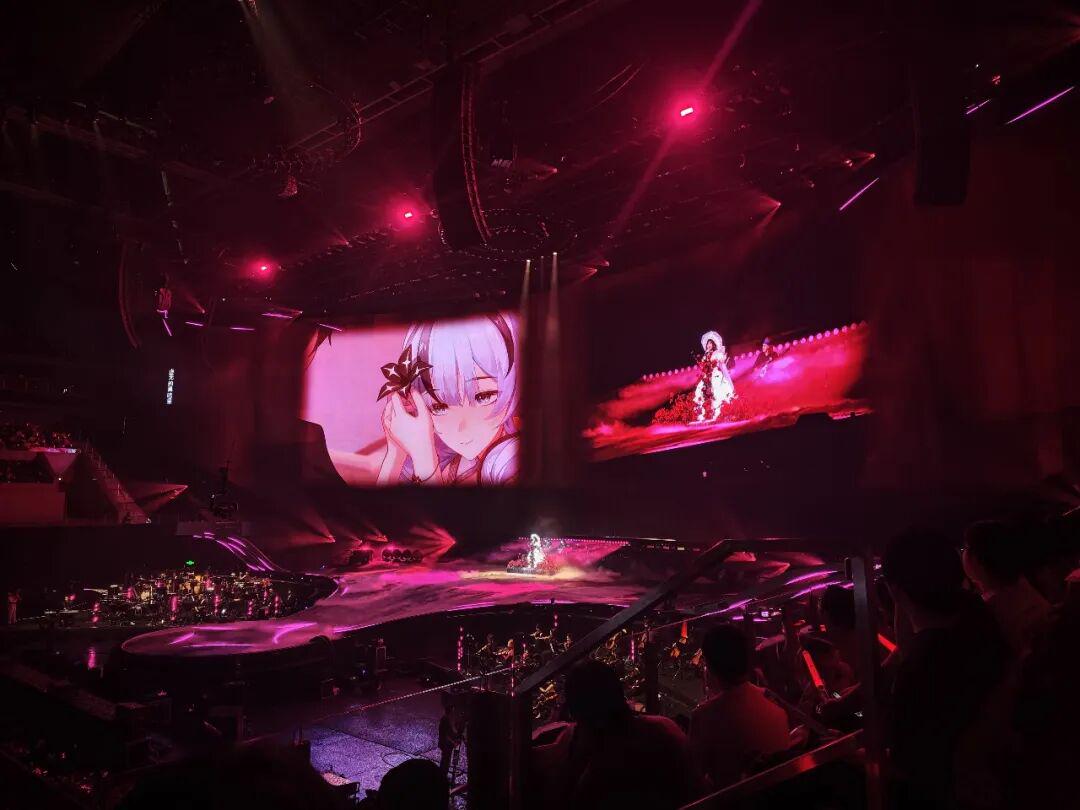
Players' memories of the second game are essentially condensed into their characters, while the role of the music is to trigger those memories in this real-world space—a space spanning hundreds of square meters in Shanghai, far from Solaris.
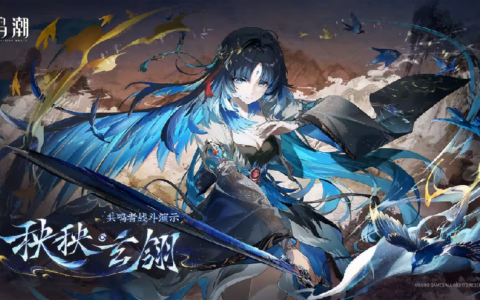
At the same time, the progression of emotions is conveyed through the transitional piece that bridges the suite; during the transition from Honglong to Li Naxi Tower, this piece is undoubtedly Qiu Yuan’s “The Shattered Sword Case.”In the storyline, he is not only a pivotal figure in Li Naxi Tower’s narrative but also holds the former title of Thousand-House Commander of the Huanglong Military Command, making him inherently a bridge-like character.
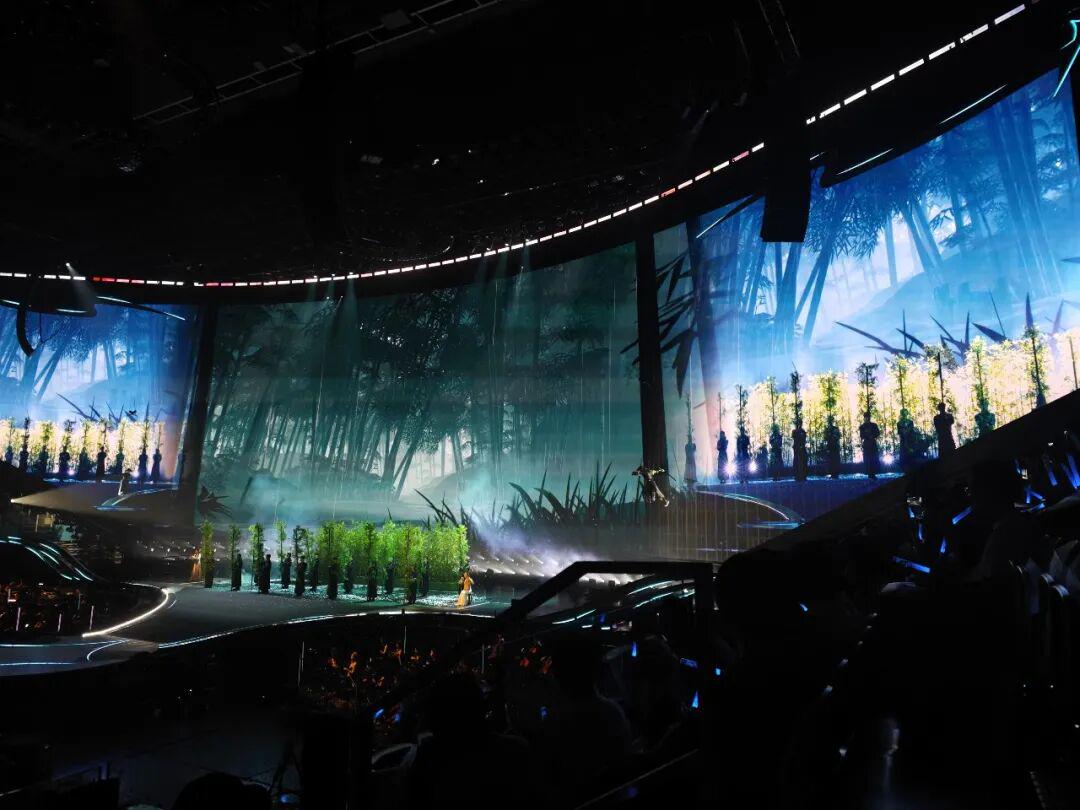
With a burst of piercing sword intent, he firmly contained that Eastern aura emanating from Huanglong, preventing it from dissipating prematurely, and allowed the concert to flow naturally into the culture of the city-states, showcasing an even more diverse range of musical styles.
In the Li Na Xi Tower Suite, the particularly significant tracks “May I Wear Glory and Plunge into the Abyss” &“Against the Tide,” as well as Florlo’s “Deep Red Dreams on the Other Shore” and “Distant Light,” deliver a relentless barrage of sounds—blending the modern framework of electronic and rock music with the ethereal resonance of Celtic melodies and the solemnity of Gregorian chant, among other styles.
When I was writing about version 3.5 earlier, I mentioned the stylistic variations in *Mingchao*; I can say that I became keenly aware of this once again while at the venue.
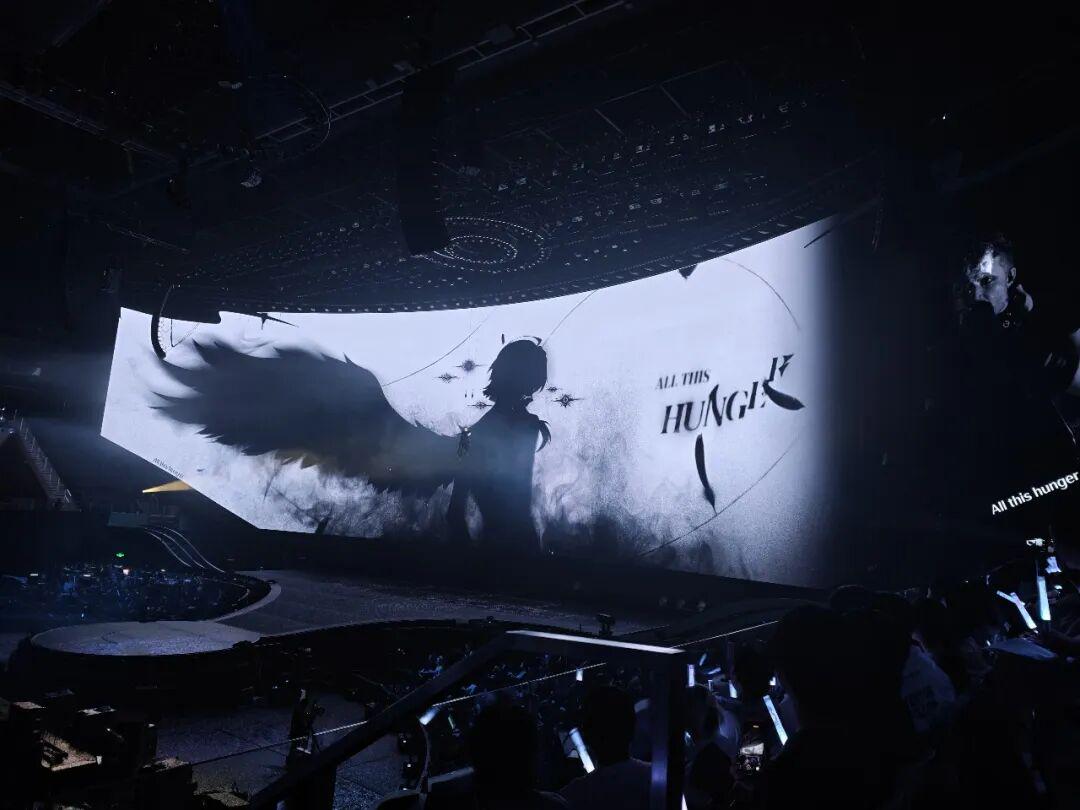
If “Shattered Sword Case” serves as the bridge between the medleys, then “Li Na Xita” is the bridge of the entire concert—and, more importantly, the bridge that stirs the audience’s emotions. During this segment, thanks to the stunning performances by singers like crywolf, the audience’s excitement had already reached a fever pitch,and *Ming Chao* chose to let that rising energy pour out during La Hailuo’s segment.
In this section, I simply must mention Tarokiki. In my view, she single-handedly carried the key segments that shaped the impression of La Helo—namely, the songs related to Amis. Over three days and three performances, with “Paper Airplane”*Farewell to the Far-Sailing Star*, and *The Spring Dreamed of by That Star*—all delved into the most poignant story about Aimes that has left an indelible mark on the players’ hearts.
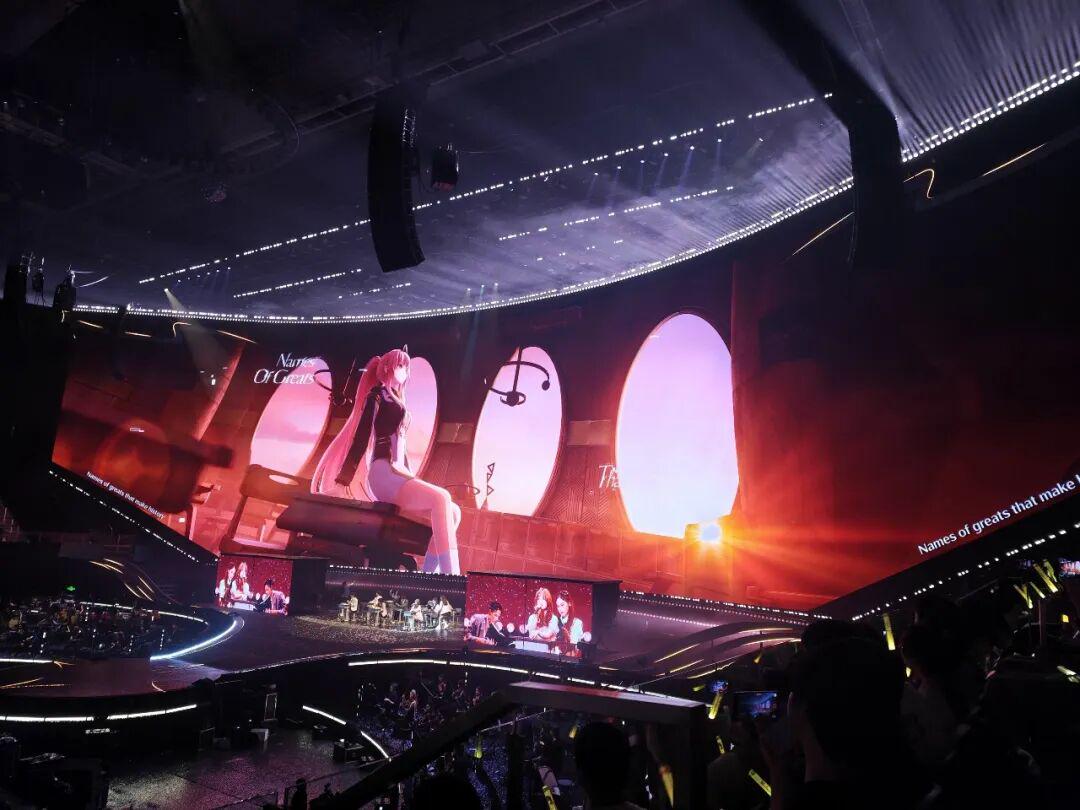
"The Heart of Lahelo" and the graduation song form yet another unique emotional pairing, symbolizing, respectively, the uplifting spirit of exploration that underlies the Lahelo story and the emotions of graduation day.Many of the players in attendance are prospective college students who have just finished their college entrance exams, are leaving campus, and are about to embark on a new chapter in their lives. As the graduation song, “The Starry Torch Never Fades,” they may find it particularly moving.
Between songs, Jin Xi’s narration, Xia Kong’s epic chorus, and Zhu Bi Daitou’s warm-up segments kept the audience engaged—making this retelling of the Solaris journey from *Mingchao* almost a non-stop experience with no breaks, which was particularly intense for players who had been playing nonstop until today.

This is how the “dramatic structure” I mentioned earlier was implemented in the structure of the *Mingchao* concert. Kuro’s goal was to have the entire audience relive their memories through the music, while the concert also subtly echoed the design concept of *Mingchao*.
Sound and frequency—which thread through the players’ encounters and partings in *Solaris*—are the fundamental building blocks of *Tidal Wave*, and at this very moment, they have become the key medium that allows the audience and performers on stage to resonate with one another.
Video game music almost never exists in isolation; every melody is anchored to the storyline, characters, and the player’s emotions. Listening to a melody again is, in essence, “reawakening memories”; shared memories evoke the same feelings, and this is how empathy is formed.
On that note, if you take another look at Wagner’s leitmotifs, you’ll find that this production—spanning more than thirty songs—weaves together a history of wanderers with a clear narrative structure. Moreover, this narrative spills over from the music itself, permeating the lighting, set design, and stage production.
This brings us to our second criterion: synergy among the elements on stage.
02
On stage, everyone is the star.
Over the years, live performances of video game music have become quite well-established.
Generally speaking, at live events for indie games, performers recreate the game’s soundtrack on stage while game footage plays on a large screen behind them, evoking memories for the audience. There’s nothing wrong with this approach, but it’s actually hard to say who the true focal point of the stage really is.
Most of the time, a live performance of video game music is an auditory journey down memory lane, with the visuals serving as a visual complement to the melodies.
But as I mentioned earlier, if the visual elements of a performance consist solely of playing pre-recorded footage, then we can say the stage is unbalanced.
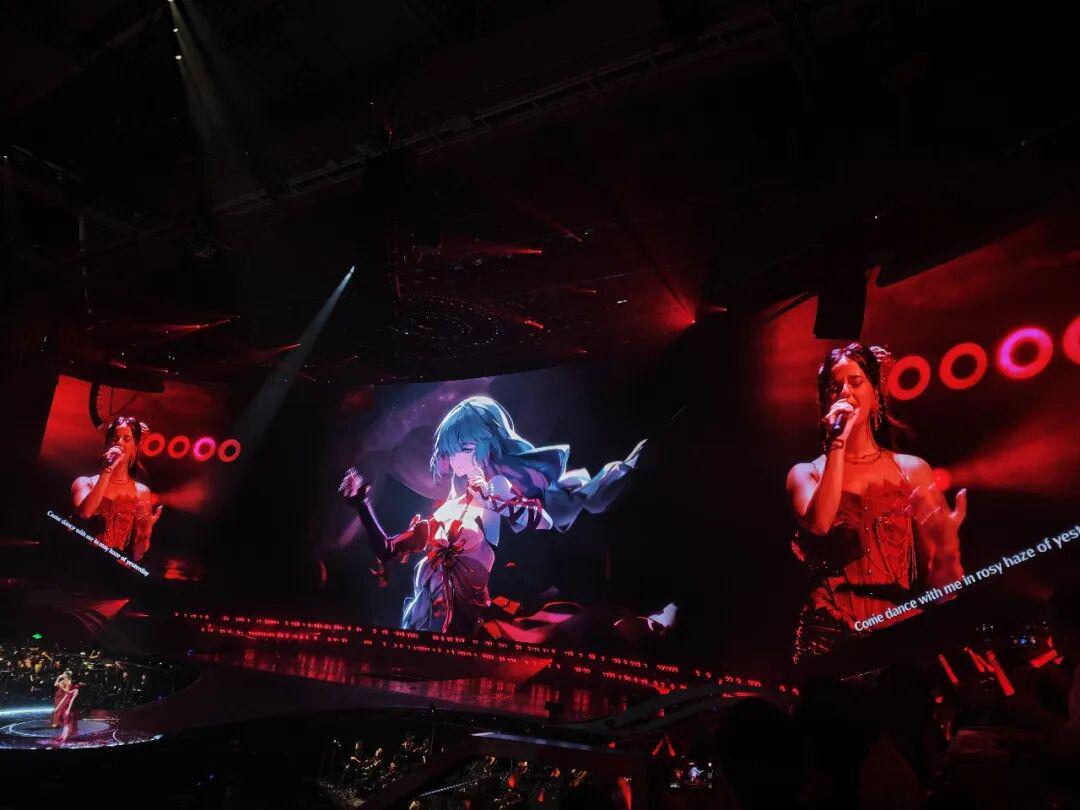
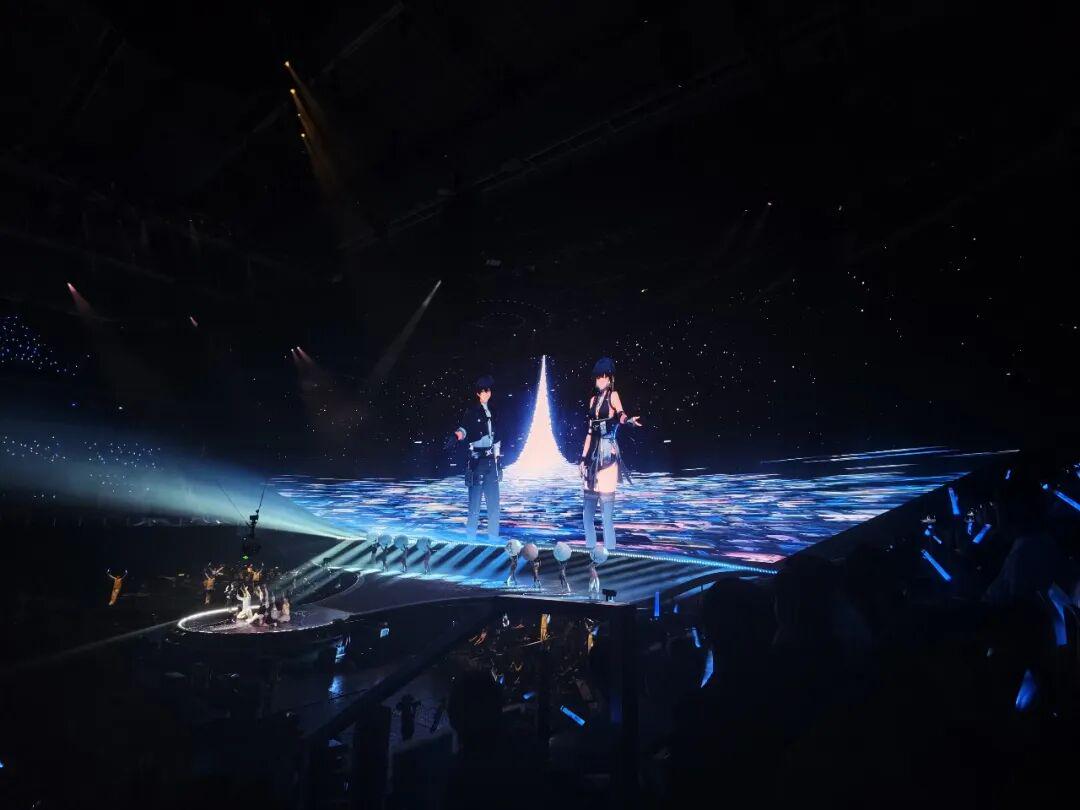
This is precisely where *Mingchao* excels: Kuro allows the visual elements on stage to actively participate in the “performance,” thereby significantly enhancing the impact of the stage design. In this process, Wagner’s ideal of integrating the stage—as embodied in *Mingchao*—has truly been brought to life.
First, *The Roar of the Tides* has reworked many of the pieces into stage sequences featuring dramatic movements.
For example, in the pieces featuring Katixia, the stage performers parody the concept of being bound; the thorn chains from the game are transformed into white silk ribbons that bind the dancers, creating an intertextuality between reality and the virtual world. At the climax of *Against the Tide*,the climactic moment where Frudelis cleaves the sea with a single sword stroke was further amplified through the visual enhancements provided by the Oriental Sports Center’s adjustable stage and ultra-high-resolution, ultra-wide screens, intensifying the dramatic tension.
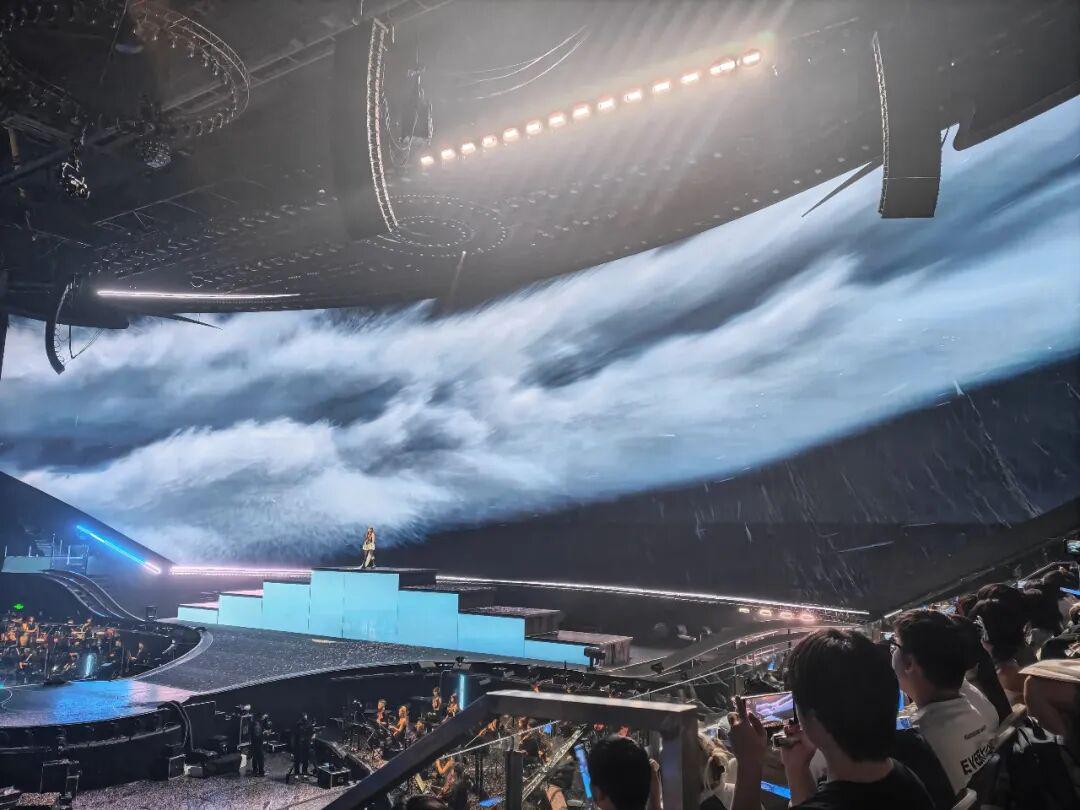
Sometimes, visual quality really does come down to hardware—you can’t deny that.
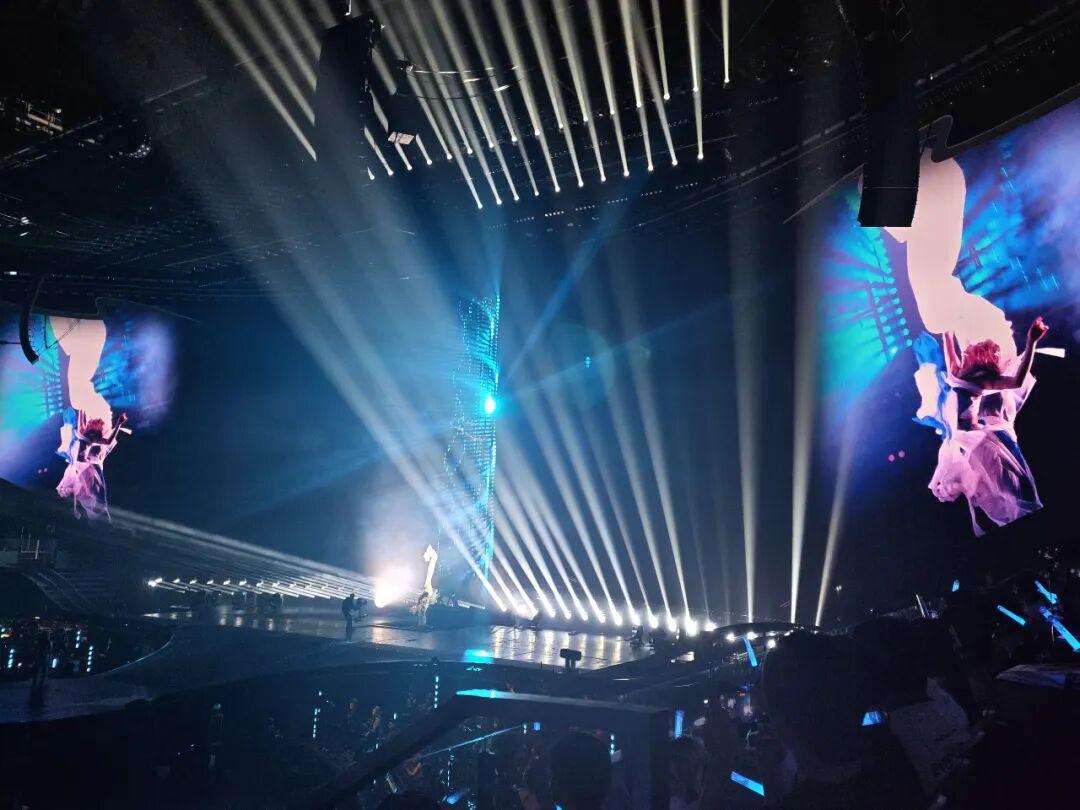
Another piece that particularly showcases the cohesiveness of the *Roar of the Tides* stage production is, once again, Qiu Yuan’s *The Shattered Sword Case*.
What makes the setting in this scene so iconic is the sense of depth that Kuro has created. First, the large screen isn’t merely used to display footage or 2D characters; instead, it features ink-wash paintings and the shadows of bamboo. It doesn’t recreate any specific scene from the game—rather, it presents a set of highly distilled visual motifs associated with the characters, existing as a form of symbolism.
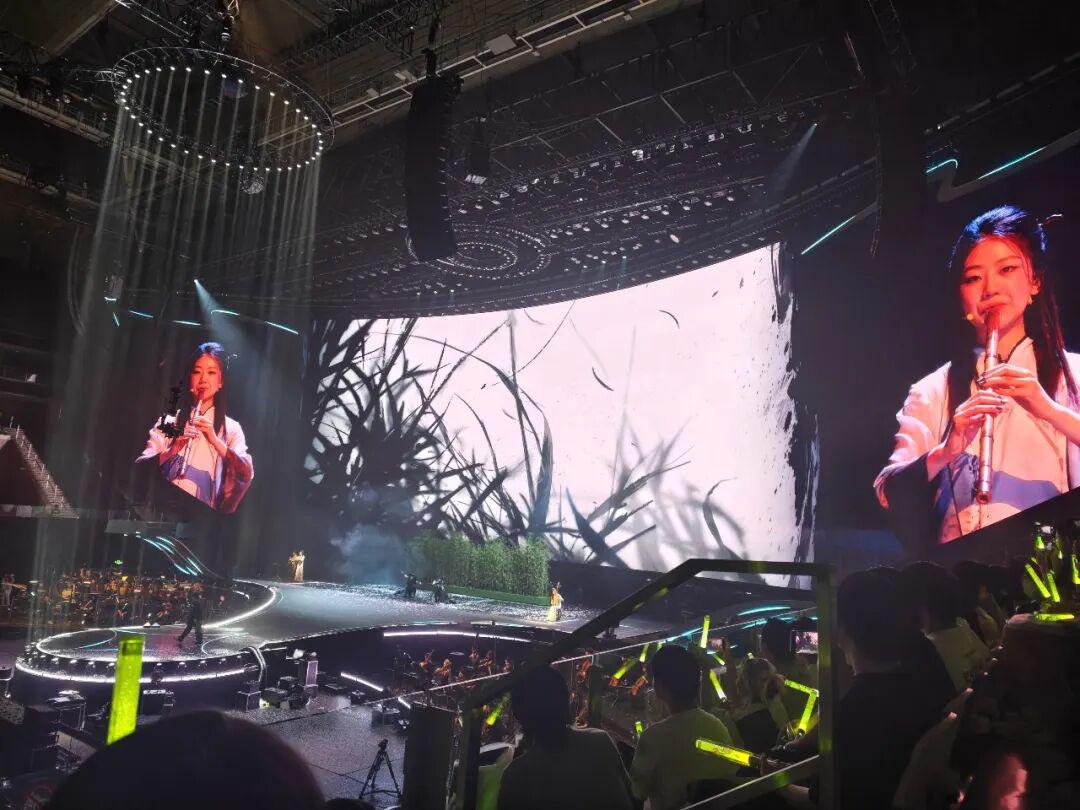
The key lies in the foreground—namely, the two swordsmen dancing in a sword-fighting duet. This is a fairly typical technique in physical theater, where bodily movement itself serves as the primary medium of storytelling.This sword duel between the two dancers has long transcended the role of mere decorative accompaniment; through their physical attacks and defenses, advances and retreats, and frozen poses, they externalize the abstract elements found in the characters’ songs:Their standoff, with its fateful tension, embodies not only Chou Yuan’s own martial spirit but also his dramatic confrontation with Guo Shulin in the storyline.
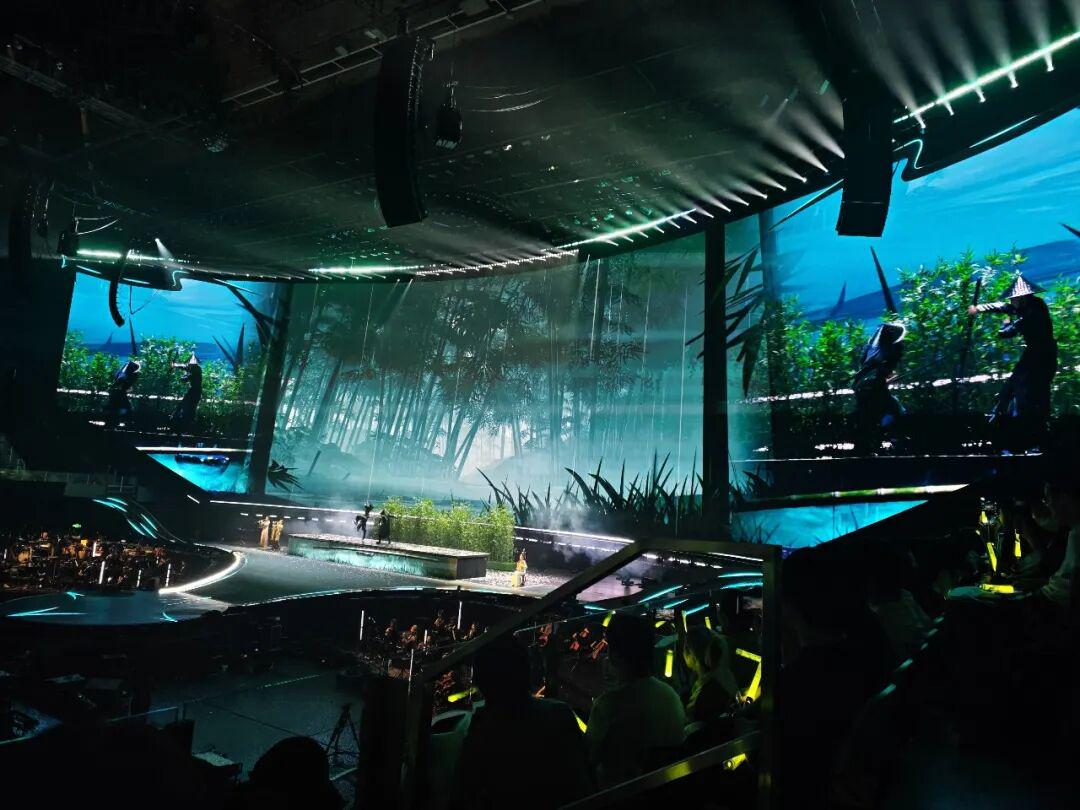
This passage encapsulates the essence that ran throughout the *Mingchao* concert—namely, a collaborative spirit of “synaesthesia.”
The melody and vocals are captivating; in the foreground is a performance that, while seemingly unrelated to the game, evokes relevant associations, while the ink-wash painting in the background provides an emotional backdrop for it all, fully engaging the audiovisual senses.the singer, dancers, stage, giant screen, and lighting effects—not a single element plays a supporting role; together, they create a rich narrative space.
This level of integration appears in many songs; in Li Naxiata’s suite, Augusta’s “O Blazing Sun, Reveal My True Name” and Juno’s “The Moon’s End: Eternity and the Fleeting Moment” demonstrate the role of installation art.Li Na Xita’s *A Great Show* and *Feast of Daydreams* employed a large number of stage performers, who portrayed members of the Sound Skeletons and the Fools’ Orchestra, recreating Li Na Xita’s carnival-like multi-person stage.
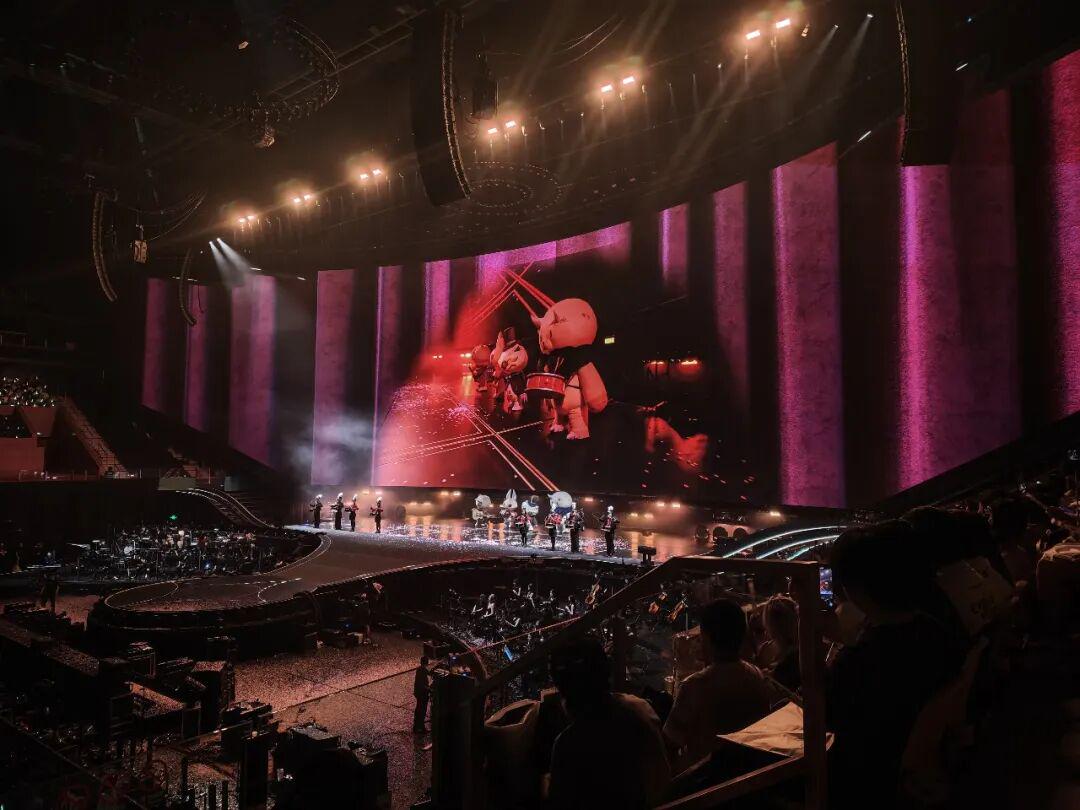
There was also the large-screen planetary trail effect in “If I Could Touch the Stars,” which filled the view with a starry sky, and the group dance from Sigrika’s “L!!!!ght.”
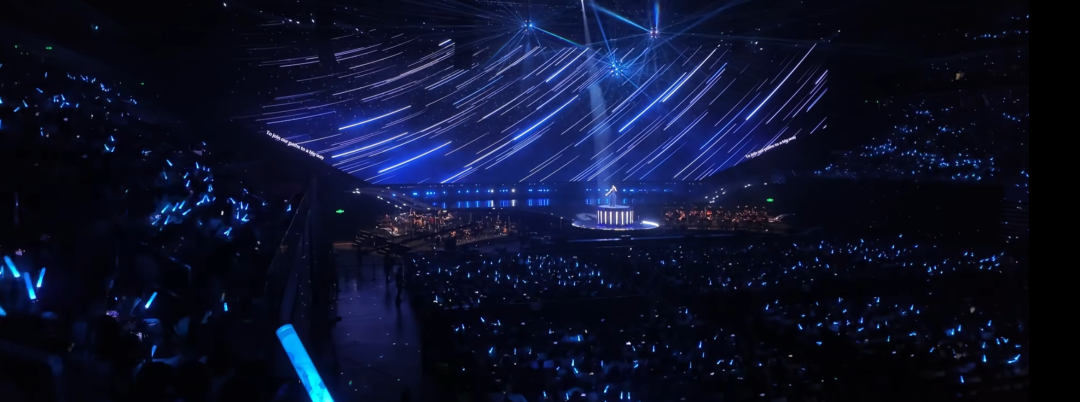
Or, to put it another way, behind the scenes of the performance, the design of the “encore” reference—every single element—elevated the *Mingchao* concert from a mere extension of the songs to a space of synesthesia.
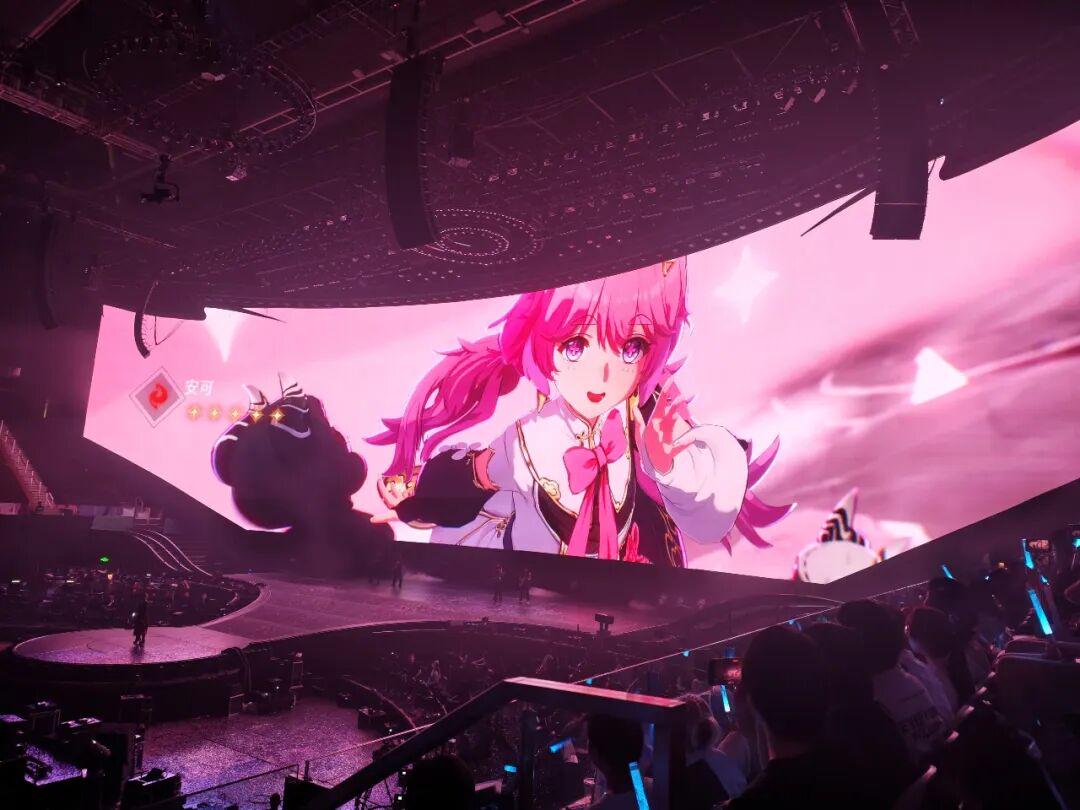
Even though *The Roar of the Tides* still uses the most conventional proscenium stage, its deep integration of the logic of immersive theater—which employs full-stage choreography to create a sense of envelopment—gives the audience a gentle illusion, as if they had briefly stepped into the real Solaris.
Over the course of these few hours, you can clearly sense that in *The Roar of the Tides*, the melodies command the auditory experience, the dancers command the physical performance, the lighting commands the spatial atmosphere, and the set design serves to reinforce the overall impression—and this integrated approach runs throughout the entire concert.
This well-rounded maturity serves as the foundation for the audiovisual experience, but what truly brings it to life are the storylines and characters that have long been etched into players’ hearts. Every carefully crafted moment on screen acts as a fuse that ignites emotion, and it is memory that ensures all of this truly takes root in people’s hearts.
Conclusion
In the two years since the success of *Mingchao*, Kuro has clearly been actively exploring ways to further develop the IP. I have mentioned on more than one occasion how important offline settings are for mobile games; their most crucial role is to provide a platform for the “social aspects” that come into play after the game is released.
The experience of a second playthrough is largely a personal one; players first go through the story’s ups and downs on their own, but the emotions that build up during that experience ultimately need an outlet.
Take this concert, for example: within the confines of the Oriental Sports Center, *Mingchao* players were finally able to see one another and realize that they weren’t the only ones choked up by the same storyline—and that they weren’t the only ones who felt that same thrill.
A solitary, personal experience, realized in that moment, became a shared collective memory.
This is precisely where offline experiences cannot be replaced by online ones.
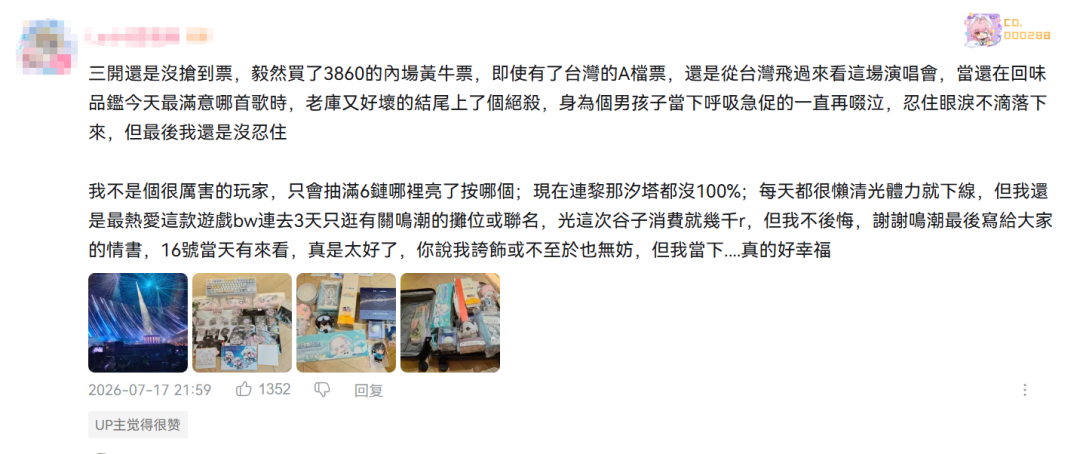
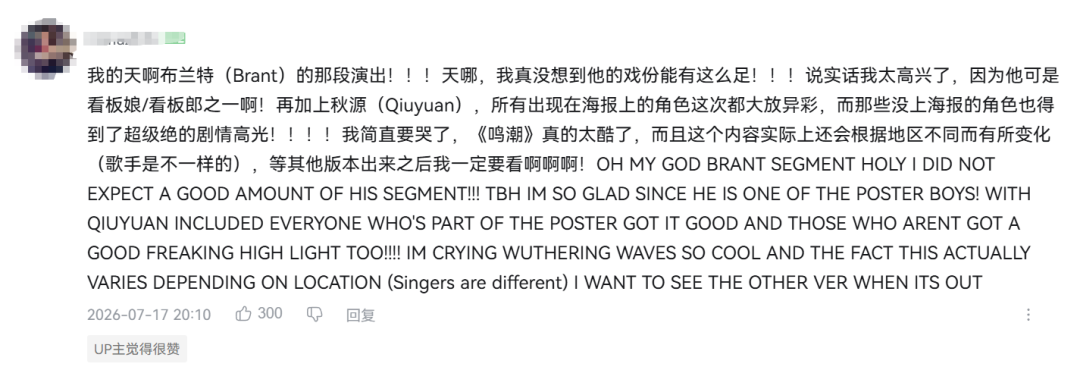
Behind this success lies the fact that *Mingchao* has continuously built upon and refined its content over the years, resulting in a compelling narrative, memorable characters, and a rich repertoire of high-quality music; Kuro’s influence has also attracted collaborating musicians with strong live performance skills;Combined with the clearly well-designed song selection flow and stage design, it is the synergy of these various elements that makes the overall stage production of the *Mingchao* concert appear so polished.
And it can withstand the emotional turmoil of thousands of players.
At this point, I really want to ask: How did Kuro manage to be so skilled the very first time?
Come to think of it, this level of proficiency isn't really all that surprising.
For Kuro, this was indeed his first time holding an in-person concert, but it was by no means his first time "performing."
The game *Mingchao* itself is a product with performance deeply ingrained in its very DNA. Over the past two years, it has been refined time and again—from the camera work in its cutscenes to the choreography of movement and emotion in character performances, and the masterful handling of pacing and dramatic pauses at pivotal moments in the storyline.
When the venue shifted to a live setting, and the visuals gave way to real people, dancers, and a physical stage, perhaps the *Mingchao* concert also carried forward the muscle memory of telling stories effectively through audiovisual language.
And this, as I mentioned at the beginning, is the unique spirit that defines *Mingchao*.
原创文章,作者:游茶妹儿,禁止转载:https://youxichaguan.com/en/archives/208361