At an industry gathering, I happened to meet a remarkable man.
His name is Han Zhiyu. At 45, he seems to have achieved a state where he can “do as he pleases”—he wakes up every day, spends four hours reading, and four hours working on indie games he enjoys, all while earning enough each year to live a comfortable life in Beijing.He doesn’t have to squeeze onto the subway during rush hour to get to work; he doesn’t have to get caught up in office politics; he doesn’t have to face the pressure of layoffs; and he doesn’t have to be overwhelmed by endless meetings.
Ideals, life, money—it seems he lacks nothing.
In today’s gaming industry, anxiety is ever-present; whether they’re developers or employees, everyone must give it their all to stay ahead. The slightest lapse in focus means being completely wiped out by competitors—ideals, interests, and a fulfilling life are absolute luxuries.Yet Han Zhiyu compares himself to Zuo Ci, living a life of leisure and detachment in this “Three Kingdoms” of the gaming industry.
Where did this opportunity to “come ashore” come from?Does he possess some extraordinary talent, or did he simply have the good fortune to meet a benefactor? With these questions in mind, I had an in-depth conversation with Han Zhiyu, gaining a glimpse into a corner of his life—a lifetime of wandering and upheaval, until he finally found his own “Peach Blossom Spring.”
01
The Awakening
Han Zhiyu was born in the 1980s. To use modern terminology, the young Han Zhiyu was undoubtedly a die-hard ACG enthusiast. His father loved reading and had a dedicated study at home; influenced by this environment, Han Zhiyu, too, became utterly captivated by books and comics.His favorites were historical novels; in elementary school, he devoured *Water Margin* and *Romance of the Three Kingdoms*, then would vividly recount the stories to his classmates at school.
Later, his interest in reading expanded to light science fiction, which sparked a new fascination with fantasy genres. Compared to historical novels—which blend fact and fiction—science fiction and fantasy novels allowed him to unleash his imagination more freely.
However, books are, after all, just static text; to pursue a more realistic and direct fantasy experience, he had to look to other media.Naturally, Han Zhiyu turned his attention to video games. At the time, he was quite “addicted” to them, often skipping class to play or staying up all night on his study console—after his parents had gone to sleep—to secretly play cartridge games like *Final Fantasy* and *The Continent of the Overlord*.

Of course, the games Han Zhiyu played back then certainly weren’t from this generation.
The reading habit he cultivated from a young age has continued to this day. Now 45, Han Zhiyu still spends four hours a day reading, and his social media feed is filled almost exclusively with reviews of various science fiction novels.
Perhaps because he spent too much time in “fantasy worlds” and reading all sorts of “light reading,” or perhaps because he started school too early—he was only 15 when he entered his senior year of high school—Han Zhiyu’s grades in high school were particularly poor. On his first college entrance exam, he scored just over 400 points, barely enough to qualify for a junior college.As a child from a family of scholars, this result was clearly unacceptable, so he regrouped and prepared to retake the exam.
No one could have imagined that this single summer—those two months of review—would, in a sense, determine the course of Han Zhiyu’s life from that point forward.
That summer, Han Zhiyu worked through workbooks relentlessly; he described it as “suddenly clicking.”In the subsequent monthly exam, he astonishingly took first place in the entire school, improving his score by over 200 points. In the second college entrance exam, he was admitted to Beihang University as he had hoped. Around the year 2000, before the expansion of higher education enrollment, students admitted to 985 universities were truly the cream of the crop.
I asked Han Zhiyu what he meant by “having a lightbulb moment.” He told me that studying is a strange thing: perhaps he hadn’t had that moment before, but he had been steadily accumulating knowledge all along—a quantitative change leading to a qualitative leap. Eventually, he suddenly realized that you don’t actually need to master everything; you just need to learn how to take the exam. That moment was his “lightbulb moment.”
It’s been a long time since that summer; more than twenty years have been enough to blur many of those memories, but this experience of “having a lightbulb moment” and the confidence that came with it are forever etched into Han Zhiyu’s very being, as if it were a reverse “broken-window effect.”

“This experience gave me a sense of confidence—as long as you want to, you can learn anything; if you haven’t mastered it yet, it just means you haven’t discovered the trick to it. There’s no such thing as ‘different fields being worlds apart,’ and there’s no such thing as being a programmer for life or an artist for life.As long as I want to learn it, I will definitely master it. So later, when I was making indie games, I found that after spending 1,000 hours learning to code, I seemed to have gotten the hang of it; and after spending another 1,000 hours learning art, I mastered that too. Nothing was harder than transferring from a junior college to Beihang University in a single summer.”
The original meaning of the phrase “opening one’s mind” (开窍) refers to unlocking various spiritual channels within oneself, experiencing an epiphany, and seeing one’s aptitude soar.But for Han Zhiyu, “kaiqu” really has only two meanings: having the courage to break through industry barriers and believing in yourself; and having the courage to spend 1,000 hours honing your skills, persevering through thick and thin until the end of time.
02
Entering the Industry
In 1998, after arriving at university, the 16-year-old Han Zhiyu encountered the confusion common to all freshmen: a sense of aimlessness. In his subconscious, college was supposed to be a place where he could do something on his own, but the reality was nothing but a never-ending stream of exams. “This isn’t right,” he thought.
So Han Zhiyu began searching for something he should “do.” Actually, at first, Han Zhiyu’s aspirations weren’t in gaming, but in writing; he wanted to write novels like Yoshiki Tanaka (author of *The Legend of the Galactic Heroes*).To that end, Han Zhiyu frequently visited the school’s computer lab to browse BBS forums, and even served as a moderator under the pen name “Daxue Gongdao” on Sina’s historical forum “Dahua Chunqiu.”
In those days, the internet was still in its infancy; the online world hadn’t yet become so hostile, and those with the means to go online were mostly forward-thinking members of society. As a result, Han Zhiyu and his peers got along very well, often gathering with Ma Boyong, Jin Hezai, and others.
However, Han Zhiyu, overly absorbed in “side quests,” neglected his “main quest,” and his college grades plummeted. In the end, he made a “radical” decision: to drop out of college! He left his studies unfinished to pursue his dreams.

This decision was steeped in the bold recklessness and passionate zeal typical of youth. Looking back now, it certainly cannot be called a rational choice.
“Of course, looking back now, it was a bit ill-considered. Actually, I could have managed to balance both, right?”
But every night, as Han Zhiyu walked lap after lap around the sports field at Beihang University, flashes of inspiration and ideas crossed his mind—leaving him no room for compromise. He was determined to do what he wanted to do, set his sights on his goal, and charge ahead without hesitation.
After leaving school, Han Zhiyu began pursuing his dream. While publishing articles in magazines such as *Legends of Past and Present: Fantasy Edition*, he also serialized and published historical novels both online and in print. He joined the “Dragon’s Sky” website as a book editor and participated in thethe editing and publication of well-known books such as *The Wind Rises in Longxi* and *Step by Step with a Thrilling Heart*. He had officially entered the literary industry. He remained in this field for two years.
During those two years, Han Zhiyu learned firsthand what it meant to be “humbled by the realities of the world.” Moving from online editor to print editor, Han Zhiyu gained access to an ever-increasing array of resources.In 2006, he was assigned a major project: to launch a historical magazine from scratch. Full of ambition, Han Zhiyu immediately began soliciting submissions, securing over 100 manuscripts, and even approached historical oil painter Wang Kewei to create illustrations for his magazine.
With the wind at his back, the 26-year-old Han Zhiyu was on the verge of becoming the magazine’s founder. However, just as everything was falling into place, his boss rejected the project on commercial grounds, and it ultimately came to an abrupt end.

“I had been constantly busy with the magazine at the time. Once it was all over, I felt a bit empty. I felt that staying on would just mean running errands with nothing substantial to do, so, as if by some strange impulse, I started wondering if I should try my hand at making games.”
In fact, Han Zhiyu’s interest in games had never waned. During college, he would write novels at night while devoting his days to various historical strategy games. He once used tools based on the Warring States period to create a complete game script set during the Five Dynasties and Ten Kingdoms era, which is still available for download in Japan today.Later, wanting to play Paradox Interactive’s *Europa Universalis II* but frustrated by the lack of a Chinese localization, he took out a dictionary and translated it word by word.
If the publishing industry was Han Zhiyu’s “moonlight” at the time, then gaming was the “cinnabar mole” that had always been by his side. After his previous dream was shattered, Han Zhiyu finally turned his attention to this career—one to which he had devoted half his life.
03
Perfect
In 2007, when China’s gaming industry was just taking off, Han Zhiyu set out with his resume in hand to find the right place to land. For his first interview, he traveled halfway across Beijing. He discovered the interview location was in a tiny residential building that didn’t look very professional, so after a brief conversation, he left.
His second interview earned him the favor of Perfect Time, which later became Perfect World. At that time, Perfect Time was nowhere near as impressive as it is today. Located in X’erqi, the company occupied only two floors and had fewer than 200 employees. Having just released *Perfect World* and made a profit, they were beginning to expand their workforce.Han Zhiyu happened to catch this wave of expansion, and just six months after he joined, Perfect World announced its IPO.
“I guess I just happened to be in the right place at the right time.”
Back in 2007 and 2008, there weren’t many major domestic game developers creating their own titles. Tencent hadn’t yet risen to prominence; the larger players were Shanda and The9, but they primarily focused on publishing and distribution. As a result, Perfect World consistently ranked among the top three for quite some time.
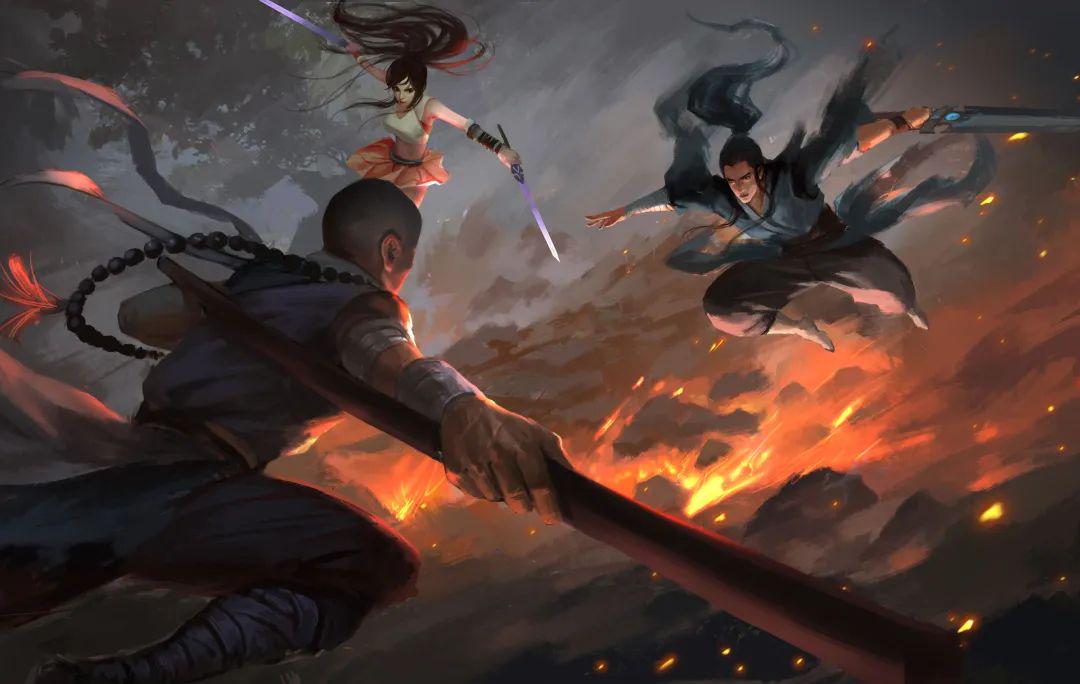
*Swordsman Online*—the MMORPG Han Zhiyu helped develop
“Back then, it felt a bit like a monopoly. Unlike today, with universal engines like Unreal and Unity, those tools didn’t exist back then. It wasn’t as simple as just wanting to make a game and being able to do so—unless you had the technical capability to develop your own engine.”
“When I joined the company, it was right in the middle of a period of rapid expansion. 2D engines were already quite advanced back then, but Perfect World was using its own in-house 3D engine, which was considered cutting-edge in terms of technical capability.This effectively meant the company had a monopoly—no one could compete with them. They’d switch to a new IP to make *The Legend of the Martial World*, then switch again to create *Red Cliff*. Back then, there was a famous phenomenon known as the ‘Perfect World Septuplets,’ where they rapidly rolled out titles to capture the market.”
Thanks to its massive production capacity and technical prowess, a 3D MMO could go from project approval to open beta in just half a year, generating unimaginable profits. Back then, Perfect World—true to its name—was the “perfect world” in the hearts of gamers. Founder Chi Yufeng proposed creating a work environment like Google’s, and the company quickly purchased its own building, complete with a cafeteria and a gym.
“Back then, there was no ‘996’ work schedule. I rented an apartment near the office—just a five-minute walk away—and would step out at lunchtime to grab a bite and take a stroll. The workday wasn’t very long, and if you worked overtime, you were paid overtime wages. Management would even monitor your overtime hours: ‘You’ve already exceeded 30 hours this month; we can’t afford to pay that much, so please don’t work any more.’”
“To today’s game industry professionals, it seems like a dream.”
However, no one can stay at the top forever; every golden age eventually comes to an end. In just a few short years, other game companies began to gain momentum, and Tencent—which would later become the undisputed dominant force in the gaming industry—also began to come into its own. Most critically, with the rise of smartphones, the mobile gaming market began to rapidly squeeze out the PC market.
Back then, even a very rudimentary 2D card game could generate tens of millions in monthly revenue.Achieving tens of millions in monthly revenue for a PC game required massive investment, but on the mobile side, it could be achieved with a product that required almost no effort. Not to mention blockbusters like *Airplane War*, which generated hundreds of millions in monthly revenue and virtually wiped out the PC gaming market’s survival space.

“The project I was working on at Perfect World at the time was *The Smiling, Proud Wanderer*—a AAA-level project that had been in development for several years with a team of several hundred people. Tencent’s *God of Battle* was the product directly competing with ours.In the end, after toiling away for so long, we were instantly outclassed by a single mobile game. This led to a shift in the company’s entire strategy—the old feeling of developing games like Western single-player titles vanished completely, and the 996 work schedule and intense competition began.”
From a capital perspective, it was naturally unacceptable that a PC game with massive investment couldn’t beat a reskinned mobile game, so morale plummeted overnight.Top talent at major studios began to have second thoughts—since they couldn’t secure projects within their own companies, why not strike out on their own, raise funding, and develop a mobile game? At the time, the restaurants next door to every major company were packed with people coming to discuss investment opportunities with core teams; for any producer of a major project to step forward and secure 10 million in funding was a simple matter.
Amid this climate, Han Zhiyu also sensed a shift in the air—partly lamenting the end of an era, and partly seeking to ride the wave of the times. In 2014, after a project proposal was rejected, he decisively resigned from Perfect World and joined the mobile game company Lingdong Shikong.
With that, the first “Perfect Era” of Han Zhiyu’s life came to a close.
04
Moving On
Previously at Perfect World, Han Zhiyu had served as a level design team lead, managing a team of over a dozen people—a position that gave him a certain degree of authority. So when he joined Lingdong Shikong, it was only natural that he became the lead designer.
Logically, his life should have been getting back on track, but on his second day on the job, he found himself crouched at the entrance to a subway station, crying uncontrollably.
When I later asked him why he had cried, Han Zhiyu gave more than one answer. On the one hand, with this career change, he could no longer commute to work in just five minutes like before, nor take a stroll after lunch. It marked the end of an era and a shift in his lifestyle.“It felt like the wave of layoffs at state-owned enterprises.”
At Lingdong Shikong, although his title was Lead Designer, the benefits and compensation weren’t as good as what he’d had at Perfect World. On the other hand, Han Zhiyu really didn’t like working on mobile games; what he wanted most was to create all kinds of large-scale strategy games.
These reasons, one by one, piled up like firewood, finally igniting a blazing fire called “departure.”
It’s time to leave—to leave the company and this industry swept up by the tide of trends. As long as one remains in the industry, they’re like a small boat adrift on the current, unable to decide where they’re headed, unable to hold onto the scenery of the present or the ideals they long for.
But if he left the industry, where would he go?

Looking back on my last failed project at Perfect World, it was ultimately scrapped because I got caught in the crossfire of open and covert interpersonal conflicts.Han Zhiyu isn’t the kind of person who’s smooth-talking and adept at navigating every situation; dealing with interpersonal relationships isn’t something that comes naturally to him. So, is it possible to leave everything behind and create a game he loves on his own?
I believe nine out of ten game developers have had this thought, but as soon as it surfaces, they realize the host of challenges: Do I understand the game development pipeline? Can I handle all the work—design, programming, art, and more—on my own? Do I have enough resources to get the game out there? Do I have enough capital to compete with other products?As a result, eight out of those nine people end up backing down.
Han Zhiyu, however, was the one who didn’t back down. Perhaps it had something to do with that summer vacation twenty years ago—“Nothing was harder than transferring from a vocational college to Beihang University.” This experience made him less likely to back down when faced with challenges that others might deem impossible.
To build up the capital needed to develop an indie game on his own, Han Zhiyu began preparing from the very second day he joined the mobile game company.For him, those three years at the mobile game company were like pursuing a “graduate degree for adults,” allowing him to break free from the “cog in the machine” perspective of a large corporation and view the entire game development process from a holistic standpoint. He also had ample time to teach himself programming and art.
From 2015 to 2017, Han Zhiyu felt that he had built up enough financial resources and skills—everything was in place; all that was missing was the right opportunity. Coincidentally, that opportunity did indeed come his way.
In 2017, Steam introduced the “Steam Direct” policy, which meant game developers no longer needed to go through the Greenlight voting process to release their games—all it took was a $100 fee. This made him resolve to leave the industry and bid farewell to a life of simply going with the flow.
From then on, Han Zhiyu wanted to take control of his own destiny.
05
Independence
Unexpectedly, Han Zhiyu still underestimated the challenges of developing an indie game on his own. After resigning, he spent a year figuring out what he wanted to do.At first, he wanted to create a grand historical strategy game, similar to Koei’s *Romance of the Three Kingdoms* series, but he soon realized that this genre was already saturated and offered little room for innovation. However, having cut off his retreat, he had no choice but to grit his teeth and keep thinking about his next move.
“Will this actually work? I felt like I was getting a bit depressed during that time.” Having already started a family, he also had to face skepticism and pressure from his family. Even though his partner and relatives were very supportive of his dream, such a move was still too bold.
After creating three prototypes, none of which he was entirely satisfied with—he always felt he couldn’t find the direction he was looking for—Han Zhiyu turned to anime and novels for inspiration.It was then that one IP left a deep impression on him: the *Warhammer 40,000* series. The space opera genre, which blends the weight of history with the lightness of science fiction, perfectly resonated with Han Zhiyu’s interests.By a stroke of luck, an editor in his social media circle asked Han Zhiyu to help with the Chinese localization of *Warhammer 40,000*. He gladly agreed and became the official translator of *Dark Empire*, the first *Warhammer 40,000* novel introduced to the Chinese market.

When someone is feeling lost about the future, the best remedy is actually to give them a task to start with—to get them moving rather than standing still. “When you’re stuck on one project, work on something else; maybe after a while, when you come back to it, you’ll be able to make progress.”
After that, Han Zhiyu finally found his path: space opera. Combining the online fiction he once loved with video games to build a vast universe similar to Warhammer’s, and then presenting it through the grand strategy gameplay he adores—that is his “authorial voice.”
I asked Han Zhiyu if he had considered commercial factors—whether it would be profitable—when deciding on his direction.
“No. If I wanted to make money, I’d be making anime-style mobile games.”
Once he’d finally settled on his path, Han Zhiyu embarked on a seven-year journey as an independent game developer. His vision was to create a grand strategy game with iterative updates, similar to *Romance of the Three Kingdoms*. His first title was *Chaos Cosmos*, which took him a year and four months to complete with the support of his family.Sales of the first installment weren’t particularly strong—only five or six thousand copies were sold—not enough to make a living.
Although it wasn’t exactly a flying start, it at least got the ball rolling, and this made Han Zhiyu realize he had what it took to create an indie game.So, he spent just over a year developing the second installment in the series, *Chaos Galaxy*. This one achieved much more impressive sales, selling 10,000 to 20,000 copies and generating over $100,000 in revenue. The follow-up, *Chaos Galaxy 2*, sold 20,000 copies, turning his dream of creating indie games into a reality.
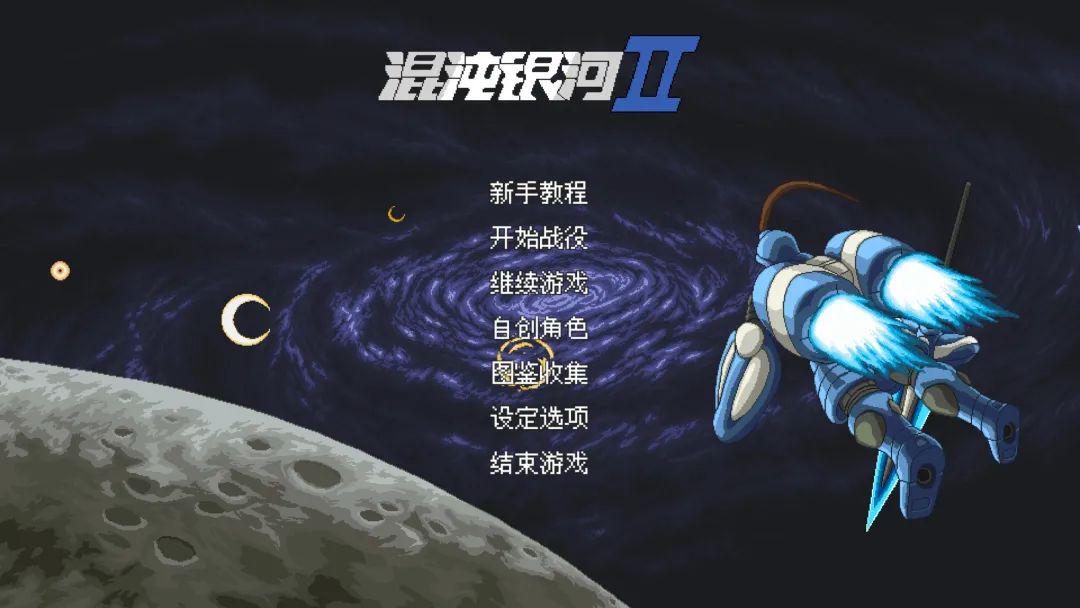
Whether it was quitting his job to pursue indie gaming or dropping out of school to write online novels, every decision Han Zhiyu made was bold, yet in the actual execution, he proceeded with great caution and steady progress.
“Because the world I’ve built is so vast, *Chaos Galaxy* only covers one-tenth of the entire world, to prevent the scope from becoming too large for me to handle all at once. For a first product, the most important thing is to establish the core gameplay.”
With the direction set, the development process was still quite arduous. For Han Zhiyu, game design is his forte; whether it’s stats, levels, or storytelling, he handles them with ease.After teaching himself programming, he had no major issues with that either. “It’s not a job that requires a great deal of creativity.” For him, the most difficult aspect was art.
“When I first started learning art, I spent hundreds of hours using pirated Aseprite software. Later, I switched to the legitimate version and spent another 1,000 hours learning it before I could barely manage to draw whatever I wanted—but it certainly wasn’t stylized. I could just draw what I needed based on the requirements.”
Although the art work gave Han Zhiyu a hard time, the in-game art assets show no signs of sloppiness—in *Chaos Galaxy 2*, the models for hundreds of units and flagship ships are all unique, with no skin-swapping or color-changing.In reality, even if he had resorted to color-swapping, it wouldn’t have affected the player experience, but Han Zhiyu still refused to make even the slightest compromise.
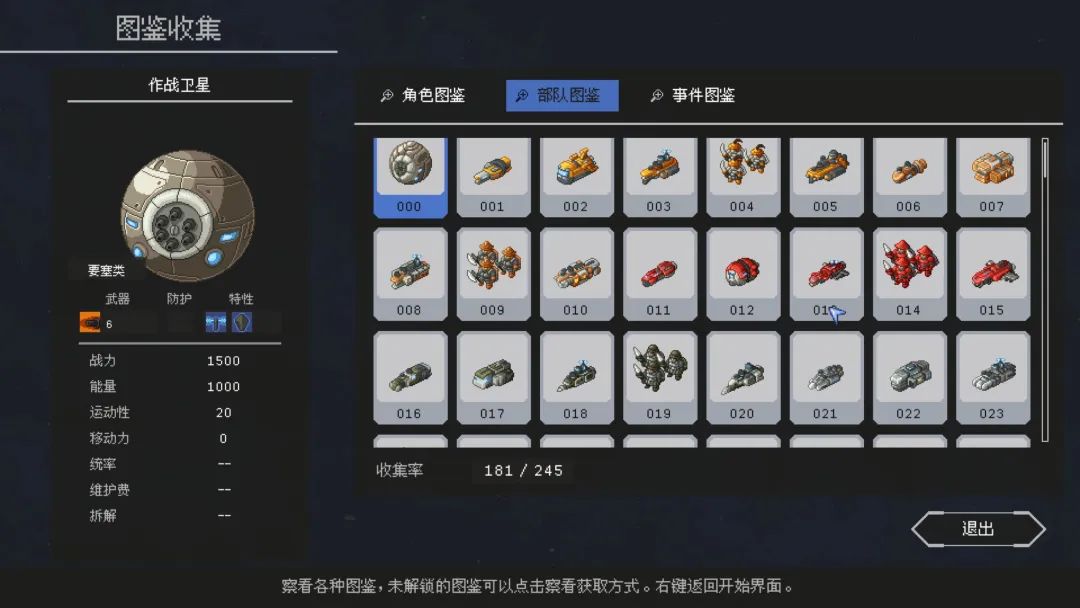
After gaining experience from two titles, Han Zhiyu became more familiar with the development process for sequels. As a result, he released *Chaos Galaxy 2* and the currently in-development *Chaos Legion* at a rate of about one game every one to two years.Each title sold around 20,000 copies—a modest figure, but considering it was a one-man development effort, the revenue was quite substantial.
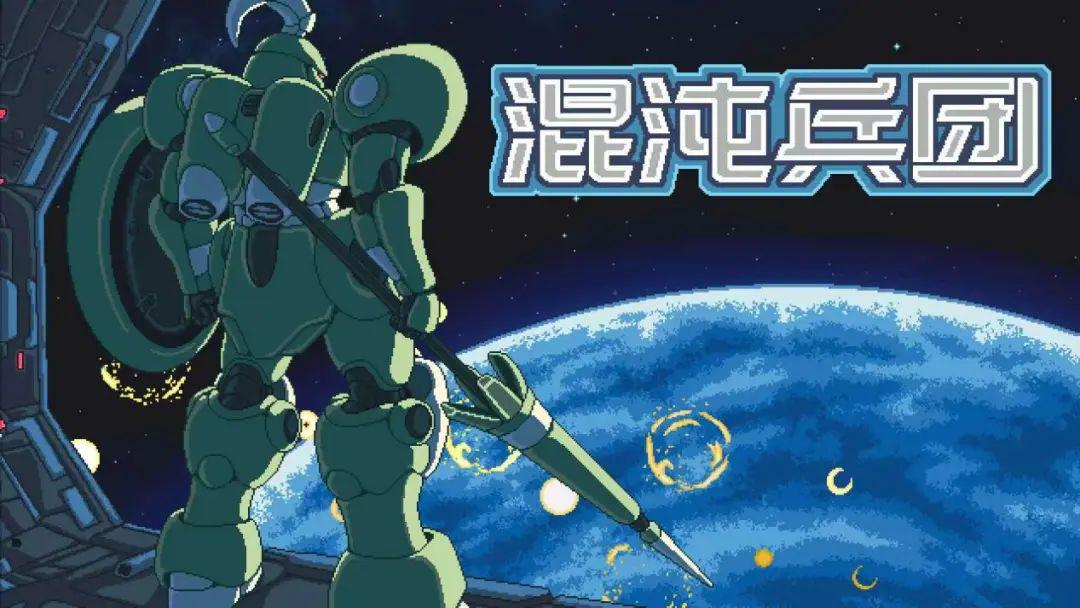
Finally, from online literature to Perfect World, then from Perfect World to Lingdong Shikong, and finally from Lingdong Shikong to the “Chaos” series—through these three departures, Han Zhiyu finally found his own “Shangri-La.”
06
“This is what my life is meant for.”
After chatting with Han Zhiyu about his journey, I simply couldn’t hold back a few questions.
“When you quit your job to go independent, did you really leave yourself absolutely no way out?”
“Of course not—I did leave myself a way out. I told the mobile game company that if it didn’t work out after a few months, I’d go back to work there.”
I wasn’t satisfied with that answer.
“So, if there were a parallel universe where your *Chaos Cosmos* failed, would you choose to go back to your old job?”
“In that case, I’d probably work a regular job for a few more years to earn money and provide for my family, and then I’d still go back to making indie games.”
“So it’s just a detour—you wouldn’t say, ‘Since this isn’t working out, I’ll quit and go make money.’ Right?”
“Right. As soon as the time is right, I’ll definitely come back.”
I was completely won over.
In recent years’ media coverage, there have been countless stories of people leaving major tech companies to become independent game developers—some succeed, some fail. While there are certainly a fair number of success stories involving solo developers, people like Han Zhiyu, who have gone it alone for a full seven years and are still going strong, are indeed few and far between.
“I think if you’re going to be a solo indie developer, you need to pour in a tremendous amount of passion and perseverance—both ability and passion are indispensable.You can’t just give up if one project fails, or take a break just because one succeeds. Neither works. You have to persevere—this is the only thing you should be doing in your life; this is what your life is meant for. You have to have that kind of resolve.”
“But do you absolutely have to make indie games on your own?”
“First, let’s be clear about one thing: making indie games definitely isn’t profitable. Every year during the New Game Festival, tens of thousands of new titles compete against you, and without the backing of a major studio, it’s very hard to beat the competition.As for teams, nine times out of ten they lose money, so I decided to go it alone—that way, I can also avoid some interpersonal communication issues. Anyway, I have both the ability and the passion; I can handle doing it on my own.”
Come to think of it, everyone knows Zuo Ci lives a carefree life, but not everyone has his skills—nor does everyone possess his spiritual resolve.
Han Zhiyu is 45 years old this year, right in the middle between the “Age of No Confusion” and the “Age of Knowing One’s Destiny.” Whichever of these two terms is used to describe him, it doesn’t seem out of place. I was about to ask him how many more years he plans to stay in the gaming industry, but he beat me to it, speaking up with a cheerful tone.
“Another 20 years—until I’m 65!”
原创文章,作者:茶馆小二,禁止转载:https://youxichaguan.com/en/archives/210047