Today (the 31st), Japanese game company Marvelous issued an announcement declaring the termination of its capital and business alliance with Tencent. Tencent will divest its entire approximately 20% stake in Marvelous, retaining less than 1% of the shares.At the same time, development of the *Story of Seasons* mobile game project—which was signed in 2019 and developed by Tencent’s NExT Studios—has been halted, and the external director appointed by Tencent has also resigned. With this, the six-year capital partnership between the two companies, which began in 2020, has officially come to an end.
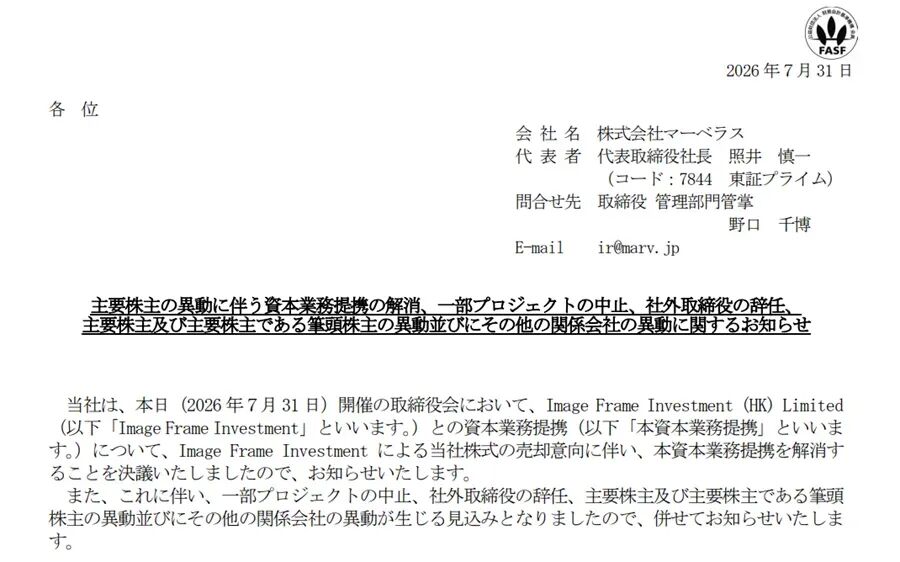
Marvelous plans to partner with a Japanese consortium to jointly acquire Tencent’s stake: Marvelous will repurchase a portion of Tencent’s stake (7.61%) with cash, Japanese brokerage SBI Securities will acquire another portion (7.79%), and Amuse Capital, the family fund of Marvelous’ founder, has confirmed it will purchase a portion as well.
Following the completion of the transaction, Marvelous founder Hayato Nakayama regained his position as the company’s largest shareholder, while Amuse Capital became the second-largest shareholder with a 10.16% stake.
The partnership between Tencent and Marvelous dates back to 2019. At that time, Tencent and Marvelous signed an IP licensing agreement under which NExT Studios would develop a mobile game based on the *Story of Seasons* IP.A year later, in May 2020, Tencent invested approximately 7 billion yen to acquire about 20% of Marvelous’s shares, becoming its largest external shareholder and appointing a director to the board. This came at a time when Tencent was expanding its global gaming investments.
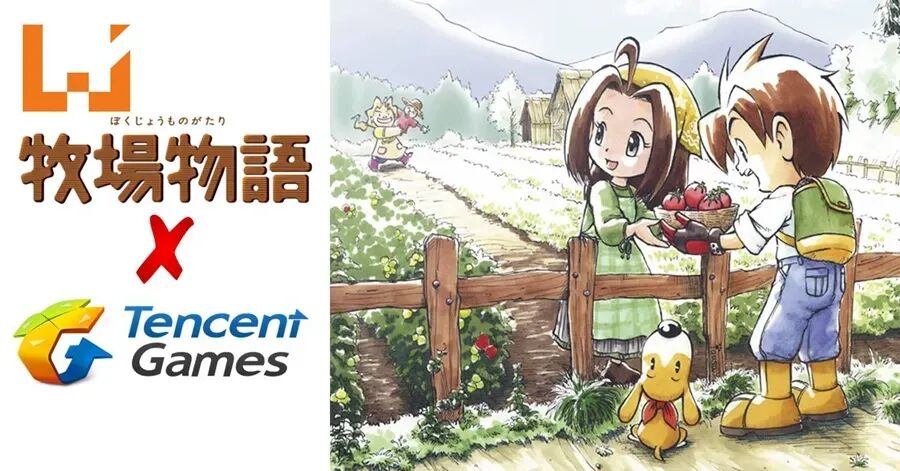
However, the promise of synergy never materialized. In May 2021, the *Story of Seasons* mobile game debuted its first in-game trailer and opened pre-registration at Tencent Games’ annual launch event, but nothing came of it afterward.Small-scale testing yielded unsatisfactory results, and the troubled NExT Studios was subsequently dismantled and downsized, with the project quietly terminated around 2022. Although the IP licensing agreement remains legally in effect, the practical value of the co-development partnership has dwindled to nearly zero.
In June of this year, Bloomberg was the first to report that Tencent was evaluating an exit from its minority equity investments in several Japanese game companies; Marvelous was specifically named, and there were even rumors that Tencent was willing to sell its shares back to the original management team at a loss. At the time, Tencent responded by stating that “games are one of Tencent’s core businesses” and that it would continue to support its portfolio companies and maintain its long-term commitment to the Japanese market.
Now that the announcement has been made official, Tencent has fully divested its stake in Marvelous.
It is worth noting that this round of adjustments does not constitute a full-scale withdrawal. A “safe list” simultaneously disclosed by Bloomberg shows that Tencent’s stakes in PlatinumGames, FromSoftware, and Kadokawa Group are not included in the sale.This strategy of “keeping some and letting go of others” reveals Tencent’s logic behind its overseas investments: minority stakes that no longer generate synergies, fail to contribute revenue, or provide content channels are being put up for sale, while the company continues to hold onto top-tier studios and projects in which it can play a significant role.
From an industry perspective, the Marvelous case epitomizes the cooling trend in gaming investments. When investments fail to produce blockbuster hits or open up channels for content to enter the Chinese market, liquidating holdings is only a matter of time.
原创文章,作者:游茶妹儿,禁止转载:https://youxichaguan.com/en/archives/208491