Recently, the international media outlet Gamesindustry.biz conducted an in-depth interview with Zhu Yongyi, Vice President of Global Business Operations, Strategy, and Compliance at Tencent Games. In the interview, regarding Tencent’s long-term strategic direction:real-time service-based games, the use of AI tools, evergreen games, and the company’s approach to overseas investments—providing a wealth of information that offers a glimpse into the grand vision of Tencent’s strategy.
(The following is a carefully edited translation of the original text; some content has been omitted for ease of reading.)
Many media outlets are asking the same question: Is it wise to focus on a “real-time service” model for games? Sony has learned this the hard way, and many other companies that have tried to generate stable revenue through this business model have also failed. In contrast, companies like Capcom, which have stuck to a traditional development path, have fared relatively well.
“Peak Defenders” is one of the recent casualties of the real-time service model. According to reports, the game is backed by funding from Tencent’s TiMi Studios Group, but Tencent itself has not shied away from the alluring prospects of the real-time service model.
“I think our ultimate goal is to ensure sustainable operations and services, right?” said Zhu Yongyi, Vice President of Global Business Operations, Strategy, and Compliance at Tencent Games.
“Take a look at Tencent’s flagship titles: *Honor of Kings*, *League of Legends*, and *Valorant*. These are all games with long-term sustainability; they provide stability for the studios while also building massive player communities. I believe that more and more games are no longer just about capturing players’ attention for a brief moment—they’ve truly become a way of life for people.”
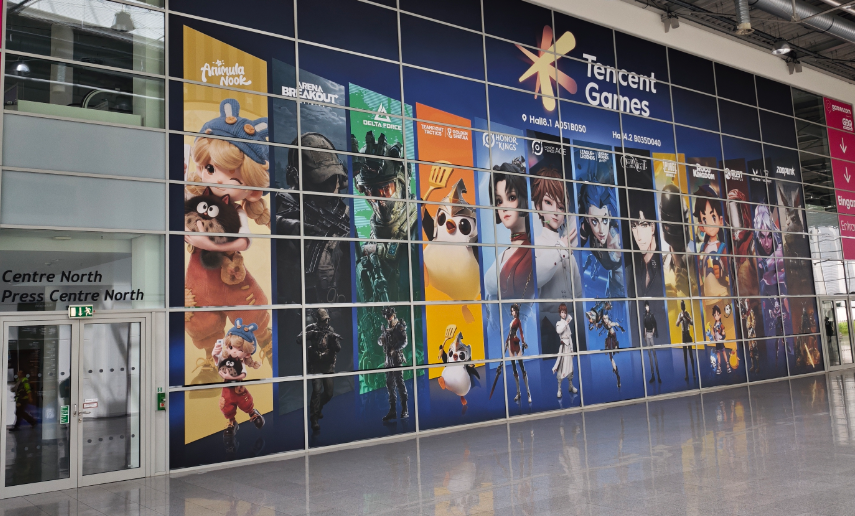
Tencent Games to Exhibit at Gamescom 2026
The company’s vast and ever-changing investment portfolio exists precisely to support this lifestyle. However, after speaking with Zhu at length, it became clear that real-time services are only one part of its strategy.
01
The Dream of Evergreen
A lot has changed since Gamesindustry.biz last spoke with Zhu last year.The two UK-based studios, Splash Damage and Bulkhead, have spun off, while The Chinese Room and Secret Mode took similar steps as early as the beginning of 2025. Zhu was reluctant to discuss the specific details of the split but stated, “For some studios, we felt we couldn’t help them promote their games more effectively.”
“For us, the real question is: Does this partnership make sense? What can we bring to the partnership, and is it on par with what the developer contributes? I think that in many cases, either there’s a lack of synergy—meaning these games don’t align with the company’s long-term strategy—or there are simply better opportunities available.”Ultimately, the company concluded that “going independent is better than staying with Tencent.”
Zhu was candid about the fact that not all acquisitions are successful. He said, “There are cases where we acquire a studio, but due to market conditions or cultural differences, it’s actually very difficult to integrate it. At the end of the day, not everything works out on the first try.”
So, what exactly is Tencent’s strategy? Zhu stated that evergreen products are a key component—whether they are single-player or multiplayer games. Single-player games account for a significant portion of the company’s mobile game portfolio. Ultimately, however, “the key lies in building sustainable gaming communities over the long term so that games can continue to attract players.”” Although “sustained operation” is the ideal scenario, it is not the company’s sole objective. Zhu said, “It can be an IP that continues to evolve, such as *Call of Duty*; we consider it an evergreen IP, even though it is essentially just a series of different, continuously updated versions.”
The ultimate goal is consistency: “Look at many games sold as one-time purchases: in the past, you’ve seen many companies rise and fall—they’d release a game, and then have to lay off employees. We’re increasingly focused on bringing stability; you don’t usually see Tencent doing the same thing.”
Zhu said that another key aspect of Tencent’s strategy is investing in “high-caliber talent.” He reiterated: “There must be strong synergy between Tencent and these developers.”
02
Double Your Bet
Zhu is responsible for the operations and strategic planning of Tencent’s global gaming business.The team he leads oversees approximately 20 game studios. These studios include Miniclip, Sumo Digital, Funcom, Fat Shark, Sharkmob, 10 Chambers, and Stunlock Studios in Europe; Digital Extremes in North America; and Grinding Gear Games in New Zealand.
His focus is not on the destinations we’re heading to, but on how to ensure these studios can succeed with their upcoming products. This means ensuring that every studio receives the necessary support from Tencent’s entire ecosystem, including regional distribution, technical support, testing, backend services, and data analytics.“These are all areas where we need to provide professional support, because Tencent has accumulated a wealth of experience in the domestic market, and now we hope to apply that experience to the global market,” Zhu said.
He gave an example: Experts from China and Europe came to assist with the development of *Dune: Awakening*. “They worked alongside Funcom’s developers to solve problems together. If a particular issue required ongoing attention, they would sometimes stay on to continue helping.We’d even say, ‘If the collaboration goes well, this person could become a full-time employee at the studio.’”
He explained that work such as creative and artistic design is typically handled by individual studios. However, for issues that all studios may encounter—such as challenges related to the Unreal Engine or distribution issues in regions like the Middle East and North Africa and Southeast Asia—Tencent can provide assistance.
03
The Question of Scale
Last October, Funcom carried out a large-scale round of layoffs. At the same time, Funcom shut down The Outsiders, the studio behind *Metal: Hellsinger*. At the time, Funcom stated that this move was intended to “focus internal resources on releasing new content and features for *Dune: Awakening*, as well as optimizing the game.”So, is Tencent’s strategy also to focus more on larger-scale game projects that require ongoing operations, rather than smaller ones?
“To be honest, it all depends on the game studio itself,” Zhu said. He noted that when Tencent acquired Funcom, Funcom had already been successfully operating *Conan Exiles* for quite some time.“So, this is already part of Funcom’s established style. The games they design are built for long-term operation from the start, and we provide support throughout that process.”
At the same time, other studios that Tencent has invested in have also experimented with the freemium model, but “without success.” As a result, these studios are now focusing more on developing high-quality buy-to-play games, as that is their core business. As for us, we sincerely hope to help studios that excel in their respective fields achieve success.
But just how small is a “small team”? Joe Brammer, CEO of Bulkhead—the developer of *Wardogs*—told Gamesindustry.biz earlier this year that Tencent “wouldn’t even consider games valued at less than 50 million pounds.”
Zhu doesn’t see it that way. “To be honest, we evaluate games from every angle. For us, what matters more is the stage the game company is at in its development and what its ultimate goals are. Can we help them achieve greater growth?Sometimes, we feel that our professional expertise or cultural background isn’t quite a good fit for the other party, but I don’t think there’s anything stopping us from developing smaller games. We do have smaller games in our portfolio as well.”
He said that Larian Studios and From Software serve as “beacons” in Tencent’s investment portfolio (Tencent holds minority stakes in both companies). He noted, “These companies have grown through long-term development. While not every game has been a huge success, each one has its own significance.These games have continuously helped the company build its user base while also enhancing its development capabilities. I believe we will certainly pay attention to smaller-scale games as well.”
04
External Development
During our last conversation, Zhu mentioned his intention to establish some local support teams in China, with the goal of bringing Tencent’s operations in the West and China closer together.A year later, he admitted that progress in this area had not been as he had hoped, partly due to collaboration challenges caused by different time zones. As a result, the focus has now shifted to drawing lessons from the various studios within the group.
However, he does believe that this model—where a small core team handles development, supplemented by external resources—has great potential. This model has already proven successful in *Star Wars: Galaxy Speeds*.“From a macro perspective, I think this model makes a lot of sense,” he said. “A few days ago, we examined the development process for *Expedition 33* and found that the situation was similar.”
“For us, the question is: How many employees should we hire, and how much staffing support should we obtain from outsourcing providers? Sometimes, we find ourselves thinking, ‘We need employees who can perform complex tasks with precision, and we want them all to be in the same location, working together.’ And that, of course, falls within the purview of the studio head.”
Geographic location plays a crucial role in the outsourcing process: some teams are willing to work with partners located far away, while others prefer to work with partners in the same time zone.“As a result, we’re exploring various options globally. Sumo might be able to support our European branch, since it’s closer. However, as a U.K.-based company, costs there might not be low. So, when it comes to these kinds of issues, we have to weigh all the factors.”
This reminds me of Amir Satwat’s insightful talk at the Gamescom Dev Conference. He pointed out that high-cost regions like California are losing jobs, while regions such as Asia are creating new ones. In Satwat’s words: “The workforce is shifting from North America to other regions.”
Zhu agreed with this view: “Overall, it’s becoming increasingly difficult to do business in North America unless you have a strong development team that’s been working together for a long time.“I used to work at Activision, and back then, our teams were all based in the Santa Monica area. A team like that was able to consistently produce high-quality content year after year.” However, for support teams, “it’s not cost-effective to base a team in such an expensive part of the world.”
05
Turning to AI
It is worth noting that this year’s Gamescom opening ceremony showcased a number of high-quality, full-price games developed by Chinese game studios. This leads us to wonder: Is the balance of power in the gaming industry shifting from the West to the East?
“I hope so,” Zhu said with a smile. “I was born in China. But I think games like *Black Myth: Wukong* have truly inspired people to create high-quality content. Now, everyone understands what kind of games truly stand out on console and PC platforms.”
“I think many Chinese developers used to believe, ‘I know how to make high-quality mobile games.’ But now they realize, ‘So this is what a high-quality game for console and PC platforms should actually look like.’ In the past, they might have outsourced a lot of art-related work, and the quality of that work was relatively low. But now, they understand what kind of results they should be striving for.In addition, they now have more advanced tools to support game development. As a result, those obstacles and gaps have been overcome.”
Zhu said that these more advanced tools include “technologies such as AI, which can help people iterate on products more efficiently.” For him, AI is not meant to replace humans, but rather to enhance people’s efficiency and effectiveness in various tasks.Some of our development teams are smaller, but this actually allows us to produce higher-quality products, iterate more frequently, and ultimately design better products.
“I think Chinese developers are probably the same, because they’ve grown up in an era that’s adept at utilizing all kinds of tools,” he said. “Overall, China places great emphasis on using AI as a tool.”
In contrast, developers in the West tend to be more reluctant to use AI. They worry about ethical and copyright issues, and are also concerned about player backlash. “I don’t think people should be afraid of AI,” Zhu said. “Just like the internet, the AI era will inevitably arrive.“I’ve also spent some time researching how to best utilize AI in my daily life to improve my efficiency.”
He believes that development teams should be more “open to this way of thinking” and view AI as “a genuine tool.”
“To be honest, there are so many tools available today—whether in the field of programming, artistic creation, or any other field—and these tools can be a huge help to you.”
He said that Tencent generally encourages developers to use AI technology, “because we believe AI has enormous potential, but ultimately, it is just a tool. When it comes to content creation, however, the situation is somewhat different. In this area, the application of AI may still take some time.During the development process, we primarily use AI for tasks such as creating concept art and assisting with design; only later do we employ AI for tasks like model binding, motion matching, and code review. AI can be applied in many areas, but it won’t replace human work, right?”
He acknowledged that there are still some challenges to be addressed, particularly when it comes to copyright issues involving content generated by generative AI. “I think this is an issue the AI industry must resolve. Assuming the AI simply uses our own databases to generate content, that’s certainly not a problem. After all, that’s our intellectual property, and we’ve done this before. They’re just repurposing our content.I don’t see a problem with that—after all, they’re using our own content. We’ll monitor this closely to ensure our data remains strictly within our studio.”
This includes reaching agreements with various tool providers to ensure that data cannot be accessed externally. “We don’t want the content created by our developers to be used by others, resulting in our work appearing in other games in a different form.”
Backed by its powerful parent company, Tencent, Tencent Games is in a position to take bold risks with various products and studios.Although Tencent recently withdrew from the Bulkhead and Splash Damage projects and had the AAA studio Lightspeed (formerly the developer of *Last Sentinel*) change direction, our conversation took place the day after Tencent announced a minority investment in W4, a commercial development partner for the Godot engine.It seems Zhu is sure to bring some new projects to showcase at the next Gamescom. However, regardless of whether the experience is delivered through online services, the core philosophy remains to enable users to engage with the content on an ongoing basis.
Original link:
原创文章,作者:gallonlabs,禁止转载:https://youxichaguan.com/en/archives/207605