Lately, I’ve been totally hooked on an AI-powered game called “Pokebonk.”
I was initially reluctant, but the hybrid gameplay of Pokémon and Survivor has a certain “nostalgic charm” to it. Given the formidable reputation of Nintendo’s top-tier legal team, I figured I might as well enjoy it while I can.
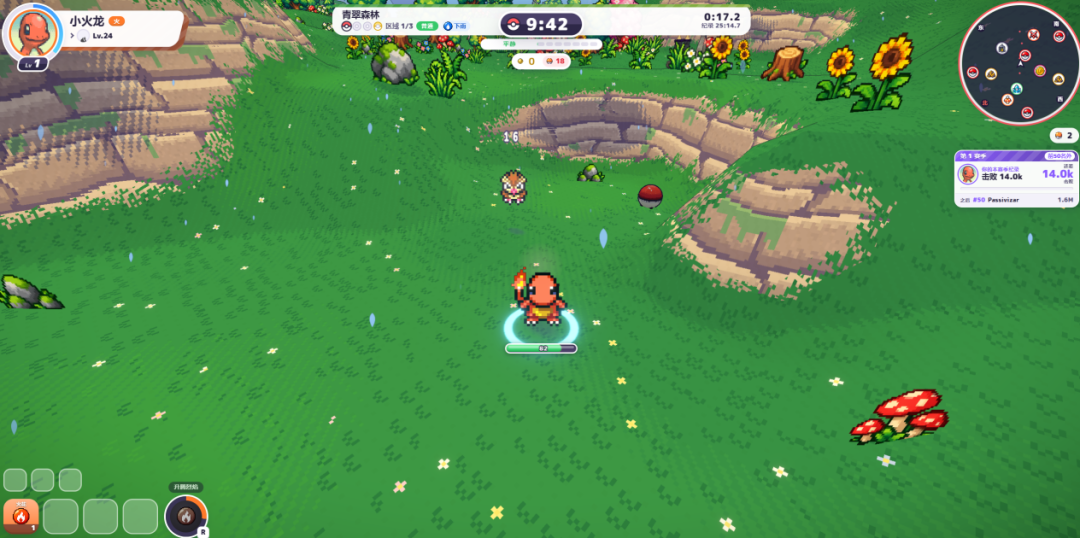
Thanks to the powerful influence of the Pokémon IP, the incredibly satisfying “mow-down” gameplay of *Survivor*, and the convenience of one-click play on the web without registration, *Pokebonk* went viral online.After the beta launch on October 16, a massive influx of players flooded the game, causing the servers to crash the very next day due to the overwhelming number of users. The developers were forced to perform an emergency server upgrade.

To date, *Pokebonk* has surpassed 181,000 registered players (based on leaderboard data), and according to data from the past few days, the daily growth rate at one point exceeded 40,000 players.

Interestingly, the core gameplay of *Pokebonk* didn’t come out of thin air; rather, it pays homage to last year’s hit indie game *Megabonk*. According to VGI, *Megabonk* sold over 4 million copies and generated more than $30 million (approximately 200 million RMB) in revenue.
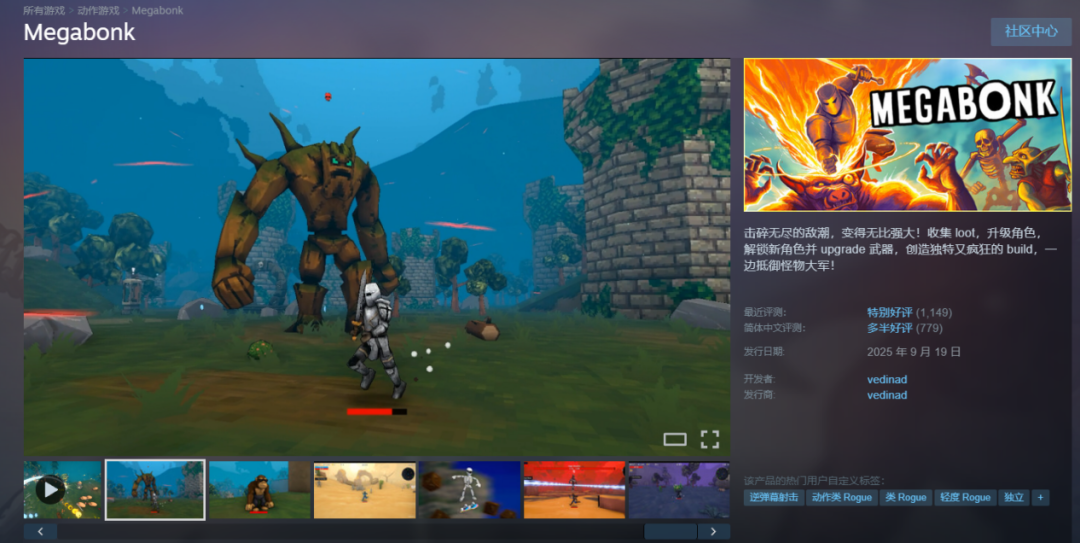
Another reason for the massive popularity of *Pokebonk* is that the use of AI in game development has significantly lowered the barrier to entry and shortened the development cycle.The scenes, trees, rocks, 3D models, visual effects, interface graphics, and soundtrack in *Pokebonk* were all generated with the help of AI. Producer Charcher also admitted on X: “It would have been impossible for me to do this alone—writing the code and generating every single asset by myself.The Pokémon images were created by fans, while the 3D models were generated using Blender and Opus.”
Charcher also said he spent a full two weeks and countless hours optimizing and fine-tuning the entire game, rather than simply generating everything with a single prompt.However, considering that Charcher only mentioned on X on October 11 that “*Megabonk* is truly impressive—I hadn’t even noticed it before,” it’s reasonable to infer that the development cycle for *Pokebonk* may have been shockingly short.

This inevitably gave rise to another reasonable expectation: “AI development + a game framework that’s all the rage = creating a hit in no time.” At first, I thought so too. But after actually researching the AI game market and talking with some game industry professionals, I realized that the polarization in the AI game market is even more severe than I had imagined.
On one side are the very few high-profile, blockbuster AI games in the spotlight; on the other are the mountains of forgotten AI “corpses” that no one pays attention to. AI may be subtly changing the reality of developers’ livelihoods and the landscape of the entire gaming market.
01
Powered by AI, but the creativity is even more impressive
The sudden surge in popularity of *Pokebonk* actually comes as no surprise.
The influence of Pokémon as a global super IP goes without saying. *Pokebonk* features all 151 Pokémon from the Kanto region, corresponding to the complete Pokédex from the original first generation. Thanks to its exquisite 3D pixel art, the game is visually appealing at first glance.
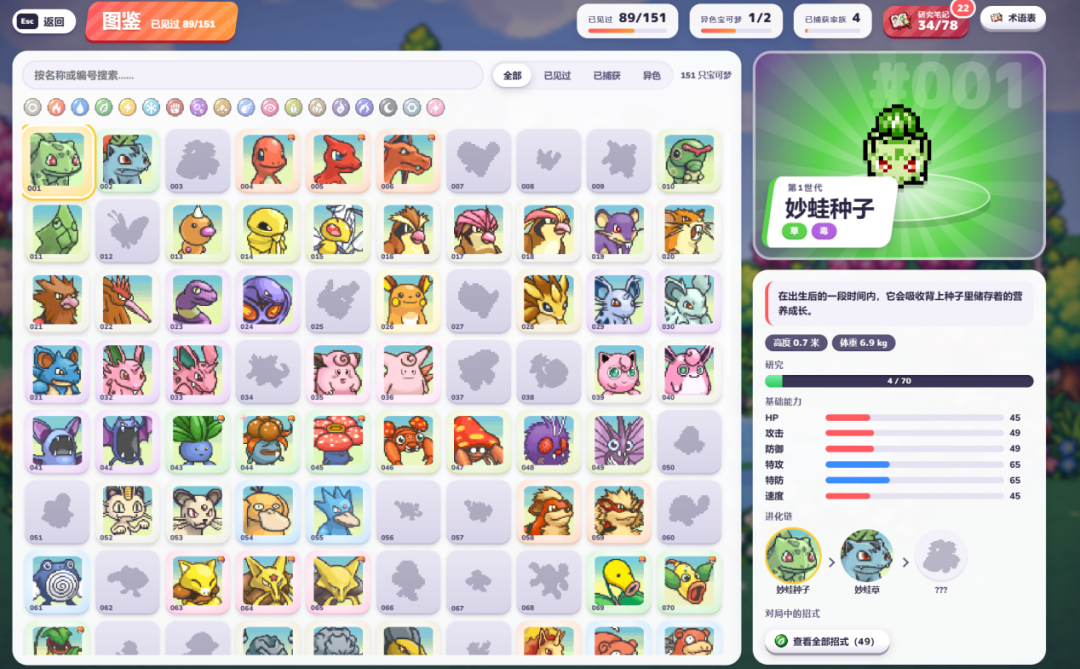
With no registration required and one-click web-based gameplay tied to your current device’s data, it’s hard to imagine anyone seeing this and resisting the urge to click through and give it a try. Furthermore, international players have always had a “soft spot” for Pokémon IP games other than those from Nintendo itself, so it’s no surprise that it went viral online in just a few short days.
However, it should be noted that since *Pokebonk* is a purely charitable, non-commercial fan-made project, all copyrights belong to Nintendo. The developer, Charcher, has also stated that if anyone reports or files a complaint, the entire game will be taken down immediately. The fact that it’s still available likely means it has yet to fall within Nintendo’s “scope of enforcement.”
Of course, even setting aside the bonus points from the Pokémon IP, *Pokebonk* itself offers plenty of fun gameplay.
In terms of core gameplay, it bears no resemblance to the original Pokémon series; it doesn’t follow the traditional cycle of catching, battling, and exploring. Overall, playing through it feels more like an innovative take on Vampire Survivors.
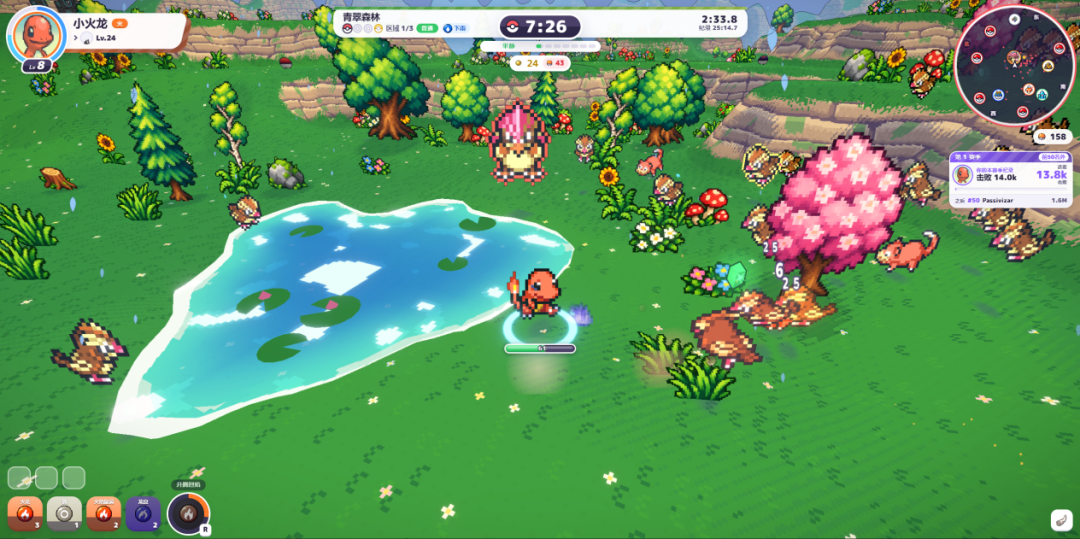
The game uses a third-person perspective. Players must choose one of the three starter Pokémon, and then they enter the game… to “wreak havoc.”
You might feel a little lost when you first start the game—where am I, who am I, and what am I supposed to do?
But when faced with a tidal wave of Pokémon closing in, players will quickly realize that there are no tedious formalities—everything follows the sole tenet of survival-style mowing down: the battles are just plain fun.
In *Pokebonk*, aside from character ultimate moves, most skills are cast automatically; players only need to control their character’s movement and jumps. Thanks to the inclusion of varied terrain, the elevation differences provide natural opportunities to escape group attacks.
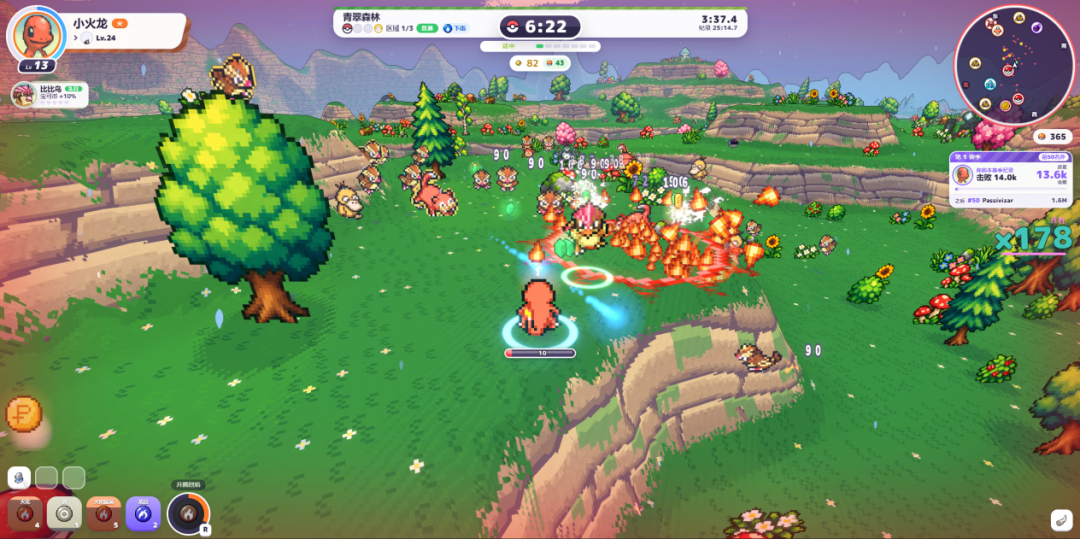
Similar to survival-style games, after collecting a large amount of experience and leveling up, players can choose one of three roguelike paths. By continuously defeating enemies and leveling up, they can grow stronger throughout the game and thereby fend off waves of enemies.
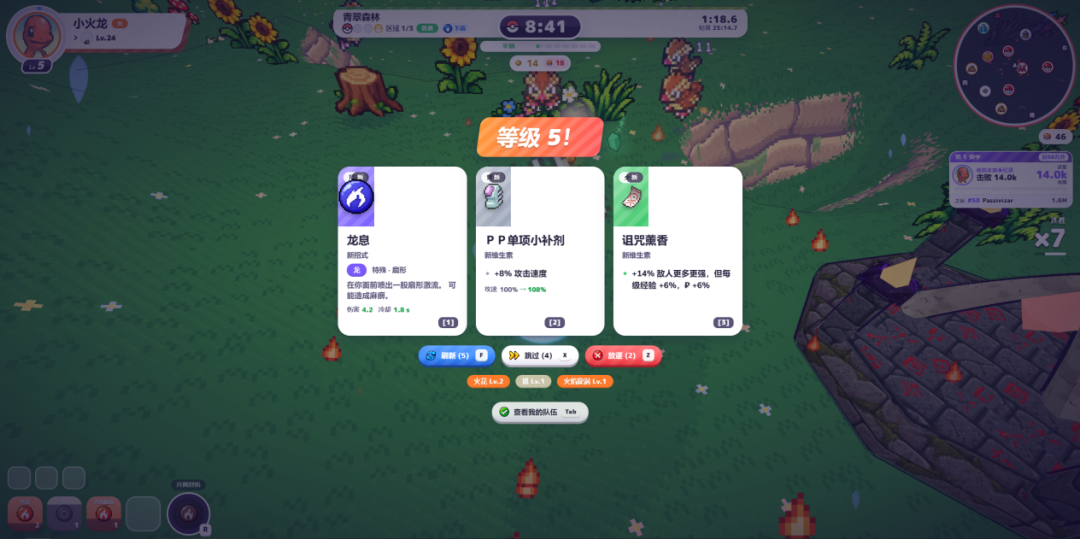
However, after playing several rounds in a row, I’ve come to realize that while *Pokebonk* captures the satisfying “mow-’em-down” action of the survival genre, it still has its own unique charm.
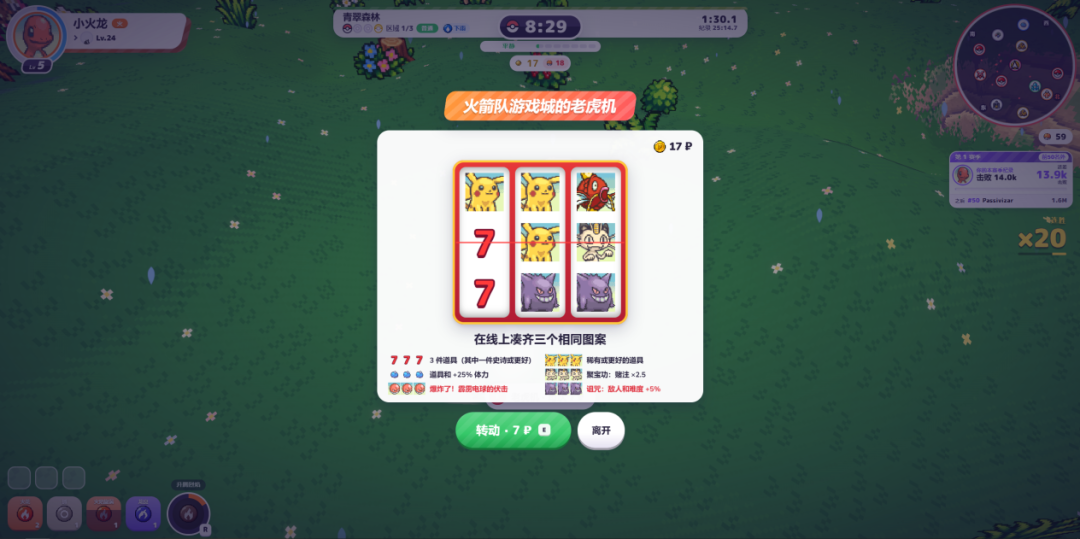
On the one hand, unlike conventional survival games where in-game progression relies solely on killing enemies, *Pokebonk* features numerous random events throughout the game that players can choose to participate in.For example, players can spend coins to open scattered Poké Balls and receive one of three skill affix bonuses, complete quests at altars and sacred sites to earn extra rewards and buffs, or mine ore and collect berries to gain additional coins and HP restoration.
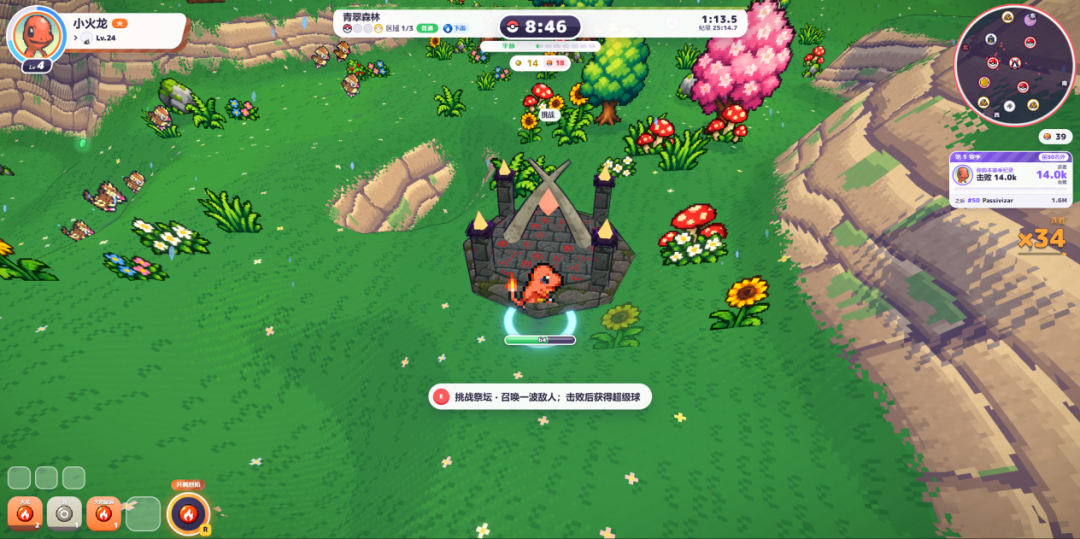
In the game, players aren’t required to stick to a set time frame; instead, they can choose to grow stronger and then defeat the guardian boss of the current area to advance to the next one. Currently, *Pokebonk* offers two maps with vastly different styles, each consisting of three areas. As players progress deeper into the areas, the difficulty increases and the number of available events grows.
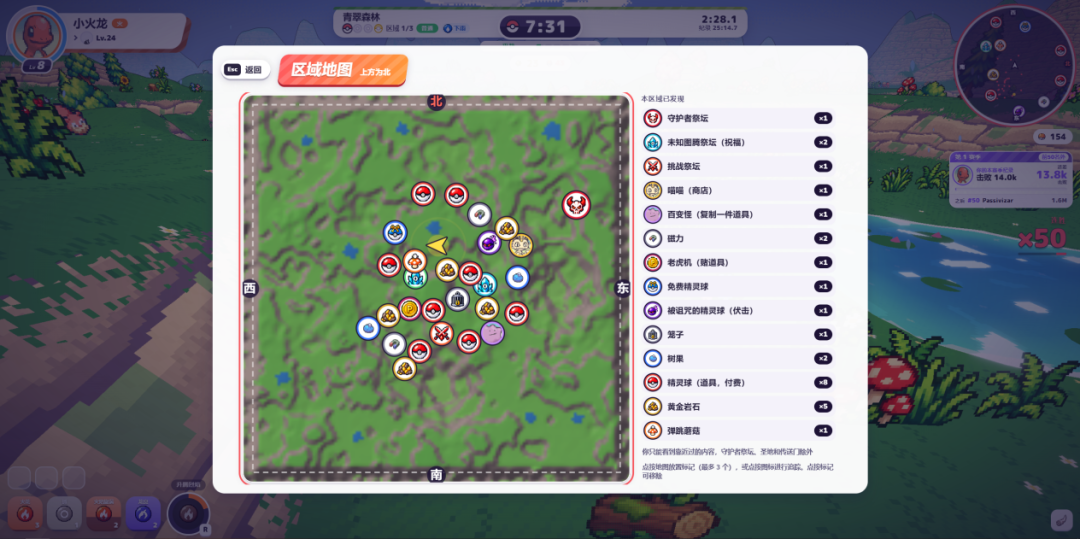
Of course, this gameplay design wasn’t pioneered by *Pokebonk*—it’s a direct adaptation of the core essence of *Megabonk*—but for a player like me who isn’t really into the survival genre, it works really well.
On the other hand, the core gameplay and Pokémon elements are seamlessly integrated. To give a simple example, while you can’t directly use a specific Pokémon to battle others in turn-based battles within the game, you can defeat wild Pokémon during battles and add them to your team.Some Pokémon can be selected to battle directly in subsequent matches after being captured, while others can fight alongside you as partners in the current match, providing various buffs.
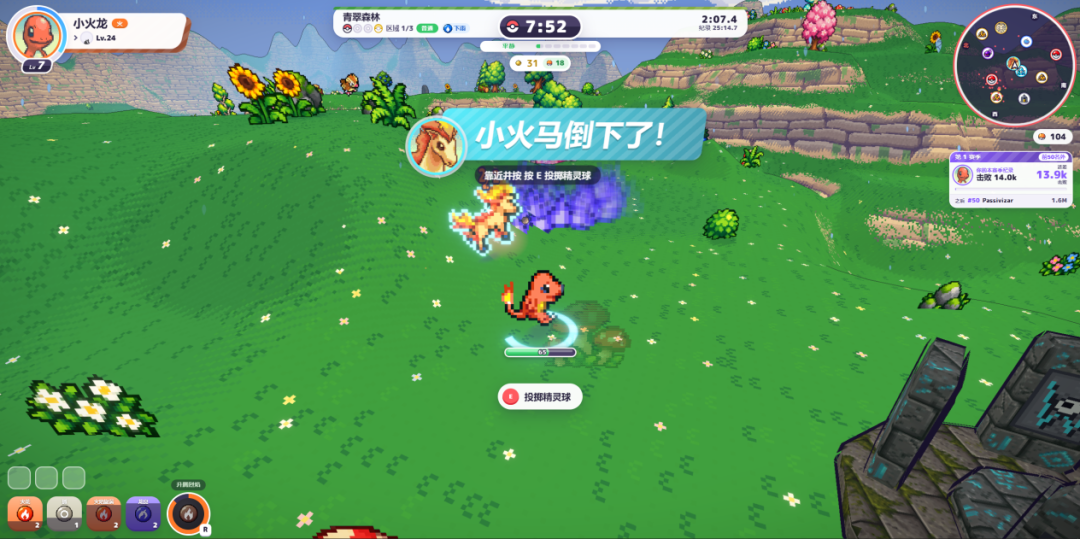
“Pokebonk” assigns each Pokémon stats and moves that are consistent with the original series, and once they reach the corresponding level, they evolve directly into new Pokémon, unlocking and learning various new moves.
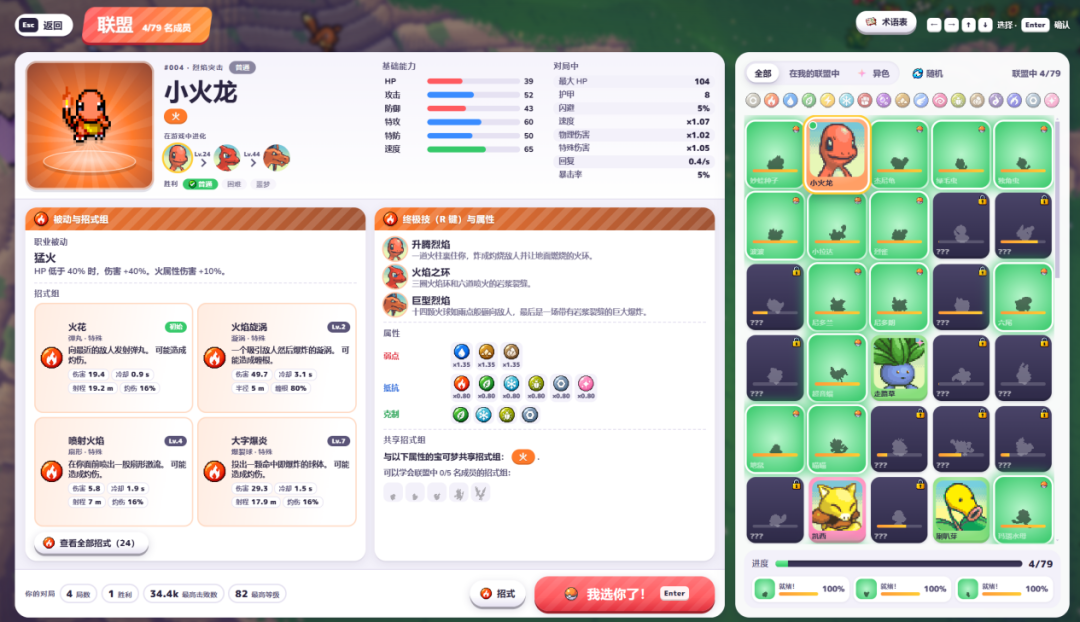
After nightfall, not only do enemy attacks become more intense, but there’s also a chance for extremely rare Shiny Pokémon to spawn for players to catch. At the end of each game, players can also spend resources to train their Pokémon or upgrade items to gain permanent bonuses.
It’s clear, then, that the core gameplay of *Pokebonk* isn’t entirely detached from *Pokémon*; part of the thrill for players comes from the positive feedback of mowing down enemies as a survivor, while another part stems from the sense of accomplishment gained from completing the Pokédex and raising Pokémon. From a certain perspective, this is very much in line with the original series.
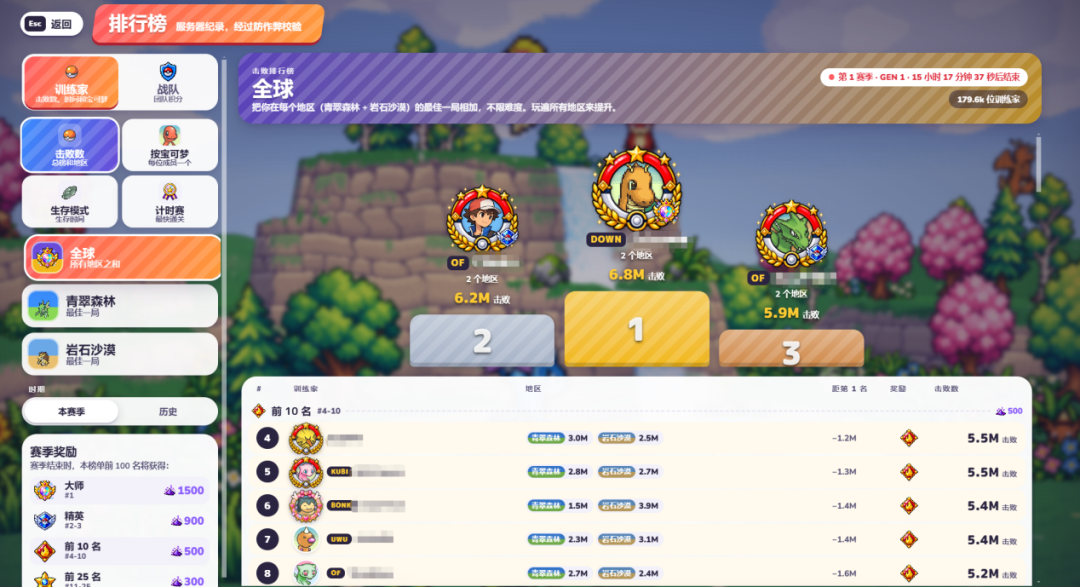
In the current first season of *Pokebonk*, the developers have not only added daily and weekly quests, Endless Mode, team-building, and a complete Pokédex, but have also launched leaderboards for kills, Survival Mode, and team-related achievements.In the upcoming Season 2, new maps, new evolutions, new items, new bosses, and even a multiplayer co-op mode will all be introduced.
02
Conclusive Evidence, or Survivor Bias?
At this point, some might say, “Isn’t *Pokebonk* proof positive that AI-driven development combined with a wildly popular gameplay framework equals the creation of a hit in record time?”
I won’t deny that the “AI + gaming” model has led to the emergence of quite a few hit products on the market in the short term, but the reality is that most AI games aren’t doing very well.Even in the case of *Pokebonk*, mentioned above, aside from the Sword of Damocles hanging over its head in the form of Nintendo’s restrictions, the inability to monetize means that developers must shoulder all costs—including server expenses—on their own without any revenue.
In addition, late last year, the website totallyhuman (founded by Ichiro Lambe, a former member of Valve’s Steam Labs) conducted a rough tally of the number of games on Steam that had used AI; they reported a figure of 10,258, accounting for approximately 8% of all games on Steam.Just a few months ago, that number stood at 7,818.
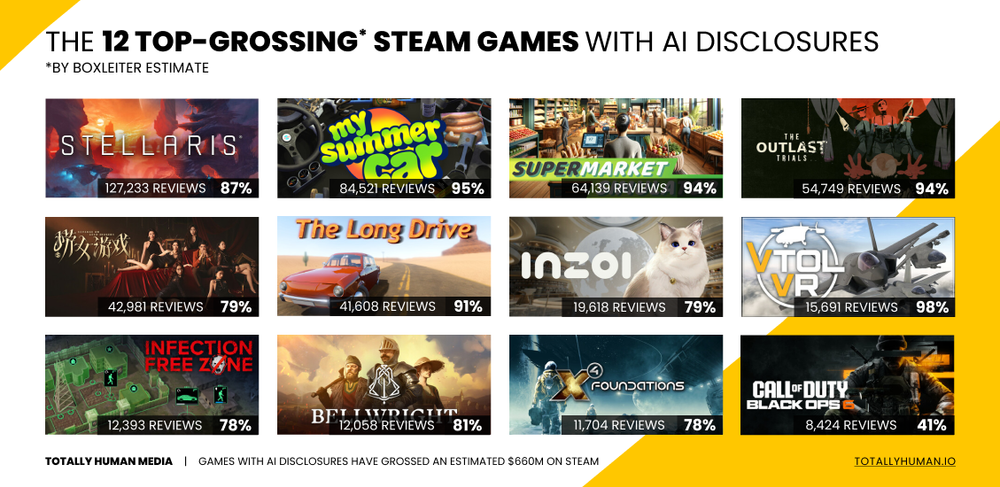
From the totallyhuman website
They then made a rough estimate of the revenue generated by these AI-powered games and found that only 4.7% of them were likely to generate revenue in the five-figure range.
Among the 45 products with revenue exceeding $1 million, AI applications accounted for 49% in game art, 27% in dialogue and voice acting, 13% in pre-production concepts, and 11% in marketing materials, with the remainder concentrated in areas such as translation and localization.
While there are certainly some major IP titles among them, almost every one has its own unique strengths that are hard to match—rather than simply relying on a formulaic approach of using AI development and adding popular gameplay mechanics as a shortcut.
It is undeniable that AI has unleashed developers’ productivity, and the resulting wave of AI-powered games is undoubtedly the future trend of the gaming market. At the same time, however, a flood of poorly made, low-quality AI games has further eroded players’ trust in such products, even evolving into a kind of ideological confrontation bordering on ZZZQ.

Player Reviews of Pokebonk
So, in the era of AI gaming, what will ultimately be the deciding factor?
A game developer from a small-to-medium-sized team gave me an interesting example, comparing AI games to the currently popular AI short videos. The proliferation of AI short videos has ultimately led to one outcome: the content itself has become increasingly devalued.This is because, in the past, character design, visuals, art style, and even camera work could all be integral parts of the creative process. However, in today’s AI era, tools are gradually leveling the playing field in terms of content quality, which means users no longer perceive distinct differences in these areas.
However, you can still clearly sense that certain short-form videos stand out significantly from other products; therefore, in his view, what will ultimately set things apart in the AI era is creativity and innovation.
Returning to the topic of AI games, he believes that today’s players have developed a certain level of aesthetic sensibility and taste; therefore, the ultimate competition in the AI game market will still come down to the essence of the game itself. Even when games are comparable in every other aspect, those that are fun to play and creative will still stand out.
He told me, “You can indeed use AI to directly generate art, music, character designs, and scenes, but right now it’s still very difficult to simply say, ‘I want a fun roguelike game,’ and have the AI instantly make it happen.However, many people currently have a misconception about AI—they think AI-generated games are simply created with a single click based on a prompt and a few requirements, or that they’re just copies or reskins of current popular games.”
From start to finish, he has always viewed AI as a tool for improving efficiency and has maintained a natural optimism; therefore, even if AI can replicate the mechanics of popular games, it is difficult for it to plagiarize the creative spirit behind them.
Conclusion
For a long time, the industry has been gripped by fears that “AI will replace everyone,” and as many major companies have implemented AI-driven reforms to cut costs and improve efficiency, there have indeed been a large number of casualties. From another perspective, however, many small and medium-sized developers have shown an unusually positive attitude toward AI.
A solo developer once told me a long time ago: “AI won’t replace everyone; it will only weed out developers who don’t know how to use it.”
And that’s exactly the case. A producer from a medium-sized AI game development team I recently spoke with complained to me that it’s very difficult to recruit talent for AI games. Just as was the case back when universities didn’t yet offer game development majors, there are simply no candidates with the right background, so most of the time, they have to hire people and train them themselves.
There is no doubt that the emergence of AI has brought about tremendous changes in the gaming industry; it has repeatedly lowered the barrier to entry, but it has not made the journey any shorter once developers have entered the field. Ultimately, what will enable game developers to stay the course in the long run is the quality of their products—not AI itself.
原创文章,作者:游茶妹儿,禁止转载:https://youxichaguan.com/en/archives/215625