Just today, the annual Unreal Fest, hosted by Epic Games, officially kicked off in Shanghai.
This year, the event moved to the Shanghai Tower for the first time, with a venue larger than in previous years. Watching people stream in in waves after checking in and gradually fill the entire venue, it was hard not to be swept up in the excitement and anticipation of the moment.

On the one hand, domestic developers’ interest in the Unreal Engine has been on the rise. According to data disclosed at the event, China now accounts for nearly 20 percent of the Unreal Engine’s global monthly active users, making it one of its most important markets.
On the other hand, people also come here to explore what’s new. According to Epic’s current plans, UE6 will enter the preview phase by the end of next year. AI, interoperability, and more user-friendly programming languages are some of the key features of this generation of the engine. Among these, AI—which tops the list—is the issue that concerns all developers the most: Just how far can it advance game development?
“AI’s programming capabilities are growing exponentially every two or three months. It’s crazy—nothing like this has ever happened in the history of the world.” “Companies that invest in AI will experience a wave of massive growth, while those that don’t invest in or resist AI will be left behind. Moreover, this process will be far faster than any generational shift the gaming industry has ever seen.”Tim Sweeney, founder and CEO of Epic Games, traveled to Shanghai in person this year and offered this unequivocal assessment during a media roundtable following his keynote address.

Tim Sweeney Delivers the Opening Keynote at Unreal Fest
Somewhat unexpectedly, he has shifted from the cautious stance he held a few years ago—when he was reserved and even slightly critical of AI—to becoming a vocal advocate who is doing his best to champion the cause.The reason for this shift stems from the internal exploration they’ve been conducting: as recently as this past January, Epic’s attempts at AI-assisted development were still less than satisfactory, and 3D content generation, in particular, proved difficult to put to practical use.

Tim Sweeney’s statements on AI in 2024 (left) and October 2026 (right)
But just a few months later, they used AI to develop a new version of the Epic Games Store client—10 times faster than manual development—and the store’s user experience became much smoother; some 3D scenes that used to take weeks to create can now be completed by a single developer in a single day.Having witnessed this leap in the capabilities of these tools firsthand, Tim Sweeney immediately hit the gas, deciding to drive the transformation of Epic’s entire workflow toward AI.
During this group interview, Tim focused on sharing his latest insights on game AI development. He is particularly optimistic about Chinese companies and developers—this is the first time in the history of technology cycles that Chinese companies have held a leading global position right from the start of the competition.
He even mentioned that, to accelerate the process of helping AI agents “learn” how to operate the game engine, they are in discussions to provide the source code for the Unreal Engine and a large amount of data to several large-model vendors—including five Chinese large-model companies.Regarding the pessimism stemming from hardware shortages accompanying AI development, several Epic executives interviewed offered an interpretation that differed from the prevailing market view.
More powerful tools, broader opportunities in the Chinese market, and an exponential increase in development capabilities set the optimistic tone for this event. Everyone who came to Shanghai is eager to see just how far this new opportunity will ultimately take the gaming industry.
Teahouse has compiled the AI-related content from this group interview. The interviewees were Tim Sweeney, founder and CEO of Epic Games; Bill Clifford, Senior Vice President of the Unreal Engine and Head of Engine Ecosystem at Epic Games; and Robin Wang, Business Director for Greater China at Epic Games’ Unreal Engine. Some content has been slightly edited for readability.

Robin Wang(左)Tim Sweeney(中)与Bill Clifford(右)
Game Teahouse: I recall that in interviews around 2024, Tim’s stance on AI was still relatively cautious—so much so that even in the UE6 preview this past June, there wasn’t much content related to AI. What have you observed in recent months that has led to such a significant shift in your perspective?
Tim Sweeney: This past January, we experimented with a lot of AI-assisted programming, and the results weren’t exactly great at the time. But later, AI companies found ways to make it much better in this area. I think a key reason is that they shifted from simply training the AI on existing code to using post-training via reinforcement learning, which makes the AI better at solving new problems.I believe the breakthroughs in AI’s mathematical capabilities stem from the same reason.
Over the past year, we’ve seen model capabilities improve exponentially on multiple occasions. AI’s programming capabilities have gotten better every two or three months, showing exponential growth. It’s crazy—nothing like this has ever happened in the history of the world.
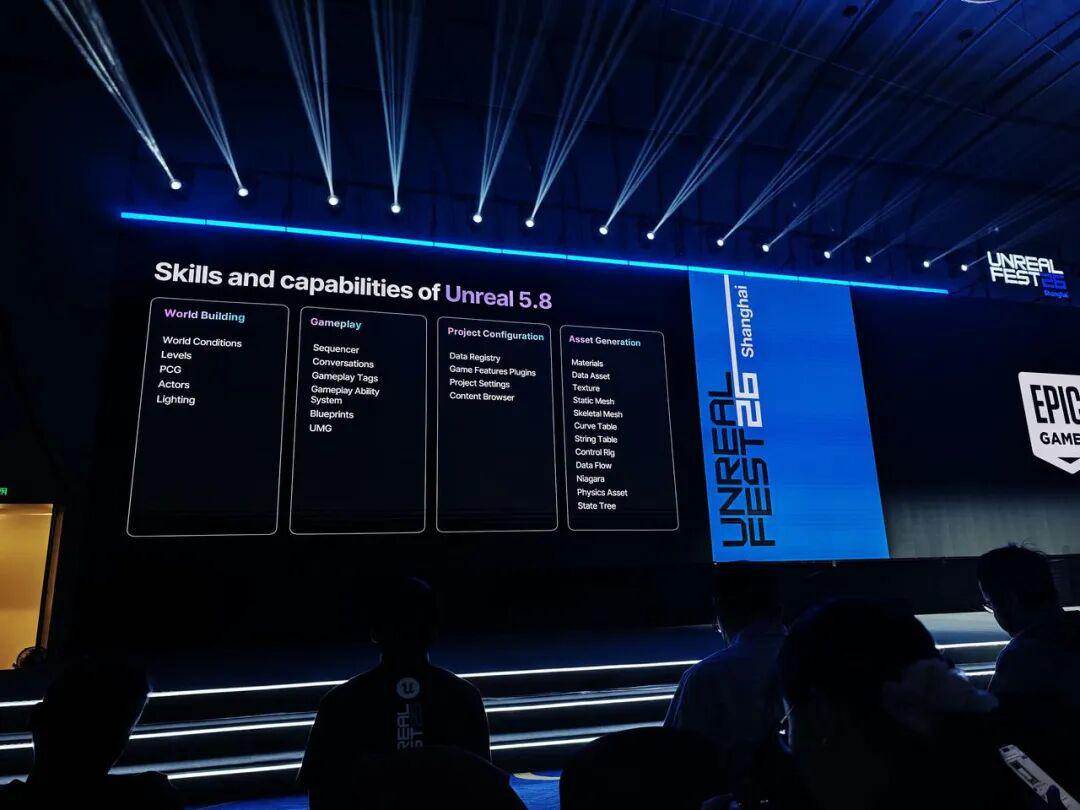
Later, with the help of AI, we built a better version of the Epic Games Store client about 10 times faster than we could have done manually. Our team also realized that, with enough effort and by redesigning the way we work, these technologies could be applied to the Unreal Engine itself.
In terms of content development, AI performed even worse this past January. It was completely useless when it came to generating 3D content. Even though video models have demonstrated a deep understanding of the world, this understanding cannot be applied to 3D content.
OpenAI then spent three months fine-tuning the model to make it highly proficient in using Blender, and trained it to create 3D content and solve 3D problems through a large number of reinforcement learning tasks. About three months ago, GPT-6 Astra completely transformed our perception of 3D content creation.
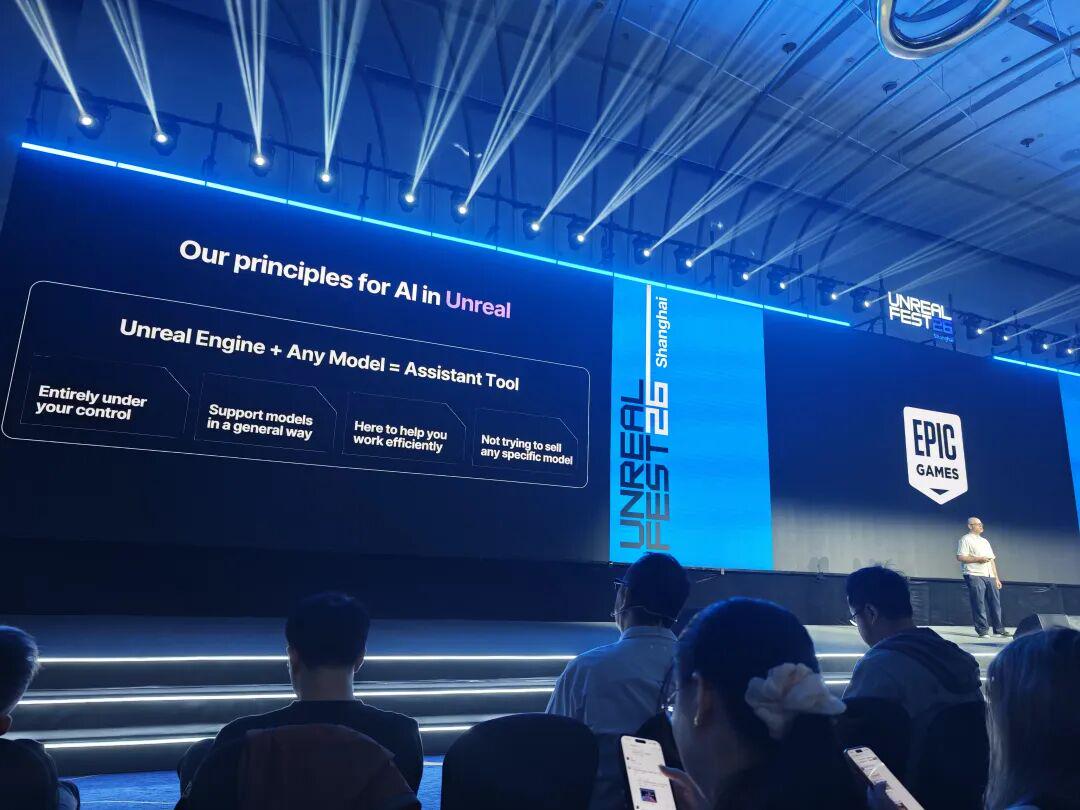
We are currently collaborating with the leading AI large-model developers, including the top four in the U.S. and the top five in China. We provide them with Unreal Engine-related training data—including complete source code, a vast amount of Epic’s proprietary content, all documentation, and numerous reinforcement learning examples—to help the models become more proficient at generating real-time 3D content.
As demonstrated in today’s opening keynote, a developer was able to create an impressive 3D scene in just one day—something that might have taken weeks in the past. We believe there will be stunning breakthroughs by next January, and by the end of next year, as subsequent iterations continue to advance, the progress will be even more significant.We have no doubt that it will continue to improve.
Robin Wang: I’d like to add that the training data Epic provides to these large AI model companies is completely free.
Tim Sweeney: We originally expected that AI would be able to create 3D content using tools. The MCP protocol allows AI to interact with Unreal Engine’s tools just as humans do using a mouse and monitor. So it’s not surprising that it can transfer the knowledge it learned in Blender to Unreal Engine.
But what truly astonished everyone was that we could feed the AI a massive binary file—which is just a jumble of bytes—and it was able to understand the 3D scene described in the file. It was practically like magic. It demonstrated a way of acquiring knowledge and understanding that is completely different from that of humans.We can look at a picture and understand it, and so can AI; but AI can also read these massive data files and comprehend their contents.
Q: How will Epic’s shift toward AI change development efficiency and competition in the industry?
Tim Sweeney: Some of Epic’s internal development teams have quadrupled their efficiency in programming and 3D scene creation; others have seen an improvement of about 50%.
We are updating all our development tools to make them AI-compatible. We believe that once this internal transformation is complete, every department in the company will be at least four times as efficient in developing software, games, and content as it was last year. This will have a significant impact on the quality and scale of the games everyone can create, and it will also intensify competition in the gaming industry.Companies that invest in AI will experience a wave of massive growth, while those that fail to invest or resist AI will be left behind. Moreover, this process will unfold far more rapidly than previous generational shifts in the gaming industry.
This will be an exciting time for China. Over the course of my life, I have witnessed the personal computer revolution, the Internet revolution, and the rise of 3D multiplayer games. In each of these areas, China got a relatively late start. But AI is the first technological revolution in which China and Chinese companies have been global leaders from the very beginning.
Interestingly, much of the competition today is taking place between Chinese AI model companies that have adopted open strategies and U.S. companies that generally follow closed strategies. Moreover, a significant portion of the engineers at these U.S. companies are Chinese engineers working in the United States. This gives the competition between companies a different character than in the past, particularly in terms of the divergence between the open and closed approaches.
Q: There are already examples of world-generation used to create interactive games, and the Unreal Fest agenda also includes several talks on “making games with a single line of code.” How will these advancements impact traditional engines in the coming years?
Tim Sweeney: We believe that in the coming years, the primary value of AI will lie in assisting with content creation and programming, as well as accelerating certain aspects of game runtime, such as dialogue and visual enhancements.
For at least the next three years, we believe that world models will not yet be a viable alternative to traditional game development methods, such as engines.The reason is simple: to generate a world model in real time at the visual quality demonstrated today at Unreal Fest, you would need a large rack filled with GPUs, with hardware costs of approximately $100,000. The same content, however, can run in real time on a $300 device using traditional 3D technology.
The difference in operating costs between the two is simply too great. Until there is a major breakthrough on the order of magnitude, we believe that world models cannot yet serve as a viable alternative. Therefore, we are focusing our efforts on advancing and improving existing 3D engine technologies, including the Unreal Engine.
Q: New titles are finding it harder to succeed, development and publishing budgets are under pressure, and players are facing rising prices for hardware—such as storage and graphics cards—as well as higher game prices in the age of AI. Given these pressures, where do you expect industry growth to come from when the next generation of products is launched at the end of next year?
Tim Sweeney: The gaming industry is undergoing more changes now than at any time in the past. These trends need to be considered individually.We believe the issue of hardware costs will be resolved within three to four years, as manufacturers are building more chip fabs. Many Chinese companies are also likely to build large-scale fabs on an unprecedented scale and enter the semiconductor industry. Therefore, this is a temporary issue.
From a longer-term perspective, the game development industry does indeed face serious cost and efficiency issues, particularly in the West. As major tech companies like Meta and Apple compete for talent, companies are forced to pay very high salaries, driving up labor costs—especially on the U.S. West Coast.
At the same time, there is also a “brain drain.” Many of the game industry’s top talents have left traditional game companies and moved to leading game companies like Epic and Riot, as well as to major tech companies. As a result, the development teams at many Western companies are now significantly weaker than they were a decade ago.
We believe the solution lies in developing automation that allows us to create better games faster. Individuals who embrace AI—whether programmers or artists—will also have tremendous opportunities: every artist will have the chance to become an art director, and every programmer will have the chance to become an architect. This will be a massive transformation that every company must undergo.
Q: With the rising cost of smartphones, many new models are still using previous-generation processors. Could this limit the user base for high-quality mobile games and, in turn, affect developers’ willingness to invest?
Tim Sweeney: Mobile devices are advancing rapidly with each new generation. I believe that in the future, more and more high-end rendering capabilities from PCs and consoles will be able to run on mobile devices.A key goal for the coming years is to enable developers to create games that look stunning on high-end devices while also being able to scale down to run even on lower-end Android devices. This inevitably means running at lower graphical quality on lower-end devices.
Recently, we’ve gotten Lumen running on the Nintendo Switch 2; this version is called Lumen Lite. The technical expertise we’ve gained during the development process may help us bring Lumen’s real-time global illumination capabilities to high-end mobile devices.
Due to cost issues and the memory crisis, advancements in high-end hardware will stall over the next three years, which in turn will give us even more incentive to focus on optimization so that existing features run more efficiently.
Robin Wang: Based on my observations of Chinese developers, I’m not particularly concerned about the issue of limited investment that was just mentioned.Many Chinese developers are shifting from “Mobile Only”—that is, focusing exclusively on mobile—to cross-platform development, especially for major titles. Even if factors such as mobile chips affect the performance or sales of high-end smartphones, Chinese developers still have access to a much broader landscape, including multiple platforms such as smartphones and PCs, as well as a vast blue-ocean market.
Therefore, whether from a logical standpoint or based on actual observations, Chinese developers’ willingness to invest in games continues to rise.
原创文章,作者:游茶妹儿,禁止转载:https://youxichaguan.com/en/archives/215627