In April of this year, a student who had never developed a game before came across a competition announcement and used AI to create a tabletop role-playing game called *Infinite Space*. After its release, the game generated over 910,000 interactions and became the second most popular title on the platform.
With the rise of Vibe coding, a new wave of game developers has emerged. At the same time, internet giants, game companies, and startups have all entered the fray, building platforms in an effort to bring these creators on board.
Tencent, NetEase, and Xindong have successively entered the market, launching Youdianling, ZaoHua Workshop, Xingxia, and TapTap Maker. “Dark Side of the Moon,” which gained popularity thanks to Kimi K3, has launched K399, an AI-powered game UGC platform.During ChinaJoy, the game aggregation platform 233 Paradise launched 233 Workshop. Startups such as MuJian and Soon secured funding ranging from tens of millions of dollars to hundreds of millions of RMB. Xiaohongshu, Douyin, Kuaishou, and Alipay have also been opening up traffic channels for AI-generated mini-games.
As platforms have emerged, a series of creative competitions have been launched.In March, MuleRun—Alibaba’s AI Agent team—hosted the CCG Game Jam; in June, Tencent’s Photon Studios Group held the first “Creation Workshop” creator competition. MuJian, TapTap Creation, and NetEase Starbox have continued to host competitions, with a themed Game Jam taking place nearly every few weeks.
In news reports and at gaming technology expos, these types of products have become the mainstream narrative in the AI gaming sector’s capital market in 2026. They are marketed as “no-code,” “game generation with a single command,” and “significantly improving game creation efficiency.”
The platform has indeed helped some ordinary people become game creators, and a few have successfully monetized their work. However, it has also generated a great deal of anxiety. Seasoned game industry professionals have observed that AI game platforms overestimate the overall capabilities of independent developers, and the flood of low-quality content is eroding creators’ patience for the long-term refinement of their work.
Where does this highly sought-after sector stand now?
01
AI Game Creation Platform Brings Together Vibe Coding Creators
Jin Haobin first realized that game development tools had evolved when he came across a video on Bilibili this past March. In the video, someone had used TapTap Maker to create a game with gameplay similar to *Minecraft*. He watched it twice, then enlisted his twin brother, Jin Haozhu, and reached out to the platform to request a beta test code.
TapTap Maker is an AI-powered game creation platform developed by Xindong that leverages the TapTap ecosystem. Creators can develop games using natural language, and their works can be submitted to TapTap for release with a single click, streamlining the packaging and publishing process.The product began recruiting for its closed beta on January 26, 2026; in July, it launched a local development mode that did not require beta access; and in August, the web version was fully launched.According to official data, in the first half of this year, TapTap Maker produced nearly 5,000 games, attracting over 10 million cumulative players, with an average of 160,000 daily active players and more than 3,000 creators.
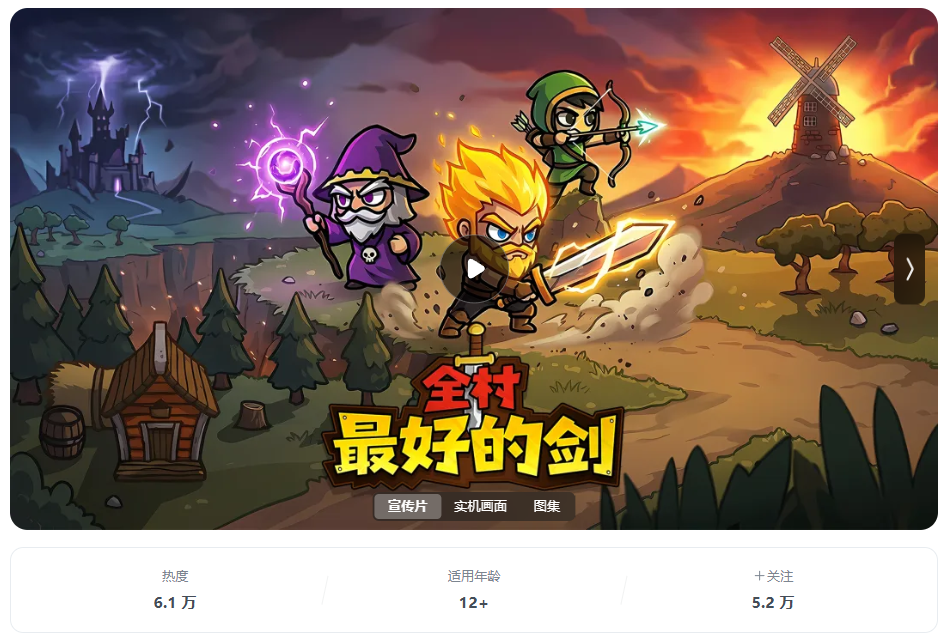
Jin Haobin quickly became one of TapTap Maker’s top creators. He joined in March, and when TapTap Maker opened up ad monetization in April, his studio was rated as an A-level developer. His four games generated a cumulative revenue of 100,000 yuan, with *The Best Sword in the Village* alone surpassing 2,000 yuan in daily revenue just three days after its launch.
At almost the same time, Octopus, the creator of *Infinite Space*, signed up for the “World’s First AI-Agent Simulator Creation Contest” hosted by the AI game creation platform “Mujian.” Mujian specializes in text-based interactive and AI agent-based works, allowing creators to develop simulators and interactive narrative content without writing code.
Octopus, who had no background in game development and couldn’t write code, created a tabletop role-playing game using AI, inspired by the competition. Not only did the game make it to the competition’s shortlist, but it later became the second most popular AI-generated game on the platform.
At that time, MuJian had just announced the completion of two rounds of financing, totaling $10 million, led by Jinqiu Fund and Yunjiu Capital, with follow-on investments from gaming industry veterans such as Shao Yun, former vice president of NetEase, and Yuan Jing, former CEO of Mutong.
The starting point for this round of funding was a viral demo created by the founder using Vibe Coding.
In the second half of 2025, Roi, a former ByteDance employee, spent three days developing a “mini-phone” app that could chat, send red envelopes, view surveillance footage, and let users listen to music together. He posted it on Xiaohongshu, where it unexpectedly went viral.
She decided to make the webpage freely available, allowing users to connect to the API on their own.Users began teaching themselves Vibe coding and came up with even more creative ways to use it. Roi saw the potential of AI-generated user-generated content (UGC) and built a creation engine based on “Little Phone”—this was the earliest prototype of the MuJian platform. Shao Yun was particularly impressed by this demo and subsequently brought Yuan Jing on board to co-invest.
“Fierce Bandit Rabbit,” an AI product manager at a major tech company, also began experimenting with game development using Vibe Coding around this time.In May of this year, she and a friend conceived the idea for *Spring at the Imperial Terrace: AI Emperor Simulator*, and a month later, they completed the game using AI. She took her creation to various publishing platforms one by one—from traditional channels like Steam and Yichuan to Douyin’s Interactive Space—and ultimately settled on NetEase Star Box.
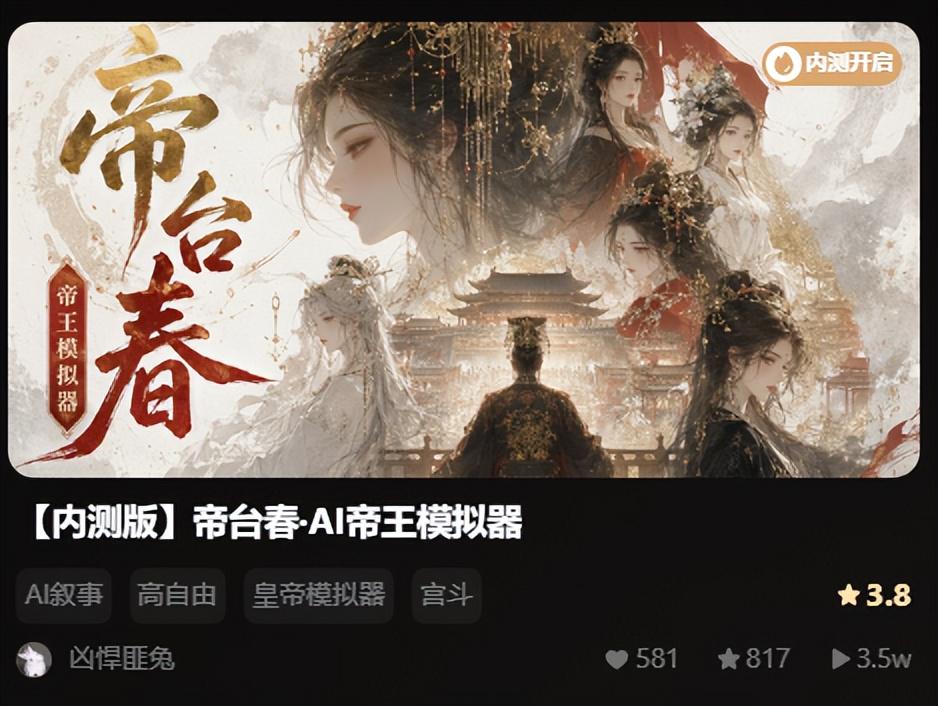
In June of this year, Xingxia quietly launched as an AI game creation platform. It features a built-in AI creation workshop and focuses on text-based games and simulators. The platform offers creation point incentives, competitions, and community engagement, and is currently recruiting campus ambassadors to expand its reach.
Fierce Bandit Rabbit chose Star Chest because it’s a rare platform that’s a perfect fit for *Imperial Spring: AI Emperor Simulator*.The Xingxia operations team proactively reached out to her to discuss the closed beta plan and objectives, suggesting she set up her own social media accounts, while the official account would coordinate promotional efforts. These are challenges that independent creators—who typically lack distribution resources—must usually tackle on their own, but the platform took them on for her.
In August, after its release, *Imperial Spring: AI Emperor Simulator* became one of the few titles on the platform to be featured by the editors.
An AI game creation platform brought Jin Haobin—who had been planning to change careers—back to the gaming industry and enabled Octopus, who had no prior experience, to create the tabletop role-playing game he’d always dreamed of. These are common success stories featured in the platform’s promotions, but they represent the experiences of only a select few. According to Jin Haobin’s observations, high-quality creators on TapTap account for about 1/30 of all creators.
02
It’s not hard to build a platform; the challenge is that there are too few good games.
“Without users, creators are unwilling to deploy their products; without high-quality content, users who do come won’t stay,” said Chen Yusen, founder of MuleRun—an AI agent platform under Alibaba Cloud—in an interview with LateNight. This statement captures the core contradiction facing AI game creation platforms today.
In March and April of this year, MuleRun hosted two Vibe Coding-related Game Jam competitions, one in China and one overseas. The domestic competition offered 100,000 yuan in prize money and prizes, with 80 award slots available, but ultimately attracted only a little over 100 participants.The international “One-Line Web Game” contest, aimed at independent developers, ultimately received only 7 submissions.
A creator who participated in the MuleRun competition had this to say about the other entries: “They all feel very ‘AI-driven,’ and there aren’t many that are actually fun to play.”
Vibe Coding makes game development easier, but there are still too few good games.
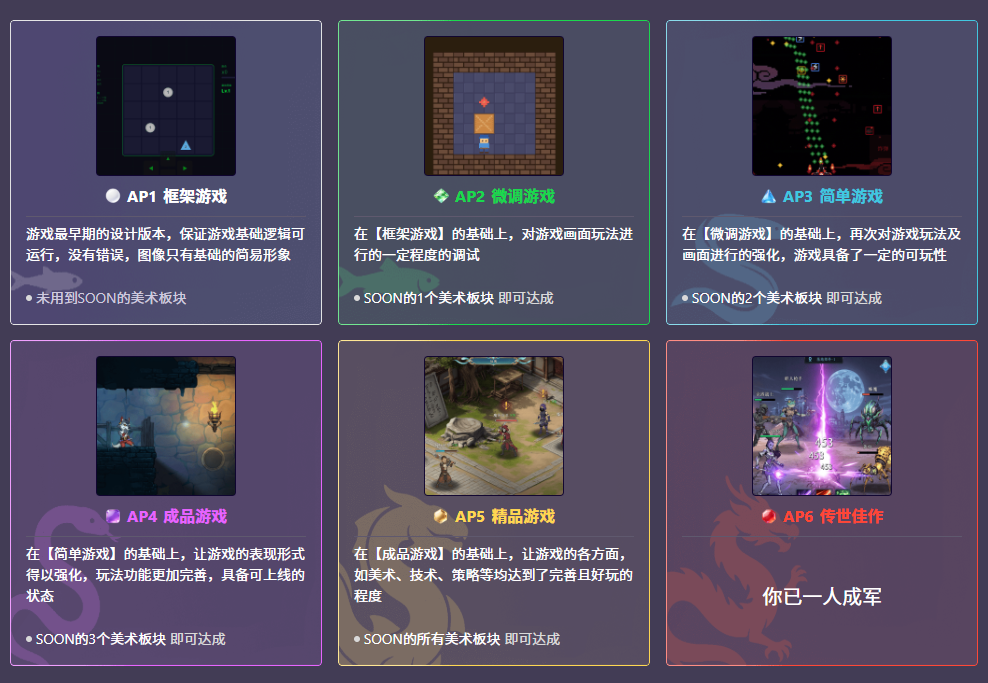
Observations from the AI gaming platform Soon confirm this.The company behind Soon, Jiyi AI, was spun off from Kaiying and has raised nearly 100 million yuan in cumulative funding. Soon categorizes games within its community into six tiers—AP1 through AP6—based on criteria such as gameplay structure, visual presentation, user experience, and commercial value, and has found that AI-generated games in the industry generally fall at the AP2 level.
AI games are generally of low quality, and this is quietly lowering players’ expectations. After Jin Haobin released his game on TapTap using AI, he expected players to criticize it for its rough quality and give it low ratings, but to his surprise, it received a score of 8. The reason is simple: players felt that their game “didn’t look like it was made by AI.”
This opened the door for some new creators, but for tools without an established community, it remains difficult to attract players and creators based on content alone. MuleRun later stopped hosting AI game competitions and fully transitioned the platform into a productivity tool.
AI game development platforms are not yet fully mature, and various companies are all exploring their own solutions.
In addition to rating community creations and providing high-quality creators with more resources and exposure, Soon has also stepped in to develop games itself, thereby adding more AP5- and AP6-level examples to the community.
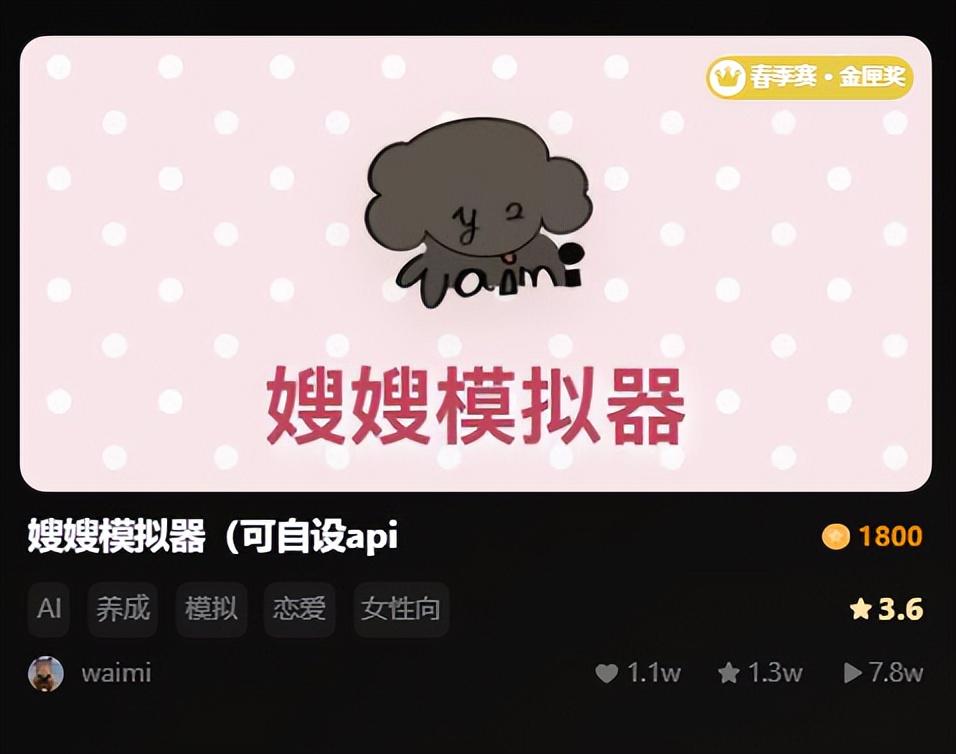
NetEase Star Box operates more like a traditional text-adventure game platform. On its homepage, it features a “Rising Authors” section that showcases the profiles of high-quality creators; these pages include their game works and link to the authors’ social media accounts. The creator of the platform’s most popular game, *Sister-in-Law Simulator*, has amassed over 100,000 followers on Douyin and Xiaohongshu.
Most AI game creation platforms adopt a “courses plus mentorship” approach. Roi, the founder of MuJian, drawing on his early experience developing gamified educational products at ByteDance, personally hosts live-streamed classes and has the first generation of successful creators provide tutorials and assign homework to newcomers.TapTap Manufacturing, on the other hand, directly interviews top creators, distills their creative approaches, and shares them on the platform for newcomers to reference.
The tool itself is also undergoing continuous refinement.NetEase Star Box categorizes games into genres such as narrative games, simulation management, and mini-games, guiding creators step by step through a dialogue-based process to refine their game’s world-building, gameplay, art, and attribute panels. Soon briefly offered a feature that allowed users to upload videos to generate games, modifying them based on popular content to circumvent the challenge of “accurately describing a game in just one sentence.”
These methods are indeed effective for creators with no prior experience. In a public interview, Roi mentioned that some creators went from not knowing how to write prompts to being able to write code using Cursor and create AI-generated images and videos within a month, ultimately completing their own works independently.
03
Neither ads nor token-based payments are good solutions.
AI game creation platforms help beginners get started, but they struggle to answer the question that professional developers care about most: How do you monetize it?
Ayue has eight years of experience as a game designer and has tried most of the AI game creation platforms on the market. In her view, the high-quality creator interviews and tool updates provided by these platforms cannot fundamentally help her. Once a game is launched on an AI game platform, no platform can provide her with answers on how to promote it or how to generate revenue.
In 2023, with the advent of AI, the problem that had long plagued her—her lack of artistic background and inability to produce quality artwork—was finally resolved, so she quit her job to become an independent game developer.
Over the course of three years, she released her games on TapTap and Steam. One of them—a cultivation-themed strategy game—has been downloaded more than 80,000 times and remained on TapTap’s New Releases chart for half a month; another won an award in last year’s TapTap Spotlight competition. However, these achievements did not translate into revenue; her total earnings from all her games combined amounted to less than 8,000 yuan.
After AI game development platforms emerged, she immediately applied to join the beta tests for various AI development tools—from MuleRun and Soon to TapTap Maker—trying them out one by one. In the end, however, none of these platforms allowed her to support herself through full-time independent game development.

Octopus is in a similar situation. *Infinite Space* ranked high in popularity during the intermission, but it has only 200 weekly active users, just 50 members in the player feedback group, and concurrent users have dropped from a peak of 50 to 100 to between 5 and 10.He has spent nearly 10,000 yuan on this game, but the only returns he has received are a 1,000-yuan prize for making the shortlist and some platform token subsidies.
Monetizing AI games is difficult in and of itself, and the situation is even tougher for AI game development platforms.
Commercialization efforts during intermissions directly sparked a community uproar. In mid-March of this year, a large number of posts warning users to “avoid intermission ads” began appearing on Xiaohongshu.
The core conflict surrounding the “lightning-avoidance post” lies in the disconnect between the community’s positioning as a “free platform run by passion” and its commercialization expectations. In its early days, “Mujian” entered the market under the “tavern-style” label.At the time, “taverns” were a popular AI role-playing format among young women, and Mu Jian, with its focus on being free and accessible, quickly attracted a large following of tavern enthusiasts and anime/manga creators.
“Creators and players work for free out of passion, only to be treated as a means to raise funds.” As soon as the funding details were revealed during the intermission, opposition from the community followed.A deeper issue is that the platform had accumulated a large number of borderline-content text-based games in its early days. While distributing them for free did not entail legal liability, once commercialization began, creators discovered that the platform’s original agreements placed the entire burden of content safety responsibility on them. As a result, a large number of creators staged a collective boycott, deleting their accounts and leaving the platform.

Intermission Home Page
Currently, some individual creators on the Xingxia platform have earned more than 100,000 per month from a single work.
However, Xionghan Feitu still can’t help but worry about the monetization of *Ditaichun: AI Emperor Simulator*.*Imperial Spring: AI Emperor Simulator* is still in the closed beta phase, and the game operates on a “one-time purchase + separate token payments” model. She believes that players of AI-driven narrative games generally haven’t yet developed a mindset for in-game spending. To make matters worse, DeepSeek adjusted its pricing twice in August, causing model costs to rise further and squeezing the game’s profit margins even more.
TapTap Maker is currently the only AI-powered game creation platform with a proven monetization model. When the platform was officially launched, it simultaneously integrated IAA in-game advertising for mini-games, with the platform taking no cut—all ad revenue goes directly to the creators.In April 2026, Jin Haobin’s second game, *The Best Sword in the Village*, had been live for just over 20 days and had already generated more than 20,000 yuan in revenue. The platform has also seen cases where a single mini-game earned 10,000 yuan in a single day.
However, Tap Tap has set clear boundaries for this monetization model: only casual mini-games with fast-paced, simple gameplay—where players don’t mind interruptions—are suitable. Octopus’s *Infinite Space* is a role-playing game, and he says he “wouldn’t even dare to think about inserting ads into the game—that would completely ruin the experience.”
Jin Haobin has invited many friends to come to TapTap to make games, but none of them stuck with it. What they want to create are more complex games that allow for greater self-expression, which is difficult to achieve in a short period of time, even with AI assistance.
Ayue can list many issues with AI game creation platforms: tools that produce high-quality results require expensive credits and lack ongoing support and user feedback; while tools built on the platform that do offer user feedback are difficult to use.As for the commercialization issues she’s most concerned about, only TapTap Maker has proven successful so far. However, the games she’s released on TapTap Maker have received a lukewarm response; they don’t seem to be the type the platform favors.
She also found that, unlike traditional game publishing—which features transparent milestones and targeted operational plans—the streaming rules on most AI game creation platforms are highly opaque, with visibility heavily dependent on traffic and gimmicks; it’s difficult to gain visibility without capitalizing on trending topics.
04
Those Who Left, Those Who Stayed
AI game creation platforms are eroding the patience that traditional game developers have for meticulously crafting their works.
Case studies like “games created with a single line of code” and “games built in just a few days,” combined with the platform’s positive incentives for high productivity, left Ayu feeling extremely anxious.She believes that, regardless of the game type, building a stable underlying framework is a prerequisite for long-term refinement. However, due to the integration of AI, platforms today generally overestimate the overall capabilities of independent developers. In many cases, the development workload required for a single short-term event is two to three times that of traditional game development—a level that ordinary developers simply cannot meet.
It’s hard to make a living working full-time as an indie game developer, so Ayu has recently gone back to working at a company.
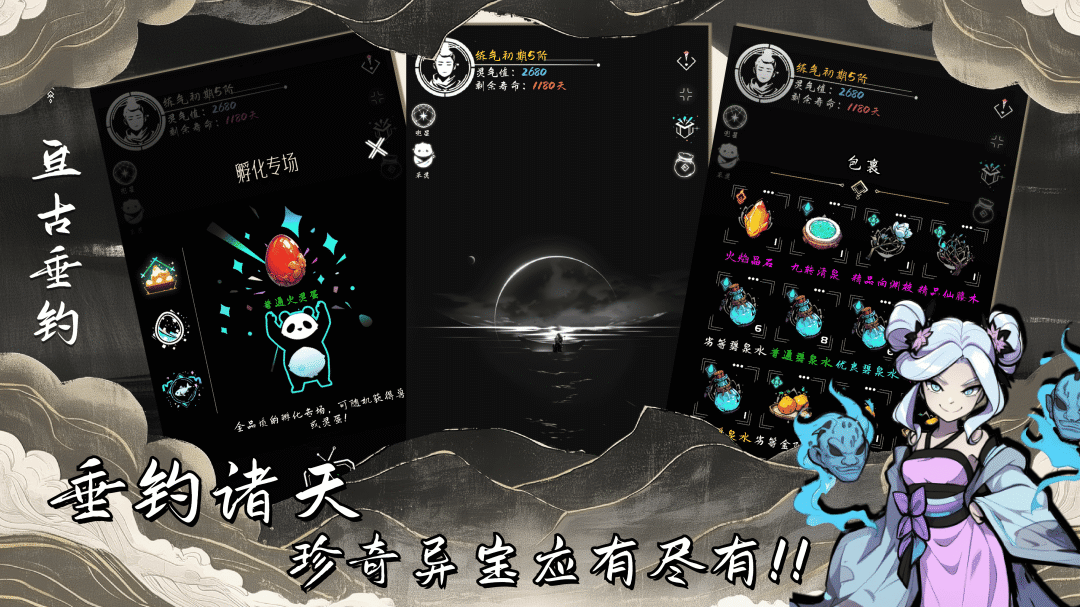
The cultivation game Ayu made earlier
As more companies have entered the market to provide traffic support for Vibe Coding, creators now have a wider range of options.
After Douyin and Xiaohongshu launched “Interactive Spaces” and “Widgets” to provide traffic support for AI game creation, the creator who had participated in the MuleRun competition uploaded a mini-game made with Kimi K3 almost immediately. As a result, the K399 gaming community that Kimi K3 had built itself seems to have lost its purpose.
In reality, it was unlikely from the start that an AI game creation platform would become creators’ only option. MuJian provided a creation guide for novice creators, and Octopus later discovered that simply feeding this document to ChatGPT allowed it to understand the logic behind the guide and create games on its own.
As Vibe Coding enters its later stages, creators are placing increasingly higher demands on AI capabilities, and the platform’s built-in models are no longer sufficient. They’ve begun integrating APIs on their own or subscribing directly to large language models.
Among all AI game creation platforms, only TapTap has imposed restrictions on this feature; games created on most other AI game creation platforms can be exported as web pages and easily published elsewhere.
In Tap Tap Maker, early developers had to use online tools for development and could only use Tap Tap Maker credits. It wasn’t until July 2026 that the platform officially opened up local development, allowing creators to integrate the AI packages they purchased locally for development, no longer subject to platform credit restrictions.
However, limitations remain. Some creators have mentioned that during the streaming phase, games developed using Tap Tap Maker have a dedicated section that provides additional exposure within the Tap Tap community. Games created with Tap Tap Maker do not use a standard H5 web engine but rather Tap Tap’s proprietary mini-game engine, which essentially only runs within the Tap Tap framework; porting them to other platforms requires significantly more time.
Professional developer Ayu is frustrated by the restrictions imposed by TapTap, but TapTap—which offers a fully integrated workflow from development to ad monetization—remains the AI game creation platform she values most at this time.
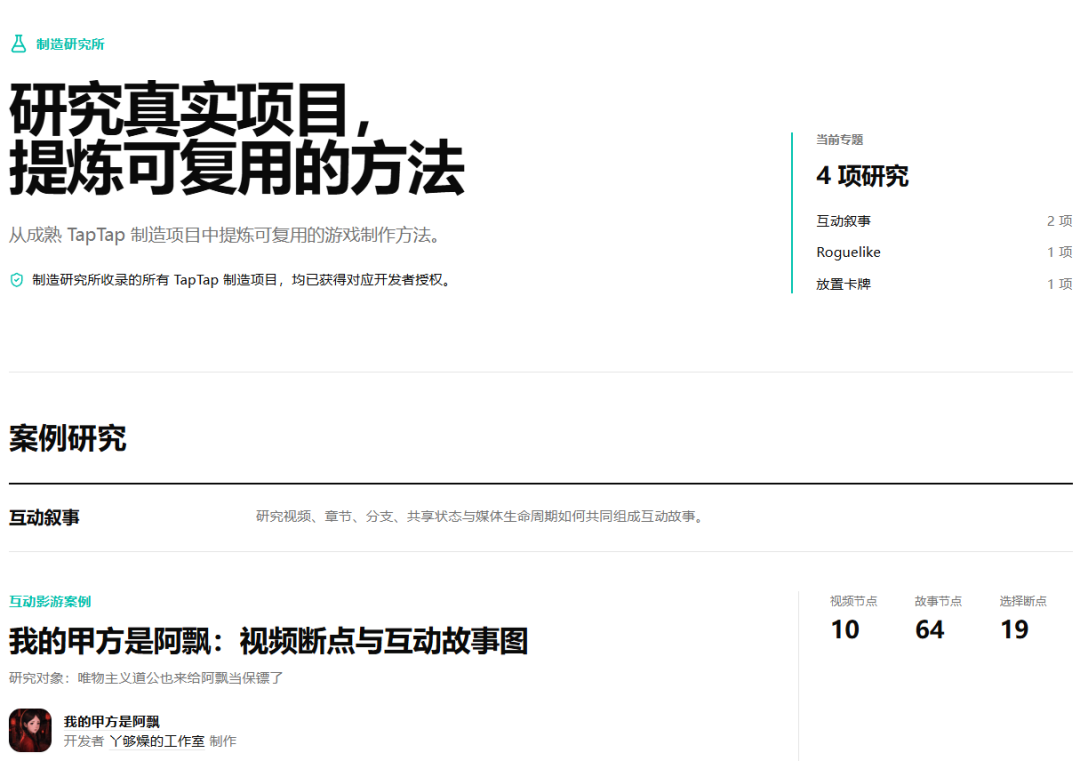
Insights from the Tap Tap Development Interview
Other creators stay on a particular platform simply out of habit. Octopus started using AI to make games with an interlude as his first project, and he plans to continue releasing his work here because he’s already familiar with the tools and sees no need to relearn anything.
Recently, Jin Haobin was invited to participate in the TapTap Manufacturing offline sharing session as a creator, where he met many people in the gaming industry. Having worked in games for many years, this seemed to be the first time he had truly stepped into the inner circle of the gaming industry. At the event, he hit it off with the people from Xindong Network. An idea took root in his mind: if he ever decides to make an indie game in the future, he’ll consider Xindong Network as his first choice for distribution.
(This article is based on interviews with respondents and publicly available information. We welcome discussion if you have additional information.)
References:
“TikTok and Xiaohongshu Jump on the Bandwagon: Online AI Mini-Games Are Going Viral,” Game Teahouse
“Why Would a Game Company Open-Source a General-Purpose Agent?”—Game Teahouse
“In 2026, the AI Company That Collapsed the Fastest Emerged,” Youjie UnKnown
“Former ByteDance Employee Launches Second Startup, Secures Investment from Former NetEase Muto Executive: She Regrets That Game Developers Are Afraid to Make ‘Crap’,” Game Grape
“Former LiblibAI Co-Founder Secures $10 Million in Funding, Breaking into the AI Entertainment Market with a ‘World Simulator,'” Undercurrents Waves
原创文章,作者:gameteahouse,禁止转载:https://youxichaguan.com/en/archives/208281