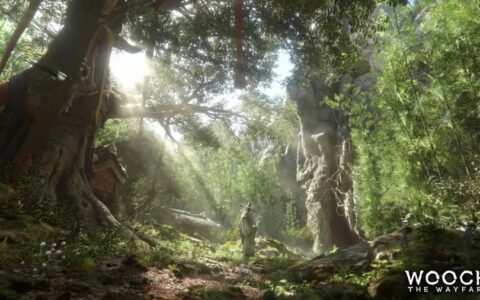
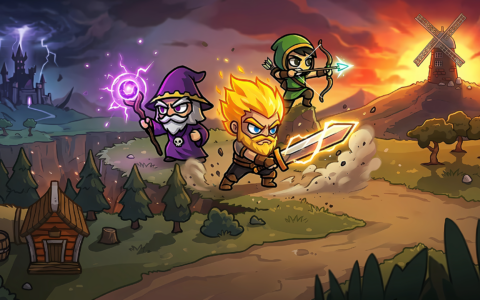
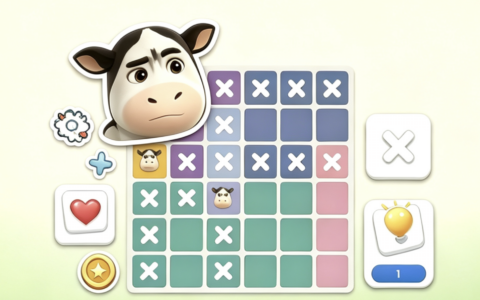
A while back, Feiyu Technology released its 2026 interim results announcement. According to the data in the announcement, Feiyu Technology’s revenue for the first half of 2026 was 319 million yuan, a year-over-year decrease of 29.7% compared to the same period last year. The net loss attributable to shareholders was 3.603 million yuan—not a huge loss, but somewhat unexpected.
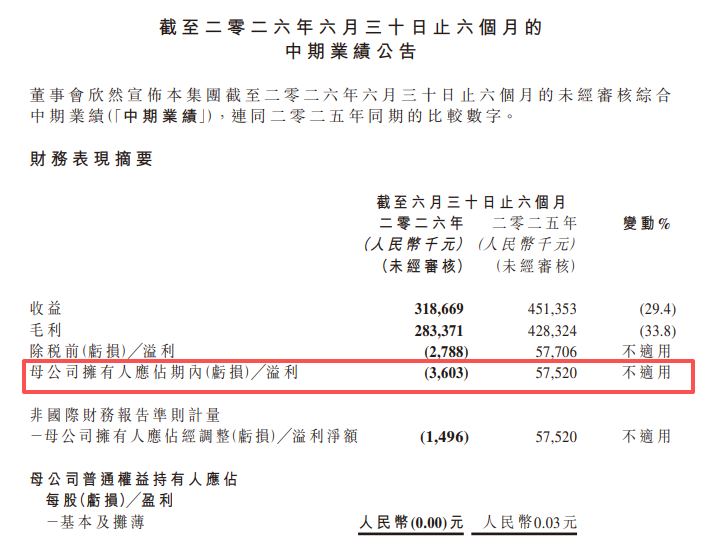
Over the past 12 years, Feiyu Technology has experienced a “roller-coaster” performance trajectory.
In 2014, the domestic mobile gaming market boomed, and Feiyu Technology rode the wave of success with its two flagship IPs, *Shenxian Dao* and *Defend the Carrot*, becoming the first gaming company in Xiamen to list on the Hong Kong Stock Exchange.However, the good times were short-lived. As the boom in the browser game market began to fade and the company’s self-developed mobile game releases underperformed, Feiyu Technology entered a seven-year slump marked by consecutive losses starting in 2016.
By 2025, thanks to the outstanding performance of its mini-game *One Step, Two Steps*, Feiyu Technology had set a new record for revenue since its IPO, surging to 810 million yuan, and turned a loss into a profit, pulling off a dramatic turnaround.
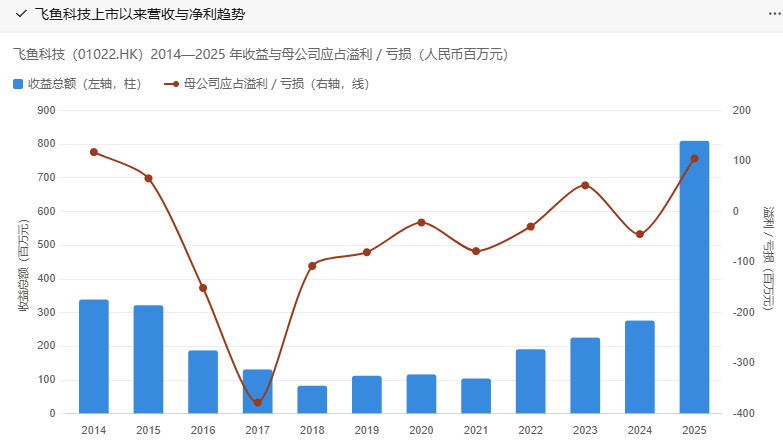
But the spotlight didn’t last long. The echoes of the story about how the mini-games sector had saved established companies had barely faded when the 2026 mid-year report once again showed a shift from profit to loss.The financial report cited the same reasons as before: the game has entered a stable operational phase, leading to a slowdown in revenue growth, while revenue from new titles has yet to materialize.
Feiyu Technology’s roller-coaster performance has exposed a harsh reality: while the mini-games sector allows developers to turn their fortunes around with a hit title, it is difficult for them to sustain long-term, stable growth based on a single product. The transformation stories of established game developers betting on mini-games are shifting from a “hit-driven frenzy” to a phase of matrix validation that tests their ability to produce content consistently.
01
Rising to Prominence with Two Flagship IPs
When discussing Feiyu Technology, one cannot overlook its two flagship IPs: *Shenxian Dao* and *Defend the Carrot*. These are Feiyu’s most valuable assets and mark the company’s beginnings.
“Shenxian Dao” was born during the golden age of browser games.
In May 2011, the browser game *Shenxian Dao*, developed in-house by Halo Games and published by Xindong Network, officially launched. Halo Games received 1 million yuan in licensing fees, marking the company’s first revenue since Yao Jianjun founded it three years earlier.

Yao Jianjun
Before *Shenxian Dao*, Halo Games’ first attempt at game development was unsuccessful and cost a great deal of money. Yao Jianjun had to mortgage his home and borrow money from his family to keep the team afloat while pushing forward with the development of their second game. Fortunately, this second attempt yielded very fruitful results.
After its launch, *Shenxian Dao* quickly became a massive hit, soaring to become one of the most popular RPGs in China in 2011–2012, and began raking in massive profits; in 2012 alone, its revenue from in-game purchases exceeded 700 million.
That same year, the mobile port of *Shenxian Dao*, which Halo Games released in rapid succession, also topped the App Store’s best-selling games chart on multiple occasions.
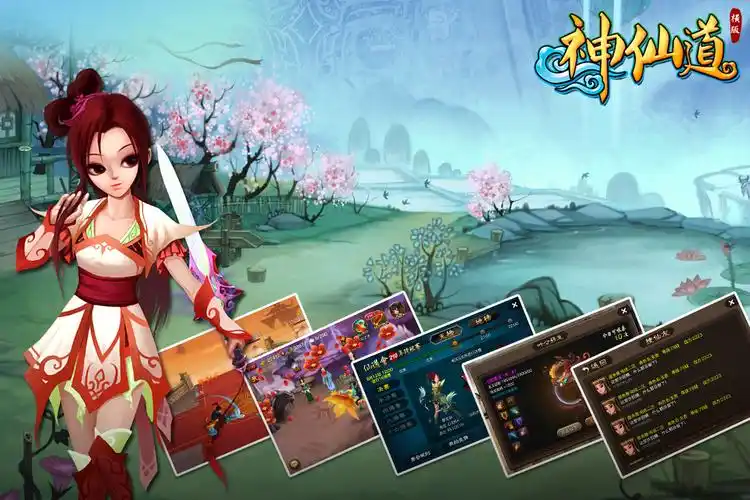
The huge success of *Shenxian Dao* made Yao Jianjun a success and sparked the idea in his longtime friend Chen Jianyu—whom he’d known for ten years—to enter the gaming industry.
Prior to this, Chen Jianyu served as CEO at Meitu XiuXiu, where he was in charge of Meitu Kankan, a platform with 200 to 300 million users, and gained deep insight into the product preferences of female users.
In 2012, Chen Jianyu left Meitu and formed a unique game development team: a lead guitarist from a rock band with experience in community products served as lead designer, alongside a designer with a background in electronics and a professionally trained artist.

Chen Jianyu
A group of people with no experience in mobile game development got together to create a tower defense game that isn’t too hardcore or dark—one that would appeal to female players.
With this goal in mind, they simplified the gameplay of traditional tower defense games, targeted the cute, charming style preferred by female users, and devoted significant effort to refining every detail—from the visual experience and animations to sound effects and artwork—ultimately creating the nationwide hit *Defend the Carrot* in 2012.

Without the backing of a massive marketing budget, this highly distinctive tower defense mobile game relied on organic word-of-mouth from players to spread, and its iOS version surpassed 10 million downloads within 100 days of launch; by 2013, the game’s monthly active user base had reached 16.9 million.
In September 2013, Yao Jianjun (Afei), who was in Beijing on a business trip, walked into Chen Jianyu’s office and, getting straight to the point, proposed a merger between the two companies. Chen Jianyu (Xiaoyu) agreed on the spot with almost no hesitation, and that is how Feiyu Technology was born.This story, which the two founders have dubbed “the fastest company merger in history,” is still documented in an article on Feiyu Technology’s official website.

At that time, Halo Games—founded by Yao Jianjun—rose to become the industry leader with its browser game *Shenxian Dao*,while Chen Jianyu’s Kairo Tianxia had also amassed a massive user base with its casual mobile game *Defend the Carrot*. The powerful alliance between these two popular IPs from different sectors propelled Feiyu Technology to a successful listing on the Hong Kong Stock Exchange in December 2014. At the time, Feiyu Technology’s prospects appeared exceptionally bright.
However, the journey ahead is rarely smooth sailing. As 2014 began, the boom in the browser game market gradually began to fade, and Feiyu Technology began actively developing spin-offs and sequels to sustain the vitality of the “Shenxian Dao” IP.
Between 2016 and 2017, Feiyu licensed Xindong Network to develop the browser game *Shenxian Dao 2* and the mobile game *Shenxian Dao HD Remaster*,along with three sequels to the *Shenxian Dao 2* mobile game developed in-house by Feiyu (later renamed *Lingyao Ji: Shenxian Dao Side Story*), which were released successively. In 2023, Feiyu Technology launched another direct sequel, *Shenxian Dao 3*.
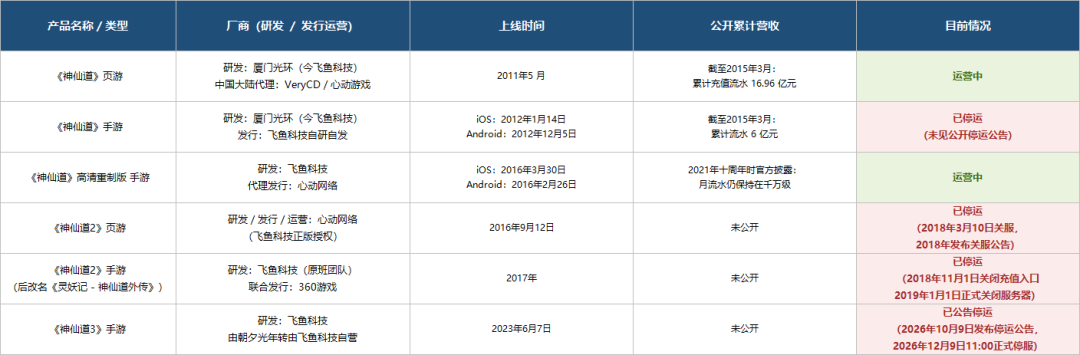
Operational Performance of the “Shenxian Dao” IP Series
However, as of today, among the entire *Shenxian Dao* product line, only the original *Shenxian Dao* browser game and the licensed *Shenxian Dao HD Remaster* mobile game remain in regular operation; all other titles have either ceased operations or officially announced that they will soon shut down.Even *Shenxian Dao 3*, which was once highly anticipated, got off to a solid start early on thanks to nostalgia for the IP. However, in the fiercely competitive idle card game market, it struggled to sustain long-term growth. Recently, the developers issued an official announcement stating that the game will cease operations on December 9.
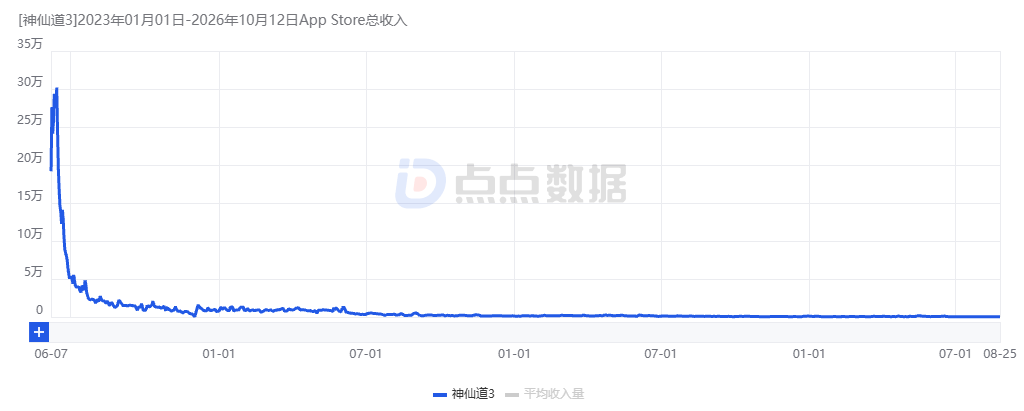
“Shenxian Dao 3” Revenue Trend Chart, Source: DianDian Data
Based on Feiyu Technology’s financial reports, the revenue generated by these two remaining products is already quite limited, and as of now, Feiyu has not announced any plans to develop a new sequel to *Shenxian Dao*.
This IP, which had been active for 15 years, has now brought its golden age to a close.
In comparison, the “Defend the Carrot” IP has stronger long-term growth potential.
Currently, the three official sequels—*Defend the Carrot 2: Arctic Adventure*, *Defend the Carrot 3*, and *Defend the Carrot 4*—are all operating smoothly and have achieved solid market performance.*Defend the Carrot 4*, launched to mark the IP’s 10th anniversary, garnered over 10 million pre-registrations thanks to players’ nostalgia. On the day of its release, the game not only topped the App Store’s Free Chart but also successfully broke into the mainstream, making it onto Weibo’s trending topics and sparking even wider public attention and discussion.
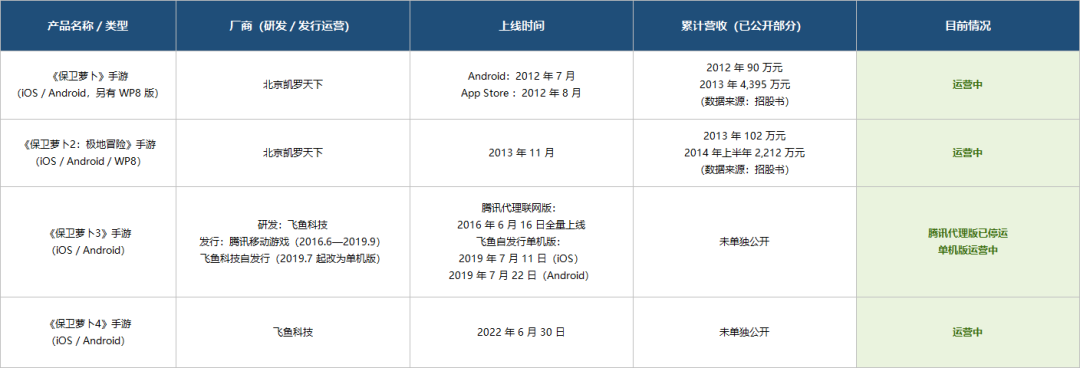
Operational Performance of the “Defend the Carrot” IP Series of Games
Even so, given the scale of a publicly traded company, the revenue generated by a single casual game is still a drop in the bucket.
According to financial reports for the first half of 2026, revenue from casual mobile games—primarily driven by *Defend the Carrot 4*—totaled 33.94 million yuan during the reporting period, accounting for 10.7% of total revenue. Outside of gaming, revenue from licensing the *Defend the Carrot* IP and sales of physical merchandise accounted for less than 1% of total revenue.
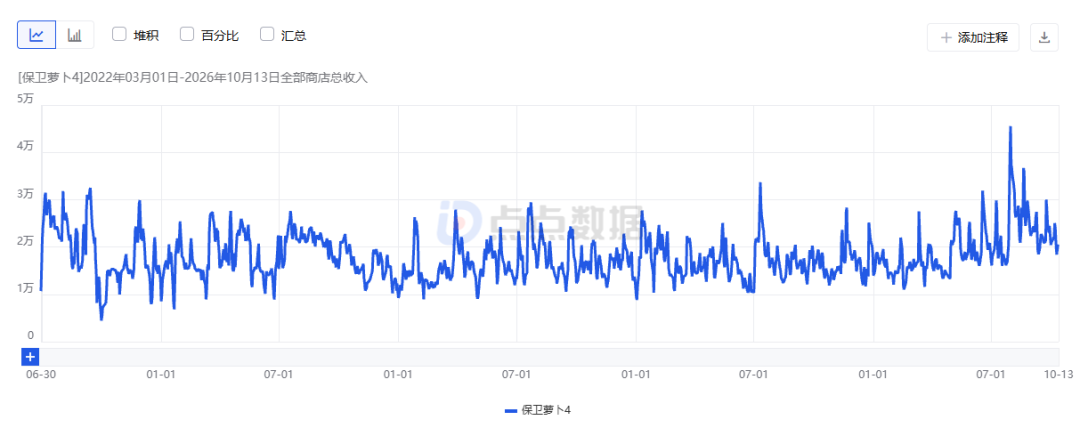
The revenue trend chart for *Defend the Carrot 4* is very stable. Source: DianDian Data
IP may be appealing, but it’s still unrealistic to treat it as a “secure job.”
Therefore, while continuing to unlock the value of its two flagship IPs, Feiyu Technology is also constantly exploring new business opportunities in various directions.They have created hit mobile games like *Three Kingdoms Blade*, which generated nearly 1.5 billion yuan in total revenue; launched *Neon Abyss*, a critically acclaimed indie title with global sales exceeding one million copies; expanded into anime-style products such as *Soul Gear Academy*; and even tested the waters of overseas publishing.However, none of these have grown into core pillars capable of driving the company’s long-term performance growth.
As the IP boom gradually faded and the popularity of established hit products slowly waned, while new products struggled to sustain long-term growth for the company as a whole, Feiyu Technology found itself mired in years of losses.
That is, until they created their first viral mini-game.
02
A Comeback Fueled by a Viral Mini-Game
The growth of Feiyu Technology’s mini-games business has been breathtakingly fast.
In 2023, the first year Feiyu formally established its strategy for the mini-games sector, H5 mini-games accounted for only 0.1% of revenue, a figure that was virtually negligible;By 2024, revenue from H5 mini-games reached 89.974 million yuan, accounting for 32.5% of the company’s total revenue;In 2025, revenue surpassed 623 million yuan, with its share of total revenue soaring to 76.9%, directly driving the company’s total revenue to double and enabling it to turn a profit.
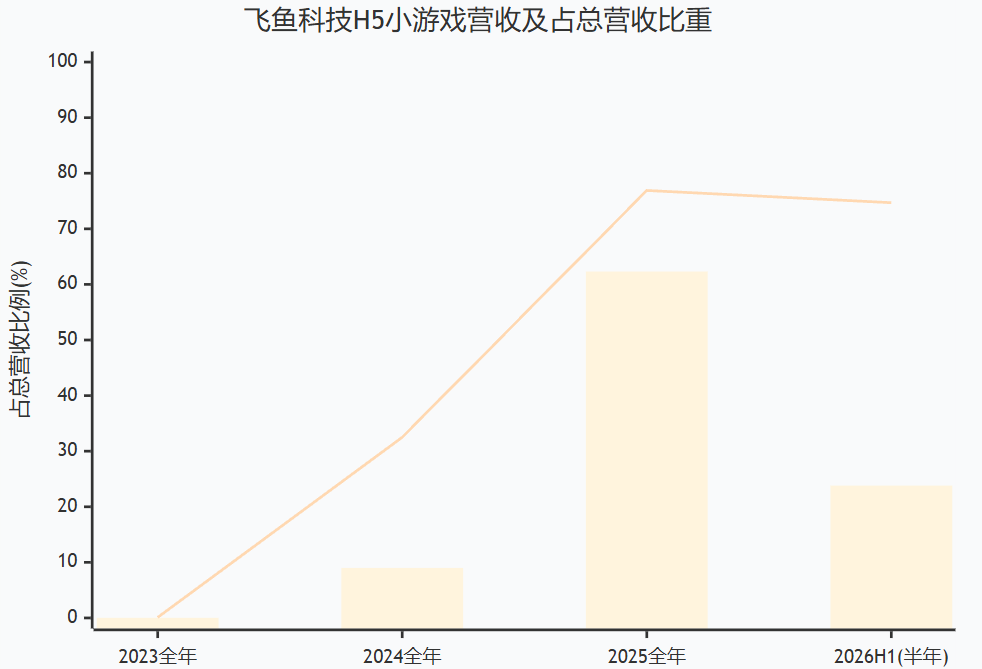
In other words, in just three short years, Feiyu Technology has grown its mini-games business from scratch into a core pillar of the company’s revenue.
This is primarily due to its hit game *One Step, Two Steps*. *One Step, Two Steps* is a classic “Bullseye-like” product. In 2024—the second year after *Bullseye* went viral—the “Bullseye-like” genre entered a period of explosive growth,a flood of similar mini-games flooded the market, with standout hits including *Shoot the Zombies* by Big Dream Dragon Journey and *One Step, Two Steps* by Flying Fish Technology.
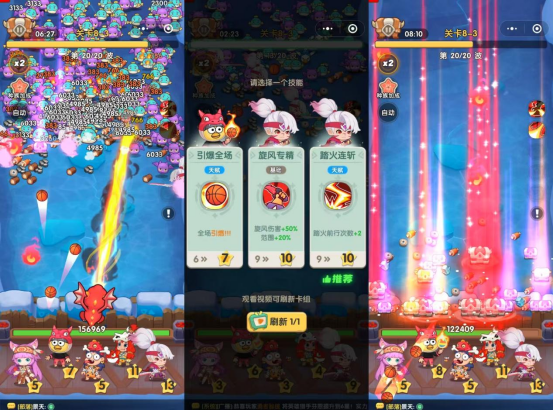
“One Step, Two Steps”: Bullseye-style gameplay
Taking inspiration from popular predecessors, *One Step, Two Steps* features a classic vertical-screen, stationary roguelike tower defense gameplay structure. Monsters continuously pour in from the top of the screen, while the player’s hero automatically attacks from the bottom. Once enough experience is accumulated, players can trigger a random selection of three roguelike skills,Players can freely mix and match these options to build their skill set, while also progressing their long-term character development outside of each run to take on wave after wave of enemies.
The thrill of real-time combat combined with long-term card-building mechanics outside of battles has created significant monetization potential for the game.Furthermore, in 2024, Feiyu Technology invested substantial resources and, with great patience, focused on user acquisition campaigns to steadily build its user base. This early groundwork finally paid off in 2025: revenue from the H5 games segment surged dramatically that year, single-handedly reversing Feiyu’s years of losses.
Following this, Feiyu Technology continued to develop more mini-game titles, successively launching *Beast-Form Three Kingdoms* and *Reversal Turn*.Both of these titles made it into the Top 40 on various mini-game platforms. Among them, *Reversal Turn* even reached as high as No. 27 on WeChat’s best-seller chart, making it a modest hit—though it still fell short of the top-tier success achieved by *One Step, Two Steps*.
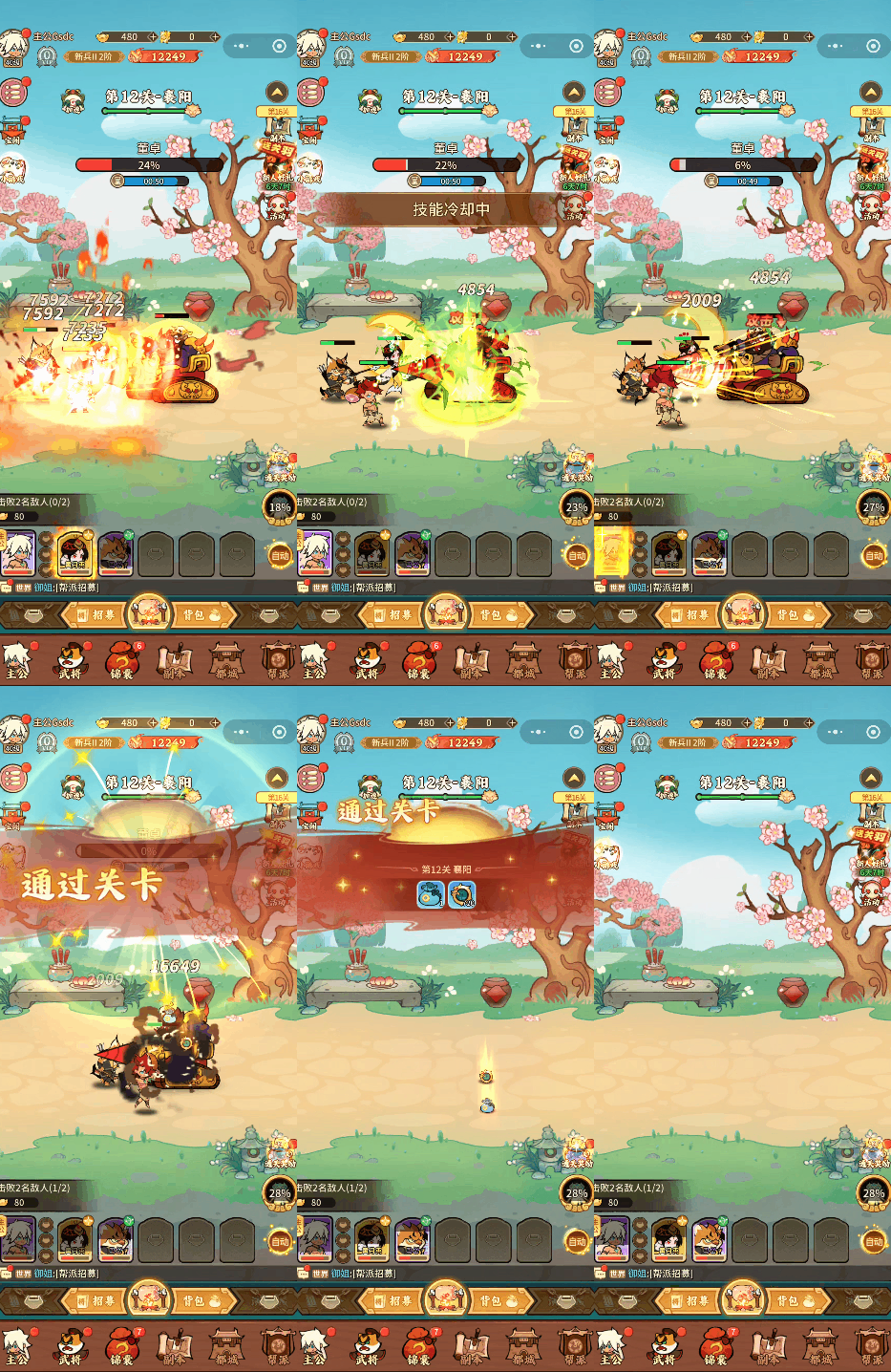
“Beast-Form Three Kingdoms”: A “Lazy” Gameplay Style
As 2026 began, *One Step, Two Steps*—which had been in operation for two years—entered the maturity phase of its natural product lifecycle. Although the game briefly returned to No. 8 on WeChat’s best-selling mini-games chart thanks to its second-anniversary event, its overall revenue contribution has slowed significantly compared to its peak period.Financial reports show that in the first half of 2026, H5 mini-games still accounted for a high 74.7% of the total, but their actual revenue dropped to 238 million yuan.
At the same time, in order to maintain revenue from this core product and promote the launch of new titles such as *Reversal Round*, Feiyu Technology still needs to incur significant marketing and distribution expenses—investments that will not yield returns in the short term. The combination of these factors directly led to the company’s loss in the first half of the year.
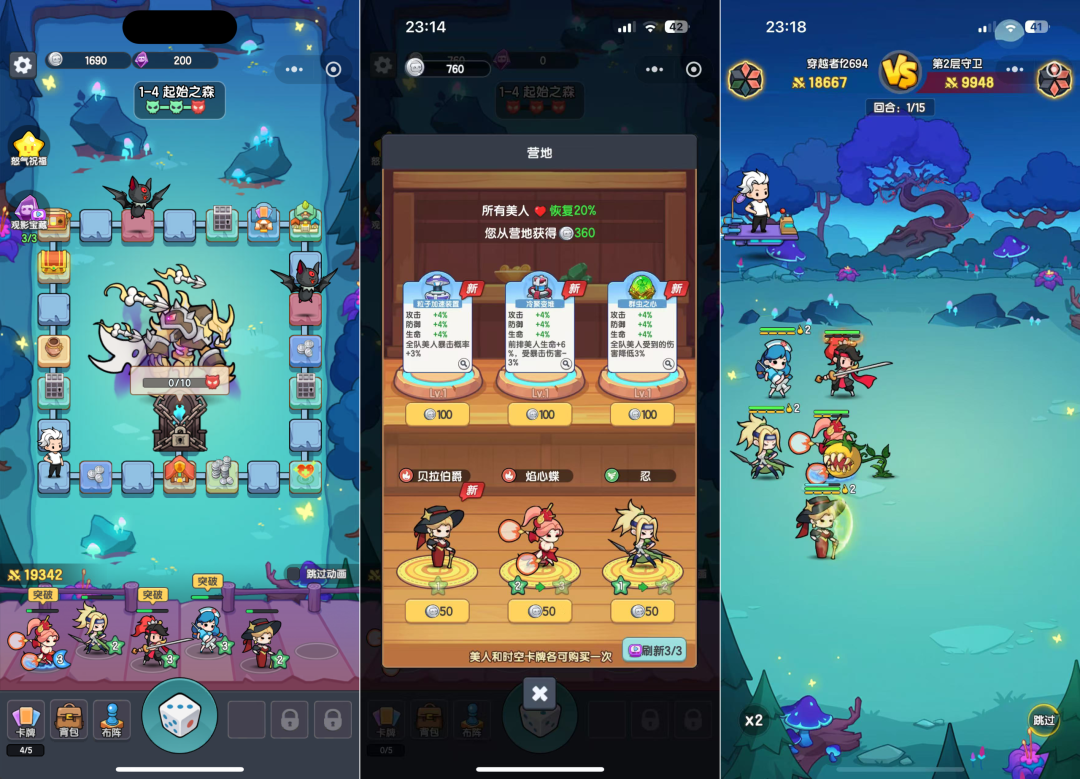
“Reversal Turn”: Monopoly-style board + turn-based cards + roguelike elements
A brief review reveals that over the past two years, Feiyu Technology’s profitability has been closely tied to *One Step, Two Steps*: when the show became a hit, the company’s performance soared; when its popularity waned, it quickly slipped into the red. This model of betting everything on a single product is clearly not sustainable.
The casual games sector is inherently characterized by high elasticity and high volatility. While hit titles can generate substantial revenue, such products are rare and hard to come by, and individual titles face a natural ceiling on their lifecycle.If a company’s financial performance is entirely tied to a single hit product, its results will experience severe volatility the moment subsequent new releases fail to successfully take the baton—and the line between profit and loss can be as thin as a hair.
Therefore, for Feiyu Technology, the real breakthrough lies not merely in chasing the next *One Step, Two Steps*, but in rapidly producing more high-quality titles and building a stable product portfolio capable of diversifying risk.

Selected mini-games from Feiyu Technology
From this perspective, the second half of the year looks very promising for Feiyu Technology.
In September, Feiyu Technology launched a new mini-game titled “Below,” which at one point climbed to No. 9 on WeChat’s mini-game bestseller chart, coming within a hair’s breadth of the all-time best ranking achieved by “One Step, Two Steps.”In addition, Feiyu Technology revealed in its financial report that over the coming months, it will gradually release several mini-games featuring different gameplay styles, as well as a cross-platform game spanning consoles, PCs, and mobile devices.
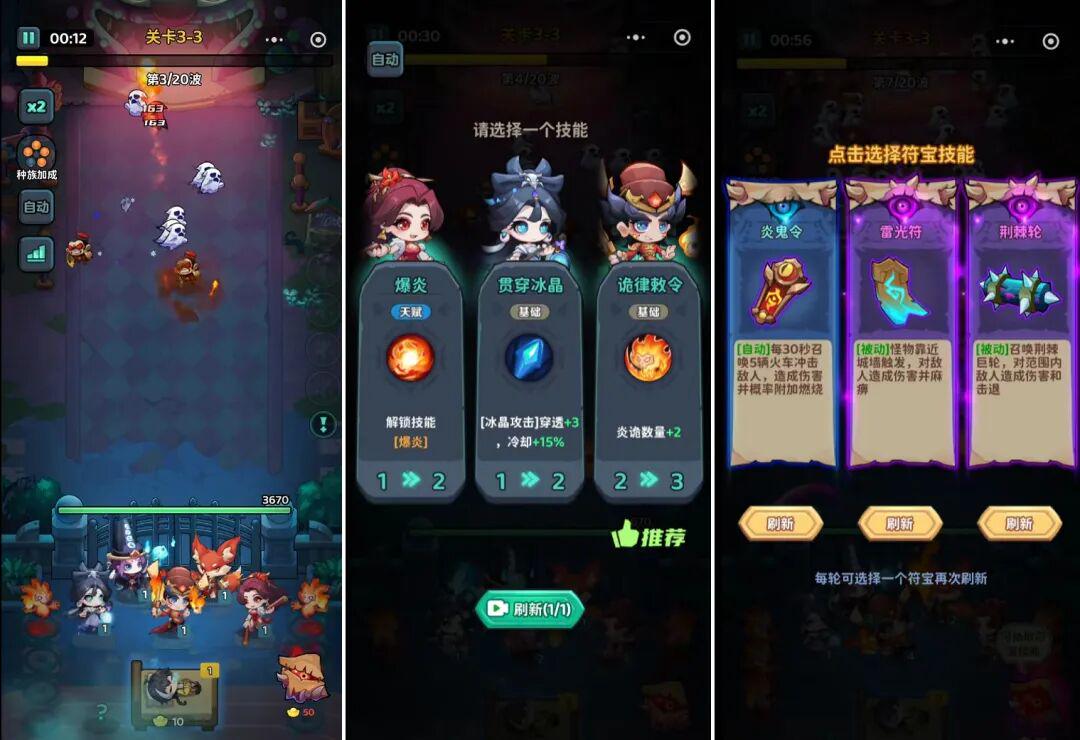
“It’s Down”: “Lying-Low” Likes vs. “Bullseye” Likes
Even more noteworthy is that Feiyu Technology has also signed a new framework agreement with Tencent for cooperation in the gaming business. The agreement covers the period from April 2026 to the end of 2028, and the two parties have agreed to continue diverse collaborations in areas such as game development, operations, and advertising.Furthermore, Feiyu Technology has allocated a substantial budget for distribution and marketing in the agreement. The maximum amounts payable to Tencent in 2026, 2027, and 2028 are projected to reach 508 million yuan, 615 million yuan, and 221 million yuan, respectively.
The implementation of this long-term agreement indicates that both parties have high expectations for the scale of their future collaboration, and it also leaves ample room for Feiyu Technology to further expand its presence in the WeChat Mini Games ecosystem.
END
Looking back, Feiyu Technology has actually achieved quite a lot: *Shenxian Dao* sparked a nationwide craze during the browser game era,*Defend the Carrot* became a national casual gaming IP, *Three Kingdoms Blade* generated over 1 billion in total revenue, *Neon Abyss* earned acclaim from players worldwide, and *One Step, Two Steps* pulled off a remarkable comeback in the mini-game sector against all odds.Pick any one of these at random, and it represents a level of success that the vast majority of game development teams would find difficult to match.
But for Feiyu Technology today, this isn’t enough. While a single hit product can provide temporary relief for its financial performance, the capital markets don’t have the patience to wait time and again for the next stroke of luck.
Only a stable, repeatable ability to generate output can truly drive the company’s long-term, steady growth. Today, the impressive launch of *Down Below*, the multiple new H5 titles in development, and cross-platform projects in collaboration with the Tencent ecosystem all represent Feiyu’s efforts to break free from the cycle where “a single title determines profit or loss.”Whether Feiyu can break free from the curse of roller-coaster-like performance in the future remains to be seen, and will ultimately be determined by its upcoming products and market reception.
The major transformation challenge facing this long-established manufacturer, which has been in business for 12 years, has only just entered its second half.
原创文章,作者:游茶妹儿,禁止转载:https://youxichaguan.com/en/archives/212634