Last August, *Blue Star: Travel Ballads* (hereinafter referred to as *Blue Star*) conducted its “Star Arrival Test.” In its first round of player testing, the game received positive reviews; players generally agreed that *Blue Star* had an authentic “anime-style” feel, but noted that areas such as onboarding, combat mechanics, and performance still needed optimization and improvement.
I was also quite impressed by the last beta test for *Blue Star Origin*. I still remember how surprised I was during the "Star Arrival" beta to discover features like floating island exploration and Qibo races—content that hadn’t been revealed in the first two small-scale offline tests. At the time, I was amazed that the development team had actually managed to keep so much content under wraps.
After more than half a year of closed development, *Blue Star Origin* has surpassed 9 million pre-registrations. On the eve of the Spring Festival, the game launched a new promotional campaign and began recruiting players for the "Constant Order Test." How far along is the game’s development? Aside from new characters and new energy waves, what other new content is there? Have the changes been made based on player feedback from the last test?

Last week, I visited the offices of Manju, the developer of *Blue Star Origin*, once again to try out the new version of the game and see if I could find the answers I was looking for.
01
Changes! We've addressed all the areas where players had the most feedback.
Good news: after spending several hours playing, I found that the development team has addressed many of the issues that players frequently raised during the Star Journey beta.
Let me mention a few of the optimizations and adjustments that left a particularly strong impression on me:
In the previous test, attack effects and damage numbers were displayed too prominently during combat to enhance the visual excitement, which somewhat obstructed players’ view and hindered their ability to observe the battlefield. In the current version, players can adjust the size of damage numbers as follows, or even disable attack effects entirely to ensure a clear field of view. However, this also means losing the thrill of seeing “999 damage” with a single strike. Players can weigh these factors and adjust the settings according to their preferences.
After optimizing the camera angles, the issues encountered in the previous test—where large enemies and bosses obstructed the player’s view and hindered gameplay—have been partially resolved.
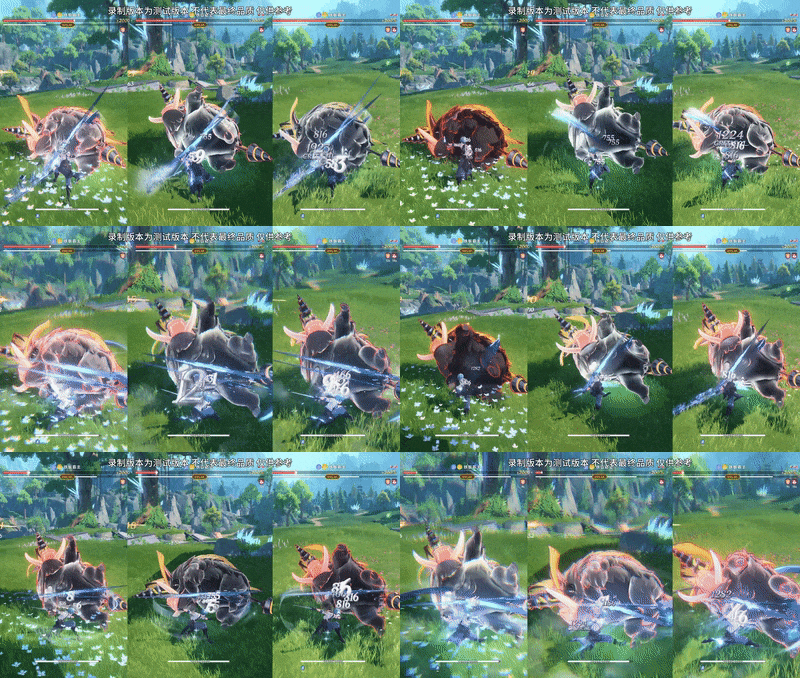
The size of the damage value is adjustable
For example, in the previous version, skipping the story meant you actually missed out on it. The current version not only includes a story recap but also thoughtfully adds a voice recap feature. This greatly benefits players who want to save time, allowing them to experience the story’s highlights.
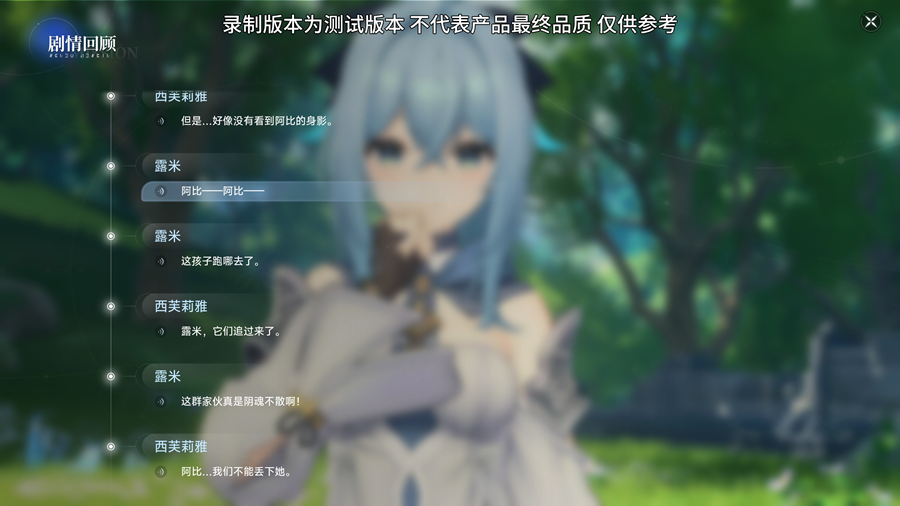
You can listen to a recap of the plot—great reviews
The Home System has seen significant improvements. This update includes new story content that fleshes out the backstory of an NPC assistant named Lilihua. By integrating the previously somewhat clunky tutorial into the story progression, the logic now feels much more natural. Plus, having an assistant means you can delegate some errands to her—which is really convenient.
In the last test, the fields I toiled so hard to clear were all crooked and lacked any sense of aesthetics. Thanks to the development team’s optimizations, it’s now much easier to align the plots and create neat, uniform fields. However, because there’s a slight lag when moving the character, I still haven’t quite gotten used to making precise adjustments to the plot positions.
One of the game’s key features, “Qibo Showdown,” is also a module I’ve been paying close attention to. The hands-on experience this time around is more user-friendly and better aligns with players’ past gaming experiences.
On the preparation screen before the match began, I noticed the system’s recommended team composition for Qibo, which made it easy for me to build my team and lowered the learning curve. This test version has optimized the in-game pacing and experience, making the overall gameplay smoother and more comfortable; during actual matches, I no longer felt like I was stuck when playing cards.
Also, to help players keep track of what’s happening across the entire table, the new version includes a top-down view. Now there’s no excuse for playing badly (lol)!
Players are particularly concerned about game performance optimization. During this offline demo, I still occasionally experienced some lag, but it didn’t affect the overall gaming experience.
The Star Reach beta last August marked the first time *Blue Star* was made available to players, so it was inevitable that there would be some shortcomings. Overall, this new update has incorporated a significant amount of tuning based on player feedback, and it goes a step further by introducing features that players didn’t even expect.
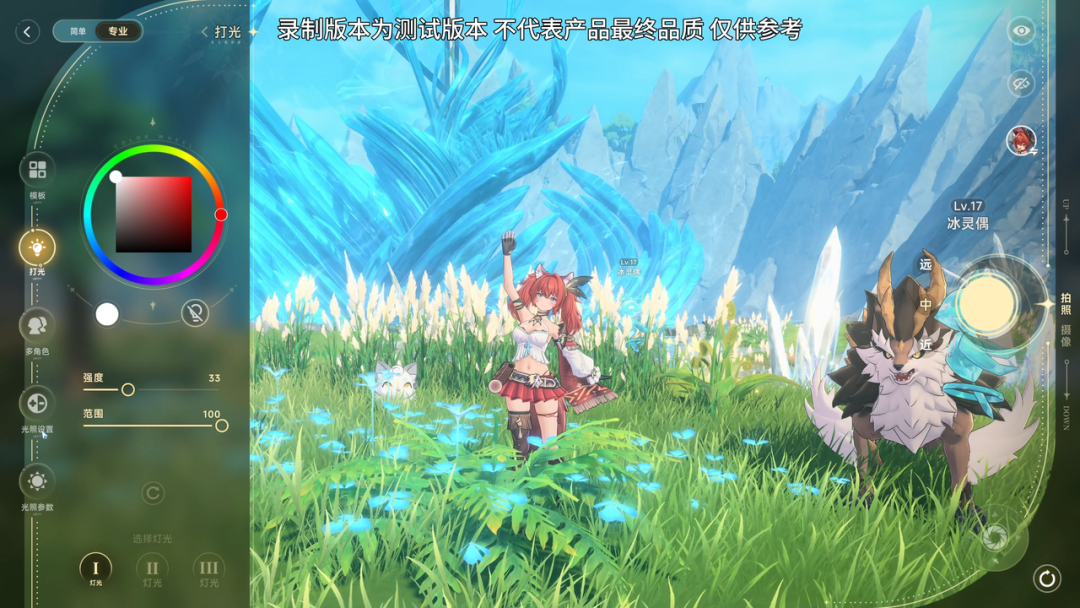
Take a photo with Qibo
I won’t go into detail about all the minor optimizations here, but I invite players to experience them firsthand during the Hengxu beta and see the results of the development team’s hard work for themselves.
02
New content and gameplay features, with a significant improvement in the game's polish
Returning to the Promilia Continent (the game’s open world) after eight months, I found that Shalulu Village still buzzed with the hustle and bustle of daily life, while the wider world beyond the village had undergone significant changes. After playing through it, I was thrilled to see how much the game’s polish had improved.
- New area, and further improvements to New Bud Valley
First and foremost, what stands out most to me is the newly unlocked “Frees” area on the map.
If Xialulu Village embodies the unspoiled charm of rural life, then the towns in the Friesland region embody the spirit of medieval European city-states. Standing in the cities of Friesland, I can clearly sense the stark contrast with Xialulu Village; the buildings, constructed of stone and brick, are towering and imposing, exuding an air of solemn grandeur.
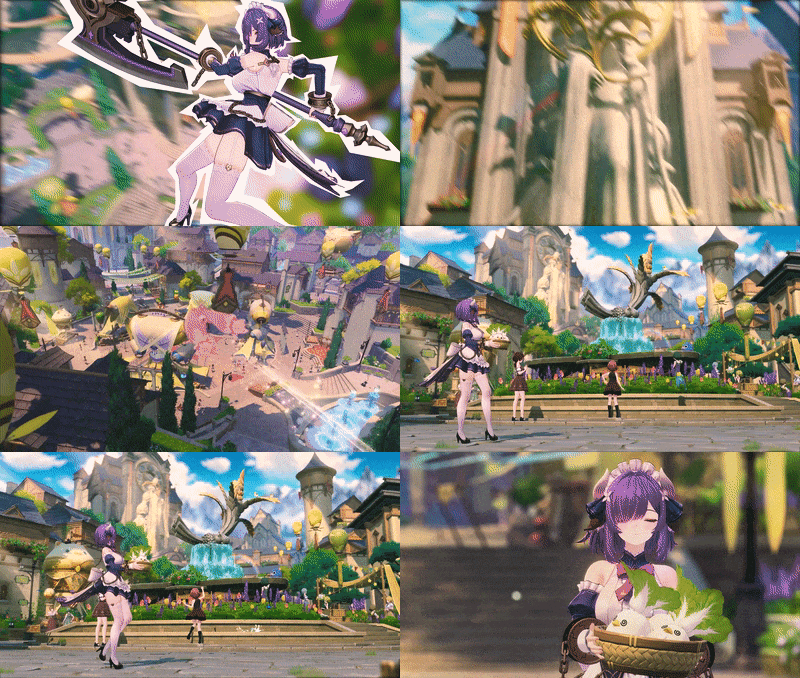
A Glimpse of Towns in the Friesland Region
The map design of Flees also differs significantly from New Bud Valley, where Shalulu Village is located. At the center of the Flees region lies a massive lake. The lake is dotted with islands of varying sizes, and during the demo, I ventured deep into them to complete some side quests. By the way, players can ride the swimming Chibo to quickly travel between the islands in the lake.
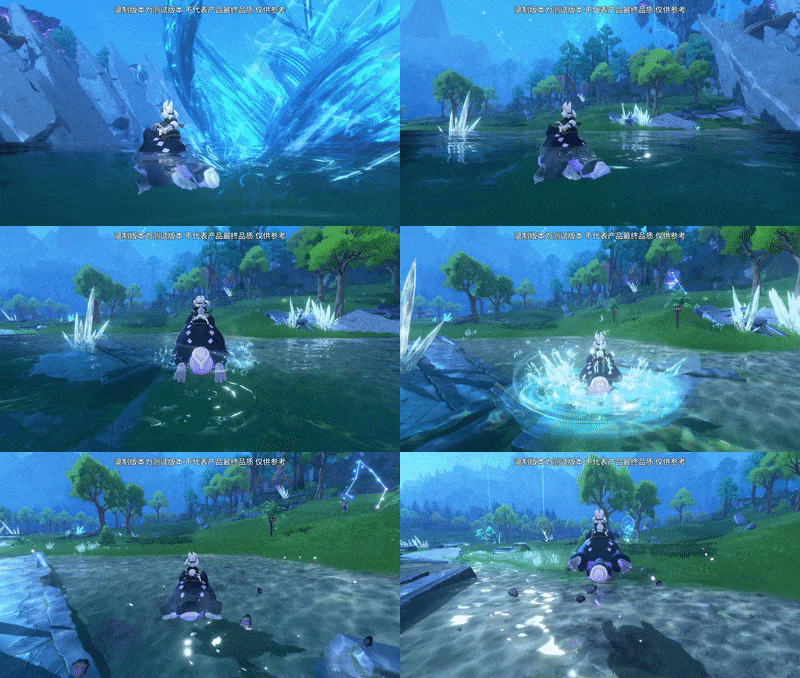
Qibo walks through the waves in New Bud Valley
So, does the Fries region have a unique ecosystem? Are there new stories to be told there? Only time will tell.
While developing the Fries region, the development team certainly didn’t forget to refine the “old region,” New Bud Valley.
The ruins, grand wonders, and floating islands on the map have been further refined, with the bizarre and the magnificent remaining the defining themes of this fantasy world. I also noticed that the locations of the teleportation points have been optimized, reducing the tedium of repeatedly traversing the map.
During discussions with the development team, we learned that they optimized the distribution of Qibo based on their conceptual attributes, taking into account the topography and ecology of New Sprout Valley. This makes their placement more in line with our common sense.
- New storyline, packed with laughs
The witty and humorous storyline of *Blue Star Origin* has already earned praise from players during the Star Reach beta. The new update unlocks several subsequent sections of Chapter 1, and I’m equally impressed with the presentation.
During testing, I watched the story at about 1.5x speed. Even so, some of the jokes in the story still hit the mark, making me smile to myself.
In particular, Titi and Nono—who have already made frequent appearances in promotional materials—finally make their debut in the story. Even while startled by the plot twists, the two didn’t forget to deliver a hilarious performance for players. Their rich and exaggerated facial expressions, especially during conversations with other characters, further highlight their cuteness.In addition, the character development of the little fairy Lumi and the beast-girl sisters Luluka and Terara has been further refined, with their personalities and appearances becoming increasingly distinct.
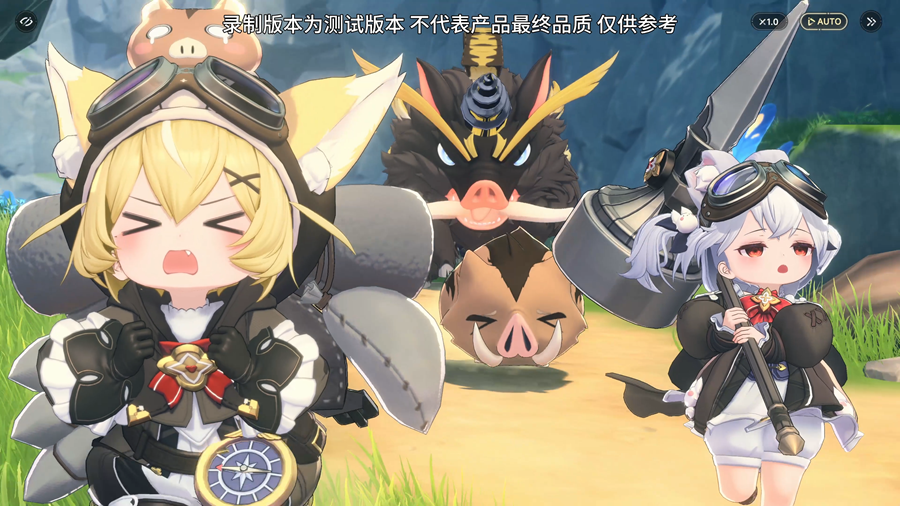
The dialogue incorporates a few current pop culture references, but they don’t feel out of place or overused, so rest assured.
It’s commendable that *Blue Star Origin* avoids taking a dark, grim, and brutal narrative approach. I don’t think every player is like a die-hard fan who delves deep into the plot of *The Riddler*; instead, most just want to step into the protagonist’s shoes and experience another fantasy world in a more relaxed way.
However, the new storyline has begun to explore the conflicts over survival among the various races of the Promilia Continent amid changing environmental conditions. It is clear that the game’s narrative will also feature thought-provoking highlights.
- New Gameplay: Multiplayer Battles Galore
During this demo, I also joined fellow media representatives in trying out several rounds of two standout new game modes: "Crisis Raid" (a multiplayer PVE mode) and "Alien Nest" (an online version of the "Qi Bo" battle).
Let’s take a closer look at the Crisis Raid gameplay.
The Crisis Raid mode is similar to co-op modes in other games: players form teams of three, team up with Qibo, and explore the map together, taking turns battling hordes of monsters, elite monsters, and boss monsters.
Since we were tackling a dungeon with monsters below our level (Lv. 80), the entire battle wasn’t particularly difficult. In fact, most of the time I didn’t even have to look to see where the enemies were—I just kept spamming my skills. Even when we faced a boss that had given me a hard time when I fought it solo before, we managed to clear the dungeon smoothly despite a few hiccups. It really was a mindlessly satisfying experience.
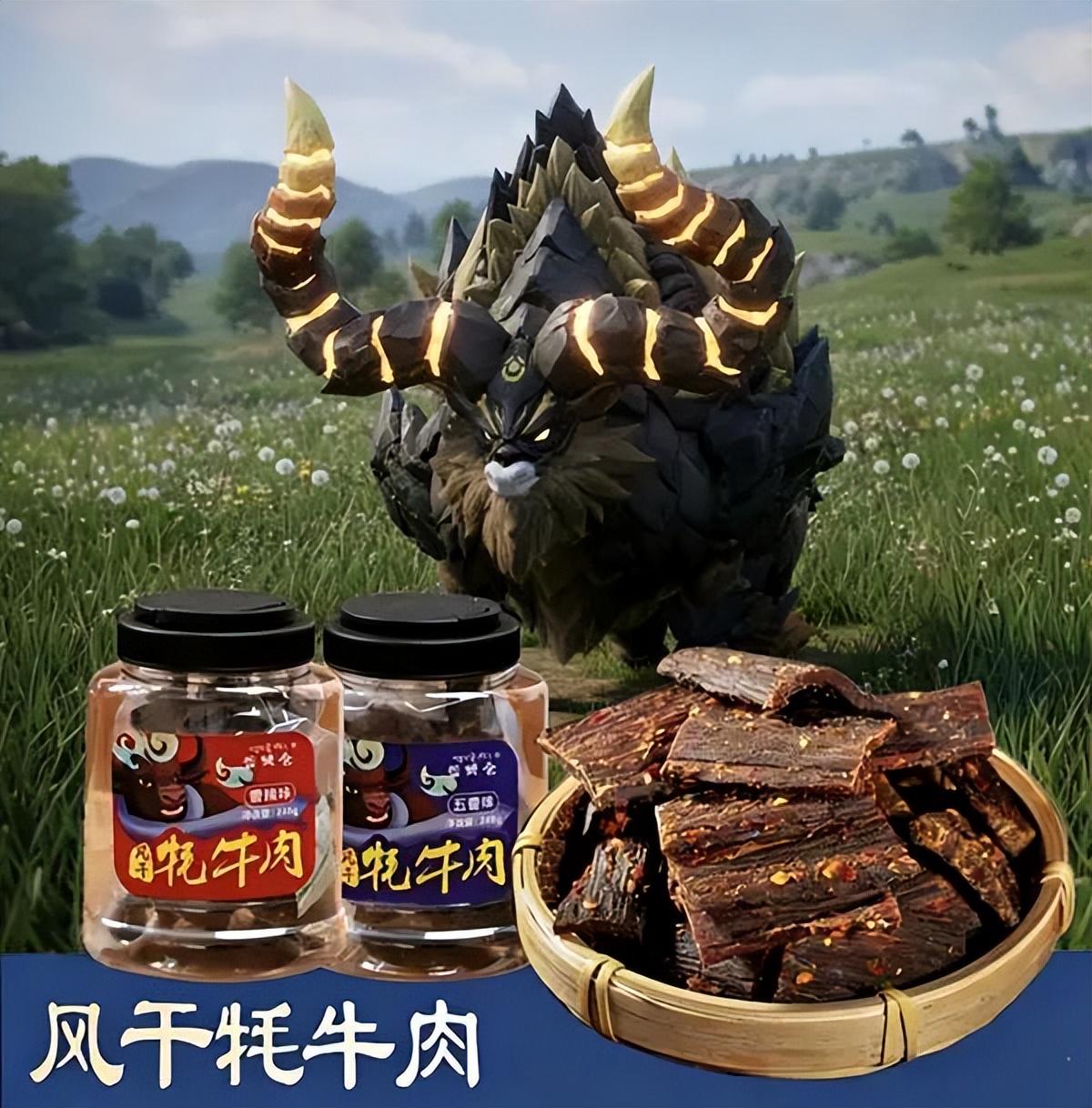
With a team effort, even Lei Guan Mao can make beef jerky (Image source: Internet)
Of course, I think that when the game enters open beta, some of the more challenging levels will require players to adopt a more strategic approach. For example, when teaming up, you’ll need to consider enemy attributes and compositions, choose the right characters and Chibos, and work together effectively. Especially in high-pressure situations, don’t forget to bring a healer character or Chibo!
While playing the demo, I also noticed that the Qibo characters players control can look strikingly similar to enemy Qibos, making it hard to tell friend from foe during combat—especially when they unleash their ultimate abilities, which deal massive damage, making the battle truly neck-and-neck.
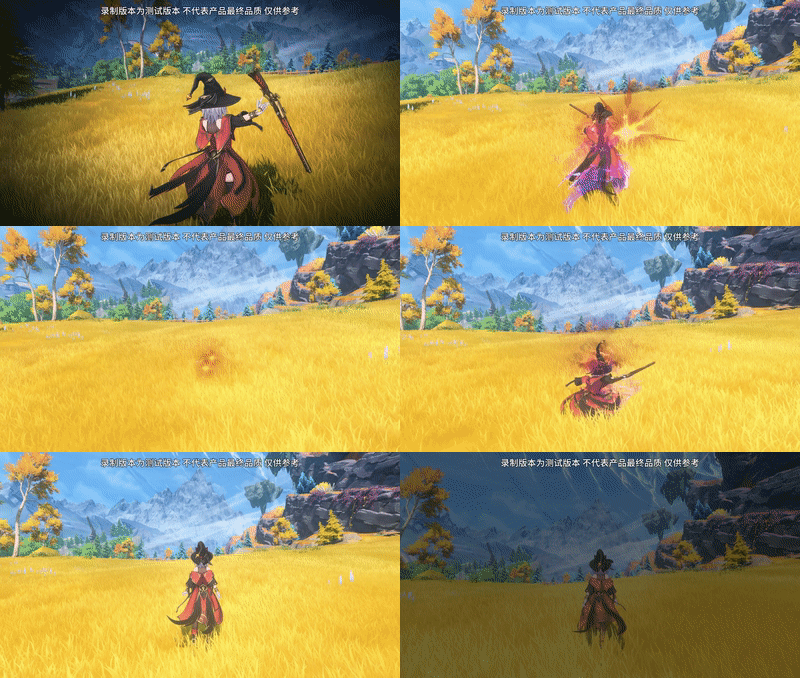
New Character: Ruby
The new version significantly expands the homestead features. Thanks to these optimizations, players can now easily establish their own little paradise deep within the idyllic landscape while exploring the vast world. The homestead features have even more highlights in store—we invite you to discover them for yourself.
- A new equipment system, or a vehicle for character-specific storylines
The character progression system in *Blue Star Origin* has been further refined. The new update introduces a new type of equipment called "Spirit Particles," which, along with other clothing items, contributes to character attribute bonuses.
Spirits are not only essential items that provide various buffs to characters, but also serve to enrich the game’s lore and characters’ unique storylines. Spirits are categorized by tier, with some featuring higher-quality artwork and additional exclusive story content. From what I understand, Spirits can be obtained through a variety of methods, not limited solely to in-game purchases.
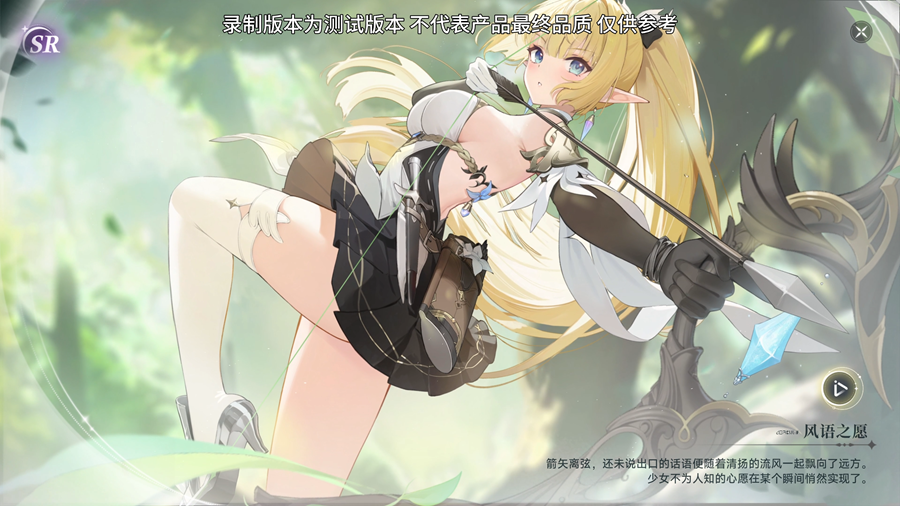
SR Sifria – Reiko – Wish of Wind and Rain
Some Spirits feature dynamic Live 2D animations that highlight their characters' traits, whether cute or mature. For example, the SR-rank Spirit "Unable to Think" showcases Han Youyou's adorable reaction when startled by a prank gift box—it makes you want to reach out and pinch her little cheeks. Other Spirits even have special short animations that tell a more complete story, presenting their charm in a more three-dimensional way.

A dynamic storyline featuring Lingzi
Unfortunately, it seems that none of the Spirit Children currently support touch interactions. I hope that, building on the existing exclusive storylines, the development team can add some interactive features for the Spirit Children.
I’m not surprised that the development team put a lot of effort into the equipment system; the stunning animations and additional stat bonuses really motivate me to collect them.
Conclusion
At the conclusion of the Starfall beta last year, I felt that the framework of *Blue Star Origin* was already quite polished; highlights such as the well-crafted character designs and the organic Chibo ecosystem had already laid the groundwork for the game’s appeal.
Eight months later, *Blue Star* has significantly improved in polish while retaining its unique characteristics. The development team has expanded upon various aspects of the game—including PvP battles, character progression, and home base gameplay—by introducing new mechanics that enhance the overall fun. In particular, the addition of multiplayer features opens up new possibilities for the game’s long-term operation.

To be honest, even after several playthroughs, I still can’t say for sure what *Blue Star Origin* is really like. Come to think of it, I haven’t fully completed the Floating Islands quests yet, I’ve only had a quick look around the newly opened Fries region, and there are still so many rare and exotic creatures in New Sprout Valley waiting for me to capture…
As I write this, the development team still has several open positions, and content production is still in full swing. I’m confident there are still many surprises in the world of *Blue Star Origin* that I haven’t yet experienced.
原创文章,作者:游茶妹儿,禁止转载:https://youxichaguan.com/en/archives/195654