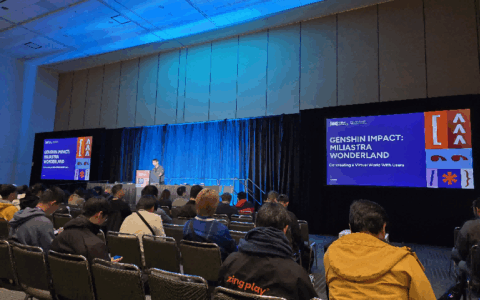
After spending five days at GDC in San Francisco and attending dozens of sessions, I’ve come to feel more and more strongly that we are standing in the eye of a storm.
At previous GDCs, the focus was on the “past”: reviewing the development of major titles and drawing lessons from past successes; at this year’s GDC, however, the conversation has centered on the “future.”
Many presentations focused on discussing trends and predicting future directions; the GDC organizers even modeled a new “Summit Forum” after the World Economic Forum in Davos, inviting executives from companies such as NVIDIA, Google, and Tencent in the hope that they could chart a course for the industry’s future.
This shift itself reveals, to some extent, a collective sense of uncertainty among industry professionals. Familiar paths are crumbling, established paradigms are being dismantled, and many professionals are beginning to pin their hopes on new factors: globalization, new business models… and, of course, the inescapable reality of AI.
The "AI content" at this year's GDC was astonishingly high—almost every industry colleague in San Francisco couldn't help but remark on it. From the West Hall, dominated by presentations, to the South Hall housing the main stage, every corner of the Moscone Center was surrounded by booths from tech giants and AI startups.AI game designers and investors were constantly arranging meetups in group chats; while waiting in line to enter, a programmer up front pulled out his laptop, typed a few lines, and Claude Code instantly generated a massive chunk of code…
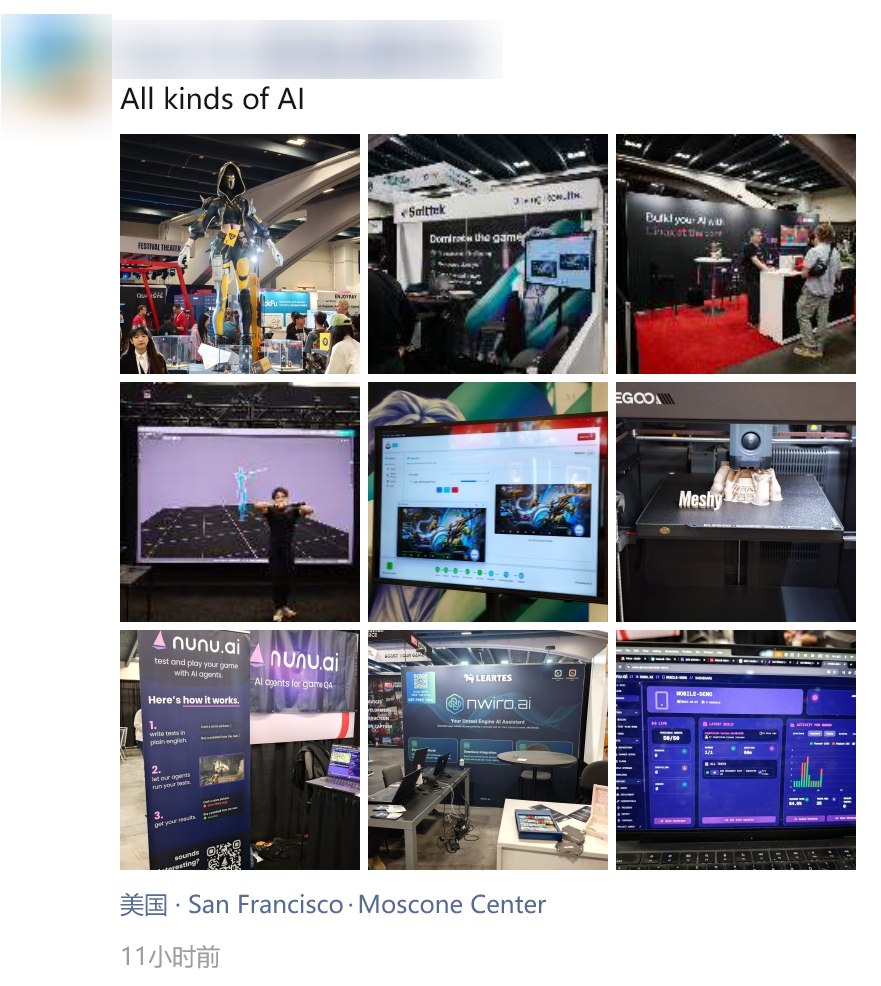
A colleague remarked, “There are all kinds of AI!”
If, in previous years, “AI + gaming” was merely a niche “innovation topic,” this year it has become a common thread running through the agenda, exhibition halls, roundtables, investment discussions, and even casual conversations. Everyone knows full well: AI is the true central theme of this year’s GDC.
However, unlike in previous years, after being immersed in this AI-driven conference and seeing so many real-world application examples, I no longer worry about whether AI will change the gaming industry. The reason is simple: once AI truly integrates into the game development process and into the games themselves, you’ll realize that the game’s competitive advantage still lies in the game itself—AI is being “tamed.”
01
The consensus split into two paths
Just how big of a sensation has AI been at GDC this year? A few examples will do the trick.
First, there’s the sheer volume. This year’s AI-related sessions numbered in the hundreds—more than double last year’s total. Second, there’s the buzz—on the first day of the event, I stood in line for a Google Cloud AI session and watched as the hall, which could hold over a hundred people, gradually filled up until the doors slammed shut right in front of me, with fifty or sixty people still waiting behind me.
This essentially means one thing: after several years of debate, developers around the world have finally reached a new consensus on AI in 2026. Over the past few years, developers’ attitudes toward AI have shifted significantly—from “fear of being replaced” to “trying to avoid it” and now gradually shifting toward acceptance and curiosity. People are beginning to realize that AI isn’t going away, and rather than resisting it, it’s better to understand and use it.
However, upon closer inspection, it becomes clear that the ways in which manufacturers are showcasing AI this year have actually diverged into two distinct approaches.
The first approach is epitomized by tech giants such as NVIDIA, Google, and Meta. The presentation style remains typical of tech companies: executives take the stage, articulate grand visions, showcase futuristic cutting-edge technologies, and paint a sweeping picture of AI “revolutionizing the gaming world.” By the end of the presentation, they naturally begin promoting their technical solutions—which are often universal tools designed for all industries.
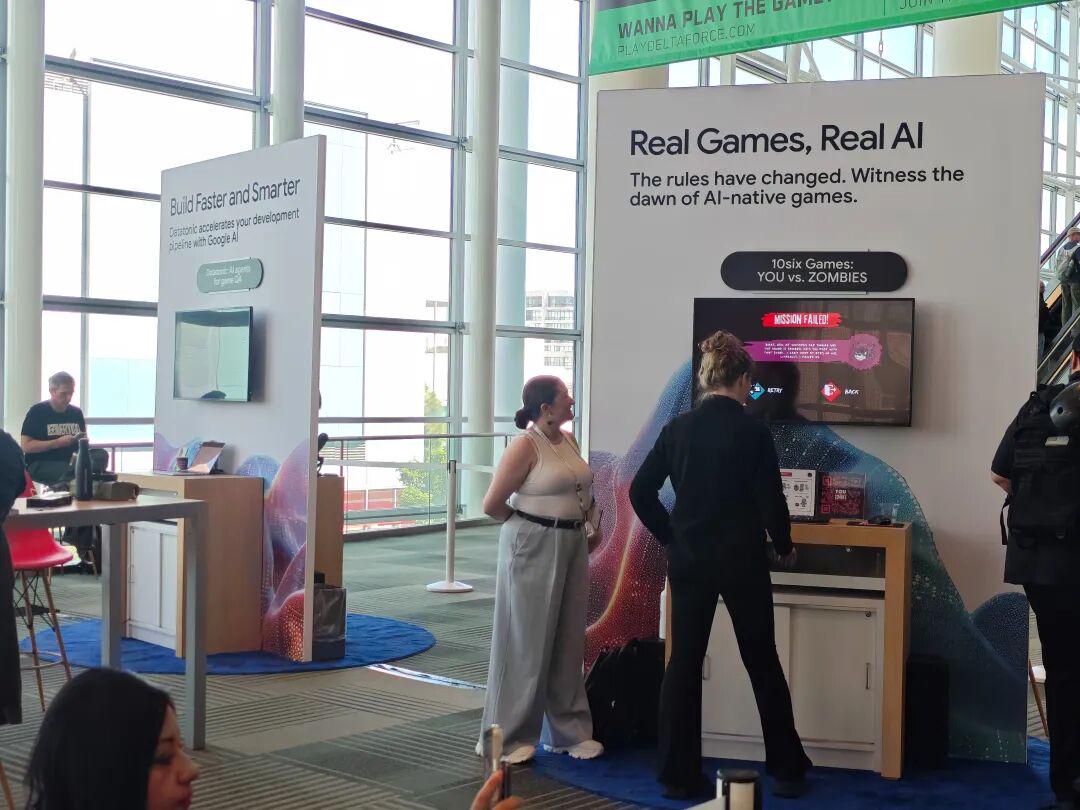
For example, Google has highlighted the 3D generative model Sima 2, the large language model Gemini, and the world model Genie 3, which recently caused significant volatility in the stock prices of game engine companies. These technologies are certainly impressive. But the challenges are very real.
On my way to the conference, I struck up a conversation with the CEO of a small studio from Texas. He told me that, in an effort to encourage his team to adopt AI, he had attended nearly every AI-related session by major studios during GDC. However, he found himself in a bit of a bind—world models were cool, but difficult to implement in the short term; 3D world generation was cutting-edge, but not something they could use. While the vision of “revolutionizing gaming” was certainly appealing, it was too far removed from their current development work.
When I asked the CEO which AI presentation he liked best, he pointed to the talk just given by Chen Dong, Head of Public Technology at Tencent Games, his eyes lighting up.
In that presentation, Chen Dong demonstrated a complete suite of AI tools that have already been integrated into the game development pipeline: automatic UV unwrapping, automatic bone rigging, automatic skinning… Steps that once required significant manual labor can now be automated.
The most notable example is skin weighting. AI can handle 85% of the workload in a single pass, boosting production efficiency for non-AAA characters by 70%.
"If our small team of just eight people could use this system," the CEO said enthusiastically, "it would cut the most time-consuming and repetitive part of our development process right in half."
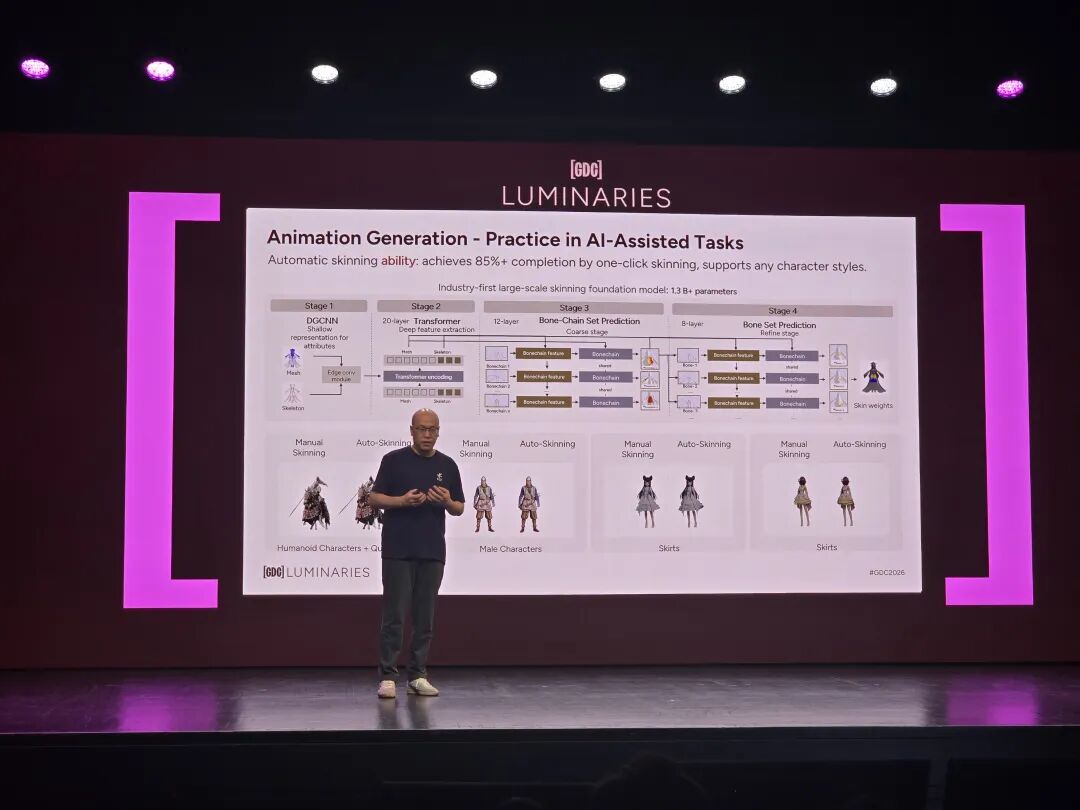
During an in-person discussion, Chen Dong mentioned that the reason he prioritized promoting the application of AI in 3D production was because “the team needed it most.” Clearly, this challenge is not unique to Tencent but is shared by many others across the industry.
In a sense, compared to tech companies, Tencent has charted a second path for AI at this year’s GDC on behalf of game developers—one that is likely better suited to the gaming industry.
This year, Tencent hosted nearly 40 sessions at GDC, 21 of which focused on AI, covering topics such as anti-cheating, R&D pipelines, and animation production. I noticed that their focus wasn’t on grand concepts, but rather on very specific questions: What problems can AI actually solve in real-world development workflows?
To be honest, at first glance, most of Tencent’s presentations seem somewhat “down-to-earth.” They lack grand visions of the future and aren’t particularly flashy; instead, they focus on a specific product, module, or problem, showcasing innovative optimizations. For example, in *Under the Strange*, they used AI to generate kung fu animations, while in *Lock Kingdom: World*, they employed AI to achieve high-performance global illumination.
But the more you listen, the more you begin to appreciate the true value of it all. While major tech companies remain fixated on playing the role of “shovel sellers,” Tencent’s AI applications have charted a steady growth trajectory compared to its GDC presentations from last year and the year before—with more case studies, deeper application scenarios, and real-world user data to prove that these technologies are indeed delivering results.
This also forces us to reconsider a fundamental question: What exactly is the core value of the combination of games and AI?
02
Redefining the Approach: Exploring the First Principles of Games + AI
From Tencent’s many insights, we can see a common logical framework they have established for applying AI to gaming: starting with identifying player needs and optimizing the player experience, they work backward to break down the implementation path, and then identify suitable AI technologies to specifically address pain points.
Tencent isn’t just solving problems; it’s becoming a constant questioner in the AI era: Why do gamers need AI? By combining explorations across various areas, Tencent’s exploration of AI applications appears both highly concrete and sufficiently systematic. This clear-cut, reusable approach largely foreshadows the future rules for AI applications in gaming.
Take, for example, a presentation given this year at GDC by Tencent Games’ ACE anti-cheat team on “AI-powered anti-cheat measures for the ‘Search, Strike, Retreat’ game mode.” The capabilities of ACE’s anti-cheat system need no introduction; it is widely recognized as one of the best in the world. When the game security team tackled the challenge of implementing anti-cheat measures for the “Search, Strike, Retreat” mode, their first step was to analyze player behavior and break down the specific anti-cheat requirements based on the unique mechanics of the game mode itself.
The difficulty of combating cheating in this genre stems from the open-ended nature of its gameplay. Social interaction and the in-game economy significantly expand the scope for cheating. Within the game environment, there are not only traditional FPS cheats—such as wallhacks and aimbots—but also a wide variety of “indirect cheating methods” that are far more covert.
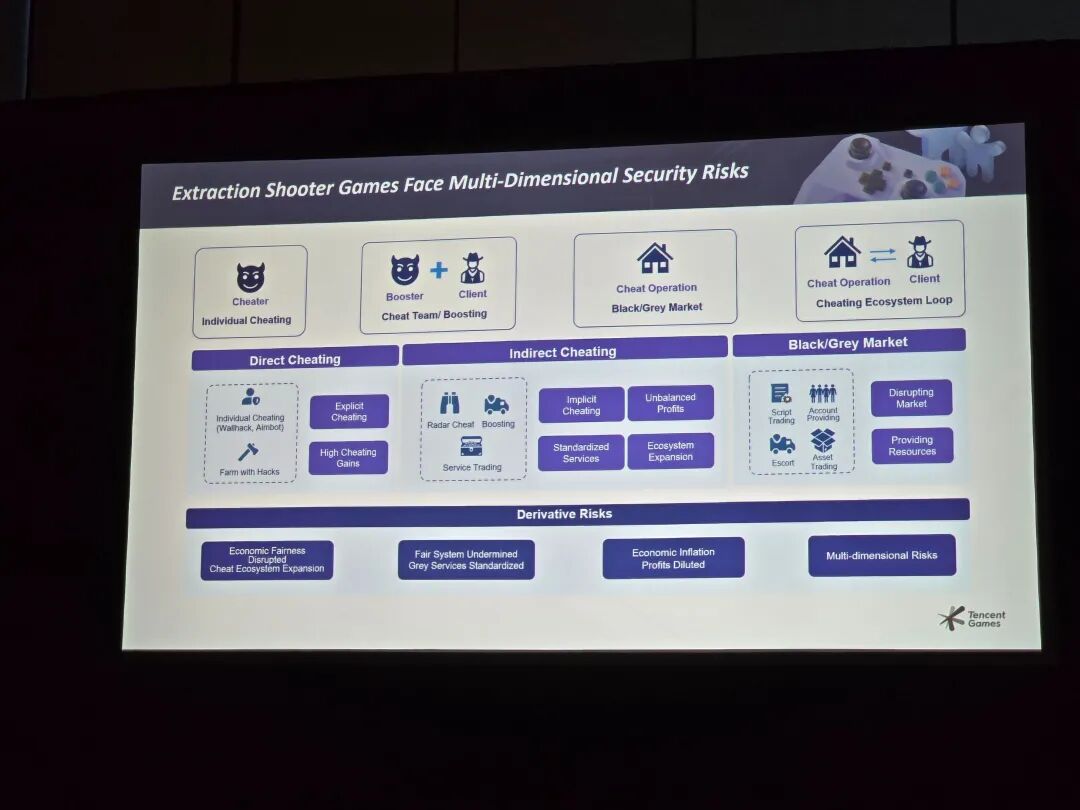
For example, when a player is being carried, a cheating teammate might use the spectator mode after dying to call out enemy positions. In such cases, the player who actually benefits from this doesn’t always trigger abnormal server data. How can we prevent this? There are also dozens of other cheating methods—such as escorting, ramming vehicles to sell loot, and loot wallhacking—that don’t result in kills but still disrupt the economic balance and leave no direct evidence.
Given the complexity of such scenarios, it is clear that a one-size-fits-all security solution cannot possibly address every situation.
The ACE team’s solution combines large-scale match replay analysis with advanced AI models to build an intelligent anti-cheating system based on match data.To address direct cheating, they employ a multimodal intelligent detection system that converts gameplay replay data into text and video to make judgments. For indirect cheating, they utilize multidimensional data—such as player teaming relationships, return on investment, and withdrawal behavior—and model these patterns using a graph neural network that integrates multiple team members’ perspectives. A foundation of large-scale models, fine-tuned smaller models, and graph neural networks, combined with the involvement of human experts, collectively form a “joint enforcement” system.
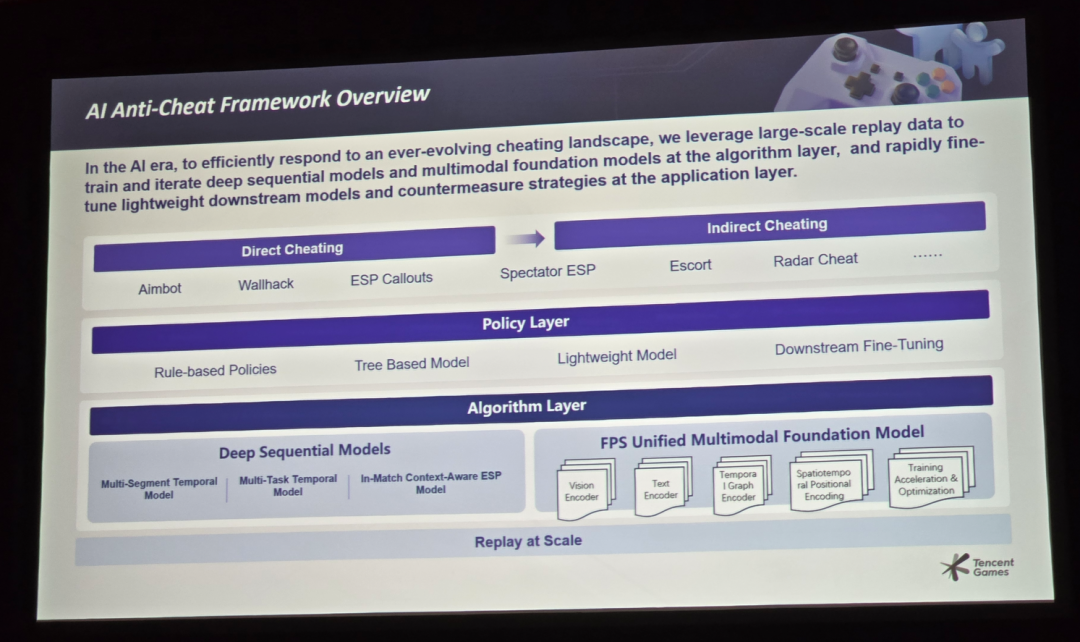
The success of this technical solution fundamentally stems from the Tencent Games Security Team’s deep understanding of both games and users. By analyzing and filtering gameplay mechanics in the “search-and-strike” genre, players’ diverse behaviors, and potential cheating scenarios—and then leveraging robust engineering capabilities—the team has developed a solution that addresses players’ pain points at their root cause, thereby creating a strong sense of a clean and healthy gaming environment for players.
Over the past few years, the reason AI applications have sparked so much controversy is largely because the question of “why we need AI” has not been clearly answered. Many AI solutions come from technology companies, which often start with the technology, then look for use cases, and end up in a classic case of “looking for a nail to fit a hammer.”
However, people have an innate resistance to this approach. In this year’s pre-GDC developer survey, positive sentiment toward AI has declined for three consecutive years. Conversely, AI applications that actually solve problems are often quickly embraced.
Therefore, the primary driver of "Games + AI" is, in fact, demand. For "AI in Game" (gameplay-oriented AI), the direct demand comes from players; for "AI for Game" (development-oriented AI), the direct demand comes from development teams.
There are many other examples that illustrate the common approach Tencent takes to AI applications. For instance, at this year’s GDC, the *Peacekeeper Elite* development team shared details about the AI teammates they launched last year. Xue Bing, Deputy Director of Game Design for *Peacekeeper Elite*, told me that the project was initiated because they first identified players facing significant competitive and social pressures who genuinely needed the companionship of teammates.
They conducted research in this direction and proposed the concept of making NPCs “more human-like,” further breaking it down into four major modules: command obedience, free chat, memory systems, and care systems. This allowed the AI to transcend the role of a mere in-game companion and foster a stronger sense of long-term companionship with players.This AI companionship framework was subsequently expanded in multiple directions, giving rise to a variety of applications, including intelligent auto-play during temporary logouts, the fully voice-controlled “Smart Warhound,” and the “Little Horse God” responsible for newbie guidance… Thus, an AI application born from a specific need evolved into a vast ecosystem of AI companions.
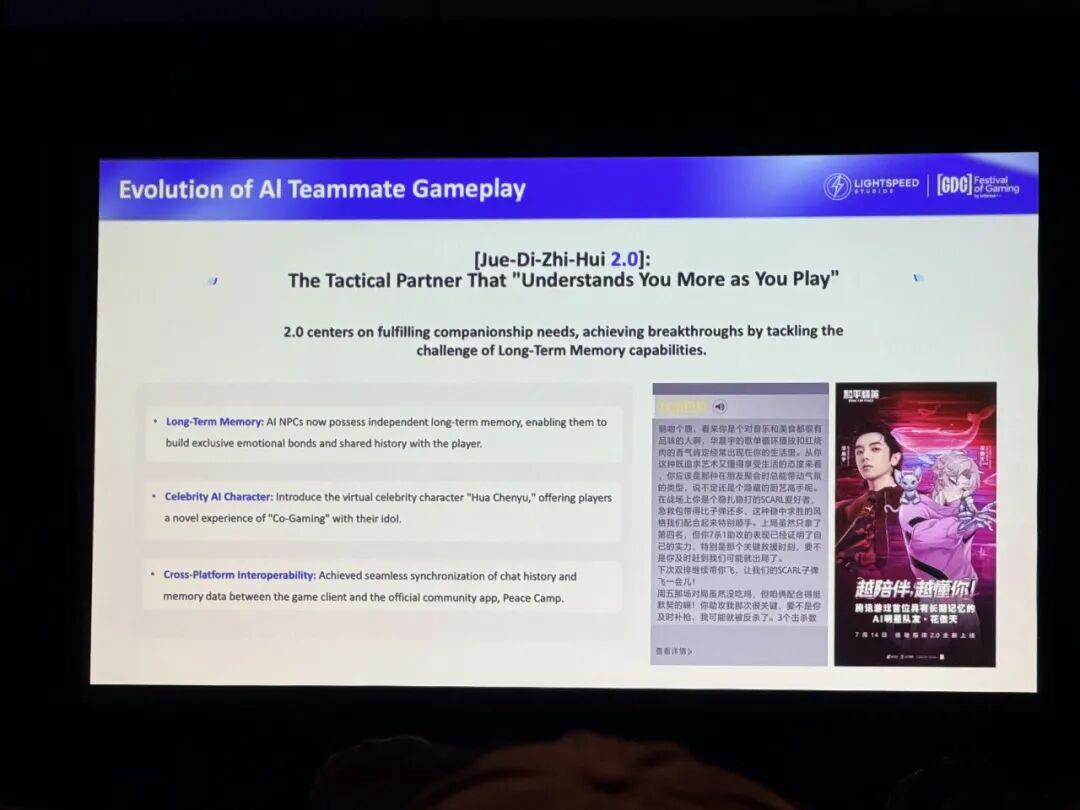
Ultimately, while many smart NPC solutions proposed by tech companies have gradually come to be viewed as “false needs,” the AI teammates in *Peace Elite* have become a massive hit—according to figures released by Xue Bing at GDC, the cumulative number of users who have experienced all AI NPC gameplay modes reached 110 million, with a peak of 17.7 million daily active players.There is good reason to believe that the implementation of AI NPCs has become a new growth engine for the long-running game *Peace Elite*.
According to Xue Bing, players who tried this feature engaged in up to 70 rounds of messaging per match, with nearly 75% of players keeping their microphones on. Both average playtime and the number of matches per session saw significant increases, and social media platforms gradually began to see a flood of viral user-generated content (UGC) centered on AI teammates—a level of popularity that far exceeded the development team’s expectations. This once again demonstrates one key point: whether AI is valuable depends on whether it solves a real-world problem.
03
After the Commotion
The most significant change brought about by these cases is not actually a technological breakthrough, but rather a shift in mindset.
Returning to the point made at the beginning of this article, why, after witnessing AI applications like these, do we no longer need to worry about the future of game AI? Tencent’s 21 AI presentations have shown us a compelling possibility: AI is no longer an unknown variable hanging over the industry, but is gradually becoming a production tool whose “wildness can be tamed.”
I believe many people can sense that we are now in the second half of the AI application race—not just in the gaming industry, but across the general public as well, where the pursuit of AI is shifting from “trying something new” to “practical utility.” From the initial craze for ChatGPT’s chat capabilities to the current interest in OpenClaw, what people value is its ability to serve as a practical assistant that gets things done. While the initial tech hype is gradually cooling down, the era of true practical applications has only just begun.
The anxiety surrounding AI in the gaming industry once stemmed from uncertainty about its practical applications, apprehension about system integration, and even concerns that tech giants might deliver a “dimension-lowering blow”—Google’s Genie once sent shares of game engine developers into a tailspin. But after attending GDC for a few days, it becomes clear that the real challenge lies not in the new technology itself, but in the ability to recognize its value.
After going around in circles, we’ve come full circle back to the game companies’ home turf. Understanding player needs, game mechanics, and the limits of the player experience—these are precisely the areas where game companies excel.
Gaming is, in itself, a complex system. It is both a technological product and a cultural product, and above all, an art form centered on enjoyment. The logic behind this system is far more complex than most people realize, and it is not easily changed.
This is particularly true of the game AI use cases demonstrated by Tencent—long-running games with high daily active users (DAU) are inherently highly complex engineering systems. Every aspect involves extensive collaboration and the accumulation of detailed experience. For this very reason, for AI to truly enter the gaming industry, it must be integrated into these real-world engineering systems, rather than remaining merely a conceptual idea.
A consensus regarding this insight is gradually taking shape. During GDC, Song Yachen, founder and CEO of Tripo AI, told me that the focus of their latest P1.0 model iteration is not on endlessly pursuing generation accuracy, but on making the generated 3D content more readily usable within real game development pipelines. The reason is simple—they have come to realize that when building game tools, the first priority is to maintain a deep respect for the game industry.
Meanwhile, Hu Yuanming, founder of another 3D large-model company, Meshy.ai, published a lengthy post ahead of GDC announcing the launch of an AI-native game studio and a return to “fun”—the eternal essence of gaming. This, too, is about creating genuine value. One of his statements left a particularly strong impression: “Science and technology determine what we can do; art and taste determine what we do not do.”
In contrast to the first half of that statement, people once believed that AI’s powerful capabilities would bring limitless potential for disruption to the gaming industry; but in the end, they discovered that what truly defines a game is still the players and the game itself.
原创文章,作者:游茶妹儿,禁止转载:https://youxichaguan.com/en/archives/195640