If “open world” was the buzzword that had developers racing to jump on the bandwagon in previous years, then in recent years, UGC has also emerged as the next big trend. More and more developers are exploring a new possibility: beyond simply experiencing content, can players also become content creators?
This trend was particularly evident at this year’s Game Developers Conference. Leading global game developers, including miHoYo, Tencent, NetEase, Roblox, and Epic Games, all presented on their UGC ecosystems. Among them, the relatively new “Genshin Impact: Thousand Star Realm” garnered significant attention.
Earlier this year, Mihoyo founder Liu Wei personally attended the first "Thousand Star Realm" Creator Exchange for *Genshin Impact*, where he revealed that as of January, the mode had recorded over 150 million total plays and attracted more than 30,000 content creators from around the world.
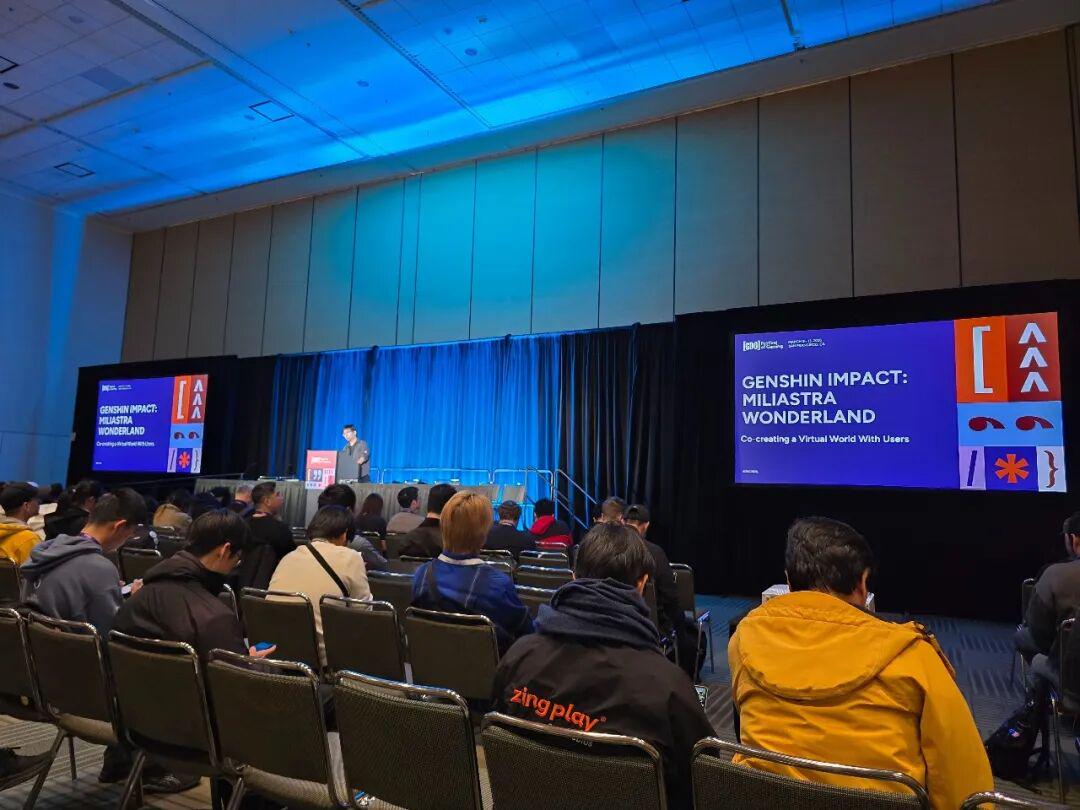
At this year’s GDC, Ning Xin from Genshin Impact’s programming team delivered two technical presentations on the Thousand Star Realm. In his latest talk on the framework design of the Thousand Star Realm, he looked back on the development journey of this feature—from concept to implementation. Since miHoYo first began exploring the idea of UGC in 2022, the entire system underwent two years of R&D before finally taking shape.The team is amazed by the vast array of incredible gameplay innovations emerging from the player community and has prepared a wealth of new content to continue helping players turn their inspiration into reality.
01
The Significance of Co-Creation with Players
Hello, everyone. I’m very excited to be here today to share some insights about “Thousand Star Realm.” This is the UGC module we launched for *Genshin Impact* in October 2025. In this presentation, I’ll discuss some of our thoughts and development experiences from this project.
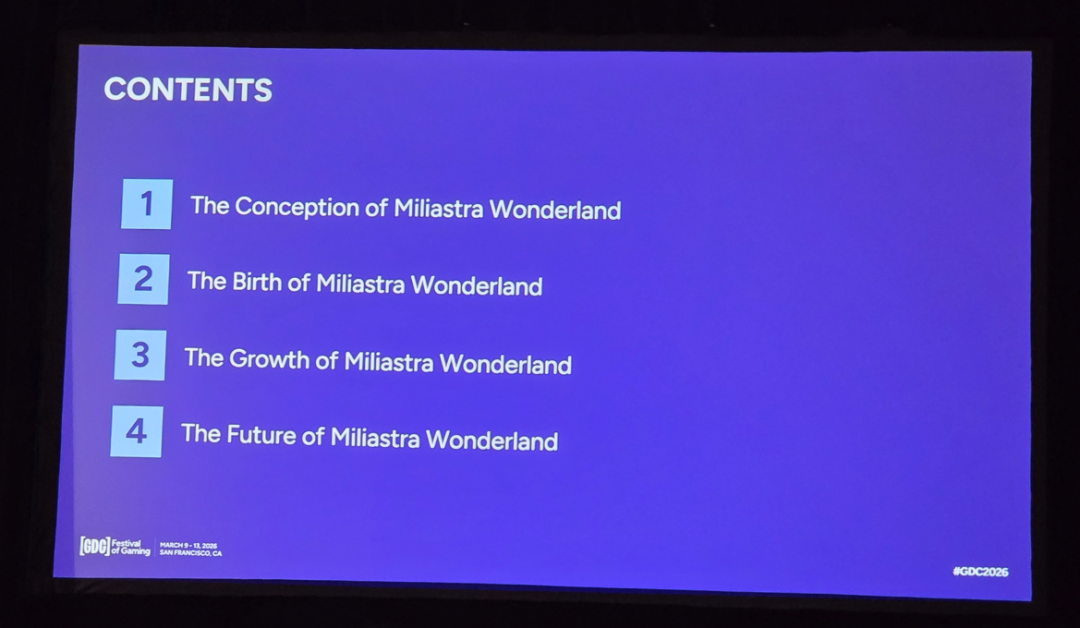
Next, I will discuss the development path and future plans for Thousand Star Wonderland, covering everything from the project’s initial design considerations to its current progress and future direction.
We first began considering the significance of UGC in May 2022. At that time, *Genshin Impact* had just released the Sumeru region. Even by today’s standards, Sumeru’s map size and exploration content remain vast. To provide nearly double the amount of content, we invested a significant amount of manpower and resources. But at the same time, we gradually realized that the team’s size could not expand indefinitely.So we began to reflect: perhaps relying solely on the official team to continuously produce content would eventually reach a bottleneck.
As a result, we have gradually shifted our focus from simply increasing the team’s output to improving content quality. At the same time, we still want players to continue enjoying a wealth of gameplay content, and we are exploring new ways to keep the game engaging over the long term.
When it comes to "fun," the gaming industry currently faces a widespread challenge: ever-rising development costs.In the early days, a small team of just a dozen people could complete a console game in a matter of months; today, however, projects at large studios often require hundreds of people, take years to complete, and consume massive budgets. On the other hand, the indie game market has shown a trend of vigorous growth in recent years—with both the number of releases and the proportion of hit titles steadily increasing. Behind this growth lies players’ growing interest in fresh and innovative ideas.
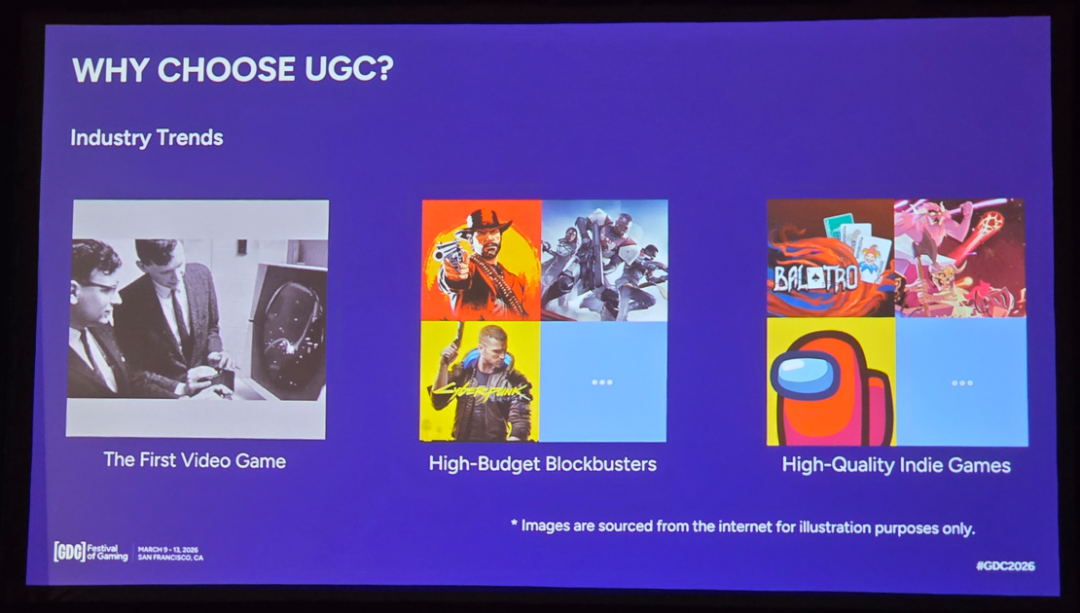
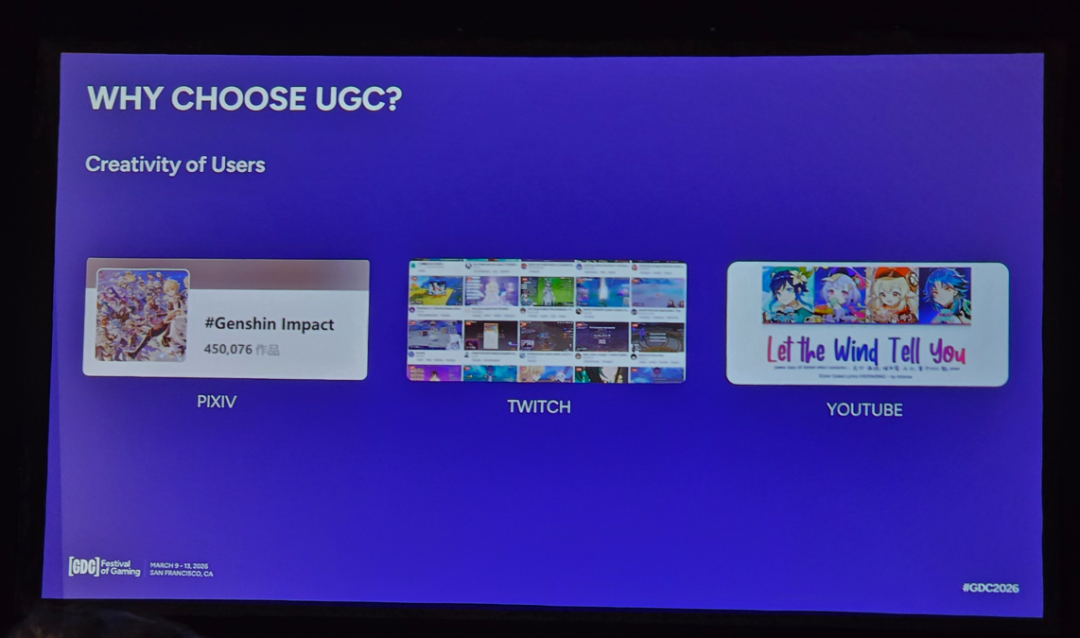
Overall, major game companies are facing high production costs and limited resources, while players’ demand for entertainment experiences remains as strong as ever.At the same time, we have observed that the expansion of *Genshin Impact* is not the only trend—user-generated content is also growing rapidly. Examples include character illustrations on Pixiv, gameplay streams on Twitch, and entertaining videos on YouTube. With the development of software tools and the internet, creating user-generated content has become easier, attracting more and more people to participate and express their creativity.
This trend has become even more pronounced following the release of Sora 2. What would happen if internet users could not only create fan content as players but also become creators of game content themselves? In fact, the industry has already seen similar success stories. Examples include the modding ecosystem for *The Elder Scrolls V: Skyrim*, the World Editor for *Warcraft III*, and games like *Minecraft*.For over a decade, these platforms have continuously spawned new creative content, and I believe they will remain vibrant and thriving for the next ten years as well.
Of course, even for professional developers, creating game content still presents certain challenges. We understand all too well that there is often a huge gap between an idea and its actual realization. Many players without development experience may have brilliant ideas, but they struggle to bring them to life quickly. That’s why we believe it’s time to help them and truly unleash their creativity.
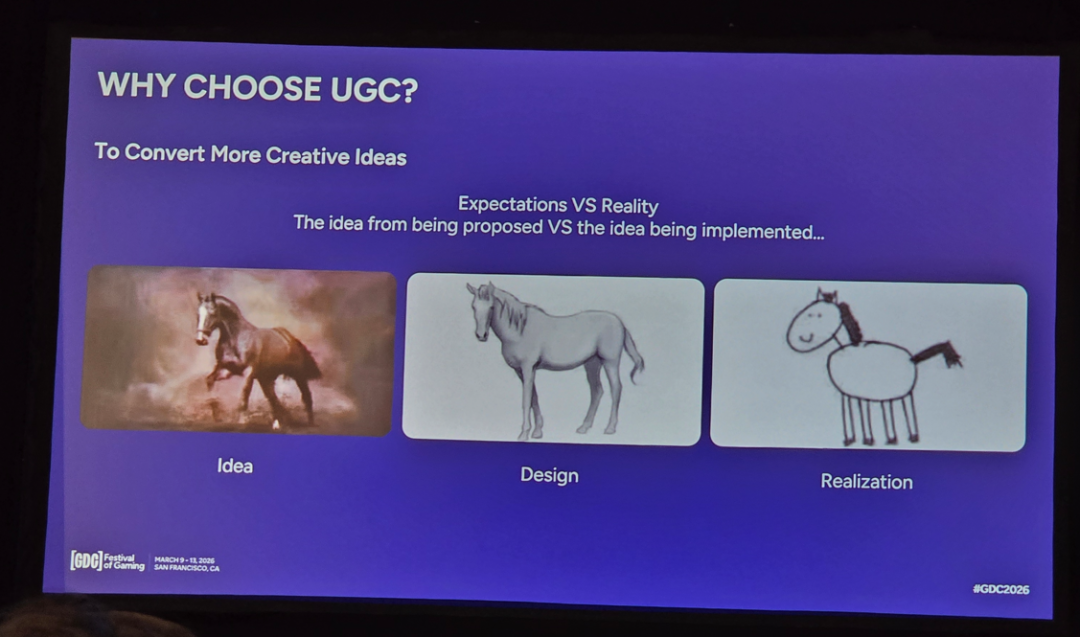
However, simply having an idea is not enough to allow us to rush headlong into the UGC space. We still need thorough preparation and determination. Fortunately, miHoYo is not a company that prioritizes short-term profits. We believe that high-quality content and an active user ecosystem can generate long-term value.
miHoYo’s current mission is to create a virtual world for one billion people by 2030. The company’s product philosophy is: “Something New; Something Exciting; Something Out of Imagination.” The team has put in tremendous effort, but based on our current development plans alone, we still have a long way to go before we can truly achieve this goal.We are always looking to recruit more tech enthusiasts to join us in saving the world. If we can use UGC to turn more users into “tech enthusiasts”—rather than just enhancing the capabilities of our existing user base—we will be one step closer to achieving this goal.
So, does *Genshin Impact* have what it takes to rise to this challenge? The answer is yes.
First, we have accumulated extensive experience in the development and operation of open-world adventure RPGs, but our goals extend far beyond that. We aim to build *Genshin Impact* into a long-lasting IP, and the UGC model aligns perfectly with this vision.
Second, we have a development team of over 1,000 people and an extensive library of game assets. These assets provide a solid visual foundation and highly polished resources for UGC creation. In addition, the team has designed a variety of gameplay modes within the game to keep content fresh and meet the needs of different players.As illustrated in the slide, players can create their own worlds based on Genshin Impact’s original content—whether it’s the “Dust Song Jar” style, which leans toward healing and relaxation; the “Divine Craft” gameplay, which focuses on combat; or the “Thousand Melodies Gathering” type, which emphasizes skill-based challenges.
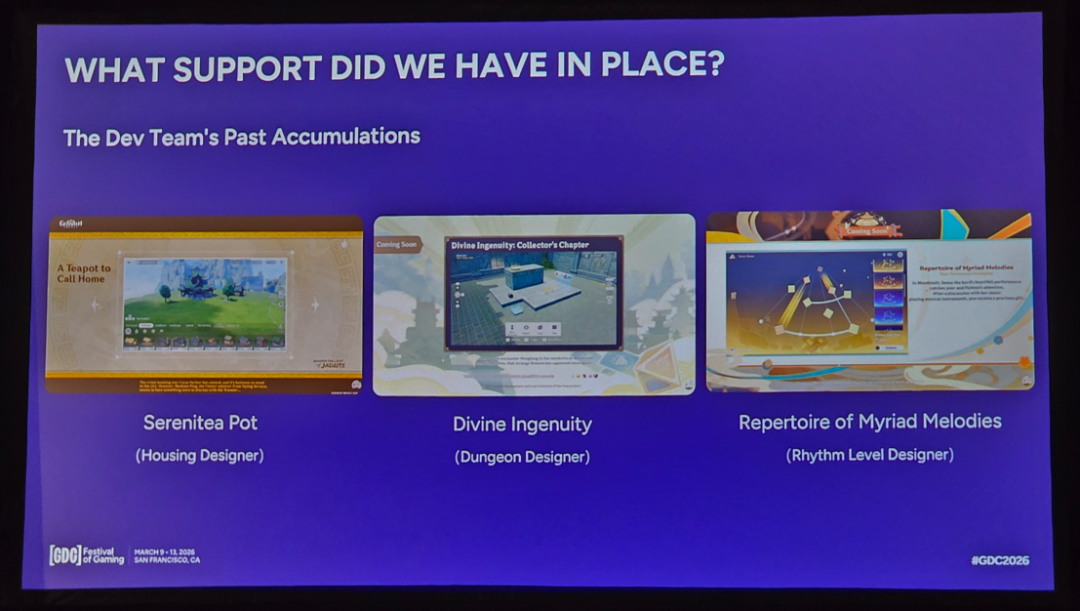
Based on these considerations, we ultimately decided to create Genshin Impact’s UGC platform—Thousand Star Realm. It is a platform-based service system where creators can produce a variety of content for players.
02
Four Dimensions: Building the Foundational Architecture
Next, I will provide an overview based on four key dimensions—creators, content, participants, and platformization—while also touching on some aspects of the development process.
When it comes to creators, we first considered four key questions.
First, the disparity in ability among creators.
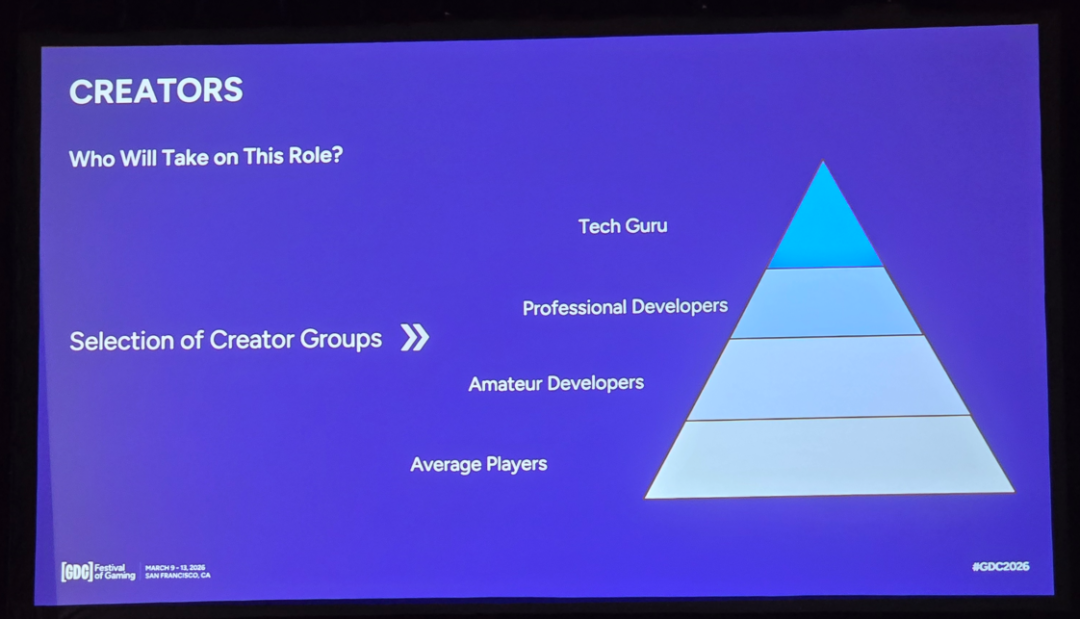
Out of any given group of 1,000 users, there might be just one technical expert, ten professional developers, and a hundred amateur developers, while the vast majority are casual players—yet it is often from among them that truly brilliant ideas emerge. Our goal is to lower the barrier to entry, but that doesn’t mean eliminating it entirely. Therefore, we’ve set the skill level of amateur developers as our design benchmark: they should be able to create high-quality levels, and casual players should be able to gradually grow into amateur designers.
Second, how can we help creators acquire the necessary development skills?
On the *Genshin Impact* development team, game designers need to understand the fundamentals of the engine and be proficient in programming languages such as C++, Python, Lua, or VBA, as well as be skilled in using various internal tools, such as level editors.
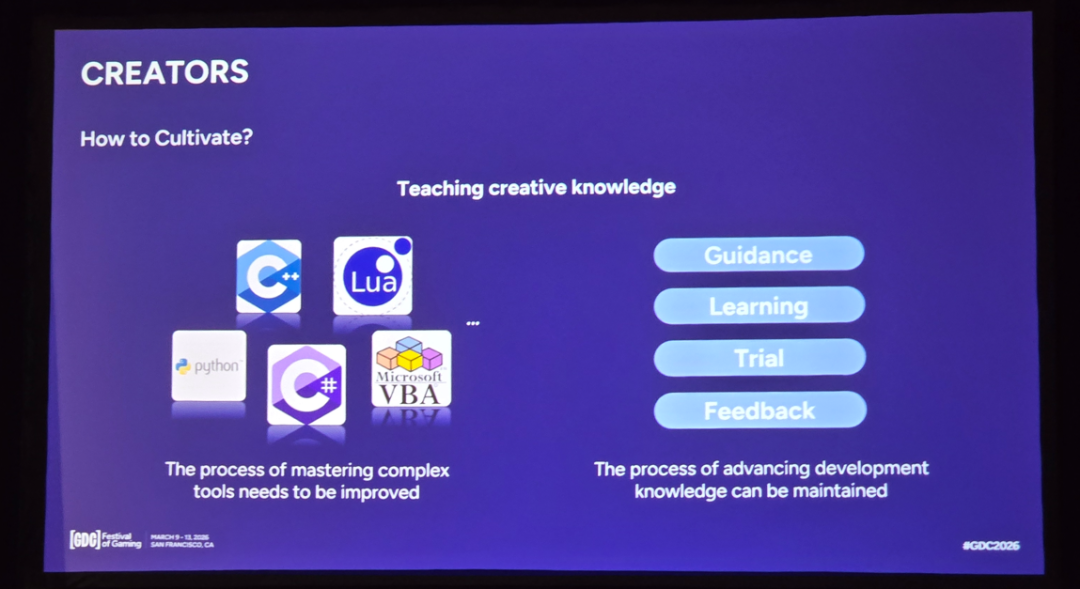
This knowledge isn’t easy for most players to grasp. When new designers join the team, they usually start with a simple case to gradually understand how the data works. If they have questions, they can consult the project wiki; when trying out new designs, the detailed error logs provided by the system can also help them pinpoint the problem.
With this in mind, we established the "QiJiang Academy." It includes video tutorials covering basic features, comprehensive guides that are updated with each release, and a real-time feedback mechanism to help creators receive monitoring and error reports during runtime.
It should be noted that while scripting languages offer a high degree of flexibility, they also significantly raise the learning curve. After careful consideration, we ultimately decided to use visual nodes as the primary method of creation rather than writing code directly.
The third question is: What features should creator tools have?
In recent years, most games have been developed using custom engines. *Genshin Impact* is no exception. *A Thousand Stars* is also built on the technical foundation of *Genshin Impact*. However, since *Genshin Impact* itself is not a fully customizable engine, certain inherent characteristics—what we call the “Genshin flavor”—inevitably carry over into the UGC system. For example, the unique art style and the lower priority given to the physics system.
Therefore, we decided to focus on making the tools more developer-friendly, so that creators can quickly preview how their gameplay affects the world. This means we need to encapsulate a large number of systems and components so that they can be easily called upon.
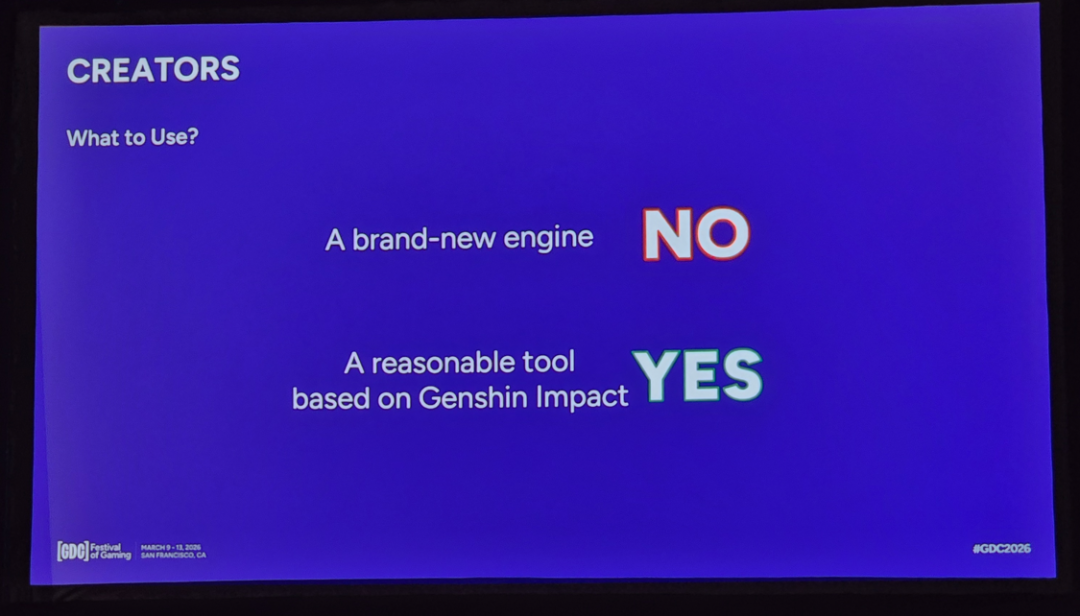
While developing new tools based on *Genshin Impact*, we also encountered new challenges. *Genshin Impact* was not originally designed with these features in mind, and the differences between various platforms and input devices made the adaptation process exceptionally complex.
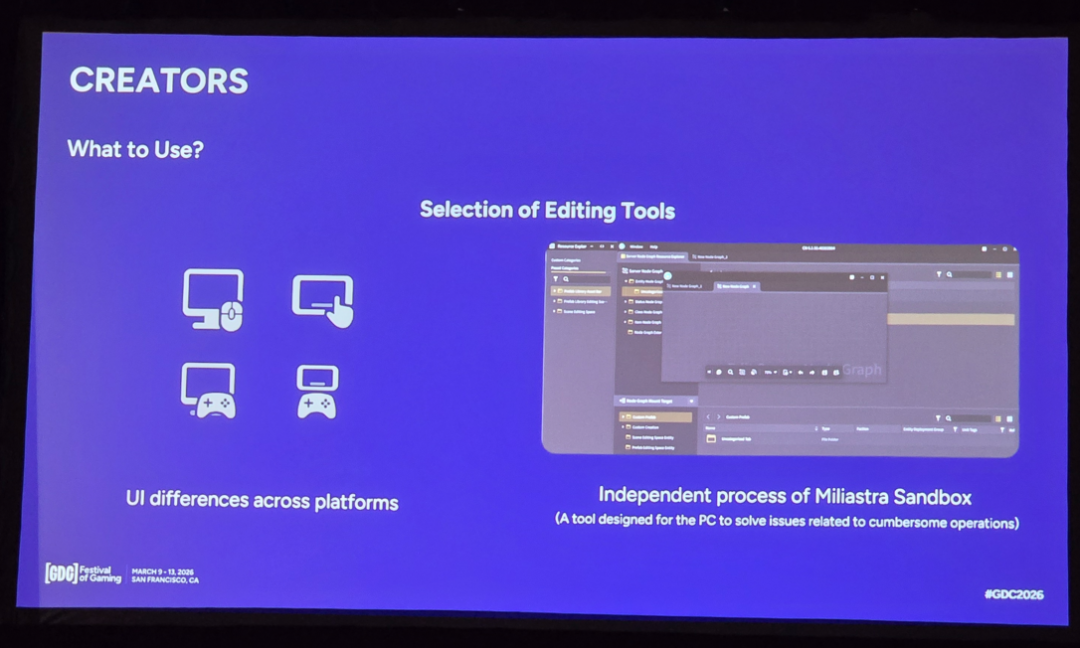
For example, common operations on PCs include dragging windows, right-clicking, and using keyboard shortcuts; on mobile devices, they involve touch controls; and on console platforms, they require solutions for extensive text input.
After careful consideration, we decided to prioritize support for PC devices. To that end, we developed a separate process to handle editor interactions, which ultimately led to the creation of the "Qianxing Sandbox." By focusing on optimizing the PC editor interface, we have significantly improved creative efficiency.
The final question is: How can we keep creators motivated over the long term?
Ongoing feedback is crucial. With tens of millions of monthly active users, *Genshin Impact* ensures that any well-designed level has the potential to attract a large number of players and generate valuable feedback. For new creators just starting out, this presents an invaluable opportunity for growth.
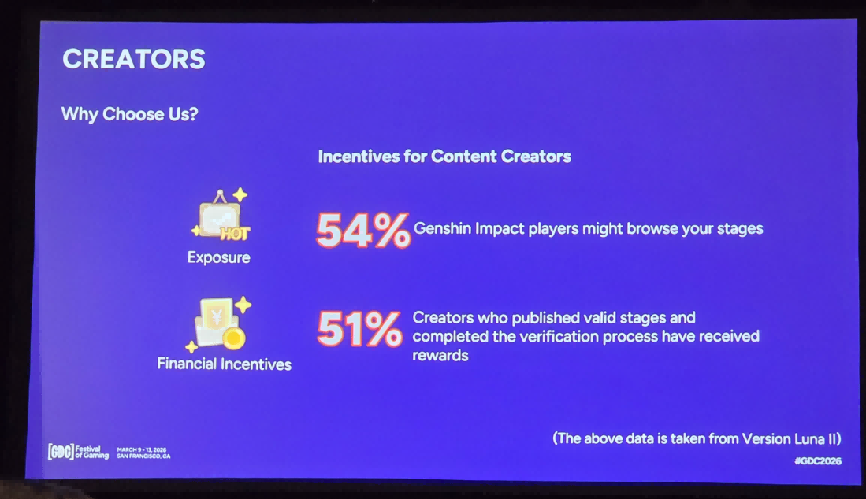
We also offer financial incentives to creators. The more popular a level is, the higher the reward the creator receives. Maybe by the time I retire, I’ll become a professional designer in Thousand Star Wonderland myself. (laughs)
03
Two years of intensive R&D—“It’s different from Genshin Impact, and that’s exactly the point.”
Next, I’ll outline our design approach to content creation.
As a game dedicated to providing a positive and engaging experience, *Genshin Impact* naturally hopes that creators will base their work on this philosophy. Therefore, we do not support content that promotes negative values such as gore and violence.
However, when it comes to gameplay formats, we don’t want to limit creators. Although *Genshin Impact* is a third-person open-world adventure game, we welcome all kinds of gameplay styles: first-person shooters, card games, and even formats that don’t involve characters. The more creative and accessible the content, the more likely we are to support it.
However, in providing these features, we have also encountered a number of technical challenges.
As a cross-platform open-world game, *Genshin Impact* features numerous highly customized systems. These include the camera, the 3C module (comprising camera, character, and controls), the skill system, and complex performance optimization mechanisms. Because the 3C module is designed around a free-roaming camera, we face certain limitations when adjusting the camera angle and control scheme—for example, the lack of a full top-down or side-view camera system.
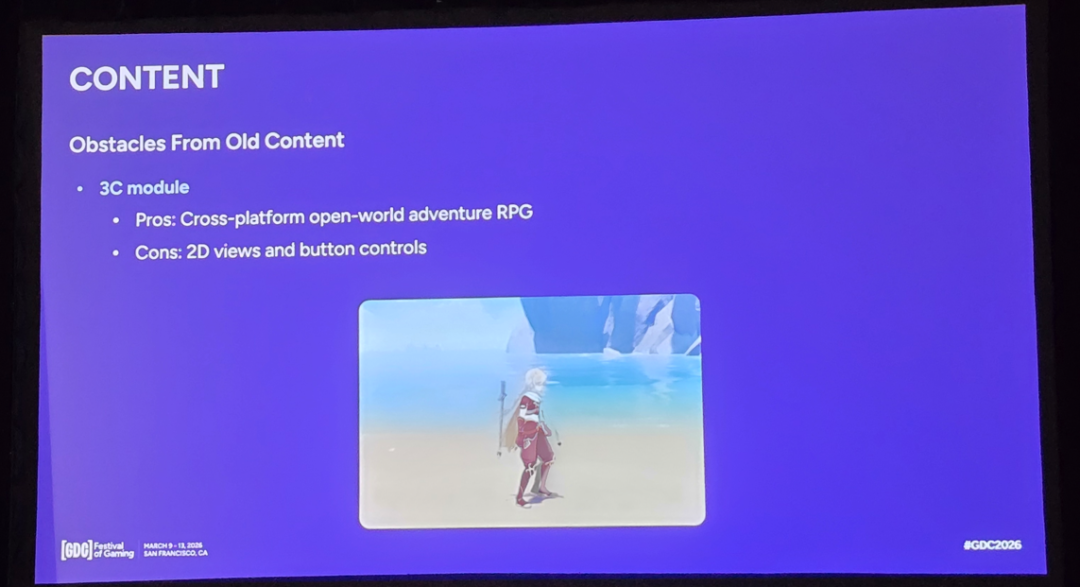
There are also issues with precision control when moving the character. For example, even with subtle keystrokes, the character may still move a considerable distance.
The ability system is a key mechanism for defining gameplay logic. To ensure cross-platform data consistency, we use a server-authoritative validation mechanism. However, this also means that much of the gameplay logic relies on server-side calculations, requiring you to understand the underlying technical framework and code—which isn’t particularly user-friendly for creators.
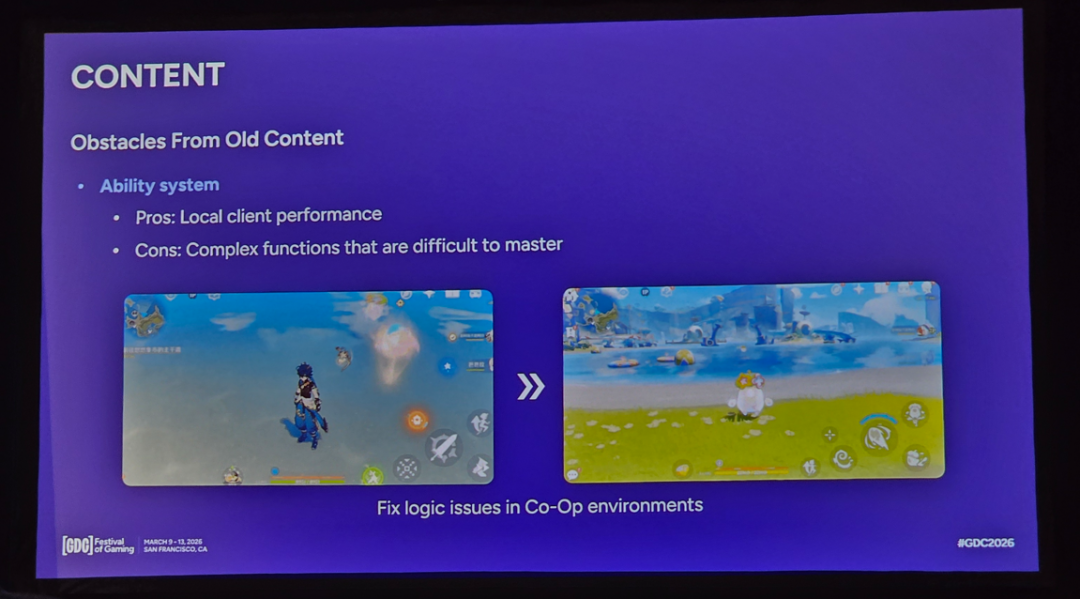
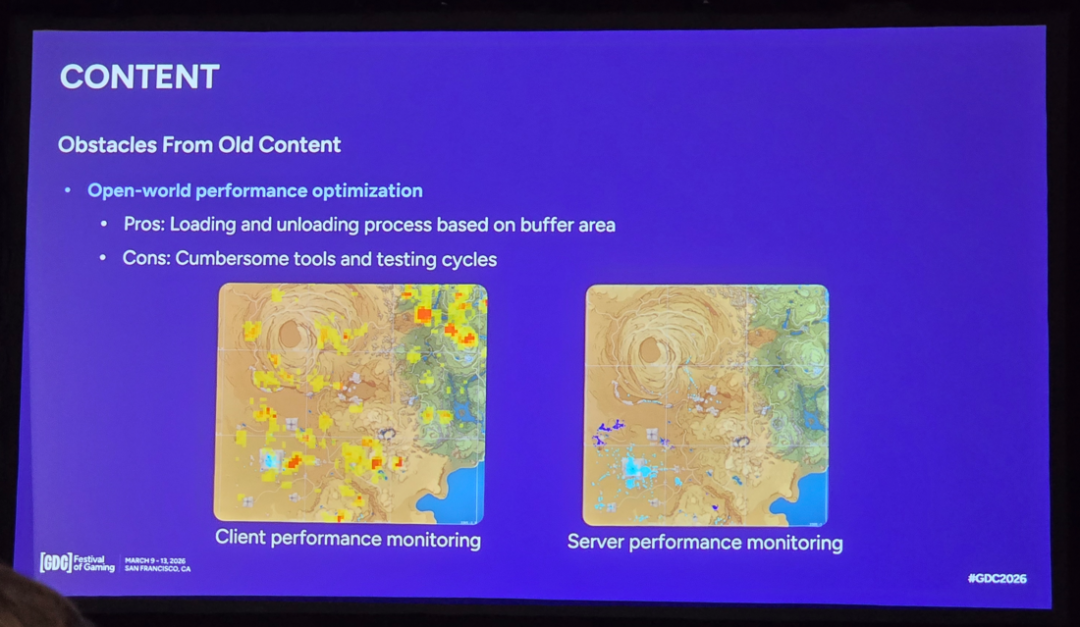
Performance optimization is even more complex. For example, if all the logic for a level continues to run in the background—so that even when the player is deep underground, enemies and traps on the surface are still being processed—it will severely impact performance.
As a result, the Genshin Impact development team has long had a dedicated performance optimization process in place. However, for UGC creators, this is clearly too complex.
To address this issue, we ultimately categorized UGC content into two modes: the extended mode and the classic mode.
In Overlimit Mode, creators can use custom characters and take advantage of new multiplayer synchronization rules that are better suited for competitive or cooperative gameplay. In Classic Mode, players can still use familiar characters from the continent of Teyvat.
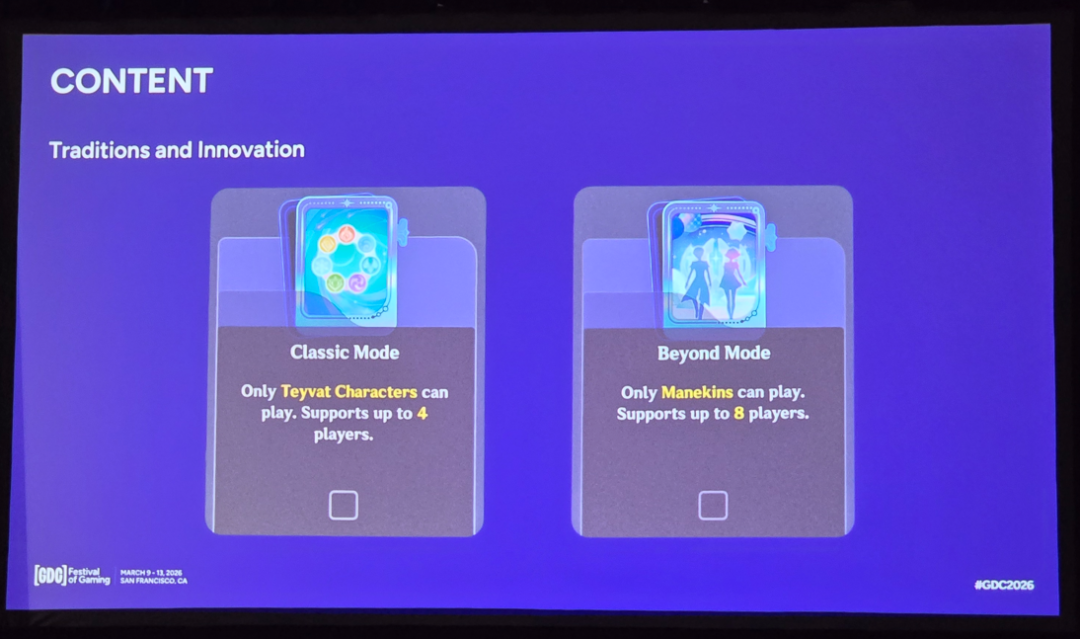
These two modes cater to different player demographics, and we do not favor one over the other. At the same time, new features developed within UGC may also inform Genshin Impact’s core gameplay. For example, the ability for characters to climb certain special surfaces was first tested in the Thousand Star Realm.
In future development, we will need to take both the official Genshin Impact content and the Thousand Star Realm into account when designing features.
To enable creators to produce the content we envisioned, we spent two years developing "Thousand Star Realm": one year on concept design and one year on technical implementation. Now, let’s take a look back at this development journey.
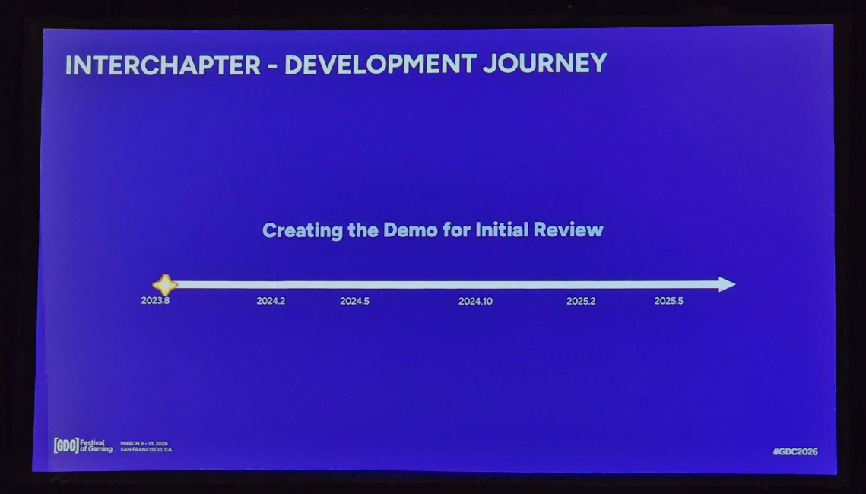
From the very beginning, we leveraged the Unity engine and Genshin Impact’s overall architecture to build the system’s underlying framework. This framework consists of four key elements: Prefabs, Entities, Attributes, and Components.Creators can use prefabs to generate a large number of entities and preload different functional components onto both prefabs and entities. Combined with the visual node system mentioned earlier, developers can dynamically enable or disable components, modify attributes, and implement communication between entities.
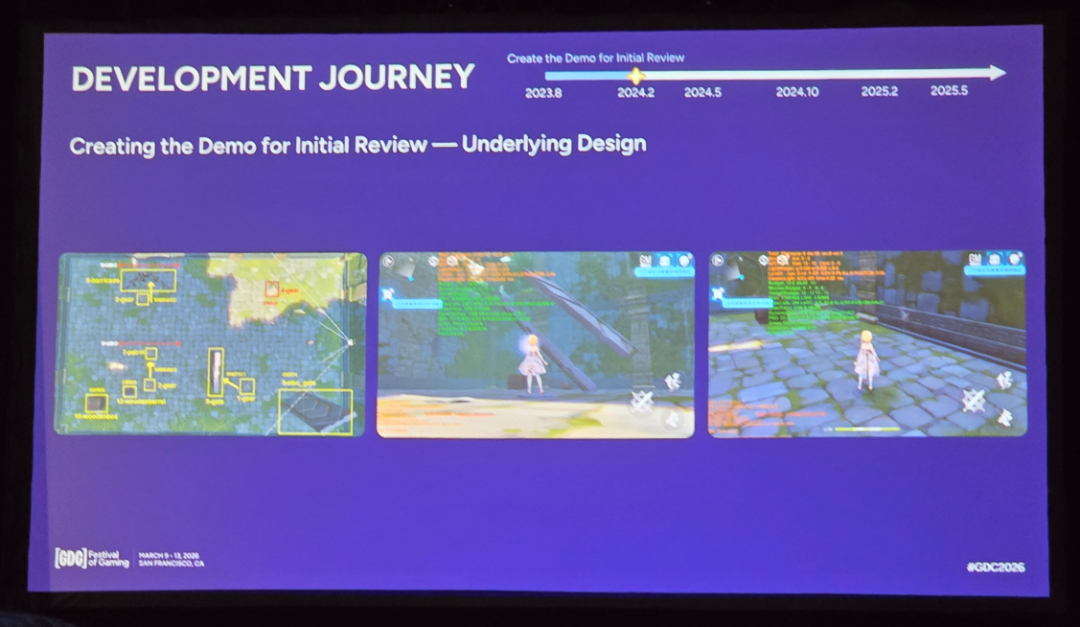
It took us about three months to make the first level basically playable. Although all the objects in it still used predefined data rather than user-generated content, when we saw that the final result offered a gameplay experience completely different from *Genshin Impact*, I knew we were on the right track.
Of course, preparing predefined data and node graphs for these entities is no easy task. Faced with test configurations spanning tens of thousands of lines, we developed a set of internal tools early on to standardize the team’s input. Looking back, these tools may not have been particularly elegant, but at the time, they served as our editors and represented the earliest incarnation of the Thousand Stars Sandbox, so they held great significance for us.
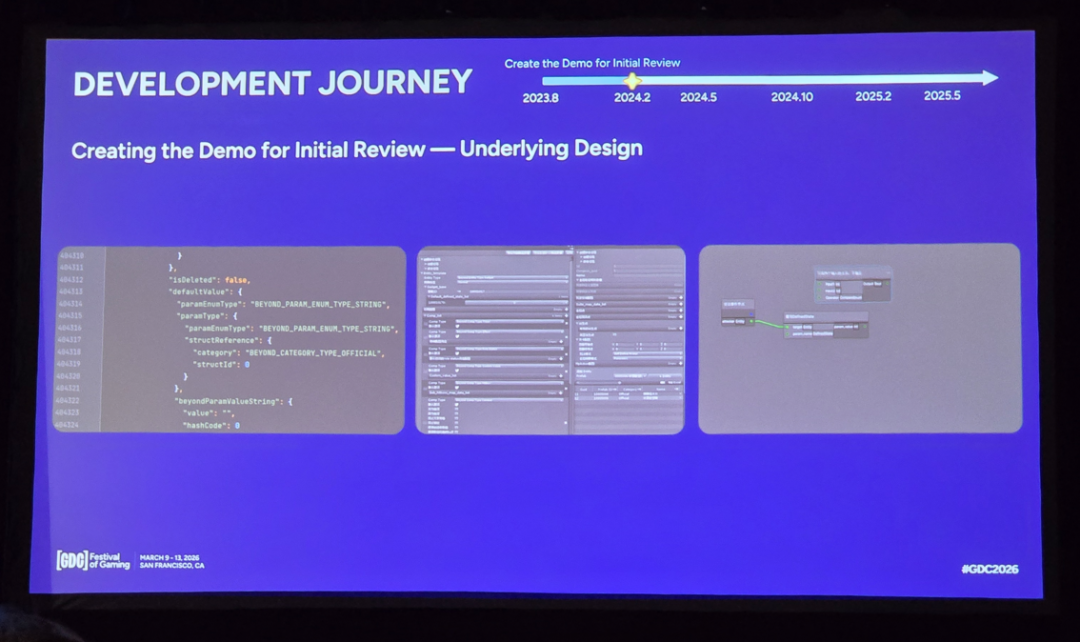
However, based on our development experience with the "Divine Craftsmanship" event, we made a critical oversight: we failed to fully recognize the risks posed by the differences between editor save files and game level save files.
Over the following year, we adopted the so-called "one level, one file" model, meaning that edited data could be downloaded directly and used in-game.
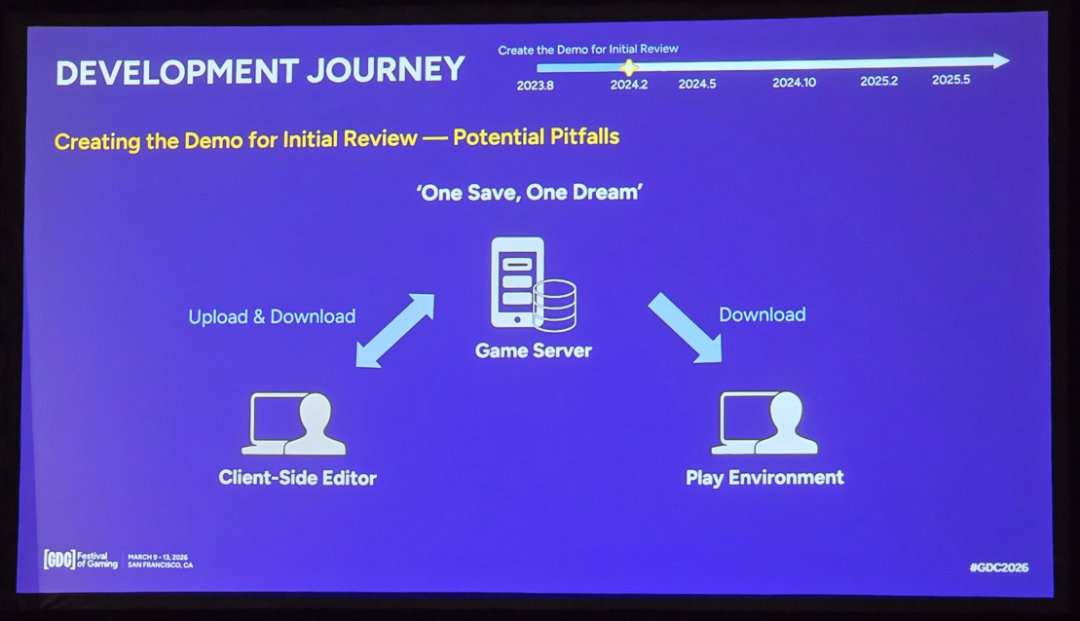
However, this approach soon ran into two major limitations: first, server capacity; and second, the fact that the editor required far more configuration parameters than the actual gameplay data.To ensure that a single save file could be used for both editing and gameplay, we had to continuously reduce the size of the parameter set. It wasn’t until much later that we realized this approach not only made the editing tool less user-friendly but also made it difficult to express complex gameplay logic, ultimately affecting some of the already completed feature designs. This issue was only gradually resolved a year later.
Next, we began designing the modules that are crucial to the gameplay experience: space and time, combat, and interaction.
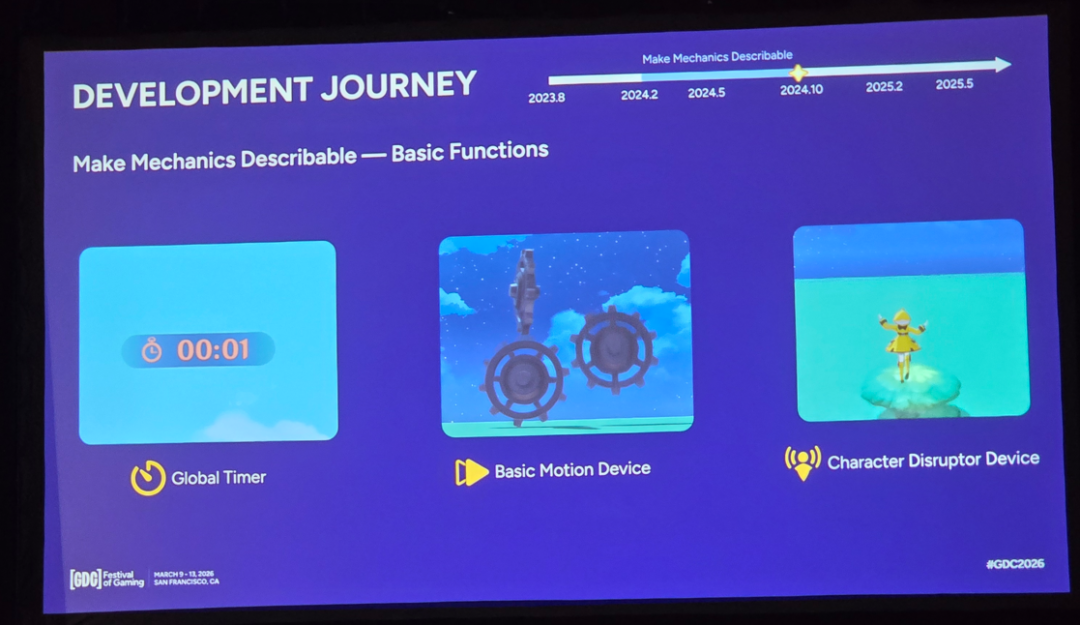
The Space-Time Model is used to describe the relationship between time and position. At its core, it consists of three components: the time function, the object motion function, and the character displacement function. The character displacement function is responsible for handling external forces applied to the avatar; this logic has been partially separated from Genshin Impact’s original 3C system (Camera, Character, Control).
We have also redesigned the motion synchronization system so that object movement data can be calculated directly from a specific timeline, without the need to continuously update the positions of a large number of entities. The latter approach would significantly drain performance and impact other gameplay features. Of course, this solution comes with certain trade-offs; for example, the movement logic for some projectiles or follower entities is not fully compatible. However, at this stage, we believe the benefits of this trade-off outweigh the drawbacks.
For players who prefer combat gameplay, we’ve expanded upon the existing Genshin Impact combat system. Previously, Genshin Impact did not offer direct PvP gameplay, but in the Thousand Star Realm, we had to integrate a system capable of supporting PvP design.
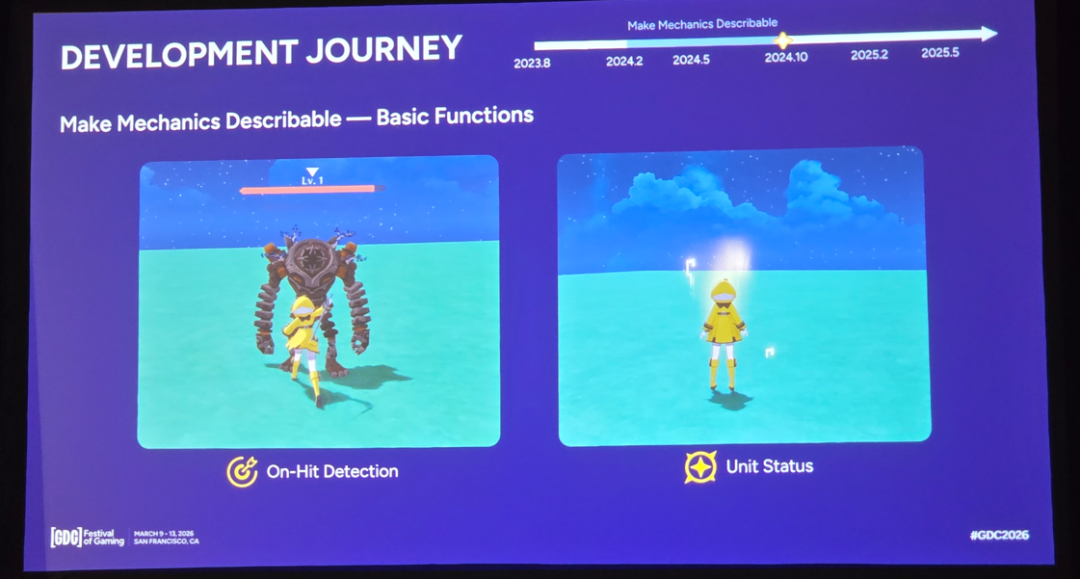
Therefore, in Transcendence Mode, we have implemented several key adjustments: we optimized the process from target locking to damage generation, improved the responsiveness of player movement synchronization, and introduced a universal combat state system to accommodate a wider range of combat scenarios.Currently, creators can use unit status components to build more balanced PvP levels, implementing a variety of mechanics—including effects common in mobile games, traditional MMORPG effects, and even gameplay effects from Genshin Impact. In addition to combat, puzzle-solving and interactive levels are also common gameplay types.
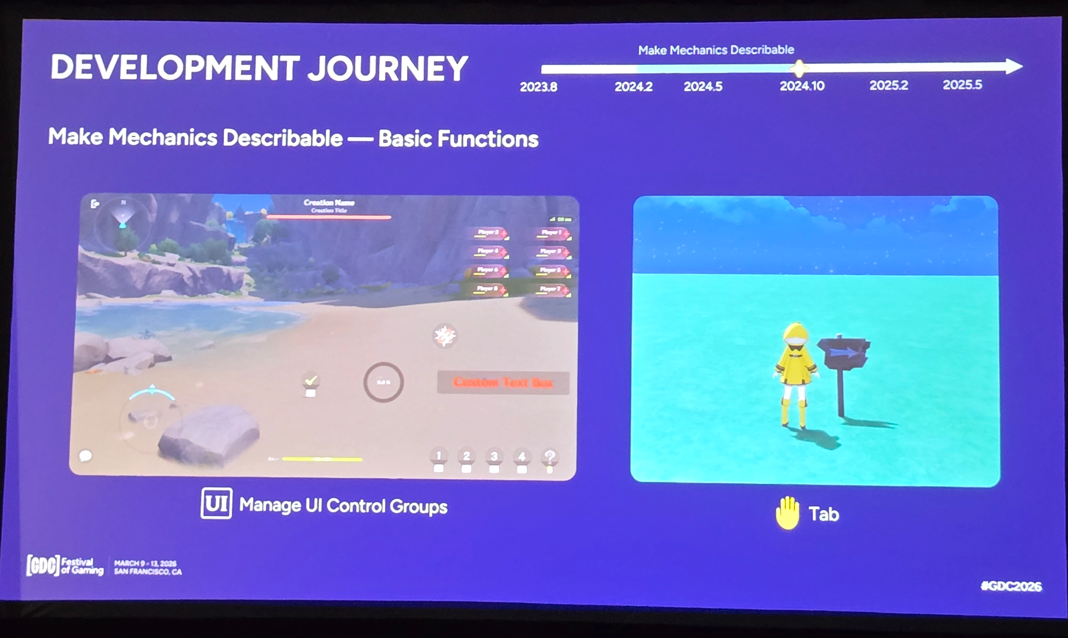
At the same time, we began addressing user interaction issues. The most common requests involved the player interface and interaction buttons, so we broke these down into UI components and a tab control system. The former currently offers relatively basic functionality, but it is sufficient to meet fundamental needs and leaves room for future expansion. As for tab control, we retained the original interaction method from *Genshin Impact*, meaning creators can still select and interact with items using the F key.
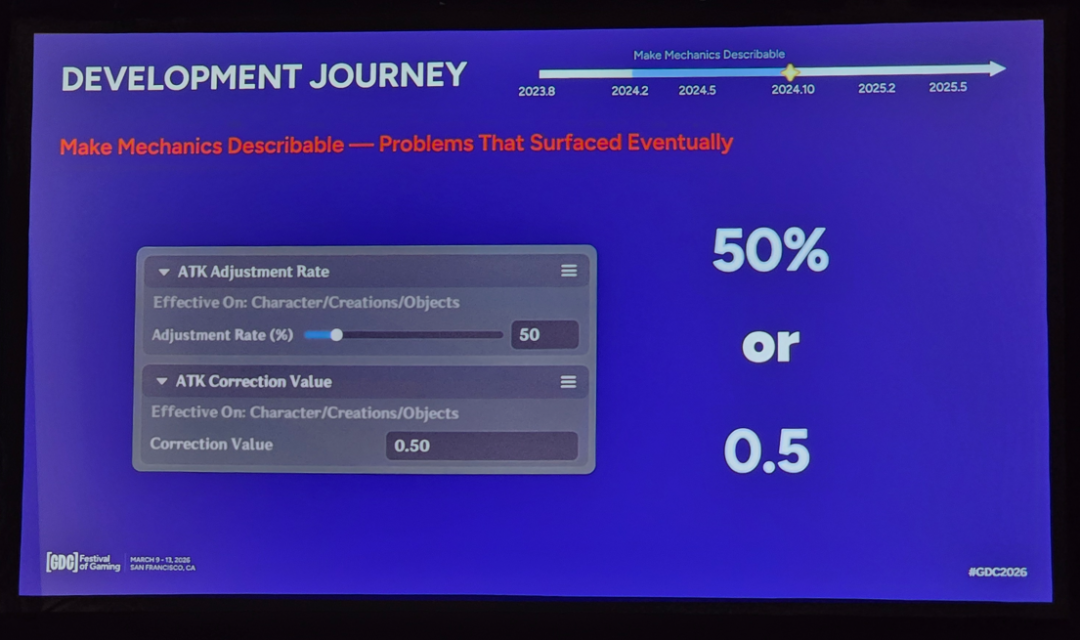
It was during this phase that we once again confronted the issues arising from the "one setting, one file" approach. For example, when a creator enters an attack adjustment rate of 50% or an attack correction value of 0.5, the system logic requires both to be written as 0.5, which does not align with our standard percentage notation. As a result, the editor had to introduce a 100x conversion factor, which inevitably led to discrepancies between the edited data and the runtime data.
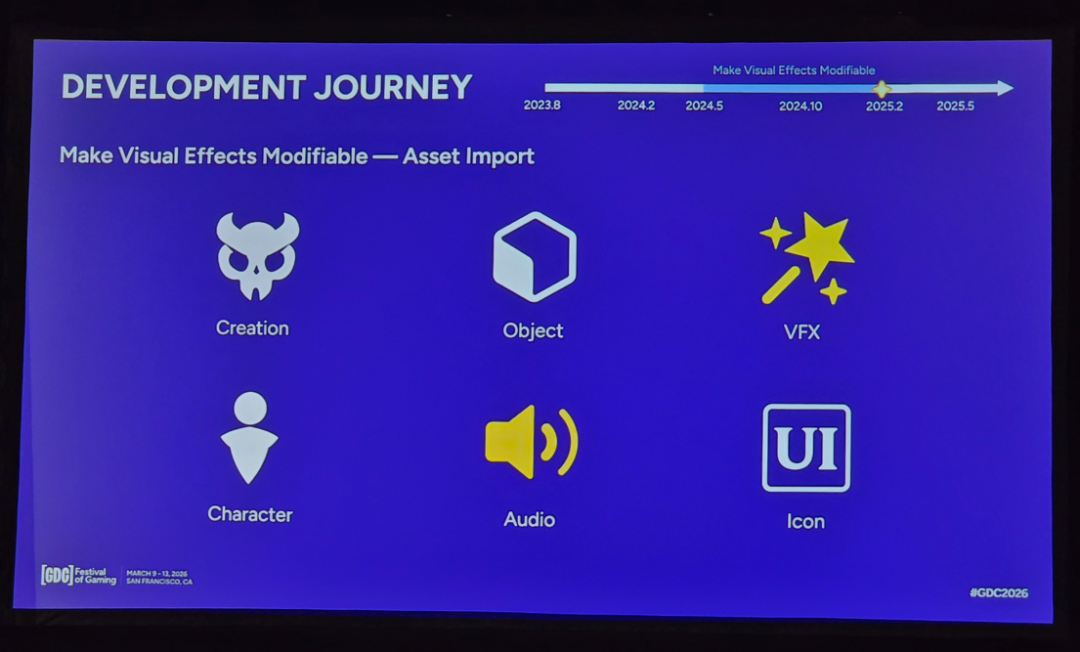
Before tackling this issue, we first leveraged the team’s most valuable resource: tens of thousands of art assets accumulated over the years. While these assets allowed us to skip the most basic production steps, they still required additional processing to function properly in Thousand Star Realm. During this process, we realized that simply reusing old assets wasn’t enough. Although these assets could enhance the Genshin Impact aesthetic, they might also limit creators’ imagination.For example, players might want to design Chuchu with special mechanics, such as triggering additional abilities when their health is low. Therefore, we had to develop new systems to support these creative ideas.
To that end, we have developed a more sophisticated creation system that offers creators greater freedom. In the future, we will utilize a combination of modified legacy assets, new Genshin Impact assets, and materials from upcoming updates. For example, we currently lack visual cues for the Qiuqiu’s charge attack warning; such specialized assets will be added gradually in future updates.
Among all assets, characters are the most unique. Genshin Impact characters feature highly customized skills, animations, and visual designs, but this level of detail also places a strain on performance and limits the number of players that can appear on screen at once. Therefore, in Transcendence Mode, we redesigned the underlying logic to allow for flexible combinations of skill animations. This structure not only increases flexibility but also optimizes memory usage, making it possible for up to eight players to play simultaneously.
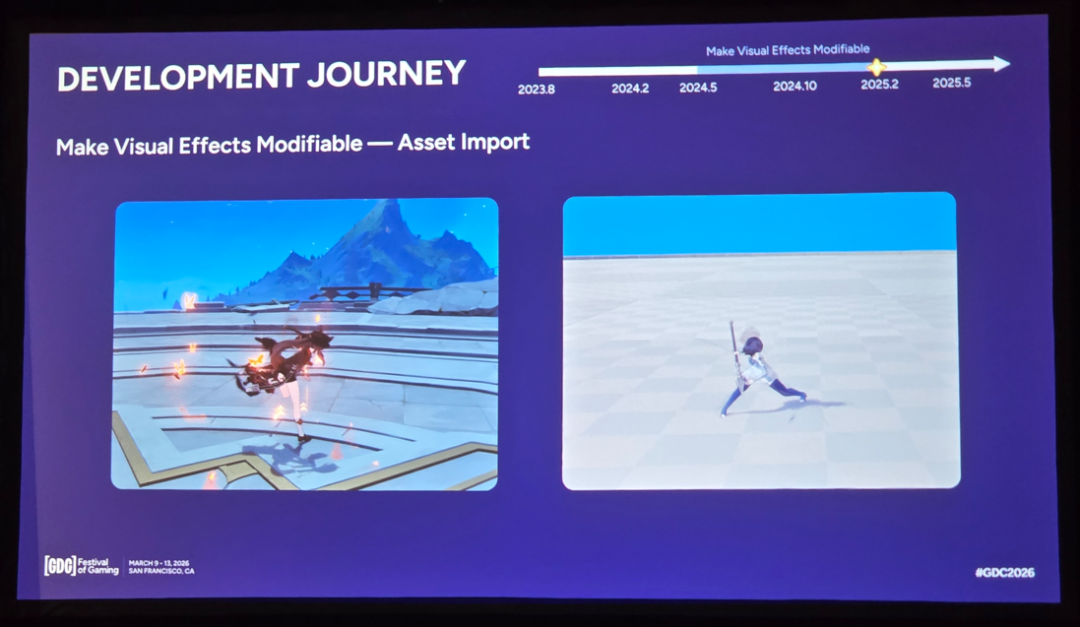
It was during this phase that we finally resolved the core issue of “one file per level”: we significantly increased our investment in object storage services, completely separating editing data from runtime data. This change gave us true freedom in developing core functionality and optimizing the editor experience. Creators can now use either minimal parameter templates or complex parameter-based formula descriptions, and whichever approach they choose, it does not increase the amount of data players need to download.
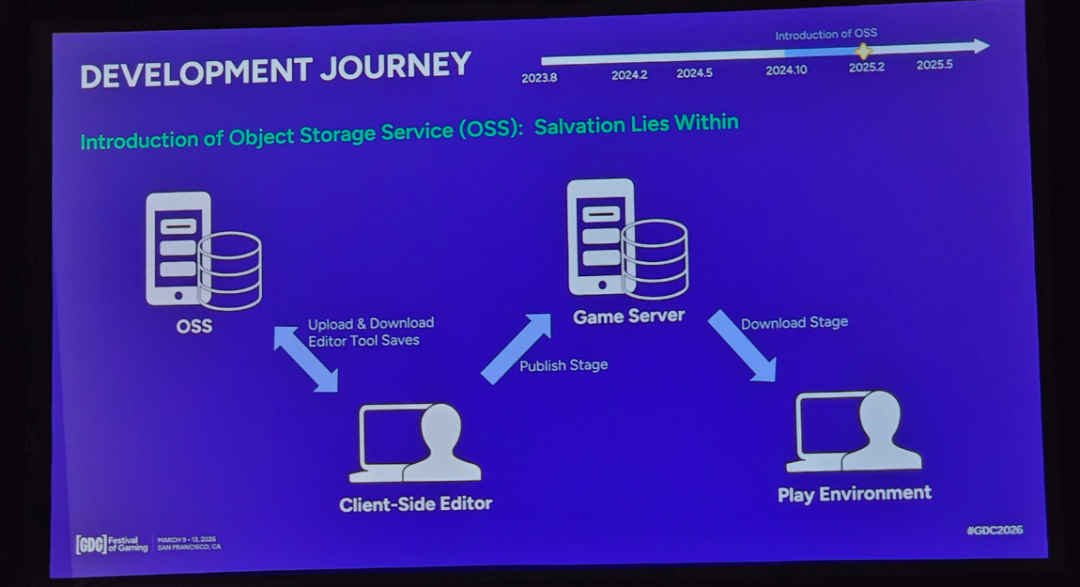
Once the editing environment is completely separated from the game runtime, we can implement larger-scale feature encapsulation. To help creators quickly build content within established gameplay categories, we’ve begun incorporating a series of convenient systems. For example:
A new width system, a cluster system for quickly switching combat abilities, a shield system that enables more flexible damage calculations, a loot, equipment, and item system that supports the RPG progression loop, and a custom deck system for roguelike gameplay.
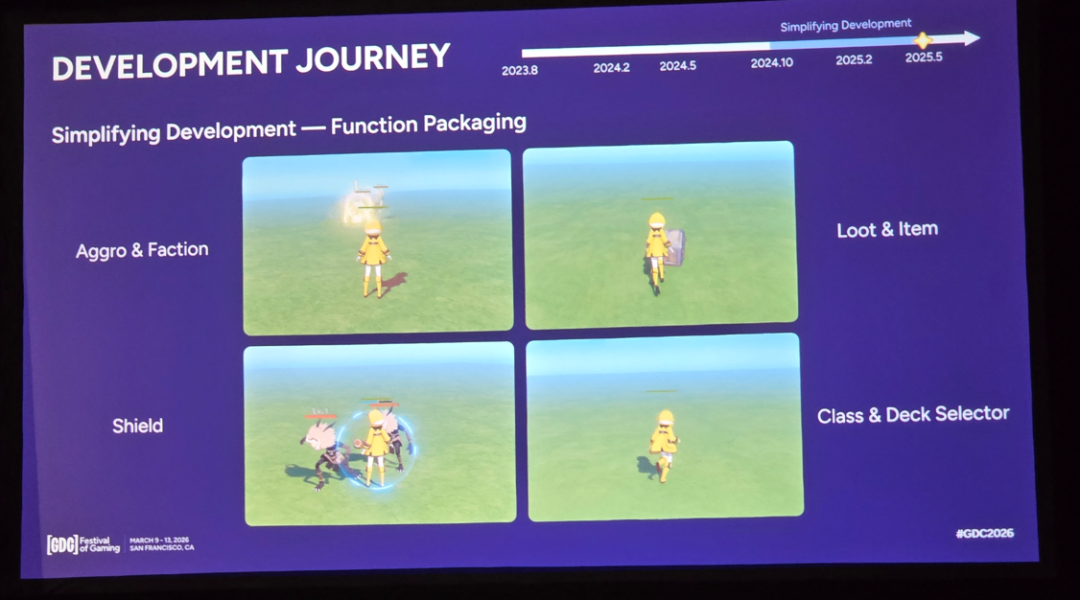
These features are designed for different types of gameplay, but they can be combined to create more complex game scenarios. We hope they will help creators bring their designs to life more easily, and we look forward to seeing people push the boundaries of existing frameworks to create truly innovative new forms of gameplay.
04
Make Players Fall in Love with the Thousand Star Realm
For creators who invest a great deal of time in designing levels, it goes without saying that they don’t want their work to be experienced just once. That’s why we’ve added end-game rewards and incentive systems. For example, the achievement system allows creators to design more challenging levels, while leaderboards provide players with a platform for competition and interaction; together, these features offer competitive players long-term motivation.
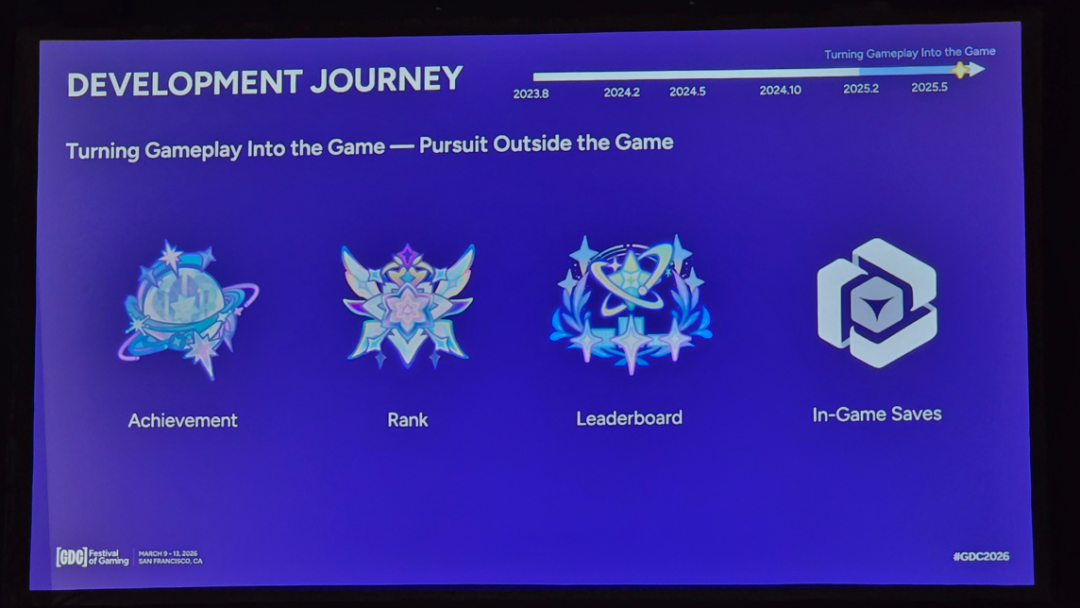
In addition, we’ve implemented a custom save system that allows players to flexibly control the length of each match, thereby supporting more expansive level designs. A clearer objective structure and a tighter gameplay pace also significantly enhance the game’s appeal.
At this point, we have largely resolved the technical issues related to content creation. Next, we need to consider how players will engage with the Thousand Star Realm.
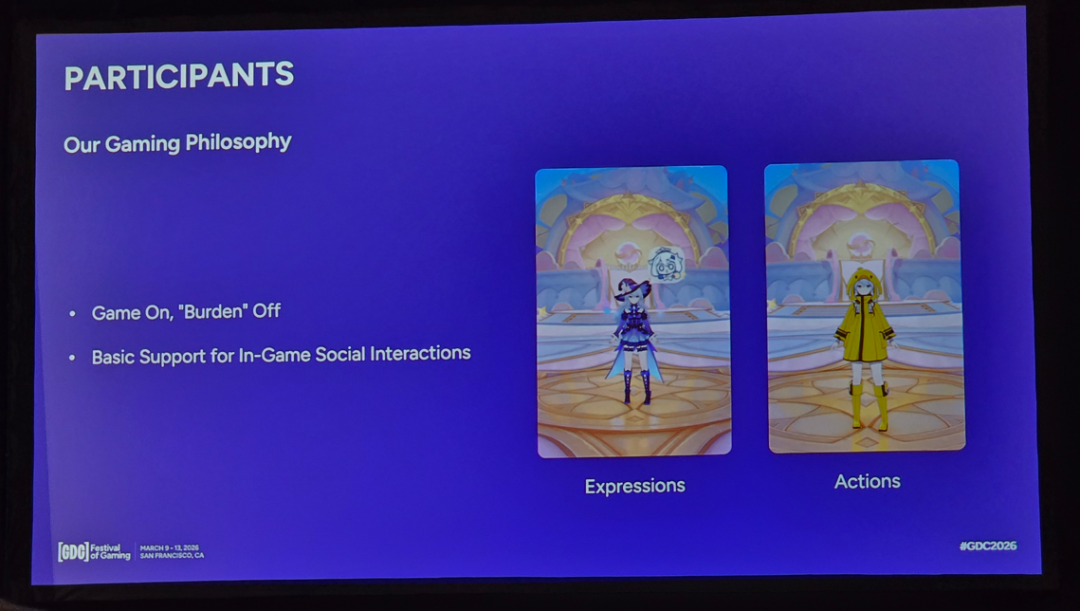
In a UGC system, there are bound to be significant differences in players’ interests and playstyles. We don’t want to force every player to participate, so the progression system in *Thousand Star Realm* remains relatively independent from the main *Genshin Impact* game to avoid placing an additional burden on players who log in only occasionally.
However, for players who love UGC content, we also provide opportunities to express their individuality through decorative elements such as lobbies, skins, emotes, and expressions.
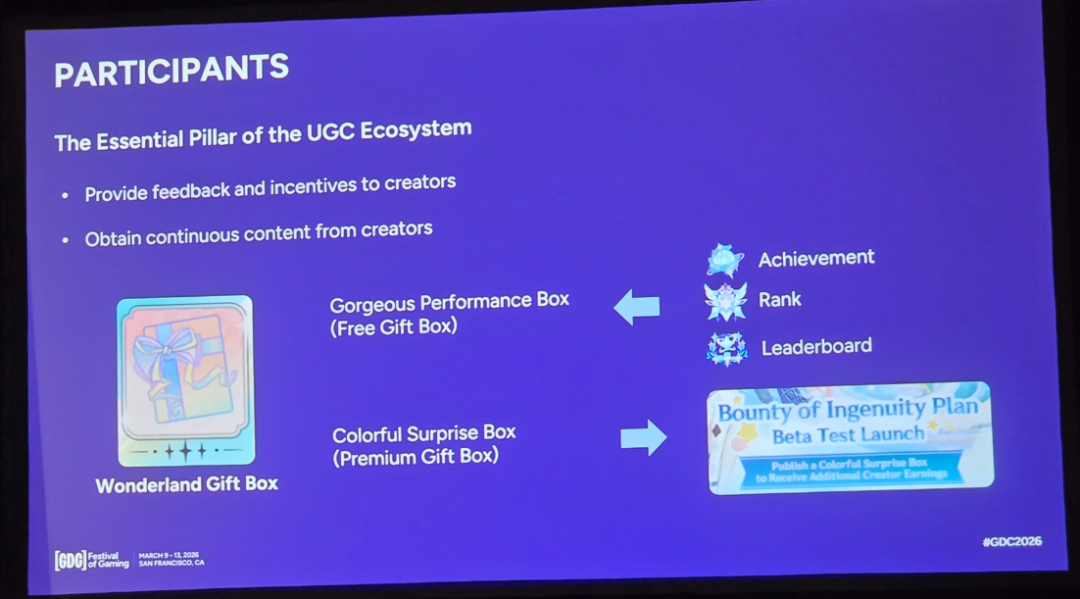
Participants are not just players; they are also key evaluators within the UGC ecosystem. Their gameplay data directly influences creators’ incentives, and the rating system affects how frequently subsequent players visit the levels. As the gap between creators and players narrows, both sides need more direct ways to interact.
Consequently, the "Surprise Gift Box" system was introduced. Creators can give free gift boxes to players who complete challenges, or sell additional gift boxes. Players receive extra rewards when they purchase gift boxes, and the proceeds from these sales are converted into financial support for creators through the "Ingenuity and Abundance Program." This system further strengthens creators' motivation and expands their influence.
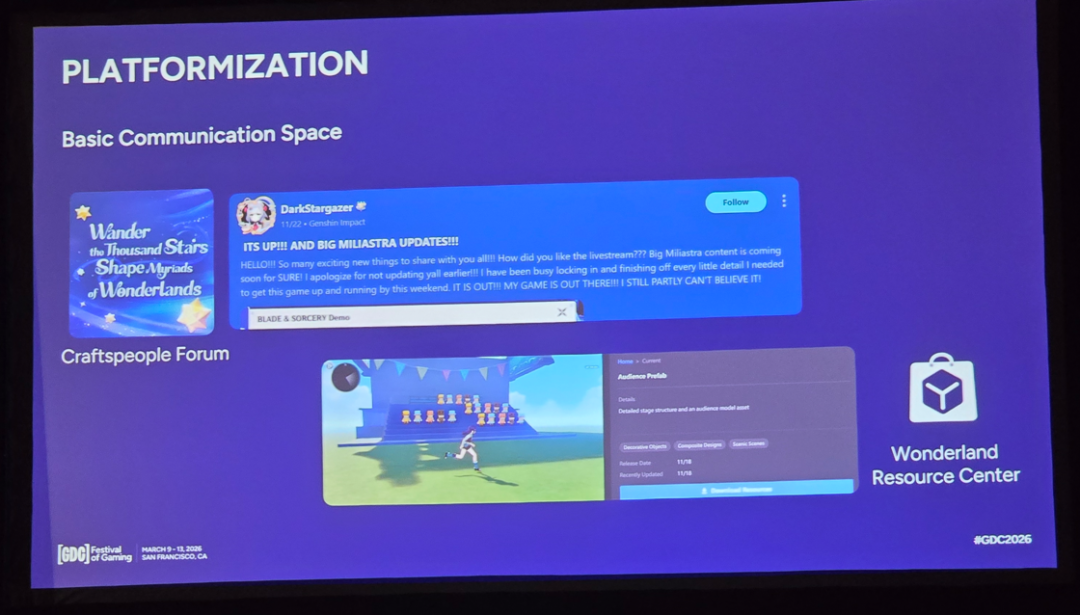
The final key issue is platformization. A mature platform must support user communication and sharing. In addition to interactions among regular players, creators also need to exchange experiences and share their work.
To this end, we have created a dedicated discussion forum where creators can exchange ideas and learn from one another. We have also established the Qiyu Asset Center for sharing level saves and resources. Just as open-source code drives the development of the software ecosystem, we hope this sharing mechanism will inspire even more innovation.
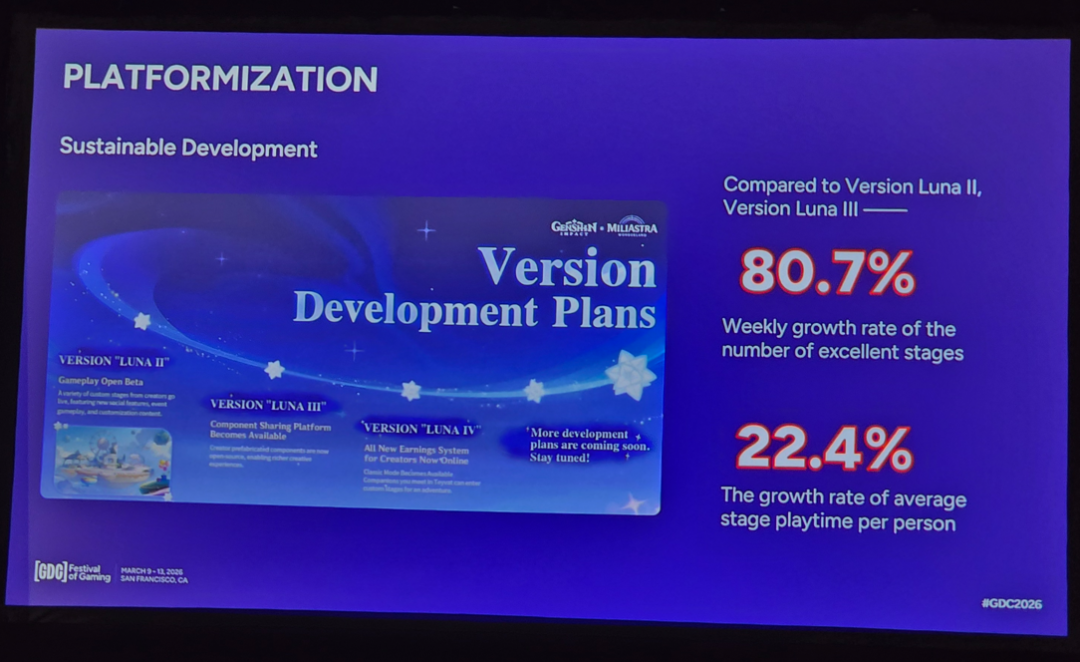
The key difference between a platform and a one-off event lies in its long-term operational goals. If "Thousand Star Wonderland" cannot sustain its growth, it will become a limited-time event similar to "Divine Craftsmanship." Therefore, we will continue to listen to feedback from creators and players, constantly refine the system, and gradually build "Thousand Star Wonderland" into the platform everyone is looking forward to.
05
The Past and the Future
After two years of development, *Thousand Star Wonderland* unveiled a host of delightful innovations in its very first month of launch.
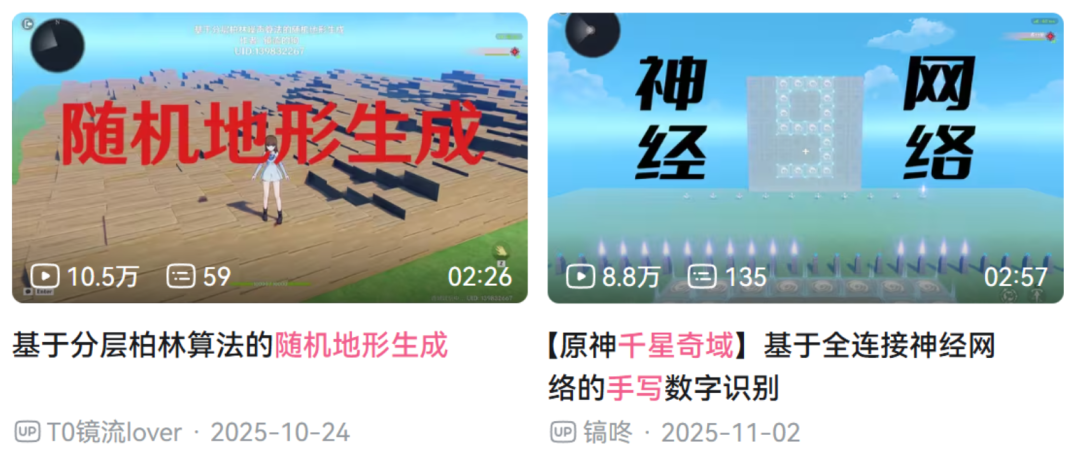
What first caught our attention was a group of technical experts. To them, Thousand Star Realm is more like an ever-changing playground. Some players have recreated complex CPU logic, others have used fully connected neural networks to recognize handwritten digits, and some have even implemented random terrain generation using a layered Berlin noise algorithm. These creations are truly incredible.
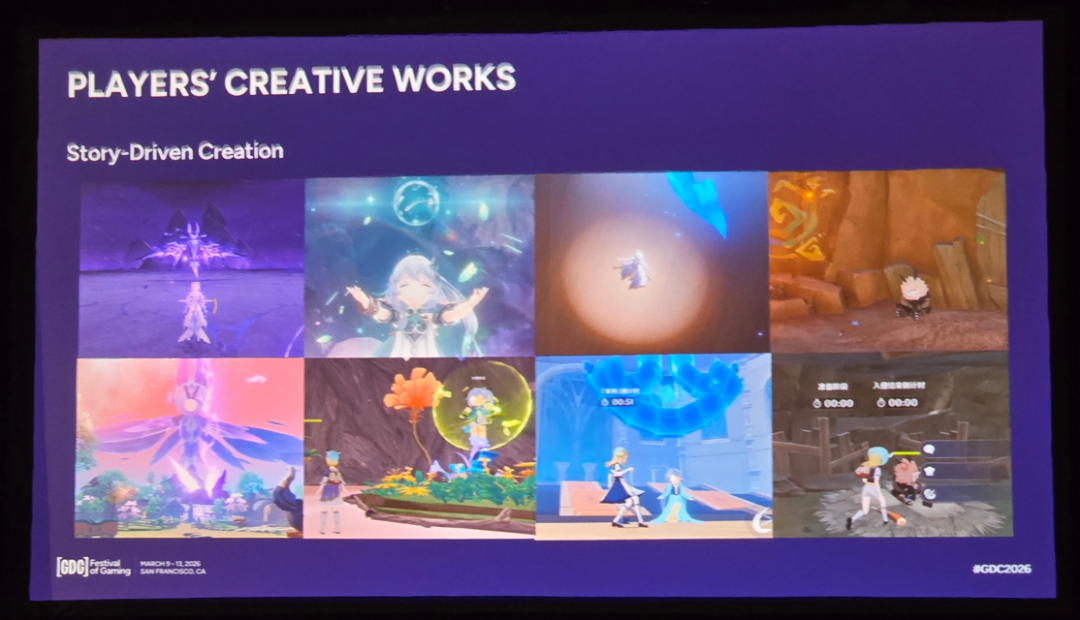
This was followed by a wave of imaginative narrative creators. Some sought to rewrite Teyvat’s history, giving characters who had died in the main storyline a different fate. Their creativity was even on par with that of Genshin Impact’s story team.
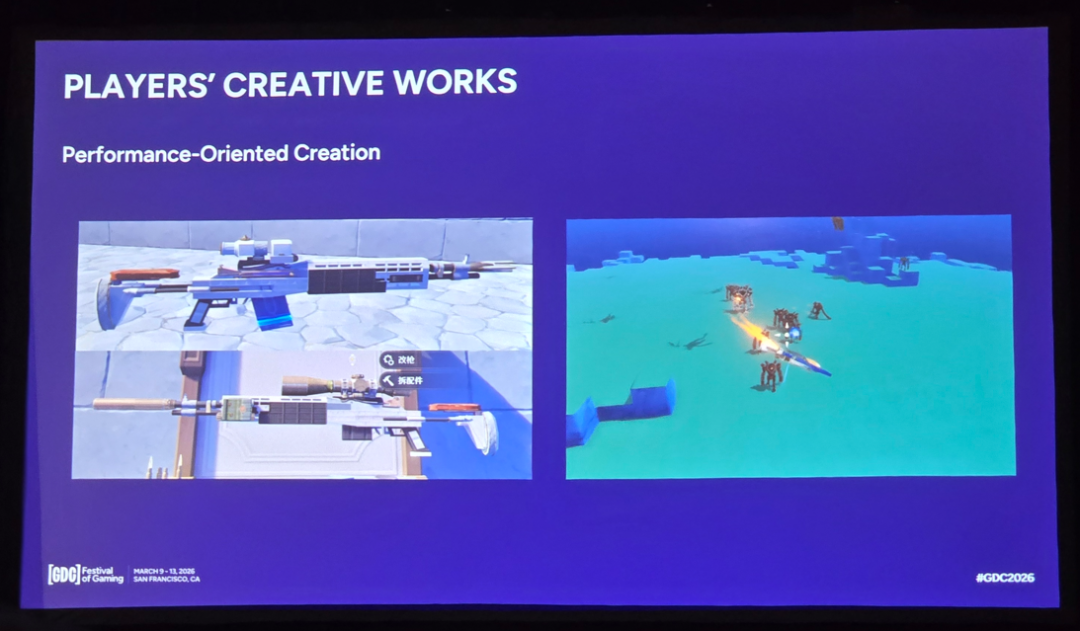
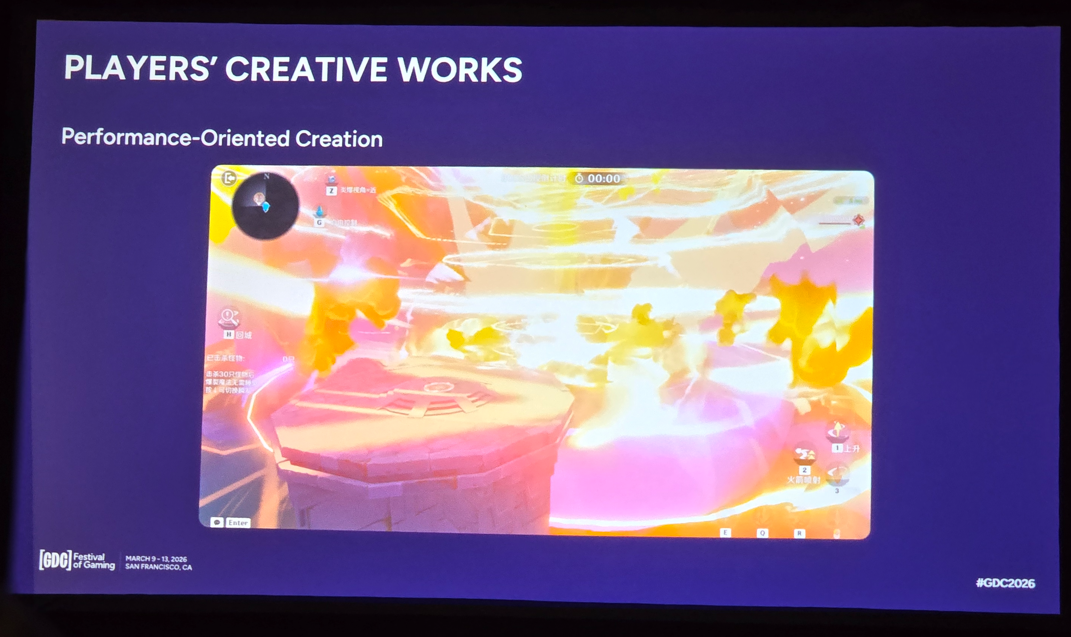
In addition, there is another surprising group of creators: visual effects artists. Just when we thought creating modern firearms in "A Thousand Star Realms" was already impressive enough, they went on to create a wealth of dazzling skill effects and explosive sequences. The richness of this content far exceeded our expectations. These works not only showcase creativity but also reflect the creators’ patience, hard work, and talent. We will continue to fully support these outstanding works.
Based on these experiences, the next phase of development for "Thousand Star Wonderland" has been finalized and will be rolled out in subsequent updates. We will focus on optimizing editing features, addressing issues such as cumbersome operations, a complex UI, difficulties in progression management, and unclear standards for special effects.
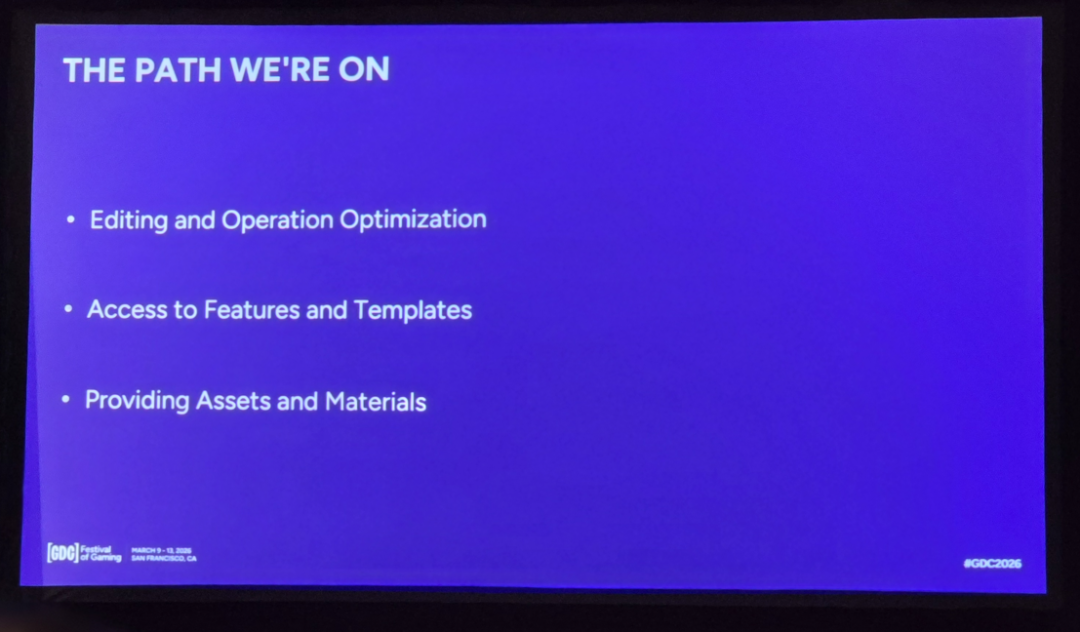
Regarding assets, many creators have reported that the limited variety of materials restricts their creative freedom. Therefore, we are actively migrating assets from *Genshin Impact* to Thousand Stars Sandbox and developing a more flexible new asset system that will give creators finer control over parameters. At the same time, to reduce repetitive work, we plan to provide more template tools—such as a visual effects preview button—and optimize features for multi-user collaborative editing and object movement control.
However, simply planning a few versions is far from enough. We must also consider how future technological trends will impact our products. Template tools represent an industrialized approach to game development; they handle repetitive tasks, allowing creators to focus on the design aspects that truly matter.
In the future, we will also introduce a Programmatic Content Generation (PCG) system. In the Moon 4 update, this feature has already entered its first phase. Going forward, creators will only need to set up the core gameplay components, and the system will automatically fill in the environmental details.
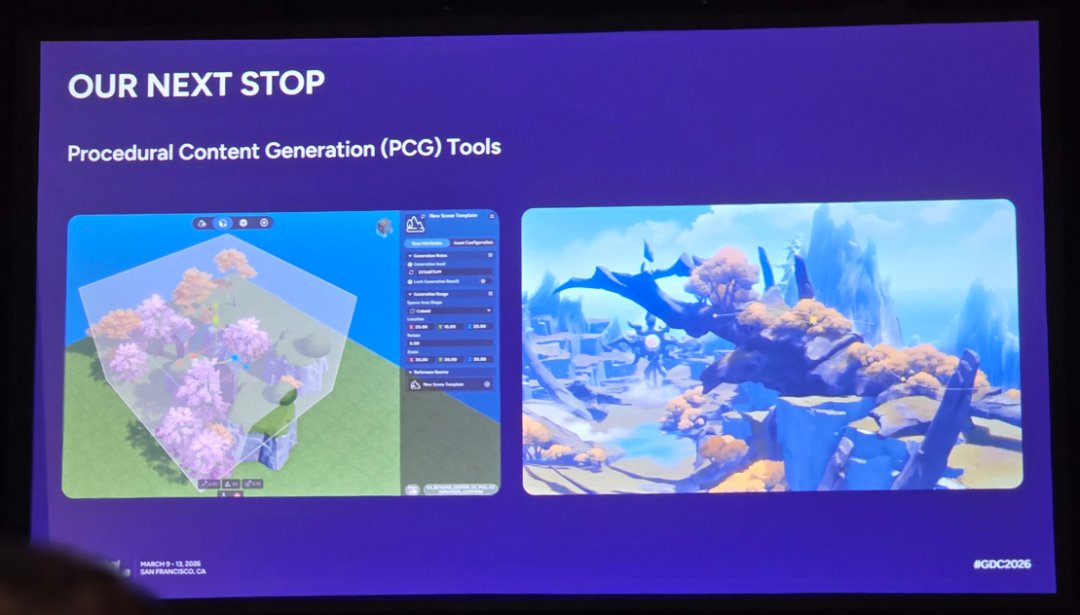
If this trend continues, PCG may eventually incorporate AI technology. Even so, AI is merely a tool. Its purpose is to reduce repetitive work, not to replace creators.
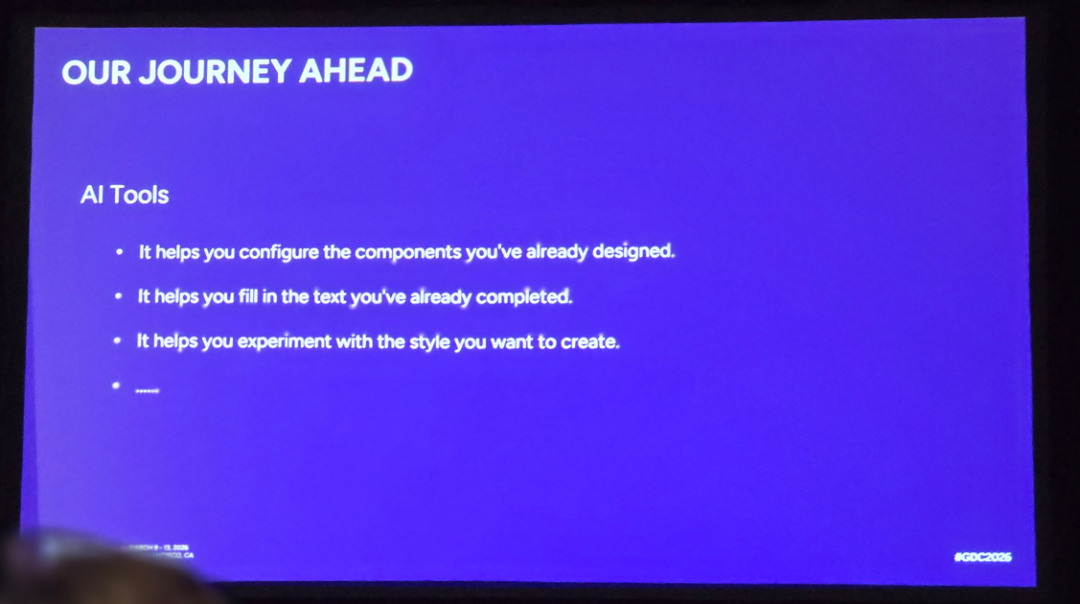
AI may not be able to design a complete level for you, but it can help you quickly adjust the node structure; it may not be able to write a truly compelling story, but it can assist with text input; it may be able to experiment with new art styles, but the final decision still rests with the creator.
Because AI cannot replace human emotion and inspiration. What we truly hope to inspire is human creativity, not AI itself.
In the Thousand Star Realm, we have already seen a wealth of novel, exciting, and imaginative works. By continuing to develop our UGC system, we believe new creative trends will continue to emerge, and we will work alongside creators to build this world.
Most importantly, if game companies want to continue earning user recognition in the future, they must not only focus on creating content for players but also consider how to collaborate with them to create content together.
Thank you all for watching this presentation.
原创文章,作者:游茶妹儿,禁止转载:https://youxichaguan.com/en/archives/195642