
On April 21, Haibi Games’ new title *Dicero!* (Six Heroes) launched worldwide.
As of May 3, less than two weeks after its launch, the game has entered the Top 20 free game charts in nearly 20 countries and regions, with over 2.7 million downloads and revenue exceeding 17 million yuan (Source: DianDian Data; excludes data from the domestic version). The domestic mini-game version has also performed impressively, currently ranking as high as No. 25 on WeChat’s Top-Selling Mini-Games chart.
As a leading developer in the global hybrid casual gaming sector, Habby Games has consistently been the focus of the industry. From its 2019 phenomenon *Legend of Archery* to the 2024 hit *Adventurer’s Diary*, nearly every title in its portfolio has garnered significant attention and has even become a benchmark that others strive to emulate.
However, *Heroes of 66*, which is now hitting the screens, seems to take a slightly different approach from their usual hit formula.
01
The Hit Formula Strikes Again
Haibi Games’ titles all follow a very consistent formula: “casual gameplay + roguelike + RPG progression.”
Since the release of *Legend of the Bow*, Haibi has repeatedly refined and gradually optimized this winning formula, eventually developing a distinctive product style. As expected, this new title continues to build on that foundation.
The core of its casual gameplay is quite novel: in combat levels, combat power is determined by rolling dice.Up to five dice are used per match. At the start of each round, the system rolls the dice randomly. Players then have three re-roll opportunities to re-roll the value of a single die. The final combat power for that round is determined by multiplying the sum of all dice values by the multiplier corresponding to the dice configuration.

The dice combinations here are similar to the well-known poker hands: High Card, One Pair, Two Pairs, Three of a Kind, Straight, Full House, Four of a Kind, and Five of a Kind. The corresponding payout multipliers are 1, 1.5, 2, 2.5, 3, 3.5, 5, and 10.
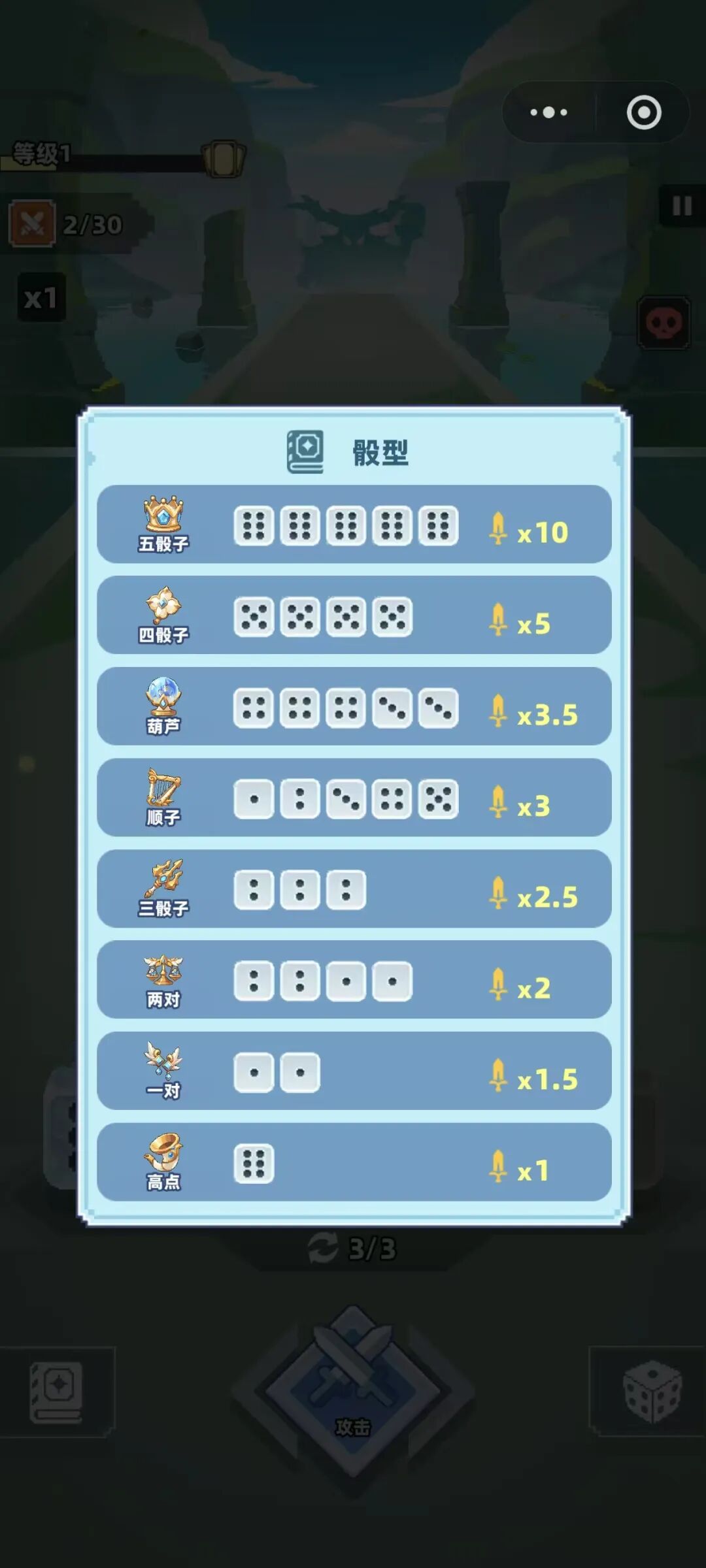
This also means that every round of combat is highly random; only by rolling higher numbers and achieving rarer combinations can you deal more damage. However, enemies within a single playthrough grow increasingly powerful, so you must gradually increase the protagonist’s base damage to better handle the tougher enemies that lie ahead—which naturally introduces the Roguelike element.
By defeating enemies and accumulating experience, players can unlock the “Roguelike” options. In addition to standard character-related options such as “Increase Normal Attack Damage” and “Restore Health,” these options primarily involve dice attributes: for example, unlocking additional dice;increasing the multiplier for all dice combinations; changing the values of specific dice faces to 6; increasing damage when specific dice form a combination; gaining a sword aura that allows for a separate sword aura attack after a normal attack; and so on.
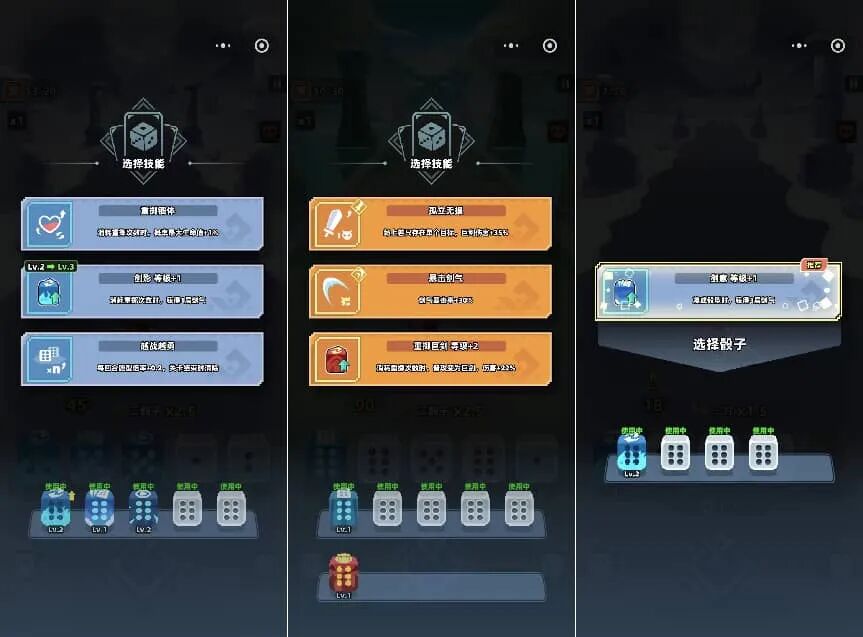
In other words, the in-game progression mechanics in this game no longer revolve around deck-building; instead, players build their combat power by modifying die attributes and enhancing die rewards.
The combination of deck-building and roguelike gameplay is sure to remind players of the previously popular *Clown Cards*, but in the mobile gaming market, this approach is still considered quite novel.
It comes as no surprise that Haipai would launch a product with such a high degree of “randomness.” After all, last year they partnered with 111%, a Korean studio known for its “random gameplay,” to establish a joint venture in Singapore.Since then, Haipai has tested several new games featuring “dice” elements. In addition to *Six Six Heroes*, which we’re discussing today, there’s another title called *Zoo Dice: Arena*, which has already undergone small-scale testing in Southeast Asia.

《Zoo Dice: Arena》
It can therefore be inferred that the collaboration between the two major Chinese and South Korean mobile game developers is progressing smoothly and has likely already entered the practical testing phase.
Returning to the game itself, the strength of *Heroes of 66*’s gameplay combination lies in the fact that, compared to traditional deck-building mechanics, its dice-rolling and dice-matching mechanics are easier to grasp and more intuitive, significantly lowering the barrier to entry for the game’s strategic system. Furthermore, the game’s design, which randomly determines combat statistics, means players can replay the same level countless times, enjoying a different combat experience and playstyle each time.
However, the drawbacks are also evident. Based on past projects, if the process were truly completely random, it could lead to excessive numerical fluctuations and an unbalanced player experience; but if the system were to control the probability of specific numbers, players might discover hidden patterns—such as a particular die consistently rolling the same number—which would cause them to question the game’s fairness.
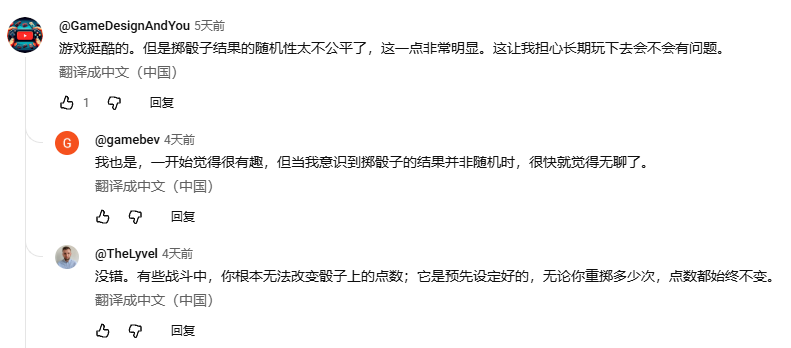
Comments from some international players
Furthermore, prior to this, 111%’s hit game *Lucky Defense* had already faced widespread criticism from players over issues with probability discrepancies in its rune and pet systems. As a result, striking a balance between the randomness of the gameplay experience and commercial efficiency remains a significant challenge for games of this type.
02
Transition to a commercial model
In addition to new experiments with core gameplay, the most notable changes in this game lie in the restructuring of its progression mechanics and monetization systems. Although Haibi Games has long been regarded within the industry as a leading “hybrid casual” game developer, it is clear that the company does not intend to stop there.
Dave Pan, Head of Business Development at Haibi, has mentioned on multiple occasions in previous talks that the team has been continuously exploring ways to push the boundaries of the casual-casual hybrid genre, and that they prefer to define their products as “midcore for dummies.” He also noted that as long as long-term user retention can be maintained, game design and monetization models can break free from conventional frameworks to allow for more experimentation.
Many past products have embodied this product philosophy, and now the launch of *Heroes of 66* offers an even more vivid illustration of what it truly means.
If we compare this game to HeiBi’s previous titles, we’ll find that in their past games, watching ads to earn stamina and opening free treasure chests were standard features of their rewarded ad placements. In this new game, however, almost all of these elements have disappeared.
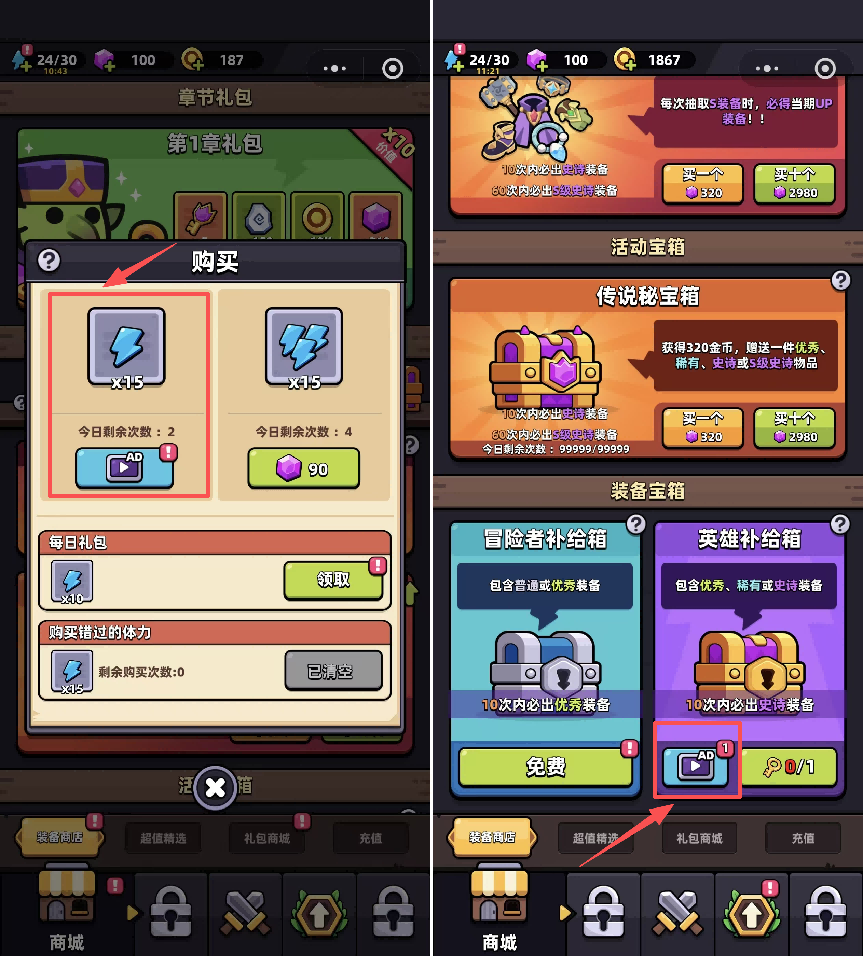
Ad placements in *Adventurer’s Diary*
On the one hand, the system provides players with a significant surplus of stamina through various mechanisms—such as idle rewards, resource recovery, and email resends—thereby completely eliminating the need to watch ads to earn stamina.
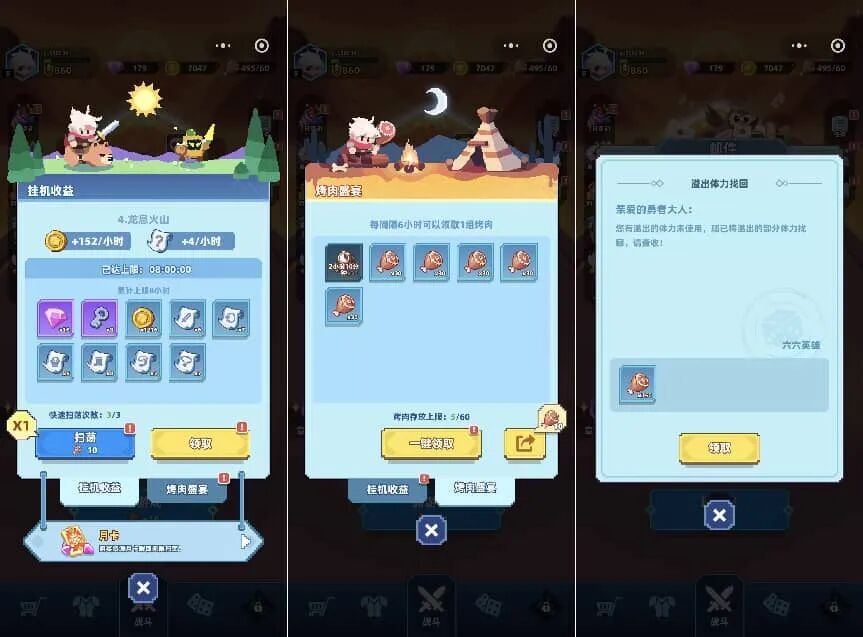
Excess Stamina
On the other hand, aside from the keys earned as level rewards, players can no longer open chests by watching ads to replenish their resources; the drop rate for chests is also tied to the chest level—the more chests players open and the higher the chest level, the better their chances of obtaining higher-tier gear.
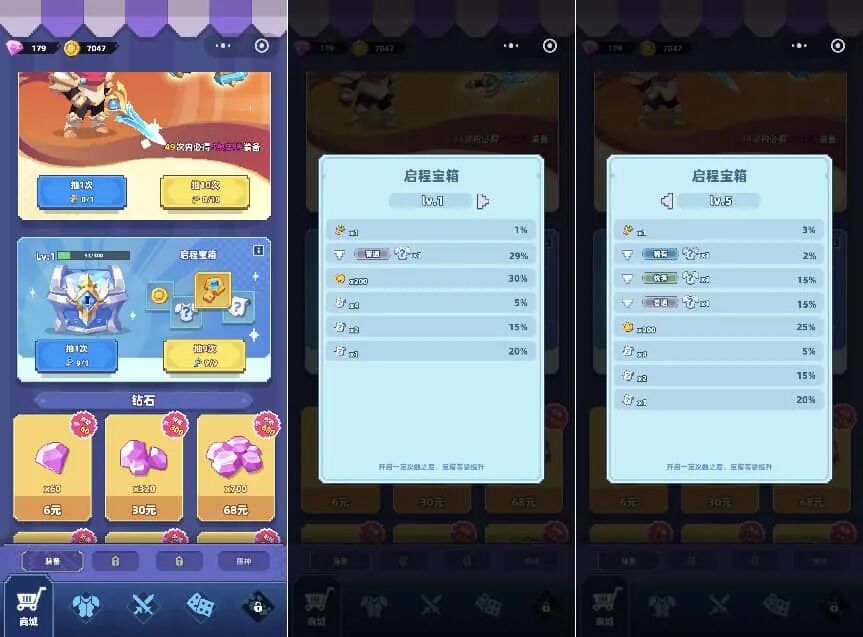
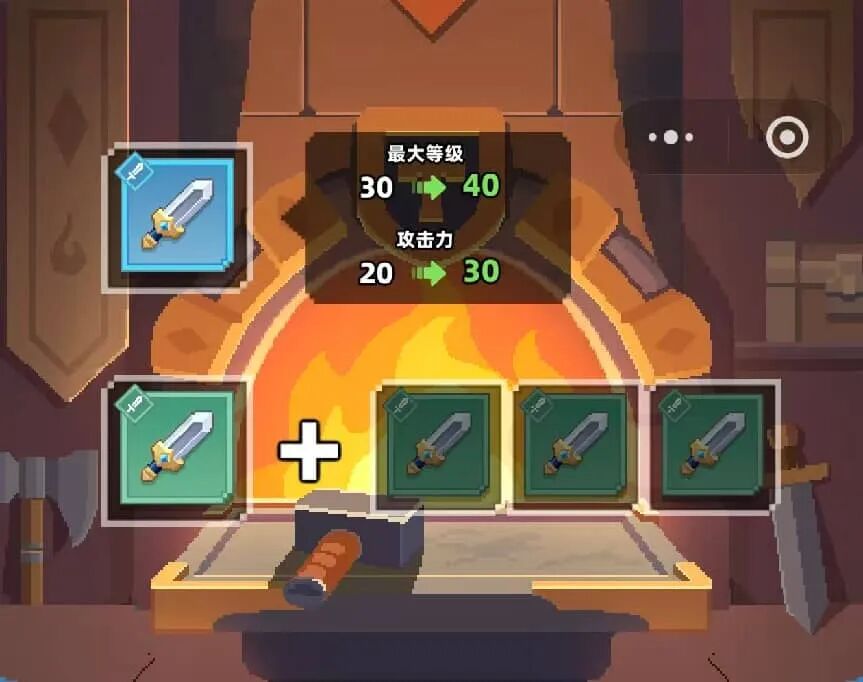
At the same time, the resource requirements for character progression have become more demanding; the previous “three-for-one” equipment upgrade rule has been replaced by a “four-for-one” system, further increasing the depth of progression and the resource gap.
This series of adjustments has directly increased the game’s progression depth and monetization intensity. With stamina limits removed, players are freed from the level-stuck pacing typical of traditional casual games, and their progress will accelerate significantly. They will soon be guided into a phase of off-game progression and resource consumption. In this progression phase, resource consumption accelerates, and the ad-based replenishment channel is completely blocked; players who want to obtain more gear and quickly boost their combat power have no choice but to turn to in-app purchases.
Given the current market landscape, characterized by intense competition for existing users and a scarcity of new users, the emergence of this strategy comes as no surprise. Its core logic is to avoid getting caught up in the vicious cycle of the battle for traffic by deepening in-app monetization and increasing user ARPU.
However, this transition also carries significant risks. The success of Haibi’s past hit titles stemmed from their seamless integration of a gameplay formula combining “casual gameplay, roguelike elements, and RPG progression” with a hybrid monetization model featuring “ads and in-app purchases.”
The core gameplay, which combines casual elements with Roguelike mechanics, features a low barrier to entry and high entertainment value, enabling the game to quickly attract a massive audience of casual and light users. Since these casual users have a low willingness to pay, advertising monetization is an ideal way to capture the value of their traffic while maintaining their daily engagement.The progression system establishes a content foundation for long-term retention. While extending the user lifecycle, it precisely identifies core players, guides them toward monetization, and boosts the product’s revenue.
However, in *Heroes of 66*, while the core gameplay mechanics and user acquisition creatives remain largely unchanged, the monetization strategy has undergone a complete overhaul. Casual players accustomed to “watching ads to progress” are highly likely to struggle with the game’s intense progression and monetization mechanics upon entering the game, and may even be driven away by them. This is likely to have a significant impact on the game’s early user base and daily active user numbers.
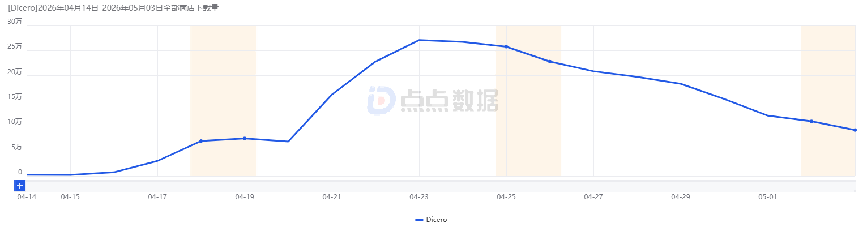
“Dicero!” Overseas Download Statistics, Image Source: DianDian Data
With the user base shrinking, the company can only rely on its core users to sustain its overall revenue. In the past, Haibi had already maximized user value in the hybrid casual gaming segment; the challenge of further increasing ARPU on this foundation is self-evident.
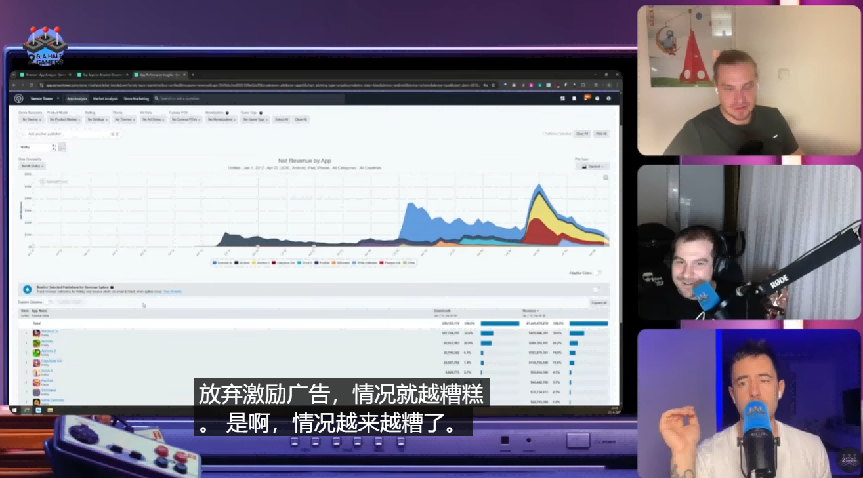
Consequently, some industry professionals both domestically and internationally have expressed a very pessimistic view of this transformation.
图源:two & a half gamers
Of course, the game is still in the early stages of its launch, with user numbers gradually increasing. For a product designed for long-term success, it is too early to pass final judgment at this point. On the bright side, as long as the product can boost core user retention and continue to encourage player spending through future updates and promotional activities, there is still a possibility of achieving sustained growth.
Conclusion
According to data from AppMagic, the cumulative revenue of Haipai’s products has surpassed $2 billion (13.7 billion yuan), a figure that clearly demonstrates the company’s track record of creating hit titles in the hybrid casual gaming sector and its strong industry position.
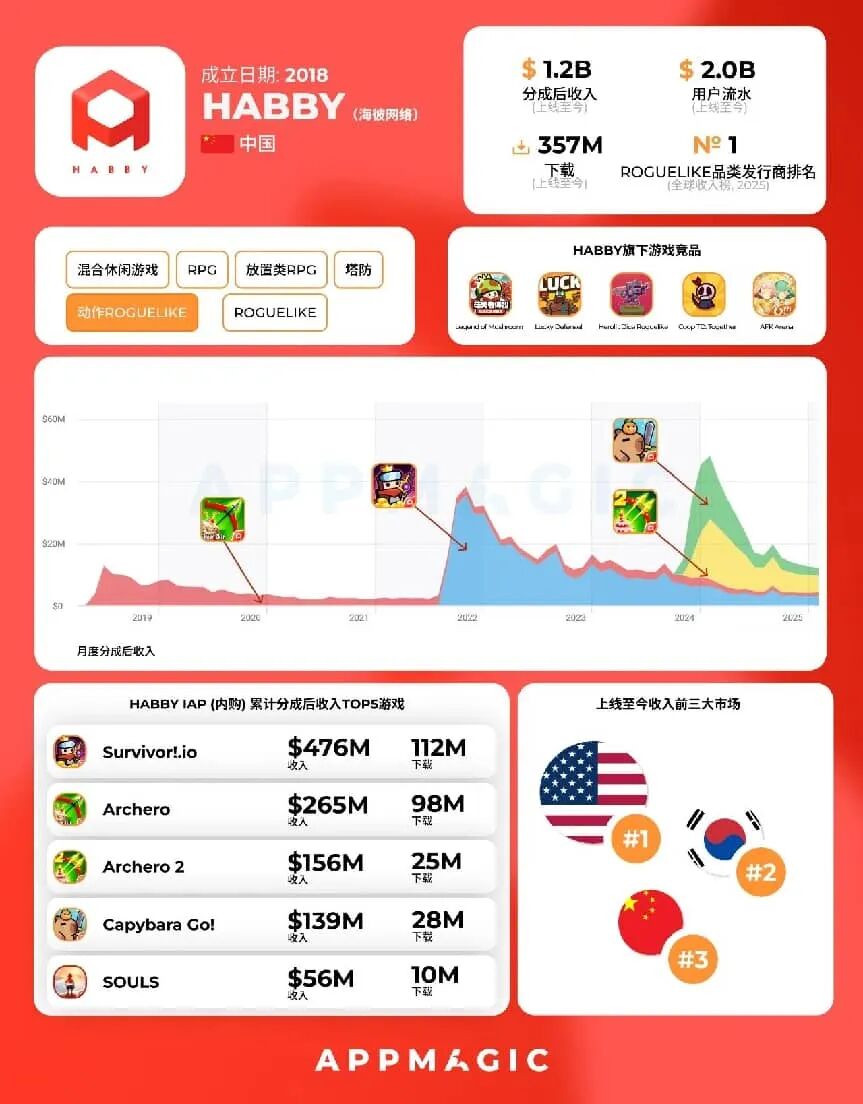
Image source: AppMagic
However, past success does not guarantee future growth. According to data from the Sensor Tower platform, Haipai’s revenue trends in recent years have been less than encouraging; its current revenue levels are at a low point compared to recent years, and its previous model of creating hit products appears to have reached a growth ceiling.
With competition in the mobile gaming market intensifying and user acquisition costs continuing to rise, sticking to traditional approaches is no longer sufficient to achieve significant growth; proactively seeking change has become the only way to break through these bottlenecks and drive growth.
Last year, the strategic partnership between Haibi and 111%, two of the world’s leading creative game companies, sparked greater imagination and anticipation among global gamers and industry professionals regarding the future development of the hybrid casual game segment—or, more broadly, the future of casual and mid-core games.
Now that *Heroes of 66* has officially launched, everyone can truly see their determination to embrace change. Teahouse also looks forward to both parties continuing to leverage their respective strengths to bring more exciting developments to the global casual mobile gaming market.
原创文章,作者:gallonwang,禁止转载:https://youxichaguan.com/en/archives/196062