In 2017, Xiao Qiu downloaded a game on her phone. The male lead wrapped her in his coat and took her away without a word. As a teenager, she was captivated by his domineering yet doting manner.
Now, what truly captivates her is no longer the idea of being saved or protected, but the sense of security and resolve that comes from standing side by side with the male lead as they face the world together.
The changes in “Little Ball” are not an isolated case. The “B-League” serves as a mirror: as women’s sense of autonomy continues to grow alongside societal changes, it is clearly reflected in the evolving needs of female players.
Players are no longer content with one-sided romance; instead, they yearn for relationships based on equality, respect, and mutual respect. Otome games, which once centered their marketing around “sweet romance,” have also begun to collectively highlight female independence, autonomy, and shared growth.
But how exactly did all this come about? Did the players change first, or did the games? How exactly is the rise of feminist consciousness reflected in the design of game narratives?
To find the answers, the Teahouse distributed a questionnaire, spoke with more than a dozen players, and engaged in in-depth conversations with game developers. We gradually came to realize that this evolution of perspectives within virtual romance is, at its core, the story of a group of real girls who rediscover themselves, come to understand relationships, and ultimately redefine “what constitutes good love” through the game.
01
That indescribable feeling of unease
A sense of unease arises long before any theoretical framework.
Cao Xin, a seasoned otome game player, experienced that feeling early on. In 2013, while still in high school, she was drawn to *Amnesia*, an anime adaptation of a Japanese otome game. The exquisite art and unfamiliar theme led her to play an otome game for the first time. To fully immerse herself in the story, she even bought her own PlayStation Vita handheld console.
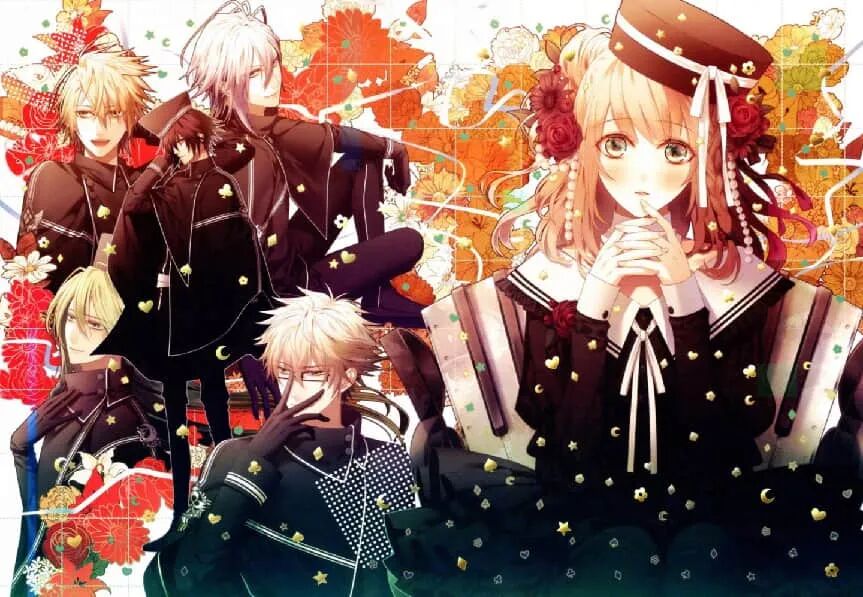
“Amnesia.” Image source: Internet
Among all the characters, she has always preferred those with a youthful vibe, childhood friends, and relationships where they can roughhouse and have fun together. Having grown up as the older sister in her family and being used to taking care of her younger brother, she finds it hard to accept becoming someone who passively waits to be looked after in the game.
Precisely because she was looking for an experience in the game that differed from reality, she noticed early on that certain storylines had an indescribable awkwardness to them.
In early otome games, the plotline where the male lead appears like a savior from above to clear all obstacles for the female lead was a sweet part of the experience. Cao Xin once reached a scene where the female lead faced a work-related problem that was ultimately resolved with ease thanks to the male lead’s resources and connections. Her heart sank at the time, though she couldn’t quite put her finger on what was wrong; she just thought to herself: “If it were me, I’d figure it out on my own.”
This discomfort first arose when she started playing J2 games. Some scriptwriters have a penchant for creating male leads who “first belittle, then pursue” the female lead, confining her to a traditional image of meekness, submissiveness, and a focus on caring for men—with saccharine romance and logic that feels suffocating.“Reading those lines felt as uncomfortable as swallowing a foreign object.” Cao Xin would either sell the game immediately or stop pursuing that male lead’s romance route.
“Before, it was just a vague sense of unease—that indescribable feeling,” Cao Xin said. “It wasn’t until feminist discourse gradually emerged that I realized it wasn’t my own problem, but rather a result of the broader social environment and the norms that shape it.”
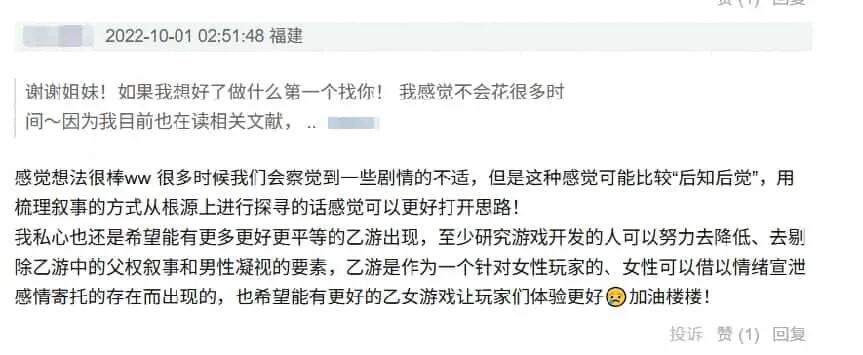
Similar sentiments have already begun to surface sporadically within the otome game community. Some players have posted on Douban asking why, in otome games, the male lead always solves every problem with his good looks, while the female lead can only stand by and be protected.
“I’m the one in control, but the spotlight never falls on me, and the stripping away of that power and glory is always sexualized,” someone wrote. “He handsomely resolves every problem, then turns to look at me with a gentle smile.”
Others have pointed out that otome games constantly encourage players to feel sympathy for the male characters’ grievances and hardships, as if the female protagonists were meant to become emotional servants. They express their frustration: “I’m here to be entertained, not to be a sounding board.”
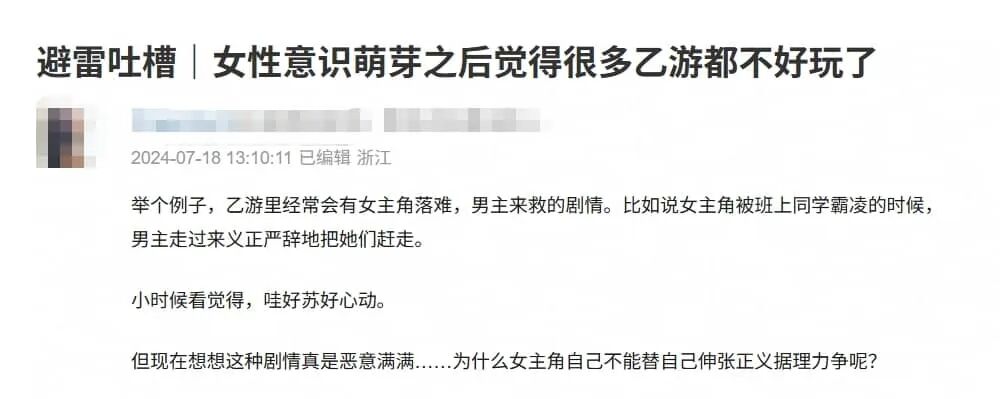
Although these scattered complaints could not coalesce into a unified force at the time, they planted the seeds for a collective awakening that would come later.
02
Change itself is ambiguous
They couldn’t pinpoint exactly when the change began, but they gradually came to realize what they didn’t want.
Among players whose tastes have shifted, several trends are frequently mentioned: they are increasingly averse to lines that interfere with the premise of “I’m doing this for your own good”; they place greater importance on whether the female lead has an independent career and the ability to make her own decisions; and they increasingly prefer the idea of “we’ll face this together” over “I’ll protect you.”
Many players can’t pinpoint exactly when they changed or what triggered the change. Xiao Qiu is one of them; she knows she’s changed, but she can’t give a specific reason—she simply attributes it to “growing up.”
Xiao Qiu is a 19-year-old sophomore majoring in science and engineering who has never had any formal exposure to feminism. Her changing preferences in gaming developed naturally as she scrolled through TikTok, chatted with friends, and gradually matured.
All she knew was that she could no longer stand those storylines where “the male lead makes decisions for you.” It wasn’t that they weren’t sweet enough; it was that they took away her freedom. “He thinks he’s doing what’s best for you, so he arranges everything for you, and in the end, you realize you’ve never really had a choice.”
Among the many players, the large-scale sheep farmer is one of the few who can clearly explain the turning point.
When she started playing *Love Between Light and Night* in 2021, she was still obsessed with real-life celebrities; for her, playing visual novels was just an extension of her fandom, so she didn’t invest much time or emotion in it, and the romantic experience felt rather superficial.
The turning point came when she played a card featuring Xiao Yi. Xiao Yi was a race car driver, and after the race, a familiar reporter asked him, “Where’s that girl who’s always hanging around you? I didn’t see her.” That girl was the character played by the sheep farmer in the game, and Xiao Yi instinctively retorted, “She has her own things to do. Why would she have to hang around me all the time?”
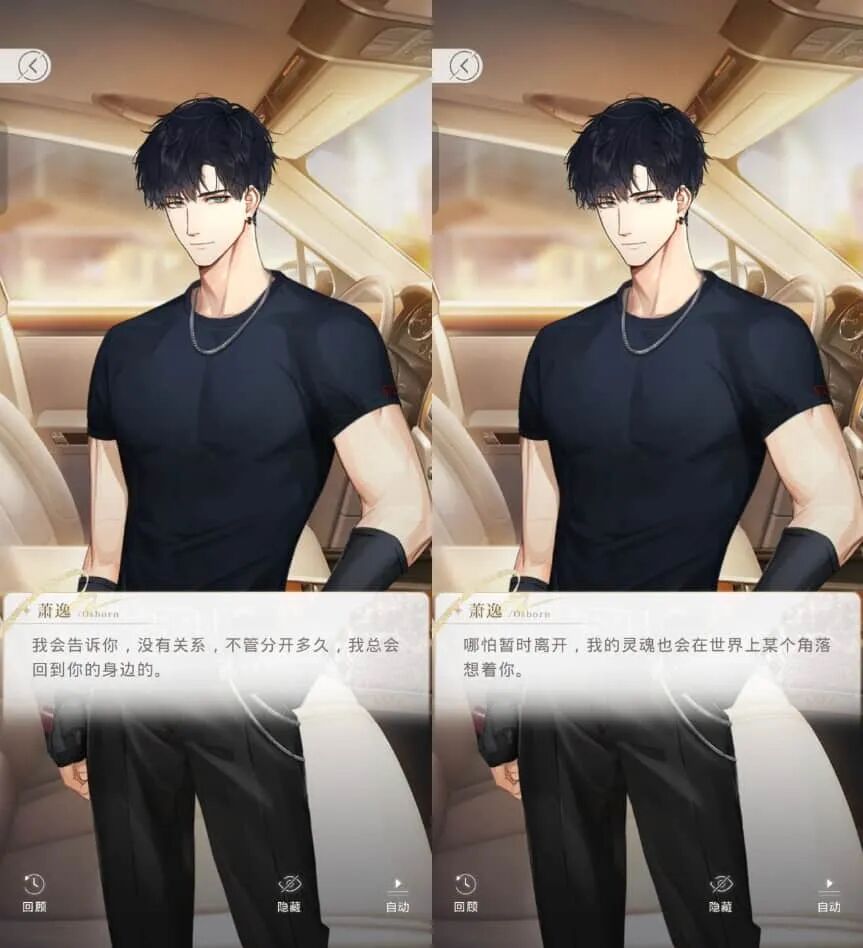
The moment in the game when Xiao Yi moved her. Image courtesy of the interviewee
The large-scale sheep farmer was instantly smitten. She felt that, in the game, he respected her independence and put her first.
She said that girls raised in East Asian families are always accustomed to putting others’ feelings first, afraid of saying the wrong thing, of causing offense, or of not being liked. Xiao Yi’s words struck a chord with a desire she had never dared to admit: I, too, can put myself first.
In another scene from the birthday card storyline, the female designer protagonist hits a creative wall at work. Instead of solving the problem for her, Xiao Yi simply tells her earnestly, “The clothes you make are the best. You don’t need to be overly modest—just acknowledge that.” From his words, she realizes that one must first love oneself in order to better love others.
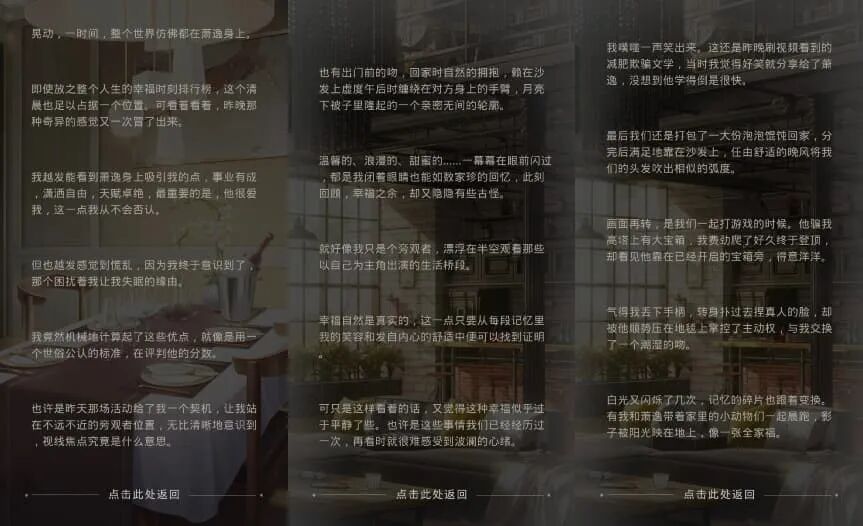
A story that large-scale sheep farmers love. Photo courtesy of the interviewee
This influence has gradually seeped from the screen into real life. When her family now occasionally teases her that she’s “changed,” she calmly asks in return, “For the better or for the worse?” Then she laughs and says, “I don’t care if you’re comfortable with it or not—I’ve said what I had to say.”
Without theoretical jargon or ideological indoctrination, it was simply the experience of being respected in the game that taught her to respect herself.
From its very inception, the “乙游” genre was created to address the long-standing absence of women in the gaming market. What makes this space unique is that it not only fulfills women’s fantasies about romance but also reflects, amplifies, and even shapes players’ definitions of a “good relationship.” As this space continues to evolve, players are redefining what they want within it.
03
Shaped by Both Developers and Players
The real turning point came around 2023.
Ariane, a producer of B-game titles, provided specific timelines: “When we launched the project, there weren’t many domestic B-games—perhaps only two or three.” As the game neared release, she clearly sensed that player demand was driving the domestic B-game market: “Respecting female agency is no longer a bonus feature; it’s a prerequisite.”
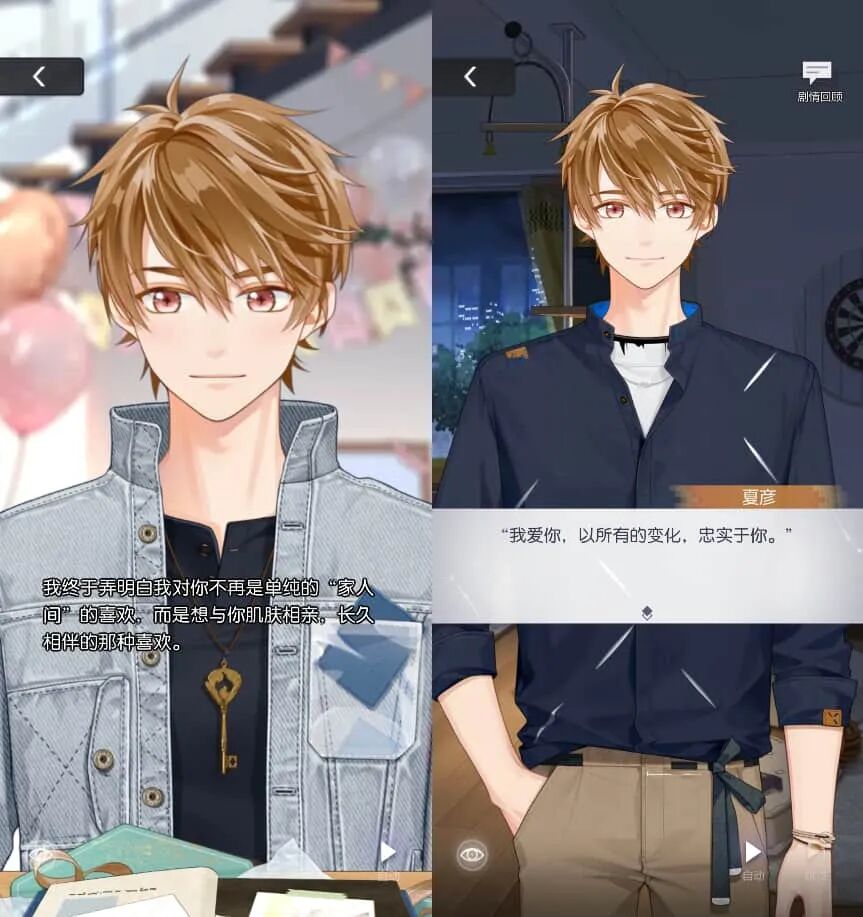
Cao Xin’s favorite character in the game. Image courtesy of the interviewee
Cao Xin attributes this shift to the unique production model of domestic mobile games. Unlike Japanese mobile games, which typically follow a one-time purchase model, domestic mobile games rely on continuous updates and long-term operation to survive. Development teams must closely monitor community feedback, trending topics, and player sentiment, as any controversy could trigger a public relations disaster.
“Starting around 2021, discussions within the gaming community about the female protagonist’s agency became more frequent,” she said. “The development team began to feel the pressure.”
The backlash quickly turned into a lesson for the industry. In 2022, a game sparked widespread discomfort and a boycott among players after the male protagonist suggested engaging in intimate acts with the female protagonist while being filmed by a hidden camera—and even proposed keeping the recording. The developers were forced to make urgent changes.
A game that gained popularity for its “strong female lead” concept faced a backlash from players who stopped spending money after the developers incorporated borderline offensive references to otaku manga in subsequent events, causing its popularity to plummet rapidly. Players’ voices are no longer faint; they now hold the power to determine a product’s fate.
At the time, Ariane, who was the producer of a certain otome game, experienced those moments firsthand. Early in the game’s testing phase, a series of misunderstandings led players to accuse the game of being misogynistic, causing its ratings to plummet. However, thanks to its solid storyline and art design, it managed to attract a portion of the player base and ultimately staged a comeback.
That controversy led them to be more conscious of incorporating respect for women’s agency into the specific details of their subsequent work.
“We’ll incorporate the concept of sexual consent into the storyline, and have the male protagonist remind the female protagonist to ‘love herself first,’” she said. “This isn’t preaching; rather, we believe that yuri games should serve as a space where women can express their desires. If yuri games don’t do this, other games certainly won’t.”
From film and television to video games, the popular “female-led” works on the market endow their heroines with noble status and immense power, yet they still cannot escape the successful formula of the patriarchal perspective. In their view, true female strength does not come from amassing power, but from striving to live well and rise above one’s circumstances in the ordinary routines of daily life.
“True equality means giving both parties the freedom to choose,” she concluded. “Being pampered isn’t unequal—it’s just a label. Women can choose to be career-driven or to be in a sweet, romantic relationship; no matter which path they take, they shouldn’t be judged by others. Being able to live life on one’s own terms—that is the true freedom granted to women.”
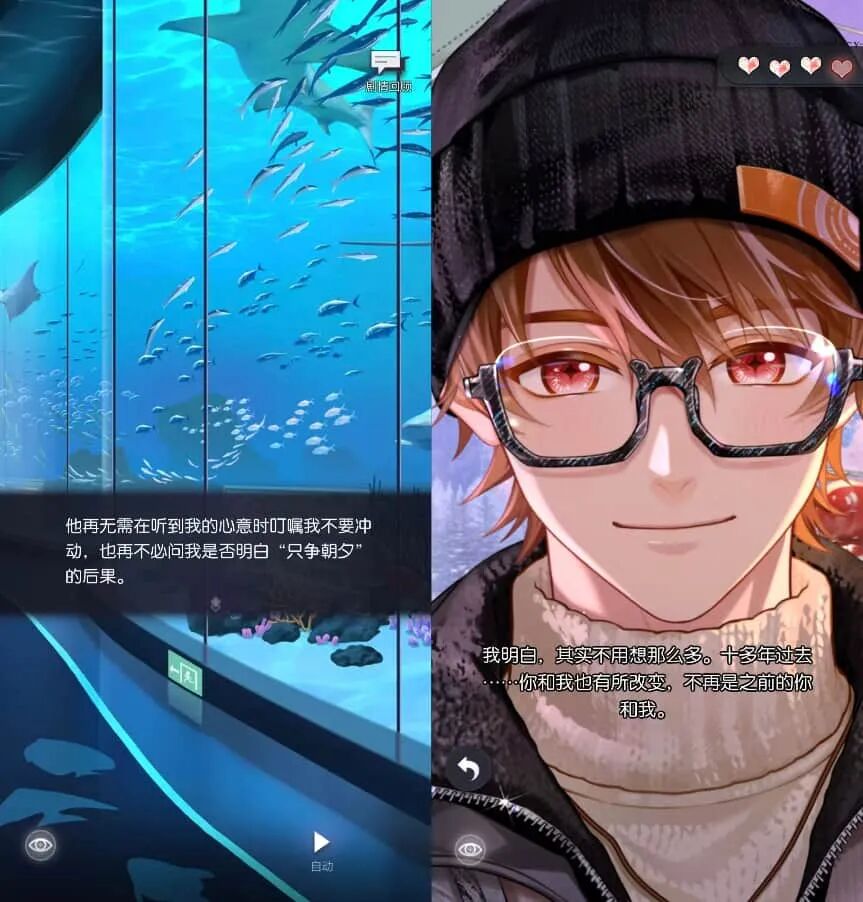
Cao Xin’s favorite storylines saved on her phone. Photo courtesy of the interviewee
Cao Xin has made similar observations. She noted that both *Love in Light and Night* and *The Unsolved Case Files* received criticism from players regarding the female protagonists’ character designs during their closed beta phases, and the development teams subsequently made adjustments. “The development teams aren’t prophets; they’re learning too. Players’ voices are genuine and can be heard, and the developers are learning from them.”
This is a two-way process. As Cao Xin pointed out, it’s not that players choose the games; rather, players are largely the ones who adapt to changes in the market. She welcomes the emergence of games that are more attuned to female players’ experiences and offer greater complexity, but more often than not, it’s simply a case of “once visual novel developers write it this way, players are more receptive to it.”
04
Complex Voices: There Is No Single Right Answer
“Respect for women” is the ticket to the otome game industry, but survival depends on something else.
Today’s otome game player base is far more diverse than it was in the past. Alian has observed that the earliest generation of otome game players was shaped by Japanese otome games and text-based romance games; they valued the sense of romance conveyed through storylines and artwork. However, with the rise of domestic otome mobile games, storylines have clearly begun to take a back seat to the sense of companionship. This means that daily interactions and situational dialogue have become increasingly important.
Changes in player preferences are not straightforward either; just as the voices within the otome game community are not always in unison—sometimes they rally together, and other times they argue amongst themselves.
Cao Xin observed that while some players quit the game due to uncomfortable plotlines, others stayed on and became its most loyal fans. “Those who stayed aren’t so concerned with the female lead; they care more about the characters themselves,” she said. “This represents a shift in consumption patterns.”
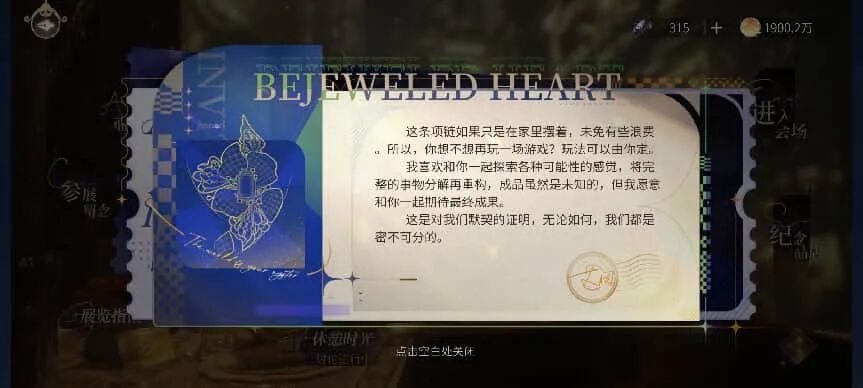
Screenshots of the game saved on Cao Xin’s phone. Image courtesy of the interviewee
The complex player community and diverse opinions make it exceptionally difficult for visual novels to survive.
“Producing and creating content for otome games isn’t actually the hardest part; marketing and distribution are the real challenges,” Aliyan noted. He pointed out that the difficulties faced by small studios in the otome game industry are structural: the return on investment is inherently low, managing community sentiment is difficult, and marketing and distribution budgets are limited. “The same amount of money can yield vastly different results depending on the company. Very few companies are willing to take on such long-term projects.”
This also means that well-funded major studios can leverage their financial resources and marketing efforts to shape what a hit otome game looks like. As long as they maintain long-term operations, community debates can sometimes serve as fuel for the game’s popularity.
But at times, the diverse voices of players may point to a single shift in social trends: they all share a common desire for freedom of choice.
Even those players who say their preferences haven’t changed are offering new interpretations of what they like. Xiao Yu, a visual novel player, initially told us that her tastes hadn’t changed much, but after talking with her in depth, we discovered that her understanding of “sweet romance” had actually evolved.
At first, she was drawn to Bai Qi in *Love and Producer*, admiring his youthful spirit and the sense of security his profession exuded, which made her long to be protected by someone so straightforward and bold. Later, she gradually fell for the tension in her relationship with Ling Xiao. In the birthday storyline, Ling Xiao asked, “Do you like me a little?” The female lead didn’t give a direct answer; instead, she asked him back, “Is that answer really that important to you?”
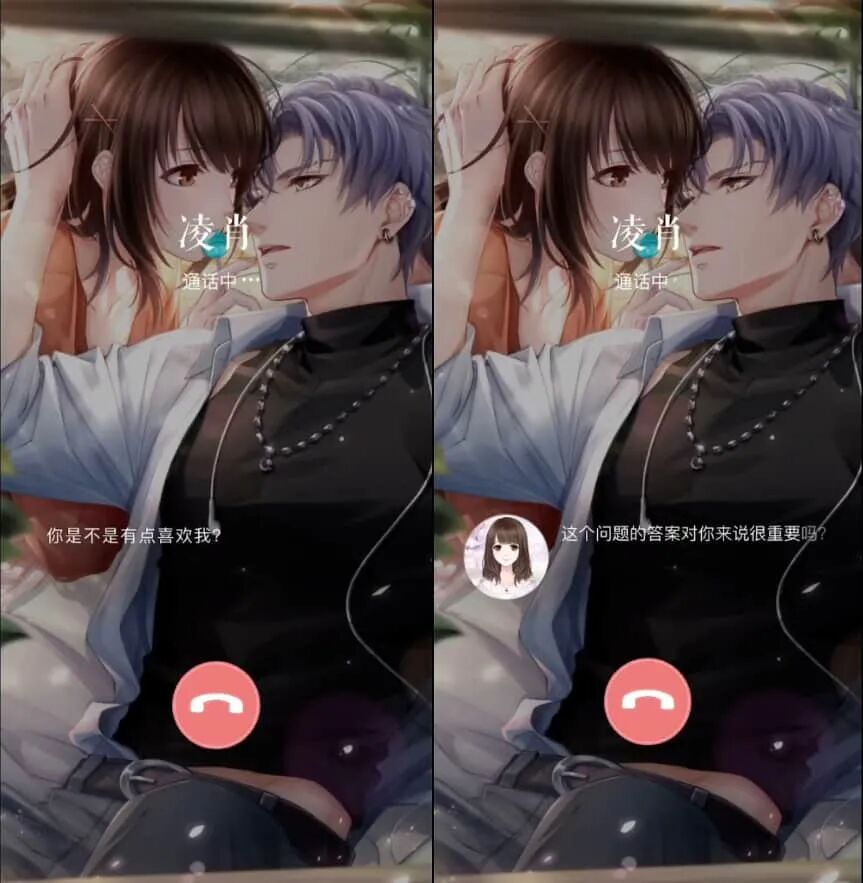
Plot summary of Ling Xiao’s birthday. Image courtesy of the interviewee.
She admits that discussions within her community and the wider public sphere influence her own feelings. Now she believes that “sweet romance” is no longer about a one-sided dynamic where the woman is weak and the man is strong, but rather an unspoken understanding between two independent adults: both are strong enough to handle their own problems while also considering the other’s needs, and they share a deep spiritual connection—that is what true “sweet romance” is all about.
This may mean that those once vague and indescribable feelings of discomfort are now being identified and articulated with increasing clarity. And this very act of expression is reshaping the future of the yaoi market.
This mirror of “Yiyou” reflects far more than just virtual romance. It reflects the growth, confusion, awakening, and choices of a generation of young women. They are no longer passive objects waiting to be loved, but rather the masters who define love on their own terms.
(At the request of the interviewees, Xiaoyu and Caoxin are pseudonyms.)
原创文章,作者:gallonwang,禁止转载:https://youxichaguan.com/en/archives/196077