The game development market is currently undergoing a new round of significant changes.
Especially in the era of global UGC (user-generated content), relying on the old approach of “heavy investment in assets and a labor-intensive strategy” makes it increasingly difficult to keep pace with the rapidly evolving industry. Identifying shifts in player preferences and pinpointing fleeting pain points has become a must for all game development teams.
While many teams are still clinging to traditional approaches to mobile and PC game development, one young team has carved out a niche in the global market through its passion for pure gameplay and extremely agile iteration.
From a remote development team of just two people to a top-tier company specializing in global expansion with over 40 elite professionals; from an unknown startup to a leading developer that has consistently created multiple hit Roblox titles with over a million daily active users. This team of Gen Z developers, known as “Luewei Chushou,” took just five years to rise to prominence after its founding.
In the view of founder Chen Kai, born in 2001, what has allowed them to stand out is their commitment to keeping the team lean, shedding preconceived notions, and, through constant trial and error and iteration, developing their own “theory of team evolution.”

A group photo of the “Slightly Out of the Ordinary” team
01
A College Life Devoted to Gaming
Game Teahouse: When did you first hear about Roblox?
Chen Kai: In 2020, I enrolled at Zhejiang University of Media and Communications to study Radio and Television Engineering. During the second semester of my freshman year, I developed a strong interest in programming and joined the university’s lab dedicated to preparing students for academic competitions. A faculty member at the lab introduced me to Roblox and mentioned that it had gone public on the New York Stock Exchange. From that moment on, I began to take a serious interest in the platform.
Game Teahouse: What was your first impression of this platform?
Chen Kai: I’m really interested—it’s like discovering a whole new world. I’ve been obsessed with gaming since I was a kid, but I always thought game development was too difficult, so I never imagined I could make games myself. After discovering Roblox, I realized it’s actually a platform for creating games, and its built-in development engine is very easy to pick up. This completely changed my understanding of traditional game development, so I immediately started experimenting with making some fun game prototypes.
Game Teahouse: What were your main sources for learning Roblox development back then? What was the biggest challenge you faced as a beginner?
Chen Kai: At first, I mainly taught myself using overseas video platforms like YouTube. Later, as the community grew, we started exchanging experiences and sharing insights with one another. The biggest challenge was that, in the early days, there was very little interest in Roblox in China; very few people understood it, and Chinese learning materials and tutorials were extremely scarce, so I had to figure things out on my own as I went along.
Game Teahouse: So how did you manage to stick with it?
Chen Kai: For me back then, creating games was an incredibly rewarding experience. In the early days, just getting a small feature to work—seeing my ideas come to life bit by bit in the engine—would fill me with excitement and a real sense of accomplishment.
Later, on my professor’s advice, I formed a small team of five with students from other majors in the lab. After about four months of preparation, we entered the competition with a game built using the Roblox engine and went on to win several awards.
The sense of fulfillment I got from creating games made me realize that this was what I loved to do, so it was only natural that I devoted all my energy to it throughout college. Aside from eating and sleeping, I spent all my time making games, and even during class I’d be playing games on my laptop.
Game Teahouse: I understand you also served as a mentor in the Roblox China community for a while?
Chen Kai: That’s right. In 2021, Tencent and Roblox established a joint venture to launch the Chinese version of “Roblox,” which was just getting started. The company set up a dedicated developer community bootcamp to foster the growth of the domestic ecosystem.
Since there were very few people in China who knew how to develop for Roblox at the time, after participating in an official GameJam, I was invited by the organizers to become a community mentor, guiding teams of beginners who had joined the training camp in developing games using the Roblox Engine.
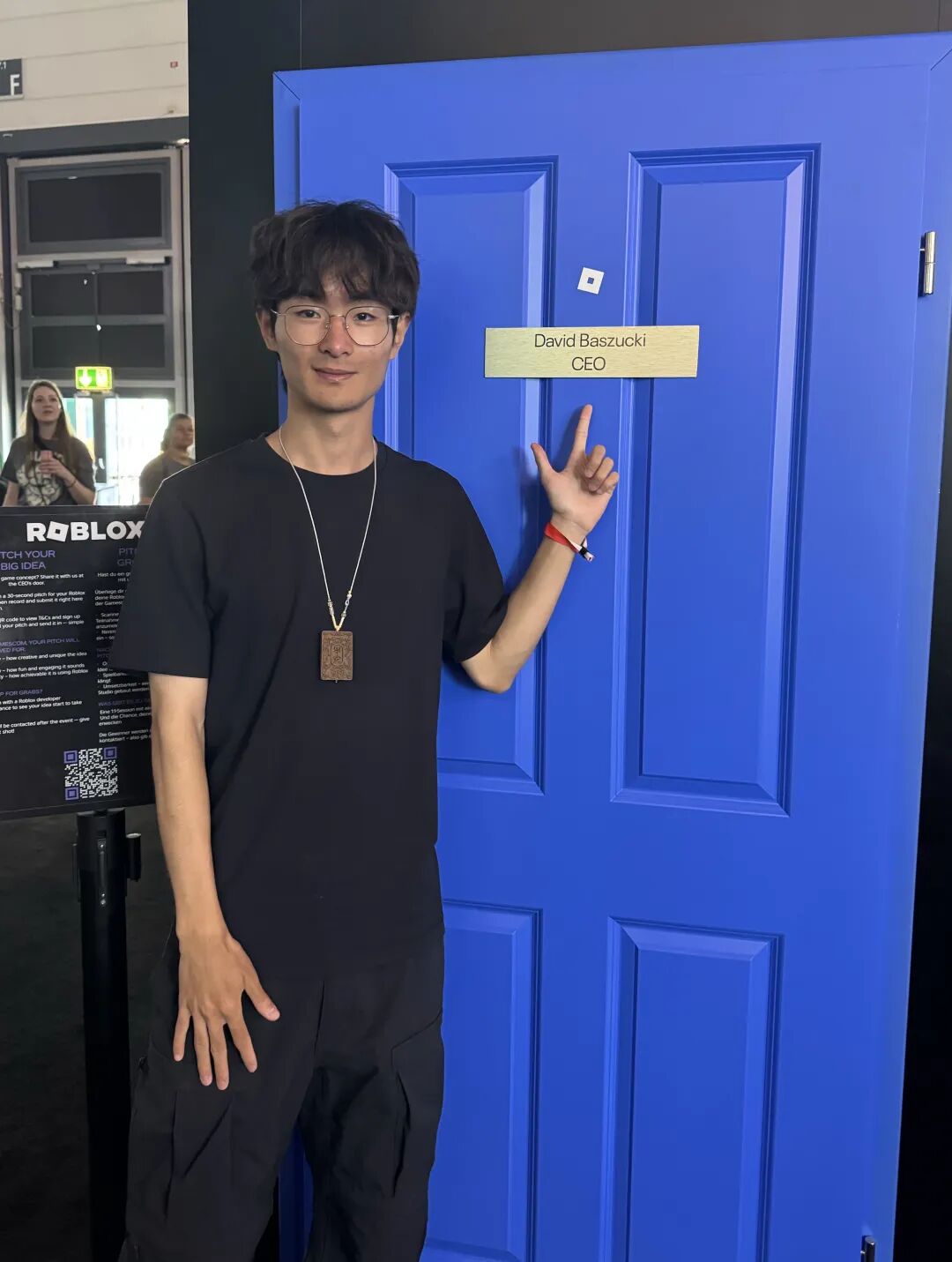
Visiting Roblox with Chen Kai
Game Teahouse: How big was the training camp at the time, and how long did you stay there?
Chen Kai: The training camp is held once a month, with each session accommodating about 70 to 100 people. I’ve participated in over ten sessions.
Game Teahouse: Did any of the people you met at the training camp actually end up entering the industry?
Chen Kai: There are quite a few. Among the top-performing global expansion teams in the industry today, almost all of them are old friends I met back in the training camp.
Game Teahouse: Did you go to Shanghai right after leaving the training camp?
Chen Kai: That’s right. In the second semester of my sophomore year, I joined a company in Shanghai as the technical lead for the Roblox division. My main responsibilities included overseeing the technical implementation of games and helping the company develop technical talent.
This company is a team specifically set up in Shanghai by a publicly traded chip company based in Wuhan that is betting on the metaverse sector. Aside from me, the team consists entirely of elite professionals with five to ten years of experience in the mobile gaming industry. We spent a total of six months developing a product that was very much tailored to the mobile gaming market, but its performance was dismal after launch. Despite our best efforts and various attempts to improve it, the situation did not get any better. I gradually realized that the company had completely lost its way in terms of product direction, so after wrapping up the project, I left the company.
Game Teahouse: What exactly is the issue with the direction?
Chen Kai: I think we approached developing the Roblox game with a mindset rooted in traditional mobile game development. At the time, we spent a great deal of time obsessing over the visual quality, creating extremely complex gameplay systems and monetization strategies, and even used a locked top-down camera angle to present the game. These approaches, which are common in traditional mobile games, actually don’t align at all with the play habits of Roblox players.
At the time, the team leader believed that games on Roblox were crude and lacked depth, and that for a seasoned mobile game team like ours to enter the Roblox market would be a “battle on a lower level.” However, my personal experience taught me that approaching a new market with the arrogance born of past success makes it impossible to achieve anything worthwhile.
Game Teahouse: So, in your opinion, what is the most fundamental difference between Roblox development and mobile game development?
Chen Kai: There are two key points:
First, Roblox games are purely about fun and creativity, whereas many mobile games do not prioritize these aspects.
Second, the R&D team must be lean and highly responsive. Roblox games do not succeed through large teams and heavy capital investment, nor can they withstand lengthy, iterative testing and refinement. To keep pace with the market, the team must maintain extremely high communication efficiency and iteration speed, enabling rapid implementation and validation.
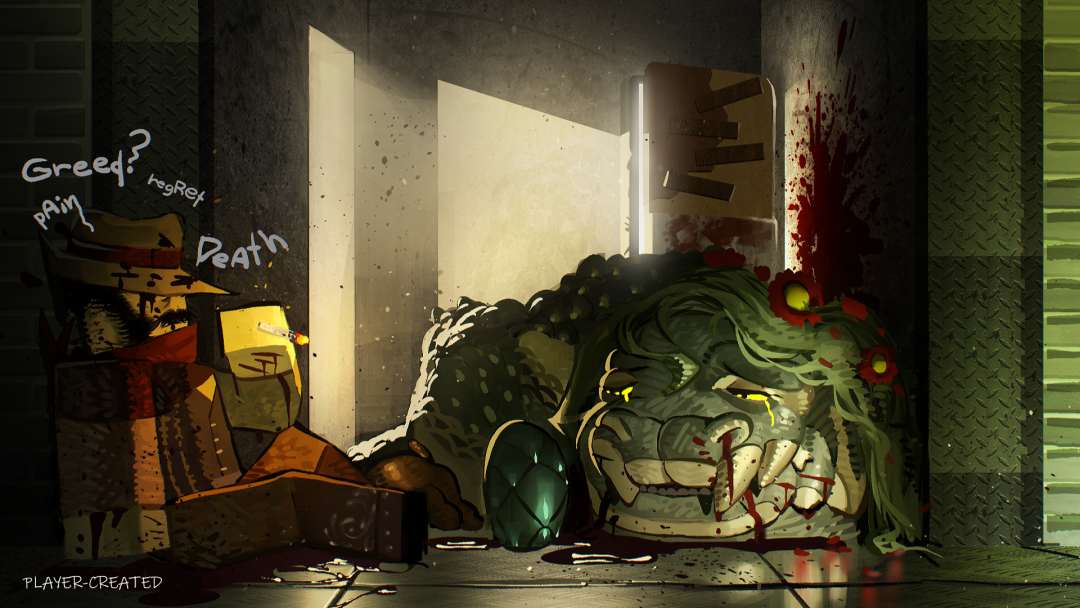
略微出手产品:SHOWHAND’s Horror Game(B1)
02
Create a hit with millions of daily active users
Game Teahouse: Did you start building your own team right after you left Shanghai?
Chen Kai: To be honest, I didn’t initially plan on forming a team. At the time, many of my close friends in the industry were achieving great success, including Wang Xin, the producer at Hangzhou Fan She Niao. We often got together to share and exchange ideas. On top of that, I had gotten to know nearly every creator in the industry early on, and among them were many partners who were passionate about game development and whose skills complemented my own.
By a stroke of luck, in October 2022, we formed a small, remote online development team of two. My teammate handled the 3D art, while I took care of the rest—including game design, game mechanics, programming, UI, and operations.
Game Teahouse: What was your first product, and how did it perform in the market?
Chen Kai: It’s a military-themed tycoon game. Since this genre is relatively niche on the platform, and since this was our first time going through the entire development process—during which we weren’t able to optimize the core metrics—our first attempt can be considered a failure.
Game Teahouse: Has this result shaken your confidence?
Chen Kai: No, at this stage we’re just purely enjoying the process of creating. From the very beginning, we never had the expectation that the game had to be a hit. In fact, seeing players log into our game—even though there aren’t many of them—is exciting. I often chat with players to ask for their thoughts and suggestions on the game. The whole process is filled with anticipation and curiosity.
Game Teahouse: What other products have you developed since then?
Chen Kai: The second game is a racing title with a peak daily active user count of around 200,000; the third is a simulation game that incorporates RPG elements, where the core gameplay involves defeating monsters and upgrading equipment. This game reached a peak daily active user count of 1.6 million, with a peak concurrent user count of 32,000.
Game Teahouse: Where did you get the inspiration for these two games?
Chen Kai: We mainly draw inspiration from successful prototypes on the market. At this stage, our team is small but highly capable and efficient; we can quickly refine a game prototype within two weeks and launch it for testing by the third week. Plus, we have no cognitive baggage, so we can create without any preconceived biases. We simply follow whatever gameplay mechanics are trending in the market, allowing us to rapidly bring products to market and validate them without letting too much subjective judgment get in the way.
Game Teahouse: How has your mindset changed since the success of these two games?
Chen Kai: The first time I saw the player count skyrocket, I was really thrilled. When the second game became a massive hit, I was happy at first, but once the excitement wore off, I immediately hit rock bottom.
First, I realized my own vulnerability and limitations. At the time, I made a mistake in a line of database code, which resulted in the loss of a significant portion of player data. I didn’t know how to recover the data, and faced with the overwhelming outcry from countless players in the community, I felt nothing but regret and helplessness.
Then I became even more acutely aware of my own naivety and vulnerability. We discovered that many of our domestic peers had started copying our product—some of whom had even been friends with whom we used to exchange ideas and share insights. Moreover, at the time, whether in terms of development efficiency or content output, our two-person team simply couldn’t compete with any company that had a team of 10 or 20 people.
It was also around that time that I truly realized I needed to start my own business and build my own team; otherwise, I would be left behind in the cutthroat world of business. So, in December 2023, I officially founded my current company and named it “Show Hand.” The name signifies giving it your all and committing fully—a direct translation of the Chinese phrase “略微出手.”
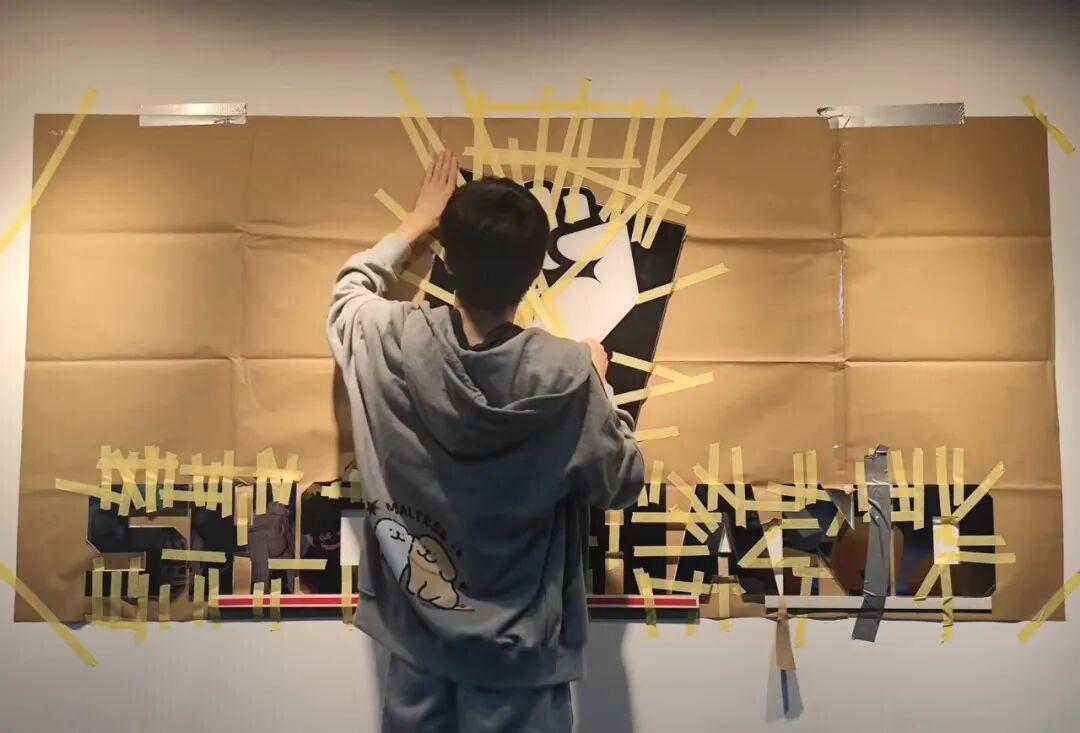
Chen Kai pasting the company logo
03
Cohesion is the best foundation for development
Game Tea House: Did the initial capital for starting the company come entirely from profits from previous products?
Chen Kai: It’s mostly thanks to my family’s support.
Game Teahouse: What does your family think about you starting a game company?
Chen Kai: Their attitude is simple: as long as I’m happy, that’s all that matters. The character “Kai” in my name means “happy,” and their consistent belief has always been that as long as I do what I love, they will support me wholeheartedly.
Game Teahouse: Given that you’ve received this kind of support, does that mean your family is fairly well-off?
Chen Kai: At least we’re not short on money, so for me personally, the sense of value and purpose in making the company stronger and bigger takes precedence over everything else.
Game Teahouse: What have you been doing since you started your company?
Chen Kai: There are two main points:
First, I invited my longtime collaborator—the art partner I used to work with remotely—to officially join the company.
Second, I streamlined the company’s structure. I first reached out to a classmate who managed the school’s lab to help handle the company’s HR, administrative, and other day-to-day tasks. Then, I broke down my own responsibilities into specific roles—such as systems, data, programming, UI, and operations—and recruited for each position one by one. I then provided targeted training to each team member. It took about six months to build a fully functional team of seven people.This allowed me to free myself from the myriad of tasks and focus on what I considered the most important aspect at the time: game design.
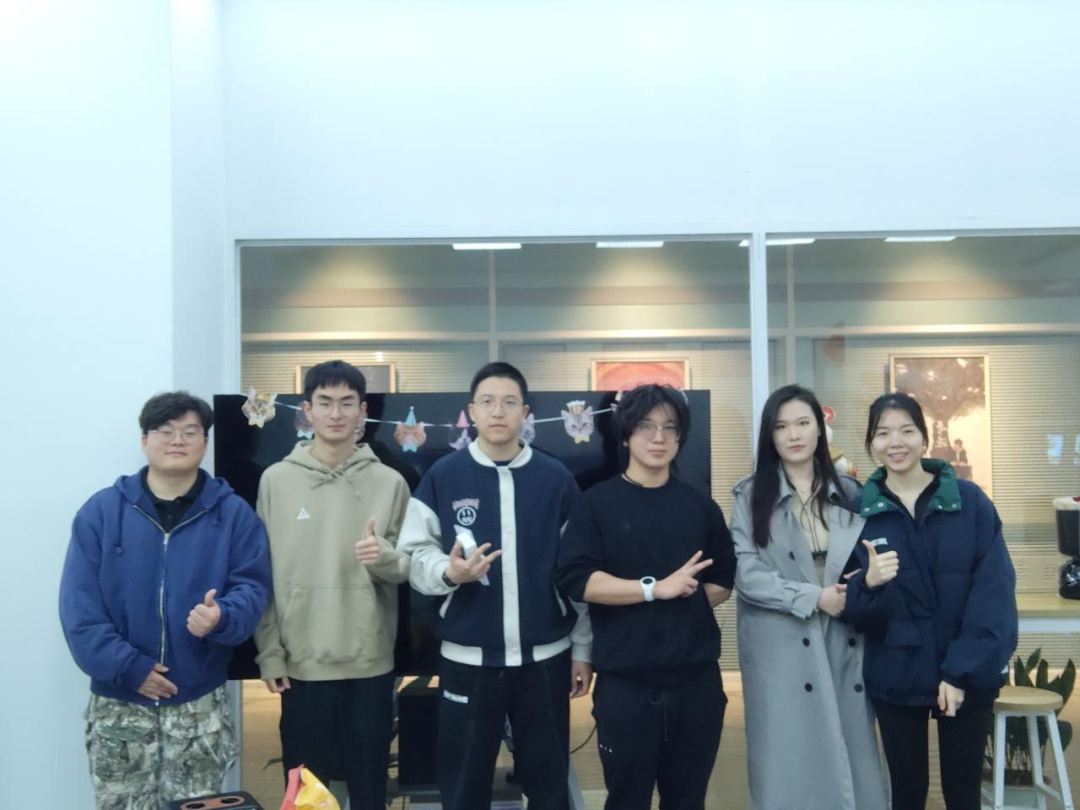
Group photo of the startup team
Game Teahouse: What kind of qualifications are you looking for in candidates right now?
Chen Kai: There weren’t any clear criteria. Most of the early members came from our school; they were either people we already knew or were recommended by people we knew. But without exception, they were all the most outstanding peers we had encountered at the time.
Game Teahouse: Where were you working at the time?
Chen Kai: At first, we rented a 44-square-meter office in the university’s industrial park, which had only seven workstations. After three months, we moved to a 200-square-meter office off campus, which had 23 workstations at the time.

Early school offices
Game Teahouse: How many people work at the company now?
Chen Kai: By the end of 2025, we had grown to 40 employees, and we plan to continue expanding this year to reach around 100–120 employees. This month, we will be moving into a new 1,100-square-meter office equipped with 144 workstations.
Game Teahouse: You mentioned earlier that streamlining the team is important, so why are you still expanding the company?
Chen Kai: As we expand the company, we strive to keep our team lean. Our goal is to build a strong and thriving company, rather than simply settling for creating a single hit product.
Game Tea House: Talent turnover in the Roblox sector seems to be quite high. How do you retain your talent?
Chen Kai: I think the most important thing is that everyone at our company really appreciates the fact that we’re willing to go the extra mile.
We consider our team members to be the company’s most valuable asset. Since we cannot find top-tier talent with Roblox game development experience domestically, we train every team member in-house after they join. It takes at least a year of sustained investment and support from the moment they join until they achieve results that drive the company’s growth.
I now spend at least a third of my day conducting job interviews, and I believe it is precisely this appreciation for people and our patience that has brought together the best team in the industry. Our philosophy is simple: the best work environment is one filled with amazing colleagues!
Of course, our compensation package is highly competitive—ranking among the top tier in China’s Roblox sector—and we offer clear, multi-tiered promotion pathways based on performance.
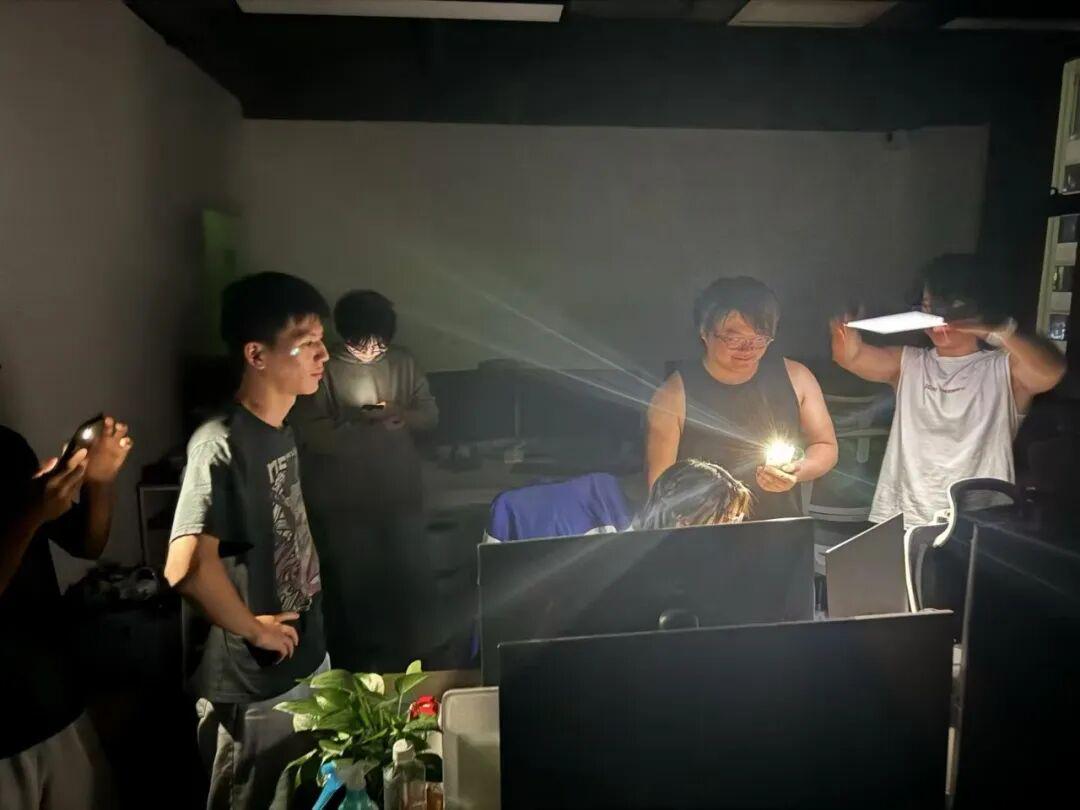
While the office building was without power, the team prepared for the Halloween update
04
AI is integrated throughout the entire R&D process
Game Teahouse: What is the general process for developing a new product these days?
Chen Kai: The process follows the standard stages of project initiation, development, testing, and launch. What sets us apart is that we give the project team complete creative freedom. As long as the team is interested, passionate, and believes a concept will be well-received by the market, they can proceed with it. After completing development in three to four weeks, we launch the game. If the market feedback isn’t positive, we immediately pivot and move on to developing the next product.
Game Teahouse: That’s a fast pace. How many new products can the company launch in a single quarter, and how many of them are successful?
Chen Kai: We launched about 10 games last quarter.
There are significant differences in product success rates among different project teams. Experienced, elite teams can achieve success rates of 80% to 90%; however, new teams in the incubation phase are unlikely to develop a commercially successful product within a six-month to one-year timeframe, with a success rate of nearly 0%. Overall, our product success rate is approximately 20%.
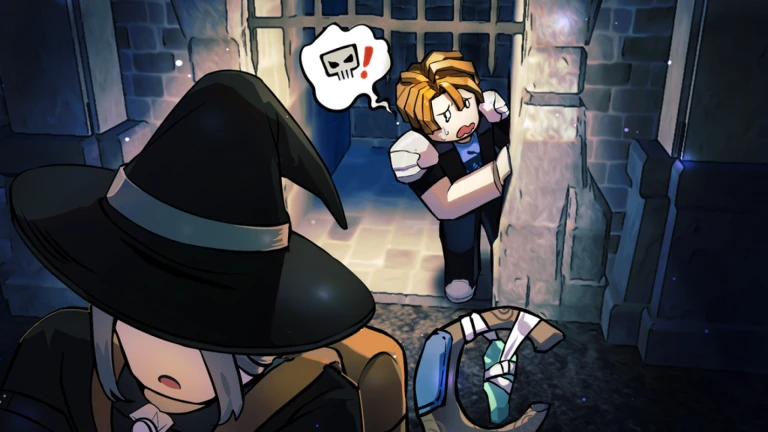
略微出手产品:SHOWHAND’s RPG Game(T6)
Game Teahouse: How are AI tools being used in your development process?
Chen Kai: We use AI in every role. All programming is handled by AI—there’s no longer any code written by humans in our projects. During testing, AI can independently write test cases and run tests automatically. When it comes to gameplay prototyping, AI can generate a playable demo in just 20 minutes. As for common applications like AI-generated images, those are even more widespread—we use them at every stage of the process.
Game Teahouse: What models are you primarily using right now? Have you started using Roblox’s newly launched AI tools?
Chen Kai: We mainly use the mainstream models like Claude, GPT, Deepseek, and Gemini. The AI tools released by Roblox are still a bit rough around the edges, so we haven’t incorporated them into our projects yet.
Game Tea House: Has using AI tools helped you reduce costs and improve efficiency?
Chen Kai: No, it’s actually added extra AI-related overhead. We’ve provided our team members with access to advanced AI models, but current AI tools haven’t yet been fully integrated into the entire game development process. They often get stuck at specific stages—such as waiting for 3D art assets or fine-tuning interactive behaviors—so the overall game development cycle hasn’t actually been shortened.
Game Teahouse: So what impact do you think AI will have on the gaming industry in the future?
Chen Kai: AI will completely transform the gaming industry’s current R&D model.
In the past, major studios followed an industrialized PGC approach, with teams of three or four hundred people spending years polishing a single game and releasing content updates every month. With the continuous advancement of AI and the lowering barriers to entry for game engines, small teams of just a few people will soon be able to create high-quality games in just one or two months. By then, the heavy-asset, assembly-line development model of major studios—relying on teams of hundreds—will seem far too cumbersome.
Furthermore, I believe that game companies across China are currently investing in UGC, which is essentially a response to the changes brought about by AI advancements: in the future, game creation will inevitably shift toward UGC. Companies will either need to incorporate a UGC ecosystem into their own products or risk being replaced by new products that already feature such ecosystems.
05
The platform is evolving and changing
Game Teahouse: Compared to other UGC platforms built on top of basic games, Roblox’s success is truly unique in the global gaming market. Why do you think Roblox was able to achieve this?
Chen Kai: Roblox’s growth trajectory differs from that of other UGC platforms. It started with tools and an engine, then gradually evolved into a platform, steadily building up its user base and high-quality content, ultimately forming a complete ecosystem.
Throughout this journey, Roblox initially capitalized on the rapid growth of the mobile internet, and later saw its user base explode as people around the world began staying home. Furthermore, the lack of dedicated social platforms for young people overseas provided fertile ground for Roblox’s growth. These favorable conditions—both timing and environment—have shaped Roblox into the platform it is today.
This development path cannot be replicated by other competitors; therefore, the prevailing strategy among current developers is to first launch a game with a large daily active user (DAU) base, build up a user base, and then release an engine, gradually evolving toward a platform model.
Game Tea House: What is the current state of Roblox?
Chen Kai: Growth is still ongoing, though the pace has slowed compared to last year. According to the data, Roblox currently accounts for 3.4% of the global gaming market revenue, but I firmly believe it can grow to 10% over the next 10 years, and I hope to contribute to that goal.
Game Teahouse: Roblox has consistently faced allegations regarding the protection of minors overseas. Has this had any practical impact on developers and users?
Chen Kai: The impact is inevitable. To mitigate risks, the platform has implemented a series of control measures, including revising security questionnaires, introducing facial recognition verification, and restricting cross-age group chats. This has sparked widespread dissatisfaction and criticism among players, and user activity on the platform has declined somewhat. However, I believe this is a necessary growing pain for the platform’s development. To ensure sustainable growth, the safety of minors is an issue the platform must address.
Game Teahouse: Surveys also show that Roblox’s user base is getting older. Have you noticed this change?
Chen Kai: This trend is quite evident. The game currently topping the charts on the platform, *RIVALS*, is a shooter that closely resembles a mobile game. In recent years, such titles were virtually nonexistent on the platform, which also indicates that the number of older users on the platform is steadily increasing.
Premium content and an aging user base will undoubtedly shape Roblox’s future direction, and this is a shift that developers must take seriously.

《RIVALS》
Game Tea House: What advice do you have for development teams looking to enter the industry?
Chen Kai: Be prepared to operate at a loss for the long term. Roblox is a platform business where market concentration among top players is extremely pronounced. Currently, the top 200 games on the platform generate only about 100,000 RMB in monthly revenue, and their lifespans are extremely short. Unless you already have a strong foothold on the platform and are confident you can rank among the top 0.1% of all titles, you are bound to operate at a loss.
06
Moving Toward the “Next Generation of Gaming”
Game Teahouse: Are you satisfied with the company’s current progress?
Chen Kai: We’ve maintained 400% growth every year, and the company’s overall development is currently exactly as I expected. It’s clear that the company makes a qualitative leap every three months. Over the next three years, we’ll drive growth to at least 50 times its current level.
Game Teahouse: What exactly are your development goals?
Chen Kai: This year, our goal is to break into the top 15. Currently, there are no Chinese teams among the top 15 products on the platform, and we firmly believe that we will be the first team to achieve this breakthrough.
At the same time, we’ve observed that as this generation of Roblox users grows up, Steam games and VR games are starting to resemble Roblox games more and more. In three to five years, we’ll move beyond UGC games and explore the next generation of gaming paradigms.
Game Tea House: What Will the Next Generation of Games Look Like?
Chen Kai: Steam games are still showing some growth, and casual games on overseas social media are showing slight signs of improvement. There is a small chance that next-generation games will be VR titles, but they will almost certainly be AI-native games driven by disruptive AI models—or perhaps an entirely new paradigm we cannot even imagine today.
In my view, no matter what the paradigm may be, it is inevitably shaped by young people. Not only are we young, but we also possess a unique advantage: we embody the aesthetic sensibilities of the next generation of post-2010s users worldwide; we are a top-tier team forged in the fiercely competitive UGC gaming market; we have iterated on hundreds of game products; and we have developed a flexible, small-scale collaborative model suited for the AI era.
So I’m convinced that we’ll be the ones to create the next generation of games, haha.
Game Teahouse: So you have plans to explore broader areas as well, right?
Chen Kai: Yes, this year we will continue to focus on Roblox and maintain our competitive edge on that platform. Starting next year, we will begin expanding to other UGC platforms, and over the next three to five years, we will wait for the right opportunity to start exploring new gaming paradigms.
原创文章,作者:gallonwang,禁止转载:https://youxichaguan.com/en/archives/196144
![[Exclusive Preview] May 14 Youcha Matchmaking Event in Guangzhou: The First Batch of Issuers & Investors Has Been Announced!](https://youxichaguan.com/wp-content/uploads/2026/05/35358030j00teww3x00jwd000u000gwm-480x300.jpg)