What does gaming mean in this day and age? People debate its artistic value and whether it can lead to financial freedom after two or three years of development. How does a game development team come together? Is there a time cost associated with finding common ground? And what about the exhaustion and uncertainty that come with the process? The survivors on the sidelines don’t care; to them, it’s nothing more than a topic of conversation that only carries weight on a podcast.
Once powered on, the screen—a symbiotic creation of several electronic components—gazes upon each individual face, absorbing the accumulated weariness while simultaneously unleashing suppressed desires. For some, this limited screen can forge an endless realm; for others, it is an ocean in which they are permitted to lose themselves.No matter the emotions—joy, anger, sorrow, or delight—of the faces before the screen, it always lays itself bare, never hesitating to share experiences, struggles, and joys, all of which are born from the players.

Today, the video game industry is underpinned by a vast array of data. At ChinaJoy, nearly 800 companies are packed together, with 400,000 visitors shoulder to shoulder; the 2025 Tokyo Game Show features approximately 4,100 booths, more than triple the number from four years ago.In 2024, the domestic gaming market generated revenue of 325.783 billion yuan, and by 2025, that figure had jumped to 350.789 billion yuan.
01
It’s not that easy, so you have to be really serious about it.
In April, catkins from willow and poplar trees, carrying their seeds, swirled through the air as they searched for a place to settle. With the arrival of spring, numerous gaming conventions have begun popping up across the country. In Beijing, Zhihu’s convention has just wrapped up.
On the evening of the first day, I found a flyer in my backpack. It introduced a game called *Tianjin 1924*, and on the right side was a line of text in larger font—a message from the producer to the players:
“…I suddenly felt that all the internet-related work I’d done before paled in comparison. I realized I’d been spending my days obsessed with so-called user acquisition, retention, and engagement, while neglecting the solid ground beneath my feet and the real people around me. In that moment, I felt as though I’d found the next goal in my life…”
The flyer was given to me by Shunshun, a woman with a Tianjin accent.
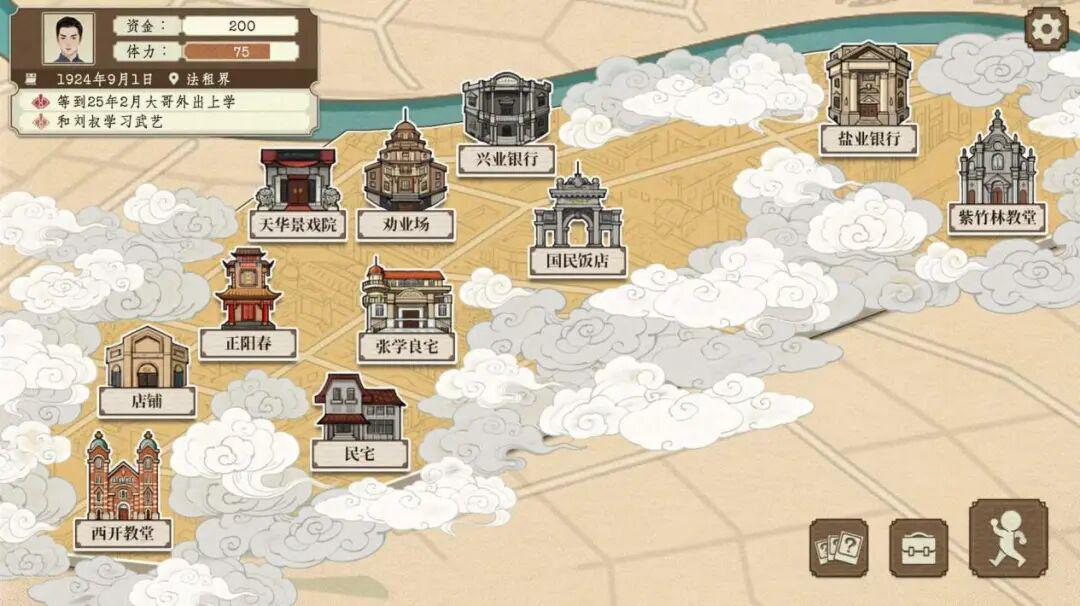
The 120-kilometer journey from Tianjin to Beijing takes two hours by train. Before leaving, she had everything ready—except for the demo. As life is full of surprises, she ran into one problem after another while preparing the demo, and with the deadline fast approaching, Shunshun was at a loss. She walked briskly through the conference center—a micro-territory spanning tens of thousands of square meters—like a nomad. Since we had met before, she spotted me in the lounge after just a few steps.
The lounge area in the clubhouse was bustling with people, so we gathered at this makeshift table.
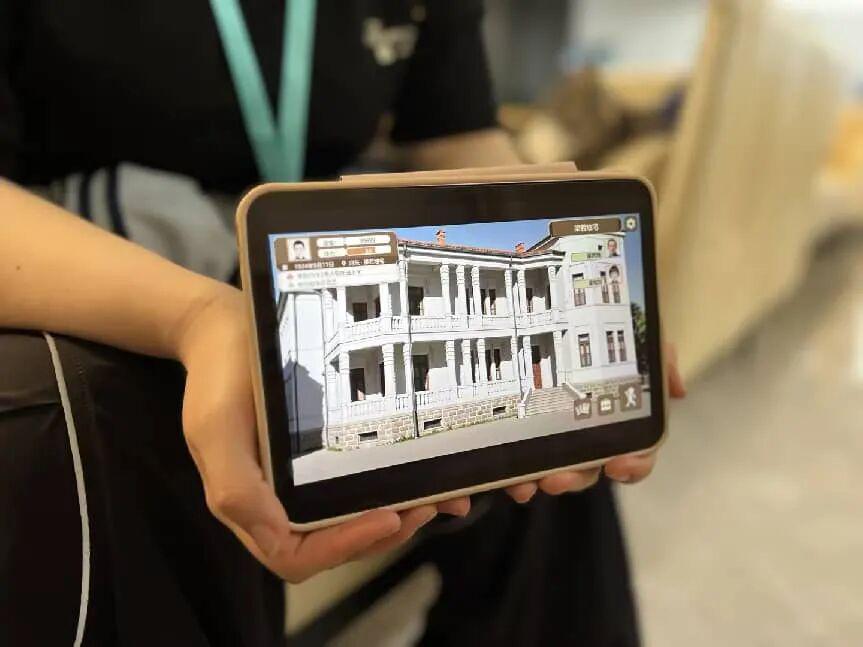
He smoothly pulled out his tablet, and the screen displayed Tianjin in 1924. In the crosstalk theater, you could play word chain games to win thunderous applause; in the martial arts hall, you could challenge foreign warriors to a game using the rules of “Three Card Monte,” and so on. Those elusive local cultural nuances were imbued with a unique sense of humor by a studio called “Bei’ergen.”
“Do you have any mustard-bean-and-sesame pills?” Jason, who had also been dragged over, quickly picked up on the vibe.
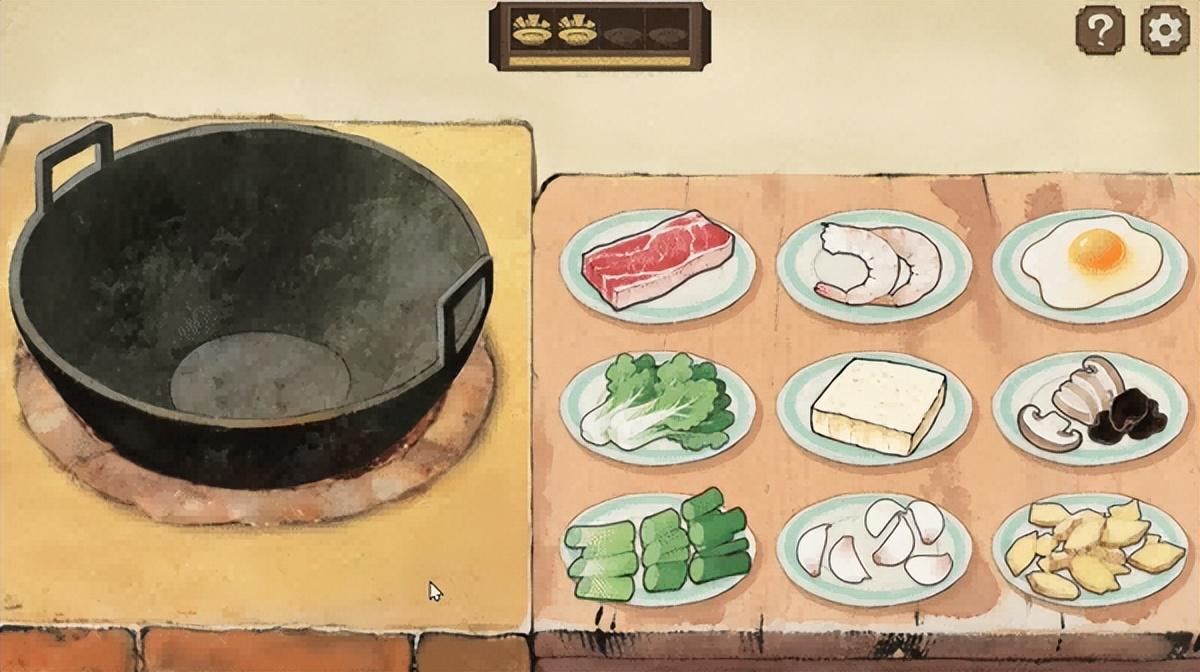
As she was showing us these things, people kept stopping by to say hello. No sooner had one person left than another would arrive. Whenever she ran into someone she knew, she would pause to introduce them, turn to exchange pleasantries, and then come back to continue her story.
She said that some AI was used for the character art in the game. While industry tools are becoming increasingly convenient, this doesn’t necessarily make it easier to convey meaning—just think back to the game of telephone we played as kids, and you’ll understand. Today, AI can help small studios save some effort and costs, but it can’t grasp as clearly as a local what kind of conversations you’d hear in a Tianjin restaurant, nor can it decide which dishes should be on the menu. That kind of urban experience still has to be brought in by people themselves, and it’s these details that determine whether a game feels authentic to its setting.
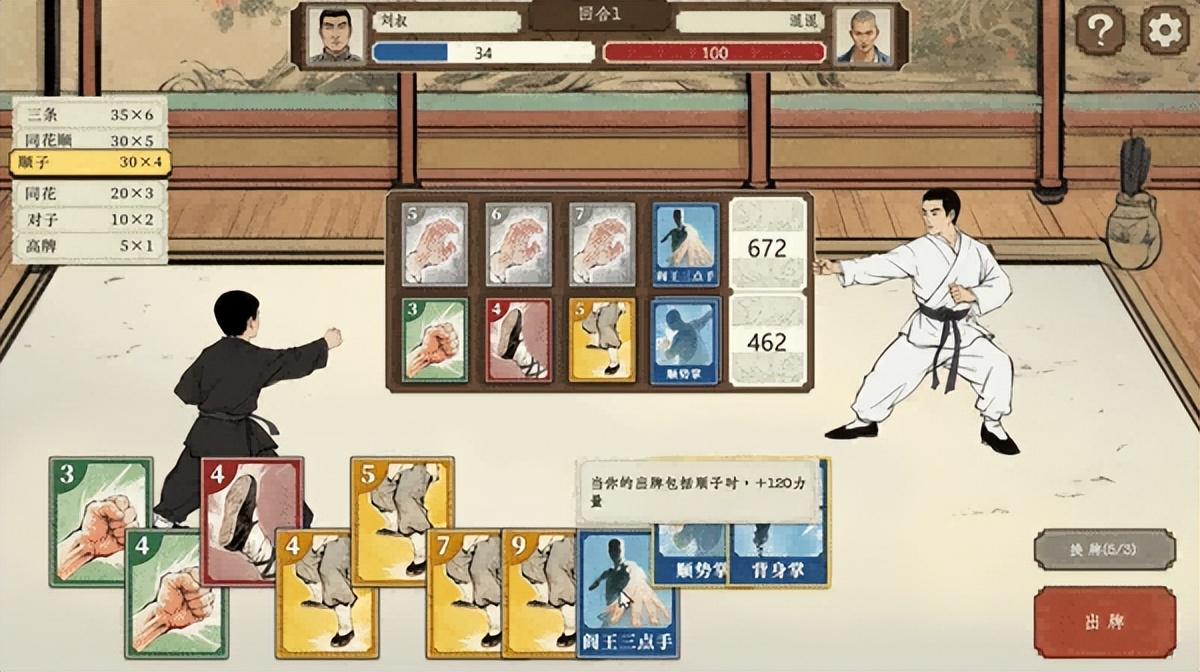
They started working on this project back in February or March of last year. They began by laying out the storyline first, then gradually built the entire framework piece by piece. Shunshun handles operations, does some business development, and even helps out with development. Producer Peter isn’t just focused on this one project either; he also has to manage the business side of things at Orange Light.
There are six people on the team in total. We’ve had a couple of game designers come and go, and the work left behind by the two of them doesn’t quite mesh. A small team doesn’t have enough money or people, and building a cohesive team takes time. Rather than spending a lot of time on personnel issues, it’s better to just get started with the limited number of people we have.
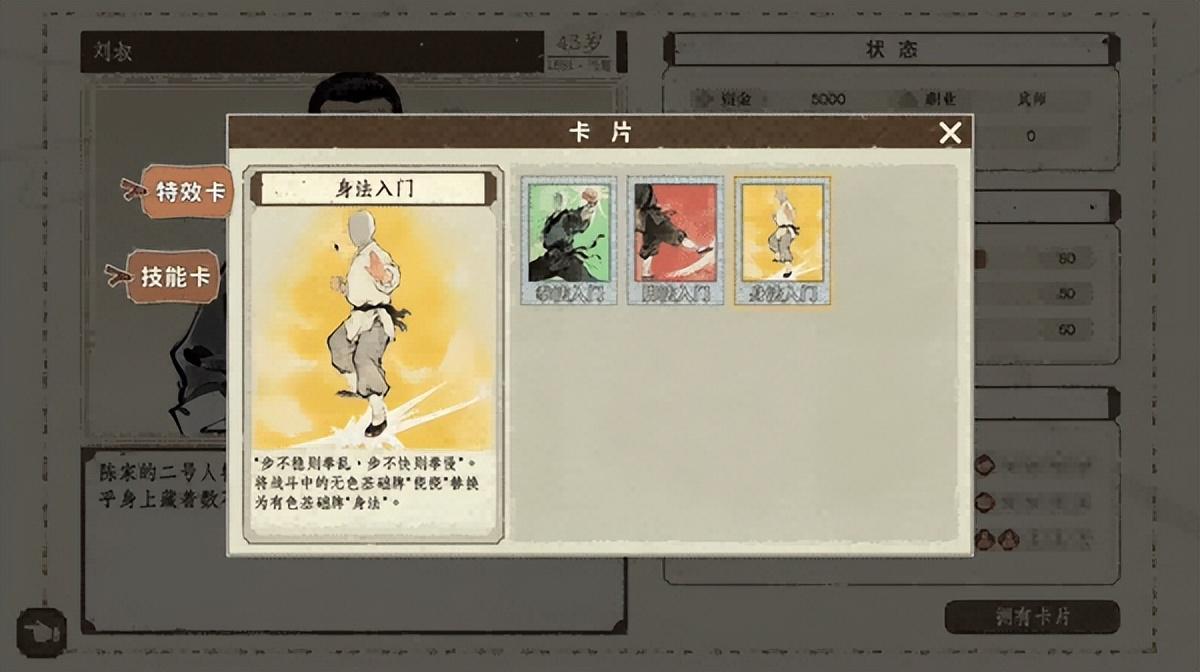
When the demo first came out, Shunshun played this game—which only took three or four hours to complete—well into the night. Using her sense of responsibility as a developer as an excuse, she became engrossed in the game, and as a result, she believed it would improve significantly with further polishing. However, life is full of surprises.“Wait, are you sure it’s appropriate to have red wine and coffee in a pharmacy in the Concession? Huh?” She frowned; while this seemed like common sense, implementing it in the system wasn’t so straightforward.
At the invisible level of code, there is already an established logic governing the relationship between shelves, product categories, and trigger conditions. To ensure the system runs smoothly, red wine and coffee can only be stocked on the shelves of pharmacies.

As a team transitioning from film and television, they are currently being incubated at Orange Light. Previously, team members worked on titles such as *Card Detective*, establishing their own track record in educational games before taking a hiatus.By chance, the producer came across fan-created works like *Beijing Girl Band* and *Guangxi Girl Band*. While these creations appear to play with urban stereotypes, they also genuinely capture the unique character of each region. With the re-release of *Taiko Risshiden DX*, Peter began wondering: Could they create a similar game set in Tianjin?

As others wrote about their cities, I suddenly felt that my own city deserved to be written about as well. So it became a map, with a story of its own; a few shops commonly found on the streets of Tianjin turned into a bottle of red wine in a pharmacy. Later, Shunshun packed it into her bag and brought it from Tianjin to Beijing.
Although there is no demo available, the materials provided by Shunshun give us a good idea of the gameplay and overall experience. However, since games are interactive, only those who have actually played them are qualified to judge them or offer suggestions—seeing is believing. Games need to be played, feedback gathered, and improvements made; games that receive nothing but praise are often the most dangerous.
Another way to get genuine feedback from players is through crowdfunding.
For a long time, crowdfunding platforms have been a trusted partner for game developers. Supporters contribute money, and in return, creators promise players a glimpse of the future.Sometimes these rewards took the form of keychains, badges, or art books; other times, they were early access to the game; and sometimes, they were simply a name listed in the game’s credits. These rewards were not merely material; more often than not, they addressed the emotional expectations of players—and perhaps, we might now say, a certain degree of market expectation as well.

Jason has been with Modian for many years. He has reviewed countless project pages, some of which were exceptionally well-developed, yet set their crowdfunding goals at only 1,000 or 2,000 yuan. Because Modian has a minimum withdrawal threshold, if a project fails to reach its goal within the specified timeframe, the funds are refunded. As a result, many people set their goals very low to ensure they receive the money, but this has distorted the very purpose of crowdfunding.

It’s not that 1,000 yuan isn’t important; for an independent team, money is time. A substantial additional investment could mean an extra month to polish the game, an additional music track, a few more background images, or another chance to experiment.
Later, in 2020, he decided to leave Modian and join Aifadian, where both monthly payments and crowdfunding payouts similar to Modian’s were supported. In his observation, many domestic crowdfunding projects were actually backed by well-funded publishers, and developers often didn’t lack the few tens of thousands of yuan. What they lacked was market feedback—a form of validation from outside themselves.
When a game is released as a demo—before its official launch—and people are already willing to pay in advance, this group is quite different from those who leave casual comments on Bilibili, Xiaohongshu, or at game conventions.They’ve seen the gameplay and the setting; they know roughly which direction the game is headed—and yet they’re still willing to shell out the money. They are the game’s core players. Because they’ve spent their money, they feel a connection to the game; they see it as a personal stake. Their mindset quietly shifts from that of a spectator to, in a sense, a spiritual stakeholder. They want the game to succeed; they want to see the thing they’ve supported gradually get better and better.

Jason has seen so many different crowdfunding outcomes for various games that he can recall specific examples for each one. In one case, a team launched a crowdfunding campaign for a game that didn’t even have a demo yet—just a trailer and a few screenshots. Asking players to pay at that stage was a bit like asking them to buy into a pie that didn’t even exist yet.
Some projects that have already built up a loyal fan base can raise an astonishing 2.9 million yuan even when crowdfunding is limited to a concept art book. Some mobile game gift packs have even been crowdfunded on crowdfunding platforms. For the majority of projects, however, even reaching the 3,000–4,000 yuan mark is a struggle, and for most of them, the outcome is already decided the moment the campaign ends.

Another point is that one of the most common illusions creators fall into is the belief that simply launching a campaign on a crowdfunding platform will automatically generate traffic. However, the platform is merely a payment gateway; while it can accommodate paid traffic driven by marketing efforts, it struggles to generate traffic out of thin air. If a game has only a few tens of thousands of views on Bilibili or Xiaohongshu, it’s clearly unrealistic to expect a crowdfunding platform to bring about a dramatic turnaround.
Players will only come to this platform and show their support once they are aware of a game, understand it, and develop an interest in it. Although the platform may offer recommendations and provide some exposure, it is ultimately neither a media outlet nor a trade show.
Shunshun was still chatting with an acquaintance about their respective projects, and the venue remained bustling with people. It’s hard to say how many of these projects will ultimately succeed, or how many people will be propelled forward by their own creations. If circumstances permit, what Jason hopes for most is to be able to lend a hand through crowdfunding and witness the emergence of more game studios—ones that can consistently produce quality games while maintaining their own unique vitality.
Today, crowdfunding has evolved to offer new possibilities while retaining its original purpose. It can serve as a way to gauge market response to some extent and reveal how many people are on the same wavelength as the creator. The benefits of using crowdfunding vary depending on the stage of development. However, not all creators who lack sufficient funding turn to crowdfunding platforms; every creator has their own path forward.
02
A collective journey from idea to demo, or a marathon
For employees of major tech companies—or former employees—most likely harbor some sort of dream of working in the gaming industry.
In their view, creation is something to be explored and enjoyed together with others. From concept to completion, the demo phase accounts for two-thirds of the journey. If an idea lingers in one’s mind for too long, those two-thirds may stretch out indefinitely, spanning an entire lifetime. The longer this journey takes, the more it feels like trekking through a desert.
The air conditioning in Hall A seemed to be on the back burner; the figure of an owl was lost in the crowd. A small sign on the booth read *Celtic Twilight*. Behind it, images flickered on a large screen, while players hesitated between the various booths.

Owl had originally studied anthropology, but she realized that the abstract and ethereal concepts of that field led down a path far removed from real life. She came to see that an academic paper in anthropology might have far less tangible impact on the world than a single video game. At the booths showcasing over a hundred games inside the exhibition hall, the clacking sounds of controllers and keyboards echoed as players engaged with the games.
So she turned around and plunged into the world of game design.
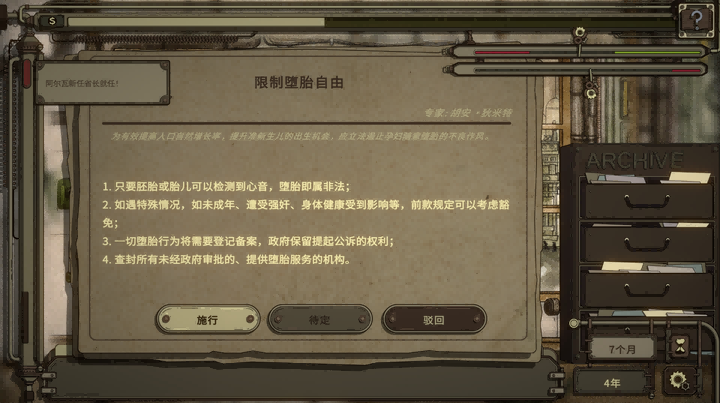
One day in 2022, during a class, students were asked to use a game to explore meaningful topics. At that time, the U.S. Supreme Court had overturned Roe v. Wade, so Owl and his classmates created a very basic prototype to discuss how the government and individuals regulate each other.
As the development progressed, those grand political narratives began to recede. Owl began to see more specific people—those struggling to survive in a chaotic environment—and how individuals manage to sustain their lives within a vast, uncontrollable world that is not always friendly.

They received a grant from the British government; while the amount was far from substantial as seed funding, it served as a meaningful validation of the work they were doing. Over the next few years, the team grew from two to three members—all classmates who knew each other well.
They work full-time on the game while covering their living expenses with other part-time jobs. Every year, they phase out an old version, making numerous changes with each new release. Owl says that satisfaction is never-ending; although life is pretty tight during development, there are times when they write something and feel so proud and happy.
It wasn’t until this year that the version finally stabilized and stopped changing constantly as it had before. The small team of three spent three or four years on the project; the time spent on classroom assignments and early demos actually accounted for only a small fraction of that period, while the bulk of the work was taken up by the long process of scrapping ideas, renaming the project, changing the background, and reworking the loop.
No matter how many years of weariness have passed, it all boils down to a single phrase: on the path toward a steadfast goal, time truly holds no weight. And so, there was that tiny figure darting back and forth in front of the stall, and so, we have the *Celtic Twilight* we see today.
It seems that these days, the smaller a game development team is, the better—the fewer the members, the clearer the goals. While this trade-off fosters communication and alignment of vision, it comes at the cost of the comfort of having everyone focused on their specific roles. A larger team requires effective communication, but that takes time to build, and time can only be found when resources are available.

Nan Liuxing, a graduate of Tsinghua University’s Department of Architecture, worked on projects at a medium-sized company in Beijing before moving to Guangzhou, where he continued to bounce around various major tech firms. As time went on, he grew weary of a situation where he wasn’t actually making games, but was instead wasting time with a group of people who weren’t quite sure what they wanted. That sense of exhaustion and disappointment with the projects was the only thing he took with him when he left NetEase.
He could actually see the pitfalls coming halfway through the project, but it was like a conveyor belt that only moved forward—with a project at a major tech company, there was no choice but to keep going.
Last year, Nan Liuxing hopped into a ride-hailing car and noticed that the driver had two phones: one for navigation and one open to a group chat. The navigation app announced, “Hello, driver. This is a Didi safety officer,” and immediately afterward, a voice message popped up in the WeChat group: “You’re lucky to even have a ride!” That kind of fragmented yet vibrant street-level humor struck a chord with him in that moment.
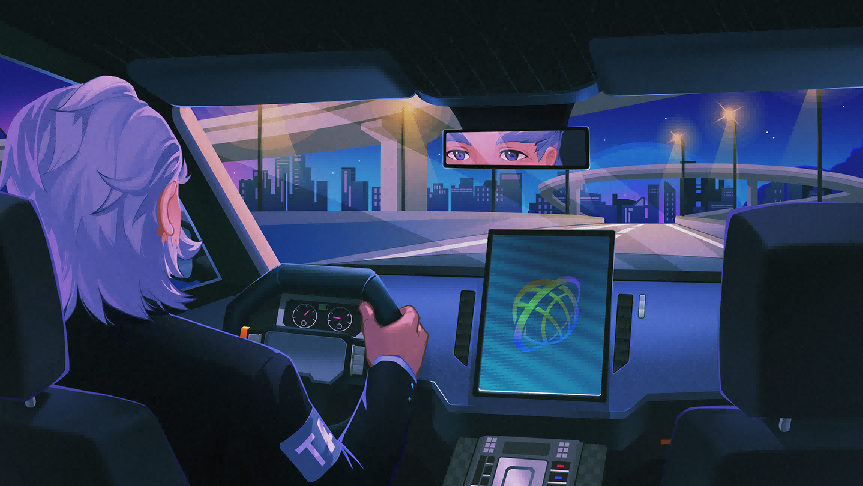
He wanted to create a detective game about taxi drivers. In Beijing, there are at least 20 drivers who used to be stock market gurus, more than a dozen bankrupt former business tycoons, and countless veterans. Their stories usually begin with “Back in the day…” and end with “If it weren’t for… I’d never be driving a taxi.”
Several of his colleagues had also come from major tech companies; some with similar aspirations formed teams right there, while others switched to working as freelance studios. But whenever Nan Liuxing tried to build a team, things always seemed to go awry. He once had a colleague help with operations, but that person went off to pursue a PhD. He also partnered with a programmer, but the programmer failed to deliver anything for three months—not only wasting time, but also leaving behind even more problems to solve. In the end, Nan Liuxing looked around and found himself all alone.
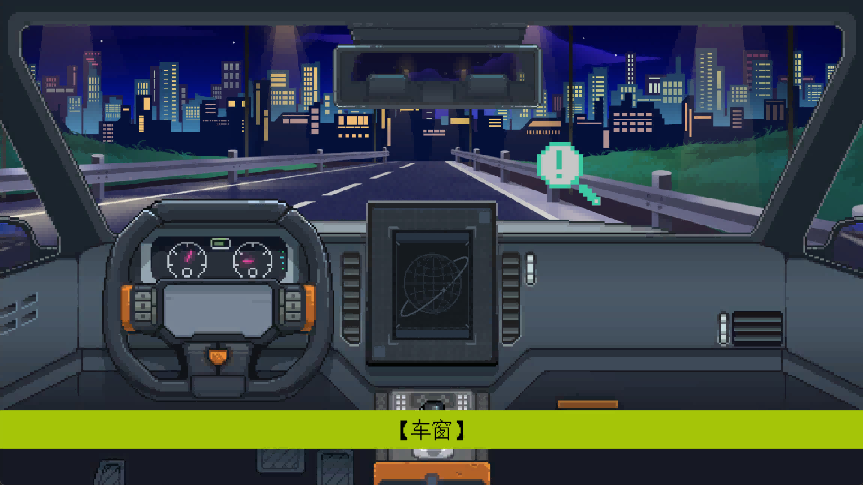
Working alone isn’t so bad; modern tools have made the development process much simpler, though the level of difficulty has become a highly personal constant. So, over the course of a year, he had to cut out some of the features he’d originally planned because they were simply too difficult for him to implement.Someone asked him why he was using Unreal Engine to build a text-based deduction game. This was a problem left behind when the original programmer dropped out—the game had originally included a driving system. Without the programmer, he simply couldn’t handle the development workload on his own, so he decided to remove the entire driving system. The advantage of working alone is that you can make flexible adjustments.
For him, wanting something, liking it, or being reluctant to let it go are not reasons to hold on to it. Any feature that isn’t absolutely certain becomes a liability, and the longer it lingers, the higher the cost. When it comes to things he isn’t good at, he’d rather give them up than spend too much time on them. That’s his approach to decluttering. In big tech companies, ample funding provides plenty of time; even if colleagues aren’t a perfect fit, projects can still move forward. But an independent developer has none of that.
Another challenge for a one-person team is that they can’t tell whether things they find fun will bore others, or whether things they consider ordinary will be a hit with players. Figuring out how to test these aspects is what they find most difficult. Conducting small-scale tests with friends, launching a Steam Playtest, and participating in in-person events seem to be the most common approaches.
It was hot and crowded in the exhibition hall. Sweating profusely, he bent down to explain the interface controls to the players while trying to determine whether the issues that had arisen were caused by his game.

Upstairs on the other side, a series of panel discussions was underway. In the packed venue, dozens of pairs of eyes were fixed on the few people on stage. The participants only learned the questions as they were asked; the event was being recorded live, and on a stage like this, every move was on full display.
Curry stood under the spotlight, flanked by Deng Buran, the producer of *A Perfect Day* and his senior in the industry. Deng’s command of language and conceptual thinking was clearly far more polished. It was Curry’s first time on such a stage, and the questions requiring on-the-spot responses forced him to think quickly.Curry prefers a style of communication that allows for pauses to think; speaking face-to-face feels like groping around in a dark room.

His game *Millennium Dream* is another example of this—it doesn’t rely heavily on text to convey its message. Curry originally worked as a game designer at Tencent and developed this game after resigning.The theme of *Millennium Dream* had been swirling in his mind for a very long time; he first conceived the idea right after graduating from college. Frequent moves during his childhood left him with a sense of unstable nostalgia for past scenes. As time flows by, many memories gradually cease to belong to him. It is precisely these fading fragments that Curry wishes to preserve.
After leaving the salon, we walked side by side outside the venue as catkins swirled through the air.
After leaving Tencent, he realized it would be difficult to determine whether potential partners were a good fit in the short term, and that communication would involve significant effort—especially since he wasn’t particularly skilled at it. So he decided to develop the game on his own. He outsourced less than 10% of the art and level design, and handled every other aspect himself as much as possible.His game features no complex numerical combat, no dense quest guidance, and hardly any explanations. Curry is well aware of the limitations of a one-person team and is willing to accept those boundaries.
He had originally wanted to do more—create mini-games, implement a more automated submission system, and introduce gameplay features that would make the project more “distinctive.” But if he could only manage to achieve a 60 or even a 50, he’d rather not do it at all.
He said he isn’t very good at storytelling and doesn’t really want to tell a specific story, because that would turn into a one-way imposition. Instead, he hopes *Millennium Dream* will be more like a space where everyone can find common ground and collaborate through the game. After all, the specific era of the millennium holds different points of reference in everyone’s memory.The game features user-submitted content, and when players see familiar elements from their own lives appear within it, he feels even more strongly that he is helping others preserve a piece of their memory.
Curry admits that the tools are indeed more sophisticated now, and AI has been a great help; it can save you time and fill in the gaps that used to require a lot of manual labor. Owl has said something similar: AI makes research much easier, and searching for information and literature is faster. But as mentioned earlier, the final shape of a work still comes down to the person behind it.
What’s more, as the technical barriers come down, market barriers naturally rise. With lower entry barriers, more people flood in, and players’ standards are rising as well.Today’s players have seen too many half-baked products and have become much more cautious. Curry says that if the goal is simply to make money, people might give up before the game even launches. The ability to keep going ultimately comes down to genuine interest—because it’s something you truly want to create—and because the feedback received along the way, along with the encouragement from those who enjoy it, keeps you moving forward.
I must have inhaled some poplar fluff; the discomfort in my throat made me cough, and for a moment I couldn’t even speak, while Curry, sitting beside me, kept telling his story.
Many people have dreams. A few create folders for them, and even fewer have the drive to start filling those folders. Whether it’s one person or a group, once they’ve filled it to a certain point, it’s no longer just an idea, and the demo is no longer two-thirds of the journey. It’s a leisurely stroll, yet it keeps a marathon runner on edge.
03
What happens next?
As I walked out of the venue, I wasn’t thinking about any grand narrative. To the world, games are data, revenue, and pixels dancing on a screen; but to them, games are a love letter sent to their hometown, an attempt to carve out a solid piece of land in the vast, empty expanse of the internet. They offer no guarantee of wealth, no guarantee of applause, and not even a guarantee of success.
My mind is filled with everyone’s words—whether from friends before the exhibition or from industry professionals who took the time to be interviewed. Mixed with the noise of the exhibition hall, the tapping of joysticks, the glow of screens, and the poplar fluff drifting outside, these voices capture the true nature of this industry more accurately than any academic paper ever could.


Since the ban on gaming consoles was lifted, the number of Chinese players on Steam has increased. Titles like *Ghost Valley Eight Deserts* and *The Scroll of Taiwu*, which are aimed at Chinese players, have proven that games that don’t quite fit the mold of traditional commercial blockbusters can still thrive. The first generation of gamers who discovered video games around the turn of the millennium have grown up and are now at an age where they can devote years to pursuing a single passion.
The crowd is beginning to disperse. Some are leaving the big tech companies because they’re tired of wasting their time on massive projects.Others, who previously worked in animation, film, or short-form video, have found their cash flow increasingly strained and are looking to try their hand at other types of content. Some, seeing the mobile gaming market become overcrowded and the old paths of skinning games and buying user traffic growing ever narrower, have turned to approach publishers. And there are programmers, artists, and game designers who, after leaving their desks, are holed up at home, pondering whether to launch a project of their own.
In the past, technology and funding were the biggest barriers to entry. Today, game engines, asset libraries, AI, and crowdfunding platforms have made these barriers much easier to overcome.
In the current industry, there are still many freelancers. Without a steady job, they have plenty of time but very little money. So, to avoid the complex costs of coordinating with others, most of them work independently. Where there’s a shortage of personnel, AI is used as a substitute—it seems a single person can now develop a game on their own. Games that used to take two or three years to develop can now be roughly completed by a single person in as little as a year.
In response to this situation, overseas developers have adopted a collaborative approach. Even though these game developers remain independent on individual projects, they are able to share promotional resources, relevant information, and publishing expertise through online networks and resource platforms. Similarly, the burgeoning array of domestic platforms and resources provides such support, enabling them to operate like individual hives, each working independently.
Perhaps they, too, have considered expanding their team, but the cost of trial and error has deterred these indie game developers, forcing them to adjust their strategy. For them, finding a team that can truly move forward together remains a challenge.
原创文章,作者:gallonwang,禁止转载:https://youxichaguan.com/en/archives/196089