On March 12, *Lock Kingdom: World*, developed by Tencent’s Magic Cube Studio Group, kicked off a three-day offline demo event. Notably, the game is set to officially launch across all platforms on March 26, and pre-registrations have already surpassed 50 million.
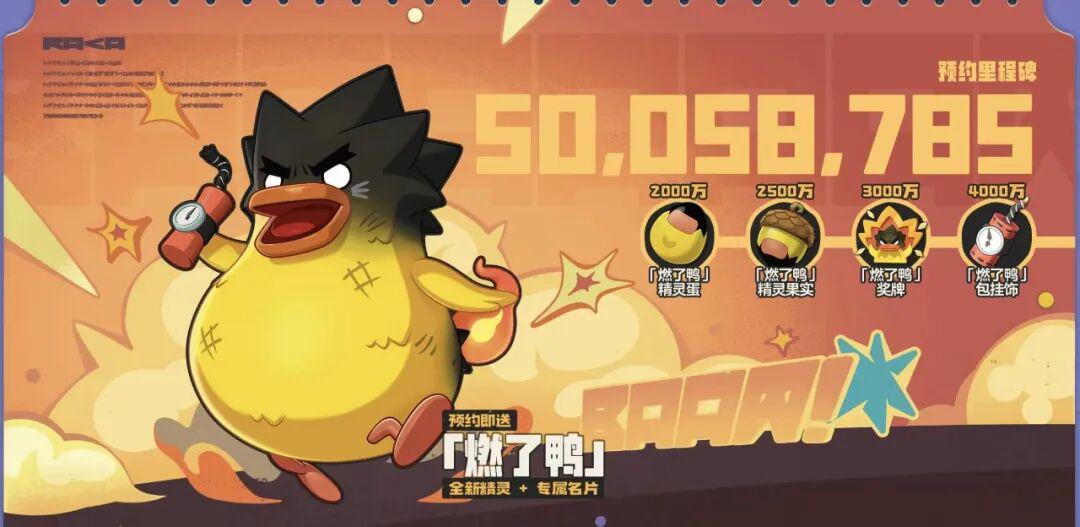
To be honest, I’m not a core player of *Kingdom of Rock*, so I’m both curious and apprehensive about this game, which countless players regard as a “nostalgic masterpiece.” Why do I say that? A couple of years ago, the pet-collecting genre suddenly exploded in popularity, injecting a shot of adrenaline into the gaming industry. For a time, it seemed as though the entire industry—from hardcore survival and building games to niche side genres—was spinning wildly around the concept of “pet-collecting.”
But the reality is that short-term hype-driven marketing isn’t enough to truly propel any bandwagon product into the spotlight.
Looking at *Rock Kingdom: World* from this perspective, its predecessor, *Rock Kingdom*, stands as one of the pioneers of the early domestic “pet-catching” genre. Whether in terms of its player base or the depth of its gameplay mechanics, it can truly be called second to none.For most developers, “jumping on the bandwagon” combined with “nostalgia marketing” is undoubtedly the best approach for this IP. However, after actually getting my hands on the game offline, I discovered that *Lock Kingdom: World* is a “counterintuitive” product.
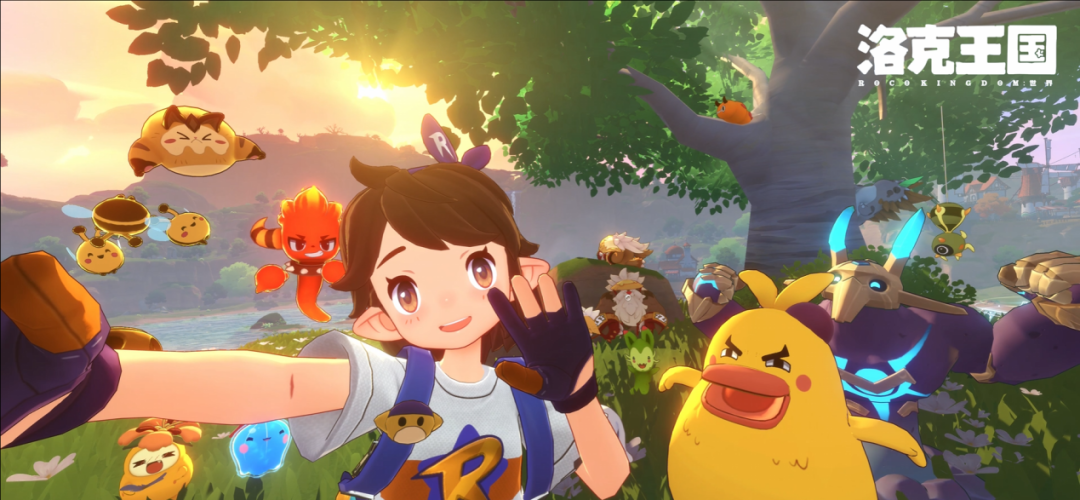
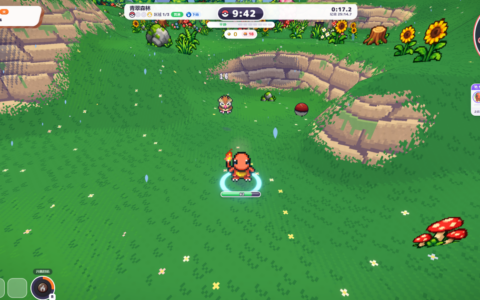
On the one hand, this isn’t just another game jumping on the pet-collecting bandwagon. On the contrary, *Lock Kingdom: World* has a very clear gameplay structure, with “collecting, raising, and battling” at its core, complemented by open-world exploration—the two elements work in perfect harmony.
You can clearly sense that *Lock Kingdom: World* has broken free from the vicious cycle of monster-catching that has dominated the past two years—a cycle in which creatures are treated merely as numerical tools, incapable of forming any emotional connection with players.The true turning point lies in *Lock Kingdom: World*’s unwavering commitment to “IP heritage,” reclaiming the role of these creatures from mere “tools of production” back to their original identity as “adventure companions,” and anchoring the experience solely in the emotional resonance between players and their spirits.
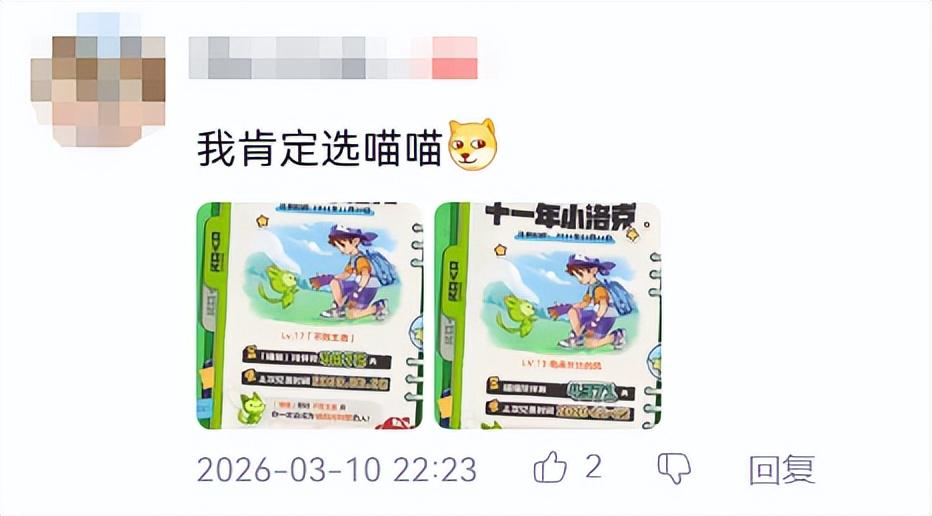
Here’s a very telling example: on Bilibili, many content creators recommend choosing Sparky or Lulu as your starter Pokémon when starting out. Yet, judging by the comments section, there are still plenty of players who insist on choosing Meowth. The reason is simple: to hesitate for even a second would be a disservice to their childhood.

On the other hand, rather than relying on nostalgia-driven marketing to tug at players’ heartstrings, I believe the true highlight of *Lock Kingdom: World* lies in its “ambition” to drive the evolution of the genre.Throughout its evolution from the traditional pet-collecting genre to a brand-new "Great Spirit World" genre, *Lock Kingdom: World* has consistently maintained the principle that all spirits are free to obtain. Rather than opting for the simpler approach of charging for spirits, the game has adopted cosmetic customization as its core monetization model, completely eliminating the heavy-spending loot box system.
Unlike similar titles, which either rely on reskinned versions of traditional MMOs or devolve into solitary single-player experiences, *Rocks Kingdom: World* has chosen to integrate a unique social gameplay system into its vast world of creatures, attempting to transition the game to a Game-as-a-Service (GaaS) model to explore the future prospects of this genre.
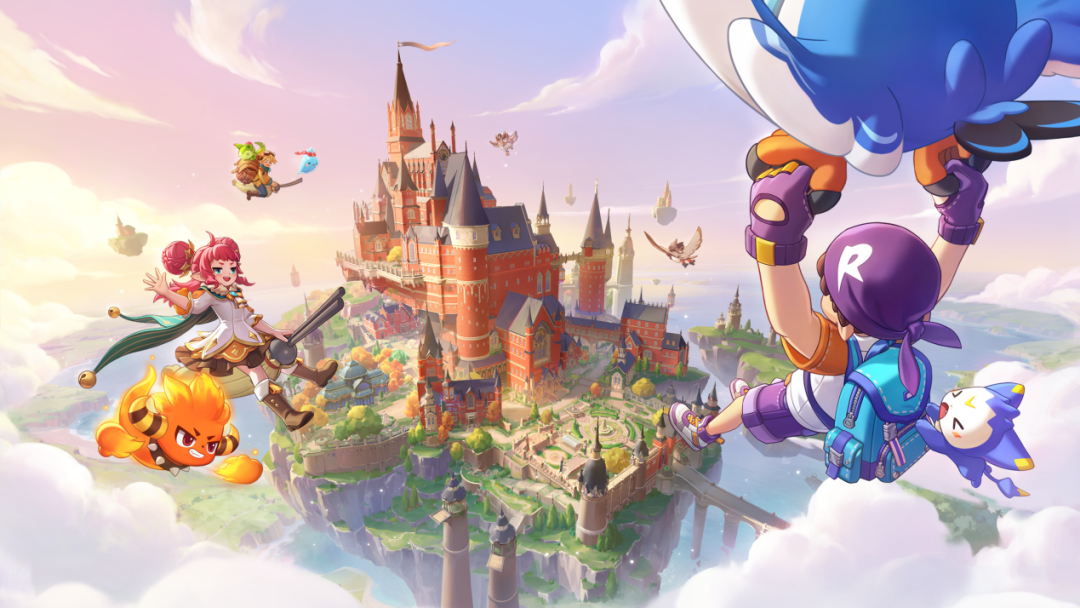
This “ambition” to reshape the genre’s ecosystem is not merely empty rhetoric on paper. At the preview launch event, Enzo—President of the Magic Cube Studio Group and creator of the Kingdom of Rock IP—along with Lead Game Designer Kai Shui and Publishing Director Jane, delivered a pragmatic presentation free of empty promises, providing the most direct endorsement for the game’s long-term development. This conveyed an extremely clear message:*Kingdom of Rock: World* aims not only to be a pioneer in the evolution of the genre, but its long-term goal is to completely surpass the industry’s and players’ ultimate vision of what a vast fantasy world game can be.
01
Redefining the Foundational Logic of the Open World: Combating "Number Anxiety" with Emotional Bonds
To truly understand *Kingdom of Locke: World*’s vision of redefining the genre, we must first address the core challenges currently facing the monster-collecting genre.
In today’s market, this genre is caught in an extremely polarized path dependency. On one end, the gameplay mechanics of the monster-catching genre have led to an extreme tendency toward instrumentalization, reducing creatures to disposable, assembly-line consumables.Simply put, every gameplay mechanic and system in the game is designed solely to help players become stronger, while monster-catching has been reduced to a secondary activity or a tool for boosting stats. There is no emotional connection between players and their creatures. Although this design can generate massive traffic in the short term, it is highly prone to product homogenization and the dilemma of “user churn once the content is exhausted.”
On the other hand, traditional monster-catching games rely heavily on a business model centered on “heavy gacha mechanics,” locking core, high-powered creatures away in bottomless gacha pools and exploiting players’ trust through steep acquisition costs and pay-to-win mechanics. This business practice—which prioritizes numerical stats over emotional connection—leads many similar titles to face a steep drop in retention rates shortly after their initial launch surge.
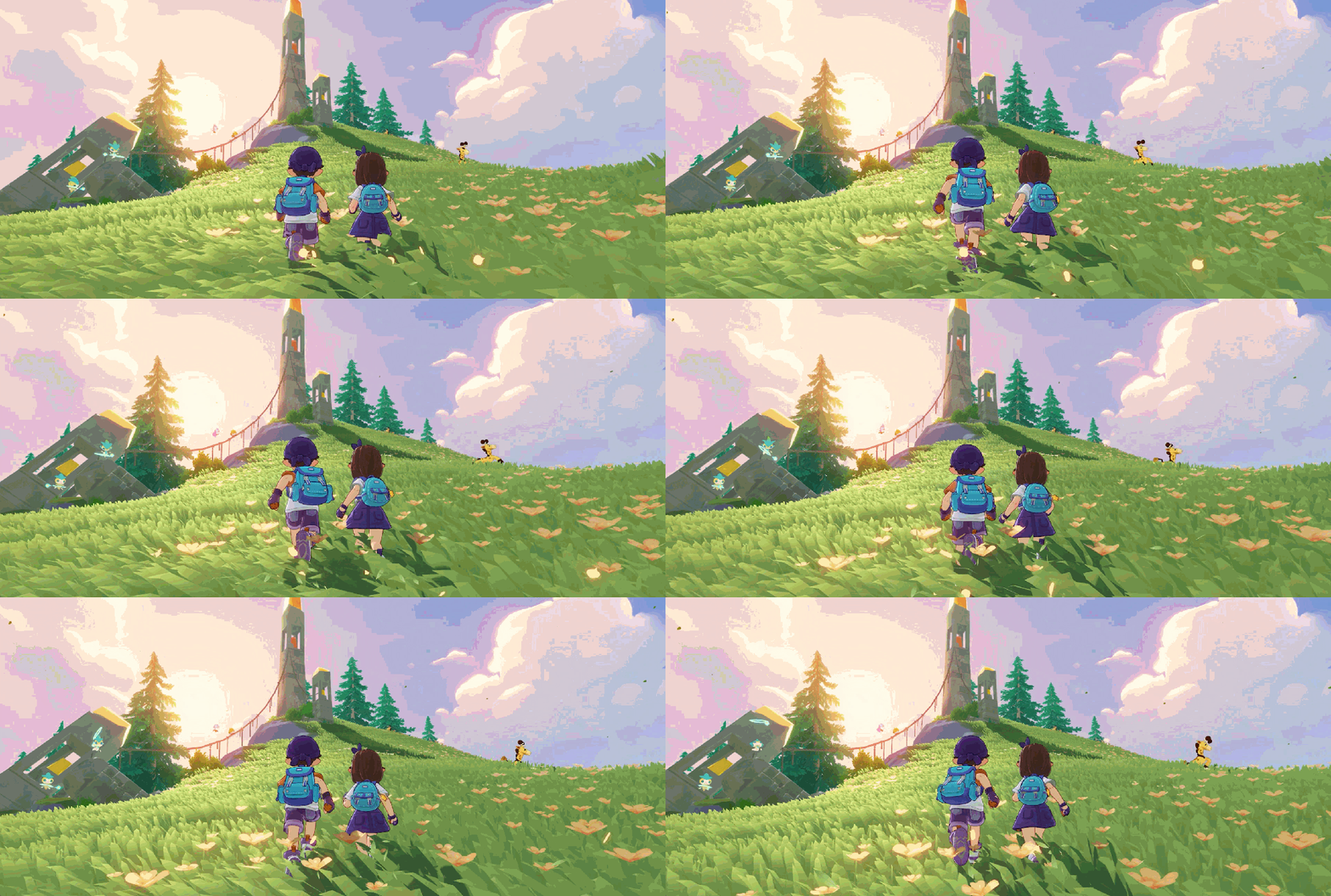
It was precisely to break free from the category constraints mentioned above that *Kingdom of Rock: World* adopted the "Great World of Spirits" as its core concept; however, this path has not been without its challenges.
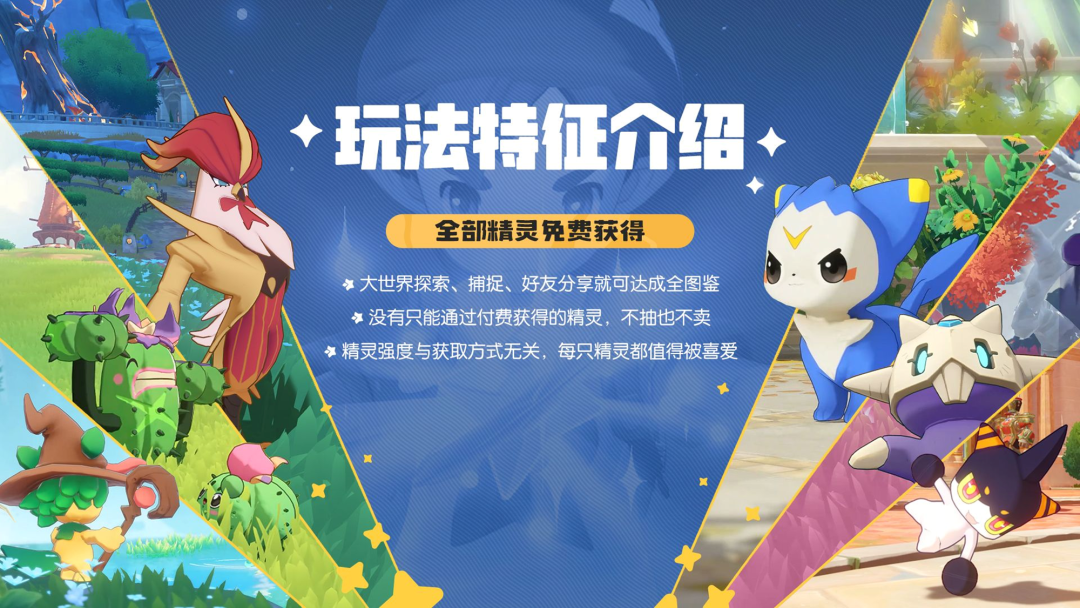
The Heart of the Product: Pokémon Are Your Partners
In fact, around 2021, when open-world games were flooding the market, *Kingdom of Rock: World* nearly fell into the same trap. The lead designer, Kai Shui, told me that during the exploratory phase at the project’s inception, the team wavered on the direction to take: whether to follow the mainstream trend of the time and pour resources into “formulaic” open-world mechanics like puzzle-solving and treasure hunting.
However, during subsequent internal discussions, they quickly realized that the core of the Pokémon universe must lie in the act of catching Pokémon, and their task was to figure out how to make that experience fun again.
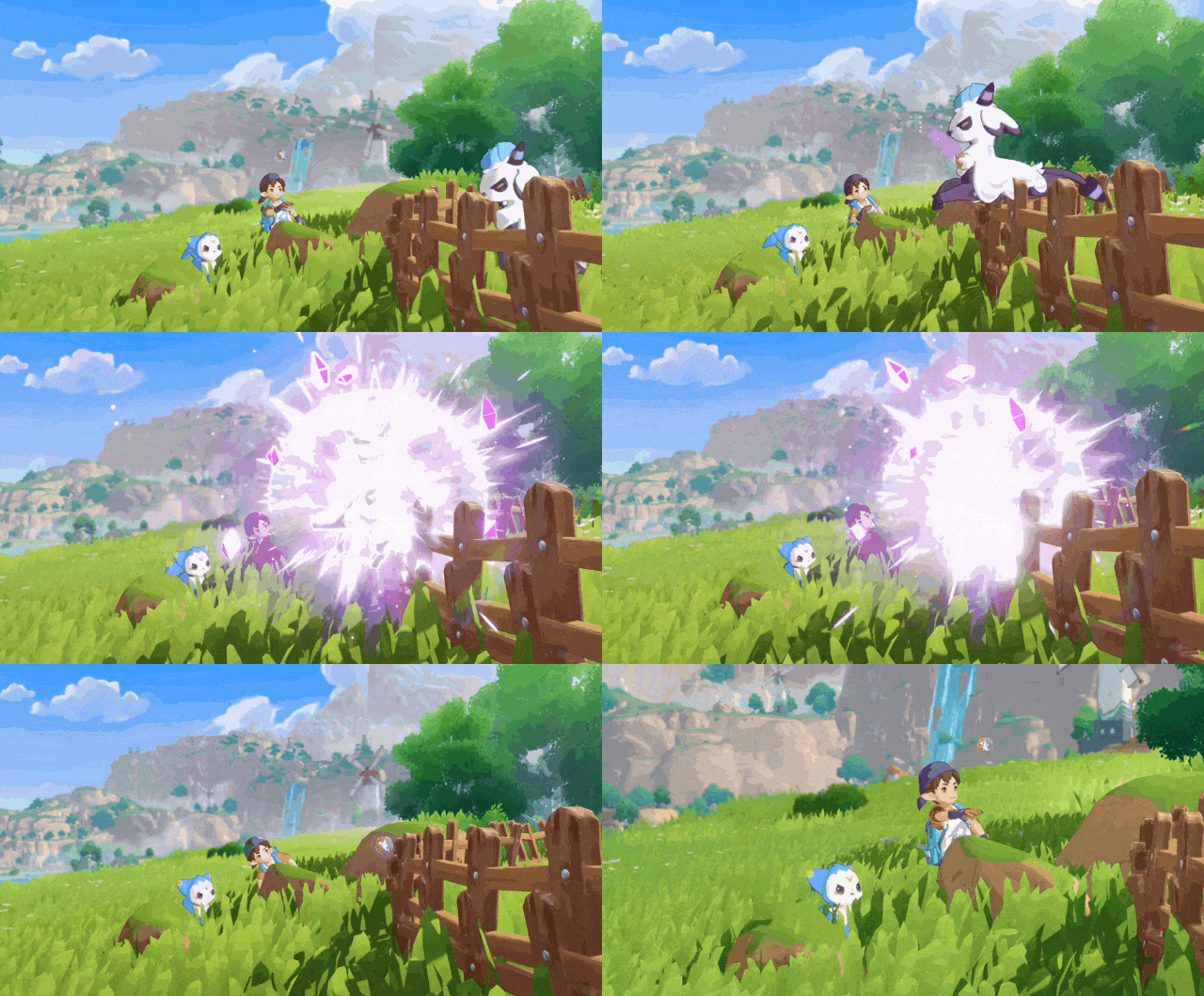
Since the strategy is centered on “spirits,” then spirits must take absolute control of this open world.
At the preview event, KaiShui unveiled a set of production figures that left the industry speechless: Upon the official launch of *Kingdom of Lock: World*, the game will feature over 400 launch-day creatures, and will continue to add more than 200 new creatures annually. This is made possible by the highly industrialized production pipeline that Magic Cube has spent years refining.
Of course, in the world of monster games, sheer volume has never been the true competitive advantage; the real barrier lies in the “substance”—that is, how to build a coherent ecosystem for monsters within such a vast scale. In the development priorities for *Kingdom of Rock: World*, monster design has long moved beyond the simple stage of “3D modeling and skill stats”; the team now needs to address more fundamental ecological challenges.
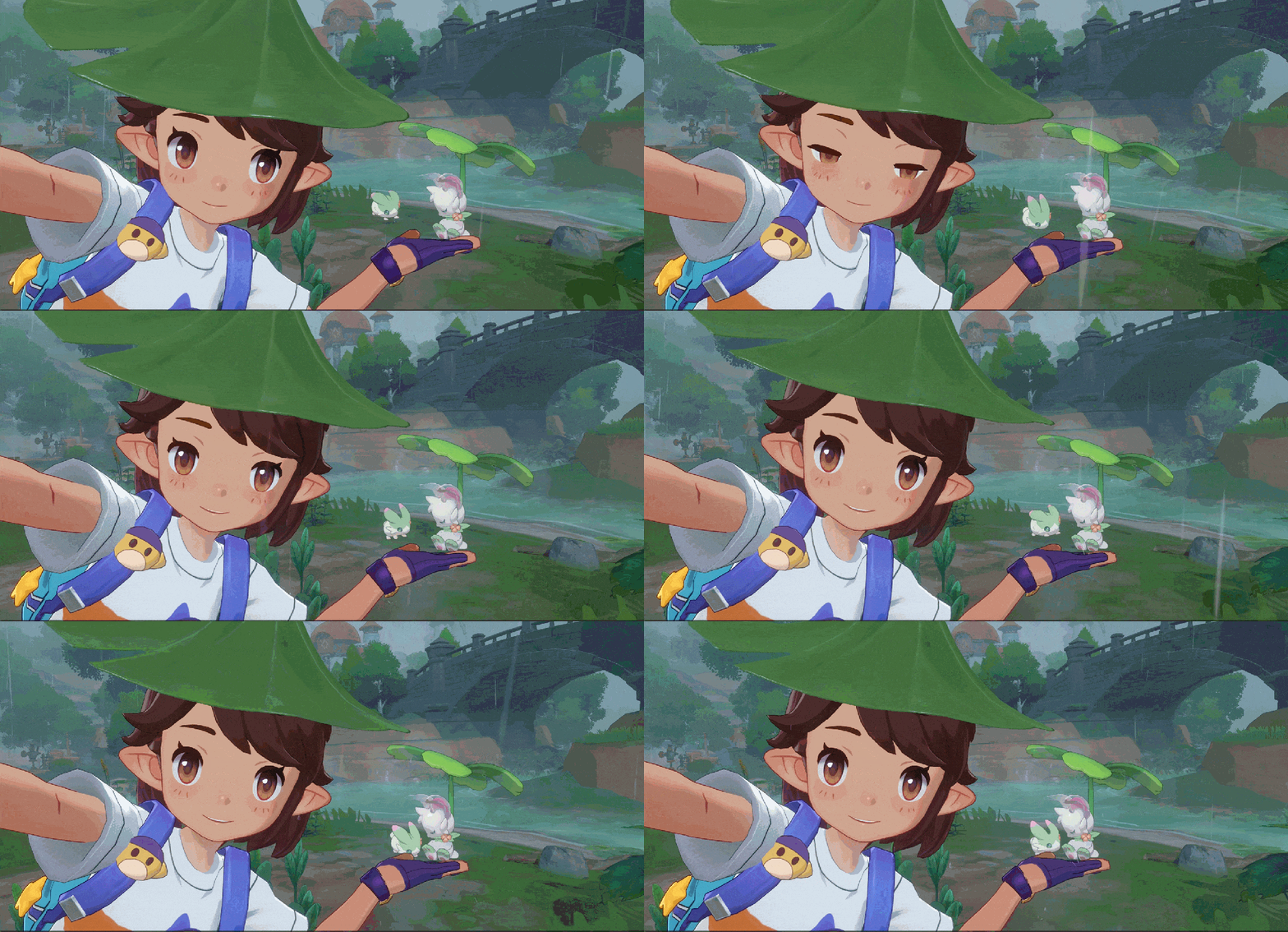
To give some concrete examples: when it rains, the four-leaf clover in Spring Rabbit’s hand acts as an umbrella, and other spirits even come to take shelter from the rain.
Even Electric Giraffes, which usually run around everywhere, can get stunned by their own electric type on rainy days. If a player challenges them to a battle at that moment, they’ll find the Pokémon is actually in a stunned state.
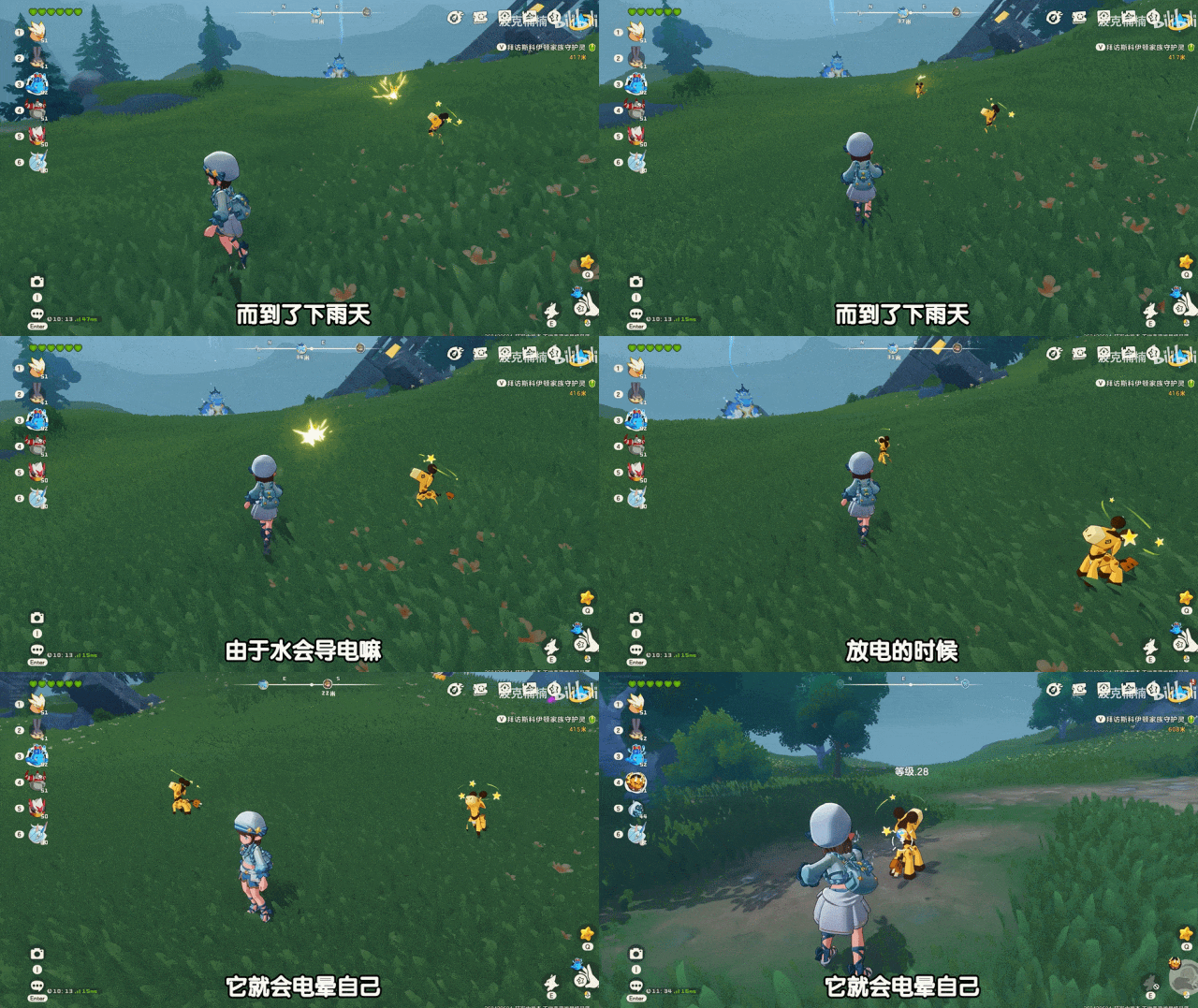
GIF courtesy of Bilibili creator Bo Ke Nan Nan
Not to mention Stupid Little Road, who spins in circles until he gets dizzy, or Crying Mushroom, who gets comforted by the other Pokémon.
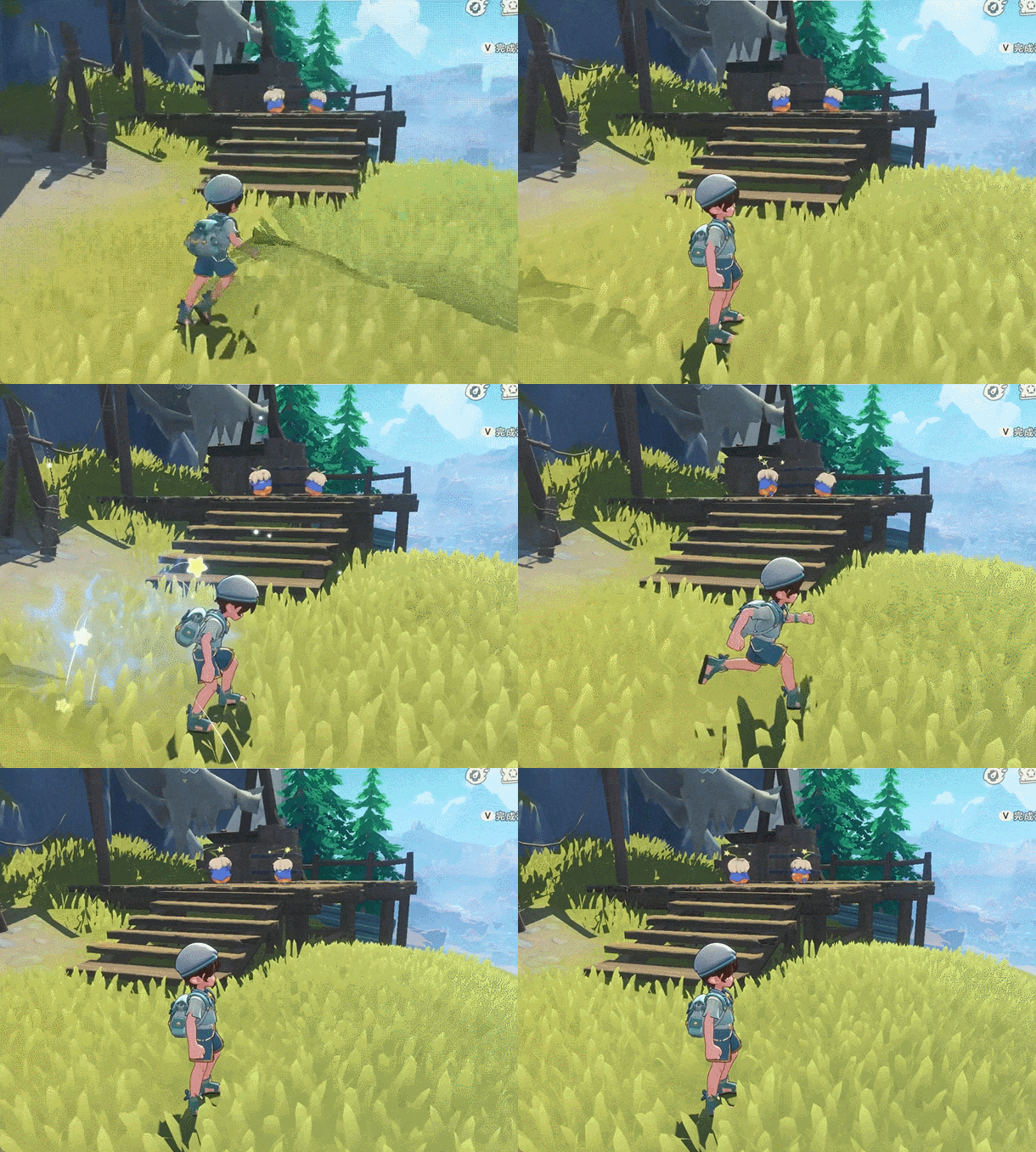
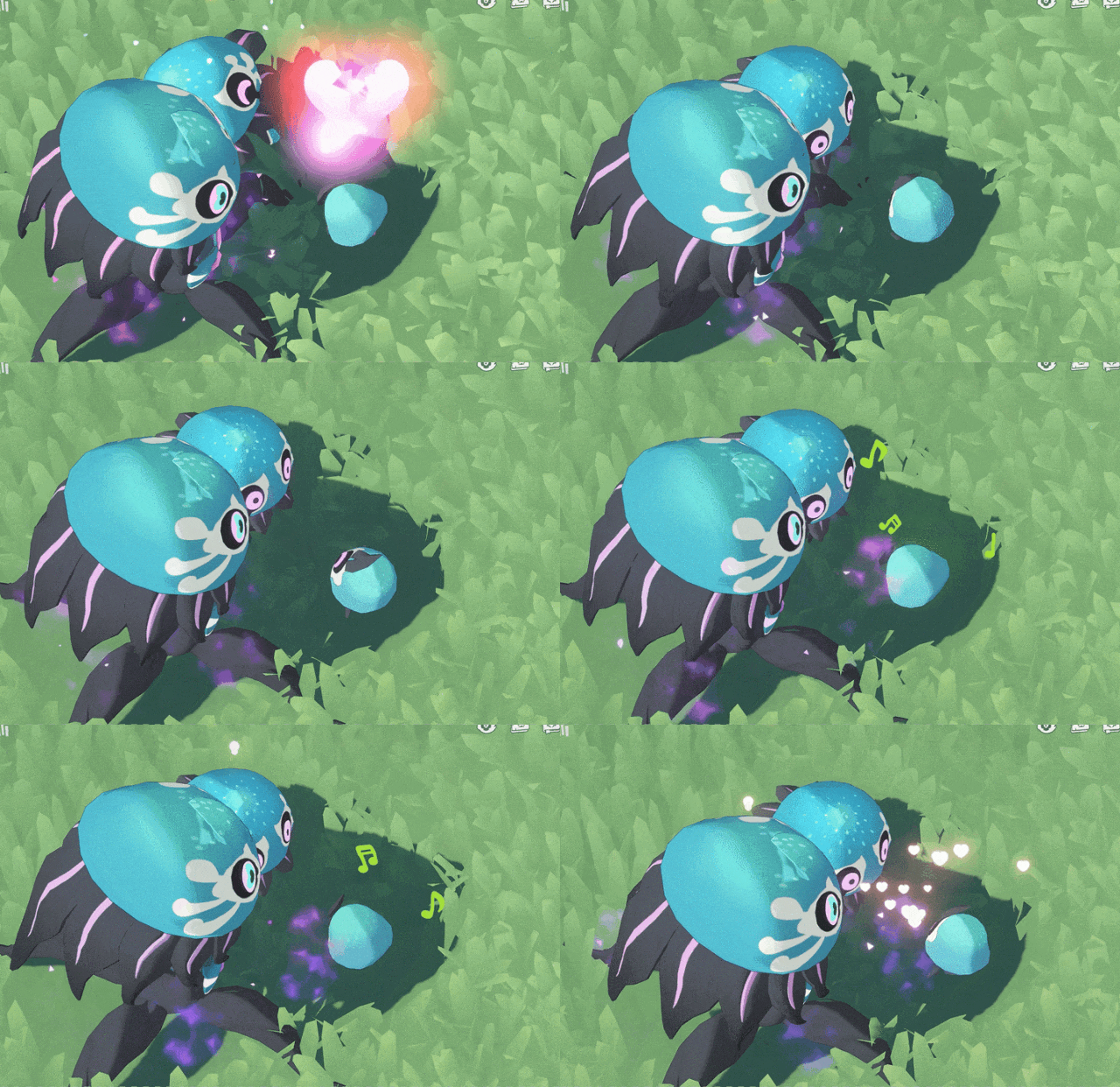
Friendly creatures will approach players on their own, and some can even be ridden without being tamed. When players perform a distress signal, certain creatures will even heal them. On the other hand, aggressive creatures will not only attack players but may even taunt those who are calling for help.

GIF courtesy of Bilibili creator Bo Ke Nan Nan
These numerous details about how the Pokémon interact with the world make the vast Pokémon universe feel even more vibrant and immersive to players.
In addition, to truly bring the genuine emotional connection between players and their Pokémon to life, the game incorporates unique personalities into the underlying mechanics for each Pokémon, making it easier to form a one-of-a-kind bond with them. Simply put, Pokémon of the same species will randomly exhibit vastly different physiques and personalities, and may even feature rarer color variations or dazzling appearances.
When players capture a Pokémon, it feels more like gaining a personal companion; the shared experiences that follow will eventually become irreplaceable emotional memories.
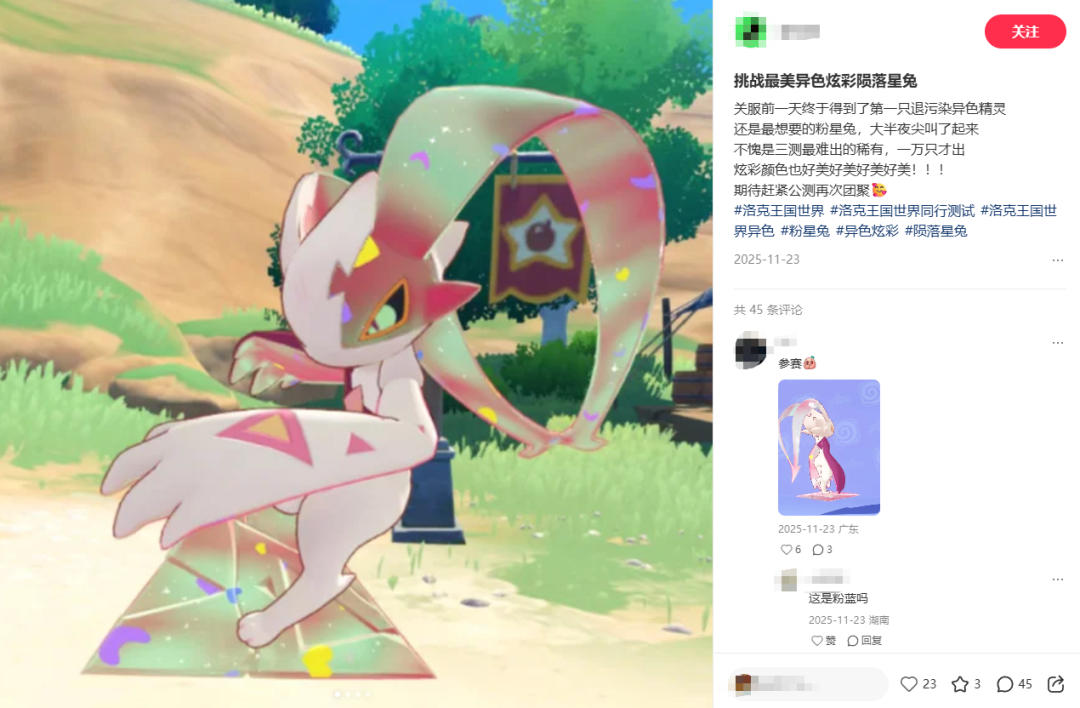
During the beta test, many players shared photos of their alternate-color and shimmering Pokémon on social media.
It’s fair to say that in the original Pokémon ecosystem, the developers imbued the Pokémon with a strong sense of individuality and companionship. Often, players choose to train a particular Pokémon not out of a utilitarian desire for raw power, but purely as an emotional attachment.
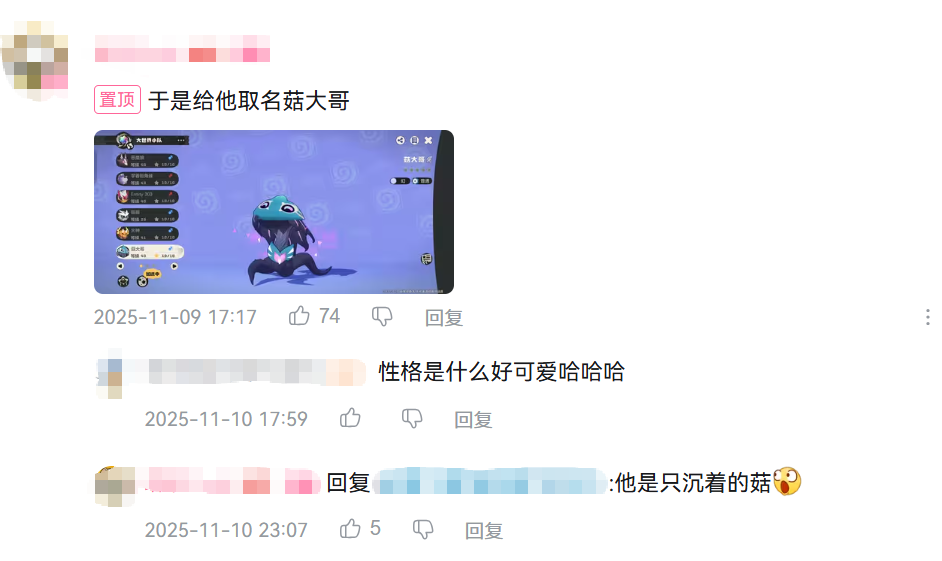
Many players give their Pokémon unique names based on their personalities and how they interact.
At a time when every developer is striving to push players to reach new heights in open-world games, the very act of daring to let players pause and enjoy the scenery alongside their creatures is, in itself, an insurmountable barrier. This emotional foundation, built on a passion for the game, is precisely what serves as the long-term competitive advantage for *Kingdom of Rock: World*.
02
Overturning the Gacha Table: A High-Stakes Business Gamble on the Restructuring of GaaS
If emotional bonds form the foundational moat of *Kingdom of Rock: World*, then its GasS-based overhaul of monetization and open-world social gameplay represents a bold gamble on reinventing the genre.
The first step in breaking the mold was to abandon the mainstream monetization model of gacha and loot boxes. Kai Shui explained that in the design of *Lock Kingdom: World*, obtaining creatures is based on the principle of “what you see is what you get”—whether through capturing them in the open world, sharing with friends, or earning seasonal rewards, players can obtain all creatures for free.
The courage to take this step stemmed from a shared consensus established by the development team early in the project: “Gacha mechanics undermine the core experience of the Pokémon World genre.” If making the game fun is the top priority, then the monetization model must inevitably change.
Consequently, at the preview event, Kai Shui also stated that *Kingdom of Lock: World* is based on a core monetization model of “light progression, deep customization.”

Lead Designer Kai Shui
This model ingeniously breaks the deadlock between production capacity and in-game metrics. When progression is decoupled from in-app purchases, character design is no longer held hostage by the need to “force players to spend money to be strong.” Kai Shui told me that the characters they design are based on real-world scientific knowledge or subcultural references, creating a sense of resonance and excitement among knowledgeable players who think, “I get this.” As long as there’s an audience that loves it, it’s worth implementing.
Furthermore, by eliminating the deep progression mechanics, the game significantly reduces the common turn-based turn-offs—such as resource shortages, high grind requirements, and steep learning curves—that often deter players. By tightly integrating core resources with open-world gameplay, this "shallow progression" approach broadens the game’s appeal, enabling it to attract a large number of players outside the genre.
As for the critical task of monetization, it naturally fell to “cosmetic customization.” Rare Pokémon varieties—such as those with unique colors or dazzling effects—offer personalized distinctions that go beyond raw numerical power, serving as a long-term incentive that drives players to explore the game repeatedly. Furthermore, by offering a variety of non-numerical cosmetic items for purchase—including “parent-child skins” for both characters and Pokémon—the game has laid a solid foundation for a more sustainable long-term LTV.
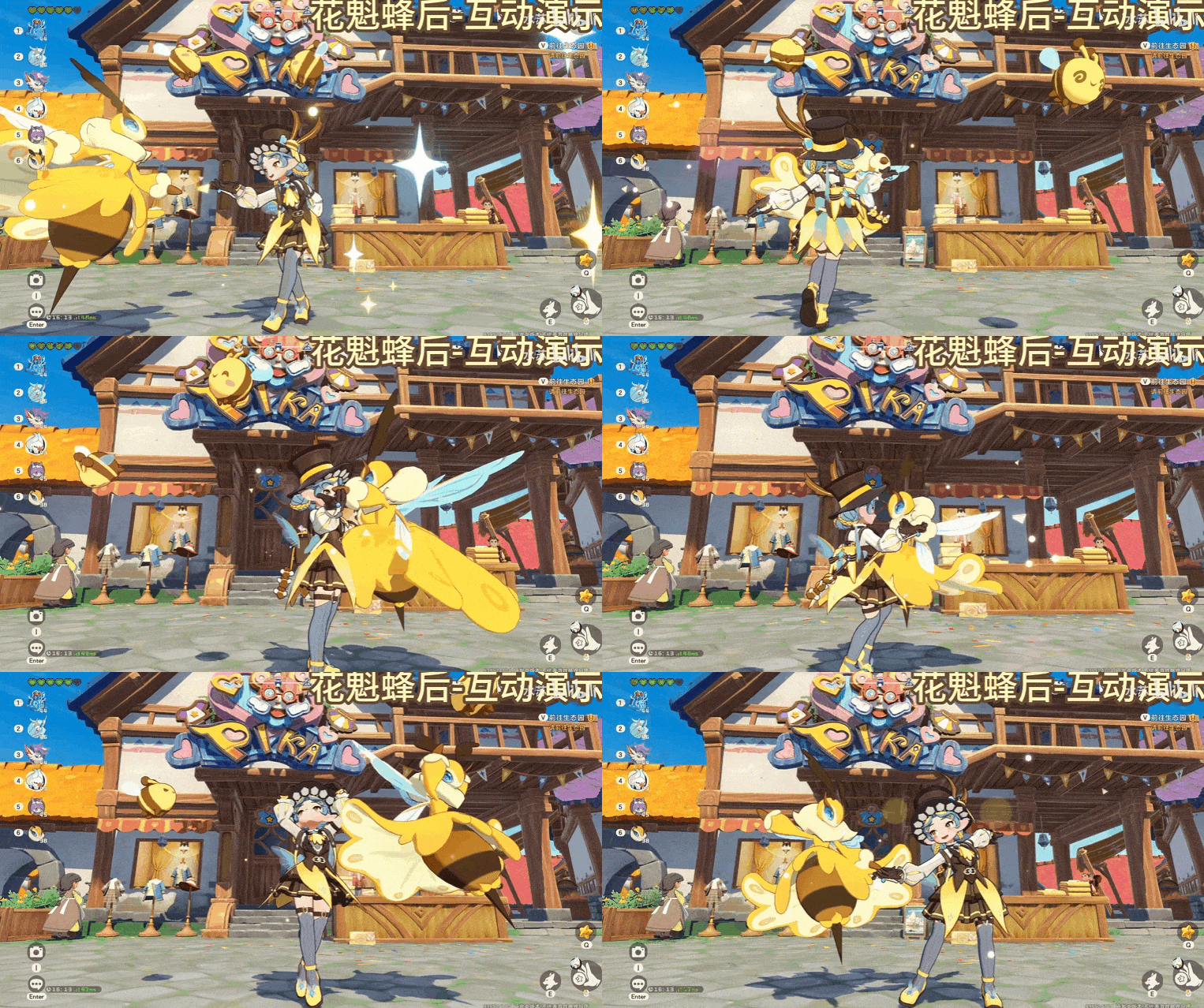
GIF courtesy of Bilibili creator ゚水苏
However, for the "Spirit World" series to truly transition to a GaaS model, innovation in the payment system alone is clearly insufficient. How can the game maintain its vitality in the face of the intense challenge of content consumption? "Rock Kingdom: World" has addressed this by introducing social gameplay features as an extension of its open-world pet-catching mechanics, thereby countering the anxiety associated with long-term operation.
In past game lineups, pet-collecting games have either veered toward the forced social interactions of hardcore MMOs or devolved into lonely single-player experiences where completing the entire bestiary leads to a sense of stagnation.However, judging by the recent beta feedback and launch details for *Rock Kingdom: World*, the game has implemented a wealth of optional, low-pressure social features: more multiplayer zones, hand-in-hand exploration, home visits, and even the bold addition of pet trading and cross-platform play across three devices. These social elements are never forced, yet they are highly engaging.

It ingeniously addresses two key pain points: first, it provides the most natural and frequent opportunities for players to show off their “deep cosmetic purchases” and share the emotional value they bring; second, through social mechanisms such as “asynchronous messaging magic” and low-barrier “refer-a-friend” programs, it enables even players with severe social anxiety to break the ice seamlessly.
It can be said that when the loneliness of solo exploration is filled by players’ own desire to socialize, this GaaS ecosystem—which doesn’t force players to grind or spend money—truly closes the loop.
03
Investing 1 Billion in Traffic to Build a Gamer Ecosystem: The Long-Term Narrative of 350 Million Users Is the "Ace Up Our Sleeve"
From a product perspective, with development initiated in 2020, the game first unveiled in 2021, and pre-registration set to begin in 2025, *Kingdom of Lock: World* has undergone multiple rounds of testing, and the outlook for both its product quality and long-term sustainability is highly promising. Judging by the series of major initiatives planned for the post-launch period, this clearly demonstrates Magic Cube’s strong commitment to fostering a vibrant player community.
In an era where user acquisition costs have long surpassed industry limits, Jane—Head of Magic Cube Market and Publisher of *Rock Kingdom: World*—dropped a bombshell at the preview conference: following the official launch of *Rock Kingdom: World*, the company will invest heavily in cultivating its content ecosystem.Strategic partnerships have been established with four major content platforms—Bilibili, Douyin, Kuaishou, and Xiaohongshu—which will collectively provide over 1 billion views and resources to support the game’s launch.

Jane, Head of Distribution
Of course, various related collaborations will continue to gain momentum. For example, we’re teaming up with Shanghai Animation Film Studio to create the Year of the Horse Spirit, and a limited-time collaboration with QQ will introduce fun in-game items. Additionally, there will be collaborations with Meituan Group Buy, Luo Tianyi, and many others—truly ramping up the excitement both online and offline.
Some may wonder why Magic Cube is investing such significant resources and dedicating five years of patience to developing "Spirit World," a game that, from a business perspective, doesn't seem like a quick way to make money.
I believe Enzo, President of the Magic Cube Studio Group and creator of the "Lock Kingdom" IP, who made a surprise appearance at the preview event, has already provided some answers:As China’s first “online fantasy world” game, *Lock Kingdom* boasts a staggering user base of 350 million registered users. Through its expansion into feature films, books, and merchandise, it has become a shared collective memory for many Gen Z and Millennials. It’s safe to say that its user retention and influence across demographics are immeasurable.
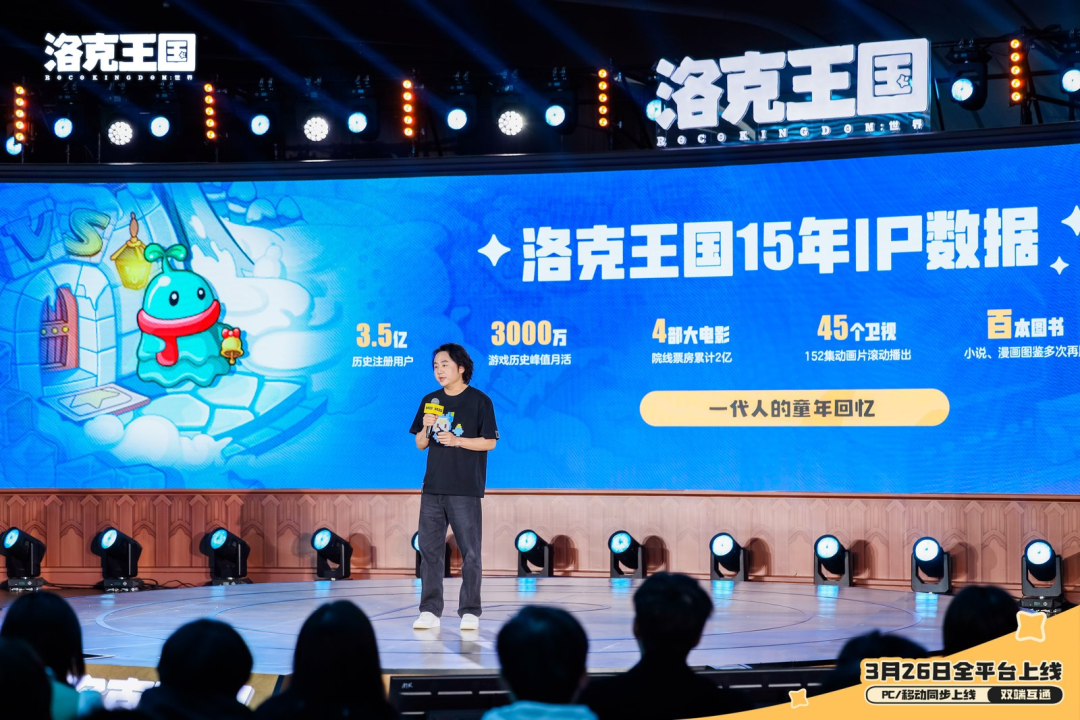
Enzo, President of the Magic Cube Studio Group and creator of the Lock Kingdom IP
It was the unprecedented success of this product that directly led to the establishment of Tencent’s Magic Cube Studio. It serves as the true cornerstone of the IP and the strategic foundation of the Magic Cube team. That is precisely why these industry veterans, who are well-versed in the harsh realities of the market, remained so restrained and down-to-earth throughout the entire press conference, focusing primarily on whether players would like it, what they wanted, and whether their expectations had been met.
In my view, true category evolution isn’t about conjuring up even more complex monetization models in a fiercely competitive market, but rather about having the confidence—backed by a user base of 350 million—to redefine the gold standard for the fantasy world genre. And in this bold gamble to push the boundaries of players’ imagination, *Lock Kingdom: World* is undoubtedly our strongest trump card.
原创文章,作者:游茶妹儿,禁止转载:https://youxichaguan.com/en/archives/195638