At 1:00 a.m., the office is brightly lit. Programmers stare at flickering screens of code, their fingers flying over keyboards as they debug the logic for character skills that are about to go live. At the art team’s desks, a modeler uses a stylus to meticulously sketch out the texture details of a game scene, while a UI designer nearby fine-tunes the gradient effects on buttons.Outside the window, the night is deep; the blue glow of the screens illuminates their focused faces, while the air is filled with the aroma of coffee and the crisp sound of keyboard clicks.
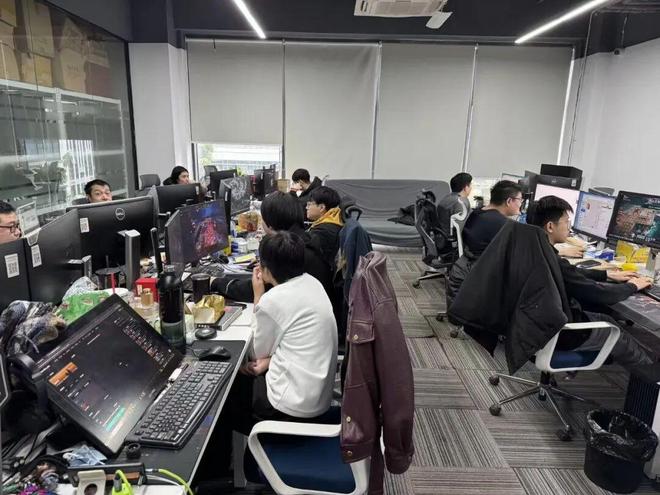
This is a typical day at a single-player game developer in Hangzhou.
Starting in 2024, the domestic single-player game market has entered a period of explosive growth. The release of titles such as *Black Myth: Wukong* and *Late Ming: Feathers of the Abyss* has not only taken over the computers and consoles of players both at home and abroad, but has also shown industry professionals a path that diverges from the past. Hangzhou, the birthplace of the up-and-coming studio Game Science, has emerged as a major hub for console gaming.
In fact, Hangzhou has a long-standing connection with the gaming industry. Since the Hangzhou Municipal Government Office issued the “Several Opinions on Encouraging and Supporting the Development of the Animation and Gaming Industry (Trial)” in 2005 and established a 50 million yuan special fund for the development of the animation and gaming industry, this move not only opened the door for Hangzhou to support the growth of the animation and gaming sectors but also prompted a number of local Hangzhou companies to begin exploring this field.
Twenty years on, the shores of West Lake have become home to numerous major game companies, including NetEase Games and Game Science, as well as hundreds of small and medium-sized game development teams. The gaming industry has evolved from a scattered collection of individual players to a cluster of thriving businesses, expanding from game development alone to encompass the entire industry chain—including art design, marketing, and distribution—and has thus formed a unique “Hangzhou gaming ecosystem.”
Game developers in Hangzhou seem to possess a unique spirit that sets them apart from their counterparts in other cities. They neither blindly follow the frivolous trend of “traffic above all” nor cling to the creative obsession of “working in isolation.” Instead, they seek a balance between dreams and reality, quality and the market—this is not just a slogan, but a conviction deeply ingrained in the very fabric of the industry, and it is the key to Hangzhou’s success in standing out in the domestic single-player game market.
01
A New Path: The Dreams of "The Next Generation of College Students"
In March, Hangzhou is still a bit chilly despite the first signs of warmth, and sunlight streams through the windows into the room. Ni Zhenjie finished his meal in a few hurried bites and quickly returned to his office. He had several meetings with company executives scheduled for the afternoon, and in between, he needed to go over game details with the R&D team.

As the founder of Hangzhou Heiyan Technology, Ni Zhenjie is leading his team in the intensive development of a turn-based strategy game. This is the company’s first single-player game, so there is no room for error.
Let’s rewind to Ni Zhenjie’s childhood. In elementary school, the bulky computer in his father’s office was his favorite thing; every day after school, he would rush to dive into the world of video games. From that moment on, creating a game that players would love became a secret dream of his.
Prior to this, Ni Zhenjie had developed a mobile game as a test project. As a newcomer to the gaming industry, mobile games were a safe bet. To that end, he also planned to leverage a sci-fi anime series previously released by the company—which had amassed 700 million views across all platforms—to create a cross-promotional partnership, thereby establishing a business model that would drive traffic between the two platforms.
He recalls that the mobile game received unanimous praise during the team’s internal beta testing, and some friends even came specifically to try it out; at that time, they were full of hope for the future. Unfortunately, when the game was scheduled to launch in 2023, they were unable to find a suitable publisher due to delays in obtaining the necessary domestic market approval, and ultimately had to withdraw from the project.
But he didn't give up. After discussing the matter with his team members on numerous occasions, he decided to shift his focus to the single-player game market, with plans to create a turn-based strategy game that was "a rarity in the market."
This decision is undoubtedly a huge gamble. Although the domestic single-player game market is currently booming, most titles focus on genres such as role-playing and action-adventure, with few venturing into the turn-based strategy market.
This decision was also influenced by Ni Zhenjie’s personality. “Perhaps fate was leading me toward turn-based strategy games,” he said. After all, he had been playing single-player games since childhood, and turn-based strategy games had captivated him the most. Deep down, he longed to use this medium to help players who shared his interests find a common source of enjoyment.

Huang Hao, who founded Yourui Card Technology Co., Ltd. in Hangzhou, is sitting at his computer, carefully reviewing game-related data, while the graphic designers and programmers standing nearby watch intently, anxious that something might go wrong.
Huang Hao has a wealth of experience and is the kind of person others see as a natural fit for the gaming industry: as early as high school, he and his friends designed custom maps for *Warcraft III*, and after entering the industry, he has worked on pay-to-play browser-based MMOs, SLG card games, and open-world sandbox mobile games, and has even contributed to turn-based strategy and action-RPG projects.
When my friends found out that Huang Hao was venturing into the single-player game market, they all thought he was “crazy.” Although the market is booming, transitioning from online games to AAA single-player games is by no means as simple as switching tracks.
A friend earnestly advised him that building a new team from scratch to develop a AAA single-player game was uncharted territory in China and would likely be a futile endeavor. “Why don’t you think it over?”
Huang Hao is well aware of the risks. The core difference between online games and AAA single-player games is that the former emphasizes the ability to sustain operations, while the latter focuses on content and quality itself; the former relies on converting traffic, while the latter depends on player word of mouth. However, he understands that competition in the mobile game market has long been fierce, and the development costs for high-quality mobile games far exceed those of ordinary single-player titles—even gradually surpassing those of flagship AAA single-player games from major international studios. Yet the success rate for launching such projects is far lower than that of the latter.Rather than investing in high-cost mobile game development, it would be better to bet on AAA single-player games.
The choices made by Ni Zhenjie and Huang Hao may well serve as a microcosm of Hangzhou’s single-player game developers. They neither blindly follow trends nor fear failure; they possess both a passion for games and a clear-eyed understanding of the market. This combination of “courage and rationality” has opened up new possibilities for their team and made Hangzhou’s single-player game ecosystem more diverse and resilient.
02
Busy: Working hard doesn't guarantee survival, but not working hard guarantees death.
Since entering the single-player game industry, Ni Zhenjie has become exceptionally busy. In addition to constantly shuttling between the company conference rooms and the game development offices, he is often stopped by team members to discuss adjustments to game details. If he goes an hour without checking his phone, he might find hundreds of messages waiting for him.
The team had also entered "battle mode." Although Ni Zhenjie had repeatedly stated that the company did not require overtime, he found that everyone seemed to be ignoring his words. On several occasions when he left work in the evening, he would find employees sitting in front of their computers, furiously typing away at the keyboard as they stared at the screen filled with complex code.
It’s widely acknowledged within the industry that developing AAA single-player games is no easy feat. The massive investment of resources and lengthy development cycles involved mean that once a project is underway, it’s difficult to pivot or scale back the product specifications to cut losses, placing extremely high demands on technical expertise and team management capabilities. Beyond the necessary manpower, material resources, and energy, it requires the tenacity to persevere through thick and thin.
A-Lin, a concept artist on a single-player game development team, hurriedly took a few puffs of a cigarette by the flower bed downstairs. After giving his mind a brief respite, he quickly rushed back to the office to continue working on his drawing tablet. The company was developing an action-adventure single-player game, and he was responsible for illustrating some of the characters and scenes. With his boss pushing for progress and the tense atmosphere in the office, he dared not let his guard down for even a moment.
Over the past few months, he has spent almost every waking hour at his computer; he hasn’t dared to go on vacation, and even on the rare occasions he’s managed to meet friends for a meal, he’s been called back to the office midway through by his boss to make adjustments to the design drawings.
In the world of single-player games, there’s no shortage of stories about people working tirelessly: some stay up all night tweaking the plot because the game “lacks a climactic moment” or “can’t elicit a gasp of excitement”; others work for over ten hours straight on a single design element, even scrapping it and starting over. These stories used to be the topic of conversation between Alin and his friends, but now he realizes that he, too, has become the protagonist of such a story.
Da Liu, who recently switched from a mobile game company to a single-player game team in Hangzhou, knows this all too well. On his first day on the job, he worked overtime until 11 p.m., and now it’s become the norm for him to work until one or two in the morning before heading home. He’s even opened his laptop on the high-speed train during business trips, taking calls while curling his arms against the narrow backrest to type code.
He also felt pressure from his superiors’ constant prodding. The project he was in charge of had been rejected multiple times, and he had even been warned that he might be fired if he failed to complete it. To meet the deadline, he pulled several all-nighters in a row. When he finally received the “approved” notification, he realized that a ray of sunlight was streaming through the window and a new day had already begun.
Behind all this hustle and bustle lies the harsh reality of the single-player game industry. According to public data, over 20,000 games were released on Steam in 2025 alone. Excluding online games, dozens of new single-player titles may flood the market every day. With such a massive supply, new games are easily lost in the crowd, making it exceptionally difficult to attract players’ attention.
This also means that for small and medium-sized teams without brand recognition or an established IP, if their game is of mediocre quality or its theme overlaps with existing titles, they may face a situation where players lose interest and sales remain sluggish, resulting in their initial investment going down the drain.
“After all, everyone wants to see the products they’ve developed presented to players,” said Alin. “To ensure that the game and all our hard work don’t go to waste, working long hours and pushing ourselves to the limit naturally become the norm. After all, working hard doesn’t guarantee survival, but not working hard guarantees failure.”
03
Breaking the Deadlock: Turning Failure into Opportunity, Betting on the Solo Hero’s Courage and Clarity
The boom in domestic single-player games was never an overnight miracle, but rather the result of countless failures, followed by consolidation and a breakthrough. Even now, as the market grows increasingly competitive, news of game developers “unable to sustain projects” and “teams disbanding” continues to circulate within the industry, and there are even rumors that “domestic single-player games are dead.”
According to industry reports, the average development cost of AAA games released globally in 2025 has exceeded $200 million, yet the percentage of costs recouped in the first month has dropped from 70% a decade ago to less than 40%. Industry insiders also reveal that the figures for single-player games may be even more dire than those for AAA titles.
What’s even more brutal is that behind the industry’s current boom lie countless teams that have fallen by the wayside. Over the past two years, several games—including TuSimple’s *The Legend of Jin Yong* and FunPlus’s *Stellar Pulse: Rebirth*—have been discontinued, and reports have emerged of major restructuring within the development team behind Paper Games’ *Contract of All Things*.
A-Lin has seen far too many cases of sudden failure. Almost every day, colleagues reach out to him asking about their companies, hoping he can help secure an internal referral. A third of the names in his phone contacts have long since turned gray—some have switched to making commercial games; others, unable to keep going due to funding cuts, are scrambling to find investors; and still others have simply disbanded their teams and vanished from the gaming industry entirely.
Liu had a similar experience: his former employer had to halt operations after its cash flow dried up and the founding team couldn’t resolve their differences—neither side could convince the other—and he lost his job and was forced to look for a new one.
To break out of this predicament, in addition to perseverance, creating unique, high-quality games has become the last resort for many game development teams.
Huang Hao has experienced the departure of teammates on numerous occasions. His mindset has evolved from initial reluctance to accept it to a more composed acceptance today, and he has come to understand more clearly the importance of perseverance. He often reflects on “what the market and players want, and how to meet their needs.” To this end, he has established a system that better supports the team’s structure, ensuring that the content creators wish to produce is recognized by the market and reaches a sufficiently large audience.
Before venturing into the AAA single-player game market, he had studied nearly every existing game genre and even went out of his way to replay many blockbusters multiple times. Ultimately, he settled on the niche of AAA action games set in ancient Chinese civilization, incorporating traditional elements such as the origins of civilization and the history of symbols.“I’ve certainly heard of many games that were scrapped midway through development, but this is a phase the industry must inevitably go through; there will always be those who can keep moving forward on the right path.”
After deciding to enter the turn-based strategy game market, Ni Zhenjie invited numerous players to participate in closed beta testing and made adjustments based on their feedback. To achieve this, he even went so far as to completely scrap certain gameplay mechanics and content and start from scratch. Although this meant that all his previous investments went down the drain, he didn’t regret it. “I’ve been obsessed with turn-based strategy games since I was a kid. The thrill of ‘I set the rules, and we compete’ is something no other game can replace.I believe there are players out there just like me, waiting for a game like this.”
04
Empowerment: Boosting Sales from 100,000 to 300,000 Copies—The Full-Chain Power Behind a Blockbuster
Before leaving on a business trip, Yishan repeatedly urged his subordinates to finish testing the game as soon as possible and identify more standout features, so that players could more intuitively experience the new game’s appeal during subsequent marketing and promotion efforts.
The success of domestic single-player games is not only due to the dedication of developers but also relies heavily on the support of marketers. A high-quality single-player game requires not only exceptional quality but also targeted marketing and promotion to reach a wider audience. In Hangzhou, this collaborative synergy between development and marketing is providing a powerful boost to the growth of domestic single-player games.
Yishan and his interaction with the mammoth are a prime example of Hangzhou’s single-player game marketing ecosystem.
In July 2021, less than two months after its founding, Mammoth Interactive secured a contract with the overseas publisher Devolver to handle the promotion of the game *Deathgate* in the Chinese market. In October of the same year, *Evil Dead: The Darkest Hour*, which the two companies co-published, was nominated for “Best Independent Game” at that year’s The Game Awards. Although it ultimately lost to *Kena: Bridge of Spirits*, it still garnered significant attention in both domestic and international markets.
When it comes to making a brand-new game familiar and accepted by the market, Yishan has its own consistent approach.
When interviewing new hires, he always asks them questions like “What’s your favorite game?”, “How many playthroughs do you typically do for each game?”, and “What makes you decide to buy a game?”
This isn’t just a random observation. Single-player games operate on a buy-to-play model, meaning players must pay before they can play. The core focus of Yishan and his team is figuring out how to attract players’ attention and encourage them to purchase the game before its launch and during its early stages.
“After all, if you don’t even know what makes the game fun, how can you convince other players?” said Yishan.
Most of the members of Yishan’s team are in their 20s or 30s. In his view, young people have a better grasp of internet memes and understand what players are looking for. Whenever they receive a beta version of a game from a partner, he always requires the team to play it at least twice, distilling key tags that are “viral and meet player expectations” from hundreds of standout features.
The team members were deeply impressed; they often got into heated debates in the conference room over the best angles for their campaigns. Once, they argued for two hours over the promotional content for a game, and even after work, they sent emails to Yishan to share their thoughts, finally settling on the best solution late into the night.
Over the past four years, Mammoth Interactive has established itself as a leading game content operator in China. The company has worked with well-known IPs such as *Black Myth: Wukong* and *Late Ming: Feathers of the Abyss*, as well as providing services for numerous indie games that are not top-tier titles. It has also built a media distribution network that spans hundreds of gaming influencers and major social media platforms.
The success of the Yishan Team also underscores another defining trait of Hangzhou’s game developers: they not only understand creativity but also understand the market; they are not only capable of dedicating themselves to refining content but also of accurately identifying player needs. This dual expertise in “creativity and market” naturally makes Mammoth Interactive—and Hangzhou’s single-player game industry as a whole—more competitive.
Yi Shang is currently helping an overseas game titled *33 Immortals* enter the Chinese market and lay the groundwork for its launch. In his view, the game has the potential to become a smash hit. “Helping a high-quality single-player game boost its sales from 100,000 copies to 300,000 or even more—that is the true value of marketing strategy.”
05
Original Vision: Behind the Fresh Start Lies the Spark of "The Next Black Myth"
As 2026 begins, for the indie game developers in Hangzhou, the new year represents a fresh start. After a period of reflection and building momentum, it offers them the opportunity to look back on the past and set out anew.
Now that he has some free time, Da Liu feels truly fulfilled. The passion that had been sapped while working on the mobile game team is gradually returning, and his love for games is increasingly evident in both his personal and professional life. He’s dusted off his long-neglected PS5, and even after working more than 10 hours a day at his computer, he doesn’t feel the slightest bit tired.
The rewards were substantial as well. After seeing his hard work, the team leader promoted him to group leader. Not only did his salary increase significantly, but he was also promised another generous bonus once the game was successfully developed.
For many in the industry, a promotion or a raise may not be the only goal. What indie games offer is something else they need.
Alin is also enjoying the current pace of his work. During lunch breaks, he chats with colleagues about the progress of the game they’re working on and their hopes for the future. When working late, everyone gathers to share newly discovered games with potential, which makes him feel as though he’s rediscovered the joy he felt when he first entered the industry, and he’s becoming increasingly convinced that he chose the right path.
He began to gradually learn how to balance his work and family life. He promised his girlfriend that once he finished the work he had on his plate, he would go through with the long-planned trip. His girlfriend, too, had long since learned to be understanding of his busy schedule and even took the initiative to play video games with him.
Whenever he has some free time after work or feels stressed, Ni Zhenjie takes the time to dust off his favorite childhood games—such as *Knights of the Flame* and *Fire Emblem*—and play them to his heart’s content. As he plays, he seeks to recapture the feelings of those days, then gathers his thoughts and gets back on track.
After work, Yishan also turns on his computer and immerses himself in the world of gaming. Although he has played hundreds of single-player games due to his work, he always manages to find something new to enjoy in them. “The biggest lesson I’ve learned from working in game operations for so many years is that I must never lose that sense of wonder—otherwise, I’ll forget why I started in the first place.”
Over the years, Huang Hao has also gone through many experiences, including the successful launch of games, the dissolution of teams, and business transformations. Nowadays, he makes a habit of documenting every milestone in game development and often revisits these records in his spare time. For him and his team members, this has been an incredibly valuable life experience.
As the development process unfolded, he gained deeper insights: “Most people in the gaming industry were inspired by a particular game during their youth, which sparked their passion for games and led them to join the industry. I hope to convey that same sense of awe and inspiration to the next generation of young players in a similar way.”
From the policy framework established in 2005 to today’s boom in single-player games, and from the initial sporadic explorations to the current full-fledged industry ecosystem, Hangzhou has spent two decades cultivating a unique gaming culture. The city has given rise to a large number of game developers who have remained true to their original aspirations and dared to break new ground, forging a difficult path between dreams and reality while continuously growing through both failure and perseverance.
One day on his way home from work, Ni Zhenjie stopped by an internet café and sat down for a few minutes. As he watched the young people completely absorbed in their computer games, for a moment, he felt as if he were seeing himself from over a decade ago—the version of himself who had shared that same boundless passion and enthusiasm for gaming.
原创文章,作者:游茶妹儿,禁止转载:https://youxichaguan.com/en/archives/195605