Yesterday (March 4), Capcom issued an announcement on its Investor Relations (IR) website stating that sales of *Resident Evil 9: Reprise* (hereinafter referred to as *Resident Evil 9*) have officially surpassed 5 million copies.
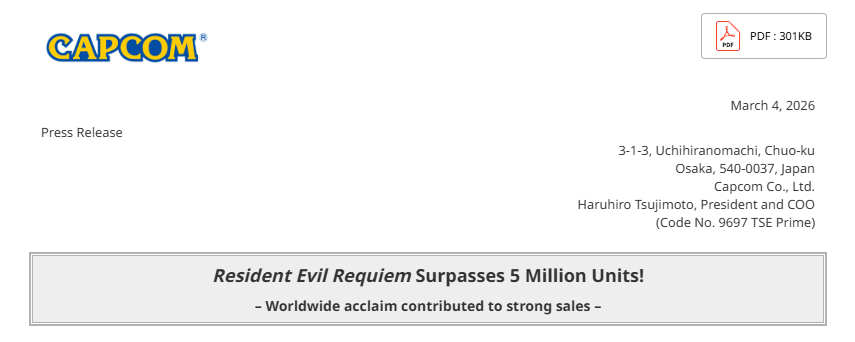
According to reports, *Resident Evil 9* has already surpassed its predecessor, *Resident Evil 8*, and *Resident Evil 4: Remake* in terms of sales growth, selling 5 million copies in just five days, once again demonstrating the enduring appeal of the *Resident Evil* horror game franchise, which has been around for three decades.
There were clear signs that *Resident Evil 9* would achieve such strong sales figures. During the promotional phase, it was made clear that the narrative would return to the series’ main storyline and that the key protagonist, Leon S. Kennedy, would make a comeback. Combined with the strong player recognition for Leon established by the 2023 release of *Resident Evil 4: Remake*, *Resident Evil 9* sparked widespread discussion even during its promotional phase.
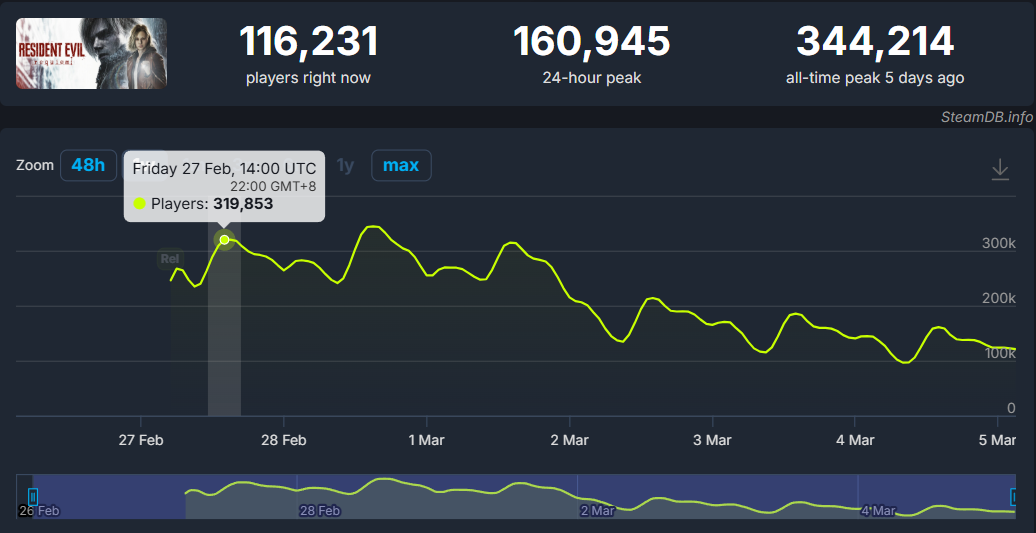
"Resident Evil 9" Sets New Series Record for Concurrent Online Players
In this report, Capcom attributes the success of *Resident Evil 9* to its ability to “successfully elevate the essence of the survival horror genre by perfectly blending intense fear with thrilling action.”

Capcom clearly has a great deal of confidence in the spiral-like experience it has created, blending psychological horror with action-shooter gameplay.
So, is *Resident Evil 9* really a breakthrough for this long-standing franchise? Not exactly.
01
For readers who haven’t played it yet, here’s a brief overview of *Resident Evil 9*’s core features: dual protagonists and dual gameplay styles. Capcom has integrated the gameplay experience into the characters and narrative flow. The new female protagonist, Grace, delivers a deep, *Outlast*-style horror experience and the resource management gameplay of the original *Resident Evil* series, while the returning character Leon handles the action-shooting elements.
The two characters have roughly the same number of playable chapters. In short, Grace’s chapters return to classic survival horror, featuring a default first-person perspective and emphasizing resource management, environmental pressure, and psychological horror—a style reminiscent of *Resident Evil 7*.
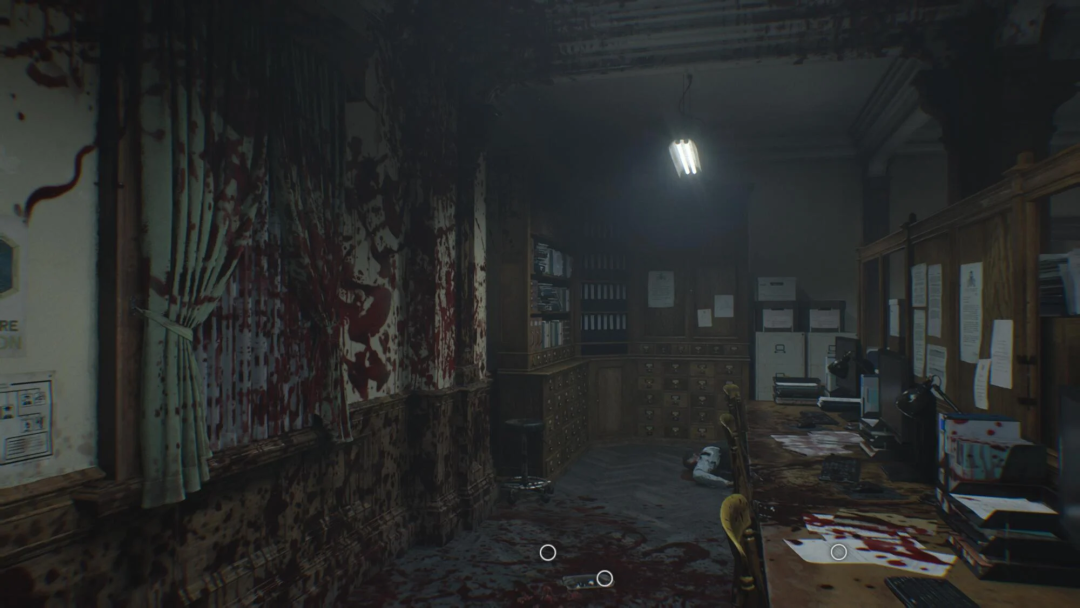
The Leon chapter continues the action-oriented focus that defined the series from *Resident Evil 4* through *Resident Evil 6*, featuring a default third-person perspective and emphasizing close-quarters combat, parries and counters, and fast-paced, intense combat.
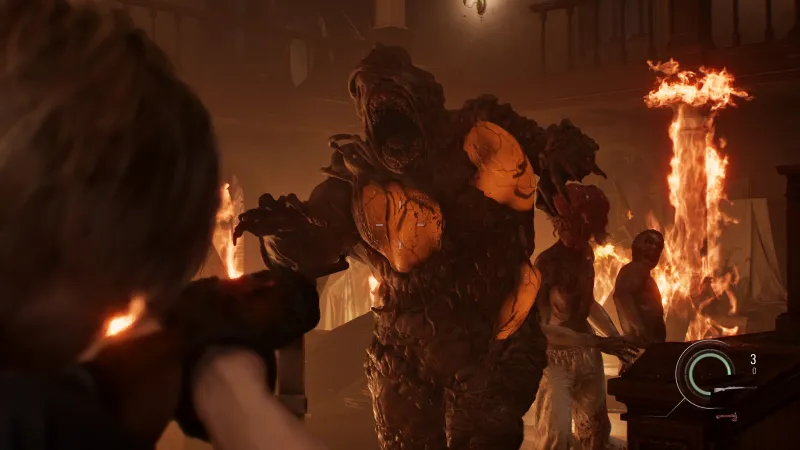
The two styles coexist within the same game, creating a more dynamic gameplay rhythm than in the previous installment.
When it comes to Grace, Capcom’s clever touch lies in having the character’s emotional state directly affect the player’s control feel. When facing enemies like “The Girl”—a stalker-type foe similar to the Tyrant from previous games—or even ordinary grunts, the character stumbles while running. Switching to first-person aim reveals her hands trembling, which also reduces aiming accuracy, creating a highly immersive experience.
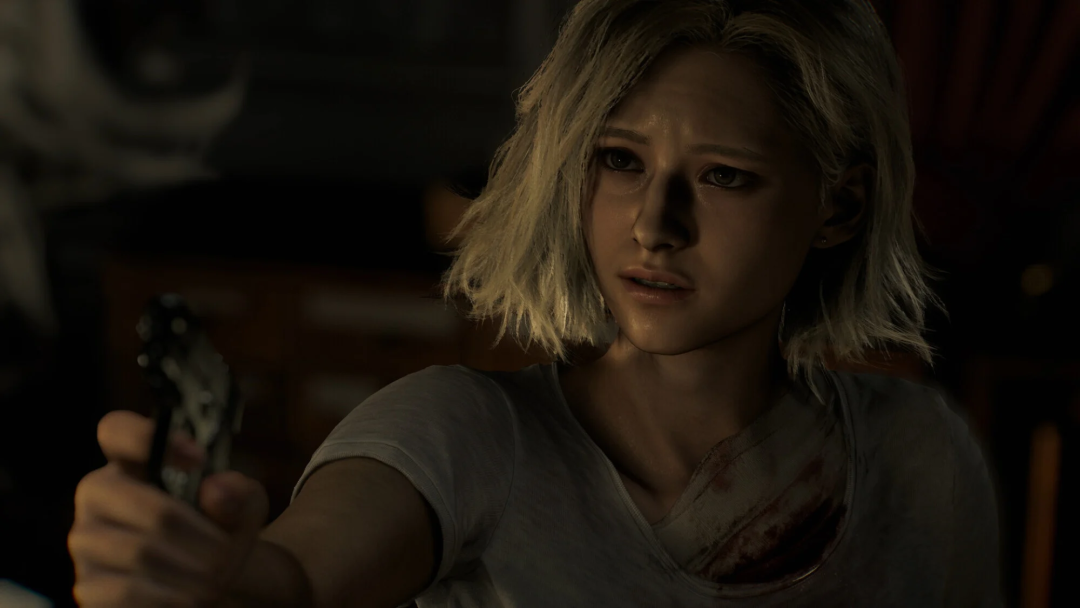
Capcom has equipped her with a unique mechanic known as the Blood Collector system. Grace can collect blood samples from downed enemies or from containers of infected blood scattered throughout the environment, which she can then use to craft makeshift knives, handgun ammunition, and healing items.
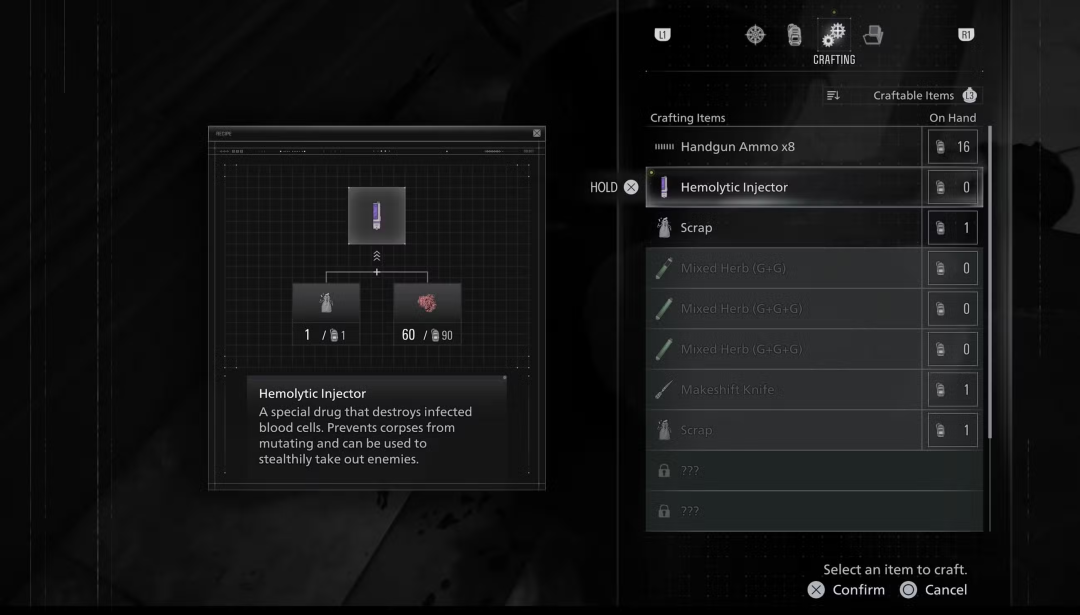
This transforms the bloodstains and corpses in *Resident Evil*’s environments—which were originally intended solely to set the mood—into interactive in-game resources, creating a tight integration between the horror narrative and survival gameplay. Infected corpses can mutate into stronger variants (a design element carried over from the 2002 remake of the original game), forcing players to make risky decisions about whether to approach and collect blood after defeating enemies.
Grace's struggle with limited resources brings to mind the experience of the original Western-style mansion and the police station in the original second installment; it's fair to say that this installment's strict management of limited supplies has returned to the old-school standard.
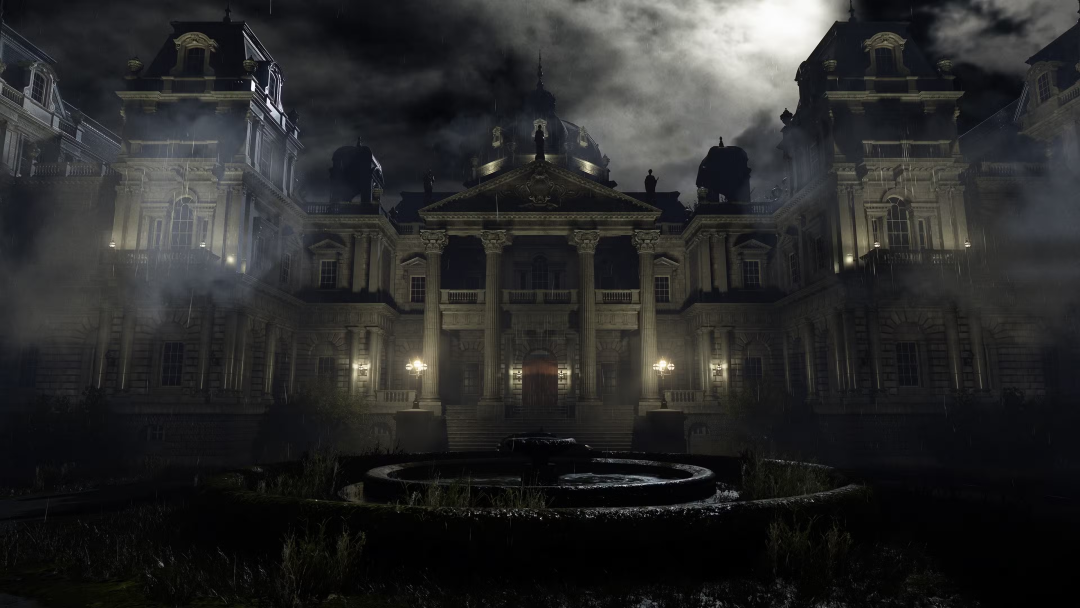
The Lyon section is based on the framework of *Resident Evil 4*, with the action feedback and impact retaining that same sense of exhilaration.
The newly added battleaxe has replaced the traditional dagger as the primary melee weapon. It can be used to deliver rapid slashes and even parry and counterattacks. It does not require repair and will not break, but it must be sharpened regularly.
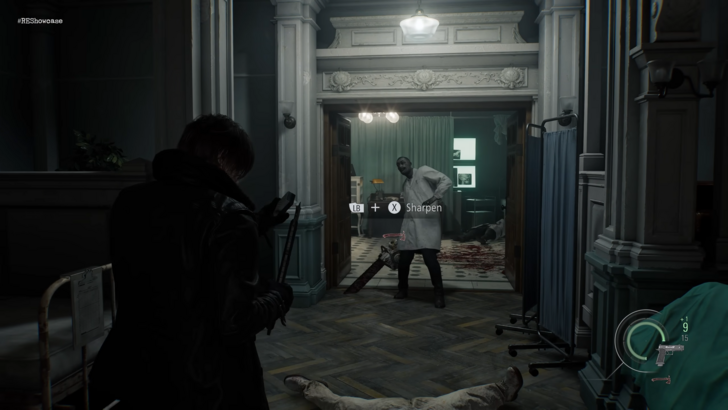
The addition of the parry mechanic adds an extra layer of reactive gameplay to Leon’s combat, particularly in the later boss battles. Parrying offers a new way to counter attacks that are difficult to dodge, making Leon feel like an efficient fighter while retaining a moderate sense of clunkiness to maintain the overall tension.
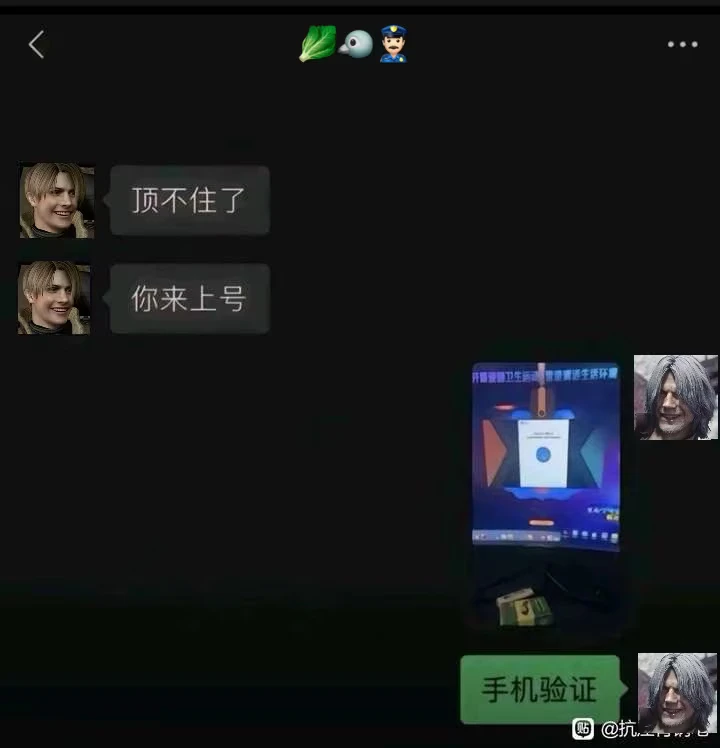
However, the difficulty is indeed too high, leading many players to believe it's an alt account belonging to a certain "True Demon" player.
The Lyon chapter features denser enemy encounters, more open environments, and a faster-paced combat rhythm; in terms of gameplay, it truly feels like the essence of both the fourth and fifth installments has been condensed into a single campaign.
The two experiences alternate as the narrative progresses and the player switches between controlling the characters. Grace creates a constant sense of tension and suffocation, while Leon allows the player to regain the thrill of controlling the situation. The two complement each other on the emotional curve, preventing the player from growing weary of a single, prolonged rhythm.
However, this design comes at a structural cost: the total playtime of *Resident Evil 9* hasn’t increased significantly compared to *Resident Evil: Village*, and is roughly on par with *Resident Evil 3: Remake*, which has often been criticized for its lack of scale. The size and design density of the boxed-in environments in Grace’s perspective during the mid-to-late game are considerably smaller than those of the first sanatorium.
Furthermore, Leon’s appearances in the first half of the game were rather fragmented, often taking the form of cameo boss battles lasting around fifteen minutes. This structure felt somewhat disjointed and even jarring; while it did effectively break up one source of tension and replace it with another, Leon’s screen time became significantly more substantial after returning to Raccoon City in the second half.Grace’s screen time was significantly reduced, the emphasis on nostalgic homages began to increase, and the creativity of the level design actually declined somewhat.

If we take a broader view of the series’ thirty-year history, *Resident Evil 9* actually serves as a sort of culmination of Capcom’s nearly decade-long shift in gameplay direction.
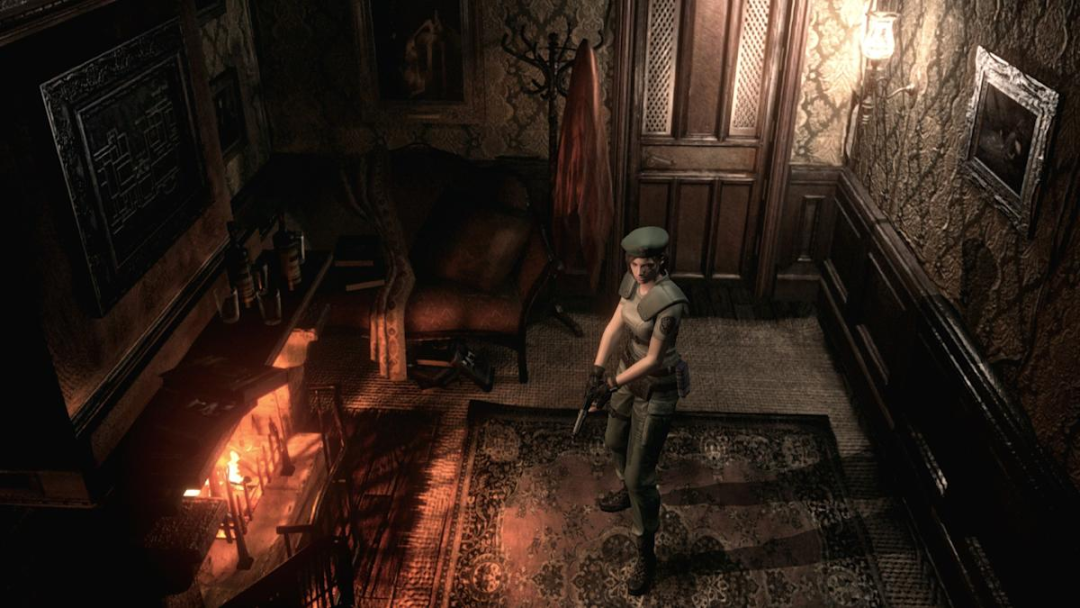
In 1996, the original *Resident Evil* established the series’ core conventions, such as fixed camera angles, limited ammunition, inventory slots, and confined spaces; the core gameplay experience revolved around resource management and route planning within oppressive environments. The second and third installments continued and expanded upon this design.
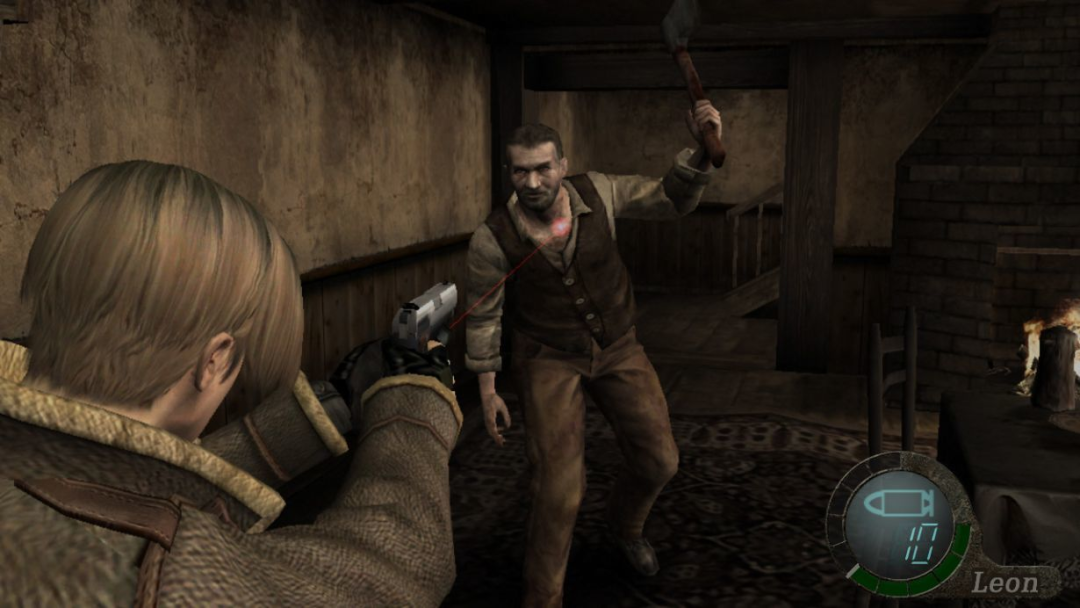
Resident Evil 4 (2005) marked the first major innovation in the series, featuring an over-the-shoulder perspective, fast-paced shooting and hand-to-hand combat, and dynamic loot drops (via Capcom’s backpack system). These elements shifted the series closer to the action-game genre, and the massive success of Resident Evil 4 led the next two installments to venture even further down the path of delivering an exhilarating gameplay experience.
Resident Evil 6 suffered a collapse in critical reception due to its bloated multi-strand campaign and over-the-top action sequences, prompting Resident Evil 7 to return the series to its roots in horror. The sequel, Resident Evil Village, builds on this foundation while incorporating more action elements in an attempt to strike a balance.
So, while the *Resident Evil* series has stood the test of time, it also suffers from a clear conflict in its creative vision—struggling to balance horror and action.
Even though the current dual-path design featuring Grace and Leon was actually attempted in earlier titles in the series—such as *0*, *Veronica*, and *Revelation 2*—it simply wasn’t as clearly defined as it is now, with the two characters representing two completely different gameplay styles that the series has developed.
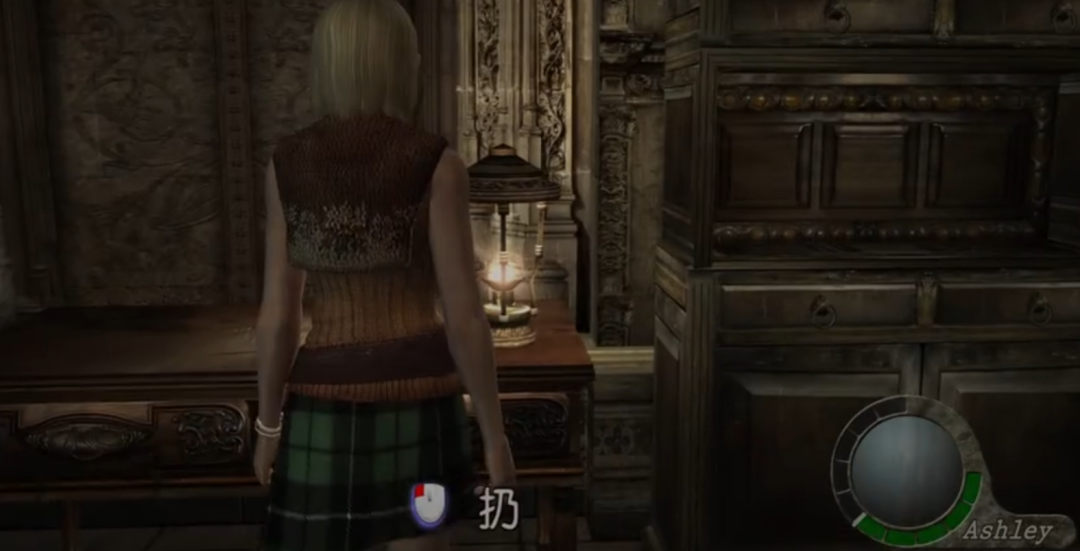
The original *Resident Evil 4* already featured a gameplay transition sequence with Ashley.
So, *Resident Evil 9* isn’t really a “breakthrough” in any sense.
As for the plot, I won’t go into too much detail here. Setting aside the fact that the game contains quite a few plot holes—such as the whitewashing of the series’ villains, the timeline set thirty years after the Raccoon City incident, the characterization of the new female lead Grace, and Leon’s return to his old stomping grounds at nearly fifty years of age—opinions on the merits of these narrative elements vary from person to person, and my perspective may not necessarily be correct.
Viewed through the lens of IP development, the “convergence of concepts” in *Resident Evil 9* may be the clearest signal yet of how the series will evolve following Shinji Mikami’s departure.
02
In fact, looking back at the changes in the *Resident Evil* series in recent years, it’s easy to see that Capcom is implementing a sophisticated IP rotation strategy.
The RE Engine marked a major turning point. Officially unveiled in 2017, it provided a unified technical foundation for all subsequent flagship *Resident Evil* titles. Its first title, *Resident Evil 7*, achieved both critical and commercial success, confirming that Capcom was on the right track.
From *Resident Evil 7* to the *Resident Evil 4* Remake, Capcom has delivered five high-quality titles in less than seven years using this engine and its continuously refined production pipeline. According to Capcom’s official *Resident Evil* series Platinum Sales Chart, each title has sold over 10 million copies:These include *Resident Evil 7* with 16.4 million copies, *Resident Evil 2 Remake* with 16.8 million copies, *Resident Evil 3 Remake* with 10.9 million copies, *Resident Evil 8* with 13.5 million copies, and *Resident Evil 4 Remake* with 12.2 million copies.
With *Resident Evil 9* having sold 5 million copies in just five days, it’s no surprise that it’s on track to surpass 10 million in total sales.
Given the industry trend of increasingly lengthy development cycles and rising costs for AAA games, this is certainly quite rare.
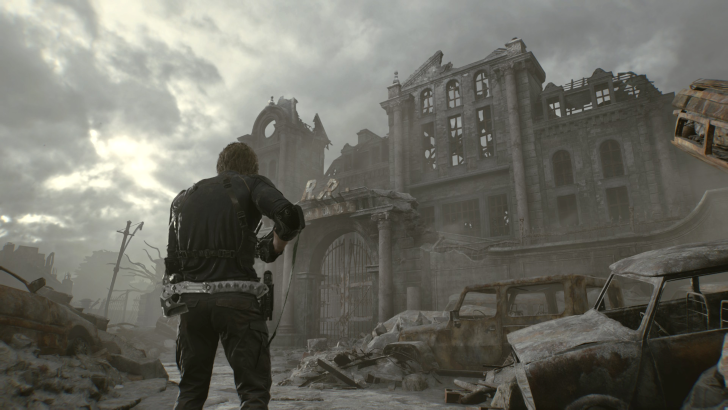
The key factor likely has a lot to do with the alternating release of new titles and remakes. In terms of development cycles, remakes are obviously much shorter than new titles, not to mention the existence of *Resident Evil 3 RE*, which features significant content cuts. However, from a production pipeline perspective, remakes likely serve more than just the purpose of capitalizing on nostalgia (rehashing old content); it’s hard to say that Capcom isn’t using them as tools for technical validation and iterating on its production pipeline.
For example, the Resident Evil 2 Remake set a new standard for the RE Engine’s capabilities in horror games, the Resident Evil 3 Remake tested the market’s reception of a more streamlined gameplay experience, and the Resident Evil 4 Remake revitalized the series’ action elements. It’s fair to say that every remake since Resident Evil entered the RE Engine era has contributed to the development of a resource library, action mechanics, enemy AI logic, and level design expertise for the next installment.
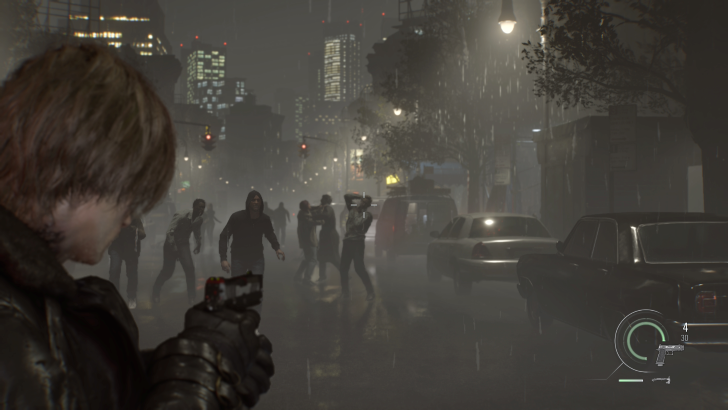
Building on this foundation, combined with the first-person perspective experiments in the 7th and 8th generations, as well as the experience gained from the older engine era, the 9th generation was finally born.
Capcom itself attributes this success to its long-standing strategy of maximizing the value of its content. In 2024, the company launched the "Dormant IP Revitalization Plan," and Haruhiro Tsujimoto stated clearly in a press release that the company would focus on revitalizing series that have not seen new releases for some time, leveraging its extensive content assets to enhance corporate value.
To put it simply, Capcom is not the only example of a traditional Japanese AAA publisher. Most major Japanese studios have a stockpile of "reheated leftovers"—titles they developed two or three decades ago—and in today’s market environment, it’s safer and more efficient to reheat these old dishes and add some "luxury ingredients" they couldn’t afford back then, rather than creating something entirely new.
These days, rehashing old titles has become a staple for Japanese developers. Take Square Enix’s *Final Fantasy* and Atlus’s *Persona* series, for example. In recent years, Sega and Konami have also been making the most of their classic IPs—some investing heavily to revamp older titles into AAA games, while others outsourcing them for mass remakes. The results have been mixed.
Taking the Resident Evil series as an example, Capcom’s approach might actually be worth emulating—but this rotation of remakes and new titles feels a bit like trying to do too many things at once.
All things considered, we at Tea House believe that *Resident Evil 9* has indeed reached top-tier industry standards in both horror and action. Even though the dual-protagonist structure necessitated some trade-offs in how gameplay is distributed, the overall polish is quite impressive. It’s safe to say that Capcom has successfully managed to both honor the series’ legacy and propel the IP forward.
However, in terms of gameplay innovation, *Resident Evil 9* remains a rather cautious effort. It’s clear that Capcom aims to transform the new era of *Resident Evil* into a new subgenre of horror games, combining the series’ 30 years of exploration in soft sci-fi bio-horror, action design, resource management, and other systemic elements. For now, I’d like to define it as a kind of “hybrid horror experience,”but as far as the ninth installment is concerned, it hasn’t quite hit the mark yet.
For a company that has proven its ability to switch seamlessly between remakes and original titles, Capcom might just one day recreate the same sense of wonder that Shinji Mikami first evoked thirty years ago when he unveiled that mansion in the Akre Mountains.
原创文章,作者:游茶妹儿,禁止转载:https://youxichaguan.com/en/archives/195617