For indie developers, while those who succeed may all share similar traits, those who fail each have their own unique struggles.
Recently, Tea House interviewed Yunfei, an independent game developer who previously worked at Youzu and Perfect World, where he contributed to the development of several key projects. Due to the overall state of the industry and other factors, he ultimately decided to leave the gaming industry and return to his hometown in Hunan.
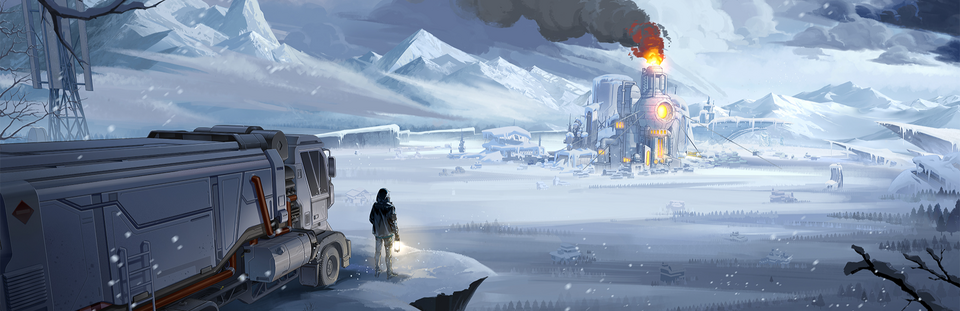
However, his days of idleness eventually led him to embark on a journey into indie game development, where he worked alongside another developer, Yangge, through all the ups and downs for two years. Finally, last Friday, *Embers of the Snowlands*, a post-apocalyptic card-based trading sim, officially launched.
Click to enter a description of the image (up to 30 characters)
Yunfei admitted, “During the development process, I encountered countless difficulties and even thought about giving up several times. But in the end, I realized one thing: I truly love games. I feel that if I have the chance, I’d be willing to make games for the rest of my life.”
For ease of reading, the following content has been organized in the form of the interviewee’s own account.
01
I entered the gaming industry around 2018. I started out at Youzu working on *Game of Thrones*, but it was an SLG title—similar to *Clash of Kings*—and overall leaned toward being a heavily monetized, stats-driven game, which I personally didn’t really care for.
After that, I joined Perfect World and worked on the development of a 3D anime-style card-based mobile game, but unfortunately, it was canceled before it even launched.
To be honest, the overall climate in the gaming industry around 2018 was pretty good. Especially after *Genshin Impact* was released, the entire market reaped the benefits, and the industry was booming.
However, about 22 years later, I returned to Shanghai and joined a company developing a mobile game based on the "Umamusume" franchise. At that time, the entire industry was in a sudden downturn. The team I was on was disbanded almost without warning, and when I tried to look for another job, I found that the landscape had already changed completely.
During that time, I went through a period of anxiety and even considered leaving the gaming industry. While I was unemployed for several months, I tried my hand at making some indie games, but ultimately, due to various pressures, I was forced to join a startup team and go back to working a regular job. After going through a series of twists and turns, I finally decided that rather than struggling to get by in such a precarious environment, I would return to my hometown in Hunan to find a stable job and continue developing indie games.
So, in early 2023, for various reasons, I finally left the gaming industry—where I’d worked for many years—and returned to my hometown in Hunan. Life there was rather dull, and my new job wasn’t particularly demanding. That’s when an idea began to take shape in my mind: “Why not make an indie game?”
Actually, I’ve tried my hand at making indie games before—for example, by participating in game jams or working on simple ideas in my spare time—but for various reasons, I never followed through. So this time, my goal is simple: to actually see a game through to completion.
Of course, back then I clearly had no idea how much I would end up investing in this game, or how far I would go down this path. Nor did I realize how many obstacles I would face, how many times I would be tempted to give up, or that I would even have to fight for my life to survive.
My initial idea was actually quite simple: to create a relatively straightforward game that could be finished quickly and would be fun to play. Compared to roguelike games with single-run gameplay, I prefer long-term progression RPGs, and if possible, I’d also like to include narrative elements.
However, given the difficulty of development, I couldn’t possibly choose a true RPG. So I thought about the game genres I’d played and enjoyed in the past, and to my surprise, one title came to mind that actually fit the bill: *Beijing Floating Life*, a text-based game from over twenty years ago that gained some fame for its “buy low, sell high” mechanics.
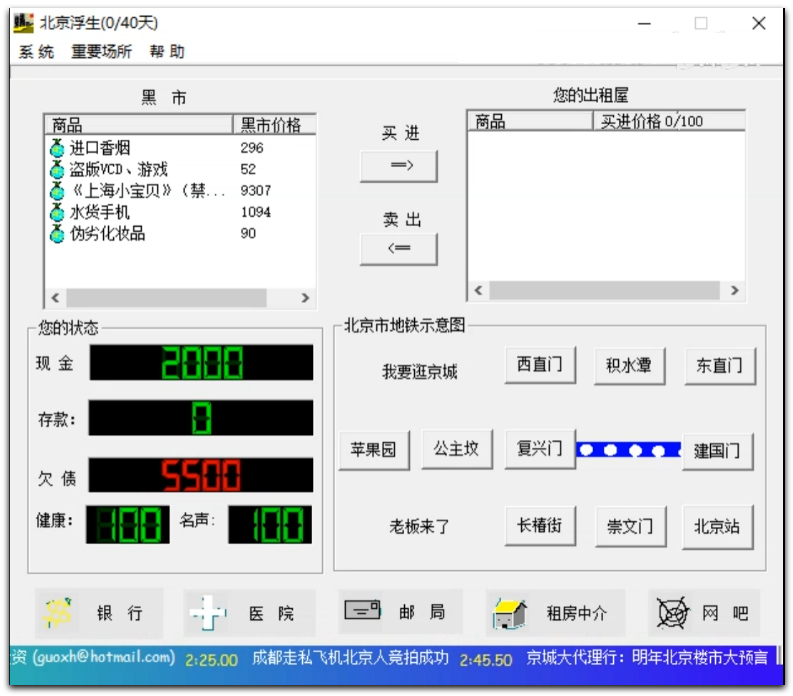
Click to enter a description of the image (up to 30 characters)
After giving it some thought, I decided this direction was actually quite interesting, so I settled on a road movie-style merchant adventure.For the first version, I planned to create only a very simple demo, with the entire project expected to take less than six months to develop. At the time, my development skills were still quite limited, but I was very concerned about falling behind schedule. So, I set a strict rule for myself: absolutely no procrastination. I had to complete the development of the target content within the specified timeframe. After about three months of frequently going to bed at 2 or 3 a.m. and waking up at 7 a.m., I managed to finish the demo as promised.
Once the demo was finished, it was time for the playtest. Although I was prepared to take some flak, the negative feedback I actually received far exceeded my expectations—and considering that the testers were all my friends, the actual experience was likely even worse.
At that moment, I had only one thought: Maybe I’m not cut out for indie game development, and maybe I shouldn’t be doing it?
My college roommate—who later became my development partner—Yang Ge, found out that I was working on an indie game. After a brief conversation, he expressed a lot of interest, so Yang Ge naturally joined the project and worked with me to develop the game.
02
Yang Ge’s story is far more legendary than mine, but I won’t go into detail about that here. The first and most critical question we face is: Should we make changes? Or should we scrap it and start over? And how should we adjust it?
After briefly exploring a few options, we finally settled on the idea of incorporating card-playing elements into the delivery process. We quickly put together a new desktop prototype, and the actual experience turned out to be surprisingly good.
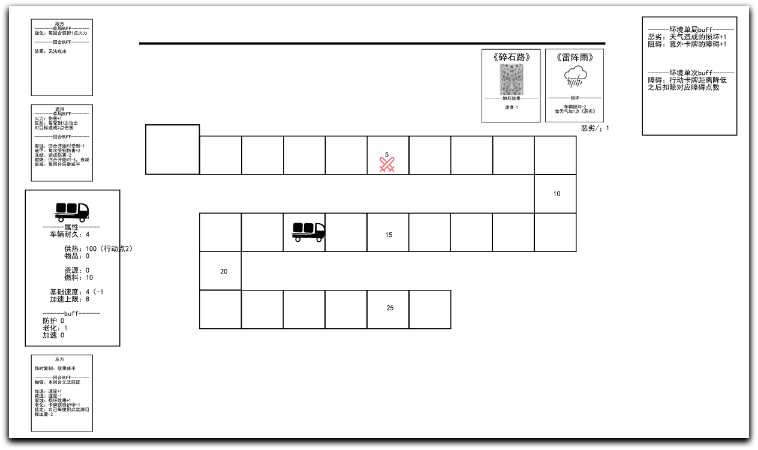
Click to enter a description of the image (up to 30 characters)
So, without giving it too much thought, we decided to move forward in this direction and made adjustments to many related aspects. As for the storyline, Yang’s joining the team gave me a bit more breathing room in terms of development. We’re both fans of story-driven games, and after discussing it, we agreed that we still wanted to create a proper, well-crafted game narrative.
However, what we want to achieve might not be that simple: “It’s not just about having a storyline; we want to create a rich and compelling one.”
No matter how you look at it, this decision seems pretty bold from today’s perspective. But as far as I’m concerned, once I’ve decided to do something, I just go for it. As a team that doesn’t even have an art department, securing resources for the production—beyond the actual story and script—is a major challenge.
However, with AI technology booming this year, less critical visual assets within the storyline—such as one-off scenes used in cutscenes—can be generated entirely by AI, while more important elements, such as character models and shelter environments, are left to artists to create.
All in all, we plan to release another new version by the end of the year and give it another try. Of course, we’re also prepared for the worst-case scenario.

Click to enter a description of the image (up to 30 characters)
The new version has received some positive feedback from those who have tried it out. While it may only be just passing, it’s still encouraging news for us.
At the very least, this shows that we’re heading in the right direction.
So we began moving forward with development in earnest. But we soon realized that the scope of the project might far exceed our expectations. The narrative was particularly challenging; the sheer workload involved in crafting the story and its presentation quickly made us realize that an indie game might not be the best medium for a story of this scale.
We also tried to find more teammates to join us in development. Since the barrier to entry for story creation is relatively low, we focused our recruitment efforts on plot-oriented roles. Fortunately, quite a few people showed interest in our project, which gave us some confidence. Once we recruited the right people, we finally breathed a sigh of relief.
However, it turned out that we were still too optimistic.
Due to our own lack of experience in story and plot development, we encountered quite a few issues during the initial adjustment period. In particular, after several months of working together, the availability of our plot writer became highly uncertain for various reasons. After discussions between both parties, we ultimately decided to replace them. However, a similar situation arose with the second plot writer within a few months, and we finally realized that this matter might be far more complex and challenging than we had anticipated.
So, should we abandon the story and make a game that focuses entirely on gameplay?
We’ve discussed this issue many times, but after careful consideration, we’ve ultimately decided to at least complete the minimum required storyline. After that, Yang and I divided up the tasks: I’ll be primarily responsible for advancing the storyline, while Yang will focus on gameplay and features.
However, as part of our original plan, the pressure to produce the content has become quite intense.
It was also around this time that I began to seriously consider the direction my life should take. I asked myself, “Is this the kind of game you want to make? What does making games really mean to you?”
In July 2024, I’ll be turning 28. I still remember how I used to sit alone on the street at one or two in the morning, staring into space for a long time as I watched the late-night food carts, the occasional passerby, and the cars driving by. I’d reflect on the past 28 years of my life and imagine what the next 30 or 40 years might hold.
So what kind of life should I be living now?
Click to enter a description of the image (up to 30 characters)
I’ve given this a lot of serious thought, and I’ve finally come to a conclusion that might change my life:
“Yes, even in the face of rejection and possible failure, if I had the chance, I would still want to make games for the rest of my life.”
So, I made another bold decision: I decided to quit my job and become a full-time developer.
Just like the word “bold” mentioned above, this actually implies a lack of wisdom and a touch of recklessness, but there was always a voice inside me that I couldn’t ignore. In the middle of 2024, I decided to quit my job and devote myself fully to development.
I think this might be something I have to give my all to; it might be my only chance in this life.
03
After that, once we had basically completed the development of the main framework, we began our initial outreach efforts and started promoting the project.
We were prepared to fail, but luckily, the feedback seems to be better than we expected. Some players have offered us words of encouragement, and several publishers have expressed interest in working with us. We’re thrilled about this and are full of enthusiasm for our upcoming plans.
However, what happened next took everyone by surprise.
Click to enter a description of the image (up to 30 characters)
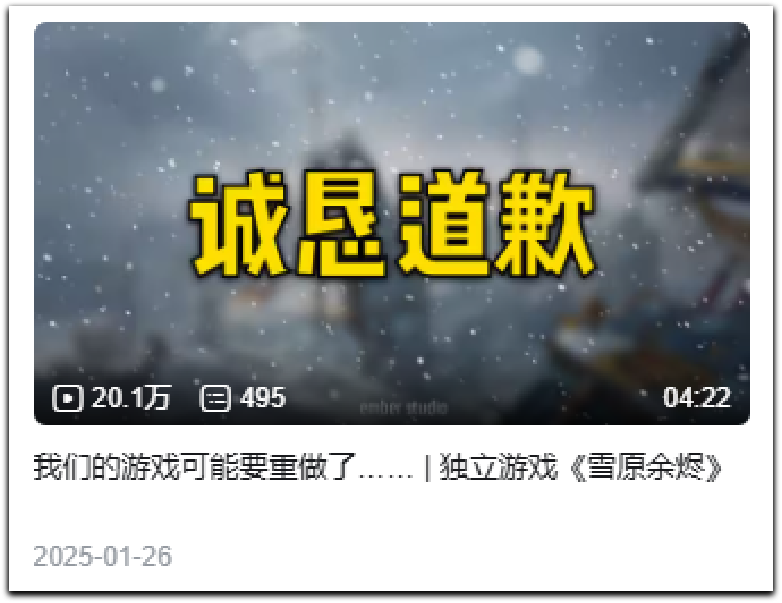
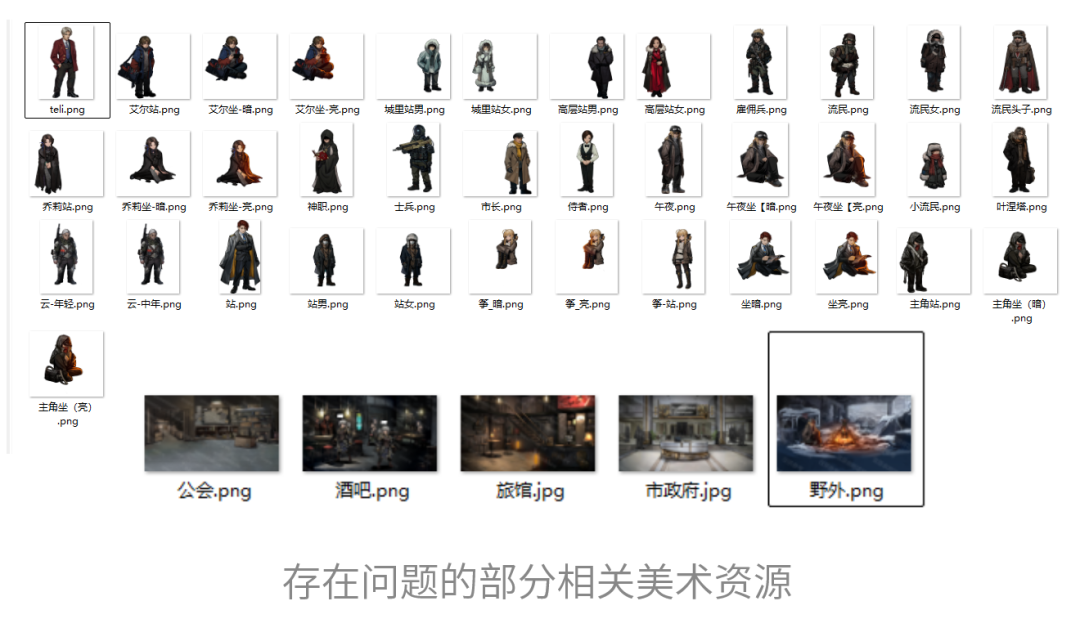
One of the artists we had been working with primarily used AI to edit images, and players pointed out serious issues such as incorrect character proportions; for various reasons, we were unable to detect these problems in a timely manner.
We then reviewed the problematic assets, including character portraits and background art. We came to the difficult conclusion that we would likely have to replace all of them.
As a result, we will need to reach out to new artists, which means we won’t be able to complete development according to the original schedule, and the entire development plan will be significantly impacted.
Click to enter a description of the image (up to 30 characters)
I still remember the day I confirmed the issue. After I’d explained the situation to Yang, I didn’t continue working on the project. Instead, I walked alone along the riverbank, walking and walking until I reached a place I’d never been to before—a place where there was hardly a soul in sight.
I just stared at the river for a long time, my mind a blank, just sitting there in a daze. I waited until the sun went down, then went home and called Yang Ge again.
We discussed many options and considered various scenarios. But in the end, we unanimously decided that the only solution was to replace them all.
I said, "Let's take a leap of faith and see what happens."
Click to enter a description of the image (up to 30 characters)
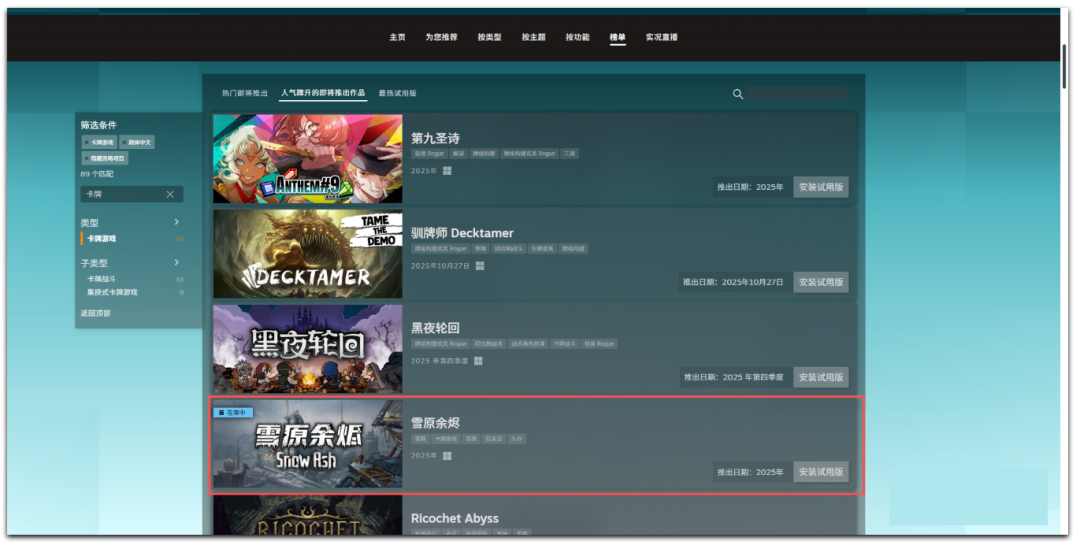
After deciding to completely replace the problematic art assets, we realized that this was actually an opportunity to upgrade our core art assets. Fortunately, the new artist we eventually found reached out to us after seeing a video we had previously released.
During this period, we launched our first player playtest and received a lot of valuable suggestions and feedback.
Click to enter a description of the image (up to 30 characters)
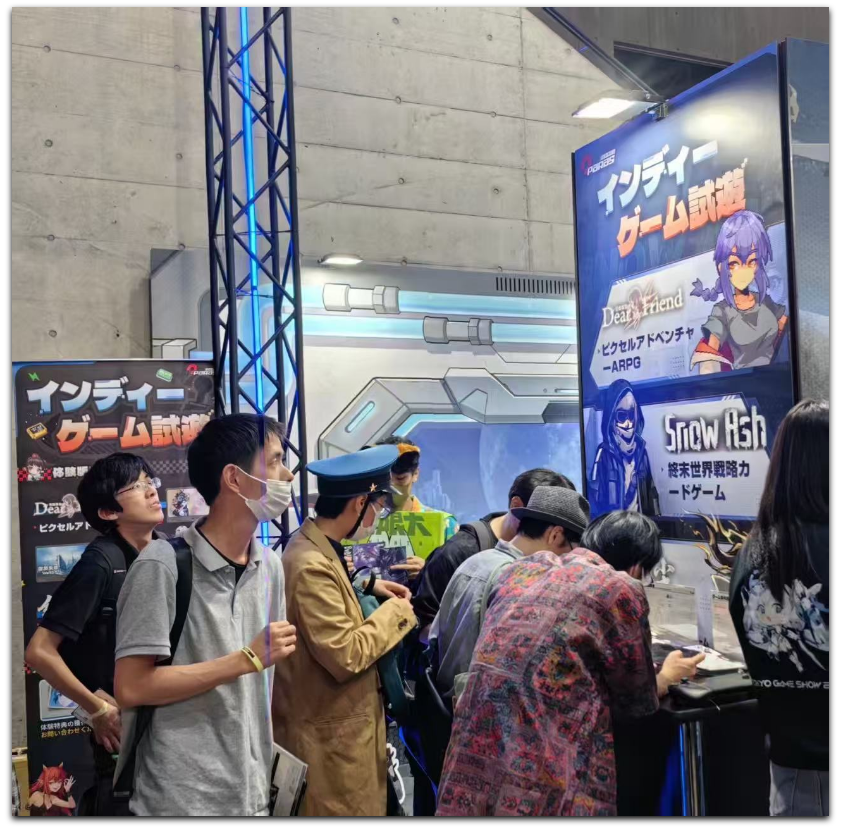
Of course, our publishing partner, Paras Games, has also been a huge help. We participated in several in-person demo events and even made it to the Tokyo Game Show—a dream come true—where we gained a lot of valuable experience.
During the Steam New Releases Sale in October, we released a demo. Based on the extensive feedback we received, we further refined the game’s details and content, which in turn attracted the attention of an ever-growing number of players. Finally, the moment has arrived for the game’s official launch.
Click to enter a description of the image (up to 30 characters)
If I were to sum up the development of *Embers on the Snowfield*, I think the word would be “fun.”
Yes, for me, it’s not just playing games that’s fun—I think the process of making games is actually fun, too.
I often went back to that little path along the river that I’d taken that day. Whenever I faced difficulties, felt down, or hit a mental block, I’d find myself heading there without even realizing it. It seemed that as long as I was there, no problem was insurmountable.
Interestingly, the first time I went there, it was just a dilapidated path still under construction. Today, however, the path has been completed and has turned into a scenic riverfront walkway with great views.
Looking back now, it’s just as I often joked with Yang during development: “This isn’t a project two people could possibly handle.” But the moment we actually finished developing it, I truly felt that the journey had been far, far more difficult than I had initially imagined or expected—but also far, far more interesting.
In the end, we gave it our all to finish *Embers of the Snowfield*, accomplishing something that I might have initially thought was impossible.
I think it definitely met our expectations—and even exceeded them in many ways.
Of course, during the development process, we’ve come across many outstanding indie games and met some truly talented developers and teams. So we still have a lot to learn, and we have a long way to go.
As for the true reception of our first game, we’ll leave that up to the players.
原创文章,作者:游茶妹儿,禁止转载:https://youxichaguan.com/en/archives/195302