AI may be one of the most significant factors in the gaming industry in recent years.
Unlike previous technological revolutions, this wave of AI technology is sweeping in with even greater force. Since ChatGPT was launched in late 2022, AI capabilities have seen an exponential leap in less than three years, expanding from conversational capabilities to the generation of images, audio, video, and programs.
In the gaming industry, AI is widely used in production workflows. A report officially released by GDC last year showed that 49% of game developers have already begun incorporating generative AI into their work. As an industry media outlet, we’ve spoken with more than one professional who has mentioned the efficiency gains brought about by AI.
However, compared to the immediate results seen in cost reduction and efficiency improvements, the impact of AI on gameplay and player experience does not yet seem significant—so much so that many industry professionals are questioning whether “AI-native games” are a false concept.
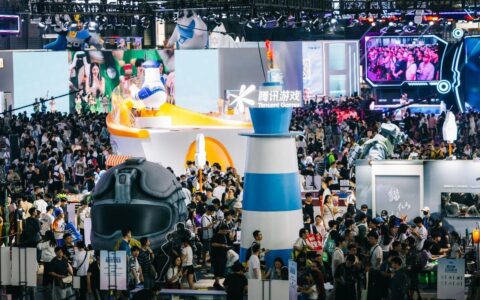
Recently, Game Teahouse was invited to participate in the “AI+GAME” symposium co-hosted by the Xuhui District Culture and Tourism Bureau of Shanghai and Lisan Lab.Prior to the event, a partner at Lisan Lab informed Game Teahouse that the symposium would deliberately avoid discussions related to “AI for cost reduction and efficiency improvement,” instead focusing on “how AI transforms gameplay experiences.”
At the conclusion of the seminar, several industry leaders in attendance engaged in a roundtable discussion on this topic. The following are highlights from the discussion, which have been edited and adapted for readability.
(Roundtable Panelists: Xu Yiran, CEO of MultiMetaverse; Shen Li, Founder of Lei San Lab; Qiao Haixin, Founder of Kotoko AI; Zhang Haoyang, Founder of AutoGame; Tan Liyuan, Co-founder of Yuan Yu Wu Jie)
Are AI games falling short of expectations?
Xu Yiran: Many people have mentioned that progress in AI gaming has fallen short of expectations, and I feel the same way. Especially in areas where AI can have a decisive impact on gameplay and the player experience, do you think it has met expectations? What are the reasons for this?
Shen Li: AI is a truly groundbreaking technology with far-reaching implications, but it takes time. Most current efforts have value in the process itself, but it’s unrealistic to expect immediate results.
My view is that AI essentially adds a new dimension to gaming. It’s somewhat similar to the transition from 2D to 3D games—in the early days, 3D characters were paired with 2D gameplay, and we’re currently going through a similar process—with some AI elements added, but the gameplay remains essentially traditional.Ultimately, however, after a period of evolution, 3D games developed purely 3D interaction styles and gameplay mechanics, such as those found in shooters, racing games, and sports games.
I believe AI-native games will go through a similar process. In the short term, we’ll naturally focus more on the presentation layer, but people will continue to explore and push the boundaries, and eventually, truly native solutions will emerge.
Xu Yiran: Do you see anything coming up?
Shen Li: There aren’t any truly original ones yet. One that left a strong impression on me was a game where you had to persuade the AI—that was the first time I felt the AI was creating something original that was both meaningful and full of endless possibilities. Concepts like game theory might be a direction that AI games can explore in their early stages.
Xu Yiran: Mr. Qiao, do you think the results fell short of expectations? Or do you see any cause for optimism?
Qiao Haixin: To be honest, there were definitely some areas where we fell short of expectations. There are several reasons for this:
First, the engineering challenges in gaming—if we look at many AI applications in Silicon Valley, they’re developed quickly because the engineering workload and complexity are nowhere near that of games, which require a long time for iterative testing.
Second is the issue of cost. Previously, the cost of using AI was relatively high, but from 2023 to now, costs have likely dropped to one-hundredth of what they were before. Combined with certain strategies, this can lead to a 200- to 300-fold improvement. That’s why many AI agent products have dared to adopt AI on a large scale this year, and everyone is starting to tackle more complex tasks.
Take our company, for example: we target young female users overseas and create interactive experiences centered around their OC (Original Character). Personalized character behaviors, inner development, and multimodal content generation—things that were impossible in the past—are now all within reach. Right now, it’s like feeling our way forward, but I think the prospects are very promising.
Xu Yiran: Could you give a specific example?
Qiao Haixin: We’ve recently been testing character-based “infinite-loop” dungeons. Some content is pre-set by writers, while some is generated by AI—we combine the two. This solves a major problem in AI games: a sense of purpose. Early experiences like *Stanford Town* were most lacking in this very sense of purpose.In the recently popular AI town games, everyone is racing to make money—and that is a clear goal.
In contrast, we don’t want to be too metrics-driven; instead, we aim to provide meaningful content and feedback to users. There are already products in Japan that have implemented this approach, and they’ve shown excellent monthly retention rates. I believe combining boundaries with goals, along with AI-powered characters, is an excellent solution.
Xu Yiran: What does Haoyang think?
Zhang Haoyang: From my perspective, the answer is simple: it hasn’t lived up to expectations. The reason is that people have overestimated the capabilities of AI and underestimated the difficulty of game development. Many people outside the gaming industry have rushed in upon seeing the potential for combining AI and games, but they’ve overlooked the complexity of game development.
However, in the long run, I believe that in ten years, no one will remember the concept of “AI games”—it will quietly and seamlessly become part of all games. So far, we’ve gone through several stages.
The first phase consisted of early attempts to combine casual gameplay with AI, which were primarily limited by the technology itself—for example, server-based games.
The second phase is related to the development of large language models. After ChatGPT gained popularity in 2023, the capabilities of underlying models began to shift toward NPC companionship, and the explosive popularity of products like Character.AI, in turn, drove the development of large language models. Today, the market for AI NPCs—particularly those offering emotional companionship—is already quite large.
In the third phase, as technology continued to advance, several major events took place over the past 25 years. For example, the massive popularity of Manus at the beginning of the year was driven by the release of Claude 3.7. The emergence of Claude Agent midway through the year, along with the recent launch of Claude Sonnet 4.5, signifies that this year is the year of AI coding.While developing *Maggie’s Garden*, we utilized a significant amount of AI coding technology—not just in the production phase, but to deliver new content directly to players.
I believe we are currently in a phase of accelerated growth for AI games; we haven’t reached the tipping point yet, but the flame is growing stronger and stronger.
Xu Yiran: What do you think, President Tan?
Tan Liyuan: We’re working on the World Model project. As for whether AI games have lived up to expectations, I’d like to look at AI and traditional games separately.
There are many well-established traditional elements in games, such as character progression, the sense of impact, and audiovisual effects. When developing AI-driven games, we won’t abandon these elements—we’ll definitely incorporate them. The question is: Does AI have a positive or negative impact on the player experience? To ensure a positive AI experience, must we sacrifice the very essence of traditional games?
Throughout our exploration over the past year or so, we’ve come to realize two things: First, the user experience generates positive feedback; second, it doesn’t necessarily impose limitations on traditional games. As the industry continues to mature, I don’t think AI-driven games will replace anything, but they will serve as a valuable addition.
In the Age of AI, What Kind of Content Do Gamers Need?
Xu Yiran: Earlier, during Steven’s (the previous speaker) presentation, he mentioned a counterintuitive point—that AI cannot generate an unlimited amount of new content; it relies on humans to create it. From a player’s perspective, even if content can be generated infinitely, it must be useful—it can’t just be a pile of junk.
I’d like to ask two questions: First, do you think AI can generate unlimited content with a single click? Second, what kind of content do players actually want? From a consumer’s perspective, what kind of content generated by AI is valuable to them?
Shen Li: My view on infinity is that it is “bounded infinity.”If viewed purely from a quantitative perspective, it may be infinite, but a more accurate description would be “infinite in a certain dimension.” Just as in three-dimensional space, the horizontal axis may be infinite, but the vertical axis has a boundary. This horizontal framework stems from our predefined learning content—it can be expanded infinitely in quantity, but it does not transcend the rules we have established for it.
Steven mentioned creating something infinite within certain rules, but I don’t entirely agree. That’s because the sense of unpredictability that AI brings is actually quite interesting. For example, a few days ago, someone used Sora to create sports videos featuring diving moves that defied the usual rules—the beginning looked perfectly normal, but at the end, some very strange movements suddenly appeared. This actually enhanced the entertainment value.
This reminds me of the evolution of art history—from realistic painting to Impressionism and on to Picasso; Picasso’s work represents a particularly uncontrolled creative state. Could this kind of “uncontrolled” nature brought about by AI also give rise to something entirely new?
Qiao Haixin: I interpret “bounded infinity” from a different perspective. When Uncle Li talks about “boundaries” or “rules,” he’s referring more to general or physical rules, whereas I think of rules more as the custodians or mediators of data.
When multiple AIs engage in endless conversations, they will inevitably enter a loop, converge, and become boring—repeating each other’s words, repeating sentence structures, and circling back on themselves.
So the key question is: Who should create the content at the right moment? It could be a human, or it could be AI. Just like with behavior trees in the past, each node doesn’t necessarily branch out infinitely—some content is pre-written, some is generated by AI—but the key is to introduce a “content mediator” who can manage the intermediate steps. That’s what ensures controllability.
If there were an agent responsible for receiving, processing, and transmitting data—and generating motivations or behaviors for other agents in the process—this could go some way toward solving the problem. This includes helping users understand the duration of the experience—whether it’s turn-based, placement-based, or some other form of goal-based feedback—all of which influence the definition of “infinite.”
We’ve recently been working on an animation generation model, and we discovered something interesting during testing—people feed it stories they’ve imagined, hoping the agent will expand on them, organize them, and offer perspectives and plot twists they hadn’t thought of, which they then share on TikTok and YouTube.
I think this is what makes the content limitless—it’s based on the users’ own ideas. The “limitless” aspect lies in the expansion of your ideas—things you hadn’t thought of, or ways to reduce costs. But of course, this process requires people or well-trained moderators to co-create the content.
Zhang Haoyang: I think that from a gaming perspective, the concept of “infinity” actually existed even before the advent of large language models. For example, Roguelike games are a form of “infinite” gameplay; *Hades* features 300,000 lines of text. Another example is *Ringworld*, which uses traditional rules and permutations and combinations to offer players virtually infinite replayability.
The "infinite" here isn't in the mathematical sense, but rather refers to the fact that, in terms of the game's lifecycle, players spend more time on it than expected. The sorting will always meet their needs before they get bored.
With the advent of large language models, Wuxian will reach new heights. Previously, players could figure out the designers’ strategies, but now the game designers’ job is no longer to craft every detail—it’s to design the rules governing the entire game world.
This reminds me of a previous discussion: “Can a toilet in the metaverse get clogged?” Whether it gets clogged depends on whether it adds value to the gameplay. What we’re building is an AI “DM” (Dungeon Master) that oversees the game’s progression as players play. This DM could be a cluster—a set of rules co-developed by players, agents, and the community.
Large models exhibit emergent properties—they can create things out of nothing. In the past, games with infinite streams were prone to illusions, but now we can eliminate those using Coding Agent’s capabilities. A legendary sword that doesn’t exist in the game? I’ll just create it for you—that’s what makes it unexpected and exciting.
One point that’s often overlooked is the need to entrust game design capabilities to AI. Previously, the focus has been on art and development, but it’s precisely AI that needs to effectively serve as the Game Master. How can this be done? By articulating the game’s logic—theories such as flow theory, “The Hero’s Journey,” and numerical design theory all offer systematic methodologies.We’ll ensure the gameplay is solid; if players find it fun, the design is a success.
Tan Liyuan: I very much agree with Uncle Li’s concept of “bounded infinity”—within a certain scope, there may be infinite forms of expression.
I’d like to share an important concept in model training: generalization.For example, based on the two dimensions of “vehicle speed” and “payload,” real-world training data may consist largely of “vehicles with heavy payloads but slow speeds” or “vehicles with high speeds but light payloads.” The innovation of AI lies in its ability to infer the existence of vehicles that are both fast and heavily loaded, or slow and lightly loaded.
Real-world models have tens of thousands of dimensions, so it’s possible to implement some complementary behaviors in games. For example, there are vampire-themed combat games and zombie-themed farming games on the market, which could be generalized into a vampire-themed farming game.
We have observed that the model is highly capable and consistent in effectively supplementing and extending knowledge within a limited scope. However, it is difficult for the model to break through major boundaries—that is, to handle concepts that are completely absent from the sample data. Even when it occasionally identifies statistically significant outliers, its performance is generally mediocre.
So I agree that its capabilities are actually limited. My expectations for the model were never that it would replace human creativity. If the model could truly achieve the infinite creativity of a human, society would undergo a massive transformation—we might just sit at home and enjoy it as it constantly provides us with new things and keeps churning out works like *One Hundred Years of Solitude*.
I don’t know if that day will ever come, but within the current framework and the model’s limited scope of generation, we can use it to explore.
How Can We Teach AI to Be a Game Designer?
Xu Yiran: Building on what Haoyang said, let’s talk about how we can teach AI to be a game designer, how to define the level of granularity, and exactly how to go about teaching it.
It’s like having a monkey type out countless works on a typewriter and then asking me to pick which one is a Shakespeare play—that would wear a player out. You can’t make me choose from a pile of junk—where’s the fun in that?
I think a lot of people working on AI games these days have forgotten one thing: don’t just transplant real life into games. Simulations aim for realism, but the more realistic they are, the less fun they become—if they were completely realistic, I’d just stay in the real world; why would I play a game? I play games to have fun, so it’s essential to distill the core elements of that fun.
So how do you distill this? How do you teach the AI to distill it—rather than having players tell you at every step what’s fun and what isn’t?
It’s a paradox to ask players to provide reinforcement learning feedback based on their experiences: if you give players a bunch of junk, they’ll get frustrated and stop playing—and then the game won’t have any data. Where would the training data come from? So first, we need to figure out if it’s even possible to resolve this paradox. Once that’s solved, AI will be able to design games, and everyone will just sit back and relax.
How do you think we can teach AI to design games? And one final, concluding question: What do you predict the gaming world will look like in five or ten years?
Shen Li: That’s a big question. I’ll try to answer the first one first.
The finer the level of detail, the greater the engineering challenges you’re likely to face. Many games ultimately break down into “Moment to Moment”—the experiences players have at every single moment. For example, whether the feel of firing a gun is satisfying or landing a headshot with a single shot—these are things that happen all the time.
The second layer is “Minute to Minute,” which refers to the minute-by-minute experience and represents the game’s micro-loops. For example, shooting and looting items—this is a positive feedback loop.
Above that is the "Session," which is more like a set of game rules. For example, in "Battle Royale," the last player standing wins, or you might lose everything—it has a gambling-like element.
I feel that the lower the layer, the clearer the metrics are from an AI perspective, and training can be supported by quantification. The higher the layer, the more it relies on human judgment. So, in the learning process of the future, might it be possible to break things down by granularity—with some tasks handled through machine-driven loops, and others requiring human intervention and intuitive analysis?
The second question: ten years from now. Haoyang made an interesting point: the moment true AI games become a reality will be the moment we stop even talking about “AI games.” It’s just like how nobody says, “I made a 3D game” as a selling point anymore—because all games are 3D now.
In five or ten years, we won’t talk about “AI games” anymore—we’ll just talk about games, with AI as one of their dimensions. Just like the transition from 2D to 3D, that may be the point at which we see AI truly playing a major role in games.
Xu Yiran: I’m not just asking about AI—I’m asking what the world of gaming will look like 10 years from now.
Shen Li: I think the concept of "games" as a whole will become very blurred in the future. This is because games are, at their core, a process of generating short-term stimulation through interaction—a concept that can be applied in many different contexts.
Suppose that in the future, many mechanical tasks are replaced by AI; humans will have more free time. People will inevitably tend to use that free time for activities that provide stimulation more quickly and in shorter intervals.
So, from a broader perspective, many things may become gamified in the future. For many people, it may be a world where games are everywhere.
Qiao Haixin: The first question is difficult to answer; it reminds me of another question from four or five years ago: How do you make UGC games? This is essentially the same question as how AI can handle game design.
Because games—or, more broadly, all consumer-facing entertainment products—are, at their core, designed to evoke emotions. The reasons behind my emotions are certainly different from those behind yours.
When I was a kid, I played *Jian Wang 3* and *FF14*, and what I enjoyed most was the social aspect—hanging out in guilds, creating fan art, and making fan-made content. In those games, players were each other’s source of entertainment. Haoyang probably plays more conquest-style games, where boss battles and thrilling combat are a must.Others prefer exploration—farming, raising dogs, or taking care of pets—because everyone finds joy in different things.
Games are particularly non-standard. Unlike standardized media, text and images, or short videos—where you can distill general rules—I don’t think that approach works here. We still need to go back to the user’s experience goals and needs.
There are simply too many variables when it comes to the scale of different game genres and the number of players they target. Once you drill down to a fine enough level, problems arise everywhere. The differences between one game and another may be even greater than the differences between a game and a video.
As for the second question—whether AI will become the norm in five or ten years—I agree with Uncle Li and Haoyang.
I still hope it can provide me with a more advanced experience tailored to my needs. For example, I want to socialize, connect with more like-minded people from all over the world, and build my own small community or circle of friends.
I’ve recently spoken with many users in the South Central United States, and I’ve found that a lot of high school students have nothing to do after school, so they go home to go online instead of participating in sports or in-person social activities. Every day, they go home and go online to make friends with people they meet there. Many high school students don’t even consider going to college or looking for a job because, in their view, they have no access to the power to allocate capital or information.
For them, the "Brave New World" might just be online—in the new small communities and virtual lives you’ve created. You can grant these users certain privileges through personalized virtual content, which is really cool.
In five or ten years, I think more and more people will feel this way. Because modern society is increasingly moving toward class固化 and reduced social mobility. We need things like this to bring joy to more people and give them an outlet.
Zhang Haoyang: Coming back to my point, how do we train AI planners? To sum it up in one sentence: “From the masses, to the masses.”
First of all, AI is data-dependent. Whether it’s reinforcement learning algorithms or large language models, they all need to learn from human knowledge and simulate players’ behavior in games in order to perform well.
Large language models are, in and of themselves, already well-pre-trained repositories of human knowledge; in theory, their latent space encompasses all kinds of situations encountered in human life. But what we need to do is extract that knowledge—using specialized knowledge to guide the process, such as flow theory, traditional film narrative theory, and so on.
But that’s not enough. From a design perspective—for example, if I’m creating an open-world AI game with story generation, quest generation, and so on—the game designer must prepare the story’s timeline, setting, characters, style, and backstory, and outline expected outcomes as much as possible. If no expected outcomes are specified, the AI should draw on established game conventions.You don’t even need to be particularly detailed—for example, if you say, “I want a *Blue Archive*-style, *Hearthstone*-like card game,” the AI can design it for you.
But there is one bottleneck. A unique aspect of the gaming industry is that its core game assets—such as code, art assets, and PRD documents—are kept confidential. General-purpose large language models do not have access to this knowledge.
So you need to figure out a way to either establish rules within the project team to help it learn, or create a mechanism that allows it to grow on its own through interactions with players later on.
What is “pre-training”? Our project has professional designers who understand the ins and outs of each component. Take numerical design, for example: while large language models aren’t sensitive to specific numbers, we can have them perform qualitative analysis and categorize values—say, into seven tiers. We then have the AI operate within the numerical space predefined by the designers to generate reasonable values at random.
Another approach is AI-generated user-generated content (AI UGC) at the product level. Why is AI UGC considered a transitional phase toward true AIGC? Because it must learn from data generated during the interaction between players and the game.
What kind of data? One type is player-generated content. The "prompt" data reflects the kinds of games players want. By analyzing large amounts of text, the AI can identify the content preferences of the majority of players.
Don’t forget that human designers are still hard at work at this stage. AI games need to be tested by human players very early on to gather player feedback. The AI also receives input, and we can use reinforcement learning or human feedback to refine it and align it with human standards.
Another source is genuine feedback from players in the community—what kinds of content have proven successful? What do players prefer?
Here’s an example: We had a character with a slight belly who was on the fuller side. When the art team redesigned the character, they removed the belly, but after the update was released on Xiao Hei He, it suddenly became a hot topic. Players were all saying, “You have to change it back.” That’s what it means to draw inspiration from the people.
Then there's the coding part. AI Coding: When it comes to developing AI games today, I think the hardest part isn't the game design itself, but rather how to implement something akin to an engine using an engineering-oriented approach.
We developed a set of UGC APIs and created many tools for the AI, enabling it to access in-game weapons such as knives, guns, swords, and so on.For example, a player requested a “hover cannon.” Since the AI has background understanding capabilities, it recognized that a hover cannon is a concept similar to those in Gundam games, while also functioning as a pet. So it combined the game’s pet module with the weapon module to generate the code.
The second topic is gaming five or ten years from now. I believe it will inevitably be closely tied to AI.
First, let’s look at data-driven industries. I’ve observed a reality: the content bubble in content-driven industries is about to burst. Content production costs are skyrocketing, but eventually, the rate at which users consume content will no longer match your production rate, leading to extreme internal competition.
Data-driven industries, meanwhile, may evolve into a hybrid model combining elements of Sora and TikTok—serving as both a content platform and a content distribution channel. Behind the scenes, a series of large language models work together to directly generate content; the content is created by AI, rather than through traditional planning or pre-designed visuals.
What it needs to do is create an editor similar to Roblox’s, while integrating AI capabilities so that the AI can learn, through the collaborative creation process, what kind of content players prefer and how to better create new content. We call this the “Soul of the World,” and it’s the world model we aim to build.
As for the rest, even if they aren’t tied to gameplay, they fall under the production side. When we greenlit *Maggie’s Garden* at the end of 2023, there were roughly 2.9 million Steam accounts. By April 2024, that number had risen to 3.2 million. As of this year, 2025, it has surpassed 4.1 million.
It tripled in less than two years, whereas the user ID before that took over a decade to build up. Could it be that AI is enabling many people who previously lacked the ability to develop Steam games—to go it alone, or for three to five people to form a powerhouse individual or team?
I think the gaming industry will become even more competitive five years from now, because people who originally lacked the ability to work in this industry will become increasingly capable with the help of AI and will have more and more opportunities to express themselves, which may lead to the emergence of a form of mass media.
I started out as a programmer, but now, with the help of the Claude 4.5 model, I don’t need to write a single line of code—I just need to review the final deliverables. The gaming industry will likely look like this in five or ten years.
Tan Liyuan: We’re running a little over time, so I’ll give a brief answer to the second question.
Five to ten years is a long time. My basic assumption is that AI will definitely continue to develop and may even advance beyond general artificial intelligence. First, I believe AI will be integrated quite extensively and deeply into games, and the boundaries won’t be so clear-cut—AI won’t be completely separated into its own distinct category.
When considered on its own, this category is still in a very early stage given the current environment. As experience and technology continue to mature, it should be integrated into games in a relatively natural way, much like high-quality sound effects, art, lighting, and ray tracing.
But looking at it from another angle, since we're talking about a very long time horizon, the way things come together may not be what we currently envision—including the models' ability to understand, their level of understanding, and the cost structure. My view is rather radical; I believe the changes could be quite significant.
Xu Yiran: Okay, thanks. Finally, let’s take a minute to get everyone’s imagination going. I’m sure a lot of you have seen *The Assassination of a Novelist*, right? The other day, after my wife watched it, she said to me, “Aren’t you a game developer? Isn’t this just an AI game?”
"What do you mean?" I asked. She replied, "Look, you can change the virtual world just with words. Once AI becomes powerful enough, won't a whole bunch of people be able to write novels together in the same virtual world, and then that world will change?"
As I mentioned earlier, I believe the integration of channels, content, and data is the trend of the future. In the future, creators and distributors, as well as content producers and consumers, may become one and the same. Everyone will be actively involved in the process, and there may be no distinction between whether you’re a creator or a user.
原创文章,作者:游茶妹儿,禁止转载:https://youxichaguan.com/en/archives/212445