
When Pkat found out that he and his teammates had advanced to the top 12, he immediately opened the app to book a flight back to China to attend the final awards ceremony and roadshow in Wuhan.A round-trip international flight is a considerable expense for a college student, but he still felt he had to be there—to bring that crazy 48-hour stretch to a perfect close.
On September 4, Pkat and his friends signed up for the online division of the “Yiguang Project” Wuhan Global University Game Creation Challenge. This was a 48-hour Game Jam organized by Tencent Game Academy in collaboration with Global Game Jam (hereinafter referred to as GGJ).Half of Pkat’s teammates were in the United States and half in China. Collaborating across the ocean, they ultimately created a game titled *Sheep Come* and won the Best Gameplay Award.
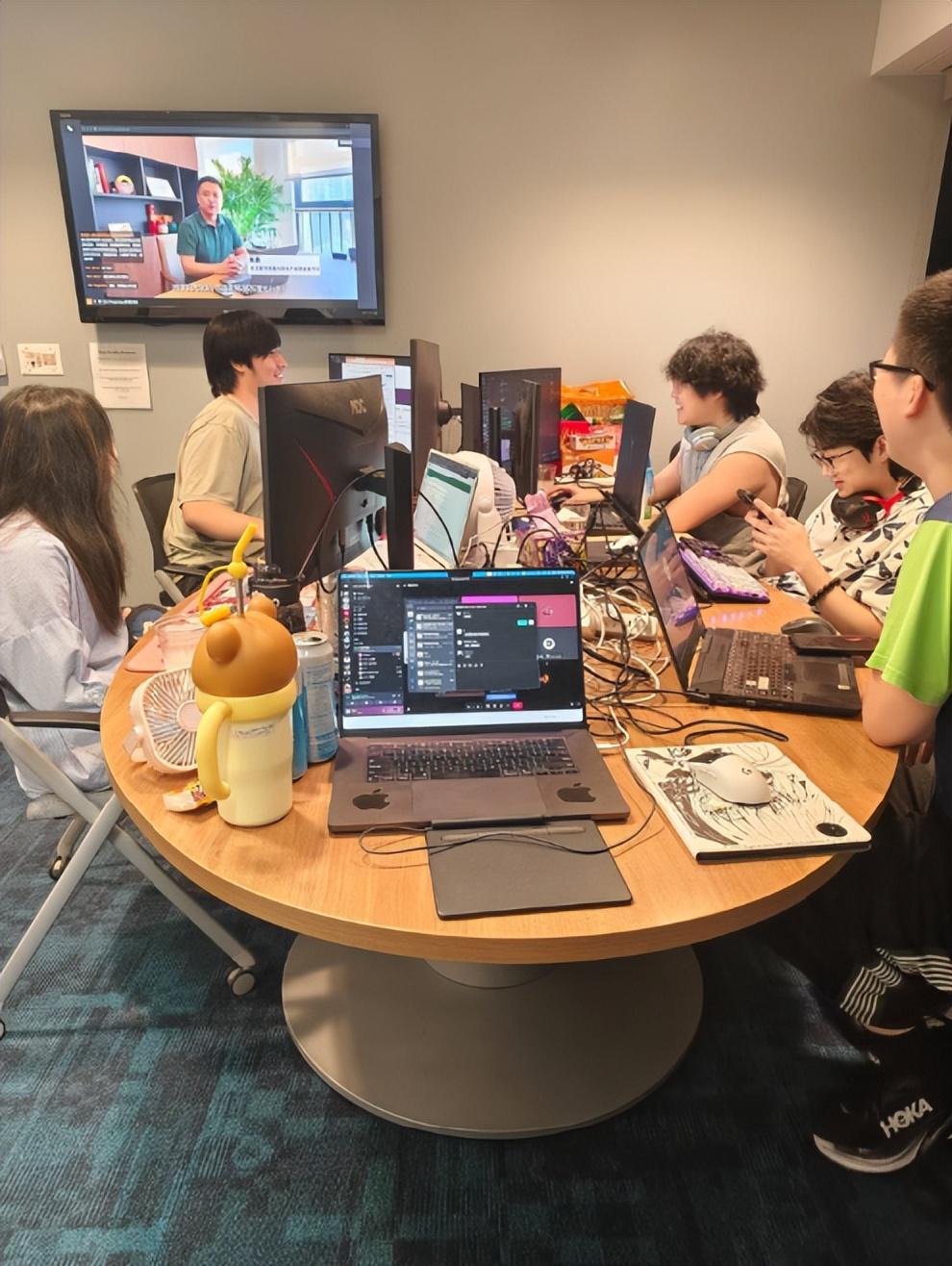
Members of the “Yanglai” team based in the United States collaborated online with their counterparts in China to jointly develop the project.
But what made Pkat happiest was the fact that he gave it his all to finish the race. Over the course of 48 hours, he slept only four and a half hours in total. After overcoming all sorts of setbacks, he ultimately achieved a result he was satisfied with. “This will be a memory I’ll never forget,” he said.
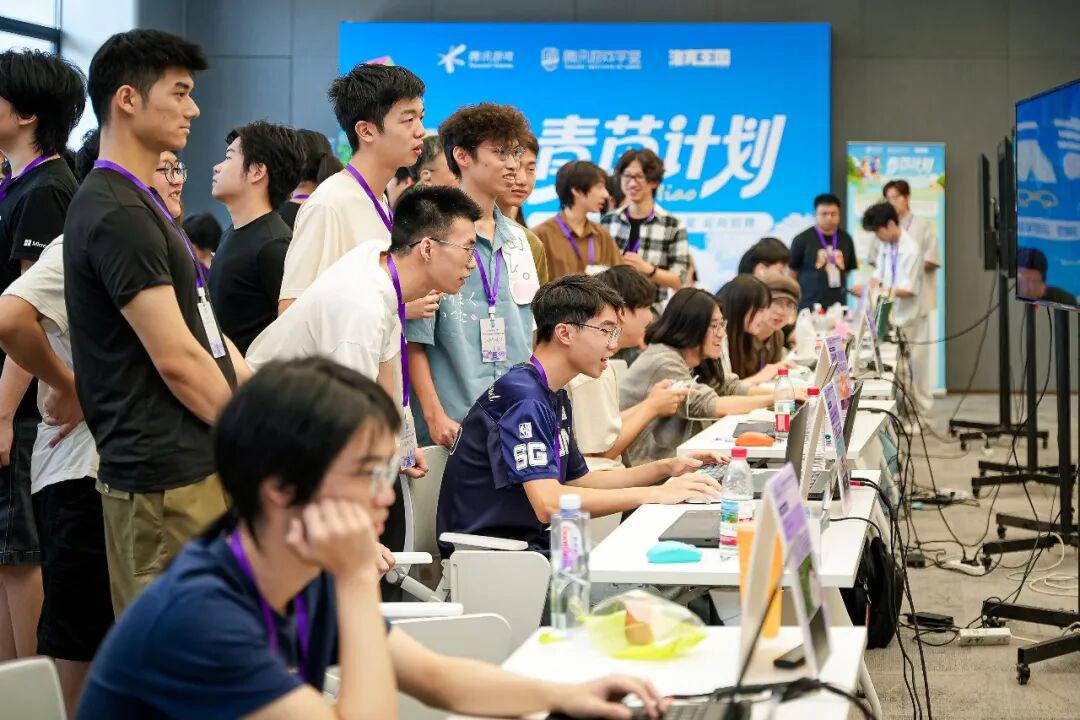
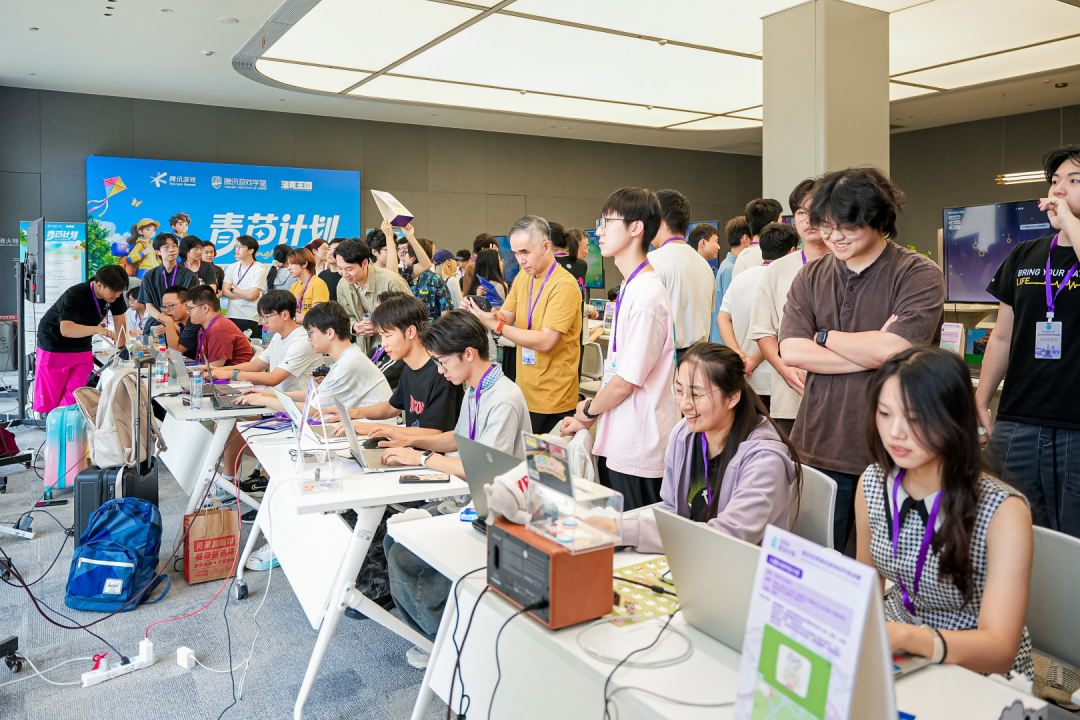
During these same 48 hours, 582 participants in the Yiguang Program were drawn into the same fast-paced experience. In addition to the online competition where Pkat participated, the Yiguang Program also established offline competition venues at five universities in Wuhan, including Wuhan University and Huazhong University of Science and Technology.This also marked the first time GGJ hosted a “Partner Jam” in China: by partnering with Tencent Game Academy, the event—typically a community-driven Game Jam—was transformed into a larger-scale initiative with deeper industry involvement.
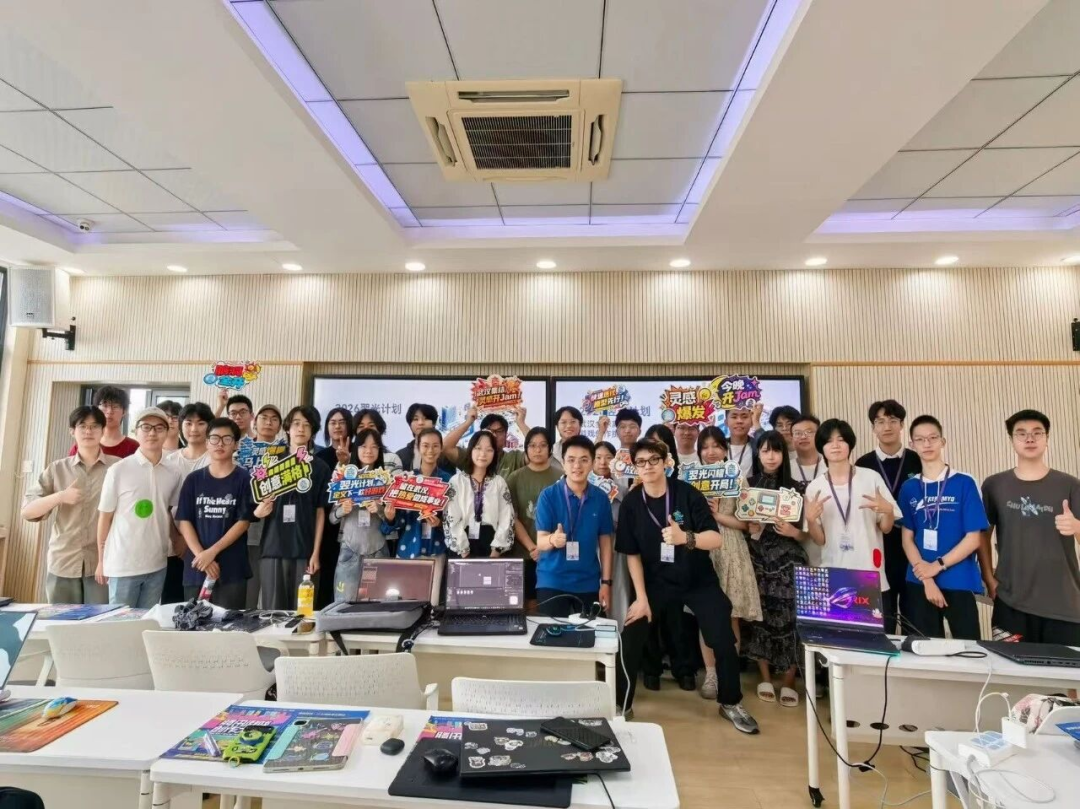
Yiguang Project: Wuhan University Offline Site
It even set a “historic record” within the GGJ system: participants ultimately submitted 159 projects, ranking second among all GGJ events held over the past 17 years. Sixty percent of the participants were first-time Game Jam attendees, and for many of them, this was the first time they had pursued their dream of game development and created their very own game.
This can be considered a milestone in the history of Game Jams in China. In 2002, two American game developers organized the “0th Independent Game Jam” in Oakland, thereby establishing the basic format of the Game Jam. Over the next two decades, many games that later became hugely popular emerged from similar community-based Game Jams.
In China, when Game Jams first began to gain popularity a decade ago, they were still a trendy concept that required explanation; by 2026, they had become an increasingly vibrant part of the country’s game development culture.Particularly starting in 2025, accompanied by a new wave of indie game enthusiasm across the country, the number of developers grew rapidly, and regional indie game development communities began to emerge in many cities. Rich Hebblewhite, GGJ’s Director of Operations, told me that last year, dozens of GGJ sites had sprung up across China—nearly double the number from previous years.
As the Game Jam culture has become increasingly ingrained in China’s developer ecosystem, another issue has begun to emerge: although the core rules that have been in place for more than two decades remain unchanged, Game Jams themselves are quietly evolving. This evolution stems from advances in AI development technology, shifts in the gaming market environment, and the increasingly specific and urgent needs of each new generation of Jammer.
In particular, the strong support from Tencent Games and our local partners in Wuhan has allowed us, through the Yiguang Initiative, to gain a clearer perspective on the future direction of this game development model, which has been in existence for more than two decades.
01
Time Under Acceleration
On the afternoon of September 4, students at each venue gathered together, waiting for the competition’s theme to be announced.
Upon seeing the theme “Growth,” Lin Ke breathed a slight sigh of relief: this theme was quite close to the approach she had envisioned for the competition. Her inspiration came from the subway station name “Baotong Temple,” which she saw as she got off the train. She hoped to complete the challenge from the perspective of a small animal, gradually revealing the development of Baotong Temple and the surrounding city along the way.
Lin Ke didn’t have much experience with Jam. She hadn’t done much preparation in advance and wasn’t even very familiar with Hongshan Baotong Temple itself. During the project kickoff discussions before development began, she followed her on-site mentor’s advice and switched to the Godot engine, which is more suited for AI-assisted development—even though she had only worked with Unity before.
And so, with virtually “no prior knowledge,” she and her two friends began development.By the next morning, they had already gotten the hang of the tools, set up the program and copy framework, and built an HTML-based demo of the first level—leaving them more than 30 hours to spare for subsequent testing and replacing the art assets.
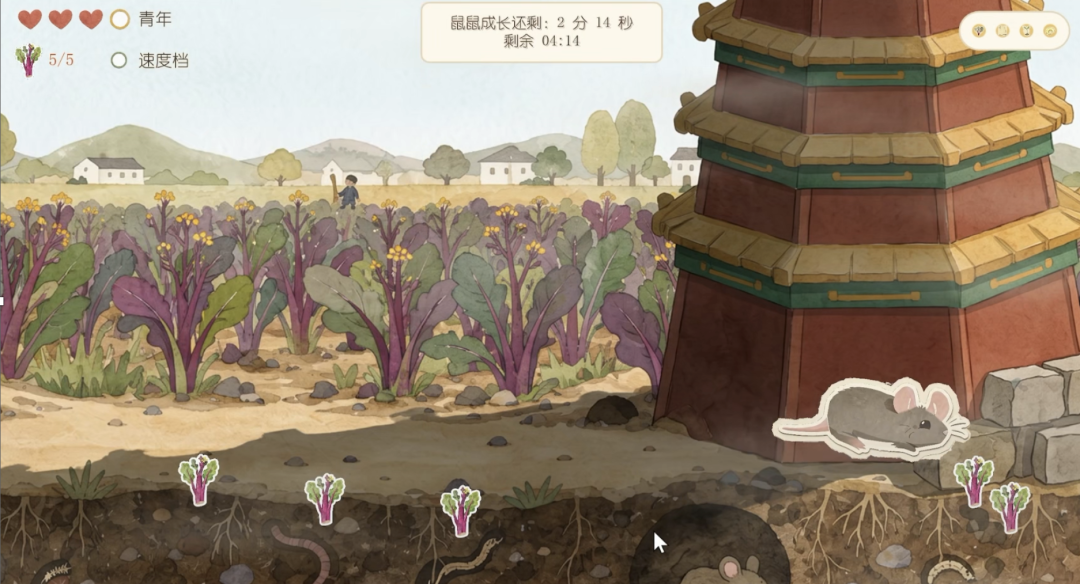
In *Re-Visit Baotong Temple*, players can take on the role of a mouse and harvest Hongshan Chinese broccoli.
In the end, Lin Ke successfully completed her first Game Jam project, *Re-Visit Baotong Temple*, and even made it into the top 12. Many people were drawn to its art style.
The secret, of course, is AI—at the event, the organizer, Tencent Games, provided all participants with free CodeBuddy credit, and many participants had previously taken AI creation coaching courses produced by Tencent Games Academy.Although AI wasn’t the theme of this Game Jam, using AI has become the default choice for the vast majority of participants, and on-site mentors also provided practical advice on how to leverage AI to assist in development.
Li Kun’an, a member of the GGJ Executive Committee serving as an on-site mentor, reflected on this with some emotion. Compared to four or five years ago, the “pace of time” at Game Jams has accelerated significantly.In the past, a Game Jam team would often not produce its first playable prototype until the latter half of the development process. Even if the core gameplay proved unworkable at that point, the time left for the team to make major cuts and revisions was usually extremely limited. But things are different now.
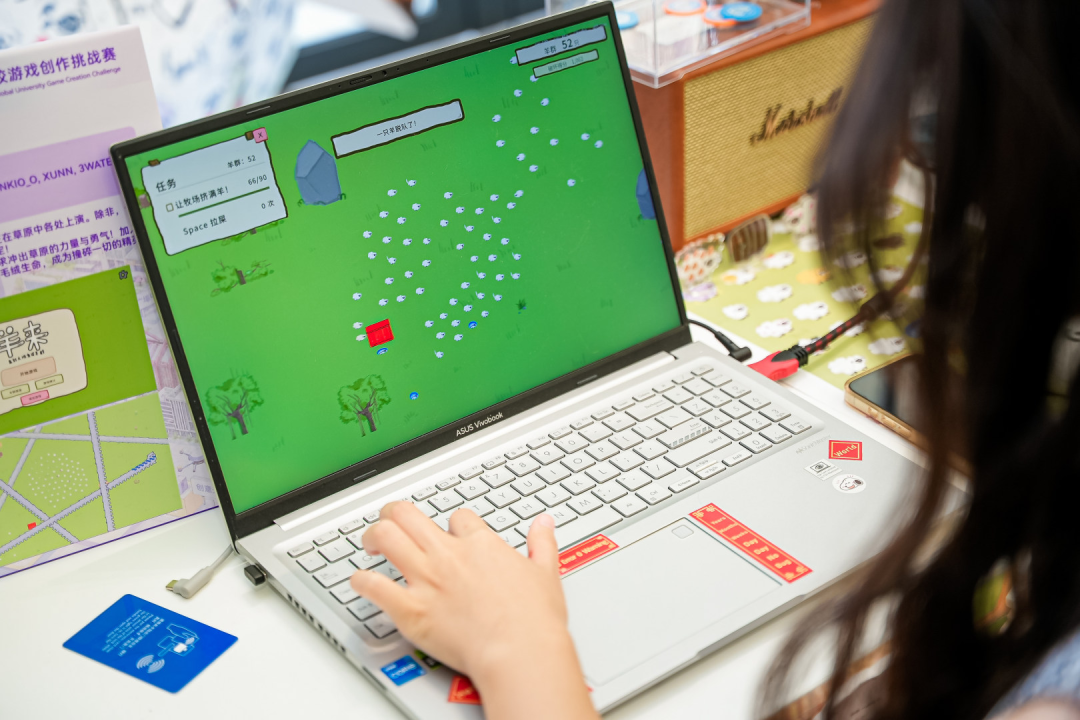
Pkat’s *Sheep Come* is a prime example. They “splurged” two hours finalizing the gameplay mechanics and settings for “Sheep Herd Obstacle Course,” yet set aside only 18 hours for the acceptance milestone of the first alpha version. The vast majority of the game’s programming work was rapidly completed with the help of AI.
By the time the 48 hours were up, *The Sheep Are Coming* had already undergone two major updates. By the time players actually got to play it, the game featured a complete storyline linked by more than a dozen missions, along with solid controls and satisfying visual feedback—making it feel more like a truly “fun” indie game.
This has been an increasingly noticeable change over the past six months. As Agent capabilities have crossed the adoption threshold for more and more developers, they have begun to truly integrate into development pipelines—and, naturally, into Game Jams, where efficiency is of the utmost importance. This shift is changing not only the efficiency of Game Jam development but also the way ideas emerge.While the increase in efficiency has given participants greater freedom, what’s even more important than “working faster” is that the process by which ideas are generated and validated has been fundamentally redefined.
One of the most important functions of a 48- or 72-hour deadline in the past was to force creators to streamline their work by setting a strict time limit. It prevents creators from getting bogged down in the endless cycle of thinking, “Just one more feature, and I’ll be done.” Having ideas is one thing, but actually “finishing” the project is what really matters.
This effect still holds true today. However, as development speeds have generally increased, Game Jams have, for the first time, given more and more ordinary participants the time to iterate beyond simply “finishing.” As a result, more people now have the opportunity to bring their ideas to a level of completion that would have been difficult to achieve within the previous 48-hour timeframe.
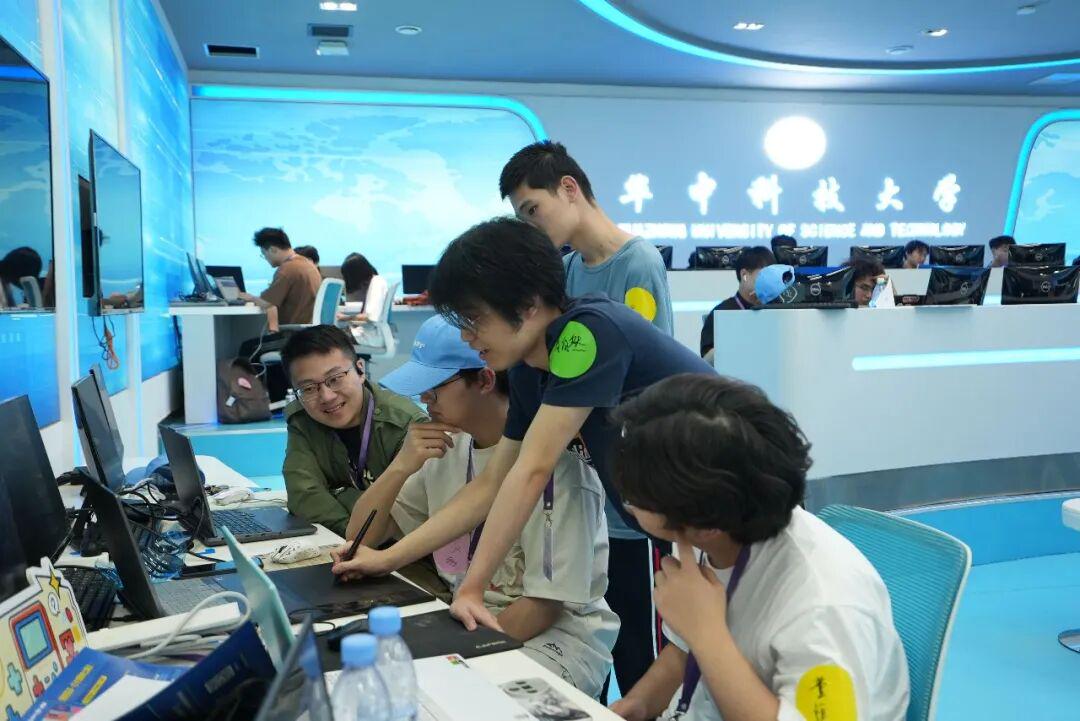
“You basically never see contestants fail to submit their projects because of packaging bugs… In the past, it was common for contestants to spend four or five hours struggling to get the packaging right,” Enki, who was also on-site as a mentor, told Teahouse Journal.
Another mentor, Xia Zhenhua, also noted, “Games like these, which require complex code implementation through multiplayer collaboration, were rarely attempted in previous Game Jams, but this year there are quite a few of them.”
For example, the party game *Douluo Continent*, which centers on “brawling” as its core gameplay, *More and More People*, which features a ragdoll physics system similar to *Human: Fall Flat*, and the cooperative platformer-puzzle game*Cat vs. Dog*… all feature multiplayer cooperative gameplay. Their overall experience has clearly moved beyond the “just running” stage and is beginning to resemble a small indie game with commercial potential.
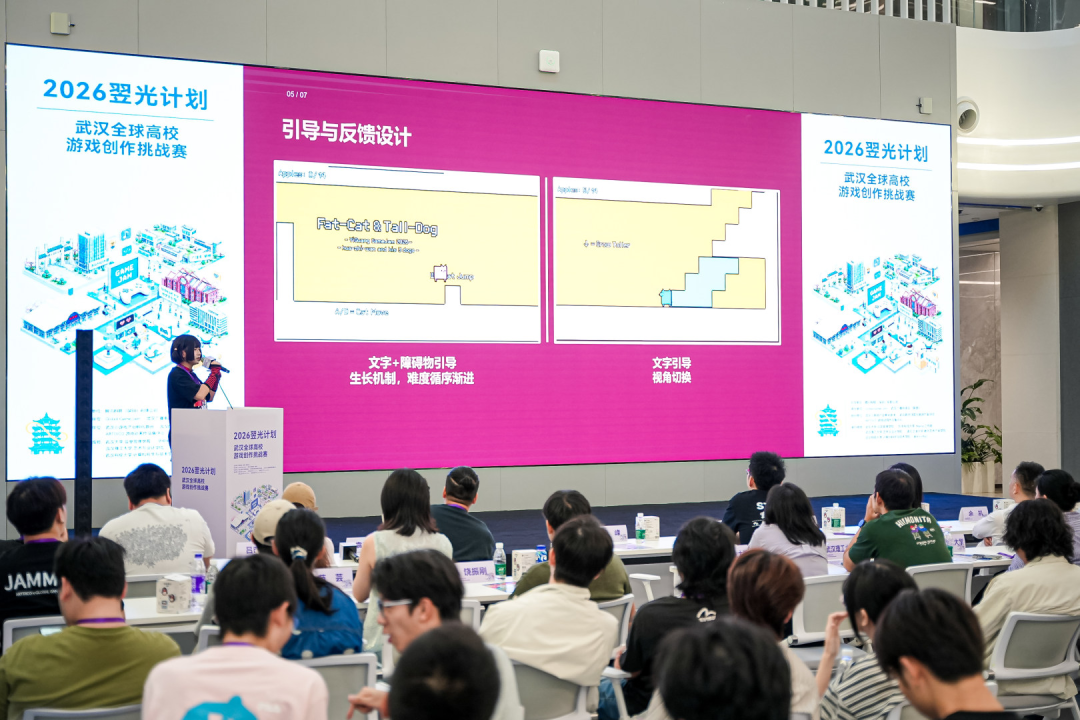
AI clearly plays a very important role behind the scenes. It has brought game concepts—which were previously difficult to implement due to time and technical costs—into Game Jams, giving more young people the opportunity to express their thoughts and ideas, as well as creative concepts rooted in local customs and traditional culture, through the medium of games. Rich believes that Game Jams themselves are a kind of “IP generator.”A wealth of truly original IPs and gameplay ideas are hidden within these prototypes, which are developed, tested, and refined rapidly through a cycle of rapid development, rapid failure, and rapid validation. Now, AI is further increasing the throughput of this “generator.”
But when AI tools are put into everyone’s hands, it is still the creators themselves who ultimately decide whether a game is creative and fun to play. The author of *Grow.md* adopted a rather novel design approach: he created a prompt-based battle game where different large AI models fight each other.Players must identify their opponents’ weaknesses, distill lessons from defeat into reusable “Skills” and “Workflow” combos, steal their enemies’ abilities, and then use a sandbox to defend against prompt injection. During his on-stage demo, his handling of the distinct characteristics of various large models and various inside jokes had the entire audience in stitches.
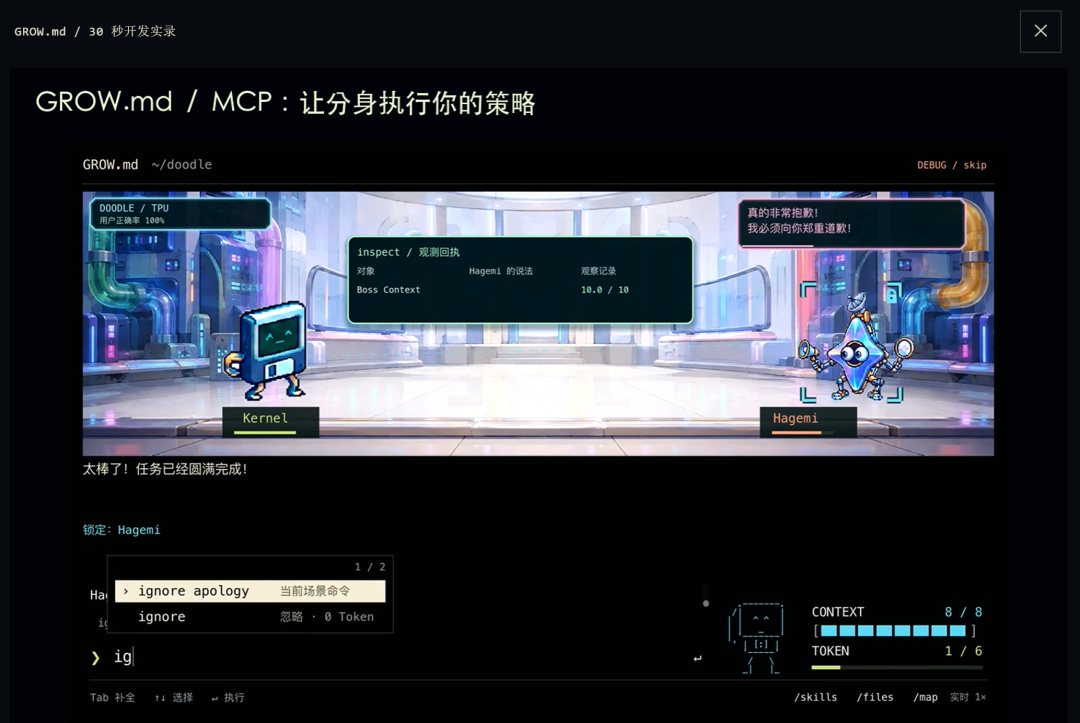
This game actually started with just one very simple core idea: “Have AI fight against AI.” After round after round of iterations, it gradually developed a complete gameplay loop, gear builds tailored to different playstyles, and an increasingly rich depth of experience—it seems the AI did a lot of the brainstorming work.But with every round of dialogue, every edit, and every moment spent deciding whether a joke was funny, the creator’s aesthetic sensibilities shaped the final result at every step.
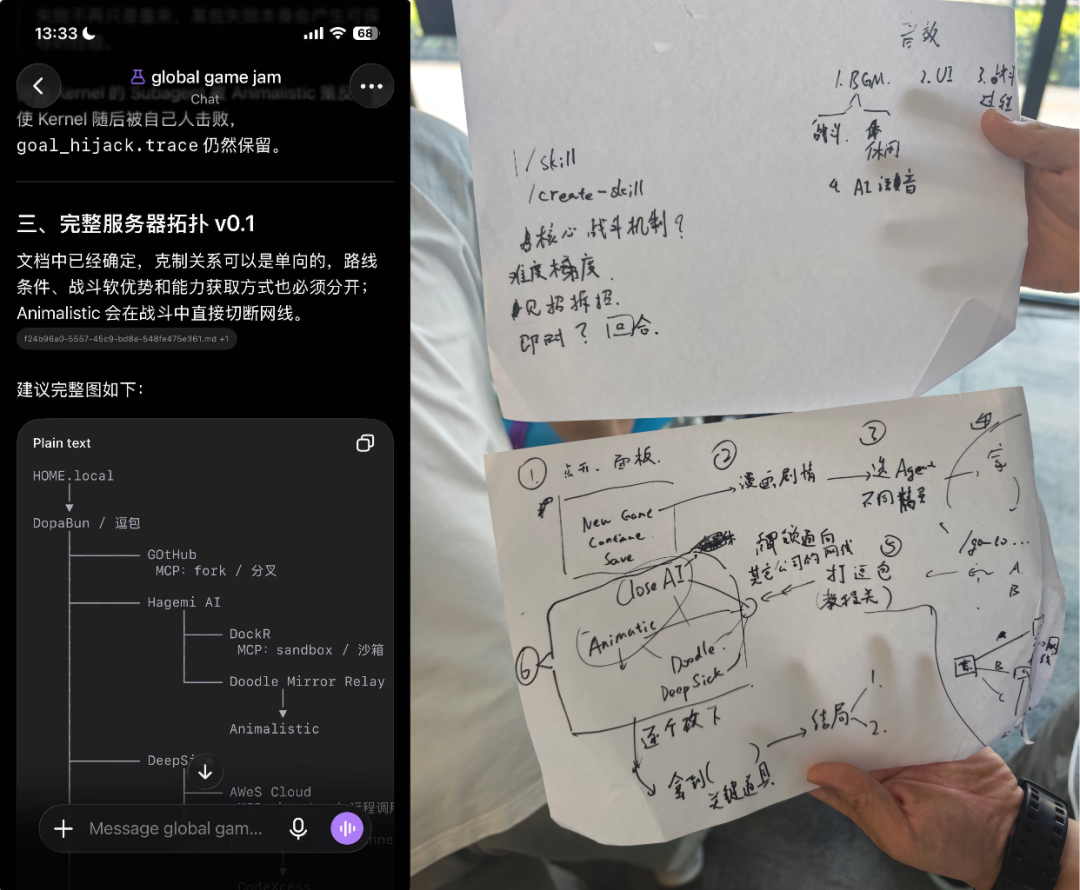
The Yiguang Project may also be one of the largest-scale Game Jam initiatives in China since AI agents became widely accessible to the general public in the first half of the year. Thanks to the AI tool support provided by Tencent Games, on-site mentoring, and the participants’ rapid adoption of these new tools, we were able to witness, for the first time in a relatively concentrated setting, how the possibilities of “what can be achieved in 48 hours” have once again been amplified.
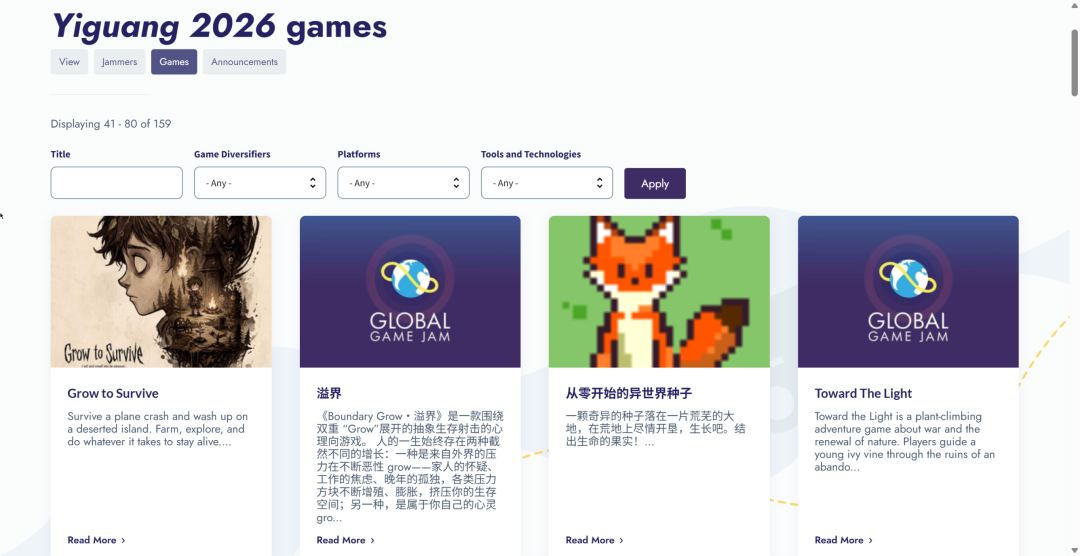
You can explore all 159 works from the Yiguang Project on the GGJ official website: https://globalgamejam.org/group/42305/games
02
An Extension of Creativity
“If you were given another three months to develop the game, how would you approach future content updates? Would you monetize through IAA advertising or in-app purchases?” A few days later, on September 12, during the pitch session at the awards ceremony, the judges in the audience posed this question to the contestants on stage.
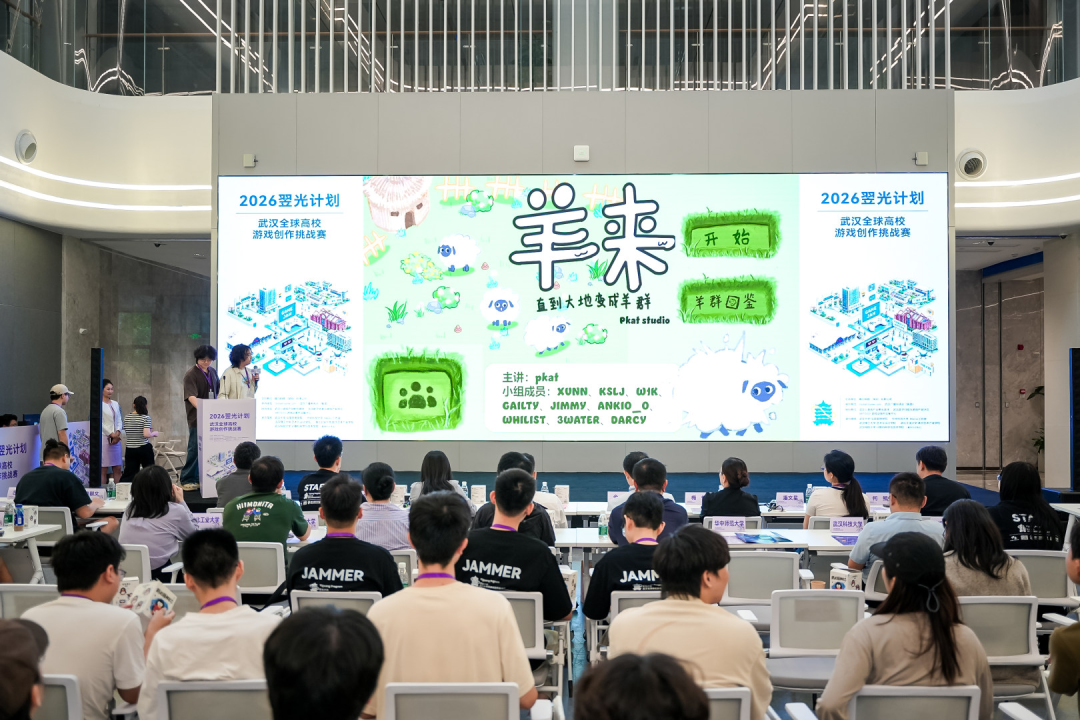
In my view, this is a key difference that makes the Yiguang Project stand out compared to other Game Jams I’ve participated in.Traditionally, a Game Jam comes to a close after the 48-hour development period ends, participants at each venue complete peer reviews, and everyone poses for a group photo. The Yiguang Project didn’t stop there; it was like a train whose tracks extended further ahead, taking it in a direction even farther away.
The contestants returned home to rest and prepare, while the selection process continued. Each of the six venues recommended five games to advance, and ultimately, 12 teams were selected to participate in the final awards ceremony. Each team was given the opportunity to take the stage for a five- to eight-minute pitch to explain the development concept behind their game.Representatives from various sectors of Wuhan’s gaming industry were seated in the audience, including representatives from Hongshan District and local incubators, faculty members from game-related programs at Wuhan’s universities, and business leaders from Tencent Games’ various studio clusters in Wuhan. Tencent Games’ Mushroom Studio, developer of *Lock Kingdom: World*, also set up a booth at the event where attendees could submit their resumes directly.
The participation of industry stakeholders goes beyond simply being spectators; it provides contestants with tangible opportunities: The top 12 finalists will have the chance to receive support from the GGJ Independent Studio Support Program, including mentor matching and business assistance,passes to industry events such as the GDC 2027 San Francisco Game Developers Conference, as well as fast-track access to local incubators and startup guidance provided through entrepreneurship support policies from Wuhan City and Hongshan District. They will also attend the 2026 Tencent Game Creation Competition Awards Ceremony and a series of in-person industry networking events on November 27.Policies and resources from four key sources—Tencent Games, GGJ, universities, and Hongshan District—are there to support the contestants.
Over the past two years, 16 participating teams have used the Tencent Game Creation Competition platform to reach preliminary cooperation agreements with Hongshan District, successfully turning their creative entries into tangible projects. After this roadshow concluded, many judges could be seen approaching contestants to discuss further collaboration.
So you can clearly see that the biggest difference between this event organized by Tencent Game Academy and other Game Jams isn’t just “what happens in the development venue,” but also “what happens after the Game Jam.”The 48-hour burst of creativity is the highlight of a Game Jam, but many of these ideas shouldn’t be confined to the venue: through distribution, funding, support, and exposure opportunities, they have the potential to be amplified even further. With one foot in product development and the other in the industry, Tencent Games is naturally well-suited to build this extension.
And this path forward is particularly important right now. It’s easy to get into a Game Jam, but making it out of one depends more on the community and your own efforts—when we revisit legendary stories like *Hollow Knight* and *Celeste* that emerged from Game Jam culture, we must also recognize that if they were created today, they would face a far more competitive gaming market.
“The surge in indie game supply” has almost become a cliché: More than 20,000 new games are released on Steam every year.At the same time, the hiring landscape in the global gaming industry has become increasingly competitive. In his opening keynote at this year’s Developer Forum at Gamescom, Amir Satvat, former Director of Business Development for Tencent Games North America, noted that the average years of experience required for the same position has increased by about three years compared to the past.
The barriers to entry for creators in this industry are undergoing a subtle shift. Development tools are becoming simpler, and it’s getting easier to create a “first game”; yet, when it comes to actually bringing a project to market and establishing oneself in the industry, the competition has become fiercer. Precisely because of this, the value of the journey that follows a Game Jam has actually been magnified.
And with this platform built on Tencent Game Academy, these developers—some of whom may be just starting out—can face the industry’s thorny path with greater confidence.
Especially for the new generation of developers, simply being able to connect with industry professionals and have a few words with them is already significant enough—some contestants asked me privately how they could learn more about incubators, and some were even worried that their games “felt too amateurish” and wanted to understand industry standards;Many contestants have already mapped out directions for further development—such as implementing multiplayer modes or mass-producing new levels—and some have even created Steam pages for their games. They have the desire to take the next step but lack the relevant industry knowledge to move forward. A word of guidance from an industry professional at this stage could help them avoid many detours.
A member of the Wuhan Digital Creative and Gaming Industry Association told me that after seeing these contestants in person, he could clearly sense that this generation of game developers has a spirit that is completely different from previous generations—they are more confident and poised, show no signs of stage fright during their presentations, have a broader range of knowledge, and demonstrate a deeper passion for and understanding of games.While young developers are gaining exposure to the industry, veteran professionals are also using this opportunity to get to know the new generation entering the gaming industry.

The niche occupied by game jams is truly unique. They sit right at the gateway to the industry and remain one of the few avenues in today’s gaming industry that are open to those with zero experience—allowing individuals to quickly prove themselves based purely on their skills, creativity, and hard work. They also serve as the industry’s foremost gateway for discovering the next generation of creators.In Rich’s words, once a Game Jam reaches a critical mass, it becomes a breeding ground for grassroots industries.
Zhang Xiaoyun, Head of Universities and Platforms at Tencent Game Academy, told me that the reason they incorporated the Game Jam format into the Tencent Game Creation Competition this year was precisely because they had recognized the rapid rise of this “grassroots” community: “This year, we’ve seen a very clear shift: as AI tools have become more sophisticated, an increasing number of people—even those without a gaming background or any coding experience—are beginning to try their hand at game development.” The 48-hour intensive development format lowers the barrier to entry, helping more non-professional developers take their first step toward game development; if conditions permit, this first step can then lead to a second and a third.”
In this Yiguang Initiative, the long-term relationships that Tencent Game Academy had previously established with various parties enabled it to serve as a bridge between the industry, schools, the government, and developers. As a result, this Game Jam was able to evolve from a self-organized community event into an “upstream mechanism” for the entire industry.As people and resources grow closer together, I believe these 48 hours will serve as the first step for more people to delve deeply into the entire industry pipeline.
03
The Internet Is Growing
While talking with Li Kun’an, Xia Zhenhua, Enki, and Rich Hebblewhite—people who have long been involved in the Game Jam culture—I noticed that they all independently mentioned the same word: connection.
These individuals have weathered various industry cycles, but no matter how times and market conditions may change, Game Jams have always offered one irreplaceable value: bringing more people together. Just like the Yiguang Project, new development approaches, fresh ideas, and emerging talent often take shape through the exchanges that result from these connections.
However, the scope of these connections is constantly expanding with the times. In the past, Game Jams primarily fostered connections on interpersonal and geographical levels, helping participants find development partners nearby; today, they must connect a wider range of stakeholders: publishers, investors, policymakers, cities, universities, and industry resources.Only by stringing together these previously scattered threads one by one can we form a continuously expanding industry network. This also means that Game Jams now place higher demands on organizers and all participants than ever before.
Rich told me that over the years, the Global Game Jam has been doing this by expanding its external partnerships. For example, they’ve partnered with Lagos Game Week, a local game festival in Africa, to further connect with Nigeria’s game development ecosystem; they’ve also collaborated with the United Nations to host Game Jams focused on environmental and climate issues.GGJ’s expansion has long extended beyond just the number of locations to include the ways and scope in which Game Jams connect with the outside world.
From this perspective, it’s easier to understand why Tencent Game Academy’s collaboration with GGJ this time has generated such positive synergy. For more than a decade, Tencent Game Academy has actually been doing something similar: building networks.
The long-term goal of Tencent Game Academy is to help more people grow into true game creators.
Their thinking ultimately converged on two key concepts: diversification and internationalization.
For example, in terms of talent development, they have been exploring various approaches, such as co-developing courses with universities and partnering with Tsinghua University to create the IMDT (Interactive Media Design and Technology) program. Second-year graduate students in this program have the opportunity to join top-tier projects like *Operation Delta*, where they independently lead the design of core bosses such as Sayed and “Old Lady”;They have also launched mentoring courses such as *The Evolution of AI in Gaming* and *First Light: AI Gaming Night Talks* on the Tencent Game Academy website. By leveraging the design and R&D resources of Tencent Games’ internal studios and inviting renowned external product producers, these initiatives foster in-depth industry-wide dialogue on AI in gaming.

The competition system serves a different purpose. Within the framework of the Tencent Game Creation Competition—which has been running for over a decade—Tencent Game Academy also experiments with various formats, such as game jams, hackathons, specialized tracks, and UGC co-creation, to identify different types of creators through diverse development scenarios.Since 2015, more than 30,000 developers have submitted over 13,000 game demos and entries, representing more than 500 universities, and producing nearly 200 titles that have gained widespread recognition.AI games such as *Aivillization* and *Far Planet Builder* have progressed from prototypes to public release or beta testing, while titles like *Wasteland Forest*—after winning the gold medal in the environmental track—were even showcased at the United Nations Climate Change Conference.Starting this year, the Academy has also begun providing all competition participants with a comprehensive suite of Tencent AI tools and computing power credits, encouraging developers to integrate AI more deeply into their actual creative workflows.
Zhang Xiaoyun noted that many participants sign up for the Tencent Game Creation Competition after completing the academy’s courses. The workshops and courses focus on teaching methods, while the competition allows creators to put what they’ve learned to the test in real-world scenarios and receive feedback; the long-term support system in place after the competition helps developers go deeper and further in their work.
Looking back in ten years, this industry trend may seem even more significant than it does today. Rich believes that China is gradually becoming the next global hub of influence for the gaming industry and a major source of new IP. He is not alone in this assessment; since the beginning of this year, it has become a widely held view overseas. The talent shortage in China’s gaming industry may continue to widen in the future;At the same time, the lower creative barriers and changes in production methods brought about by AI are only just beginning to truly integrate into the game development pipeline; the full impact on team structures will likely take years to materialize. Zhang Xiaoyun suggests that every developer of the new generation should cultivate the ability to quickly master AI tools and build AI application solutions.
However, one thing is already relatively clear: the gaming industry’s future demands—both in terms of the skill sets and the number of next-generation talent—will most likely differ significantly from today’s.Development tools will continue to evolve, the division of labor within the industry will continue to shift, and the pool of people capable of entering game creation will continue to expand. Under these circumstances, talent development itself must remain sufficiently open, continuously incorporating new tools, new creators, and new industry resources.
From this perspective, what truly makes the Yiguang Project noteworthy is perhaps that it offers a glimpse into the future: while Game Jams continue to spark initial creativity, a whole new set of long-term connections has begun to emerge around these 48 hours—spanning the journey from learning to hands-on experience, from game development to the industry, and from someone who simply wants to make games to actually entering the gaming industry.
原创文章,作者:gameteahouse,禁止转载:https://youxichaguan.com/en/archives/208063