Half a month has passed, and “Guild Wars” fans are still reeling from the bombshell at the Summer Game Festival—the long-awaited “Guild Wars 3” was finally officially announced.
This is developer ArenaNet’s first all-new title in nearly a decade. The story takes place more than a thousand years before *Guild Wars 1* in the Wilds of Oer, where players take on the role of a Vile Watcher to explore a world where spirits and magic coexist.
At the Summer Game Festival, thunderous applause erupted when “Guild Wars 3” appeared on the big screen, with a crowd of foreign fans cheering, “We’ve finally been waiting for you!” On YouTube, the “Guild Wars 3” trailer surpassed 1.5 million views in just one week.Related videos on China’s Bilibili also flooded the gaming section, and the NGA forum dedicated a full 25 pages to discussing it. This clearly demonstrates the influence of the Guild Wars IP.
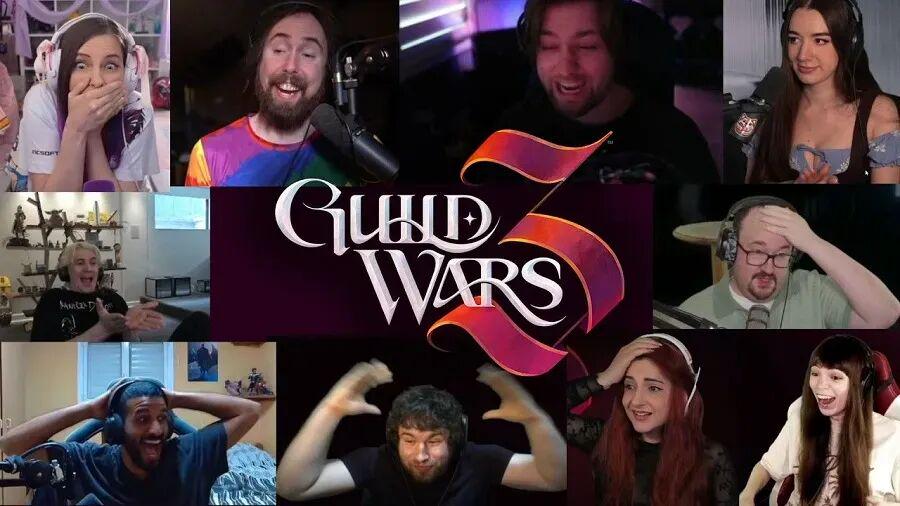
“I’ve Finally Waited for You”
But ArenaNet has even more surprises in store for players.
Just today (the 21st), *Guild Wars: Big-Name Heroes*, a new CCG spin-off of *Guild Wars*, made its global debut, and pre-registration for the Chinese server has already gone live.
The first promotional video for *Clash: Big-Name Heroes* has been released in both Chinese and English, and the game’s international official website also features a Korean version, suggesting that the game may eventually allow players from around the world to compete against each other.
It is worth noting that the global publisher of *Clash: Big-Name Heroes* is Bilibili, a platform known for its “old-school anime and manga” culture. By taking on global distribution in its first foray into the CCG market, Bilibili has demonstrated its determination to grow into a global game developer.
When it comes to the CCG genre, the landscape has been set in stone for far too many years.
“Hearthstone” is the clear leader, while “Shadowverse,” “Yu-Gi-Oh!,” “Marvel Snap,” and “Pokémon TCG” each hold their own.Even more entrenched than the market landscape is the nature of CCG gameplay itself: from *Magic: The Gathering* to *Hearthstone*, the core mechanics—fixed positions and the turn-based “you play a card, I play a card” rhythm—have remained unchanged for over two decades. The depth of strategy is limited by mechanics that are difficult to overcome, and the match format is becoming increasingly outdated.
In the long-term operation of CCG games, greater emphasis has been placed on building operational capabilities and fostering a community ecosystem, while innovation in gameplay has been neglected. This may also be the fundamental reason why new CCG games are becoming increasingly rare.
So, what exactly does *Battle Royale: Big-Name Heroes*—which aims to shake up the genre—bring to the table?
01
A New Action Game That Breaks with CCG Tradition
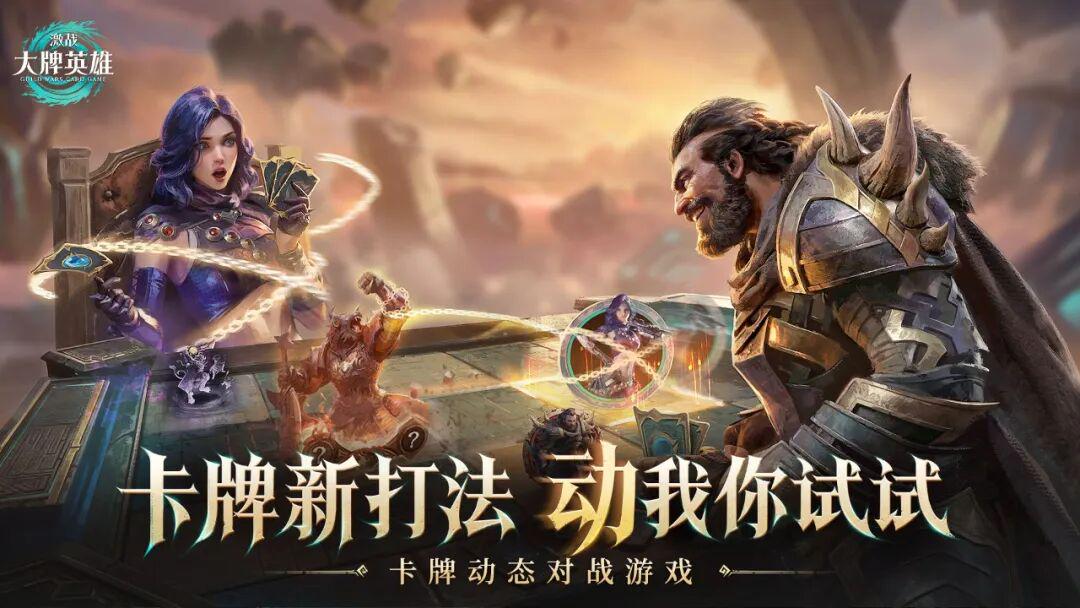
After decades of development, CCG games have established a classic set of mechanics centered on “turn-based gameplay, fixed positioning, and hand resource management.” However, the first-look trailer for *Clash: Big-Name Heroes* has shown me something different.
- The 5×3 Dynamic Battlefield Brings an MMO Feel to CCG
The battle arena in *Clash: Big-Name Heroes* is a 5×3 grid.
Commanders and card units can move freely within the grid. Common PvP mechanics found in MMOs—such as dragging, focusing fire, and knocking back—have made their debut on the CCG battlefield. These groundbreaking innovations in core mechanics have finally infused CCG matches with the feel of an MMO.
The PV has showcased several movement strategies: surrounding the enemy commander with units and attacking from both sides simultaneously; using a skill to stun enemy units and drag them to the front of the allied formation, while simultaneously creating a breach in the enemy encirclement for the allied commander.

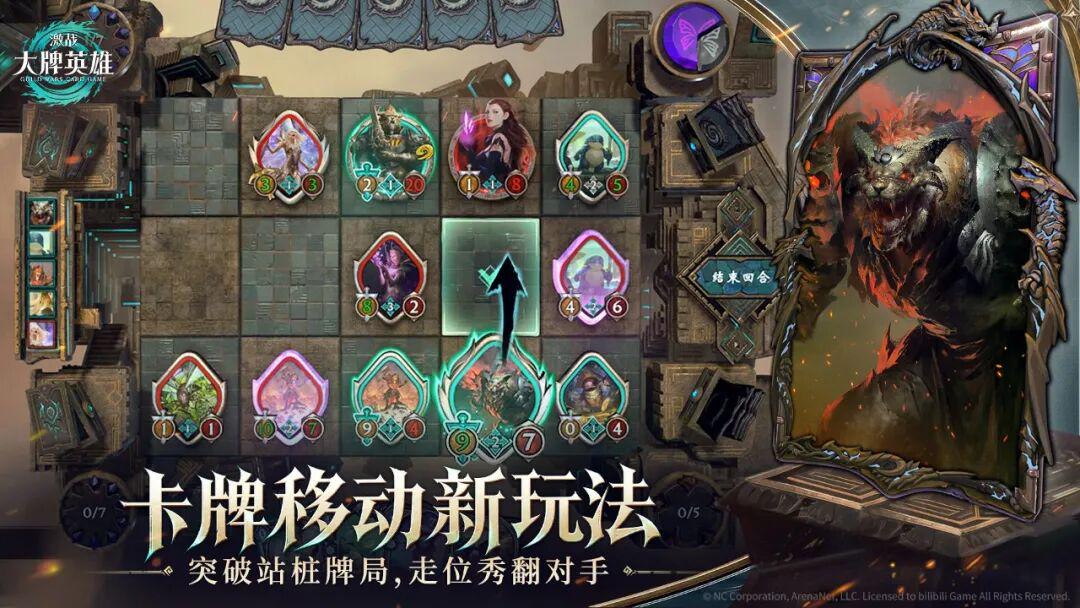
In actual gameplay, the strategic interplay can be even more nuanced. Cards with low health don’t have to sit idly by and wait to be finished off; shifting their positions might just buy them a moment to catch their breath. Alternatively, you can use a “divide and conquer” strategy by focusing fire on the opponent’s commander to force them to abandon their pursuit.
During a turn, the relative positions of the attacking and defending sides on the grid are constantly changing, and a single position may have multiple solutions.
“Outmaneuver Your Opponents” is clearly more than just an official tagline—the new mechanics truly offer a wealth of opportunities for skill-based play. I suspect that once the game enters beta testing, the sheer variety of playstyles will exceed expectations.
- A dual-axis system combining commanders and classes significantly enhances strategic depth.
In most CCG games, heroes and classes are permanently tied together. Selecting a hero effectively locks in your card pool, and deck-building is essentially single-path. You simply choose a playstyle based on the class’s characteristics and build your deck around it.
In *Clash: Big-Name Heroes*, the commander is one axis, and the class is another.
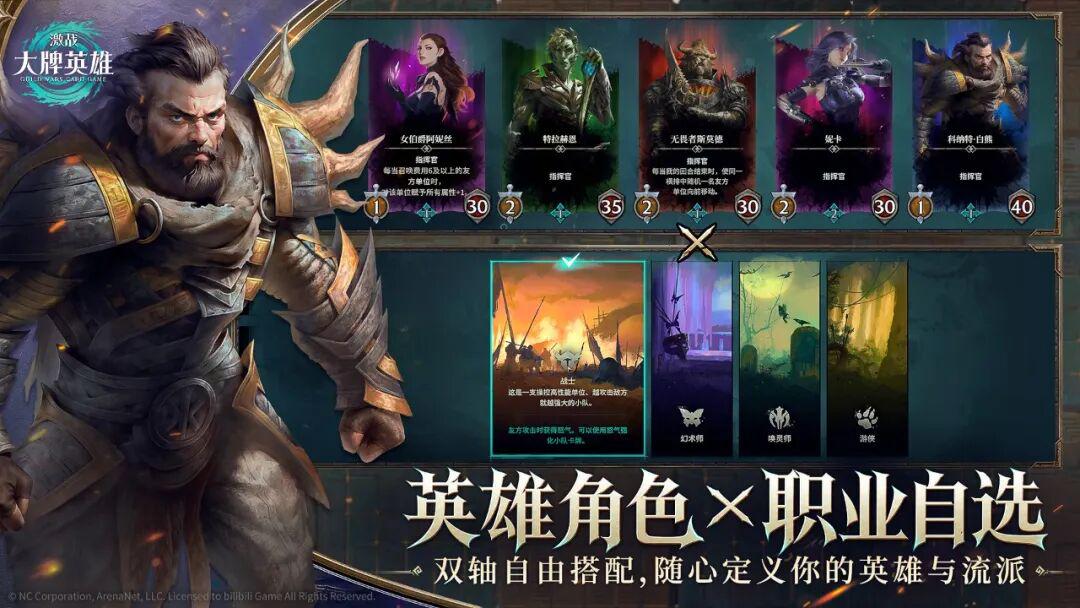
Each commander has unique 3D attributes and exclusive skills. The same commander paired with different classes results in completely different playstyles, and vice versa. This gives rise to countless deck-building combinations, making it difficult to find a single “T1” universal solution deck. The ceiling for strategic depth has been raised significantly.
It’s especially worth noting that in *Clash: Big-Name Heroes*, the commander is no longer a passive character who occasionally plays a card and sits idly in the rear—instead, they personally charge into battle and serve as a key combatant, fighting side by side with other cards.At the most tense moments of the battle, the Commander unleashes their skill, striking deep into the enemy’s heart to slay the opposing Commander—a decisive move that determines the outcome of the battle.

The commander personally killed the opposing commander.
- Capturing the Essence of the “Fierce Battle” IP
“Guild Wars: Big-Name Heroes” is a new title in the Guild Wars franchise that offers a different gameplay experience, faithfully capturing the essence of the series in both design and presentation.
The game was developed by NC, the parent company of ArenaNet, with ArenaNet providing strict IP oversight throughout the process to ensure an authentic “Guild Wars” experience.
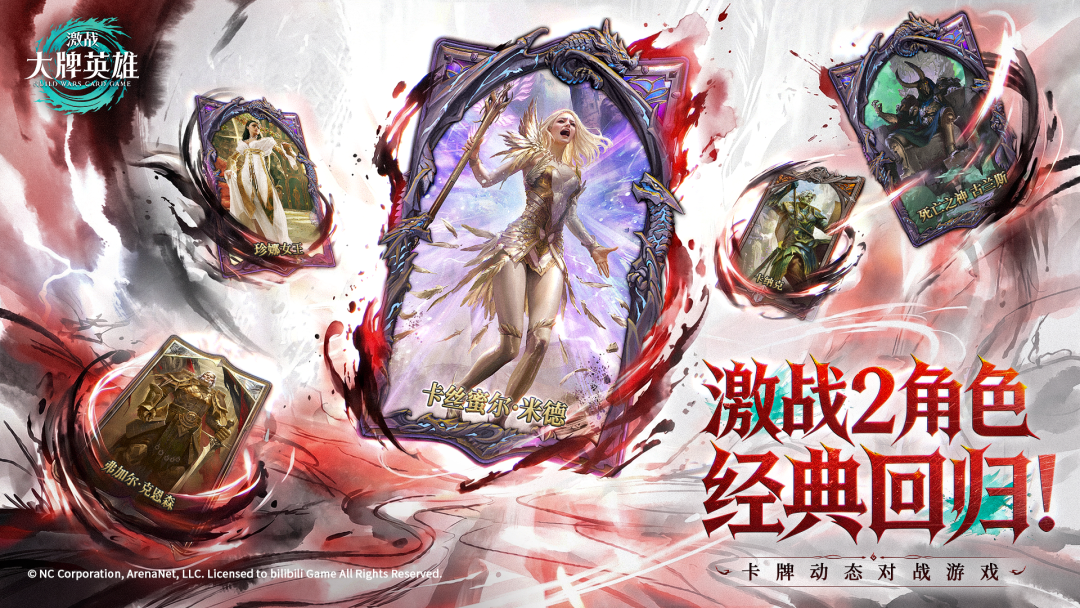
The “Commander × Class” system mentioned earlier is itself inspired by a signature feature of *Guild Wars 2*—namely, the freedom for players to choose their character’s race and class.*Guild Wars: Heroes* carries over this design, with popular NPC characters from the *Guild Wars* IP—such as Nika and Trahern—taking on the role of Commanders and entering battle with skills familiar to players.
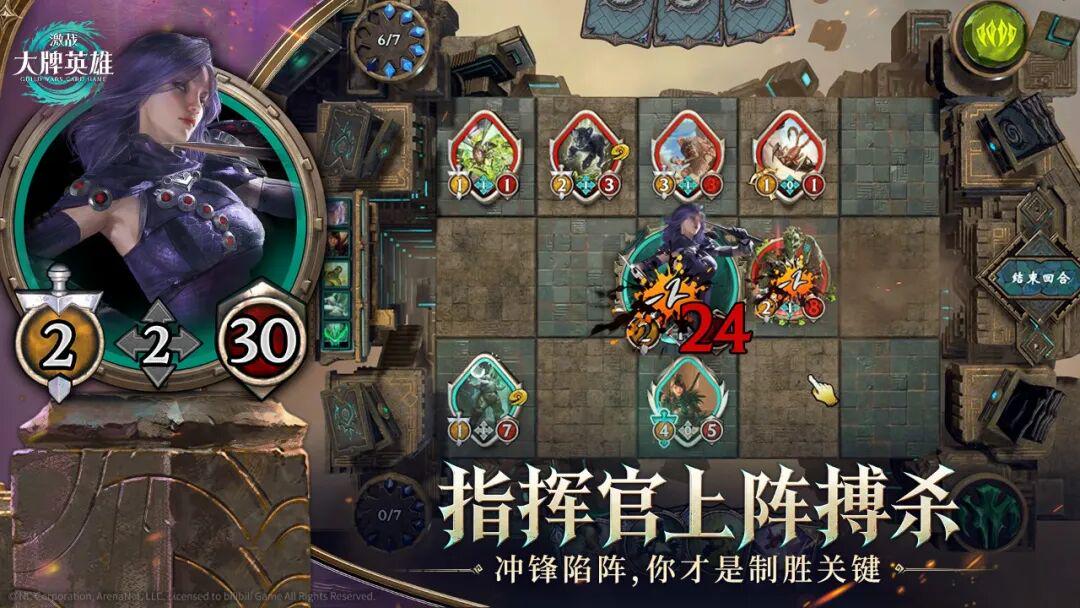
The five classes revealed so far—Warrior, Illusionist, Spirit Walker, Ranger, and Rogue—all originate from the nine-class system in *Guild Wars 2*, and we believe the game will eventually include the full range.
Visually, the game continues the iconic fantasy art style of the Battle series. Players familiar with the continent of Tyria will instantly recognize that this is the same world; on the audiovisual front, the game has enlisted the original soundtrack team to recreate the classic score, evoking a sense of nostalgia for longtime players.
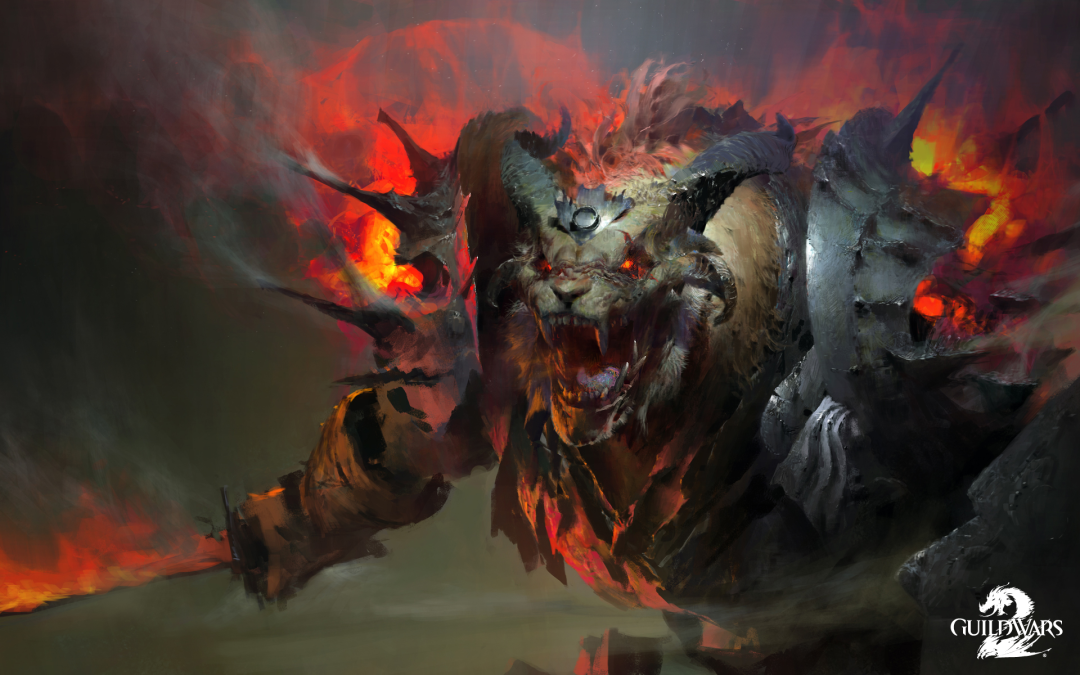
Overall, *Battle Royale: Superstar Heroes* features innovative mobile gameplay, enhances strategic depth through a dual-axis deck-building system, and pays close attention to staying true to the source material. It is poised to break free from the conventional mindset surrounding CCG games and set a new standard.
02
The “Fierce Battle” IP May Be Entering Its Golden Age
In addition to its innovative gameplay, the 20-year legacy of the “Guild Wars” IP is another source of confidence for “Guild Wars: Legendary Heroes” as it challenges the CCG landscape.
This confidence stems from the departure of three key technical staff members at Blizzard.
In 2000, three Blizzard veterans—Mike O’Brien, Jeff Strain, and Patrick Wyatt—left the company to co-found ArenaNet. O’Brien single-handedly built Battle.net and led the development of the 3D engine for *World of Warcraft*;Strain and Wyatt had been involved in the core development of *StarCraft* and *Diablo*.
The three people who know Blizzard best have indeed created a new game that’s “anti-Warcraft”: it’s a one-time purchase, doesn’t force players to grind, and avoids number inflation.
Guild Wars 1 was released in 2005, half a year after *World of Warcraft*, and by 2008, global sales had surpassed 6.5 million copies.In 2012, *Guild Wars 2* was released, winning 60 Game of the Year awards and selling 3.5 million copies in its first year. Even more remarkable is that, after 14 years of operation, the game is experiencing a resurgence. Following the release of its sixth expansion, “Eternal Vision,” it set a new record for the highest concurrent players in Steam history, with market performance exceeding NCSoft’s expectations.
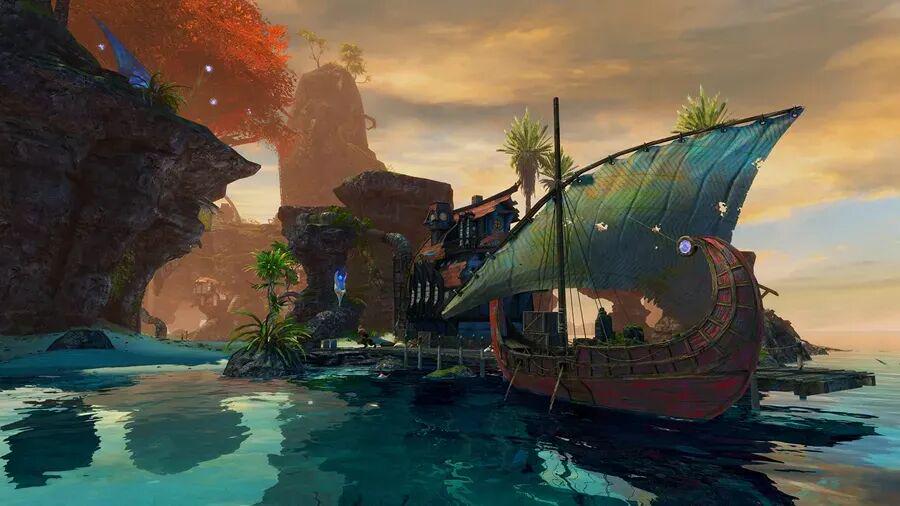
Eternal Vision
Right now may well be the golden age of IP battles.
The successive announcements of *Guild Wars 3* and *Guild Wars: Heroes* have added another layer of legend to the intricate history between ArenaNet and Blizzard, while also lending a unique narrative charm to the challenges posed by later entrants. Following the announcements of these two new titles, Western gaming media followed up with detailed coverage.
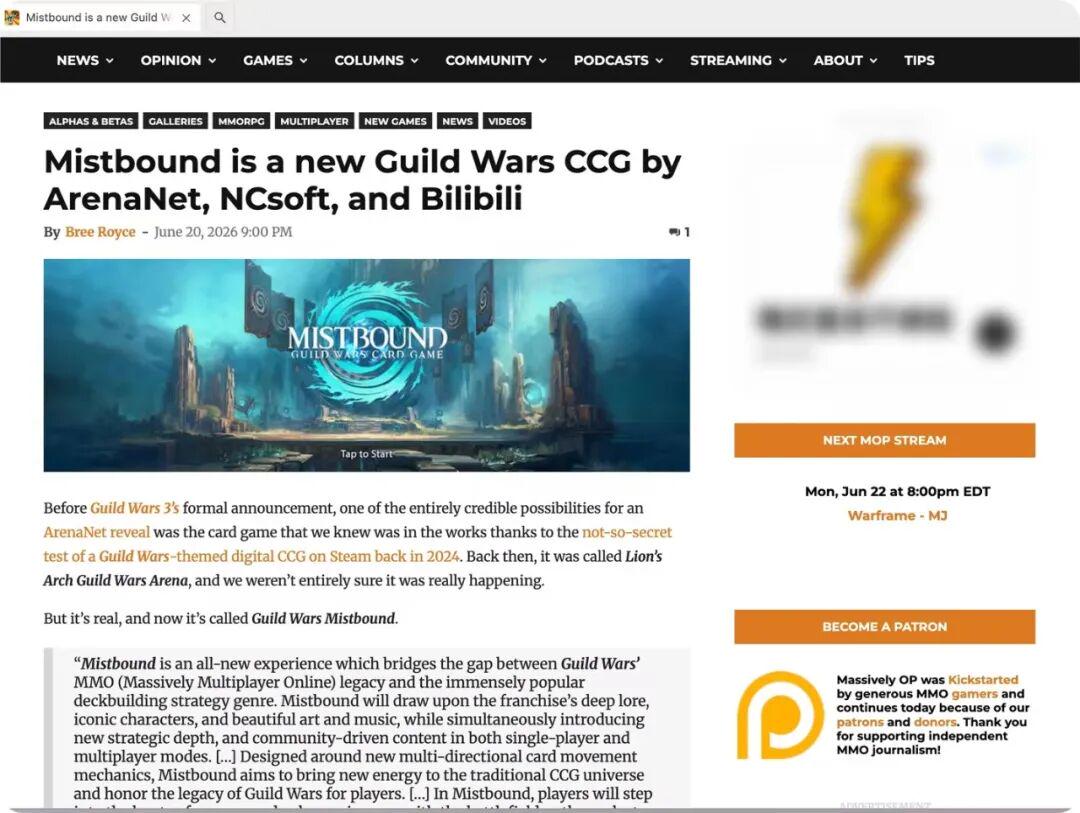
Naturally, European and American media are paying more attention to the new installment in the “Fierce Battle” franchise.
03
It actually makes perfect sense for Bilibili, a long-standing anime and manga platform, to get into distribution.
According to reports, Bilibili will select its Chinese server as the region for the global beta test, a decision likely fueled by the confidence the platform’s community has instilled in it.
At first glance, it seems a bit incongruous to have a CCG spin-off of a hardcore MMO published by a platform known for its anime and manga community. But upon closer examination, the logic behind Bilibili’s decision to publish a CCG makes much more sense than the general public might think.
- Bilibili has long since shed its label as a platform “only for anime and manga content.”
Following the restructuring of Bilibili’s gaming business, the company is no longer just a publisher of anime-style games; its pipeline now includes a diverse range of genres, such as competitive card games and idle pet-catching games.
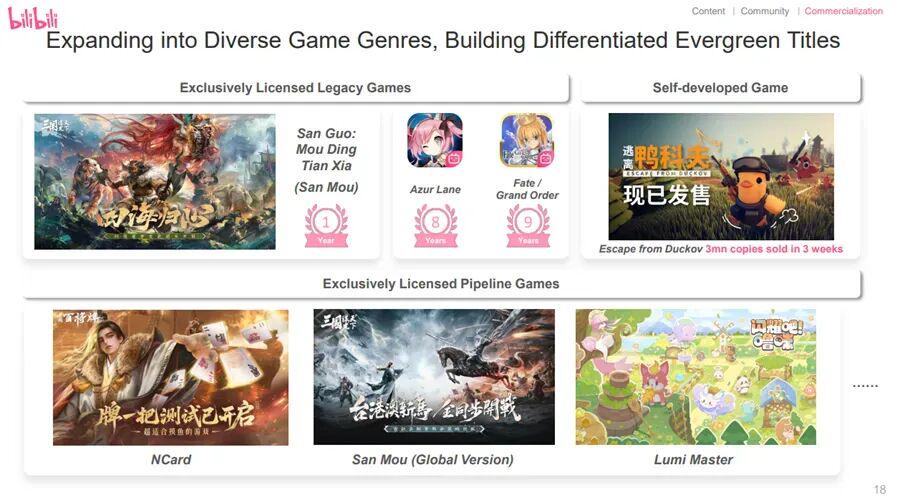
Bilibili has become a platform for publishing content across a wide range of categories
In the end, it’s the results that speak loudest.
Bilibili’s self-developed and self-published game *Escape from Yakof* has sold over 3 million copies, claiming the top spot on last year’s domestic game sales chart; the SLG *Three Kingdoms: Strategize for Supremacy*, now in its second year of operation, has formed a three-way rivalry with *Rate the Land* and *Romance of the Three Kingdoms: Strategy Edition*.
The successive releases of *Escape from Yakov* and *Three Schemes* have proven that Bilibili has the ability to propel its products to the top of their respective niche markets. After years of trial and error, Bilibili has developed a distribution strategy that works best for it.
More importantly, Bilibili’s distribution strategy does not rely on in-platform channels; it has already established mature cross-platform distribution capabilities. It is evident that the content ecosystem Bilibili has built around interest-based communities acts as a mutually reinforcing lever with its gaming business. Content drives traffic to games, and games, in turn, fuel content growth, creating a highly efficient synergy.
On the other hand, Bilibili’s proactive entry into the CCG gaming market is also a strategic move based on its users’ characteristics, further expanding the boundaries of its gaming business.
- Bilibili boasts an active CCG user community
Bilibili is probably the most dedicated and active CCG gaming community in China.
Deck building, match analysis, tournament commentary, and new card reviews—Bilibili offers a one-stop solution for virtually all of a CCG player’s core content needs. The Bilibili community itself is home to a large number of hardcore CCG players and content creators.Strategy guides and fan-created content for games like *Hearthstone* and *Shadowverse* are constantly emerging, with viral videos easily surpassing one million views.
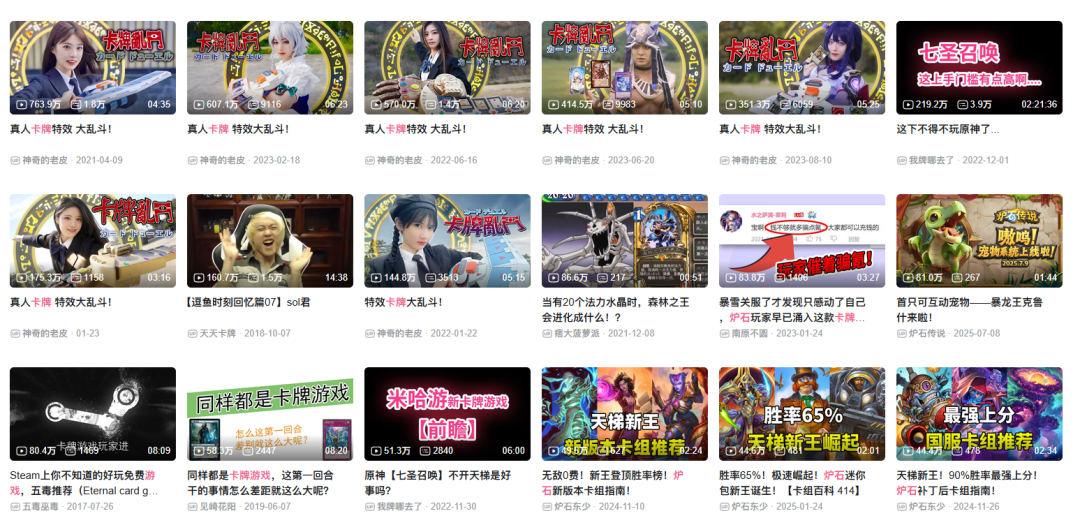
Bilibili’s fan-created content ecosystem is truly thriving.
Bilibili currently has 40 million monthly active users in the gaming sector. Behind this figure lies a group of young gamers with a strong willingness to pay and high community engagement. They are the natural user base for *Clash of Heroes: Big Names*.
The synergy between a vast repository of niche content and an active community ecosystem gives Bilibili Games a unique advantage as a platform backed by its main site. For *Clash of Heroes: Big Names*, there are plenty of opportunities for distribution right at hand.
More importantly, ArenaNet and NC also value Bilibili’s community culture and distribution capabilities, and are willing to place their trust in the platform. This powerful three-way partnership aims to make a big splash in the CCG sector.
04
1+1+1>3
ArenaNet provides the IP license and oversees the project as a whole; NC, with its extensive experience in mobile game development, leads the R&D efforts; and Bilibili handles localization and distribution, leveraging its content ecosystem to engage players. The three parties have clearly defined roles and leverage their respective strengths, striving to achieve a “1+1+1>3” effect.
For ArenaNet and NC, *Guild Wars: Big-Name Heroes* represents a crucial attempt to expand the Guild Wars IP’s reach beyond its existing audience. If successful, the “IP + gameplay innovation” model will be validated, and the Guild Wars IP may launch a wider variety of spin-off titles in the future. The transition from an MMO to a CCG is just the first step.
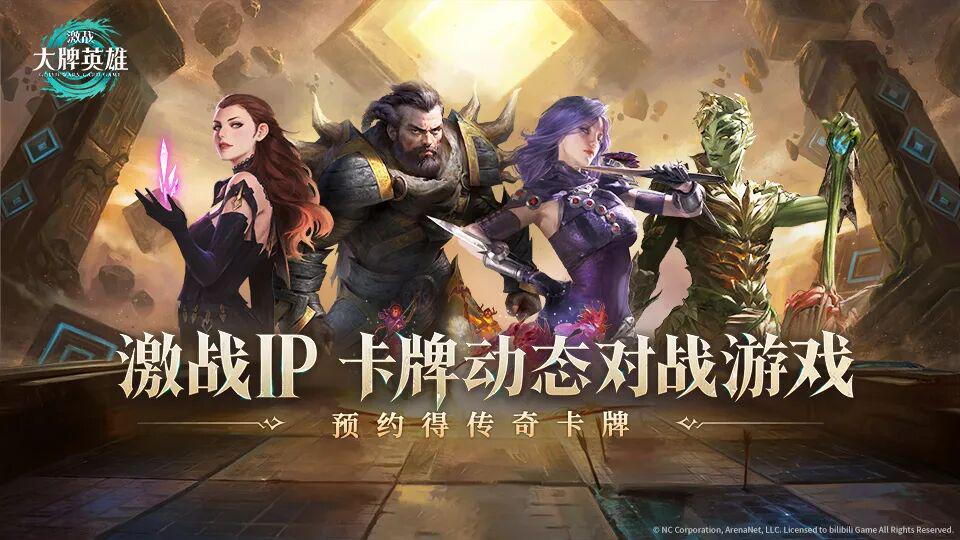
For Bilibili, securing the global distribution rights to *Battle: Big-Name Heroes* and partnering with top-tier IPs from Europe and the U.S. represents not only a key strategic move to expand into new genres but also an important step in deepening its presence in overseas markets.
For players, the long-dormant CCG genre has suddenly seen the emergence of a game-changer, bringing fresh perspectives on the fundamental mechanics of gameplay. This is, of course, a good thing.
原创文章,作者:gallonwang,禁止转载:https://youxichaguan.com/en/archives/208023