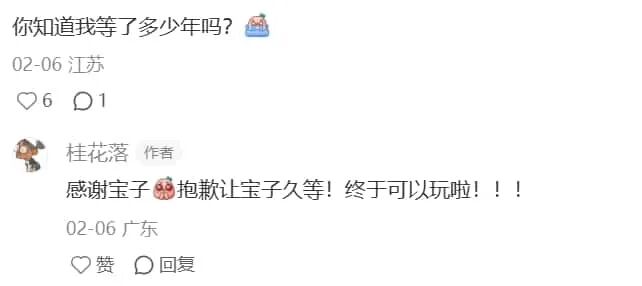
“Do you know how many years I’ve been waiting?”
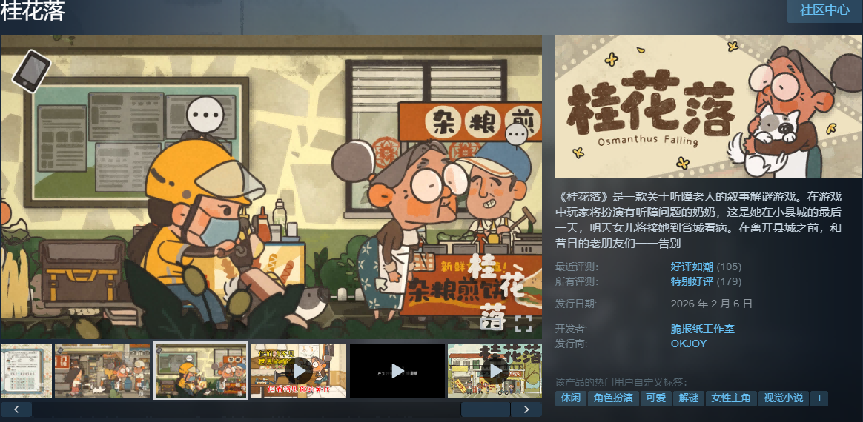
On February 6, a game titled *Osmanthus Blossoms* launched on Steam. In the comments section, one player tearfully wrote this message.
What kind of game would make players willing to wait four years?
"The Answer" is a text-based puzzle game that tells the story of an elderly man with hearing loss. Shortly after its release, the game quickly climbed to the top of Steam’s "Rising Stars" chart, with a 96% positive rating. Players have left lengthy comments in the review section, sharing stories about their own grandparents. Some said they "cried their eyes out by the end," others mentioned "crying while playing during the Lunar New Year," and still others called their grandmothers immediately after finishing the game.
“It was so much fun—I actually felt like crying for no reason while playing.”
“This game is the most moving one I’ve played in recent years.”
“The art style is fresh and cute—it’s like looking at a picture book, and it feels very soothing.”
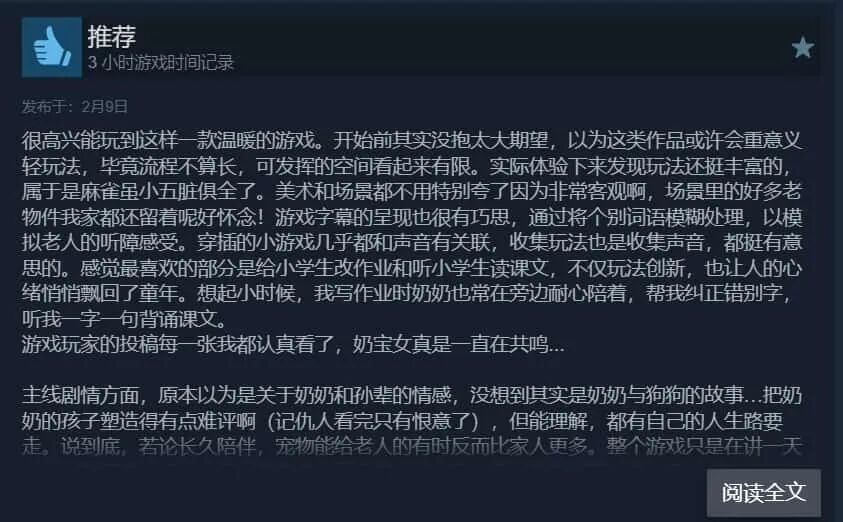
Behind these reviews lies the long journey of a game that evolved from a class project into a commercial release. As early as 2022, when *Osmanthus Blossoms* first debuted as a class project at the Communication University of China, it quickly won the hearts of many players. It later became a graduation project, winning the Silver Award and the Excellence in Narrative Award at the 2023 Tencent Independent Game Competition.Three years later, this title—which players have praised as “exactly what a game should be”—has finally launched officially.
However, how far can a highly acclaimed student project go in the market?
Teahouses often feature stories about people who shot to fame and turned their lives around by making indie games, but *Osmanthus Blossoms*, which has received solid reviews, has sold only 7,000 copies so far and hasn’t seen a dramatic surge in sales since its release.
The development journey of *Osmanthus Blossoms* also reflects the real struggles a student team faced after leaving campus. The team scrapped and rebuilt the game multiple times, and the repeated delays in its release date gradually eroded their initial enthusiasm for game development. Despite being a game design major with several award-winning projects under his belt, Sanju still found himself struggling to find a job upon graduation.
01
A heartwarming story that has touched countless people
The main plot of *The Falling Osmanthus* is a journey through memories and farewells.
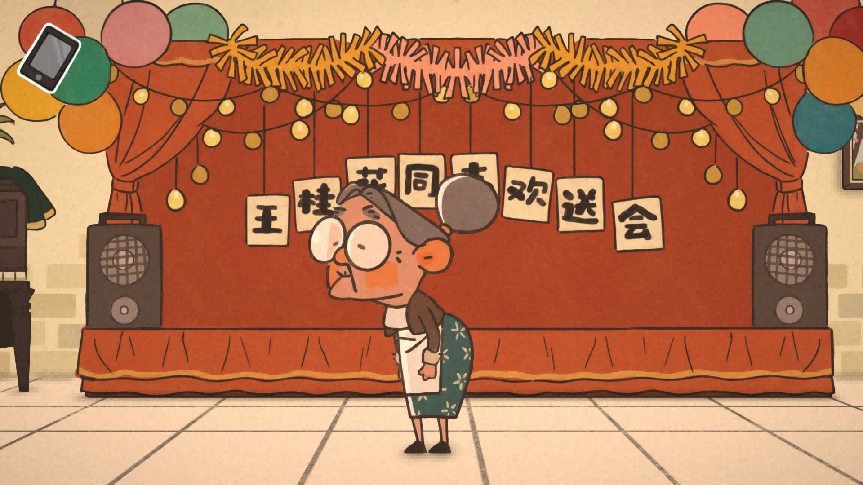
Players take on the role of Wang Guihua, an elderly woman who is deaf. With her husband gone and her daughter working far away in the provincial capital, she lives alone in an old apartment in the Gui'an residential complex, relying solely on her little dog named "Xiaobai." The old building is about to be demolished, and her daughter wants to take her to the provincial capital for medical treatment. However, her grandson is allergic to pets, so she must find a new home for Xiaobai before she leaves.
This was the last day before the move. Early in the morning, she called the new owner who was about to take in Xiao Bai, but the person said they wouldn’t be available until that evening. So she steamed a basket of osmanthus cakes, intending to treat her old friends to them one last time before saying goodbye to Xiao Bai—and to fulfill a wish she had held in her heart for a long time.
The narrative of *The Fall of the Osmanthus Blossoms* is intricately interwoven; imagery such as osmanthus blossoms and mayflies recurs throughout the story, linking Wang Guihua’s past and present, as well as the choices and sacrifices she was forced to make.
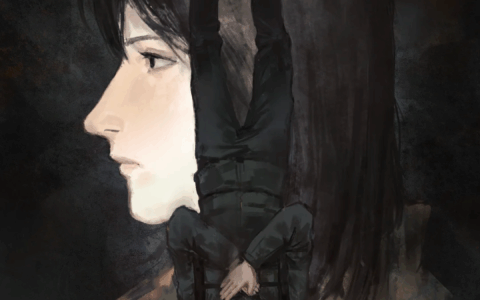
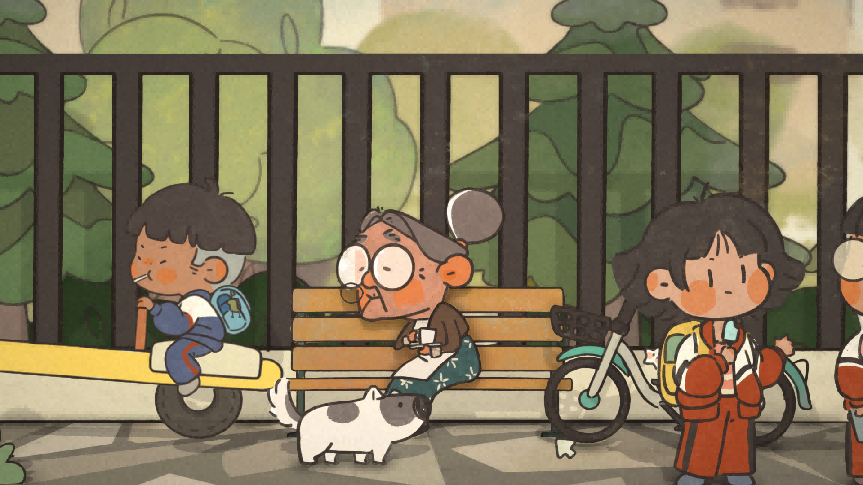
The game’s art style has caught the eye of many players. The visuals resemble both old-school Chinese cartoons and the picture books we flipped through as children, exuding the unique warmth of hand-drawn illustrations. One player commented, “The art style is fresh and cute—it’s like looking at a picture book,” while another remarked, “My family still has so many of those old items in the scenes; it really brings back memories.”
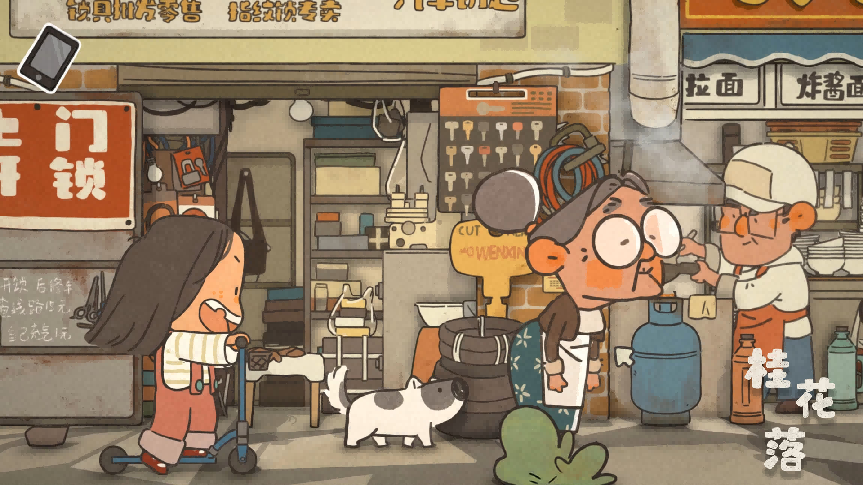
The game’s most distinctive feature is its visual depiction of the daily challenges faced by people with hearing impairments. Since the protagonist is an elderly person with hearing loss, the game blurs some of the subtitles, requiring players to guess the correct information.
At the same time, the game’s vivid portrayal of the daily lives of the elderly makes it particularly engaging. The tutorial is designed as a scene where a daughter teaches her mother how to use a smartphone; the notes app serves as a to-do list; and the characters move slowly and deliberately, even pausing to sit down and rest when they pass a chair.
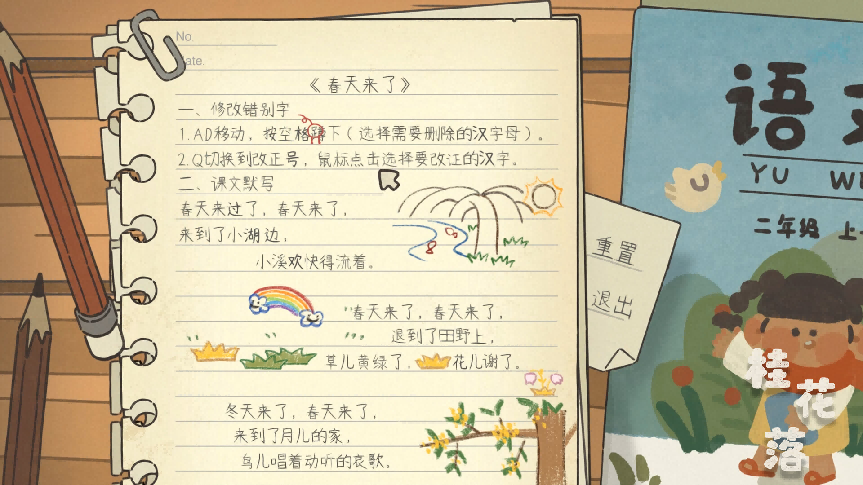
In addition to the main storyline, the game features several mini-games with puzzle elements, such as ringtone matching, editing Chinese language textbook passages, and an interactive version of the animated series *The Adventures of Little Mayfly*. While these mini-games aren’t particularly difficult, each one is closely integrated with the setting and storyline, complementing them perfectly.
With its touching story, engaging gameplay, and distinctive art style, *Osmanthus Blossoms*—though it spans just a single day—touches on a range of socially resonant themes, including the lives of elderly people living alone, the hearing-impaired, retired workers, and laid-off employees.
One player wrote in the comments section, “I called my grandmother right after finishing the game.” Another shared a photo of themselves with their grandmother, saying the game reminded them of a loved one who had passed away.
These heartfelt player stories began emerging as early as 2022, when the game was first unveiled. The development team incorporated these stories into the game; when players find and open postcards among a pile of old items, they can read these heartwarming tales.
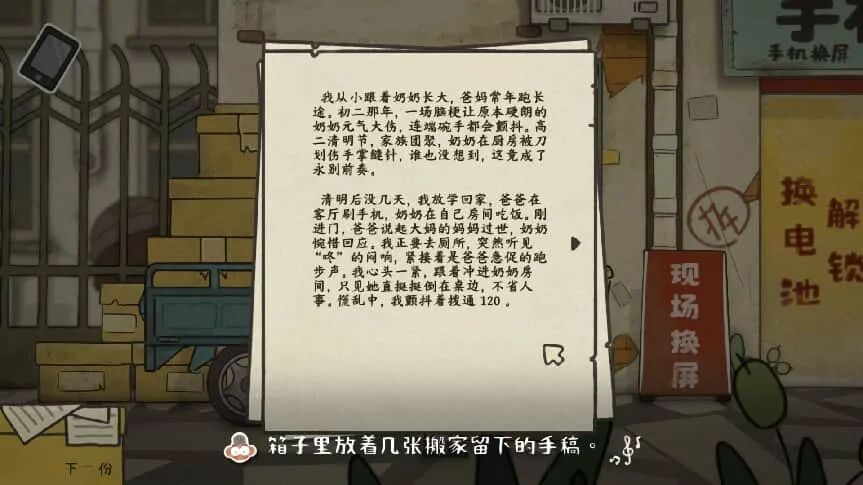
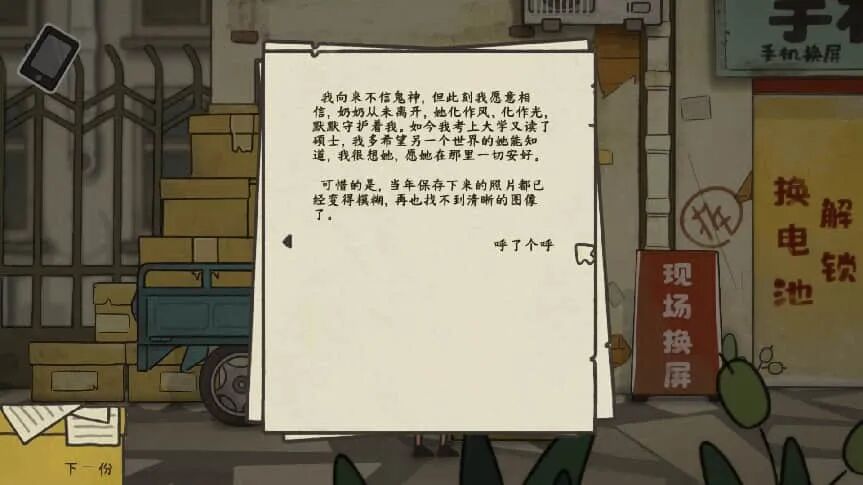
This collaboration with players has also become another highlight of the game. One player said that they had carefully looked at every submission in the game, adding, “Nai Bao really resonates with me.”
02
From Coursework to Thesis
The creation of *Osmanthus Blossoms* began with a simple school assignment.
The original development team members all came from the Game Design Department at the Communication University of China. The department offers three specializations: game design, art, and technology. Sanju, the game designer, studied game design; Nanzhu, the artist, was a classmate in the game art program; and the two programmers came from the game technology program.
The Game Design Department at Communication University of China offers a four-year game development curriculum. In the first year, professors assign students to groups and require them to create a game every week. “Back then, we were all freshmen and knew virtually nothing about coding,” recalls Sanju. “Many students used no-code tools like RPG Maker, while the more skilled ones followed Unity tutorials to make simple platformers. We had new teammates every week, which helped everyone quickly find partners they could work well with.”
Sanju (game designer) and Nanzhu (artist) have been partners since their freshman year of college, and over the years they’ve built a strong bond of trust and chemistry. Thanks to this collaboration, Sanju created quite a few games during her college years; in the early days, it was considered a success if a game lasted even 10 minutes. A WeChat Mini Program game they worked on during their freshman year even won a WeChat Mini Program award, but unfortunately, when the engine they used was shut down, the game disappeared along with it.
By their sophomore and junior years, the game development courses gradually extended the production cycle for individual projects, allowing them to refine their work with greater attention to detail. The initial version of *Osmanthus Blossoms* was a junior-year course assignment, for which their professor gave them one or two months.
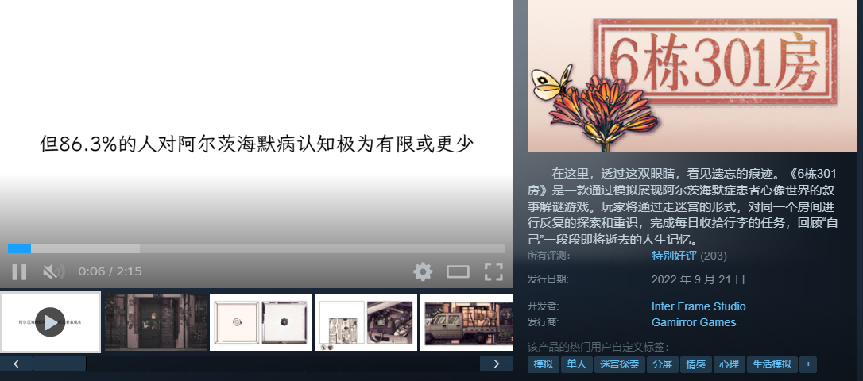
*Osmanthus Blossoms* was initially inspired by *Room 301, Building 6*. The latter, also developed by Frame-to-Frame Studio—a team of students from the Communication University of China—won the Social Value Award at the 2022 GWB Independent Game Awards. It is a narrative puzzle game that focuses on Alzheimer’s disease. At the time, the team wanted to build on this concept and turn their attention to groups with even greater social significance.
Just as they were brainstorming ideas, Mom told Sanju that even with the TV turned up really loud at Grandma’s house during quarantine, she still couldn’t hear it. They finally decided to focus their project on people with hearing impairments.
Initially, they chose to blur the entire text to visually represent hearing impairment. This ingenious design was initially driven by technical limitations; as students, they were unable to create a “deafness” effect through sound design.
The blurred text first appeared only in the scene where the grandmother and her daughter were talking on the phone. Later, their mentor pointed out that the game’s portrayal of the hearing-impaired community was too weak, so they spent another week adjusting their approach, rewriting all the dialogue, and turning this mechanic into the game’s core feature.
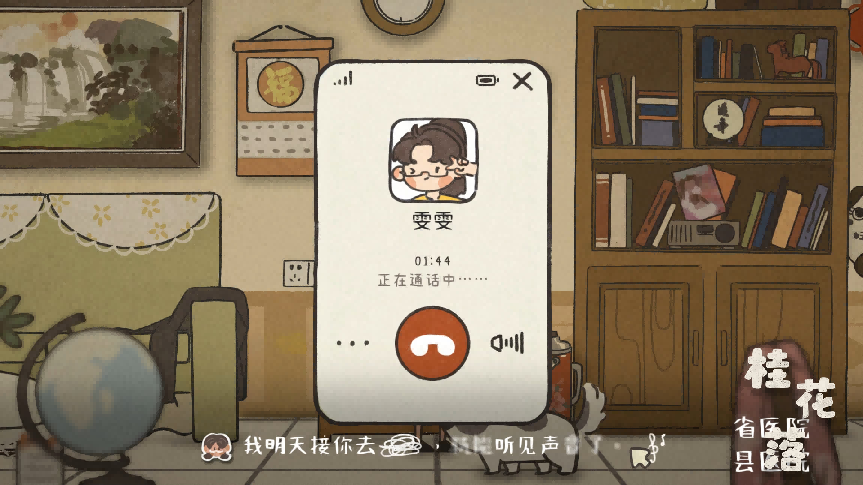
In 2022, the earliest version of *Osmanthus Blossoms* was only about 20 minutes long. It featured the early stages of core gameplay mechanics—such as blurred text and audio recordings—but the overall quality was lacking, with rough visuals and a thin storyline. Yet it was still moving enough to touch people’s hearts. After the game was released online, it gained a following among many players, who hoped the developers would finish it.
And so, *Osmanthus Blossoms* evolved from a class assignment into a senior thesis project. But by my senior year, there were changes in the team.
Sanju (the game designer) and Nanzhu (the artist) wanted to continue developing the game until its release, so they posted in an indie game forum looking for a new programmer. Eventually, they met Ziran, who offered to help.
Ziran had always worked on a project-by-project basis at indie game studios, and since the group hit it off, they decided to continue working together. And so, after reorganizing the team, they embarked on the long journey of remaking the game.
03
Three years of reworking, over 400 bugs
“In this version, the code has been completely rewritten,” said Sanju.
"Osmanthus Blossoms" has undergone several major overhauls. In addition to rewriting the code, the team switched to Unity's Unified Rendering Pipeline (URP) and integrated the professional audio middleware WWISE. This meant that all previously implemented sound effects became obsolete, and the entire audio system had to be rebuilt from scratch.
The team held detailed discussions regarding the demo version. While some art assets and core gameplay mechanics were retained, the game design, programming, art, and music and sound effects were all updated. Sanju was primarily responsible for gameplay updates; during this process, they gathered extensive player feedback to enhance the immersive quality of the storyline, balance the pacing between narrative and puzzle-solving, adjust the difficulty of certain mini-games, and remove or modify any ill-conceived designs.
The story has also been greatly expanded. In the initial version, players noted that while the main storyline involved sending Xiao Bai off, Xiao Bai had too few scenes in the story. The new version adds scenes of Grandma searching for Xiao Bai at dusk, interactions between humans and dogs, and the final farewell sequence—all of which the team debated and refined at length before finalizing them.
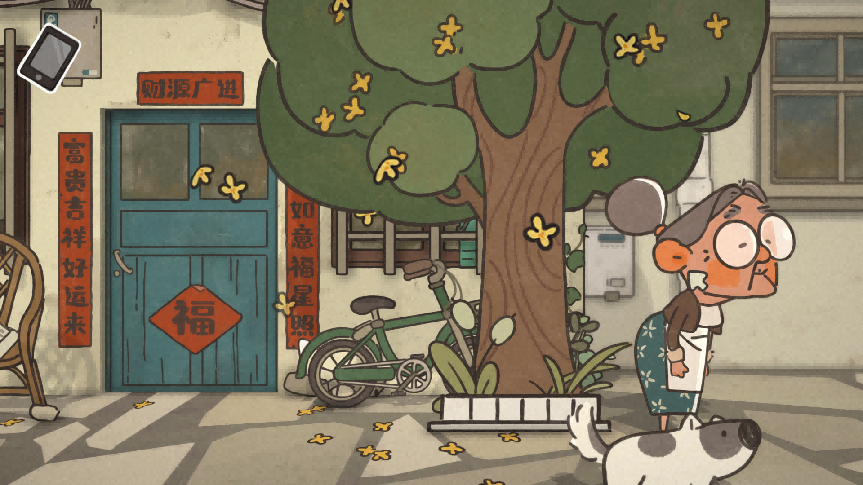
The remastered version of *Osmanthus Blossoms* addresses the shortcomings of the original story. The developers have incorporated more side stories into the radio program: why the flower shop on Old Street is always closed, and why the locksmith at the lock shop is never there. These hidden narratives bring the game world to life and make it feel more three-dimensional.
*The Fall of the Osmanthus Blossoms* bears many marks of reality. The daily life of Wang Guihua, a retired factory worker, draws on Sanju’s own experiences living in a factory residential compound; the film’s settings are modeled after the county town where the art director, Nan Zhu, grew up.
The factory restructuring and demolition of residential buildings featured in the game are all based on Sanju’s personal experiences; they also incorporated social news stories they encounter in daily life into the game, such as pop-up ads on mobile phones that won’t go away and scams offering free eggs on the street.
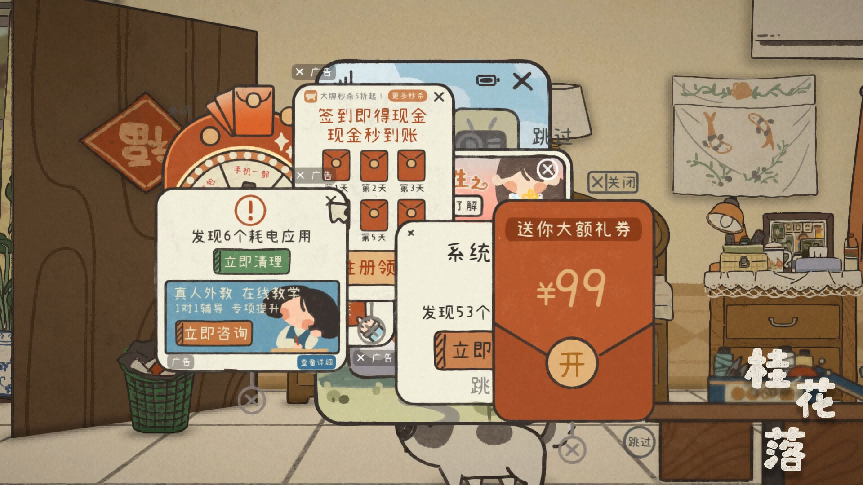
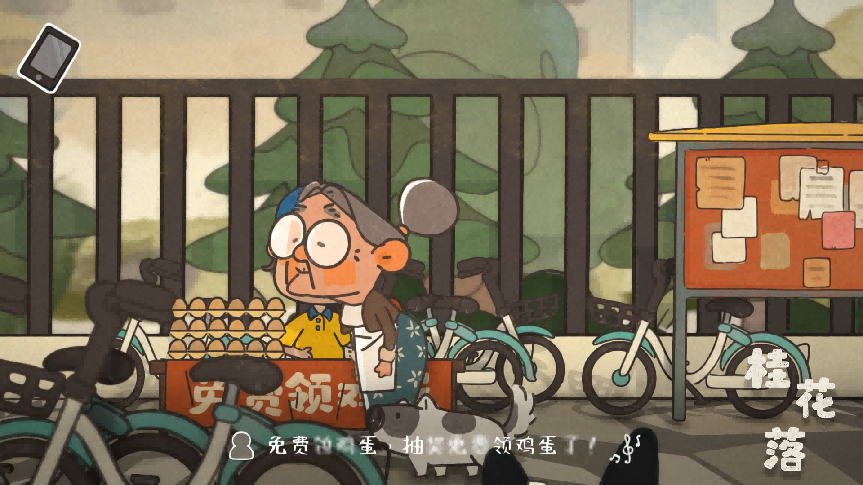
Over the three years of remaking the game, as Sanju gained more life experience, he incorporated his observations of life into the game.
She realized that in real life, “family members often use concern as an excuse to impose their own will on others.” In the game, Wang Guihua and her daughter are no different: her daughter worries that it’s unsafe for her to live alone and wants to bring her to the city; but she would much rather stay in the small county town, keeping Xiao Bai company and looking after her old friends, living a quiet life.
She wants to challenge the public’s stereotypes about the elderly. They, too, struggle to balance family and personal life—they want not only the joys of family life but also a little space of their own.
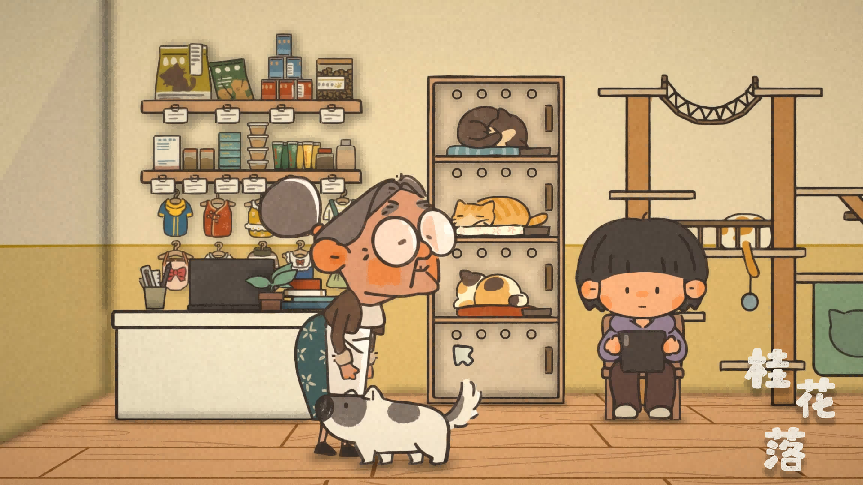
Over the course of those few years, everyone had graduated. Nan Zhu joined a game company as an artist, Sanju was pursuing a master’s degree, and Ziran, the programmer, had also found a job. *Osmanthus Blossoms* became an online side project, and everyone worked on it in their spare time, collaborating across different cities to gradually bring the game to completion.
In 2025, Sanju graduated from graduate school and started working at a game company. *Osmanthus Blossoms* was originally scheduled to launch before she began her new job, but due to an overwhelming number of bugs, the release was postponed for another six months.
“We fixed over 400 bugs in the last two months,” she said. “We basically had to release a package for testing every day.”
04
Not a rags-to-riches story
“We don’t have high sales expectations for it,” Sanju said. “We’re making it because we want to do it right—and a big part of that is not wanting to let down the players who supported us from the very beginning.”
At the height of *Osmanthus Blossoms*’s popularity, an investor approached them, offering to fund the establishment of a studio so they could work on the game full-time. They turned down the offer.
“Independent game development is quite risky, and the pressure faced by full-time and part-time developers is completely different,” said Sanju. “I graduated with a bachelor’s degree in art and joined a game company right away, securing a stable job. I don’t want a team of students to rush into starting a business without much real-world experience.” More importantly, they believed that even if the game secured investment, it would likely fail to break even.
Even though it was just a side project, they faced considerable pressure over the course of several years. Both she and Meishu had full-time jobs. “Juggling work or school with game development in our spare time—sacrificing our rest time without any income—made it easy to lose our mental balance.” Meanwhile, after programmer Ziran wrapped up his previous indie game project in 2024, he dedicated himself full-time to this one; it wasn’t feasible to expect her to keep contributing without any income.
In addition to the pressure of creating the game, there’s also the burden of player expectations and the debts of gratitude we owe to others. “People are always asking, ‘Is it out yet?’ Maybe they’re worried we’ll just disappear.” We’ve accumulated quite a few favors during the game’s development—for example, our friends helped out with the sound design entirely for free, without any compensation.
On February 6, 2025, *Osmanthus Blossoms* finally launched on Steam. Four years have passed since it began as a class project.
“If we don’t log in soon, it’ll be too late,” Sanju said. “The in-game date still says 2022.”
In the end credits, the development team acknowledged the many people who supported them in 2022. On the game’s main menu, a small rag doll appears after you complete the game; click on it to read the players’ stories that didn’t fit into the game.
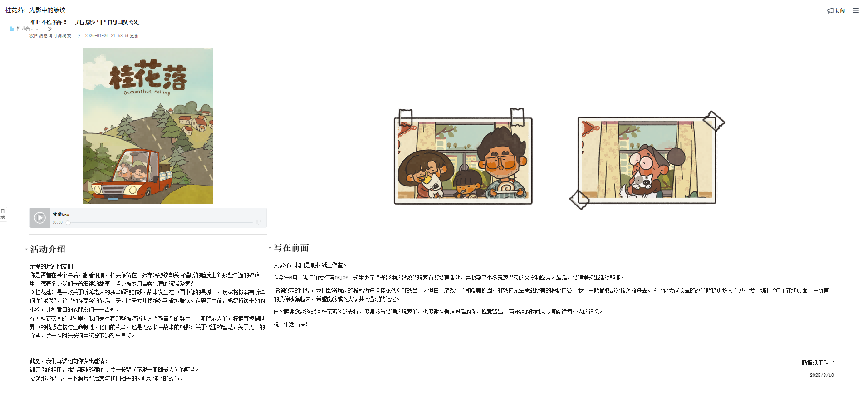
"Osmanthus Blossoms" Story Submission Page
On February 6, the team launched a new call for stories on Steam and announced that it would donate 5% of the first month’s total sales revenue, on behalf of the entire *Osmanthus Blossoms* team and all players, to the “Benefit for Ears” initiative—a charitable project run by the China Hearing Medicine Development Foundation that focuses on supporting people with hearing impairments.
This isn’t a rags-to-riches story. Upon graduating from Sanju, she sent out countless resumes but couldn’t land her dream job as a game designer, so she decided to pursue a master’s degree. She reflected that perhaps because she had always worked on single-player games, she lacked sufficient understanding of the domestic commercial mobile game industry and didn’t possess the skills required for that field.
Publisher OKJOY revealed that *The Fall of Osmanthus Blossoms* has sold over 7,000 copies, but it is still far from becoming a hit.
“Many games may just have hit the right note; the initial choices are often more important than the efforts made later on,” said Sanju, who has a formal background in game design, works in the gaming industry, and has been observing the sector for many years.
After the game launched, the team members each returned to their daily routines. Designer Sanju planned to focus on his work and continue gaining experience at the game company; artist Nanzhu worked his day job while developing his own game on the side; and programmer Ziran threw himself into his next indie game project.
Sanju feels that *Osmanthus Blossoms* has garnered more attention than they had anticipated. Rather than high sales figures, they place greater value on a good reputation.

"Falling Osmanthus Blossoms" Player Message Board
The fact that this game has been fully released is reason enough for players to celebrate. One player commented: “I went to the Communication University of China to see their graduation exhibition a few years ago. The art style was so soothing that it left a deep impression on me. I thought it was a shame that there was only a short demo, but I never expected they’d actually finish developing it… It’s wonderful.”
原创文章,作者:游茶妹儿,禁止转载:https://youxichaguan.com/en/archives/195634