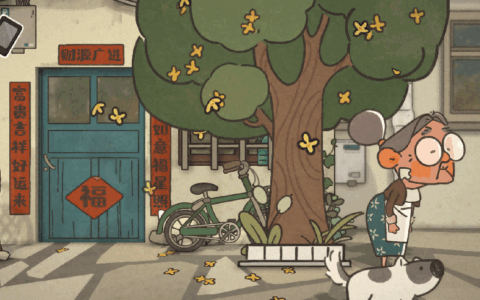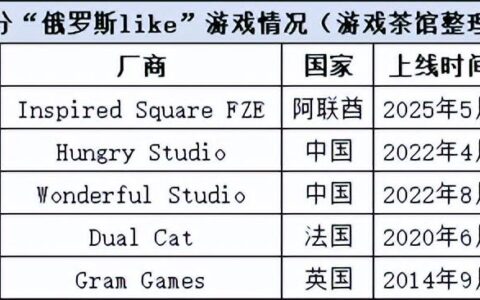
Over the past couple of years, Chinese horror has become all the rage.
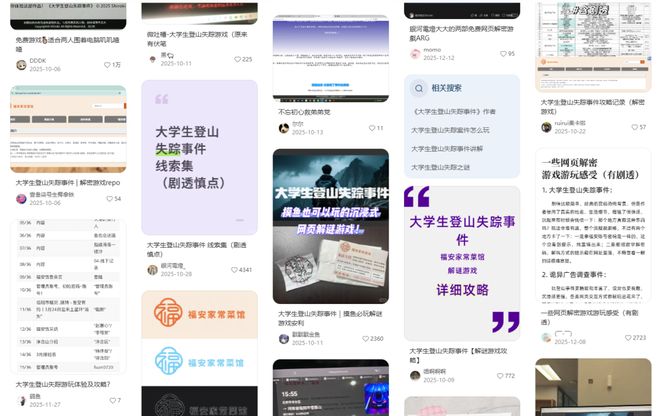
Last October, a “complete novice office worker” shared on Xiaohongshu a horror puzzle browser game he developed entirely on his own, titled *The Case of the Missing College Student on a Mountain Hike*, which is modeled after an ARG (Alternate Reality Game). The creator, Yinhe Dian Deng, majored in Japanese in college and, after graduation, worked as an administrative assistant at a Japanese game company. He had no background in programming or art and had never been involved in game development before.
This browser game features no graphic violence or gore; it’s so “rudimentary” that it lacks music and sound effects, and even the images are AI-generated. The gameplay can best be described as “basic”—players gather evidence through web searches, and the entire game consists of no more than 30 web pages.

(Synopsis: My younger brother mysteriously disappeared while hiking. The police search turned up nothing, so I had no choice but to take matters into my own hands… While going through his belongings, a strange talisman fell out of a pack of napkins from [Fu'an Home-Style Restaurant], sending a chill down my spine. What is the true nature of this restaurant? I decided to dig deeper and uncover the secrets behind it…)
Yet this simple browser game became an overnight sensation. Unlike classic horror games that deliver a direct sensory shock, this game starts in an ordinary, everyday setting—a “local diner”—where players let their guard down. As players unravel the mystery and inch closer to the truth, a creeping sense of dread settles in, and they realize that the creator has seamlessly blended a sense of everyday life with an eerie atmosphere.
Far from being a drawback, the crude AI-generated images and retro-style web interface have, by a twist of fate, become powerful tools for setting the mood. Those low-resolution, slightly distorted yet strikingly realistic images perfectly capture the eerie atmosphere of “urban legends” and “Chinese horror,” greatly enhancing players’ sense of immersion and engagement.
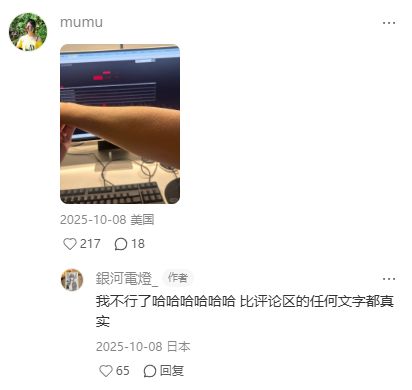
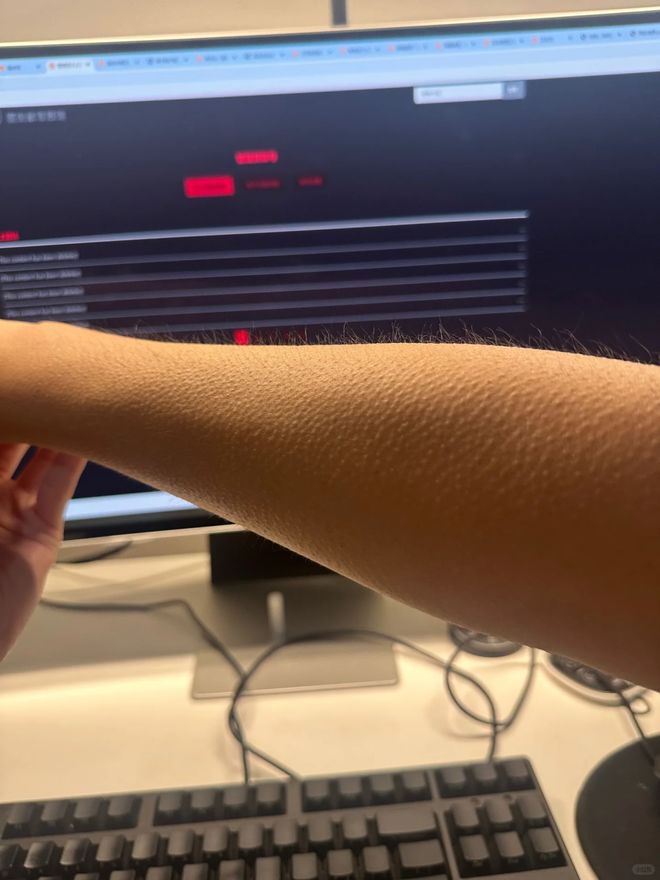
(From Xiaohongshu user @mumu—Goosebumps never lie)
On major social media platforms such as Xiaohongshu, Bilibili, and Weibo, many puzzle game enthusiasts have spontaneously begun creating walkthroughs and clue guides for *The College Student Mountain Climbing Disappearance Case*, sharing their gaming experiences. The game has also become a source of content for many content creators. Its simple web design and lightweight gameplay have, ironically, made it a “go-to time-waster” for office workers.

Less than two months later, Galaxy Lamp released another new title, *The Strange Advertisement Investigation*. As the team’s second project, the game features significantly richer content and presentation. The team enlisted a die-hard mystery enthusiast who guzzles cola to design the UI, and their AI tuning has clearly matured since the previous installment: the AI-generated images and videos are more realistic, and the AI-generated code runs much more smoothly.

These two seemingly simple web-based puzzle games quickly took the community by storm after their release: According to data from Xinbang, as of mid-January, there were nearly 1,000 related posts on Xiaohongshu, with over 400,000 interactions and more than 2.7 million views;Several well-known gaming content creators on Bilibili streamed live gameplay, with individual videos racking up as many as 520,000 views; just one month after its launch, *The Missing College Hiker Incident* had attracted over 430,000 unique visitors according to backend statistics. It also received a recommendation from Moonlight Cockroach, the producer of *Sanfu*, and was featured in live streams by multiple prominent gaming content creators.
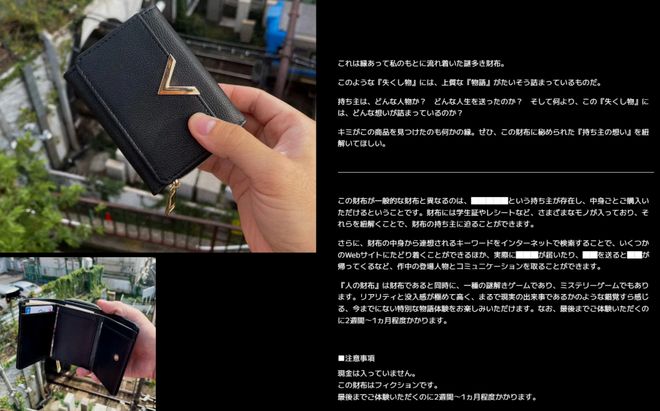
As a game developer who came to the field later in life, Yinhe Dian Deng was inspired to create his own ARG-style game after seeing *Hito no Saifu* (a puzzle game developed by Japan’s Fourth Dimension that revolves around a physical wallet and involves deducing clues based on the information found inside a lost wallet).
In the first installment, *The Case of the Missing College Student on a Mountain Hike*, he relied solely on common AI writing tools such as Doubao, Wenxin Yiyan, DeepSeek, and Gemini, ultimately producing a small but polished piece.
This is just one of many stories about “AI empowering creators.” For those with creative aspirations but no technical background, AI acts as a gateway that breaks down barriers. Traditional game development—even for simple web-based interactions—requires collaboration between programmers and designers, and the costs in terms of manpower and time are real obstacles standing in the way of most independent creators.
All tools have their limitations, and Yinhe Dian Deng does not view AI as a panacea. He restricts the use of AI to the execution level: code generation, image output, and copywriting refinement.The script, world-building, puzzle design, and emotional pacing—the core elements that determine whether a work is “fun”—are all handled by humans. These are precisely the areas where AI still falls short. AI cannot discern what is truly entertaining; this is not a flaw, but rather a prerequisite for creators to retain creative control. For this very reason, the label “made with AI” has not sparked resistance among players: what players perceive is still the creative judgment of a human.
Beyond AI, ARG-style formats have created a fascinating synergy with Chinese horror themes.
Consuming traditional horror content is a passive experience. When watching horror movies, audiences always maintain a psychological buffer: “This is fiction.” ARG-style mechanics, however, break through this barrier: players search and click within a real browser, engaging in genuine interactions with “that world,” leaving traces of their participation in the real world.
"Galaxy Lights" further reinforces this mechanism: the game’s sense of horror isn’t delivered directly through shocking content, but rather by constructing highly ordinary settings—such as a neighborhood restaurant or a TV station’s website—that allow players to actively discover the "crack" that shatters their sense of normality. Fear that one uncovers for oneself naturally leaves a deeper psychological impact than a shock that is passively imposed.
His story demonstrates the potential that the combination of "non-professional background + AI tools + clear creative judgment" can unlock at this stage. This path is now opening up to more ordinary people.
Recently, Game Teahouse sat down with Galaxy Electric Lamp to discuss his creative journey. Below is the unedited transcript of their conversation:
01
Why did a humanities major and corporate drone start making games?
Game Teahouse: Could you start by briefly introducing yourself?
Galaxy Lamp: My username is Galaxy Lamp. I majored in Japanese in college and was a pure liberal arts student; I also took the liberal arts track on the college entrance exam. After graduation, I worked for a while at an online gaming company in China before moving to Japan. Although I’m currently at a gaming company here, my role is more administrative. To put it simply, I don’t really get to see the inner workings of the games; all I see every day are the codenames or titles of various games on documents, and I actually have very few opportunities to actually interact with the games themselves.
Game Teahouse: Do you think learning Japanese and experiencing Japanese culture has influenced your creative work?
Galaxy Lamp: Some aspects of Japanese culture may have subtly influenced my thinking without me even realizing it. In fact, I deliberately avoid incorporating Japanese elements into my work, since it’s intended for a Chinese audience. But a deeper influence might be the meticulous psychological portrayal found in Japanese literature—or, to put it bluntly, its “over-the-top sentimentality,” where even the slightest thought can be expanded into profound inner turmoil and struggle. This has led me to place greater emphasis on psychological portrayal when reading works and writing characters.
Game Teahouse: How did you come up with the username “Galaxy Light”?
"Galaxy Lamp": I have to admit, I’m a bit embarrassed to say this, but I didn’t come up with it myself—it’s actually the title of a song. I think it’s a particularly great title, one that even surpasses the song’s content itself. There was that novel *Night on the Galactic Railroad* by Kenji Miyazawa, which is already widely known, but this is the first time I’ve ever heard the name “Galaxy Lamp.”
I think it’s even better than the “railroad.” The Milky Way is vast and boundless, while a light bulb is a tiny thing—yet it, too, gives off light. In this immense, boundless universe, where the edges are completely invisible, there is actually a tiny light bulb shining; though its light is faint, it truly does emit its own glow.
Game Teahouse: Why did you decide to create an ARG-style game like *The Case of the Missing College Hikers*? Why did you choose this theme?
Galaxy Electric Light: Around August last year, I came across a gameplay video online for a game created by the Japanese development group "Fourth Dimension." I found it incredibly innovative—it didn’t feel like a game at all. They were selling a wallet online that held receipts, cards, and other items. After someone bought it, they recorded themselves playing the game while filming their computer desk. It was a true blend of reality and virtuality, and I thought the concept was truly magical.
Later, I found out online that an amateur enthusiast had created a fan-made project entirely as a web-based application, incorporating features like browsing, searching, and an on-page search bar—which made it much more accessible. At first, I knew I couldn’t possibly create something like a physical wallet, but once it became a purely web-based project, I thought to myself: “I think I could do this—it’s just a matter of creating a bunch of static web pages, isn’t it?”
In particular, after that person’s game ended, there was a credits list that contained only his own name. He made it all by himself. I thought to myself, if he could do it alone, why couldn’t I give it a try?
Game Teahouse: Did you calculate the costs or anything like that before you started making it?
Galaxy Lamp: I considered using AI right from the start. I knew there was no way I could learn all that from scratch. First, it’s a personality thing—if I really want to do something, I have to act on that passion right away.I tend to lose interest quickly; if my enthusiasm doesn’t immediately translate into tangible results, I might just give up. AI really is the most efficient shortcut. Second, my passion for game development lies in the process of “puzzle design”—I’m not actually interested in programming or art itself. For me, programming and such are necessary tools, but they aren’t what drives me.
Game Teahouse: So, can we take that to mean that it was precisely because of AI that you felt you could give it a try? If we go back two years, when AI didn’t exist, would you still have felt the urge to dive right in?
Galaxy Lamp: No, really, I won’t. The fact that AI is such a convenient tool is actually what’s encouraging me. Since AI is becoming more widespread and everyone is using it for all sorts of things, I thought I’d give it a try.
02
What can be left to AI, and what must we do ourselves?
Game Teahouse: How long did the first installment take to make?
Galaxy Electric Lamp: The first one came together really fast—we were truly “fearless newcomers.” We didn’t know anything, so we didn’t overthink it at all; we finished it in just a month.
Game Teahouse: When you first decided to make a game, what challenges did you anticipate?
Galaxy Lamp: Before I started, I didn’t think it would be that difficult, but once I got into it, I realized there are still a lot of things I haven’t figured out yet. At first, I learned just the basics of programming theory—enough to get a general idea of what the code meant—and then I dove right in. But that definitely wasn’t enough. For example, I still haven’t solved the issue of storing passwords on the front end; if you press F12, you can basically see them. Even though I added encryption, you can decrypt them using just any old decoding website.So during the development process, I realized that a lot of things aren’t as simple as I thought—they require constant debugging. After I released the project, people in the comments pointed out issues, and I made a lot of changes afterward.
Game Tea House: Are there any aspects where you find the AI particularly useful, and others where you feel, "I might as well just do it myself"?
Galaxy Lamp: First, the copywriting. I wrote the plot outline myself, but I wasn’t confident in my writing skills, so I tried having the AI generate it. The result was that most of the time, what the AI wrote was unusable—it was clearly trying too hard, cramming in fancy words, as if it wanted to replace every single everyday expression with flowery, formal language.When I said, “Make it sound more conversational,” it instantly switched to something that felt like Northeastern Chinese with a strong dialect. It kept swinging back and forth between two extremes, unable to find a balance.
Second, AI simply cannot design any puzzles. While I do use AI for other aspects—such as programming, graphics, and copywriting—the puzzles are 100% my own creation. If you ask an AI to “generate a fun puzzle,” what it comes up with would bore even a child. It’s still very difficult for AI to achieve that level of creativity.AI has no consciousness and doesn’t understand what “fun” means; it just randomly pieced together a few elements from online sources. When it comes to the core of puzzle design, AI simply can’t do it—at least not yet. I don’t think it will be able to do so within the next five years.
I think this experience has also made it clear to me that AI isn’t nearly as all-powerful as you might think; a lot of the time, it’s just a clunky tool that makes you want to smack it.
Then there’s the audience perspective. At the time, I thought it was simple: whenever I made a game, I’d just say, “This was made by AI.” But when people who don’t understand AI hear that, they assume it was generated entirely by AI—that all I did was press a few keys, type “make me a game,” hit Enter, and the AI just produced it. But in reality, it’s far more complicated than that.
Game Tea House: What percentage of the game in the first installment relies on AI?
Galaxy Lighting: I’d say there’s an 80% to 90% chance. The code is mostly generated by AI, the copy is polished by AI, and the images are AI-generated.
Game Teahouse: Will there be fewer in the second installment?
Galaxy Lamp: The UI for the second installment was designed by Teacher Kuangyin Cola. She’s a UI designer herself, and she handled the entire page layout. As for the images, she used AI to generate them for me—since she has a better grasp of the prompts, they look more realistic. But when it comes to programming, it’s still AI. Unless I actually have a programmer on my team, I’ll definitely rely on AI as long as I’m doing it myself. For the second installment, AI accounted for about 60% to 70% of the work.
Game Teahouse: Have you switched to a different AI tool?
Galaxy Lamp: I started using Cursor for the second project, and it’s incredibly handy. You just drop a folder into it, say, “Create a page for me,” and it works directly on your files. With other AI tools, you have to copy and paste the code yourself, but with this one, you just give the command and wait—the webpage is automatically generated, completely hands-free. Of course, the downside is that it modifies the files directly, so you need to back them up before making complex changes; otherwise, if something goes wrong, you’ll lose your work.
Game Teahouse: Have you considered using AI for the voice acting and music in the second installment?
Galaxy Lamp: If we can’t find a human voice actor, we’ll use AI—but if someone contacts me and offers to do the voice acting, that would definitely be better. If everything in the game were AI-generated, it would feel a bit lackluster. It would be too much like “pre-made meals.” The moment you hear an AI voice, your enthusiasm for the game drops—I think that’s a natural instinct. Deep down, people feel more at ease hearing something that comes from a human; AI always feels a bit off.
03
The Horror Aesthetics of ARG: Atmosphere Trumps Jumpscares
Game Teahouse: What do you think is the main selling point of your first work, *The Case of the Missing College Hikers*?
Galaxy Lamp: First off, I used Chinese folk horror as the setting, but since there are already plenty of games in this genre in China, I tried to set mine apart. Many domestic folk horror games start with a strong hook—sensational content like ghost marriages or funeral processions—but my opening is much more subdued; at first, you can’t even tell it’s a folk tale. Second, this game is actually a bit of a “misleading title”—by the end, it has absolutely nothing to do with mountain climbing (laughs).The mountain climb is just a pretext—it’s presented as a story about someone who went missing while hiking, but the specific mountain doesn’t really matter. It’s a little trick to keep you guessing that folklore elements will appear later on.
Game Teahouse: What was the inspiration for the second installment, *The Strange Advertisement Investigation*?
Galaxy Lamp: At first, I wanted to make a horror game related to the turn of the millennium and television, because TV from that era naturally has a creepy vibe.Then the concept expanded from TV to transmission towers. I was probably influenced by Hideaki Anno, the director of Evangelion, who really loves drawing power poles and finds them romantic. The chaotic tangle of wires and the massive towers wrapped in all sorts of cables give off an inexplicable sense of dread. This kind of horror is completely different from seeing ghosts; it’s a fear stemming from the “unknown,” which fits perfectly with the atmosphere I wanted to create in this game.
As for the premise of the second installment, I don’t want to portray the aliens as villains whose sole purpose is to invade Earth—that’s too much like a typical American blockbuster.I’ve been thinking: if a creature we know nothing about suddenly appeared, but it wasn’t hostile toward us, how would we approach it? Dealing with a hostile one is actually simpler—we’d just fight it. But what if it wasn’t hostile? Let me make the premise a bit more complex: even though it isn’t hostile, it wants to “toy” with us—like observing ants, occasionally nudging you or drawing a line right next to you. That feeling of being infuriated but powerless to do anything about it.
I think the villains in all games are portrayed as being too "logical." The villain wants to kill the protagonist, so the protagonist simply defends themselves—and the player feels no moral qualms about it. If the villain’s humanity were portrayed in a more complex way, the story would be much more thought-provoking. These morally ambiguous characters are ultimately the most popular, especially among female players.
Game Teahouse: You mentioned some of the thoughts of female players. I checked the comments on Xiaohongshu and WeChat official accounts, and it seems like there really are more female players. Is that actually the case?
Galaxy Lamp: According to the user demographics in Xiaohongshu’s backend, women make up 80% of the user base. I suppose that’s to be expected, since Xiaohongshu itself has a large female user base, so female players were likely the first to discover the game. Also, my game isn’t packaged like a traditional game—it’s more like a “prototype”—so there’s a natural split in who it reaches: whether male or female, people are either drawn to this format or not. In the future, I hope to broaden my player base.
Game Teahouse: So does this audience profile influence your creative direction?
Galaxy Lamp: Of course it had an impact. At the start of the second game, I hadn’t planned to include so many relationships between the characters, but since the audience is primarily female, I felt that a game focused purely on hardcore puzzle-solving with minimal character interaction would lack soul. After the first game was released, many female players created fan art and derivative works based on my game, which really moved me. So during the development of the second game, I listened closely to the feedback and ideas from female players.
04
Ideas aren't valuable; it's how you present them that matters.
Game Teahouse: You took it easy with the first game, but people started getting excited about the second one. Has your mindset changed?
Galaxy Lamp: With the first game, I didn’t think too much about it. It was like a kid who’d accomplished something and ran to show their teacher and parents, saying, “I did it!”—that’s all. But since the first game received such a huge response, I couldn’t just slap together a sequel. Everyone had expectations, but they were mostly positive.I’ve been thinking a lot about how to turn game development into not just a hobby, but a sustainable career. I know that to monetize at a professional level, I need to constantly refine my work, understand user needs, and consistently produce valuable content. I’ll keep working to improve these aspects step by step. At the same time, if I can see more people willing to pay and show their appreciation along the way, that will be my greatest motivation and fuel my passion for this work.
Game Teahouse: One of the main reasons you’ve become so popular is that you started from scratch and used AI to develop all of this, which really surprised people. But if your team grows in the future, the “AI” label might become less prominent. What are your thoughts on that?
Galaxy Lighting: I'm not worried at all, for two reasons.
First, as you create more and more games, your core fan base will become increasingly loyal. The fans who stick around are the ones who love the work itself—it has nothing to do with AI. They aren’t staying because they like that you use AI. When you release a new title, they won’t care how much AI you used. As your reputation grows, new fans will come to you because of word of mouth and your brand—and by then, it won’t be about the AI anymore.
Second, as tools continue to evolve, more and more people will use AI to create games in the future. As a result, the significance of the label “AI-made games” is actually diminishing. I was fortunate to receive such recognition at a particularly opportune moment. In the future, as more people do this, people will be less and less surprised.
I feel that AI offers me a shortcut to getting closer to my own ideas. To put it simply, it would certainly be more convenient to have a human to work with—communicating with a person is less of a hassle than communicating with AI. But when there’s no one else around, it opens up new possibilities for me, and I’m truly grateful for that.
Game Teahouse: Are you planning to make your third game a paid title?
Galaxy Lights: It’s still free; I’m not sure of a good way to monetize it at the moment.
Game Teahouse: Is it that you haven’t figured out how to monetize it, or do you feel the current scale isn’t sufficient yet? Are you worried that your audience might think, “This is all generated by AI—why should you charge for it?”
Galaxy Lamp: I did have that concern at first, which is why I never considered commercializing it. But then I realized that the people saying that basically don’t understand the production process. Since they don’t have a deep understanding of AI, I’ll just put the AI where they can’t see it. If they can’t see it, they won’t realize it’s there, and they’ll just have fun playing. If players end up strongly resisting AI in the future, I’ll try to scale back its use in the art and writing, but I can still keep using it on the programming side.If I wanted to, I could probably have an artist rework the art for the first two games and sell them on Steam. But for now, I mainly want to focus on development.
Game Teahouse: Finally, if anyone else wants to use AI to make games, what advice would you give them?
Galaxy Lamp: Just go for it, really. From my own experience, I’ve faced so much inexplicable criticism—criticism I never even anticipated—simply because I used AI tools. If the game content is lacking, that’s a legitimate flaw, and it deserves criticism; but I truly didn’t expect to face backlash just for using AI. I didn’t realize public opinion on AI in China was still so negative. If anyone is truly interested in doing this, my biggest piece of advice is: don’t let this stop you.
This is probably just growing pains. Whenever something new emerges, there are always those who don’t understand it and feel it’s disrupting the social order. But as long as it’s a good thing, people will eventually accept it—just like the internet. AI may currently be going through the same period of skepticism it faced when it first emerged.
I actually think you should do it now. Once more people start doing it later, your first-mover advantage won’t be worth much.I remember a line from a video I watched a while back that really stuck with me: “Ideas aren’t valuable; what’s valuable is how you present them.” Everyone has creativity—with so many stories throughout history, humans have pretty much exhausted all possible ideas. The reason we still see so many new works is that they’re presented differently. AI is a great, newly emerging way to present ideas—it’s still fresh. If you wait until everyone else starts using it, it won’t be valuable anymore.
原创文章,作者:游茶妹儿,禁止转载:https://youxichaguan.com/en/archives/195632