After more than two decades in business, Huang Yimeng hasn’t felt this excited in a long time.
In recent years, despite his busy schedule, he has learned to enjoy life—fishing, hunting, and most recently, buying a farm in New Zealand to experience a real-life version of “Farm Simulator.” Although he started out as a programmer, he hadn’t written a line of code in nearly twenty years and never imagined he’d be able to build a game from scratch on his own.
AI has brought about change. Last spring, he downloaded the AI programming tool Cursor and used vibe coding to first create a simple webpage, followed by a version of Flappy Bird. Although AI at the time could only create simple games and was still a long way from producing fully-fledged works, it had already shown him the possibilities.
He realized one thing: TapTap had spent a decade figuring out “how to discover good games,” but there was an even more fundamental question that no one had answered—how to create more good games. AI might be the key factor, which means: “There’s more work to be done.”
A few months later, he spearheaded the development of an AI-powered game creation tool within the company. On January 30, it was unveiled under the name “TapTap Maker.” During a live stream, Huang Yimeng used natural language to build a multiplayer sandbox game from scratch without writing a single line of code. At the end of the stream, he said it was the coolest and most pride-worthy product TapTap had produced in its ten-year history.
Unlike the complex user interfaces of other editors, TapTap Maker features only a single chat box. While this choice may seem counterintuitive, it stems from a hard-learned lesson: TapTap Maker’s predecessor was “Spark Editor,” and although the team went to great lengths to translate professional features into a graphical interface, the barrier to entry remained too high for creators, causing most to give up right at the start.
Once the editor was removed, everything suddenly became clear. Huang Yimeng said that, in a sense, this is a matter of first principles: if the owner of a game company wants to make a game, all the work can essentially be handled through chat—someone programs, someone designs, someone handles the art, and once it’s done, they confirm whether they’re satisfied. A chat window perfectly aligns with the producer’s most fundamental way of working: voicing ideas, seeing the results, and then deciding on the next step.
But simply making the tools easier to use isn’t enough; the real challenge lies in helping creators take that first step. To address this, TapTap Studio has developed a series of “scaffolding”tools—not templates that restrict gameplay, but tools that help lay the technical groundwork for component selection, architecture, and code organization. This allows creators to skip the most tedious initial setup and start directly with the question, “What kind of game do I want to make?”
The success rate for games is already extremely low; creative individuals are naturally scarce, and the barriers to entry add yet another layer of selection—one in a million. Most people’s games never even get the chance to be made, so they have no way of knowing whether they have a talent for game development. TapTap’s platform may not necessarily increase the success rate of games, but at least it allows more people to give it a try.
In Huang Yimeng’s view, AI has not only lowered the barrier to entry for game development, but more importantly, it has reduced the “cost” of experimentation.
In the past, whenever an idea required the cooperation of others, it had to be carefully considered; otherwise, it would likely result in complaints from partners: “Could you please think this through before bringing it up with me?” If a wild idea ultimately turned out to be a dud, it could lead to a blow to morale, a loss of trust, and even calls into question the leadership of the person who proposed it.
These “costs” have caused countless ideas to die before they could see the light of day. It’s not just independent developers; even producers and executives at large companies—including Huang Yimeng himself—have their minds filled with game concepts they’ve never voiced. AI has virtually eliminated this barrier: trial and error requires no one’s approval, and failure comes at little cost.
During the closed beta of TapTap Maker, some users have already created works that are nearly ready for release. But what surprised Huang Yimeng even more was that so many people actually stayed up all night playing TapTap Maker, only to realize dawn had broken while they were still working on their projects.
“It’s like playing a game of *Civilization*,” he said half-jokingly. “For people who love games and have a creative streak, building TapTap is a fantastic game in itself.”
How far apart are a tool that lets anyone start making games and an ecosystem that enables great games to actually be created? Together with "405 Game Studio," we invited Huang Yimeng to record a podcast episode where we discussed the stories and insights behind the making of TapTap.

The following is a transcript of the conversation, which has been edited.
01
In just one month, from "Jump Jump" to "Minecraft," AI has made more progress than expected
Xiaoning: You used a live stream to introduce the product on January 30. Looking at the bigger picture, was choosing that timing a decision driven by AI, or had you been waiting for a long time?
Huang Yimeng: It’s a bit of both. The timeline was a bit tight for us, and based on our internal testing, there are still many areas we’d like to improve to make the product more polished. But the AI industry is evolving so rapidly that we feel releasing it now still offers a sense of surprise. If we set the bar too high or held off for too long, by the time newer tools emerge on the market, people might lose interest the moment they see it’s made by TapTap.
So we set ourselves a deadline: no matter what, we’ll make the public announcement on January 30 and start inviting people to test it.
Xiaoning: When did you first truly realize that AI could change the way games are made?
Huang Yimeng: It started around February or March of last year. I started out as a programmer, but I hadn’t written any code in nearly twenty years. When this opportunity came up, I installed Cursor and started with web development—the AI handled it with ease. After that, I created a version of Flappy Bird; it had a very high success rate on the first try, and it was highly adaptable for subsequent adjustments.
However, at the time, I felt we were still a long way from creating full-fledged games; we were just getting to the point where we could make some simple HTML5 games. Of course, casual games are a significant genre in their own right—titles like Happy Match, Flappy Bird, and Sheep Sheep were all massive hits. At the very least, I felt that AI might begin to be used by more people as a production tool. But over the next year or so, things developed very rapidly.
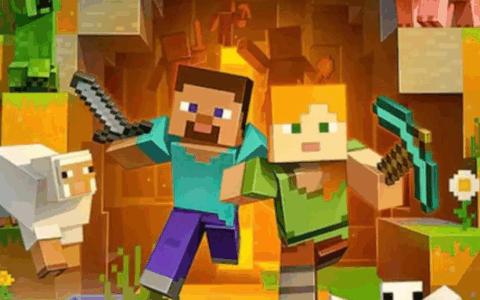
For us, it was really a case of being swept along by events. Starting around the middle of last year, once we were convinced that AI would eventually be capable of creating complete, high-quality games, we began preparing and laying the groundwork. We took quite a few detours along the way—including debating whether to use HTML5 or our in-house engine—and it wasn’t until December that we finally decided on the in-house engine. Even a month before launch, we were still working on a game at the “Jump” level, and it was incredibly difficult.But just one month later, we were already capable of creating Minecraft—a game of far greater complexity. The progress far exceeded our expectations.
Xiaoning: That sounds a lot like my experience. From September to December last year, the output at Vibe Coding increased rapidly. You mentioned that you didn’t finalize the direction until a month before launch—was that more a result of team consensus or your personal initiative?
Huang Yimeng: Until December, we were pursuing a dual-track approach: developing both H5 and our in-house engine in parallel. We were initially hesitant about the in-house engine because AI hadn’t been trained on our engine from the start, whereas we were already well-versed in H5. However, after exploring both paths, we found that our in-house engine offers greater control and holds more long-term potential.
Another important point is this: if we ultimately choose H5, there won’t be any fundamental difference between us and other external platforms. Although we can provide extensive professional game support, streamline the TapTap release process, and adopt a business model that doesn’t charge players, for more experienced users, the end result will essentially be the same. We don’t think that’s enough; only by having our own engine and the ability to make quick adjustments can we unlock more possibilities.
Wenjie: TapTap Maker was originally known as Spark Editor. How much of its legacy has been carried over, and what were the key changes made?
Huang Yimeng: A great deal of it comes from accumulated experience; the work I’ve done over the years has ultimately paid off. But there has been a major shift.
To be honest, before TapTap Maker launched, neither the editor nor the developer services were particularly successful.As for the editor, there were two main barriers: for us, lowering the creative barrier through a graphical interface while ensuring high customizability and gameplay variety eventually put us under pressure comparable to building a game engine; for creators, the editor remained a significant hurdle—positive feedback was slow to come, and it required a tremendous investment of time and effort. Having used both the editor and Vibe Coding, I found the difference to be enormous.
It’s as if we put a lot of effort into creating a product that was meant to lower the barrier to entry, but the barrier remains high. Most people get stuck at the very first step and can’t stick with it.
Conversely, now that I’ve abandoned all editors and am focusing solely on the engine and optimizing its core features, the development pressure has actually eased. That’s because I’ve eliminated a massive workload—making code-based elements visual and user-friendly, which actually consumes a huge amount of design and development resources. When building an engine for AI, I simply fill in the gaps as needed, which makes the process much easier.
The same applies to developer services. We previously developed services such as TapTap login, cloud saves, and anti-addiction features—essentials that all games need to share. Once integrated with TDS, developers no longer had to build these features from scratch. However, we also identified an issue during promotion: even with the content packaged, the integration barrier remained high. Additionally, each TDS version update required extra work from developers, and since many games aren’t released exclusively on TapTap, they had to build a separate version for other platforms, which ended up becoming a burden.
Things are different in the age of AI. Now, every game developed on TapTap is seamlessly integrated with existing infrastructure services—a process developers don’t even have to think about: the AI handles everything from integration to debugging in a single step. When a game launches, it automatically comes equipped with TapTap login, accounts, friends, achievements, cloud saves, and even multiplayer functionality. If you were to develop a game entirely on your own, it would take a long time to handle all of this. This actually makes us more competitive.
02
AI is a very useful "assistant," but key decisions still have to be made by humans.
Xiaoning: Previously, all engines and editors were focused on lowering the programming barrier—from programming languages to scripting to drag-and-drop. But the interface TapTap has created is so simple that it consists of just a single dialog box, which is quite counterintuitive. Why did you make that choice?
Huang Yimeng: In a sense, this is also a first principle. If I, as the owner of a game company, wanted to create a game, all the work could essentially be handled through chat—someone would code, someone would handle game design, and someone would handle art; once it’s done, we’d use chat to confirm whether everyone is satisfied. The difference is that you need capable assistants working under you.
So we believe that the ultimate solution will rely solely on natural language. In the future, there will be some auxiliary tools to enhance convenience, but one crucial point is this: I hope that when people first see our tool, they don’t perceive it as a programming tool, but as a creative tool.
We had some key decisions to make. For example, should we make the code visible to users? Should we add a folder and a code preview panel? Ultimately, we decided that we are not a tool for professionals; those who want to write or modify code should use other, more specialized tools. For our users, the code should be completely invisible—they should be able to focus solely on creating.
This relates to a phenomenon we’ve observed. Why has Claude Code become so popular? Cursor is built into the IDE, so after installation, the first thing users tend to do isn’t open the chat window—it’s use code completion.Our company provided Cursor to all employees early last year, but for a long time, no one was using the Agent—everyone stuck to code completion. There was a prevailing mindset: “It’s more efficient to write the code myself than to have an AI do it.” Claude Code, on the other hand, gives you a command line where the only input method is natural language.
We made the same choice: to help users understand the process more thoroughly—this is a platform where you can build products simply by talking. While there are still some requirements for how you speak, you don’t need to write or read code, or even write or read documentation. Everything is centered around the chat window.
Xiaoning: On my first day using TapTap Maker, I asked it what kind of games it was good at, and found that it mostly suggested casual games. From a design perspective, if we want to create a completely new gameplay experience, can the AI handle it?
Huang Yimeng: That’s a very practical question.All large language models are indeed weak when it comes to game design; they can only handle the basics. This is determined by how they’re trained—large language models are typical “test-takers”: they’ve read widely and solved every possible exam question, but they’ve never actually played a game. They’ve only heard about games through others’ brief mentions and seen screenshots; when it comes to gameplay experience and flow, they’re purely theoretical. Relying solely on theory isn’t enough—the information available online is completely insufficient—so creators need to fill in these gaps.
On the other hand, this is precisely what defines the value of creators. If AI could do everything perfectly, there would be very little room left for creators—if players could simply tell the AI what they want and get an entertaining game, there would be no need for game development at all.
It is precisely for this reason that we believe the value of the creator—the individual—will remain paramount for a long time to come. Our vision is to bring outstanding creators onto our platform as early as possible, allowing them to develop their first game here, hone their game development skills, and stay with us long-term to become an integral part of our ecosystem. This is also why, within our business model, our goal is to offer them the opportunity to use our products completely free of charge. We believe this will ultimately create a virtuous cycle.
Xiaoning: It sounds like the planning side is safer, but the programming and art teams face bigger challenges?
Huang Yimeng: I would say creators will be in a safer position—they must possess creative ability. Creative skills in programming and art still hold value, but one cannot be merely an executor. The same goes for game designers; a large number of those in purely executive roles will be replaced. Currently, a single project might have a dozen or even twenty to thirty designers, with many performing purely executional tasks—filling out forms, and turning ideas into reality. These roles will be largely replaced by AI in the future.In the future, with AI assistance, a single game designer’s output will increase significantly, eliminating the need for people whose sole role is to handle execution, write text, or fill out forms.
Xiaoning: Career paths are changing, too. In the past, event planners always started out as coordinators, but that may be changing now.
Huang Yimeng: That's right.
Xiaoning: If the design and gameplay still have to be created by people, what do you think is the best way to collaborate with AI based on your own experience?
Huang Yimeng: A key point is to treat AI as a person when communicating with it. Don’t just give orders; have a conversation with it. Ask plenty of questions: “Would this work?” “Do you have any suggestions?” While AI may lack a natural “game sense,” it has an incredibly broad knowledge base and a deep understanding of game genres and core mechanics. When collaborating with humans, you often need to provide a lot of context—the person you’re working with might not have played the game you’re suggesting, or they might not understand the gameplay mechanics you’re describing. But AI is a jack-of-all-trades; in certain genres, it might actually know more than you do. What it lacks most is the ability to judge whether the actual gameplay experience is good or bad once the game is built—it has no sense of that at all. That’s where human feedback is absolutely essential.
Xiaoning: So we should think of ourselves as the CEO of a game company and discuss things with the AI as if we were in a meeting?
Huang Yimeng: Pretty much. You have to fully tap into AI’s capabilities. In the future, working with AI will require strong management skills. AI is an incredibly useful “assistant”—it’s well-read, unbeatable at its tasks, and highly dedicated—but it has obvious shortcomings: a lack of knowledge about the game itself and poor contextual understanding. Sometimes you’ll find it slow on the uptake; it doesn’t remember what you said earlier.
It’s like always working with a new hire who has to start by consulting the manual for everything. If the project documentation isn’t well-written and the AI can’t find the information it needs, the results of direct task assignments will be poor—but don’t assume it’s entirely the AI’s fault.
Every creator now has countless smart and capable assistants at their disposal. The goal is to figure out how to make the most of them, rather than complaining that they’re not user-friendly. You should focus your energy on thinking about “how to use them better”—by compiling project manuals and onboarding guides so that every new team member can hit the ground running, and by documenting your work processes. You can start doing this right now—and you can even do it with the help of AI.
Xiaoning: When I’m using Vibe Coding, I always get the urge halfway through—I think, “Just give me a drag-and-drop interface, or maybe editing the code directly would be faster.” Could it be that people in the gaming industry are actually the ones who find it the most awkward to use?
Huang Yimeng: A shift in mindset is definitely needed. But the ones who will find it easiest to adapt are undoubtedly the creators—the very people who originally made the requests. Although there are some awkward aspects, the advantages are simply too obvious: AI is available 24/7, and feedback is provided within a few to ten minutes—something that was completely unthinkable in the past.
There’s another important point here: AI not only saves money and time, but also eliminates the “psychological cost of making requests.” Over time, we’ve all been conditioned to think twice before making requests—we consider how much time it will take the other person and whether it’s worth it. This stifles many ideas and prevents many experiments from ever happening. But in the age of AI, this cost is so low as to be negligible.You don’t have to worry that pursuing some wild ideas will end up being a complete waste of effort—something that’s nearly impossible in a real-world team, where the follow-up costs are high and leadership credibility can take a serious hit. But when collaborating with AI, these costs are drastically reduced.
Today, a producer told me that using Claude is a bit expensive—a single prompt costs $10. I told him: “As managers, whenever we make a request of our colleagues, the cost of that single request is far more than $10—it takes our colleagues a week or two to complete, and when you break it down into actual costs, it’s far more than that.”
Wenjie: My friend said they spend about 3,000 yuan per person per month on AI, and anything done with AI costs more than 10 times less than doing it with human labor.
Huang Yimeng: That's right. The average monthly salary in the gaming industry is already quite high. Once AI is implemented, productivity will more than double, so compared to the monthly salary, the cost is really not that much.
03
The AI-driven transformation of business processes is a top-priority initiative that requires proactive, top-down leadership.
Xiaoning: Can this new workflow be made compatible with the traditional pipeline?
Huang Yimeng: Yes, there will be. Internally at Xindong, we’re pursuing both approaches simultaneously. TapTap Maker is positioned as a tool for complete beginners—anyone can create a game with just one person and AI. But we also have a large number of games being developed the traditional way, with teams ranging from dozens to even hundreds of people.
We hope that the collaborative approach pioneered by TapTap will inspire game producers and lead designers. While TapTap may have completed a project entirely through chat windows, we may not be able to achieve that 100% internally—but we should strive to reach 20%, 30%, 50%, or even more. Our goal is for every role to have similar tools to assist in their work in the future.
Xiaoning: So, while TapTap is designed for users with no prior experience, how to integrate Vibe Coding into the game development workflow is a separate issue.
Huang Yimeng: Yes, we’re pursuing both approaches in parallel. In TapTap’s development process, AI has a complete view of the entire project—it can access the engine, code, documentation, and assets. But in traditional workflows, let alone AI, each person only has access to a small part of the project. For humans, this limitation isn’t very noticeable, since people naturally can only grasp a fraction of the whole. But in the age of AI, we really need AI to have a complete view at every stage.
This has a significant impact on traditional collaboration methods—in the past, there were silos around how data was stored, where documents were located, where code was kept, and where resources were found. If AI cannot see the big picture at any stage of the process, the results will be subpar.
Here’s an example: In the past, when we used AI for translation in our projects, the results were poor. That’s because we were still following the traditional process—extracting text sentence by sentence and feeding it to the AI, just as we used to do with human translators.In theory, AI translation can perform very well, but only if it’s given the full picture—not just the text, but also the project specifications, so it knows where a particular sentence appears on the interface and why. This requires a shift in mindset: AI must be able to grasp the full context; when modifying code, we must consult the project specifications and provide it with more information.
Xiaoning: How long will it take to achieve this shift in the workflow paradigm?
Huang Yimeng: Theoretically, we could do it right now, but if we were to complete it today, AI would likely only play a relatively small role. On the one hand, the capabilities of large language models themselves need to improve; on the other hand, the project’s engineering capabilities and collaboration methods also need to be enhanced.
To give an example, with products like Claude Code, improvements in engineering architecture alone—even if the capabilities of the large language model remain unchanged—can boost actual productivity. The same applies to TapTap Studio: even if the capabilities of large language models stop improving, there is still significant room for growth in game development capabilities simply through enhancements to the product’s engineering capabilities, architecture, knowledge base, and tools. Moreover, the advancement of large language models is unstoppable, so we are very optimistic about the future.
Xiaoning: When it comes to integrating AI into game workflows, is Xindong among the frontrunners?
Huang Yimeng: I don’t think it’s particularly fast, and I’m not entirely satisfied. But perhaps no one else is moving any faster than we are. With TapTap’s involvement, it’s bound to have a significant impact within the company. Over the past few days, we’ve had a lot of game company executives come by asking for invitation codes.
Wenjie: Transforming game production pipelines with AI has almost become a necessity. But the reality is that the larger the team and the more complex the pipeline, the harder the transformation becomes—historical baggage, collaboration chains, and switching costs all pose obstacles. From what you’ve observed, have you seen any promising approaches to breaking through these challenges?
Huang Yimeng: From my perspective, the most important thing is for team leaders to adopt a top-down mindset and take the initiative to drive this kind of innovation.
This is because, for every part of the team, it involves not just adjustments to their own existing processes, but massive changes to the entire traditional workflow—and some roles may even disappear or undergo drastic changes. Therefore, it is extremely difficult to drive this kind of change from the bottom up; it must be consciously driven from the top down by leadership. This is also the approach we are currently implementing.
04
It’s not a template—it’s a framework that provides a foundation without limiting creativity.
Xiaoning: I see there are some template-like elements in the current version?
Huang Yimeng: To be precise, it’s not a template—it’s a scaffold. Unlike a template, a scaffold doesn’t include as much content and doesn’t restrict you. It’s more about providing a foundation, guiding you on how to choose the right components, how to build the architecture, and how to organize your code in a way that’s more conducive to long-term development.
Xiaoning: Did the scaffolding come from the components accumulated during the Spark project?
Huang Yimeng: No, it was built using AI, too—it was quick. If you get an experienced programmer to work with the AI, you can build it from scratch in less than a month. We’ll see more and more of these kinds of things in the future.
In the future, we plan to introduce a very important feature: Remix, which allows for the re-creation of games. For example, if I develop a game and release it at the framework stage, any creator can build upon it just as they would with an open-source game. The gameplay and visual optimizations I’ve made mean new creators won’t have to start from scratch. We hope to foster this kind of ecosystem on our platform.
Xiaoning: It’s like a UGC community with different tiers—those skilled in scaffolding handle the scaffolding, while those skilled in art handle the art assets.
Huang Yimeng: The hardest part is still the final step—getting the game to a point where it can be released and welcomed by players. Today, the barrier to entry is very low; you can create a rough prototype with just a few lines of code. But making it fun and ready for release still requires a significant investment of time and effort, and it needs to be done by high-quality creators.
Xiaoning: Since you currently operate on an invitation-only basis, what kind of creators do you tend to send invitation codes to?
Huang Yimeng: I prefer people who can actually build games. At this stage, I’m looking for people with game development experience—experienced developers can avoid basic mistakes and provide more targeted feedback. For pure enthusiasts, even though the barrier to entry is very low, it still takes at least a few weeks or even months to fully master the process from start to finish.
Some enthusiasts believe that AI can help them with content planning, but when given very broad parameters, the results are often poor. That’s why we’re starting by limiting the number of creators. Our goal is to build a community where everyone can acquire certain skills and knowledge—knowledge that we can also collect and build upon—and then gradually expand through word of mouth and mutual exchange within the community.
If we were to completely deregulate the industry today, many people might be disappointed.We’ve made it possible to start making games with zero barriers to entry, but that doesn’t mean it can be done in a single sentence, nor does it mean creative ability isn’t required. We’ve lowered the creative barrier, but we haven’t increased the success rate of games—we’ve simply expanded the pool of participants, giving more people the chance to try. Ultimately, the cream rises to the top. Of course, that’s fine for everyone else too; creating something fun based on a passion and a dream, and having friends around you play it, is a wonderful experience in itself.
Xiaoning: When do you think more people will be able to try it out?
Huang Yimeng: We will send out another batch of invitations before the Spring Festival.
05
It’s not altruism—it’s mutual benefit. We’re willing to invest in the growth of creators.
Xiaoning: Now that creative capabilities have become widely accessible, supply has exploded—how can we meet the demand?
Huang Yimeng: First of all, demand has always been strong, so we’re not worried in the short term. However, the standards of the demand side will also rise. Games that seem good today may not be good enough for players in the future—the barriers to entry have lowered, but competition has intensified, and players’ expectations have grown higher.
A couple of days ago, a colleague asked, “In the future, when AAA games can be made by just a few people and AI, where will our company’s competitive edge lie?” There’s a major shift happening—the highest-quality games of today might one day be made by just a handful of people, but if we presented them to players then, they certainly wouldn’t be satisfied.Take GTA as an example: players would say, “This city feels so empty—you can’t enter every room, and not every character has a story.” Because AI has led to an explosion in productivity, players will demand more. So the pressure on creators remains immense.
Xiaoning: What will be the most important capability for platforms in the future?
Huang Yimeng: The key is having creators and a virtuous cycle. Why do players come to TapTap? Because there are games here, creators who are willing to engage with them, and a steady stream of interesting games being released. We hope to establish a virtuous cycle: more games → more players → more creators → and even players discovering their own creative talents.
Xiaoning: With the explosion in supply, it’s also important to know how to identify good games.
Huang Yimeng: This issue has long been resolved on video platforms—the recommendation algorithm ensures that every piece of content gets a certain amount of exposure, and every creator has their own influence. We’ve been working on TapTap’s recommendation algorithm for a long time, and to be honest, we feel that the biggest bottleneck is the sheer lack of content available for recommendation.
Ten or twenty years ago, releasing a game required a publisher, resources, and distribution across various platforms—it was a huge undertaking. Today, none of that is necessary—as long as a few dozen or a hundred players take a look at your game, recommendation algorithms can quickly determine whether it’s worth recommending to a wider audience.
More importantly, on a platform like TapTap, game development can be a dynamic process. There are bound to be many players willing to get involved right from the game’s inception—interacting with the creators and offering feedback, which is likely to be adopted quickly. The entire process is more like a simulation game. By the time the product launches, it has already built up a strong reputation and buzz, so there’s no need to worry about it getting lost in the crowd.
Xiaoning: In this scenario, who should do more—the author or the platform?
Huang Yimeng: We’re in this together. The creators are the most important, while the platform provides a safety net and guidance. This is also where our confidence lies—we are creators ourselves, so we understand the pain points creators face. Even today, TapTap isn’t user-friendly enough for independent creators, because the platform was originally designed with commercial games and game companies in mind. The tools and publishing scenarios that independent creators need differ from those of traditional TapTap; it’s a product that’s still evolving. There’s still a lot of room for improvement, but we’re happy to keep making adjustments.
Xiaoning: Since using AI in game development involves token consumption, how do you calculate the costs?
Huang Yimeng: It looks promising to us. The key is that tokens are only spent during the development phase. A good game can be enjoyed by many players, so the cost per player is very low. Moreover, TapTap has traditionally spent a significant amount of money each year on licensing titles and securing exclusive partnerships. When calculated in terms of tokens, developing a game that can be launched is definitely cheaper than licensing a product.
Xiaoning: If the platform were completely open, wouldn’t that make it difficult to keep track of the accounts?
Huang Yimeng: I’m not too worried. People who aren’t a good fit tend to use the platform less, so they don’t spend much. Those who stick with it every day see their skills improve very quickly. As long as they stay on the platform, we’re willing to invest in their growth.
Xiaoning: With the addition of multimodal data, token consumption might increase, and the best models have always been expensive. What are your thoughts on this?
Huang Yimeng: I’m still fairly optimistic. While the unit price of tokens is indeed high, the number of tokens required to accomplish a given task is steadily decreasing—in fact, it now takes fewer tokens to achieve the same result than before. Furthermore, there’s a significant difference in token consumption between projects that use scaffolding and those that don’t.
Of course, under the Agent architecture, token consumption can get out of hand—having AI animate and voice each clip, or even creating 10 or 100 versions to pick the best one, can lead to waste. So when we officially launch, we’ll have a simple pricing system in place to prevent waste. But if you’re actually working on a project and it goes live, we’ll definitely provide more than enough tokens. The token mechanism will also be tied to how many players engage with your game after launch, with adjustments at different levels.For creators capable of producing extraordinary work, we actually encourage you to “go all out”—as long as the final result is excellent, we’ll definitely provide ample resources.
Xiaoning: What will the final business model look like?
Huang Yimeng: We don’t plan to charge creators. If TapTap Studio takes off, with high enough DAU and a large enough player base, the existing advertising business model will generate significant revenue.
Wenjie: Once supply surges, the platform is likely to be the biggest beneficiary. Many people worry that once the platform grows large, it might “abuse its power.” TapTap has always given the impression of being quite altruistic, but its business model seems a bit unclear.
Huang Yimeng: Actually, it’s not vague at all. Our business model was clearly defined from day one: we don’t take a cut from developers; we generate revenue through advertising. It’s just that people were skeptical and thought it would change sooner or later, which is why they perceived it as “vague.” In fact, we’ve operated this way from the very beginning until today.
Wenjie: You once said, “So-called idealism, morality, and kindness are themselves based on logic.” Over the years, have you gained any new insights into TapTap’s role as a platform and the logic behind its altruism?
Huang Yimeng: TapTap is not fundamentally about "altruism," but rather "mutual benefit"—a relationship of mutual benefit among developers, players, and the platform. Only when all three parties benefit can the ecosystem remain healthy and sustainable in the long term. This isn’t idealism; it’s logic.
TapTap isn’t a platform that was “born with a silver spoon in its mouth.” Some platforms are tied to hardware or come pre-installed on phones, so they naturally have a built-in user base and essentially rely on their distribution channels to acquire users. But TapTap isn’t pre-installed and has no hardware integration, so players have no reason to “have to” play games through TapTap.
If we don’t do a good job, players can leave at any time. That’s precisely why we must retain users through a truly robust ecosystem—by not taking a cut from developers, we attract high-quality games, and through fair recommendations and ratings, we help players discover great content. This is the foundation that has allowed TapTap to grow from nothing into what it is today. It’s not that we chose altruism; rather, mutual benefit is simply the most logical survival strategy.
06
TapTap is a fantastic game in its own right, and lots of people play it all night long.
Xiaoning: If Tencent were to announce tomorrow that it’s launching an AI game creation platform, where would TapTap’s competitive advantage lie?
Huang Yimeng: There is no such thing as an absolute moat, but there are a few things we firmly believe in.
First, TapTap’s decade-long brand—with its commission-free model and fair rating system—has earned the trust of both developers and players. Just like Steam, the brand is the most crucial element. Looking back to when we were founded, companies like 360, Baidu, and 91 were massive and highly profitable at the time, but once their tied relationships dissolved, these platforms quickly faded away. That’s why we constantly ask ourselves: what is the foundation for long-term survival?
The same applies to our business model. If we charge fees, we essentially cannot be 100% competitive—after all, we are not a model agency, but rather an engineering firm focused on application integration. We need to build an ecosystem and a community, attracting and retaining high-quality creators from the very beginning. Creators have a lot of leverage when it comes to choosing where to work, so we must ensure we are in a position of strength and not rush to make money.
Second, we are game creators ourselves; we truly love game development and enjoy working closely with other creators. Even if ByteDance or Tencent were to launch similar products, it would be a relatively minor undertaking for their companies. Although our company is smaller than theirs, the resources we have—our existing player base, our reputation among developers, our funding, our technology, and the experience we’ve built with the Spark Editor—are more than enough to make this happen.
If there are still competitors who outperform us, we’ll accept that—no regrets. At the very least, we must ensure that unless others do a better job than us, we don’t mess things up because we didn’t do enough.
Xiaoning: Within the Xindong ecosystem, do you envision TapTap as a standalone product or as an upgrade to TapTap’s core capabilities?
Huang Yimeng: It still comes down to upgrading TapTap’s underlying capabilities, but the importance of this will only continue to grow. If we can achieve this, it will have a positive impact not only on TapTap but on the global gaming industry as well.
Xiaoning: As a foundational capability upgrade, could this eventually influence the content structure of the main TapTap site?
Huang Yimeng: It’s possible. Just as traditional media platforms underwent certain changes after the emergence of short videos and self-media, it is indeed possible.
Wenjie: Now that AI has made game production easier, how might the nature of games change? Many people speculate that, like the video industry, games will become shorter, simpler, and more fast-paced.
Huang Yimeng: I hope to see more variety emerge. In the gaming industry, I actually feel there aren’t enough short-form games—not that there are too many. This is a result of the industry’s business model; everyone is doing F2P, with the goal of keeping you playing for the rest of your life. This isn’t a particularly healthy situation. Many people play games just to kill a few minutes; it could easily be like watching short videos—whether it’s 10 minutes, an hour, or a whole day.
In the past, 10-minute games simply weren’t feasible because production costs were too high and they wouldn’t turn a profit. But as costs have come down—and especially with the emergence of platforms like TapTap—there’s now an opportunity for many games that aren’t driven by short-term profit but are purely about the experience. Ultimately, the choice lies with the players—they’ll have more options, rather than the limited selection available today.
Xiaoning: It’s been a week since the closed beta began. What user behavior has surprised you the most?
Huang Yimeng: Some experienced users did indeed quickly produce products that were nearly ready for release. But what surprised me even more was that so many people actually stayed up all night working on them—before they knew it, dawn had broken, just like playing a game of Civilization.
Xiaoning: What are TapTap's criteria for success?
Huang Yimeng: We need to be able to create truly marketable, high-quality games that can be released consistently on TapTap—and even have the potential to become blockbuster hits. The key metric is how many of TapTap’s millions of daily active users will actually play the games developed by TapTap. I don’t think it will take too long.
Xiaoning: What will be the most significant turning point in the integration of AI and gaming over the next 3 to 5 years?
Huang Yimeng: We need to distinguish between using AI to create games and games that are driven by AI. These are two completely different things. In the first case, AI serves as a tool for game creation, and the game itself has little to do with AI. In the second case, the game’s core gameplay relies on AI—without it, the game simply wouldn’t exist.
There’s no question that AI-driven game development will happen very quickly—it certainly won’t take two or three years. Starting now, whether in six months or a year, the landscape will begin to shift. Even companies like Xindong, with teams of 100 people, are already using AI to develop games; this trend is absolutely irreversible.
Games with AI-driven core mechanics tend to have a longer lifespan. However, the two complement each other—this type of innovative gameplay is better suited as a challenge for small creators rather than a project for large companies. If TapTap can reduce production costs while opening up access to large AI model APIs, allowing developers to call upon these models during gameplay, it could lead to the creation of many more interesting titles.Innovative gameplay needs to grow organically from the ground up. As the barriers to entry are lowered and more new genres emerge, we will see an increase in innovative gameplay that integrates with AI.
Wenjie: The impact of AI on game development is now irreversible. On the flip side, amid all the buzz surrounding AI and gaming right now, are there any trends you think are overhyped?
Huang Yimeng: I’m not sure which areas are overvalued. I think at this stage, it’s crucial for everyone to actively explore every possible direction. If we don’t try, we won’t be able to determine which areas are undervalued or overvalued. Given the current environment, the market is sufficiently vibrant, and everyone has the enthusiasm to experiment in various directions—which is a positive development for the industry.
Xiaoning: We have a tradition at the end of our podcast where we ask our guests to recommend two or three games they’ve been playing recently.
Huang Yimeng: To be honest, I haven’t been playing games much lately. I’ve been spending all my time working on my own game and reviewing submissions in the backend. If I may toot my own horn a bit: for anyone who loves games and has creative talent, TapTap Maker is a fantastic game in and of itself.
原创文章,作者:游茶妹儿,禁止转载:https://youxichaguan.com/en/archives/195546