“My body is quietly crying in a way you can’t understand.” Late on the night of January 19, Shatin Dangge posted these words on his Moments feed.
A few hours ago, the BIG Independent Game Expo in Shenzhen came to a close. As one of the five curators for the organizer, “Pengyou Harbor,” Shatian Dangge cheered, celebrated, and took photos with the players who were reluctant to leave, then helped clean up the venue. It wasn’t until the lights went out that he realized a powerful wave of emotion was washing over him.
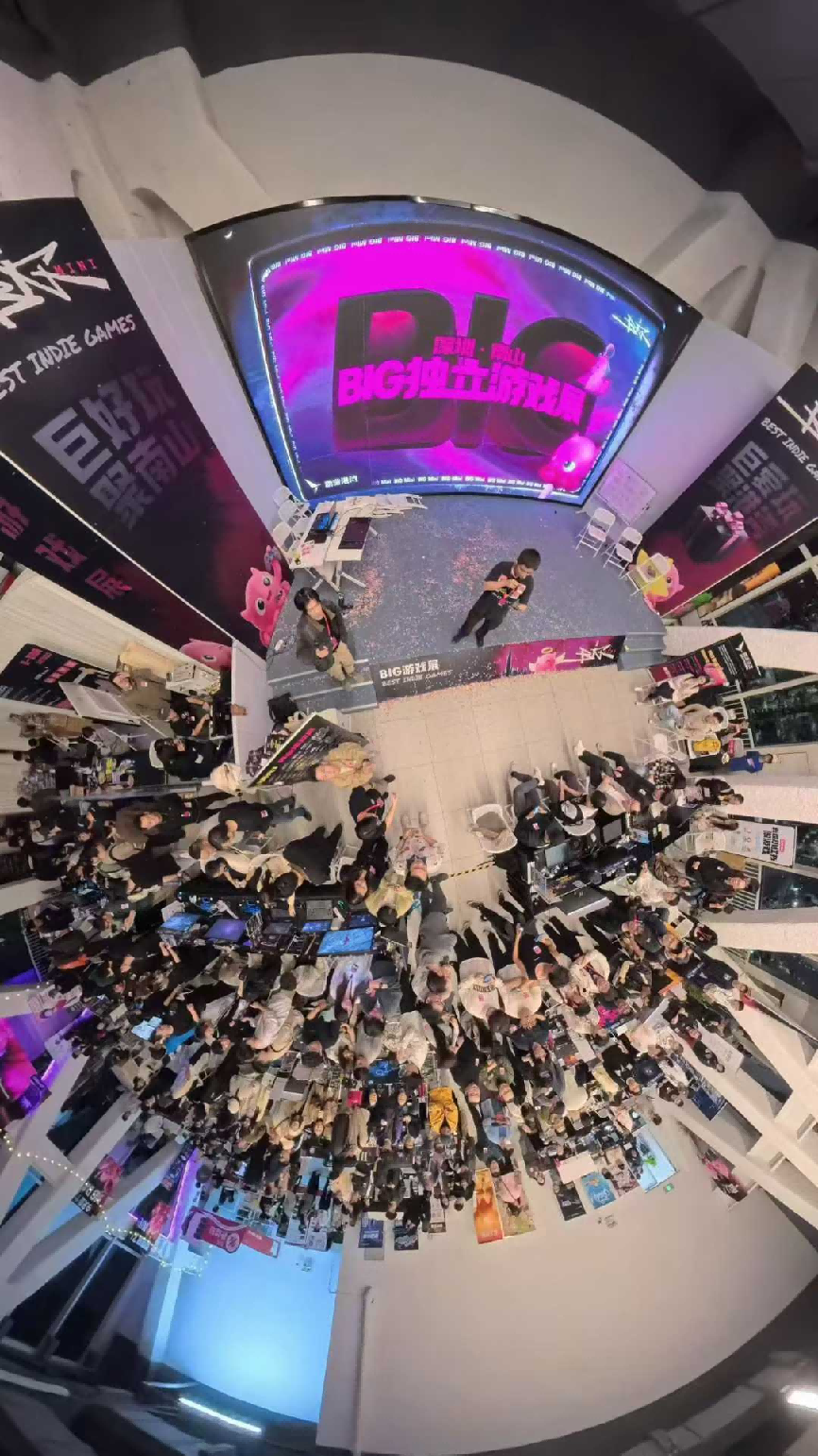
In conversations with Tea House before the event, Dangge had once tactfully expressed hesitation about continuing to organize the exhibition—this was their first time hosting a large-scale event, and their lack of experience forced Dangge and the other curatorial partners to put their independent game projects on hold and devote months to getting all the processes up and running. For a creator, this was a particularly difficult trade-off.
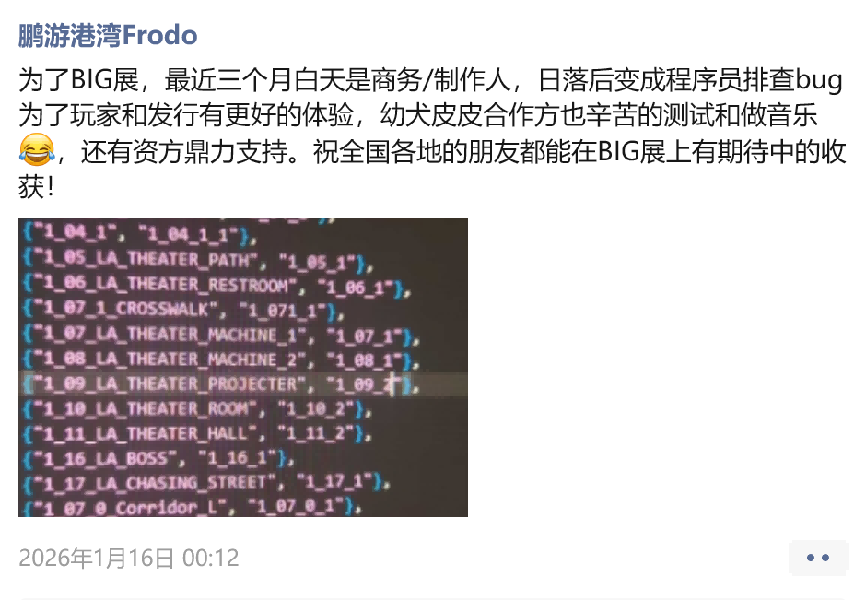
Frodo, curator of the BIG exhibition, remarked on the heavy workload involved in the early stages of curation
But when the event finally went from plan to reality—and he spent two days interacting closely with nearly 800 players—it clearly prompted a complete turnaround in his thinking. In the post-event survey, 47% of attendees rated this year’s BIG Game Expo as “awesome.” “The next one is definitely going to be a massive hit!” Dan Ge announced in various chat groups a few days later.
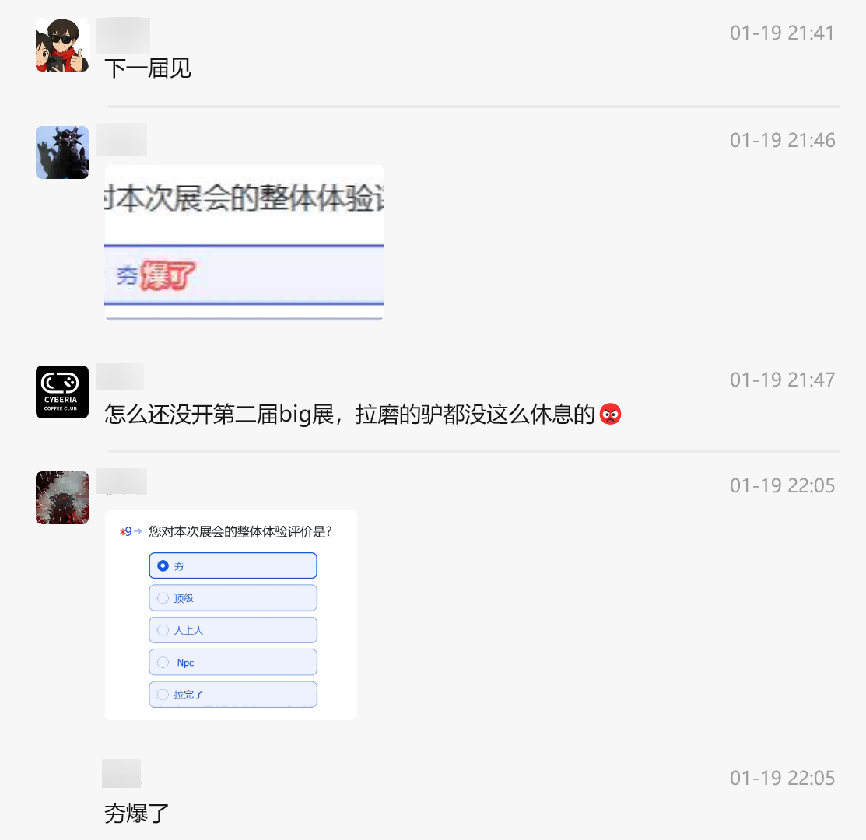
Pengyou Harbor has garnered widespread admiration and praise. Thanks to the dedicated efforts of several curators, they have achieved a remarkable “ground-up” success—the BIG Game Expo has become Shenzhen’s first independent game exhibition, providing local game developers with a central venue to interact with players face-to-face. While this “first” may have come a bit late compared to other regions, it represents a somewhat unexpected breakthrough for the city.
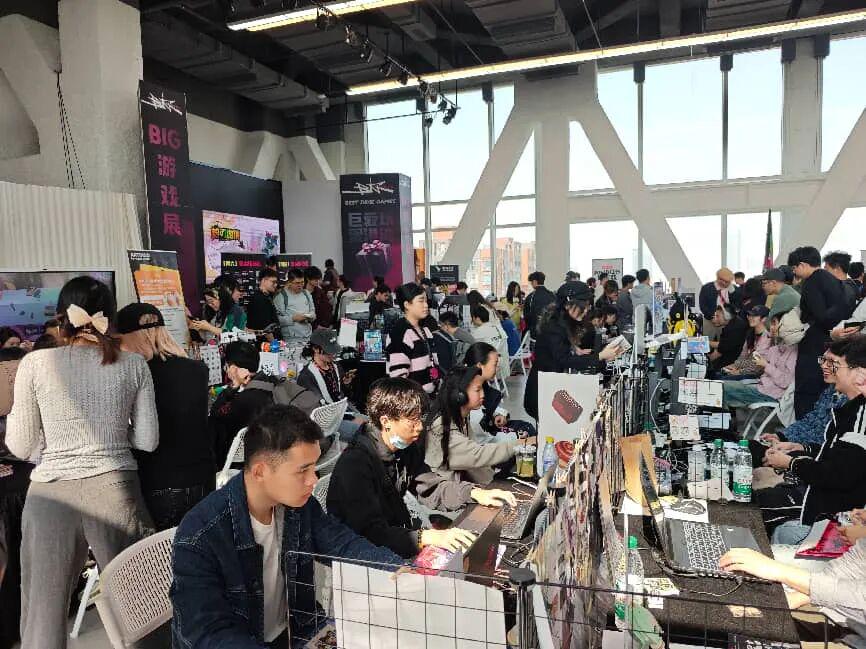
For a long time, it was widely assumed that Shenzhen had nothing to do with indie games. Here, tech giant Tencent is headquartered in Nanshan, and numerous smartphone manufacturers such as Huawei, OPPO, and Vivo have clustered in the surrounding area; in the 2025 list of China’s top 100 mini-game companies, Shenzhen claimed 20 spots, ranking second only to Guangzhou. In this city that rose to prominence through the market economy, working for a living and “making money” are the common goals of its people.
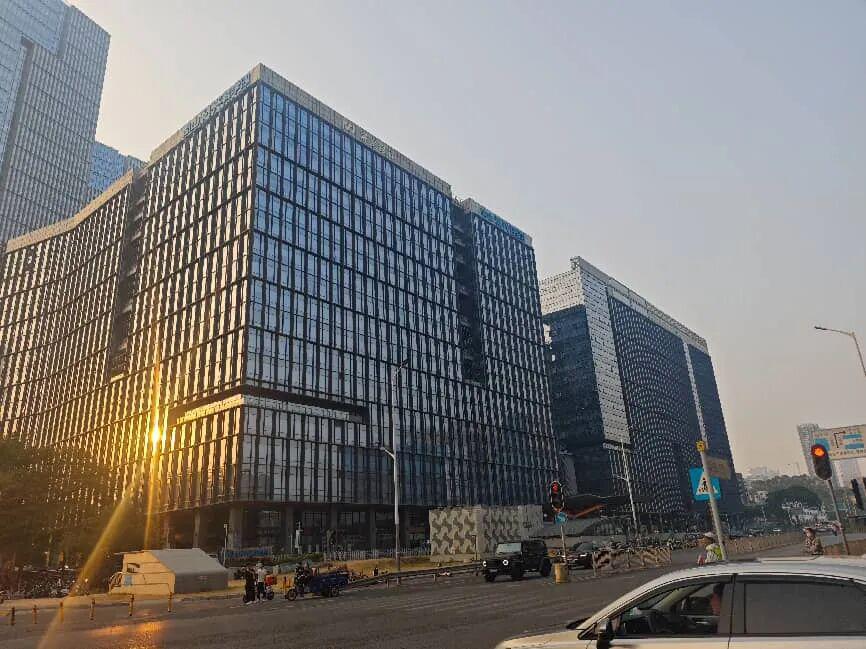
Kexing Science Park at Dusk
Given these realities, it’s easy to imagine Shenzhen as a 24/7 assembly line: people go in, and “beasts of burden” come out; youth goes in, and savings come out. And the indie game scene—a field inherently tied to creativity, ideals, and the “dream of gaming”—naturally takes a back seat amid the overall social tension.
For many years, aside from a handful of names like Liangwu Games, Shenzhen didn’t have many indie game studios or titles that were well-known outside the city; even indie developers who had been based in Shenzhen for years knew nothing about their local peers.
But things are not set in stone.
01
Beneath the Surface
The most recent turning point occurred in 2025. By following the story of Pengyou Harbor, we can trace the evolution of Shenzhen’s independent travel ecosystem.
The name “Peng” is derived from Shenzhen’s nickname, Pengcheng. Pengyou Harbor defines itself as a community for local game developers in Shenzhen and the Guangdong-Hong Kong-Macao Greater Bay Area.At its core is a WeChat group established around early 2025. The impetus for its creation was simple, even somewhat casual: early members noticed that neighboring cities like Guangzhou had indie game development communities, so they decided to replicate that model. Their goal was twofold: first, to avoid working in isolation during the creative process; and second, to foster mutual support regarding resources such as distribution, thereby helping members avoid common pitfalls. At the time, such organizations were hard to find in Shenzhen.
In less than a year, Pengyou Harbor has evolved from a purely online community into a communication platform that also encompasses offline spaces. On average, they host an event—such as a networking session or creative workshop—once a month, inviting industry leaders to share their insights and providing community members with an opportunity to socialize.
These in-person events initially drew only a dozen or so participants, but their popularity has grown steadily. A professor at Shenzhen University told Teahouse that by the end of last year, a creative workshop hosted by Pengyou Harbor at the university had, for once, filled the lecture hall to capacity with about a hundred people. The BIG Game Expo marked a milestone for their in-person events; it was organized in response to the collective demand and calls from community members.
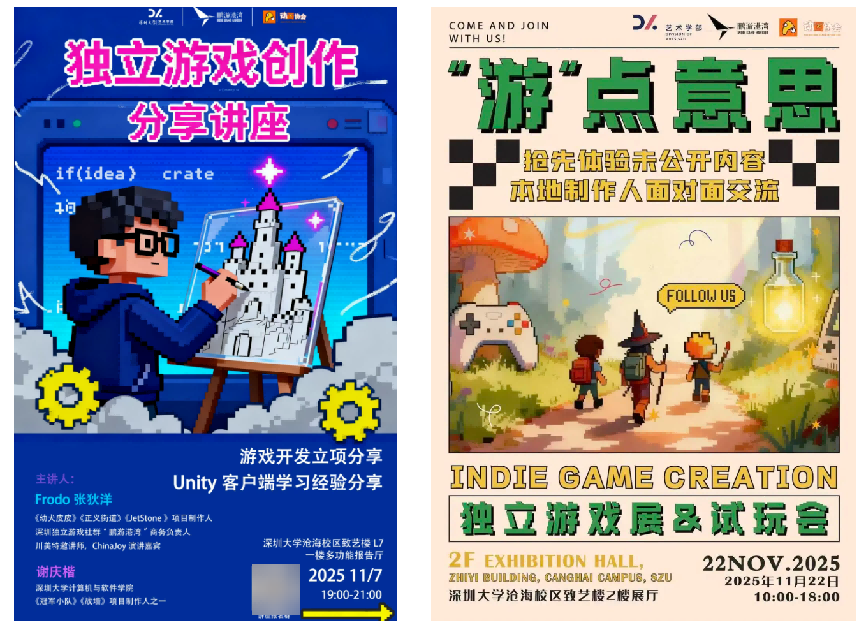
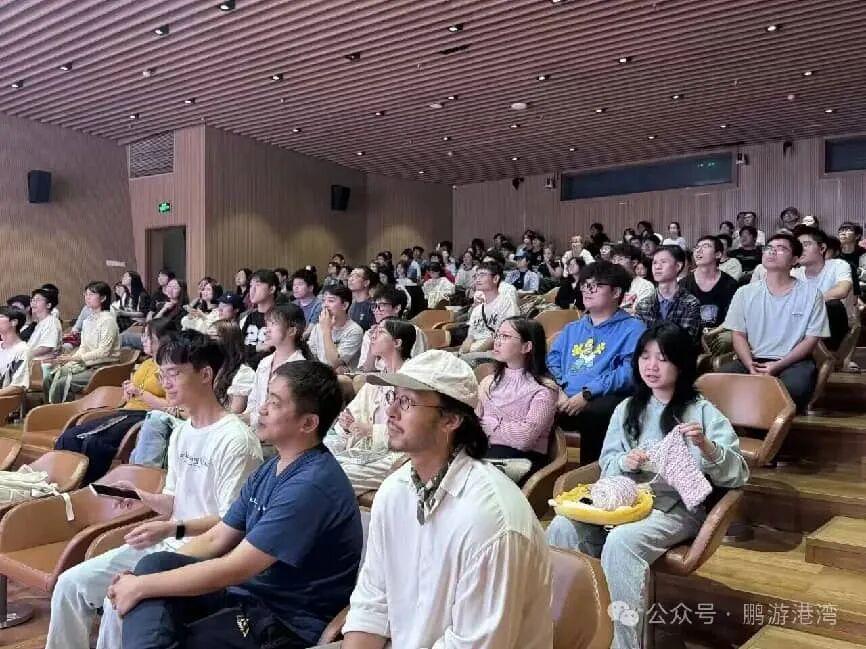
To this day, however, Pengyou Harbor continues to operate as a decentralized grassroots community—it has no publicly named founder or leader and remains a non-profit organization. The responsibility for organizing these in-person events is voluntarily taken on by several enthusiastic and active members, including the five curators of the BIG Game Expo.
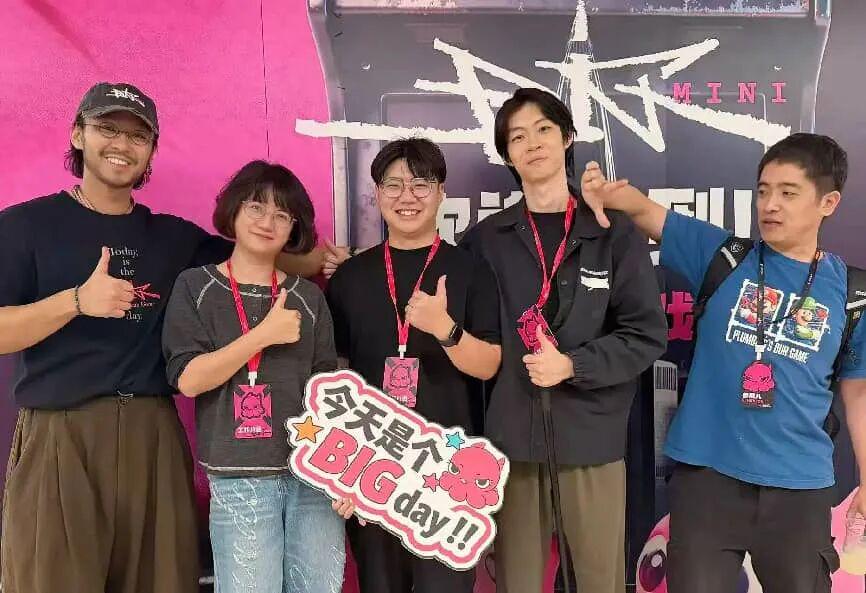
BIG Curators: Shatian Dangge, Yana, Guyue, Wilson, Frodo
At this point, we can see that the narrative of “Shenzhen as a wasteland for solo developers” is clearly at odds with the growth story of Pengyou Harbor.For instance, it fails to account for the rapid growth in the number of developers at Pengyou Harbor—early members initially recruited people by posting on platforms like Xiaohongshu, and later relied on word of mouth among developers; the community’s promotion was almost entirely driven by “shouting it from the rooftops.” Yet in less than a year, this small community, which originally had only a dozen or so members, has rapidly expanded to nearly 500. Local developers seeking a community are pouring in every day.
Frodo, a member of the curatorial team at Pengyou Harbor, told me that this is the result of their strict vetting of developers when they joined the community to prevent publishers and sales representatives from taking up space. Currently, about three-quarters of the group’s members are active indie developers based in Shenzhen.
Another phenomenon is that, almost immediately after Pengyou Harbor was established, organizations related to solo travel suddenly began to spring up all over Shenzhen.
During the after-party on the first day of the BIG Game Expo, Pengyou Harbor invited Li Beizhen, the organizer of “Independent Game Compass” (also based in Shenzhen), to take the stage and deliver a speech. Founded in late 2024, Independent Game Compass began as a grassroots independent game awards program. The group subsequently partnered with “Game Singularity,” another newly established independent game organization in Shenzhen, to co-host numerous independent game events in the city, including Global Game Jams and game demo sessions.A Game Jam with a capacity of 100 developers quickly reached full capacity.
Game Singularity is a game developer community founded by several industry professionals who left major game companies. It took shape around January 2025, establishing a platform through mini-programs and a website to help indie game developers form teams for game development. At the end of last year, during an indie game event titled “Infinite Play” Demo Showcase—co-hosted by Game Singularity and Indie Game Compass—the Shenzhen Independent Game Incubation Center, supported by the Shenzhen Radio and Television Group, was officially unveiled.
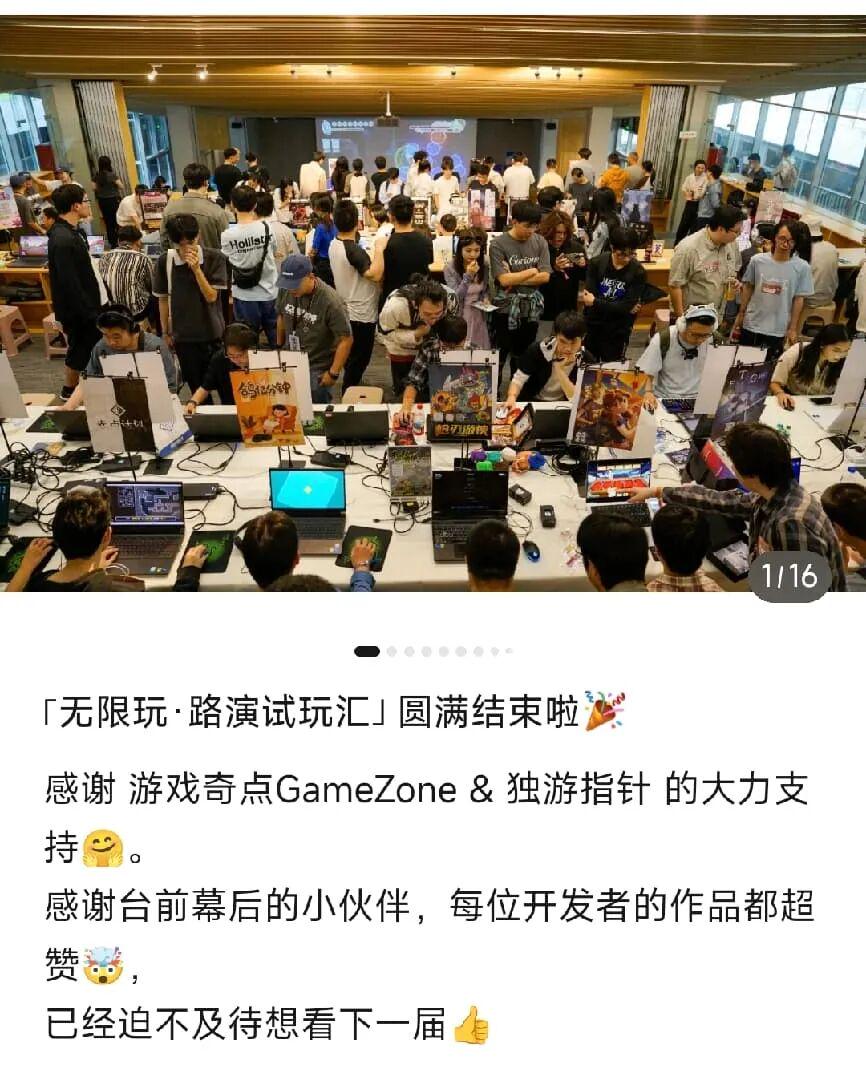
I met with representatives from Shenzhen Radio and Television at the BIG Indie Game Expo. They told me that Shenzhen Radio and Television first became involved with the indie game scene at the Shenzhen Animation Festival in July 2025, when they set up an indie game exhibition area on a trial basis. The response far exceeded expectations, and the subsequent success of one vibrant offline indie game event after another in Shenzhen has strengthened the organization’s resolve to become more deeply involved in supporting the local indie game industry.
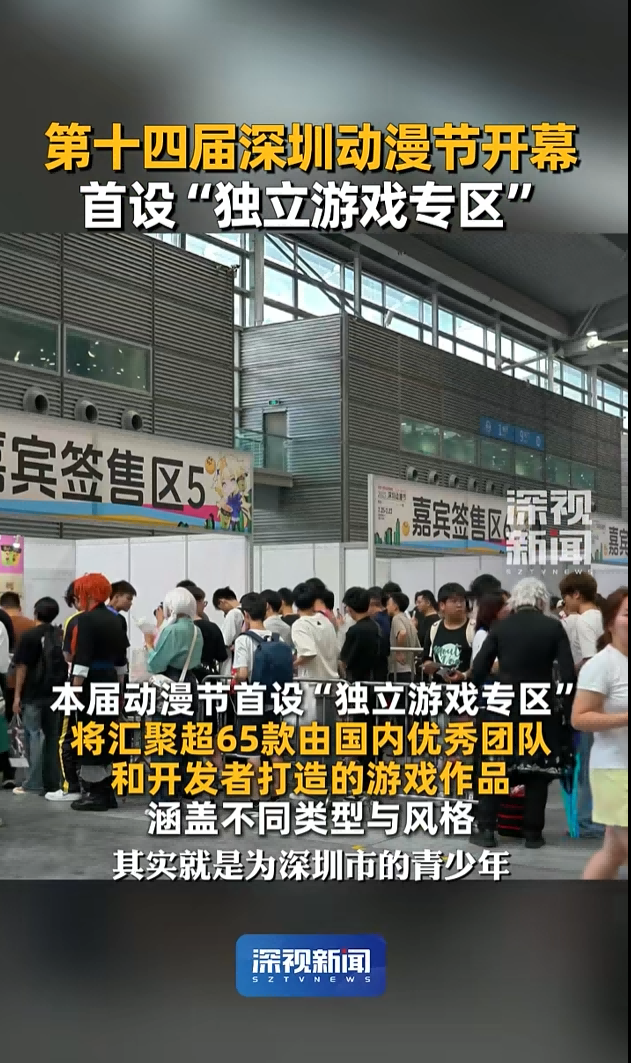
"Shenzhen Vision News" coverage of the indie game booths at the Shenzhen Animation Festival
No one can say for certain why, over the course of just a few months, Shenzhen suddenly saw the emergence of so many organizations dedicated to indie games. While there was no collusion behind their founding, they quickly bonded over a shared goal—to support every indie gaming dream ignited in this city—and eventually wove themselves into a network. What we do know is that the vitality of Shenzhen’s indie gaming ecosystem has clearly been vastly underestimated in the past.The sparks from various events and communities suddenly ignited a raging fire because a neatly stacked pile of kindling had long been waiting there.
As Li Beizhen told me, having spent ten years working at various indie game studios in Shenzhen, he has always felt that the city has far more independent game developers than people outside imagine; it’s just that, prior to 2024, most creators chose to live “below the radar.” And this collective choice is closely tied to the city’s cultural fabric.
02
Sculpting the Spirit of the City
After speaking with many people in Shenzhen’s gaming industry, I’ve come to appreciate the dual nature of this city’s DNA, which together has shaped a unique indie gaming ecosystem that differs from other cities in many ways.
As the city’s economic flagship, the tech giants represent the public face of Shenzhen. Countless people are drawn to these internet giants, traveling from all corners of the country and moving within the city, imprinting the culture of these tech giants on every aspect of their lives.As Frodo observes, a key reason why Shenzhen’s independent development ecosystem didn’t begin to emerge and form a community until 2025 is that there are simply too many solo developers from these tech giants, and they are generally too “i”-oriented.
The impact of major tech companies is not the same for everyone. For some, the performance-driven environment at these companies has honed their ambition and technical skills.Teahouse met with Jeff, the founder of Soda Game, whom we had previously interviewed. Compared to our last conversation, he now has a much stronger technical vision. As a group of AI-native game studios, he hopes Soda Game will eventually achieve an annual output of 12 to 15 games. Having come from ByteDance and Tencent, his keen sense for cutting-edge technology aligns perfectly with the ambitions of Shenzhen as a city.
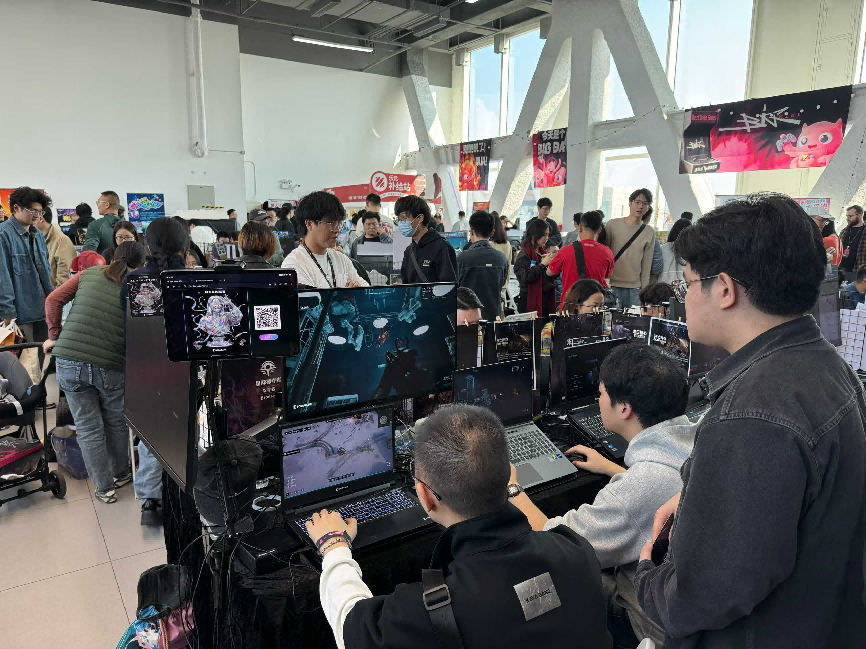
Soda Game Booth
Another indie game developer told me that she currently works full-time as an artist at Tencent. She values the collaboration and the financial security that come with creating products in this role. However, within the structure of a large tech company, she feels she’s always too far removed from the players: “You might spend two whole years working on the same inventory system, only to have the project canceled before it’s even released. It’s hard to feel a sense of accomplishment.”
Over the past two years, she has spent her evenings back at her small apartment learning about game engines and coding, then sharing her development journey on Bilibili with players, and using their feedback to fix bugs. For her, this indie game project is both a way to pursue her original creative dream and a "utopia" where she finds solace—and there is no right or wrong when it comes to these two fundamentally different perspectives on value.
The flip side of this city is somewhat counterintuitive: for independent game developers, Shenzhen offers a relatively “friendly” environment. In recent years, many indie game studios have relocated to second- and third-tier cities due to cost considerations. Yet in the eyes of many game developers who have chosen to stay in Shenzhen, the city actually offers good “value for money”—though this is, of course, relative.
Aside from housing prices, the cost of living in Shenzhen isn’t particularly high compared to other first-tier cities. You can find affordable housing in the urban villages and get by on pork knuckle rice to meet your daily caloric needs.While enjoying all of this, you also have access to the abundant commercial resources of a first-tier city—especially when a project begins to take shape and securing distribution and funding becomes the key to advancing to the next phase, which can be a huge boon for an independent developer. This is particularly true for developers coming from large tech companies, who have already accumulated considerable material wealth and can use Shenzhen as a place to pursue life goals that go beyond the material.
At the BIG Game Expo, I was instantly drawn to the cover art of a particular game. The developer manning the booth told me that right after graduation, he had received offers from major companies like Tencent and NetEase. Since then, he’d worked on high-profile projects like *Onmyoji* and earned an annual salary in the millions.Now 36, he chose to leave the corporate system, moving with his family of three to a suburb an hour’s drive from Shenzhen to work alone on an indie game he estimates will sell only 3,000 copies. “You’ve got to leave something behind for the world,” he said. I chatted with him for a long time about his favorite manga artists, bands, and film directors, and his eyes shone with an unmistakable radiance.
“In Shenzhen, whatever you do feels more like a struggle. In other second- and third-tier cities, it might not seem that way.” An indie developer who has lived in Shenzhen for many years believes this may be the greatest benefit Shenzhen can offer an indie developer.In this city built by migrants, I met developers from Northeast China, Henan, and even Taiwan. Their views on Shenzhen aren’t always positive—they describe it as too cutthroat, too cutthroat, and so on. Yet they’ve remained here without hesitation. “This is a city where dreams come true; its future is always bright,” one of them told me.
Admittedly, the “survival model” this city has created for independent developers is far from perfect. For instance, more than one person I spoke with noted that independent developers in Shenzhen tend to go it alone—perhaps because their strong individual capabilities make them more comfortable working solo, or perhaps because setting up a company or renting an office means once again facing the inescapable issue of housing prices.
This is likely one of the reasons why the independent game development scene in Shenzhen has taken so long to take shape, and why there are so few standout indie titles visible to the outside world. Solo development tests one’s conviction and perseverance; the grind of working in isolation and the lack of feedback often lead to giving up. Or perhaps, with ample financial resources and too many fallback options, developers lack the resolve to make a “do-or-die” commitment.Dangge relayed to me a story he heard from another developer, Producer A—a leading company in Shenzhen once compiled data on independent developers and published a white paper. Looking back several years later, Producer A was the only one who ultimately stuck with making indie games.
But that is all in the past now. It is impossible to verify when—or even if—this white paper ever existed. What we can be certain of is that, as the community’s nucleus enters this fragmented ecosystem, everything will be rewritten. Perhaps this city, once viewed as a “lone wanderer in the desert,” will one day shatter the outside world’s perceptions of it once again.
03
Climbing
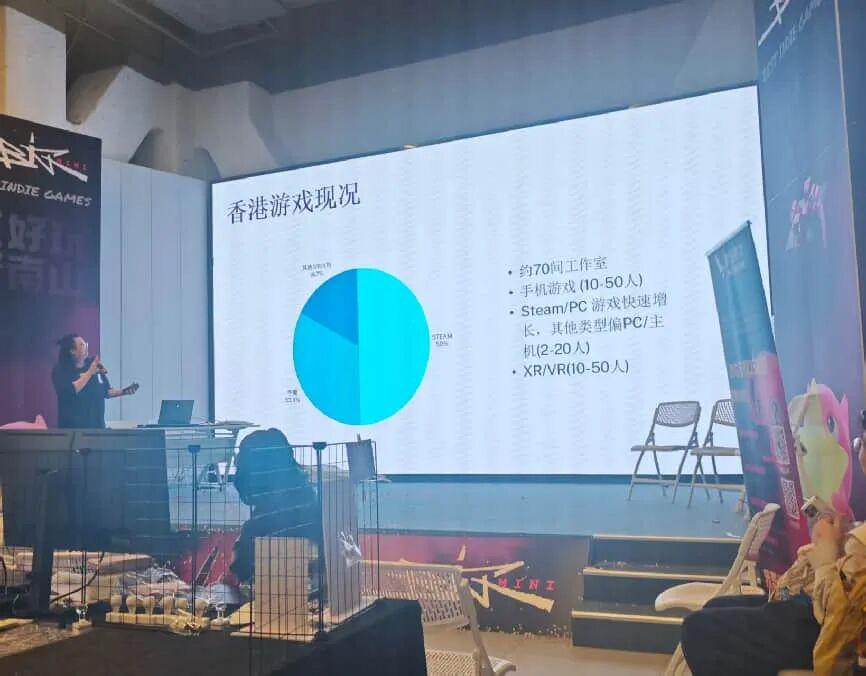
There was one detail from the day of the BIG Game Expo that has stayed with me to this day. During the after-party on the first day, representatives from various regional indie game organizations—including Hangzhou’s Siberia, Hong Kong’s GameDEVA, Shenyang’s Atom, Guangzhou’s Wanwu Po Yuan, and Shanghai’s Independent Light—all gathered at the venue.On stage, host Frodo called out each name as they raised their hands, while the crowd below surrounded the stage, applauding the visitors who had traveled from afar. The atmosphere was somewhat reminiscent of a reunion banquet—people had gathered from all corners of the country to collectively witness the rebirth of the indie game scene in Shenzhen.
Taking a broader view, this also reflects the growing nationwide interest in indie games and high-quality titles in recent years.Just a few months ago, Teahouse reported on the Baozao Incubator, jointly funded by the Chaoyang District Government of Beijing and Jike. Also recently, Yuce Capital, the Xuhui District of Shanghai, and other parties pooled resources to allocate 500 million yuan to support the development of domestic single-player games. Events such as the "Only" indie game festival have been popping up all over the country.
Along with this wave comes a growing willingness among people to invest for the sake of their ideals rather than for financial return. This is especially true for organizers of various indie game events, as in-person events are inherently expensive, with the return on a single event hovering just above or below the break-even point. An event organizer in Shenzhen whom I interviewed told me that, in addition to hosting events, whenever he manages to save some money, he invests it in indie game projects run by friends in his circle.“When the money runs out, I just save up again and invest it. ‘This money is just sitting here with me anyway, not doing much good—I might as well give it to someone who needs it more.’” While this may not be a universal value that suits everyone, it demonstrates that there is more than one standard of value in this world.
The curators at Pengyou Harbor told me that their monthly events have become quite well-established this year, and they plan to continue launching new events in the future. Duyu Zhenzhi has also organized more in-person trial events this year. On the Global Game Jam website, although only a month has passed since the start of 2026, the number of event applications submitted from the Shenzhen region has already reached the level of previous years’ totals. Li Beizhen believes this momentum will continue at least through the end of 2026.
Everything is still on the rise.
原创文章,作者:游茶妹儿,禁止转载:https://youxichaguan.com/en/archives/195386